

Can a tiny, screenless tracker really change how you sleep, train, and recover over months? I spent six months wearing the device every day through workouts, travel, and late nights to find out.
I tested comfort, sensors, sleep depth, Readiness coaching, app usability, battery life, and long-term value. The aim was simple: give you science-backed, practical answers you can use today.
The new Gen 4 upgrades flatter sensors and longer battery potential versus Gen 3, which mattered in daily accuracy and weekly charging. I tracked trends, stress, and cycle signals and checked how guidance shaped real choices.
If you avoid wrist screens but want solid health data, this test shows where the device shines and where it falls short — from sleep scoring to proprietary charging and membership costs.
For more context on staff testing and multi-month data, see a detailed editor summary and community findings at this editor roundup, and for a cost-benefit take geared to biohackers visit a pricing analysis.
Key Takeaways
- Daily wearability wins: Lightweight feel makes consistent data collection possible.
- Sleep and readiness are standout features: Actionable guidance helps plan rest and training.
- Gen 4 improves accuracy: Flatter sensors and battery gains matter over months.
- No display trade-off: You lose on-device feedback but keep discreet design.
- Subscription matters: Membership and integrations change long-term value.
How I Tested: Daily Wear, Workouts, and Sleep Over Six Months
I wore the device full time across workdays, workouts, and travel to judge real-life performance. This approach focused on useful nudges, not chasing perfect scores.
I tracked the sensor through desk work, commutes, strength sessions, zone-based cardio, and long weekend walks to capture normal movement and recovery patterns.
I synced once a day and checked morning summaries. Midday app highlights guided small choices without turning data into anxiety.
Sleep tests covered early nights, late dinners, travel disruptions, and naps to see how quality and stages shifted. I logged when I ate, drank, or did breathwork to check HRV and readiness links.
Workout testing mixed intervals, steady-state runs, and lifting. With no on-device display, I used heart-rate trends in the app to pace sessions and review activity detection after each day.
| Test area | What I did | Key finding | Practical tip |
|---|---|---|---|
| All-day wear | Desk to travel | Comfortable, often unnoticed | Get sizing right for reliable contact |
| Sleep | Early/late nights & naps | Captured shifts in sleep quality | Log late meals and alcohol for context |
| Workouts | Intervals, steady runs, lifting | Activity detection improved; HR trends useful | Use app zones for outdoor pacing |
I tracked battery under “everything on” and battery-saving modes to plan charging. Route tracking and cardio zones influenced outdoor training choices and recovery pacing.
The goal was clear: daily check-ins that nudge smart changes, not constant score-chasing. This mirrors how most people will live with the device—continuous wear, quick morning reviews, and simple, sustainable routines.
For deeper data context and HRV explanations, see a hands-on feature comparison and a technical breakdown at this hands-on review and an HRV and sleep data guide.
Design, Fit, and Everyday Comfort
The look and feel here matter: comfort supports nightly use, and stable contact supports reliable data. Gen 4’s interior redesign aims to make the band feel more like jewelry and less like a gadget.
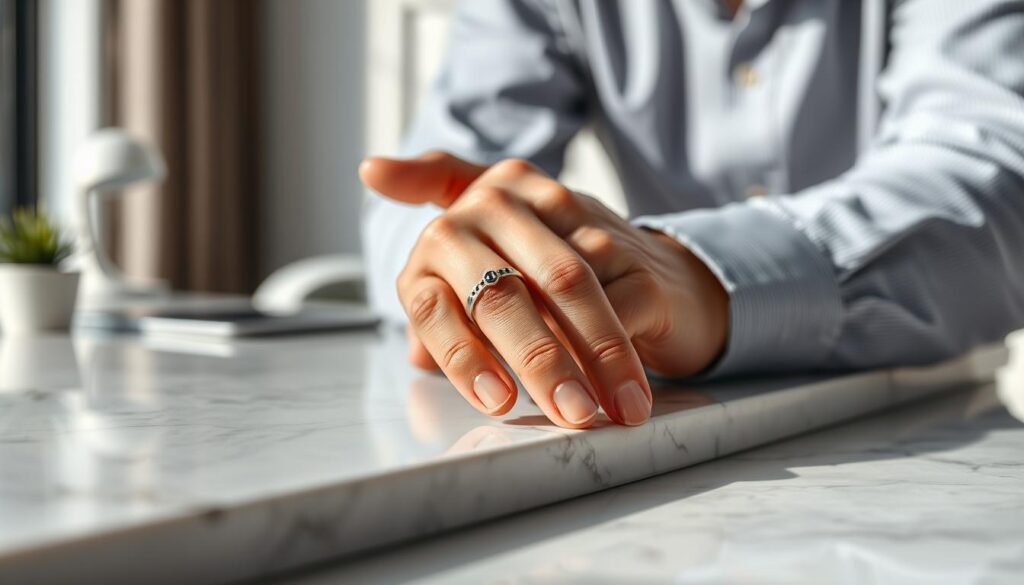
Fit, sizing kit, and flatter interior sensors
The free sizing kit helps you find a snug, sensor-stable fit before the device ships. Many people find Gen 4’s recessed, flatter sensors change how their previous size fits—some need to size down for a secure seal.
Pro tip: wear on the index or middle finger for best contact, and choose snug but not tight. If the band twists or the LEDs show in the dark, it’s too loose.
Colors, finishes, and how it blends with jewelry
The full titanium build comes in silver, gold, rose gold, black, and Stealth. The finishes blend with everyday rings and slim bands, so the piece reads like regular jewelry, not a tracker.
Durability is high: water resistance to 100 meters and scratch‑resistant titanium mean it survives showers, dishwashing, and casual swims without sacrificing quality or life span.
- Why it matters: stable fit equals stable data, so the sizing step is worth it.
- Style note: stacking slim rings frames the band and keeps it discreet in professional settings.
Sensors, Data Quality, and Accuracy in the Real World
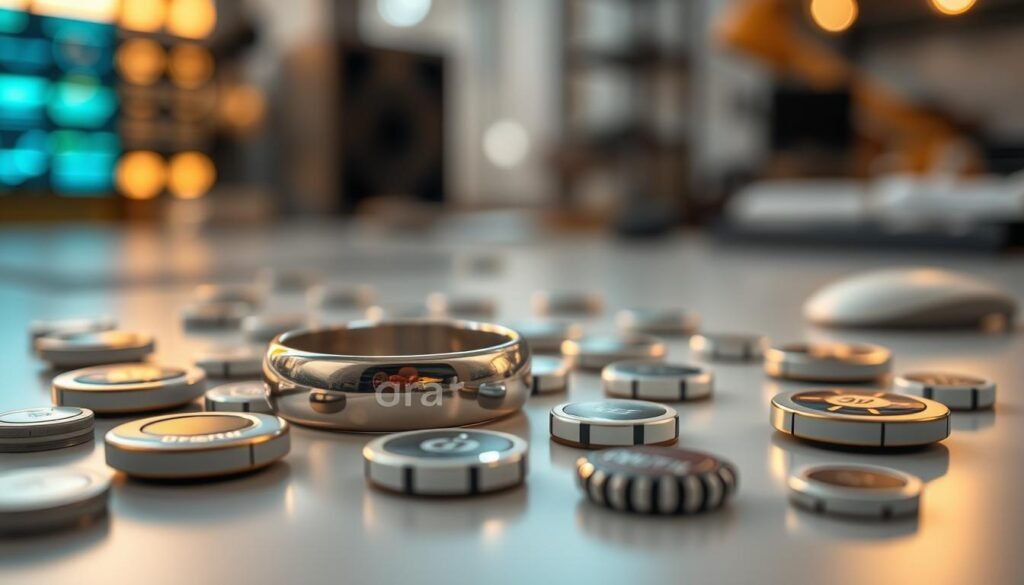
Precision at night makes the biggest difference for recovery and training decisions. The sensor suite now captures HRV, SpO2, temperature trends, and breathing regularity with fewer false alerts.
A mix of infrared PPG, multi-color LEDs, and accelerometers now powers richer sleep and recovery metrics.
How accurate is heart rate variability vs. EKG?
Independent testing shows HRV closely matches EKG-grade benchmarks. Marco Altini’s head-to-head work found near-identical hrv results, which supports using variability trends for training load and stress interpretation.
Overnight SpO2, temperature trends, and breathing signals
Gen 4 boosted SpO2 signal quality by ~120%, improving average overnight blood oxygen accuracy by about 30%.
That matters: clearer SpO2 plus temperature and breathing regularity can flag travel strain, early illness, or disrupted sleep before symptoms appear.
Workout heart rate and the no-display workflow
Daytime heart rate streams to the app via Bluetooth. With no on-device display, live coaching requires a phone or paired watch.
Practical tip: pair a chest strap or sport watch if precise zone pacing matters. For nightly resting heart and readiness context, the ring’s passive data is the stronger asset.
- Sensor stack: infrared PPG, red/green LEDs, temperature sensors, accelerometers.
- Data quality factors: snug fit, same finger, and minimal tracking gaps when charging.
- Outcome: steadier daily Readiness guidance and fewer false alarms for stable routines.
For step-by-step sleep fixes that work with this kind of overnight data, see my experiment on natural sleep improvements at tracking sleep for 30 days.
Sleep Tracking: Stages, Sleep Score, and Night-by-Night Insights
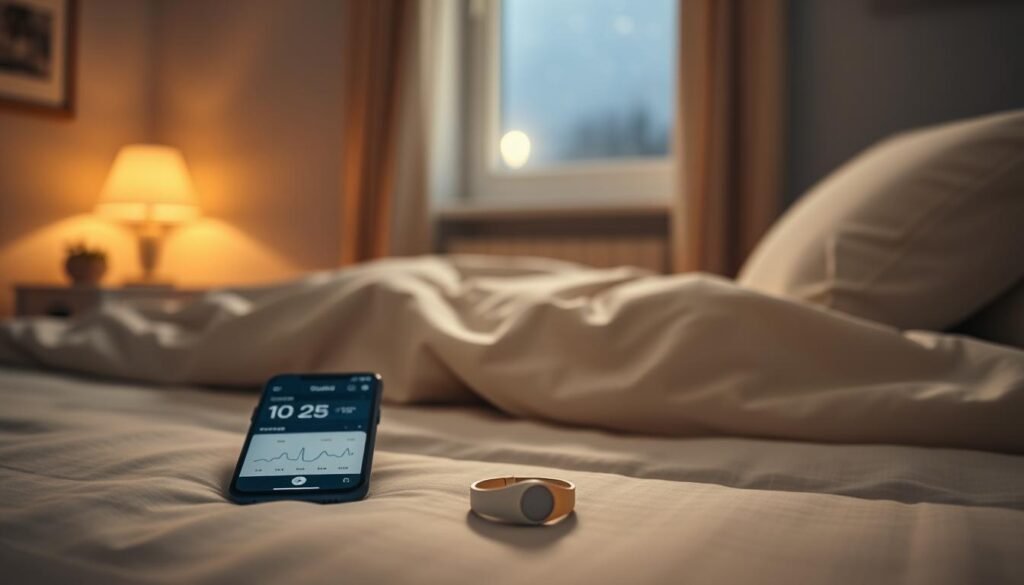
Nightly tracking turns raw sensor readings into clear, actionable sleep insights you can use the next day. The system combines heart rate, skin temperature, and oxygen saturation to create a single sleep score and a stage breakdown.
What the score includes
The sleep score blends total sleep, efficiency, restfulness, REM, deep sleep, latency, and timing into one number.
Total sleep and efficiency capture time in bed versus time asleep. Restfulness flags movement and awakenings.
Why stages matter
Deep sleep supports tissue repair and immune recovery. REM fuels memory and creativity.
Balanced stages predict better next-day energy and mood, even if total hours match another night.
Latency, breathing, and naps
Latency near 15–20 minutes is ideal. Under five minutes can mean overtiredness; over 20 may point to stress, caffeine, or screens—tools you can adjust immediately.
Breathing regularity and SpO2 patterns give early clues to disrupted nights; persistent issues warrant clinical follow-up.
The tracker detects naps and adjusts the day’s insights so a short afternoon snooze won’t hide chronic sleep debt.
Practical moves: earlier dinners, morning light, breathwork, and steady bedtimes often improve quality within days. Use nightly insights to steer daytime choices — move more, limit evening alcohol, and add a wind-down routine.
comparing sleep data and ambiance can help you decide which cues matter most for your own body.
Readiness, Activity, Stress, and Resilience—How the App Guides Your Day
Readiness condenses overnight signals into a single, actionable number so you know when to train hard and when to back off. The app surfaces the most relevant insight by time of day, so a morning fever or a spike in resting heart gives a clear nudge.
The Readiness score is a composite driven by HRV balance, resting heart rate trends, sleep quality, and body temperature patterns. It translates those inputs into one easy-to-interpret number that helps plan your workout or rest.
How activity and routes feed daily guidance
The activity detection has improved for sports like boxing, skiing, and kayaking. The app now shows route tracking and cardio zones so you can see intensity and how it affects next-day energy.
Stress, resilience, and quick fixes
Resilience reports daily stress capacity on a scale from Limited to Exceptional and adds simple in-app suggestions to tilt the day toward recovery.
When resting heart rises and hrv falls together, the system flags higher strain. In that case, swap a hard session for mobility or Zone 2 to protect long-term health.
Practical moves: short walking breaks, five minutes of breathwork, or an earlier wind-down often lift readiness within a few days. Steps and cardio zones inform, not shame—the focus is sustainable consistency, not chasing totals.
For a deeper hardware and membership look, see a detailed review.
App Experience and Integrations That Matter
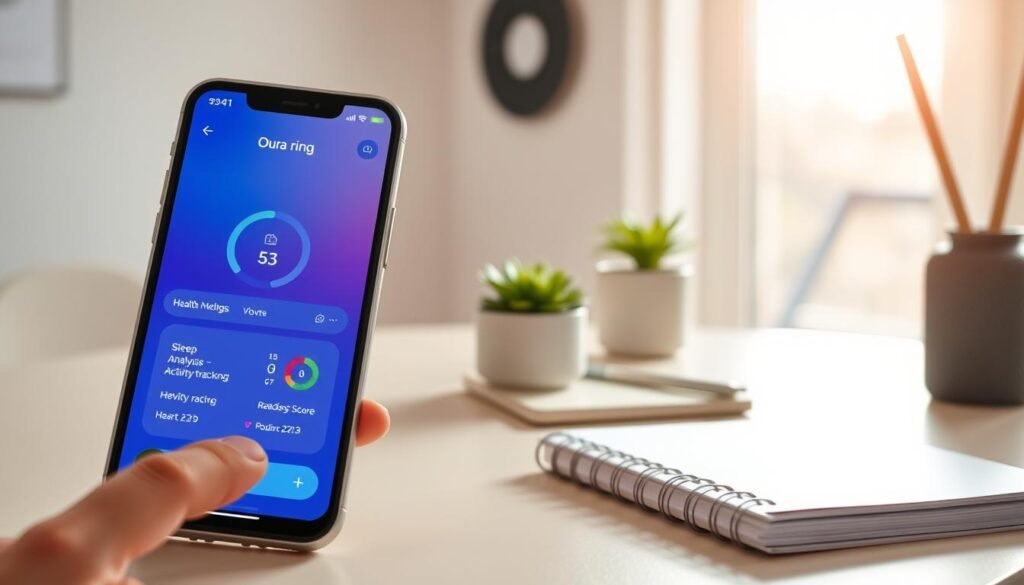
The app keeps daily guidance simple while letting deeper charts live one tap away. It prioritizes morning readiness and sleep summaries, then surfaces activity and temperature trends when you need them. This design keeps people engaged without overwhelming them with data.
Strava, Therabody, and partner integrations
The two-way Strava sync unifies workouts and recovery. Readiness scores appear in Strava and Strava workouts feed back into the app, so your activity and recovery picture stays aligned regardless of device used during training.
Therabody sessions can be logged directly to track how percussion therapy affects recovery markers over days and weeks. That makes it easy to see which treatments move the needle.
Cycle tracking and temperature-based insights
Temperature trends power cycle predictions and fertility features. Pairing with Natural Cycles unlocks FDA-cleared period and fertility forecasts using nightly temperature shifts for users who want clinical-grade timing support.
Explore content balances convenience and privacy. Guided meditations and breathwork live in the Explore tab. Some sessions require Bluetooth for real-time biofeedback; sleep meditations work in airplane mode for low-EMF use.
| Feature | What it does | Why it matters |
|---|---|---|
| App layout | Mobile-first, prioritized summaries | Quick morning check-ins and deeper charts one tap away |
| Strava sync | Two-way workout and readiness flow | Unifies activity and recovery across platforms |
| Therabody logging | Track percussion sessions | Measure recovery impact over time |
| Natural Cycles | Temperature-driven fertility predictions | FDA-cleared timing for cycle-aware planning |
Ongoing tests add useful features only. The team trials CGM and fasting app links but only ships integrations that add clear health value. Multi-year community feedback also shaped social tools like Circles for sharing core scores with family or training partners.
User flow tip: do a quick morning check-in for sleep and readiness, glance midday for movement nudges, and use evening Explore content to wind down. This routine keeps engagement high and reduces app-hopping, so your health story stays continuous across platforms.
Battery Life, Charging, and Travel Gotchas
Expect real-world battery life to vary with the features you use and how you travel. Plan simple routines so overnight tracking — the most valuable data — doesn’t drop out.
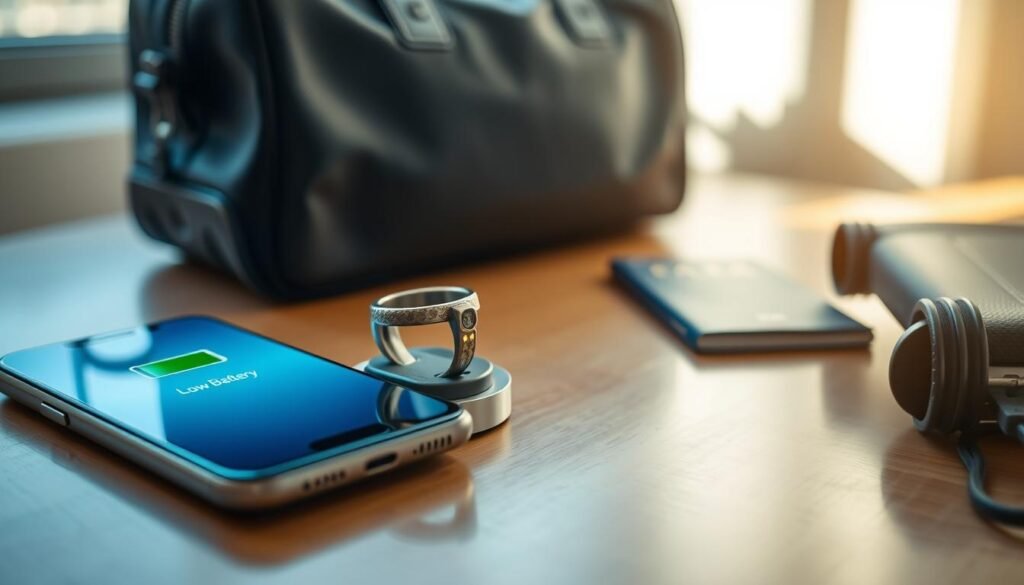
The Gen 3 often fell to about three days with continuous SpO2 active; before that it regularly hit five days. Gen 4 users report several days between charges, and official claims stretch to eight days depending on use.
What shortens charge intervals?
Continuous SpO2 and frequent workout HR sessions drain the battery faster. Bluetooth streaming all day also uses more power than occasional syncs.
Practical travel fixes
Don’t forget the proprietary charging base. It’s compact but easy to misplace; spares cost $59. Pack the charger with your toothbrush to make it a habit.
| Situation | Observed charge cadence | Tip |
|---|---|---|
| Gen 3 — SpO2 always on | ~3 days | Turn off continuous SpO2 for trips |
| Gen 4 — mixed use | Several days (up to 8 claimed) | Top up during desk work or showers |
| Frequent syncing | Shorter battery | Use occasional syncs or airplane mode |
A dead ring breaks your data story, so small charging habits protect long-term trend quality. For more on battery behavior and issues, see this troubleshooting piece at why your device may be dying.
Pricing, Membership, and Value Over Time
Hardware costs range from $349 to $499, plus a $5.99/month membership that unlocks deeper insights. Decide whether you want raw tracking or the full suite of recovery tools before you buy.
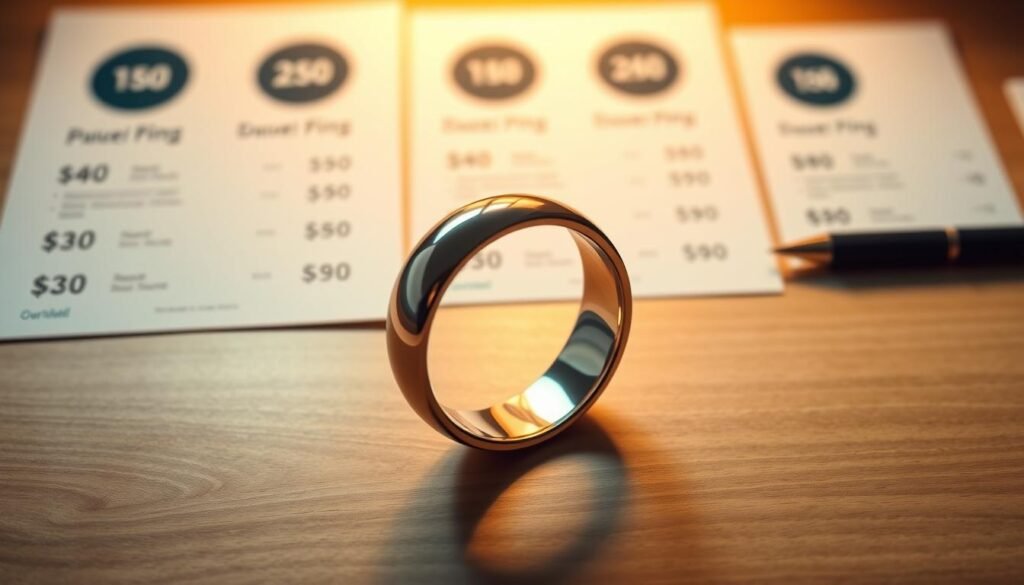
The upfront cost depends on finish: $349 (Silver/Black), $399 (Brushed Silver/Stealth), and $499 (Gold/Rose Gold). The monthly fee grants access to advanced sleep analysis, SpO2 trends, stress and Resilience reports, and period prediction features.
What the membership unlocks
Members get richer guidance: detailed sleep breakdowns, nightly temperature-based cycle cues, continuous SpO2 metrics, and expanded recommendations for training and rest.
Non-members still see basic Sleep, Readiness, and Activity summaries, but those views are limited compared with the paid experience.
Who benefits most and how to pair devices
People who prioritize recovery, consistent sleep, and stress balance will get the most value. If you need on-wrist notifications or live heart-rate coaching during workouts, a smartwatch still wins for that activity use case.
A common setup: use a watch for live training and notifications, and use the ring for high-fidelity night and recovery data to guide weekly plans.
- Longevity: years of app updates and integrations add value without swapping hardware regularly.
- Buy tips: try the free sizing kit, pick a finish that fits your wardrobe, and pack a spare charger for travel.
- Opportunity cost: fewer things to manage if you prefer jewelry-like wear and focused recovery guidance.
For deeper context on membership value and period features, see an editor roundup and a practical look at cycle apps at best period-tracking apps.
Bottom line: if better sleep and steadier readiness cut down off days and improve training quality, the device can pay for itself in life improvements over months and years.
Oura Ring Long-Term Review: Gen 3 vs Gen 4 Differences You’ll Actually Feel
Comfort and signal gains land first — then the rest of the upgrades make daily use simpler and more trustworthy.
You notice the hardware refinements quickly: less pressure on the finger and steadier contact that reduces data dropouts. Flatter interior sensors remove the pressure points some users felt on earlier models.
Fit, materials, and sizing
The full titanium interior and more sizes improve durability and fit. This helps people who stack bands or prefer a gold or silver finish to keep a polished look while staying snug.
Practical note: some users moving from Gen 3 need a different size because the flatter internals can feel looser. A snug fit matters for consistent readings.
Accuracy, battery, and daily impact
Signal upgrades drive a measurable jump in overnight SpO2 quality (about 120% stronger) and roughly a 30% lift in average SpO2 accuracy. Breath disturbance and heart-rate signals also tightened up.
Real-world result: fewer outlier nights, tighter alignment between how you feel and what the app shows, and more confidence adjusting training and recovery plans.
“This version simply fades into daily life while delivering clearer, more actionable signals.”
| Area | Gen 4 gains | Why it matters |
|---|---|---|
| Comfort & fit | Flatter sensors, more sizes | Stable contact; less irritation |
| Signal quality | Stronger SpO2, better HR & breath | Fewer false nights; actionable trends |
| Battery life | More days between charges | Easier weekly routine; less travel stress |
Activity detection saw incremental improvements, and cardio zone visuals are smarter without adding complexity. If sleep, recovery, and all-day comfort matter to you, the upgrade becomes noticeable within a week.
For a side‑by‑side look at the changes in practice, see this comparison at which is better: Gen 4 vs Gen.
Conclusion
The device excels at guiding better sleep and steady recovery without becoming noisy. It turns overnight signals into clear, daily nudges you can act on.
Wear it long enough and the device becomes a quiet nightly coach for sleep and recovery. Core strengths are exceptional overnight sleep insights, reliable readiness guidance, and a discreet design that fades into your routine.
Trade-offs are real: no on-device display for mid-workout coaching and a proprietary charger that needs planning. Neither undermines the primary mission of improving sleep, managing stress, and shaping smarter activity choices.
Bottom line: if you want a recovery-first wearable that supports health without adding noise, this oura ring is one of the simplest, most effective ways to do it. Order the sizing kit, pick a finish you’ll wear, and set a simple charging routine to keep your data flowing. For a personal take on wearing one for a year, see my notes after a year with the device.
FAQ
How accurate is heart rate variability (HRV) from the ring compared with EKG-grade monitors?
HRV from the device is reliable for day-to-day trends and readiness insights but won’t match clinical EKG precision. For nightly resting HRV and relative change over weeks, it performs well; for beat-to-beat clinical diagnostics, use an EKG. Treat HRV here as a sensitive wellness signal rather than a diagnostic number.
Can the wearable reliably track sleep stages like deep sleep and REM?
Yes—the sleep staging uses combined motion, heart rate, and temperature to identify light, deep, and REM sleep. Night-by-night staging is useful for patterns and changes, though polysomnography remains the clinical gold standard. Use scores and trends to guide habits, not to diagnose sleep disorders.
How does overnight skin temperature tracking work and what can it tell me?
The sensor measures relative finger temperature during sleep and flags deviations from your baseline. It’s great for spotting illness, cycle-related shifts, or environmental influences. It shows trends rather than exact core temperature, so interpret changes in context with symptoms and other data.
Does the device detect naps and do naps affect my daily sleep score?
Yes—automatic nap detection captures daytime sleep and adjusts daily sleep totals. Naps may influence your nightly sleep score depending on length and timing; short naps can refresh you without major score penalties, while long late-day naps may reduce nightly deep sleep and lower your score.
How well does workout heart rate tracking perform compared with chest straps and smartwatches?
Wrist/finger optical heart rate is generally accurate for steady-state cardio but can lag or smooth rapid heart-rate fluctuations during high-intensity intervals. For the most precise training data, use a chest strap for interval work. For most gym sessions and steady runs, the ring’s readings are actionable.
What affects the Readiness score and how should I act on it?
Readiness combines resting heart rate, HRV balance, sleep quality, recent activity, and temperature trends. Use a low score as a cue to reduce intensity, prioritize sleep, and hydrate; a high score supports pushing workouts. It’s a personalized recovery guide, not a strict rule—combine it with how you feel.
How long does battery last in real-world use and what are charging quirks when traveling?
Expect multi-day battery life that varies with continuous features (nightly monitoring, frequent syncs). In practice, 4–7 days is common. The proprietary charger is compact but easy to misplace—pack it when you travel. Overnight charging routines work well to keep interruptions minimal.
Is the device comfortable for all-day and overnight wear, including during workouts?
The low-profile metal design and slim band make all-day and night wear comfortable for most people. Some users need a sizing swap to avoid movement during high-sweat workouts. If comfort issues persist, consider trying a different size or wearing finger tape for protection during heavy lifting.
Do I need a subscription to get useful features from the app?
Basic tracking and daily scores are included with the hardware, but a subscription unlocks long-term insights, advanced trends, guided programs, and historical comparison tools. Evaluate how much you value coaching and depth of analytics before subscribing.
How does the device integrate with other apps like Strava or cycle-tracking platforms?
It offers integrations with fitness and wellness platforms to sync workouts, sleep, and temperature-based cycle insights. These connections streamline training logs and menstrual-cycle tracking, though integration depth varies—check current partner features in the app.
Can I wear the ring during swimming and will water affect sensors or battery?
The device is water-resistant and fine for swimming and showering. Prolonged exposure to chlorinated pools or saltwater may accelerate wear on finishes, so rinse with fresh water afterward. Water won’t harm sensors when used as intended.
How durable are finishes like black, silver, and gold over years of daily wear?
Metal finishes are robust but show micro-scratches over time, especially with frequent contact sports or manual work. Polished and matte options age differently—matte hides scratches better. Treat the product as everyday jewelry: remove during heavy manual tasks if you want a pristine look.
Will the device measure blood oxygen (SpO2) overnight and how actionable is that data?
Overnight SpO2 estimates are collected to track trends and detect significant drops that may warrant medical evaluation. These readings help monitor breathing irregularities but are not a medical-grade pulse oximeter—use them to spot concerning patterns and consult a clinician if you see persistent low values.
How does temperature-based cycle tracking compare with dedicated fertility devices?
Finger temperature trends can supplement cycle awareness and highlight fertile-window shifts, but dedicated basal thermometers or clinical fertility systems may be more precise for conception planning. Use the device as a convenient supplementary signal rather than the sole fertility method.
What maintenance keeps sensors and battery performing well over several years?
Keep sensors clean and dry, avoid harsh chemicals, and charge regularly to preserve battery health. Replace the sizing ring if fit loosens. With normal care, performance remains steady for multiple years, though battery capacity can slowly decline over long-term use.