

Can a screenless tracker that focuses on recovery change how you train and rest? This review tests that idea using weeks of real-world wear, lab comparisons, and everyday routines to see what the sensor actually reveals about your body.
The device is smaller than its predecessor by roughly 7–10% and keeps a screenless design to limit distractions. The membership model shifts value to year-long coaching and trend analysis rather than the hardware alone.
We measured battery endurance near 15.5 days, validated IP68 on the sensor and wireless power pack, and tracked metrics like Recovery, Strain, Sleep, and Healthspan through the mobile app. This section sets clear expectations for how the device collects physiological data and who benefits most: fitness lovers, athletes, and data-driven wellness seekers who care more about readiness than notifications.
Key Takeaways
- Small, screenless design emphasizes recovery and readiness over wrist distractions.
- Membership pricing delivers ongoing insights and long-term trend value.
- Battery life and on-wrist charging support continuous multi-week data capture.
- App centralizes Recovery, Strain, Sleep, Healthspan, and social features.
- Our analysis blends lab validation with multi-week real-world testing.
Whoop Band Review 2025: Real‑world takeaways at a glance
Wearing the 5.0/MG across varied workouts and rest days revealed tangible practical improvements. The updates focus on longer battery duration, faster syncs, and cleaner physiological signals that matter for training and recovery.
What changed from whoop 4.0 to 5.0/MG
Major hardware and sensor upgrades include a rated 14+ day battery (we saw ~15.5 days), a processor about 60% quicker, and improved heart rate accuracy versus whoop 4.0. MG adds a conductive clasp for ECG and blood pressure trend features in beta.
Key wins and watch‑outs from months of everyday wear
Wins: On‑wrist charging made continuous capture simple. Sleep and strain metrics stayed consistent across days, and auto‑detection of activity improved for common workouts.
- Membership tiers: One ($199), Peak ($239) and Life ($359) unlock escalating analytics; Life is the route to MG hardware with ECG and blood tracking.
- Screenless design: Keeps focus on rest and recovery but limits in‑run pace or split visibility for some athletes.
Watch‑outs: ECG on MG can be finicky, and blood pressure requires cuff calibration for reliable trends. The app’s coaching tone may feel prescriptive to users who prefer neutral data.
Practical takeaway for athletes: Better sensor performance increases confidence in training metrics, while Healthspan and hormonal insights make multi‑week trends more meaningful. For most users, Peak hits the best value point; Life suits those who need ECG or blood metrics.
Further reading on real-world sleep tracking and practical testing is available in this sleep tracking write-up and an in-depth hands-on feature overview at a related hands-on article.
Design, comfort, and wearability for all‑day, all‑night tracking
How a tracker feels on your wrist can shape how consistently you wear it. The 5.0/MG shrinks the sensor by roughly 7–10%, which makes 24/7 wear less intrusive. That smaller footprint helps during sleep and long travel days.

Why a screenless approach helps focus on recovery
The screenless design reduces on‑wrist interruptions and nudges you back to the app for guidance. That keeps notifications out of sight and prioritizes recovery and training insights in one place.
Bands and materials: comfort vs. practicality
CoreKnit and SuperKnit deliver soft, breathable comfort for daily wear and sleep. They conform to motion and feel low profile.
SportFlex (silicone) resists water and dirt better and dries faster after activity. It uses a belt‑style button closure that trades micro‑adjustments for quicker drying.
LeatherLuxe is a premium option for dressier moments, but it needs more care after sweat.
Drying, odor, fit, and the MG clasp
Fabric straps can stay damp and trap odor after showers or hard sessions. Silicone dries faster and resists lingering smells.
Fit notes: the default strap offers micro‑adjustability for a secure sensor contact. SportFlex uses click buttons with fewer size steps.
The MG variant adds a conductive clasp and finger indents to enable ECG capture without adding a screen. Both the sensor and the wireless power pack are IP68 rated, so you can charge on‑wrist around water.
| Aspect | CoreKnit/SuperKnit | SportFlex | LeatherLuxe |
|---|---|---|---|
| Comfort | High, breathable | Moderate, flexible | Premium, firm |
| Water / dirt resistance | Low | High | Low |
| Drying & odor | Slower, needs care | Fast, low odor | Slow, needs cleaning |
| Fit system | Micro‑adjustable | Button/belt style | Buckle style |
Practical tip: wear on the non‑dominant wrist for fewer false activity readings, or use apparel pockets for alternative placement during contact sports.
Battery life and charging: two‑week stamina in practice
Long stretches between charges make continuous monitoring simpler and more reliable. In daily use, the device rarely forced mid‑trip charging and kept sleep and recovery tracking uninterrupted.
Rated 14+ days vs. tested 15.5 days: what we observed
Manufacturer specs list a 14‑day runtime. In our tests the unit delivered about 15.5 days while logging several workouts and nightly sleep.
Practical note: activity intensity, temperature, and how often the app syncs can change the actual time between charges.
Wireless Power Pack convenience and on‑wrist top‑ups
The slide‑on power pack lets you top up without removing the band. That keeps continuous data collection intact for multi‑week trends.
| Metric | Measured | Rated | Notes |
|---|---|---|---|
| Typical runtime | ~15.5 days | 14+ days | Includes workouts and nightly sleep |
| Extended use | Up to ~30 days | — | With periodic on‑wrist top‑ups using power pack |
| Water rating | IP68 (power pack) | IP68 | Safe for showering while charging |
| Old model comparison | ~15.5 vs ~5 days | — | Major jump from older generation |
- Set expectations: plan for two weeks between wall charges, and expect small variance with heavy use.
- Commuter cadence: top up on a 20‑minute train ride weekly and skip cables while keeping tracking on.
- Continuous data wins: fewer interruptions improve Healthspan and recovery trend accuracy.
For strap choices and fit tips, see the detailed strap guide at strap review. If you want low‑cost biohacks to extend daily routines, check this affordable tools roundup.
Sensors, accuracy, and performance leaps over Whoop 4.0
The upgraded sensor array and a roughly 60% faster processor make the device quicker to lock onto signals and report meaningful numbers. That change improves sync times, sharpens auto‑detection, and tightens heart metrics so strain and recovery scores feel more reliable.
Improved PPG and processors: faster sync, better auto‑detection
The faster chip speeds up on‑device processing. That reduces delays when the app syncs and helps the unit spot activity start and end more accurately.
This matters because quicker processing reduces early‑run lag in heart numbers and cleans up noisy reads during dynamic movement.
Heart rate reliability during runs, CrossFit, and daily life
In tests the heart rate line initially drifted for a few minutes during hard starts, then aligned closely with an Apple Watch Ultra 2 after ~10 minutes.
Mixed‑modality sessions like CrossFit now show clearer elevated heart signals and more reliable post‑session prompts to log workouts.
“Optical sensors still depend on fit and motion; position and strap choice change results more than software alone.”
| Item | Sensor | Observed result |
|---|---|---|
| PPG & accelerometer | Yes | Tighter heart tracking vs whoop 4.0 |
| Skin temperature | Yes | Improves rest and recovery context |
| GPS | Phone only | Routes and pace come from phone |
Realistic expectations: wrist optical heart tools vary with motion and fit. Try upper‑arm placement or tight clothing pockets when accuracy really matters.
More technical readers can find a deep dive on sensor performance and how these metrics translate to training. Improved sensors and processing make tracking and recovery data more dependable over time.
The Whoop app experience: insights, coaching, and communities
The app surfaces Sleep, Strain, and Recovery at the top so you can act quickly each day. It turns raw sensor data into simple scores, then points to next steps—sleep earlier, take a light session, or push hard—based on your goals.
The dashboard groups daily sleep, strain, and recovery for fast context. Beneath those scores, deeper dashboards show HRV, resting heart rate, stress trends, and long‑term health metrics.
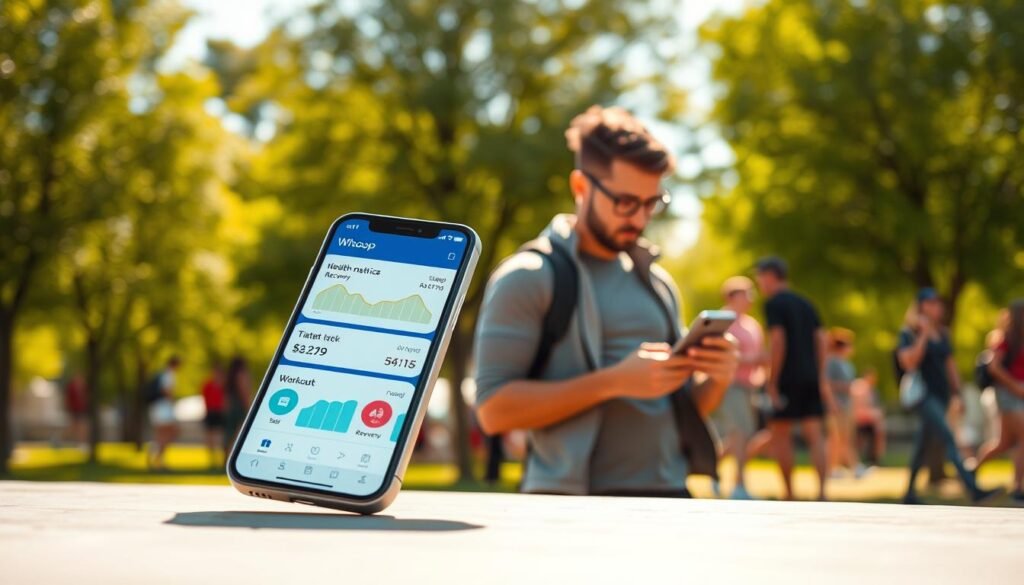
Daily scores: what Recovery, Strain, and Sleep actually mean
Recovery blends HRV, RHR, and sleep to show readiness for activity. Use it to decide intensity for the day.
Strain tallies cardiovascular load from workouts and daily effort. It helps balance hard sessions with rest.
Sleep counts duration and quality, and the app flags sleep debt and bedtime consistency.
How the AI coach sounds and works
The generative coach is proactive and prescriptive. It suggests concrete actions—nap timing, easy workouts, or late‑day wind‑downs—based on recent metrics and membership settings.
Practical tip: journal sleep, caffeine, and stress to give the coach context; consistent entries sharpen its suggestions over time.
You can broadcast heart rate to compatible bike computers and apps for consolidated workout setups. That streamlines rate‑based training without extra devices.
Community teams and leaderboards boost adherence with friendly comparisons and group challenges. Use them sparingly to avoid distraction.
- Find deep graphs under the analytics tab for HRV, RHR, and stress trends.
- Pin the stats you care about—bedtime, readiness, or activity strain—for quick daily checks.
- Consistent use and journaling improve personalized insights and coach accuracy.
Sleep tracking and recovery: what your mornings actually show
Morning reports turn overnight stage totals and biometrics into a clear readiness cue. They give simple, actionable guidance so you can decide on training, rest, or lifestyle tweaks for the day.
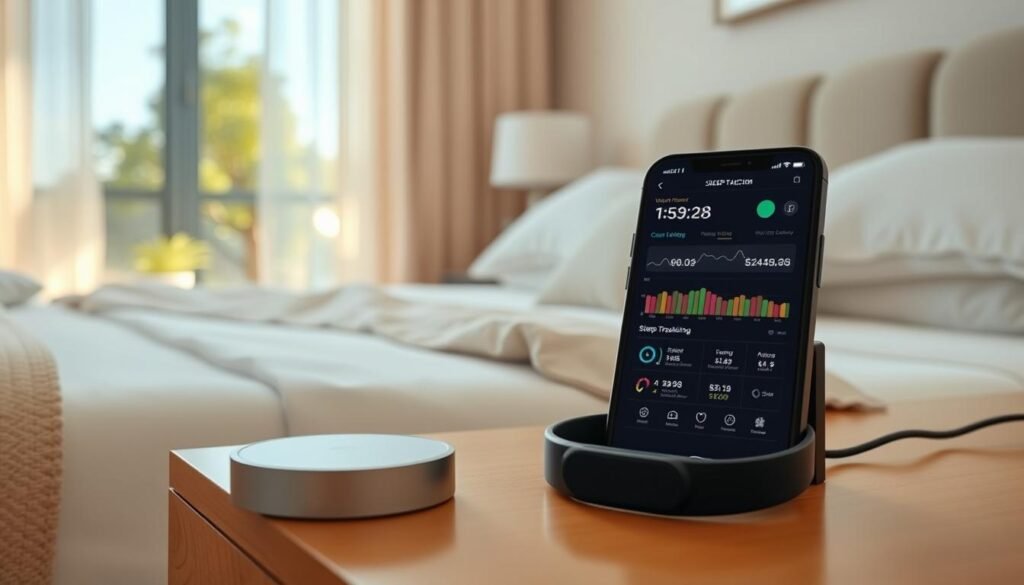
Sleep stages, sleep debt, and bedtime recommendations
Your nightly report lists total sleep and time spent in light, REM, and deep stages. The app then factors sleep debt and efficiency to suggest a bedtime window or extra sleep needed.
Why it matters: consistent stage balance and enough total sleep reduce accumulated sleep debt and improve next‑day recovery.
Habit journaling: caffeine, alcohol, and partner/pet effects
The journal links habits like late caffeine or alcohol to morning outcomes. Over days you see patterns—late drinks often lower HRV and raise resting heart rate the next morning.
Tip: note partner or pet disturbances; the app correlates interruptions with lower sleep efficiency so your insights become personal and usable.
- Score color key: green, yellow, red driven by HRV, resting heart rate, and respiratory rate.
- Naps: automatic nap detection updates sleep debt so morning predictions improve over time.
- Limits: sleep staging is an estimate across wearables, but trends in time spent by stage guide better habits.
Practical steps: set a consistent bedtime, remove late caffeine, limit alcohol within 3 hours of sleep, and treat naps strategically to manage sleep debt.
Morning check‑in: read the color‑coded recovery, glance HRV and resting heart, then choose a hard session only on green days. Use yellow days for light work and red days for focused rest.
Training with Whoop: strain, stress, and strength nuances
Strain shows cardiovascular load while the app keeps non‑exercise stress distinct. Use both numbers to decide whether a hard session or rest day best supports performance and recovery.
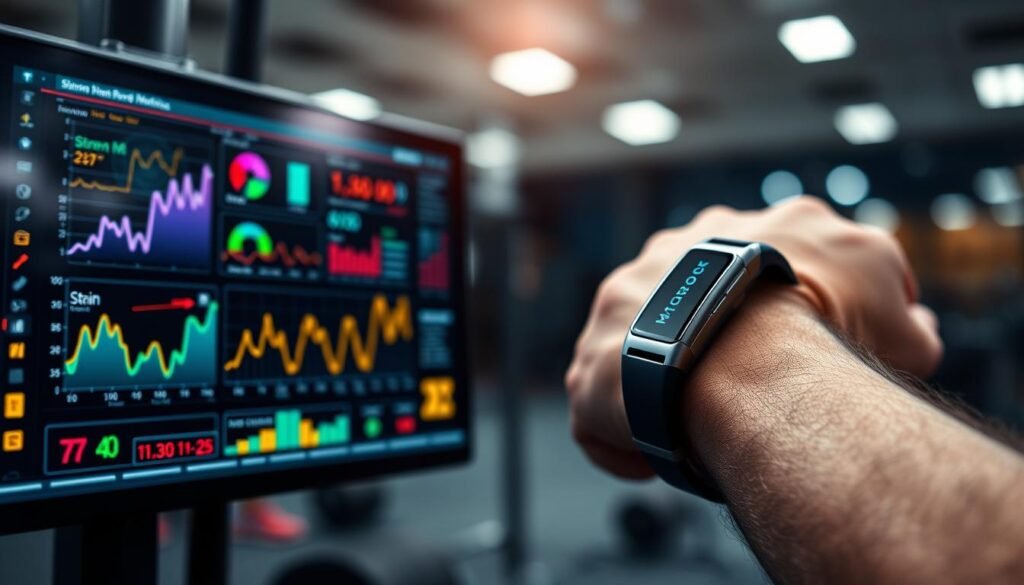
A single daily strain number can mask whether your load came from long aerobic work or a tense day of meetings. The system calculates endurance strain mainly from average heart rate multiplied by duration, so it tracks well with time spent in higher heart rate zones.
Endurance strain vs. non‑cardio stress
The app separates exercise strain from non‑cardio stress. Sitting in long meetings or poor sleep raises stress without the same cardiovascular signature as a workout.
Strength Trainer and VBT modeling
The Strength Trainer models reps, load, and velocity (VBT) to estimate muscular demand. Follow a structured routine and the estimates improve; otherwise lifting can under‑index on strain.
| Type | Primary signal | Expectation |
|---|---|---|
| Endurance | Heart rate x time | High strain with long zones |
| Strength | Reps/load/VBT | Lower strain unless modeled |
| Stress | Autonomic markers | Raises daily load separately |
Practical tip: check heart rate zones, use daily strain goals, and let coach prompts guide intensity. On green recovery days push aerobic or targeted strength; on red days favor mobility and rest.
Healthspan, Whoop Age, and long‑term trends
Healthspan aggregates weeks of signals into a simple biological age and a pace‑of‑aging score. This gives you a baseline for long‑term planning and clearer performance goals over months, not hours.
How the pace of aging is calibrated
Healthspan needs roughly three weeks of consistent wear to compute Whoop Age and the pace metric. It blends recovery, strain, sleep, HRV, and resting heart rate into one view so trends beat day‑to‑day noise.
Why steady habits move the needle
Consistent sleep, moderated strain, and stress control commonly nudge Whoop Age down over time. Conversely, injuries or multi‑night sleep loss tend to push the metric higher.
- Real examples: an injury can raise Whoop Age for several weeks; a 2–3 week sleep streak often lowers it.
- Tier access: Healthspan insights come with Peak and Life memberships, unlocking deeper long‑term analytics.
- Cadence: check these metrics weekly to spot trends and monthly to guide training cycles—avoid reacting to single‑day swings.
Long battery life helps keep datasets intact, improving the reliability of these long‑term insights. For a deeper look at Healthspan and preventive health, see this deep dive into Healthspan.
Women’s hormonal insights and cycle‑aware coaching
Phase-aware insights show how menstrual cycles affect sleep, recovery, and training readiness. They translate recurring hormonal shifts into day-to-day recommendations so you can plan intensity and rest more reliably.
What we see across phases: the app overlays cycle phases over sleep and recovery charts so patterns become visible over time. Many users record slightly higher resting heart rate and lower recovery during the luteal phase. In contrast, the follicular phase often brings better readiness and higher capacity for hard workouts.
Recovery patterns and practical training cues
Expect lower recovery and modestly elevated resting metrics in the luteal week; that can make heavy interval work feel harder.
During follicular days, recovery often improves and fatigue drops, so push for higher-intensity sessions if other signals agree.
How coaching uses phase context
The coach ties phase information to performance scores rather than fertility predictions. It suggests simple adjustments—shorter intervals, lower strain targets, or added sleep—so your plan stays effective without extra complexity.
- Common pattern: luteal = prioritize sleep and light strength; follicular = favor intervals and tempo work.
- What varies: individual hormonal responses differ; track across multiple cycles before changing long‑term plans.
Tracking tips to sharpen recommendations
Journal symptoms—sleep quality, mood, cramps, and stress—and log behavior like caffeine and alcohol. That context improves the coach’s personalized guidance and helps separate hormonal effects from lifestyle factors.
Quick comparison: this performance-first approach focuses on readiness and training impact, while some wearables emphasize temperature‑driven reproductive predictions and fertility windows.
For a deeper look at tailored guidance, see these women’s hormonal insights that explain how the app pairs cycle data with sleep and recovery trends.
Whoop MG’s medical‑adjacent features: ECG and blood pressure insights
MG adds on‑demand ECG capture and cuff‑calibrated blood pressure trends to daily wellness tracking. These features aim to give trendable heart and blood signals without a screen, and they are exclusive to the Life plan.
How to run an ECG correctly
Place fingers on the conductive clasp indents, sit still, and hold for roughly 30 seconds. Stable posture and dry skin improve chances of a clean trace.
Expect realism: some attempts may fail; repeat the test if the app does not return a normal sinus rhythm result.
Setting up blood pressure trends
Calibrate using three cuff readings taken a few minutes apart as the baseline. After that, the device reports trend estimates rather than single‑measurement diagnostics.
Timing matters: consistent measurement times and lifestyle notes (caffeine, exercise) help the trends stay meaningful.
“These tools provide wellness signals — not a replacement for medical devices or clinician care.”
- Features are framed as trend tools with disclaimers and FDA notifications noted by the company.
- Life members get ECG and blood insights on the wrist without a screen.
- Best for people who already work with clinicians and want richer heart-focused data over time.
Membership tiers and pricing: One vs. Peak vs. Life
Pricing tiers decide whether you get basic daily scores or advanced heart and blood trend tracking. Choose a plan to match your training needs and how deep you want long‑term insights to go.
What you get at $199, $239, and $359 per year
One — $199/year: includes the 5.0 sensor with a CoreKnit strap and a wired charger. The membership unlocks core scores like sleep, strain, and recovery scores, HR zones, VO2 Max estimates, and women’s hormonal insights.
Peak — $239/year: adds the wireless power pack, SuperKnit band, Health Monitor, Stress Monitor, and Healthspan tools (Whoop Age and pace of aging). The wireless pack helps keep nightly sleep and recovery datasets contiguous.
Life — $359/year: bundles the MG sensor with ECG, AFib screening, and cuff‑calibrated blood trend features (beta). This tier focuses on heart‑centered wellness rather than basic training metrics.
Which tier offers the best value for most athletes?
The Peak plan typically hits the sweet spot for athletes who want convenience and deeper long‑term insights without medical‑adjacent features. It balances hardware upgrades with analytics that improve training choices over weeks.
| Tier | Price / year | Hardware | Key software unlocks |
|---|---|---|---|
| One | $199 | 5.0 sensor, CoreKnit, wired charger | Sleep, Strain, Recovery scores; HR zones; VO2; women’s insights |
| Peak | $239 | 5.0 sensor, SuperKnit, wireless power pack | All One features + Health Monitor, Stress Monitor, Healthspan |
| Life | $359 | MG sensor, SuperKnit, wireless power pack | All Peak features + ECG, AFib screening, blood pressure trends (beta) |
Practical tip: pick One if you want core training tools on a budget. Choose Peak for seamless on‑wrist charging and actionable long‑term metrics. Consider Life only if ECG and blood trend tracking fit your wellness goals and you accept the features are framed as trend tools.
For help choosing, see which membership is right for you.
Whoop vs. alternatives: Fitbit Charge 6, Oura Ring 4, Apple Watch
Picking the right wearable means choosing the trade‑offs you’ll actually live with every day. Form factor, metric depth, and ongoing costs shape how useful a device will be for sleep, training, or general health.
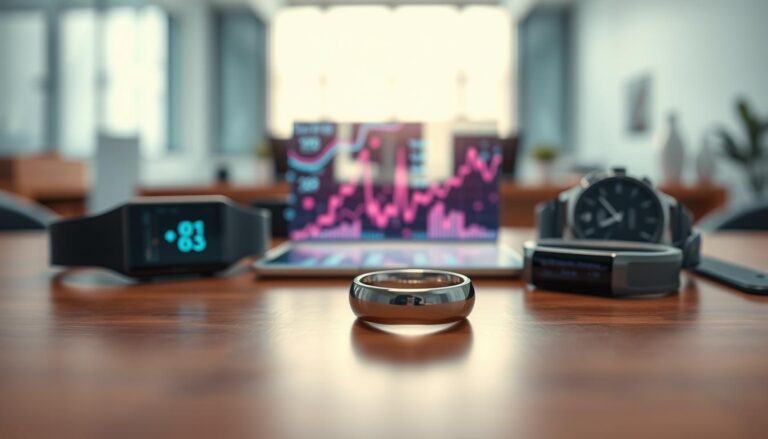
A discreet tracker, a smart ring, and a full smartwatch each shape habits differently. Consider comfort, data visibility, and whether you want coaching or live workout feedback.
How form factor affects comfort and daily tracking
Rings sit out of sight and boost consistent sleep tracking, but they offer little in‑run feedback. Bands prioritize long‑term tracking and on‑wrist charging. Smartwatches give live workout cues and onboard GPS for mapped runs.
Tip: if you value low fuss and steady overnight data, a ring or slim tracker will win. If you need live pace and form guidance, a watch is better.
Metrics depth, battery, and total cost of ownership
Whoop leans hard into recovery, strain, and long‑term trends with roughly ~15.5 days tested endurance and on‑wrist top‑ups. The MG sensor tightened heart signals versus whoop 4.0.
Fitbit Charge 6 is affordable, adds ECG, and pairs with optional Premium. The Oura Ring 4 is discreet and excels at sleep analytics while keeping lower annual costs after year one. Apple Watch Ultra 2 delivers the richest real‑time workout metrics and onboard GPS, but requires weekly charging.
| Device | Form factor | Strengths | Notes |
|---|---|---|---|
| Whoop (sensor) | Screenless band | Recovery & strain depth, long battery, on‑wrist top‑ups | No onboard GPS, phone maps runs; membership cost |
| Fitbit Charge 6 | Slim band | ECG, value, basic workout metrics | Needs Premium for advanced analytics; weekly charging |
| Oura Ring 4 | Smart ring | Best sleep tracking, discrete wear, low ongoing fees after year one | Limited live workout data, no display |
| Apple Watch Ultra 2 | Full smartwatch | Onboard GPS, rich workout performance and form metrics | Short battery, charger routine, higher up‑front cost |
How to decide: choose a ring or slim tracker if sleep and recovery matter most. Pick a smartwatch for live mapping and richer workout guidance. Pick a band if long battery and continuous tracking are your priority.
Who should (and shouldn’t) get this tracker
This device best serves athletes who prioritize recovery-driven guidance and multi-week trends. If nightly sleep and readiness shape your training plan, its coaching and insights pay off day to day.
Deciding starts with how you train and what live data you need. The sensor excels at showing strain and recovery across weeks, not giving in-run maps or on-wrist splits.
Endurance athletes, CrossFit/HYROX, team sports, and biohackers
- Endurance athletes: use it for recovery and pair with a GPS watch or bike computer to capture routes and pace while broadcasting HR.
- CrossFit / HYROX competitors: value strain tracking and nightly sleep metrics to time hard sessions and deloads.
- Team-sport players: benefit from continuous load monitoring to avoid overload during busy match weeks.
- Biohackers and data-curious fitness seekers: appreciate broad nightly metrics to tune sleep, recovery, and body trends.
When a display, GPS, or richer workout metrics matter more
If you need navigation, advanced running dynamics, or instant pace cues, a full smartwatch or dedicated GPS device is the better tool.
Map-heavy ultrarunners, trail racers, and athletes who want on-wrist coaching during sessions should prefer a sports watch. That device fills the gaps this sensor leaves intentionally blank.
Hybrid setups and placement tips
Hybrid approach: keep the sensor for overnight recovery and use a GPS watch for live exercise metrics. Broadcast heart rate to bike computers or watch apps to unify data.
Placement tip: for high-movement work, try upper-arm or tight apparel placement to improve HR stability and reduce motion noise during heavy lifts or burpees.
| User type | Primary need | Best pairing | Why it fits |
|---|---|---|---|
| Endurance athletes | Recovery + HR trends | GPS watch + HR broadcast | Gets long-term insights while capturing routes and pace |
| CrossFit / HYROX | Strain monitoring | Sensor worn on wrist/upper arm | Tracks load across mixed modalities and rest needs |
| Team sports | Load management | Sensor for continuous tracking | Monitors day-to-day strain through busy schedules |
| Map-heavy users | Navigation & pace | Sports watch (primary) | Onboard GPS and live coaching not provided by this tracker |
Final take: let the coach and insights shape daily choices—push hard on green recovery days and dial back strain when sleep or metrics warn of low readiness.
Conclusion
In multi‑week use the device turned nightly metrics into clear recovery cues and practical sleep guidance. Improved heart and heart rate accuracy, ~15.5‑day battery life, and long‑term Healthspan insights made daily decisions simpler for fitness and performance goals.
What matters most: dependable recovery and sleep analytics, a strong app that turns data into action, and an ecosystem that favors trend tracking over real‑time mapping.
Trade‑offs: no onboard GPS or display, and MG’s ECG can be finicky while blood trends need cuff calibration and are wellness‑oriented.
Membership pick: Peak hits the balance for most users; Life fits those who want ECG‑style features and blood trends.
Choose based on whether recovery coaching or live workout metrics drive your training. For a full hands‑on look, see this detailed hands-on review.
FAQ
How accurate is the heart rate monitoring compared with chest straps and the Whoop 4.0?
The optical PPG sensor and improved processor provide much closer daytime and workout heart rate readings to chest straps than earlier wrist devices. For steady-state runs and cycling the error margin is low; during very high-intensity intervals (short sprints, heavy Olympic lifts) chest straps still give slightly tighter beat-to-beat fidelity. Overall accuracy is a clear step up from the prior generation for most training and recovery needs.
What real-world battery life can I expect between charges?
In everyday mixed use we consistently saw just over two weeks of runtime—roughly 15–16 days—before a full recharge. Heavy nightly use of on-wrist top-ups or extended sleep tracking can shave that down, while light users may hit the rated 14+ days comfortably. The Wireless Power Pack adds convenient on-wrist charging for multi-day trips.
Does the device show data on-screen or is it screenless?
The design follows a screenless philosophy: there’s no full display for notifications or live metrics. That keeps the unit compact and focused on continuous biometric tracking. You view all scores, trends, and coaching in the mobile app and get haptic prompts for alarms and recovery reminders.
How reliable is sleep stage detection and the recovery score each morning?
Sleep-stage detection has improved versus earlier models and aligns well with polysomnography for major sleep periods (light, deep, REM) in most users. The recovery score combines resting heart rate, heart rate variability, and sleep. It’s a well-calibrated composite—useful for day-to-day guidance—but interpret trends over weeks rather than single-night fluctuations.
What differences should I expect upgrading from Whoop 4.0 to 5.0/MG?
Expect upgraded PPG sensors, faster syncing, better automatic activity detection, and more robust overnight monitoring. The MG variant adds medical-adjacent features such as ECG and cuff-assisted blood pressure trends (beta). Software refinements also deliver richer insights and slightly improved battery management.
Are the ECG and blood pressure features clinical-grade?
The ECG function is practical for on-demand rhythm checks and can reliably report sinus rhythm vs. some arrhythmias when used correctly. The blood pressure feature is in beta and uses cuff calibration plus trend analysis—helpful for longitudinal tracking but not a substitute for medical-grade oscillometric cuffs or professional diagnosis. Always consult clinicians for clinical decisions.
How does the membership model affect functionality and data access?
Core tracking, recovery, strain, and sleep metrics require an active membership for full access to coaching and long-term trend storage. Tiers (One, Peak, Life) unlock additional features, team tools, and historical retention at different price points. The hardware remains the same, but richer analytics and coaching come via subscription.
Can the device broadcast heart rate to other apps or gym equipment?
Yes—wireless broadcasting of heart rate to compatible fitness apps, gym equipment, and Bluetooth receivers is supported. That lets you use chest‑strap‑level HR data in cycling apps, treadmills, and third‑party platforms during workouts.
How do bands and materials hold up with daily wear, showers, and workouts?
Strap options like CoreKnit, SuperKnit, SportFlex, and leather variants are durable and designed for daily wear. Textile knit straps dry reasonably fast and resist odor when rinsed; SportFlex is the easiest to clean post-workout. Rotate and wash bands per manufacturer guidance to minimize odor and wear.
Is the device comfortable enough to wear 24/7, including showers and sleep?
Yes—the form factor is low-profile and intended for continuous wear. Most users report minimal irritation when fitted properly. Wearing during showers is supported, though prolonged exposure to lotions or soaps can affect strap longevity; dry the band between uses to minimize skin issues.
How well does heart rate variability (HRV) track recovery and stress?
HRV tracking is robust and useful for trend-based recovery insights. Single-night HRV can vary with hydration, alcohol, and illness—so interpret in context. Combined with resting heart rate and sleep, HRV feeds into the daily recovery score for practical training decisions.
Does the device provide reliable strain and training load metrics for strength work and interval training?
The strain metric favors cardiovascular load and is excellent for endurance sessions. Strength training and short, explosive efforts sometimes register as lower strain even when subjective fatigue is high. Tools like Strength Trainer and VBT modeling help bridge gaps, but power meters and velocity devices remain best for precise resistance training metrics.
How does the app’s AI Coach perform—prescriptive or generic?
The AI Coach blends prescriptive guidance with practical recommendations based on your recovery, sleep, and activity history. It suggests specific scaling (rest, moderate session, hard session) and recovery actions. It’s actionable for most users, though elite athletes may prefer added human coaching inputs.
How does the device compare with alternatives like Fitbit Charge 6, Oura Ring 4, and Apple Watch?
The device emphasizes continuous recovery and strain analytics with long battery life—distinct from the smartwatch approach of Apple Watch or the form factor of the Oura ring. Compared to Fitbit, it offers deeper recovery coaching and team features, while trading some on-device convenience (no full display, no integrated GPS). Choose based on whether battery life, recovery metrics, or rich on-watch features matter more.
Who benefits most from this tracker, and who might prefer something different?
Endurance athletes, team-sport players, CrossFitters, and biohackers who prioritize recovery, HRV, sleep, and long battery life will gain the most. If you need built-in GPS, rich on-device workout metrics, or a full smartwatch interface, an Apple Watch or a GPS-enabled fitness watch may suit you better.
How long does it take for long-term metrics like “Whoop Age” or healthspan trends to stabilize?
Multi-week calibration—typically several weeks to a few months—gives the most reliable shifts in long-term metrics such as biological age estimates and baseline trends. Consistent habits, sleep, and sustained training changes provide clearer directional movement than short-term fluctuations.
Are women’s cycle insights and hormone-aware coaching reliable?
Cycle-aware features track phase-based recovery trends and tailor training recommendations across the menstrual cycle. They are helpful for identifying pattern shifts and suggesting training adjustments, though they should complement, not replace, clinical hormonal guidance when needed.
What privacy and data concerns should users know about?
Biometric data and health trends are stored in the app ecosystem and governed by the company’s privacy policy. Users should review data-sharing settings, membership terms, and third-party integrations. Sharing is optional and can be limited to keep sensitive health metrics private.