


Can a few smart grocery swaps change how you feel every day? This guide cuts through the hype and shows which picks really deliver proven benefits.
Microbial transformation turns simple ingredients into shelf-stable, nutrient-rich options that may add vitamins and live cultures to your diet. Not every product keeps active microbes after processing, so choices matter.
We spotlight five accessible picks — kefir, yogurt, sauerkraut, kimchi, and miso — and explain how to buy, use, and test labels so you get real value. Expect clear, expert-backed tips on serving sizes, storage, and who should be cautious.
Start here for practical actions you can use today: pick refrigerated, active options, avoid high added sugar, and pair these items with fiber-rich meals to support your microbiome in the long term. Learn more from a practical roundup on trusted sources like must-eat picks and expert reviews.
Key Takeaways
- Choose refrigerated, labeled “live” options to maximize live cultures and benefits.
- Not all products retain microbes after heat treatment—labels matter.
- Pair these items with fiber-rich food for best microbiome support.
- Start small: simple servings can fit any routine and build lasting habits.
- Watch added sugar and high-sodium varieties; aim for plain, active products.
Why Fermented Foods Matter for a Healthier Gut
Microbial transformation creates flavorful, shelf-stable options that may support a balanced microbiome and lower inflammation.
Through a natural process, microbes convert sugars into organic acids like lactic acid and thousands of other metabolites. This process preserves food, boosts flavor, and can enhance nutrient availability.
By adding beneficial bacteria and postbiotics, many fermented foods may help crowd out pathogens and feed existing good microbes. Small clinical work found that daily intake lowered several inflammatory markers, including IL-6, after ten weeks.

For people who want practical steps, start with small, regular servings. The benefits build over years, and simple changes can complement other healthy habits.
- How it works: microbes → acids and metabolites → supportive environment for beneficial bacteria.
- What research shows: emerging studies link eating fermented foods to reduced inflammation and improved microbiome diversity — read a key roundup here.
Not every product delivers live cultures, so later sections will explain how to pick items that actually provide benefits. Even a spoonful or a sip can be a simple, effective starting point.
What Counts as Fermented Food—and What Doesn’t
Knowing whether a product contains living cultures takes more than tasting tartness; labels and storage tell the story. Fermentation is a biological process where microorganisms and bacteria transform sugars into acids like lactic acid, altering flavor and texture.
Pickling often uses added acid (vinegar) and may not involve active microbes. That means tangy jars on the shelf can lack live cultures if they were heat‑processed.
Fermentation vs. pickling: live cultures, lactic acid, and the role of microbes
Look for phrases such as “live and active cultures” or “naturally fermented” and check the refrigerated aisle. Kombucha is fermented tea made with a SCOBY but recipes and sugar content vary, so read labels carefully. Sourdough bread is fermented but baking kills microbes; it offers prebiotic fibers rather than live cultures.
“Not every tangy product is probiotic; refrigeration and label claims are the best shortcuts.”
- True fermented items result from microorganisms transforming sugars into lactic acid.
- Shelf‑stable sauerkraut and pickles are often pasteurized and usually don’t contain probiotics.
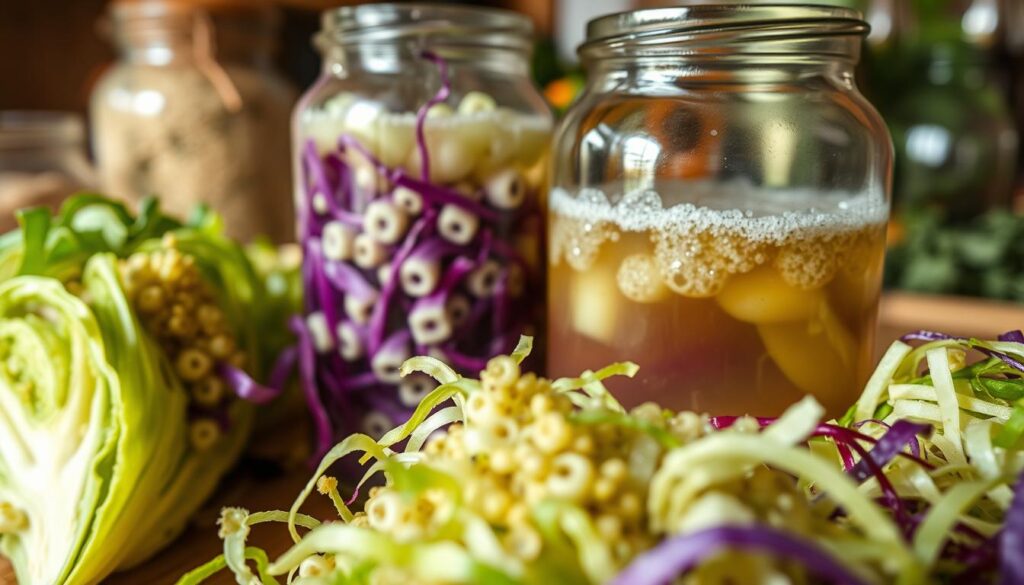
- Choose raw, refrigerated vegetable products (like cabbage kraut) to get live cultures.
| Product | Likely Live Cultures | Notes |
|---|---|---|
| Refrigerated sauerkraut | Yes | Raw, unpasteurized retains microbes |
| Shelf‑stable pickles | No | Often vinegar‑processed or heat‑treated |
| Kombucha (bottled) | Variable | Contains SCOBY cultures but sugar and methods vary |
For more guidance on practical choices and clinical context, see trusted summaries like what to tell patients and an explainer on how these items repopulate microbes: the science of probiotics.
Evidence-Backed Health Benefits of Fermented Foods
Clinical studies now show measurable advantages for regular intake of live-culture items. Daily patterns that include raw, refrigerated options have been linked to lower inflammation and better digestive comfort.
Small human trials offer the clearest early signals. A Cedars‑Sinai 10‑week trial found that a daily fermented pattern reduced 19 inflammatory proteins, including IL‑6. See the trial details in the Cedars‑Sinai 10‑week trial.
These pantry additions provide probiotics and postbiotics that help beneficial bacteria compete with less desirable organisms. They also interact with the gut barrier and immune cells, which may help stabilize the local environment.
Clinical reports and smaller human studies link raw, live‑culture sauerkraut with reduced irritable bowel syndrome symptoms in as little as six weeks. Fermentation also increases availability of certain nutrients, including B vitamins and vitamin K.
- Lower inflammation: measurable drops in inflammatory proteins in controlled studies.
- Microbiome support: probiotics and postbiotics that reinforce the barrier and immune signaling.
- Improved digestion: partial breakdown of complex carbs can ease tolerance for some people.
- Extra nutrients: increased B vitamins and vitamin K add nutritional value per serving.
“Regular, varied intake of live‑culture options appears to deliver the most consistent benefits over time.”
Not every product delivers the same impact, so rotate choices and pair them with fiber‑rich meals to feed and retain beneficial microbes. For broader context on diet trends and mechanisms, review a concise overview at this science roundup.
Top Fermented Foods Gut Health Choices
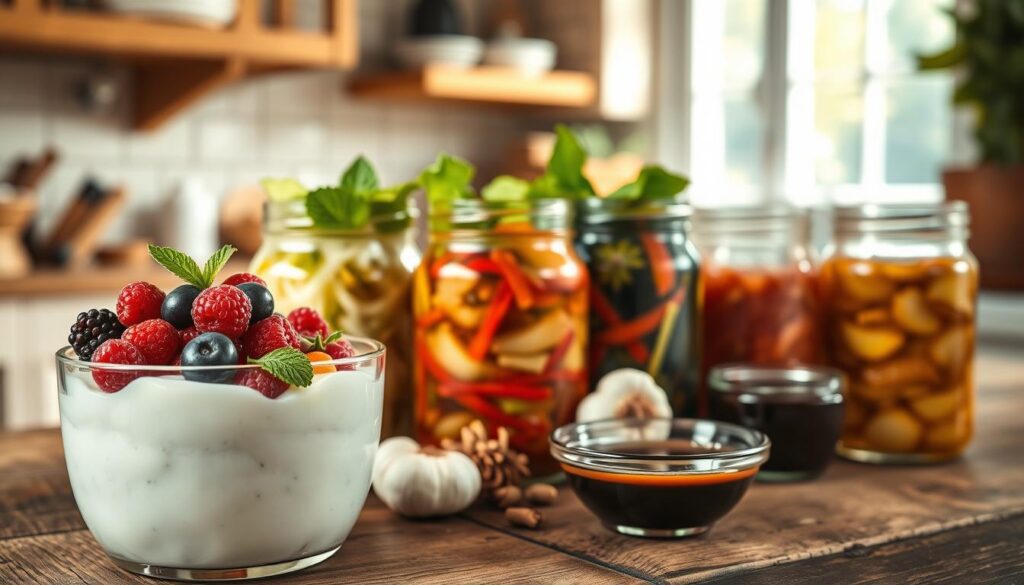
Choose simple, refrigerated options and small daily servings to get started. The items below provide diverse microbes, useful nutrients, and easy ways to add live culture support to meals.
Kefir
Kefir is a tangy, drinkable milk product with diverse bacteria and yeasts that may help blood sugar, inflammation, and digestion. Use plain, unsweetened kefir in smoothies or overnight oats. Start with 4–6 ounces daily and adjust to taste.
Yogurt
Yogurt labeled “live and active cultures” often contains Lactobacillus acidophilus and other strains tied to better heart markers, weight outcomes, and bone nutrients. Try Greek styles for added protein and pair with fruit or nuts.
Sauerkraut
Sauerkraut made from raw, refrigerated cabbage contains probiotics, fiber, vitamin C, and iron. Small portions (1–2 tbsp) work well on tacos or bowls and can ease IBS symptoms within weeks for some people.
Kimchi
Kimchi blends spicy vegetables and live bacteria that may help cholesterol and digestive comfort. Add a forkful to rice bowls or eggs just before serving to keep cultures active.
Miso
Miso is a savory soybean paste that may help blood sugar control and cardiometabolic markers. Whisk into warm soups at the end of cooking to protect delicate bacteria and nutrients.
| Item | Key benefits | Serving tips |
|---|---|---|
| Kefir | Diverse microbes; vitamins A, B, C, K; may help inflammation | Smoothies, overnight oats; 4–6 oz to start |
| Yogurt | Live cultures; protein; heart and bone support | Choose “live and active cultures”; pair with fruit or nuts |
| Sauerkraut | Probiotics; fiber; vitamin C | Raw, refrigerated cabbage; 1–2 tbsp on bowls or sandwiches |
| Kimchi | Vegetables with live bacteria; may improve cholesterol | Add cold to dishes before serving to preserve cultures |
| Miso | Soy-based; potential blood sugar and cardiometabolic benefits | Stir into warm (not boiling) broths or dressings |
How to Choose Fermented Foods That Actually Contain Live Cultures
Scan labels and storage first — that combination often tells you if a product still carries active cultures. Look for simple ingredient lists and refrigeration to improve your odds of getting live microbes that matter to your diet.
Knowing which items truly contain probiotics comes down to three checks: label language, cold storage, and ingredient simplicity.
- Scan for “live and active cultures,” “raw,” or “naturally fermented” on the label — this is the fastest way to see if a product likely contains probiotics.
- Prioritize refrigerated items such as raw sauerkraut and salt‑brined pickles; shelf‑stable jars are often heat‑treated and unlikely to contain live microbes.
- Check ingredient lists for short formulas and low added sugar, especially in kombucha (fermented tea) and drinkable yogurt.
- Remember that sourdough bread can support microbes indirectly but does not contain live cultures after baking.
“Fermentation alone doesn’t guarantee active cultures — manufacturing and storage do.”
When a package claims “probiotic,” look for strain names or CFU counts and build a shortlist of trusted brands for staples. For a curated list of reliable options, see these top fermented picks.
Simple Ways to Add Fermented Foods to Your Diet
A few simple swaps turn everyday plates into sources of probiotics and extra flavor.
Small, consistent servings often work better for digestion than occasional large portions. Start with modest amounts and build up to your comfort level so your system adapts.
Aim to add live-culture items after cooking so heat doesn’t kill the probiotics. For miso or soups, stir in at the end. For bowls and sandwiches, place toppings on just before serving.
- Blend plain kefir into morning smoothies or use it as a chilled sip with lunch; 4–6 ounces is a good start.
- Swirl yogurt into savory bowls or use it as a creamy dressing base instead of mayo.
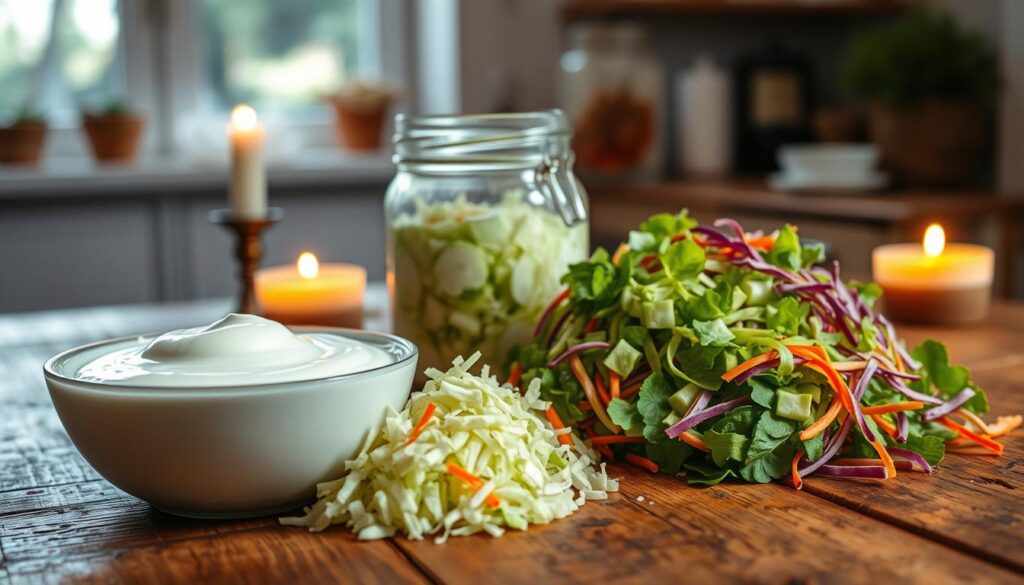
- Tuck a forkful of cabbage kraut into sandwiches, wraps, or grain bowls right before eating to keep crisp texture and probiotics.
- Treat kimchi as a spicy topper for eggs, rice, or tacos to add bold taste and a serving of live vegetables.
- Choose low-sugar kombucha (fermented tea) or plain kefir for a refreshing, small daily sip.
“Start with 1–2 tablespoons of kraut or kimchi, or 4–6 ounces of kefir, then increase slowly to reduce bloating.”
Pair these items with fiber-rich foods like oats, beans, and veggies to feed beneficial microbes and support digestion. Watch added sugars on flavored yogurts and kombucha; sweeten naturally with fruit or spice when needed.
Who Should Be Cautious When Eating Fermented Foods
If you have certain medical conditions or take specific medicines, adding live microbes can require caution and a quick check with your care team.
People who are immunocompromised, on immunosuppressive drugs, or who have a central venous line should discuss introducing live cultures with their clinician first. In these cases, microorganisms that are usually harmless could pose risks at certain levels.
Active flares of digestive conditions — including irritable bowel syndrome and small intestinal bacterial overgrowth (SIBO) — often mean you should start with tiny portions and monitor symptoms. Kombucha and other fermented sips can worsen reflux or IBS for some people; trial a few sips and track effects.
- Medication interactions: High sodium in miso or kimchi can affect blood pressure meds and fluid balance. Review labels if you manage these conditions.
- Histamine sensitivity: Aged products may trigger flushing, headaches, or hives in sensitive people.
- Lactose intolerance: Yogurt and kefir may be easier to tolerate because fermentation reduces lactose, but tolerance varies by person.
When in doubt, introduce one product at a time in small amounts and keep a short symptom log for a week. Reassess levels of tolerance periodically and align choices with any therapeutic diet your care team recommends.

| Risk group | Why to be cautious | Practical advice |
|---|---|---|
| Immunocompromised people | Possible infection risk from live microorganisms | Talk with clinician; avoid untested raw products |
| Those with active IBS or SIBO | Symptoms can worsen with certain fermentation byproducts | Start very small, track symptoms, skip kombucha if reactive |
| People on BP or fluid medicines | Sodium in some products can affect medication levels | Choose low-sodium options and read labels closely |
| Histamine-sensitive individuals | Aged items can trigger adverse reactions | Limit aged picks; test one product at a time |
For detailed guidance on who should avoid live-culture items, see this clinical overview on safety concerns and side effects at who should not eat fermented foods. If you suspect a reaction from a pre-workout or a drinkable product, a practical troubleshooting guide may help: quick fixes and tracking tips.
Conclusion
Consistent, modest portions of refrigerated, active-culture items can support digestion, strengthen the gut barrier, and help lower inflammatory markers over time.Choose products with live cultures, keep added sugar low, and add them after cooking to protect probiotics.
Rotate kefir, yogurt, sauerkraut, kimchi, and miso to expose your microbiome to different bacteria and metabolites. Start with a spoonful or a small cup and track how you feel week by week.
Remember, sourdough bread offers prebiotic benefits but will not contain probiotics after baking. Pair it with a live-culture side for a complete meal.
If you want a concise primer on practical choices, read this guide on fermented foods and the gut. When in doubt, consult your clinician or dietitian to align servings with your diet and needs.
FAQ
What are examples of foods that contain live cultures and help digestion?
Look for yogurt with “live and active cultures,” kefir, raw sauerkraut kept refrigerated, kimchi, miso, and certain unpasteurized pickles and kombucha. These items often contain lactic acid bacteria or yeast that can support digestion and nutrient absorption when consumed regularly.
How do lactic acid bacteria benefit the microbiome?
Lactic acid bacteria produce acids that lower intestinal pH, which can limit harmful microbes and support beneficial ones. They also help break down fibers and proteins, making nutrients easier to absorb and sometimes reducing bloating and discomfort after meals.
Are sourdough bread and aged cheeses good sources of live microbes?
Sourdough can contain fermentation by-products that make grains easier to digest, but many loaves are baked at temperatures that kill live microbes. Some aged cheeses retain cultures if labeled unpasteurized or raw-ripened. Always check packaging for live-culture claims.
Can these foods help people with irritable bowel syndrome (IBS)?
Some people with IBS report symptom improvement after adding cultured dairy like yogurt or kefir and fermented vegetables in small amounts. Responses vary—start with small portions and track symptoms. Consult a clinician or dietitian if you have moderate to severe IBS.
Do store-bought products always contain active cultures?
Not always. Pasteurization and heat processing kill live microbes. Choose items labeled with “live cultures,” “raw,” or “unpasteurized,” and prefer refrigerated versions rather than shelf-stable unless the label specifies active strains.
How much should I eat to see benefits?
There’s no single dose that fits everyone. Many studies show benefits from regular, modest servings—about a small cup of yogurt or kefir daily, or a few tablespoons of raw sauerkraut or kimchi at meals. Consistency matters more than large, infrequent portions.
Are there risks or side effects to be aware of?
Most people tolerate these foods well, but some experience gas or bloating when they start. People on immune-suppressing medications, with severe GI conditions, or with specific dietary restrictions should check with their healthcare provider before increasing intake.
Can I get similar benefits from supplements instead of food?
Probiotic supplements can help and allow targeted strains and doses, but whole foods also deliver fiber, vitamins, and fermentation metabolites that support overall digestion. Choose supplements backed by clinical research and reputable brands when needed.
How should I store and use these foods to protect live microbes?
Keep refrigerated when indicated, avoid heating them (add after cooking), and follow use-by dates. High heat, prolonged light, or long shelf time reduce viable cultures, so buy smaller amounts and consume fresh.
Will eating these items improve my heart health or blood sugar?
Some research links regular consumption of cultured dairy and certain vegetable ferments with modest improvements in cholesterol and blood-sugar markers. Benefits are typically part of a balanced diet and healthy lifestyle rather than a standalone cure.
What should I look for on labels to ensure quality?
Seek phrases like “live and active cultures,” strain names (Lactobacillus, Bifidobacterium, Saccharomyces), refrigeration instructions, and minimal added sugar or salt. Certification seals and transparent ingredient lists can also indicate higher-quality products.


Don’t Miss These Picks