


Ready to change how you shop so meals feel easier and your plate is more balanced? This short guide is your weekly playbook to shop smarter, save money, and make healthy eating automatic for you and your household.
Planning works: research shows shoppers who write a grocery list choose healthier foods, cut impulse buys, and reduce waste. Start by deciding meals, portion sizes, and backup options before you go.
Focus on whole foods: seasonal vegetables, quality proteins, 100% whole grains, and thoughtfully chosen dairy or alternatives. A registered dietitian recommends checking unit prices and scanning labels for added sugars and excess sodium.
Be intentional, not perfect. Rotate items by season and budget, pick multi-use staples like eggs, oats, and leafy greens, and build in a few favorite comfort foods so the plan sticks.
For a practical shopping framework and gut-focused categories, see this gut health grocery guide to translate nutrition science into action at the store.
Key Takeaways
- Write a short plan before shopping to reduce impulse buys and waste.
- Prioritize seasonal vegetables, quality proteins, and 100% whole grains.
- Check unit prices and nutrition facts for added sugar and sodium.
- Choose versatile, multi-use ingredients to simplify meals.
- Rotate items by season and review weekly to refine your approach.
Shop With Intention: How a Plan Makes Healthy Eating Easier
Planning meals ahead cuts impulse buys and makes balanced food choices the easy default.A short, repeatable plan saves time, reduces calories from extras, and helps you avoid products with hidden added sugar.
Planning meals ahead cuts impulse buys and makes balanced food choices the easy default. Start by mapping 3–5 core dinners and simple breakfasts so decisions happen before you walk into the store.
Quick check: scan your pantry, fridge, and freezer first. Rotate older items forward and fill genuine gaps so you don’t buy duplicates or let food go to waste.
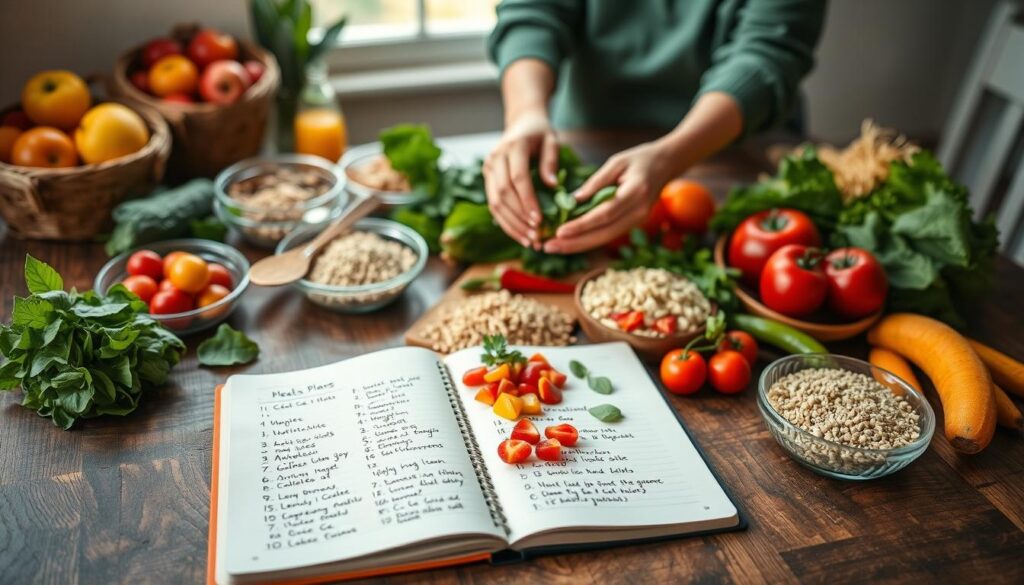
- Write a focused list by section (produce, proteins, grains, dairy, frozen). This reduces wandering and helps you skip products high in added sugar.
- Assign meals to nights — reserve low-prep options for busy evenings and batch-cook on weekends for easy weekday reheats.
- Compare unit prices on shelf tags to find true value, and buy staples in bulk only if you store them properly to prevent waste.
- Pre-commit to snacks: add fruit, yogurt, nuts, or veggie sticks so grab-and-go choices support your diet.
“A simple plan turns grocery trips from guesswork into a repeatable, healthy system.”
Make the plan visible — post it on the fridge or save it in a notes app so everyone knows what meal is next. For a fast, practical approach to shopping, see this healthy grocery shopping in 20 minutes.
Produce Power: Fruits, Vegetables, and Fresh Herbs to Prioritize
Choose a rainbow of produce so vitamins and flavor show up at every meal. Pick versatile fruits and vegetables that work across breakfasts, snacks, salads, and dinners.
Start with easy wins: stock apples, berries, citrus, avocados, mangoes, kiwis, peaches, and pears for simple snacks and breakfasts.
For vegetables, favor leafy greens and cruciferous picks—kale, spinach, broccoli, cauliflower—plus carrots, cucumbers, onions, sweet potatoes, and zucchini. These support fiber and vitamin needs and fit many recipes.
Fresh herbs boost taste without added sodium. Keep basil, cilantro, dill, parsley, rosemary, and thyme on hand to lift salads and roasted veggies.
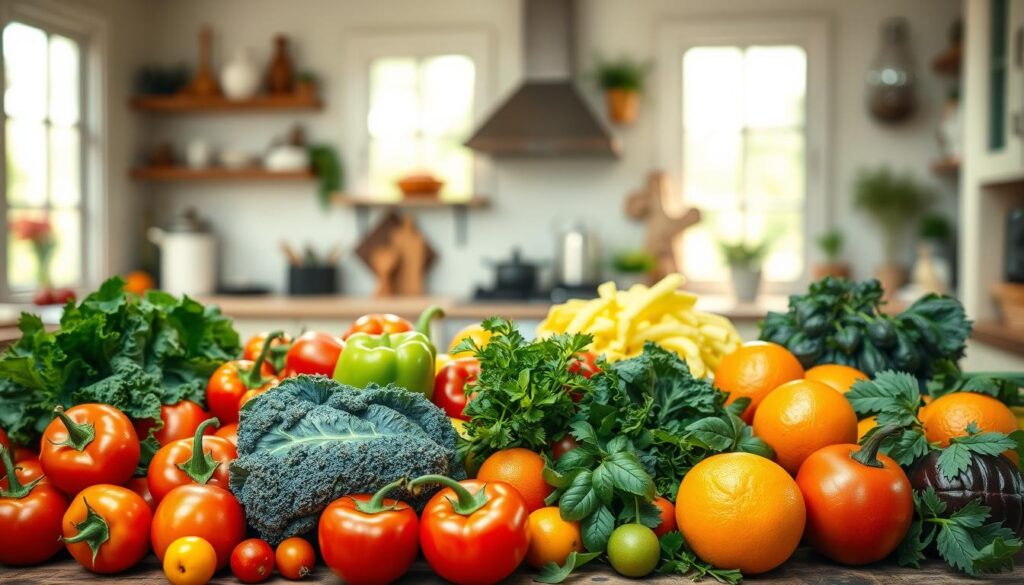
- Buy seasonal using the USDA seasonal guide; choose frozen berries or spinach off-season to cut waste.
- Prep once: wash greens, chop veggies, and wrap herbs in a damp towel to extend freshness.
- Make half your plate veggies at main meals; batch-roast sweet potatoes, carrots, and zucchini for easy dinners.
“A colorful mix of produce delivers more vitamins, fiber, and flavor with every bite.”
| Item | Use | Top Benefit | Storage Tip |
|---|---|---|---|
| Berries | Snacks, smoothies | Antioxidants | Freeze extras |
| Leafy greens | Salads, sautés | Vitamins A, K | Wash, spin dry |
| Cruciferous | Roast, soups | Fiber, phytochemicals | Store cold, use within week |
| Fresh herbs | Flavor boosters | Low-calorie nutrients | Wrap damp, refrigerate |
Protein Picks: Meat, Seafood, and Plant-Based Sources
Pick quality proteins that keep you full longer and make weeknight meals simple.Rotate poultry, fish, and plant proteins to cover key nutrients without extra effort.
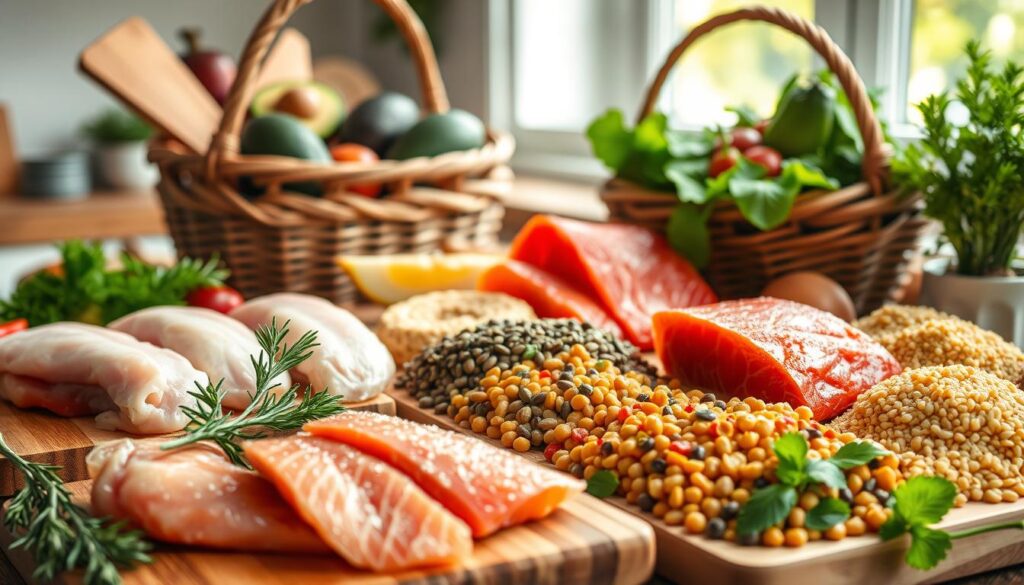
Center meals on reliable protein sources to support muscle, satiety, and steady energy. Choose lean ground chicken, turkey, or extra-lean beef and skinless chicken or turkey breast. Pork tenderloin is another lean meat option; trim visible fat and cook with a light brush of oil to keep calories in check.
Make seafood a weekly habit. Salmon and sardines supply omega-3s and vitamin D; sardines also add calcium. Trout, cod, shrimp, and clams offer lean protein and variety. Opt for low-mercury, responsibly sourced fish and rotate canned wild salmon or sardines for an affordable pantry source.
- Plant proteins: tofu, tempeh, edamame, beans, and lentils deliver fiber plus protein—scan labels for sodium and additives.
- Prep tips: pre-portion raw chicken or fish before freezing, and use sheet-pan bakes or broiling for fast, nutrient-preserving meals.
| Protein | Typical Use | Key Nutrients | Shopping Tip |
|---|---|---|---|
| Chicken breast | Grill, bake, stir-fry | Lean protein, B vitamins | Buy skinless, freeze portions |
| Salmon / Sardines | Roast, canned salads | Omega-3s, vitamin D, calcium | Choose wild or responsibly sourced |
| Tofu / Tempeh | Stir-fries, bowls | Plant protein, iron | Compare sodium on labels |
| Legumes | Soups, sides | Protein, fiber, minerals | Use low-sodium canned or dry |
For extra ideas on high-protein pantry staples and meal pairings, see this high-protein resource.
Dairy and Dairy Alternatives Done Right
Choose dairy and dairy-free picks that deliver clear nutrients and protein without hidden sugars. Small swaps—plain yogurt for flavored cups, or soy milk for lower-sugar plant protein—make meals cleaner and more satisfying.
Start with nutrient-dense staples: eggs, Greek yogurt or skyr, low-fat cottage cheese, and low-fat milk. Eggs are a quick, affordable protein and bring vitamins and minerals in a compact package.
Smart staples
Compare labels and buy plain varieties. Pick plain yogurt and add fruit or nuts yourself to control added sugar and calories. Larger tubs save money and cut packaging waste. Use cottage cheese or yogurt as a savory base for dips or a sweet topping with berries and cinnamon.
Plant-based alternatives
When you want more plant protein, reach for soy or pea milk—these usually match dairy for protein. Choose unsweetened non-dairy yogurts and scan for added sugar; aim for 8 grams or less per serving.
- Keep eggs handy for fast scrambles, frittatas, and dinners.
- Use fortified soy/pea milk if lactose is an issue or you want higher plant protein.
- Avoid flavored dairy that hides added sugar—plain plus fruit or a handful of nuts is smarter.
| Item | Protein (per serving) | Typical Calories | Watch for |
|---|---|---|---|
| Greek yogurt / Skyr | 15–20 g | 100–150 | Added sugar in flavored cups |
| Cottage cheese (low-fat) | 12–15 g | 80–120 | Sodium in some brands |
| Soy / Pea milk (unsweetened) | 7–10 g | 70–120 | Added sugars, fortification |
| Eggs (large) | 6 g | 70 | Balance with veggies and whole grains |
For lactose-free shopping ideas and more dairy-free options, see the dairy-free shopping options.
“Aim for variety: dairy supports nutrition, but no single food covers every need.”
Whole Grains and Breads for Steady Energy
Choose whole grains that keep you full, add fiber, and supply steady energy across the day. These staples turn simple meals into nutrient-dense plates without much extra work.
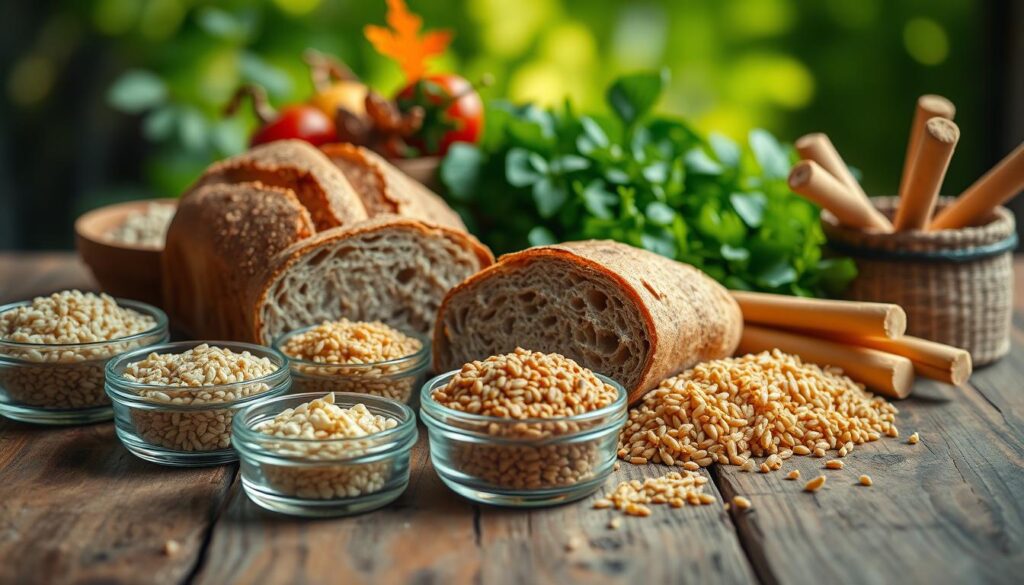
Pantry picks: stock oats, quinoa, brown rice, farro, wild rice, barley or millet. Buy from bulk bins when you can to cut costs and fill airtight containers for freshness.
Label cues matter: look for “100% whole grain,” “100% whole wheat,” or “100% sprouted grain” on breads. For cereals and granola, aim for at least 2 g of protein and 2 g of fiber per serving and under 10 g added sugar.
- Rotate pasta types: whole wheat for fiber or legume pasta for extra protein; pair with olive oil, vegetables, and lean protein.
- Batch-cook grains: make brown rice or quinoa on Sunday and reheat with a splash of milk or broth for quick bowls and recipes.
- Flavor tip: toast grains briefly in a little oil before simmering to boost aroma and texture.
For diet-friendly bread options, see this best whole-grain breads guide. For broader pantry planning and nutrient-dense choices, check this nutrient-dense shopping guide.
Canned and Dry Goods to Round Out Your Meals
Stocking smart canned and dry staples turns rushed dinners into nourishing meals in minutes. These pantry items give reliable protein, fiber, and flavor when fresh options are low or you need a fast dinner.
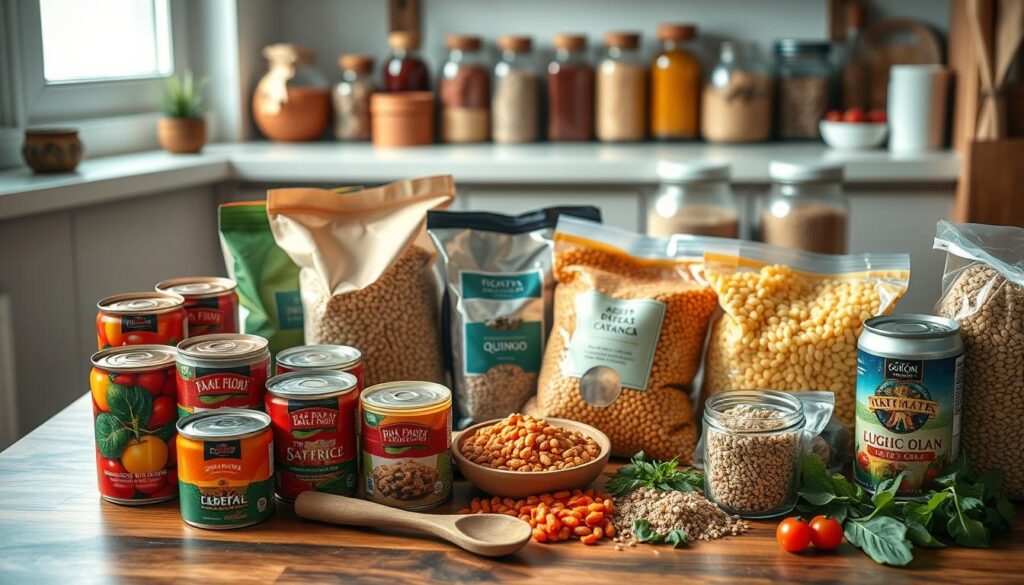
Start with versatile basics: beans, lentils, canned tomatoes, and water-packed fish form quick meal building blocks. Dry beans cost less and freeze well after cooking, so cook a batch on the weekend.
- Beans: pick low-sodium or no-salt-added varieties. If using regular cans, drain and rinse to cut excess salt.
- Canned fish: choose water-packed tuna, wild salmon, or sardines for a ready omega-3 source that fits salads and bowls.
- Produce in cans: buy no-salt-added tomatoes and plain pumpkin; choose fruit packed in water, not syrup to avoid added sugar.
- Nuts and seeds: select raw or lightly salted almonds, walnuts, chia, flax, and hemp. Store them in the fridge or freezer to protect the fats.
- Ingredients: prefer minimal-ingredient nut butters (nut ± salt) and compare unit price on cans and bags for value.
“A simple, well-chosen pantry lets you build balanced foods fast and reduces impulse buys.”
For more on balancing acidic and alkaline foods and how pantry choices fit your meals, see this alkaline vs acidic chart.
Fats, Oils, and Condiments that Support a Holistic Diet
Small swaps in oils and condiments deliver big wins for heart health and flavor. Use oils that match cooking temperature and keep condiments focused on real ingredients. This helps meals taste better while supplying key nutrients.

Go-to oil choices: Make extra-virgin olive oil your daily base for dressings and low-heat cooking. It supplies heart-healthy monounsaturated fats and antioxidants. Use avocado oil when you need higher-heat sautéing or roasting.
- Use coconut oil sparingly: it offers MCTs but raises LDL more than other plant oils, so reserve it for occasional flavor.
- Build a low-calorie flavor kit: apple cider, balsamic, and red wine vinegars brighten foods with minimal calories.
- Read labels: many store-bought sauces hide sugar and excess salt; choose minimal-ingredient versions or make dressings at home.
- Boost texture and nutrients: add crushed nuts or seeds to dressings and salads for extra protein and healthy fats.
Practical tip: measure oil by tablespoon to control calories and keep your diet balanced. Rotate condiments seasonally—fresh salsas in summer, warm spice blends in winter—to keep meals interesting without relying on heavy sauces.
Frozen Aisle Wins for Convenience Without Compromise
Turn to the freezer for quick, nutrient-dense options that keep your weekly meal rhythm steady. Plain frozen fruits and vegetables often match fresh for vitamins and fiber while slashing waste and prep time.
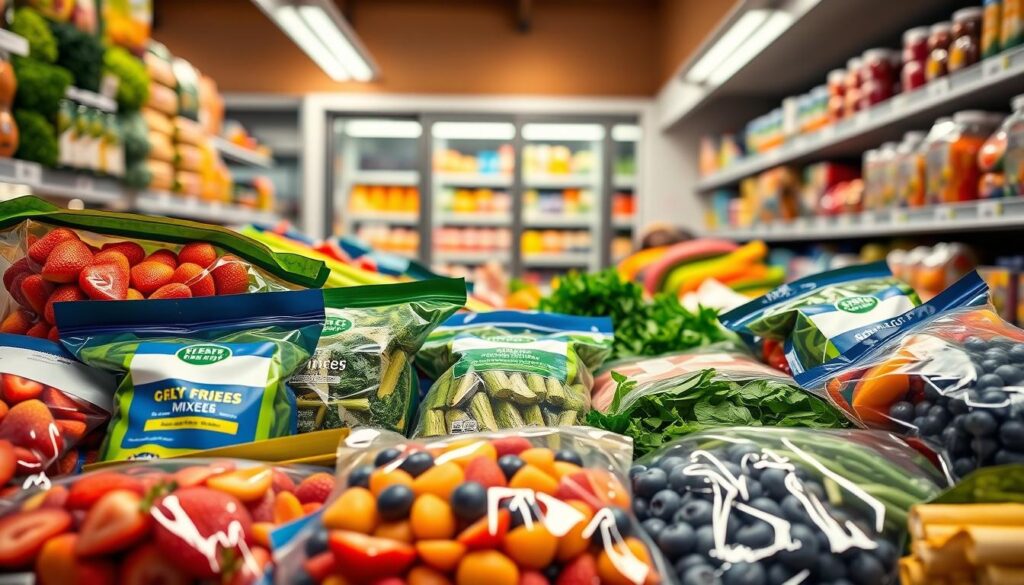
Keep the frozen aisle as your healthy back-up when life gets busy. Choose plain frozen vegetables and fruits with no sauces or syrups. They work well in smoothies, soups, stir-fries, and sheet-pan bakes.
- Frozen grains: stock brown rice and quinoa for fast sides and bowls that save 20–40 minutes of cook time.
- Portion proteins: buy family packs of chicken or fish, divide into portions, and freeze to extend shelf life and cut waste.
- Read labels: many frozen meals contain added sugar, excess salt, or unhealthy fats—pick options with short ingredient lists and balanced macros.
- Keep steam-in-bag vegetables for truly no-excuses sides that pair well with a lean protein and a grain for a complete meal.
Quick shopping rule: treat frozen foods as intentional staples, not junk replacements. Use them to fill gaps on your grocery list and to make consistent, balanced meals at home.
For practical meal templates that use frozen produce and proteins, see a science-backed eating plan that adapts well to freezer-friendly cooking.
Holistic Grocery List: What to Buy and What to Avoid
Pack your cart with foods that fuel real life—simple, nutrient-dense, and versatile. These choices keep meals balanced and make smart swaps easy to repeat each week.
Buy these whole foods
Vegetables, fruits, whole grains, beans, nuts, and seeds form the base. Add plain yogurt, salmon, and chicken for protein and variety.
Choose these fats
Olive oil and avocado should be the daily cooking oils. Use nuts and seeds for texture and micronutrients. Keep coconut oil occasional because it raises LDL if overused.
Skip or limit
Avoid products with high added sugar, highly processed meats, refined grains, and high-sodium canned soups. These patterns reduce nutrition and make meal planning harder.
Smart swaps
Swap brown rice for white, Greek yogurt for sweetened cups, and olive oil for refined seed oils in dressings and cooking. Rotate fish, chicken, and plant proteins to widen nutrient sources.
- Half-plate rule: fill half with vegetables, then add protein and whole grains.
- Stock basics: oats, canned tomatoes, beans, olive oil, and milk alternatives for consistency.
- Flavor boosters: herbs, spices, and vinegars keep foods exciting without extra sugar.
Want meal-focused supplements or specific macros? Check this supercharge your curves resource for targeted support.
“Choose progress over perfection: upgrade one item on your cart each week.”
Budget-Friendly, Label-Savvy Shopping for the United States
Plan meals, check unit prices, and rotate stock to save money and reduce waste. Do a quick inventory, decide how many meals you’ll cook, and build a lean grocery list around what you already have.
Plan meals, check unit prices, and shop store brands and specials
Start with a realistic plan: map how many dinners and lunches you’ll cook at home, then craft a lean list that fits your week. Do a quick inventory first so recipes revolve around what’s on hand.
Compare unit prices on shelf tags for grains, beans, canned goods, and rice. Store brands often match quality at lower cost. Buy brown rice, oats, and other whole grains in bulk if you use them weekly, and decant into airtight containers.
Rotate pantry and freezer stock to reduce waste and impulse calories
Move older items forward and plan one “use-it-up” meal each week. For protein on a budget, dry beans and canned fish are reliable sources of nutrients at a fraction of fresh meat cost.
- Buy what you will finish: choose milk and dairy options sized to your household to avoid spoilage.
- Stretch produce: shop seasonal specials and use frozen vegetables for cost and vitamin retention.
- Batch-cook: soups, chilis, and grain bowls freeze well and save time and money.
- Read labels fast: favor short ingredient lists, higher fiber and protein, and lower added sugars and saturated fats.
- Keep one running household list to avoid duplicates and impulse buys at checkout.
“A small plan plus smart rotation turns routine shopping into a budget-friendly, health-forward system.”
Conclusion
Keep your kitchen stocked with whole foods and simple staples so healthy eating feels automatic. Small habits—batch-cooking grains, prepping produce, and rotating proteins—save time and improve nutrition.
A focused list makes balanced meals manageable: prioritize vegetables, fruits, fish, chicken, beans, nuts, seeds, yogurt, milk, and whole grains. Use olive oil as your daily fat and reserve coconut for flavor, not routine use.
Keep beans, brown rice, oats, canned tomatoes, and frozen produce on hand so a quick, nourishing meal is always within reach. For more on benefits of whole foods, see benefits of whole foods, and for context on alkaline diet ideas, read this alkaline diet research.
FAQ
What core foods should I keep on hand to support balanced meals?
Keep a rotation of fresh vegetables and fruits (leafy greens, cruciferous veggies, apples, berries, citrus, avocados), whole grains (brown rice, quinoa, oats), lean proteins (skinless chicken breast, salmon, tofu, beans, lentils), dairy or alternatives (Greek yogurt, cottage cheese, unsweetened soy or pea milk), and healthy fats (extra-virgin olive oil, avocado, nuts and seeds). These staples cover protein, fiber, healthy fats, vitamins, and minerals so you can build nutrient-dense meals quickly.
How can I shop to make healthy eating easier during a busy week?
Shop with an intention-driven plan: map meals for the week, make a targeted shopping list by category, batch-cook grains and proteins, and use frozen vegetables and portioned proteins for speed. Checking unit prices, buying store brands when sensible, and rotating pantry and freezer items reduce waste and keep costs down while maintaining nutrition.
Which fruits and vegetables are most versatile and nutrient-dense?
Prioritize leafy greens (spinach, kale), cruciferous vegetables (broccoli, cauliflower), sweet potatoes, carrots, and versatile fruits like berries, apples, citrus, and avocados. These choices deliver fiber, vitamin C, potassium, and phytonutrients, and they work across salads, bowls, smoothies, and roasted dishes.
Are frozen fruits and vegetables as nutritious as fresh?
Yes. Frozen produce is typically flash-frozen at peak ripeness, preserving vitamins and minerals. Use frozen berries in smoothies or frozen vegetables for quick side dishes to cut waste and save money without sacrificing nutrition.
How do I choose seafood and limit mercury exposure?
Opt for lower-mercury options like salmon, sardines, trout, and cod. Look for responsibly sourced labels (e.g., MSC certification) and vary choices across the week. Pregnant people and young children should follow FDA and EPA guidance on portion limits for higher-mercury species.
What plant-based proteins should I include and what should I watch for?
Include tofu, tempeh, edamame, beans, lentils, and chickpeas. Check packaged plant proteins for added sodium, sugars, or long ingredient lists. Cooking dry beans and lentils from scratch reduces sodium and cost while improving texture and flavor.
Which dairy alternatives are best if I want more protein?
Choose fortified soy or pea protein milks for higher protein content compared with most nut milks. Unsweetened non-dairy yogurts made from soy or pea protein also offer more protein; always compare labels for added sugar and calcium/vitamin D fortification.
What whole-grain cues should I look for on labels?
Look for “100% whole grain” or “whole wheat” listed first in the ingredient list. Aim for higher fiber (3+ grams per serving) and meaningful protein in bread and cereal. Avoid products where refined flour or added sugars appear near the top of the ingredient list.
Which canned and dry goods are worth stocking for meal flexibility?
Stock low-sodium canned beans, canned wild salmon or tuna in water, no-salt-added tomatoes, lentils, and whole-grain pasta or legume pasta. Nuts, seeds, and minimally processed nut butters provide quick fats and proteins. These items extend meal options and simplify cooking.
What fats and oils should I prioritize and which should I limit?
Prioritize extra-virgin olive oil for everyday use and avocado oil for high-heat cooking. Use nuts, seeds, and avocado as whole-food fat sources. Limit excessive coconut oil and highly processed seed oils; also watch condiments for added sugar and sodium.
How can I keep sodium and added sugar in check while shopping?
Compare Nutrition Facts panels and choose low-sodium or no-salt-added versions of canned goods, broths, and condiments. For sweet products, pick unsweetened or low-sugar options, and swap sweetened yogurt for plain Greek yogurt, adding fresh fruit for sweetness.
What are smart frozen-aisle picks for quick meals without compromising nutrition?
Choose plain frozen fruits and vegetables, frozen brown rice or quinoa, and individually portioned frozen proteins like chicken breasts or fish fillets. Scan ready meals for sodium, saturated fat, and sugar, and prefer simple ingredient lists when possible.
Which surprising items help stretch a healthy food budget?
Dry beans and lentils, bulk whole grains (oats, brown rice, quinoa), frozen produce, store-brand canned tomatoes, and whole chickens can lower per-serving costs. Planning, buying on sale, and rotating pantry staples reduce waste and keep meals affordable.
What should I avoid or limit when building a shopping list for better health?
Limit highly processed foods, refined grains, sugary drinks and snacks, added-sugar cereals, and processed meats high in sodium and nitrates. Focus on whole foods—vegetables, fruits, whole grains, beans, lean proteins, nuts, and seeds—to support long-term health.


Don’t Miss These Picks