


Fermented foods and probiotic supplements can influence the gut environment, but they do not simply “repopulate” your microbiome with permanent new residents. Many microorganisms you consume are temporary visitors. Whether they survive digestion, interact with resident microbes, change microbial activity, or produce a measurable health effect depends on the food, strain, formulation, dose, individual, and outcome being studied.
This distinction matters because finding an ingested microbe in the gut is not the same as proving lasting colonization or a health benefit. For everyday gut support, a varied diet can often play the bigger role. Probiotic supplements become more useful as a decision tool when there is a specific reason for taking one and evidence exists for the particular strain or formulation.
Key Takeaways
- Fermented foods, foods with live cultures, and scientifically defined probiotics are not the same thing.
- Many consumed microbes are transient; permanent colonization should not be assumed.
- A probiotic’s effects depend on the strain, formulation, dose, population, and health outcome studied.
- Higher CFU counts and more strains do not automatically mean a better supplement.
- For general gut support, diet quality and varied fiber-rich foods remain more broadly useful than routine supplementation.
- People who are seriously ill, immunocompromised, or otherwise medically vulnerable should be more cautious with probiotic supplements.
Helpful Products at a Glance
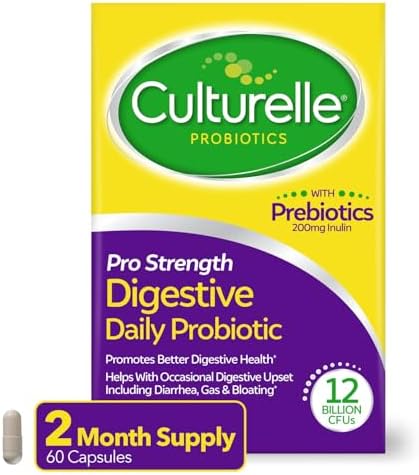
Named-strain probiotic example — LGG: This product is included as an example of clearer probiotic labeling, not as a universal solution for digestive symptoms or microbiome health.
- PROBIOTIC FOR DIGESTIVE HEALTH: Culturelle probiotics are naturally sourced with scientifically proven ingredients to keep your digestive system in balance; helps reduce occasional gas, bloating and diarrhea.* For daily use, take 1 capsule per day
- PROVEN EFFECTIVE STRAIN: Culturelle Pro Strength Daily Probiotics for Men & Women are formulated with the clinically studied probiotic strain, Lactobacillus rhamnosus GG which has also been demonstrated to survive harsh stomach acids to get the probiotics where they’re needed in the intestines
Probiotics, Fermented Foods, and the Microbiome: Three Different Things
The human gut microbiome is the community of microorganisms already living in the digestive tract. These resident microbes interact with food, the intestinal lining, and one another. Their composition differs substantially between healthy people, so there is no single ideal microbial profile that everyone should try to copy.
A probiotic has a more specific meaning than simply “a live microbe.” An international probiotic consensus defines probiotics as live microorganisms that, when administered in adequate amounts, confer a health benefit on the host. That means the organism needs to be adequately identified and the claimed benefit needs appropriate evidence.
Fermented foods are foods made through controlled microbial growth and enzymatic activity. Some contain live microorganisms when eaten, while others do not because heating, filtering, processing, or storage has reduced or removed them. Even when a food contains live cultures, those microbes are not automatically probiotics. The consensus definition of fermented foods makes this distinction especially important.

Do Probiotics Actually Repopulate Your Gut?
“Repopulate” sounds as though probiotic organisms move into the intestine and permanently become part of the resident community. Human research suggests the reality is more complicated.
A human probiotic colonization study found that responses to an 11-strain probiotic preparation varied between individuals, strains, and parts of the gastrointestinal tract. Some ingested organisms were detectable, but persistent colonization was not universal. The study does not prove that no probiotic can ever persist; it shows why permanent residence should not be assumed.
It helps to separate several possible outcomes instead of treating them as one process.
| What may happen | What it means | What it does not prove |
|---|---|---|
| Survival through digestion | Some organisms remain viable long enough to pass through the GI tract. | That they permanently colonize the gut. |
| Temporary detection | An ingested organism can be measured for a period of time. | That it becomes a lasting resident. |
| Microbiome composition change | Relative abundance or diversity may shift during an intervention. | That the change is permanent or beneficial. |
| Functional or metabolic change | Microbial activity or metabolites may change. | That symptoms or disease outcomes improve. |
| Clinical outcome | A study finds a measurable health effect in a defined population. | That every probiotic or fermented food produces the same effect. |
| Persistent colonization | An organism remains detectable beyond short-term consumption. | That lasting colonization is required for benefit. |
This is why a probiotic can potentially have an effect while it passes through the gut without becoming a permanent member of the microbiome.
What Fermented Foods May Change
Fermented foods can add microbial exposure while also contributing ordinary food components such as protein, carbohydrates, vitamins, minerals, and bioactive compounds. Their effects therefore cannot always be reduced to the microorganisms alone.
In a 2021 fermented-food diet intervention, healthy adults assigned to a diet high in fermented foods increased their intake over several weeks. Researchers observed increased microbiota diversity along with changes in inflammatory markers during the intervention. This was a sustained dietary pattern, not a single serving, and it does not show that fermented foods permanently repopulated the gut.
Food type also matters. Yogurt with live cultures, kefir, kimchi, sauerkraut, miso, and kombucha can differ greatly in processing, microbial composition, storage, and whether viable organisms remain at the time of consumption. A fermented food can still be nutritious even if it does not meet the scientific definition of a probiotic.

How Gut Microbes Affect Digestion and Metabolism
Some of the most important gut-microbiome functions come from microorganisms that already live in the intestine rather than from probiotic supplements.
For example, certain dietary fibers pass through the small intestine and reach the colon, where resident microbes ferment them. This process can produce short-chain fatty acids such as acetate, propionate, and butyrate. These metabolites participate in normal intestinal physiology and provide an important link between diet and microbial activity.
That does not mean every probiotic supplement directly increases short-chain fatty acids or produces the same metabolic effect. Likewise, broad claims that probiotics improve protein absorption, increase amino-acid availability, or reduce fat absorption go beyond the evidence used for this article.
What Human Research Shows for Specific Uses
Probiotic evidence makes the most sense when it is discussed by condition, strain or formulation, population, and outcome. “Do probiotics work?” is usually too broad a question.
Irritable bowel syndrome
Research on IBS has produced mixed results across many different products and study designs. The American College of Gastroenterology IBS guideline suggests against probiotics for treatment of global IBS symptoms because the evidence is very low quality and highly heterogeneous. This does not prove that every individual strain is ineffective, but it does mean routine probiotic treatment cannot be broadly recommended from the available evidence.
Ulcerative colitis and Crohn’s disease
These conditions should not be grouped together under a general “probiotics help IBD” claim. The AGA probiotic guideline treats the evidence as condition- and formulation-specific and recommends probiotic use for Crohn’s disease and ulcerative colitis only in clinical-trial contexts rather than as routine self-directed therapy.
Pouchitis
Pouchitis is another specialized situation. AGA pouchitis guidance distinguishes prevention, active episodes, and recurrent pouchitis rather than giving one blanket recommendation for probiotics.
Antibiotic-associated diarrhea
Some probiotic regimens have reduced antibiotic-associated diarrhea in selected studies and populations, but the result depends on the organism, formulation, dose, baseline risk, and study design. That evidence should not be translated into “all probiotics prevent diarrhea.” It also does not establish a universal rule that everyone taking antibiotics should use a probiotic.
Fermented Foods vs. Probiotic Supplements
| Feature | Fermented foods | Probiotic supplements |
|---|---|---|
| Main role | Part of the diet and food pattern | More targeted delivery of defined organisms |
| Microbe information | May be variable or incomplete | Can provide genus, species, and strain details |
| Amount | Often not standardized as a probiotic dose | Usually states a CFU amount |
| Other nutrition | Can provide protein, vitamins, minerals, or other food components | Usually limited compared with whole foods |
| Clinical interpretation | Evidence often relates to the food or dietary pattern | Evidence should match the specific strain or formulation |
When food-first makes sense
If the goal is general dietary support rather than treatment of a defined condition, fermented foods can simply be part of a varied eating pattern when they are enjoyed and well tolerated. You do not need to treat every serving as a microbiome intervention.
When a targeted supplement may make sense
A supplement becomes a more rational option when you have a specific reason for considering one and can identify evidence for the strain or formulation involved. The label should help you determine exactly what organism you are buying rather than relying on vague terms such as “microbiome support.”
How to Read a Probiotic Supplement Label
The NIH Office of Dietary Supplements probiotic guidance emphasizes that benefits depend more on the specific microorganism and studied dose than on chasing the largest CFU number.
- Look beyond the genus: “Lactobacillus” or “Bifidobacterium” alone may not be specific enough. Species and strain information can matter.
- Check the CFU statement: A higher number is not automatically better. Look for an amount relevant to the product and, when available, information about viability through the end of shelf life.
- Check storage directions: Some products require refrigeration; others are designed for room-temperature storage.
- Check the expiration or use-by date: Live-organism counts can decline over time.
- Match evidence to the goal: Evidence for one strain and one outcome does not automatically transfer to another product or condition.
- Read claims critically: A structure/function statement on a supplement label is not the same as FDA approval that the product treats a disease.
FDA guidance explains that dietary supplements operate under a specific U.S. regulatory framework. Manufacturers are responsible for meeting applicable requirements, and structure/function claims are different from approved disease-treatment claims.
A Real-World Example of a Clearly Identified Probiotic Strain
Culturelle Pro Strength is useful here as a label-reading example because the current listing identifies Lactobacillus rhamnosus GG, commonly called LGG, rather than relying only on a generic “probiotic blend” description. The listing states 12 billion CFU, includes inulin, and provides specific storage directions.
The listing also states that refrigeration is not required and advises storing the product in a cool, dry place away from sunlight. Those details make it easier for a buyer to understand what organism is being supplied and how the product should be handled.
There is still an important limitation. The inspected Amazon listing did not clearly establish that the stated 12-billion-CFU amount is guaranteed specifically through the expiration date. That matters because viable counts can decline over time. A clear strain name and CFU number are useful pieces of information, but neither one establishes that the product will provide a particular clinical benefit for every reader.
LGG has been widely studied, but evidence involving that strain must still be interpreted by indication, population, dose, and formulation. The product should therefore be viewed as an example of relatively transparent labeling, not as proof that it treats IBS, prevents antibiotic-associated diarrhea, boosts immunity, or permanently changes the microbiome.
- PROBIOTIC FOR DIGESTIVE HEALTH: Culturelle probiotics are naturally sourced with scientifically proven ingredients to keep your digestive system in balance; helps reduce occasional gas, bloating and diarrhea.* For daily use, take 1 capsule per day
- PROVEN EFFECTIVE STRAIN: Culturelle Pro Strength Daily Probiotics for Men & Women are formulated with the clinically studied probiotic strain, Lactobacillus rhamnosus GG which has also been demonstrated to survive harsh stomach acids to get the probiotics where they’re needed in the intestines
- PROBIOTIC POWER: Culturelle Pro Strength is formulated with 12 billion CFUs (colony-forming units) of the most clinically studied probiotic, proven to provide digestive & immune support, plus the prebiotic inulin*
- SAFE & BACKED BY RESEARCH: Over 1,000 scientific studies and 30 years of research have demonstrated the safety and efficacy of Lactobacillus rhamnosus GG probiotic; Culturelle Pro Strength is vegetarian and contains no gluten, milk, soy or preservatives
Safety, Antibiotics, and Who Should Ask a Clinician First
For generally healthy people, probiotics have a long history of apparently safe use, although detailed long-term safety data are not complete. NCCIH probiotic safety guidance notes that the risk of harmful effects can be higher in people with severe illnesses or compromised immune systems. Serious infections have also been reported in vulnerable populations such as premature infants.
If you are seriously ill, immunocompromised, or managing a complex gastrointestinal condition, probiotic supplementation deserves more individualized guidance than a general wellness article can provide.
During antibiotic treatment, evidence is specific to particular organisms and clinical circumstances. There is no single well-supported rule that every probiotic should be taken a fixed number of hours away from every antibiotic. Follow the directions for the specific product and any instructions from the clinician managing the antibiotic treatment.
Practical Ways to Support Your Gut Microbiome
For most people interested in general gut health, the most useful habits are less complicated than trying to engineer a particular bacterial profile.
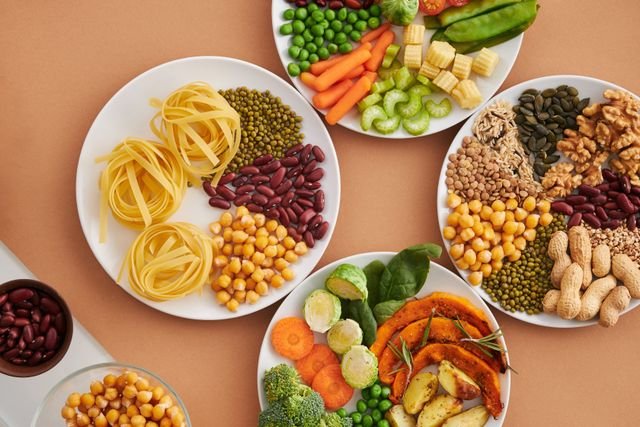
- Eat a varied selection of plant foods and fiber sources that you tolerate, such as beans, whole grains, fruits, vegetables, nuts, and seeds.
- Include fermented foods if you enjoy them and they fit your diet, without assuming every fermented food is a probiotic.
- Use antibiotics when medically appropriate rather than treating probiotic supplements as a way to cancel out unnecessary antibiotic exposure.
- Choose supplements for a defined purpose rather than because a label promises to “balance” or “reset” the microbiome.
- When buying a probiotic, prioritize strain information, appropriate viability information, storage instructions, and evidence relevant to your intended use.
Bottom Line
Probiotics and fermented foods can affect the gut, but “repopulating the microbiome” is too simple a description. Consumed microorganisms may survive digestion, appear temporarily in the gut, alter microbial activity, or influence a measurable outcome without becoming permanent residents.
For general gut support, a varied diet remains the more broadly useful foundation. A probiotic supplement is better treated as a targeted tool: identify the strain, understand the dose and storage information, and ask whether evidence exists for the specific reason you want to take it. More CFUs, more strains, and stronger marketing claims are not substitutes for that evidence.
FAQ
Do probiotics permanently colonize the gut?
Not necessarily. Some probiotic organisms can survive passage through the digestive tract, but persistence varies by strain and person. Temporary presence can still produce biological effects, so permanent colonization is not required for every potential benefit.
Are all fermented foods probiotics?
No. A fermented food is produced through microbial activity, but it may or may not contain live microorganisms when eaten. Even when live cultures are present, the food is not automatically a probiotic unless the microorganisms are appropriately characterized and supported by evidence of a health benefit.
Is a higher CFU count better?
No. According to NIH guidance, higher CFU numbers do not automatically make a product more effective. The relevant strain, dose, formulation, intended use, and viability over shelf life matter more than simply choosing the largest number on the label.
Do all probiotics need refrigeration?
No. Storage requirements are product-specific. Some require refrigeration, while others are designed to remain stable under specified room-temperature conditions. Follow the label rather than applying one storage rule to every probiotic.
Can probiotics be taken during antibiotics?
Some specific probiotic regimens have been studied during antibiotic treatment, but the evidence does not support one universal product or timing rule for everyone. The organism, formulation, antibiotic, population, and reason for use all matter.
Who should be especially cautious with probiotic supplements?
People who are severely ill, immunocompromised, or otherwise medically vulnerable should be more cautious because rare serious infections have been reported in high-risk populations. For these situations, probiotic use is better discussed with the clinician managing the underlying condition.




Don’t Miss These Picks