


Can three simple moves really ease a tight back, calm your mind, and help you fall asleep faster? Many assume long routines or complex drills are required, but experts say short, targeted work done 30–60 minutes before lying down is more effective.
Simple static holds reduce muscle tension and improve blood flow, easing common night spasms in the neck, calves, hamstrings, and quads, according to HSS clinicians. This guide gives three expert-backed moves that relax the whole body without adding complexity.
You’ll get clear cues on what to feel and what not to force, plus quick form notes and gentle breathing tips. Consistency matters more than intensity: a brief routine each night beats long, rare sessions.
Ready to try a focused short routine that targets your back, hips, and shoulders? Start with the three-move plan below, or preview a related quick routine here.
Key Takeaways
- Three moves, done 30–60 minutes before sleep, calm the body without overdoing it.
- Gentle static holds lower tension and boost blood flow for recovery.
- Focus on the back, hips, and shoulders to cut night wake-ups.
- Short, nightly routines beat long, infrequent sessions.
- Clear form cues and light breathing make each stretch safer and more effective.
Why a simple pre-sleep stretch routine helps you fall asleep and stay asleep
Gentle movement before bed signals the nervous system to downshift, lowering heart rate and easing muscle tension. A short, static routine also reduces mental stress and redirects attention to breath and body, which supports better sleep quality.
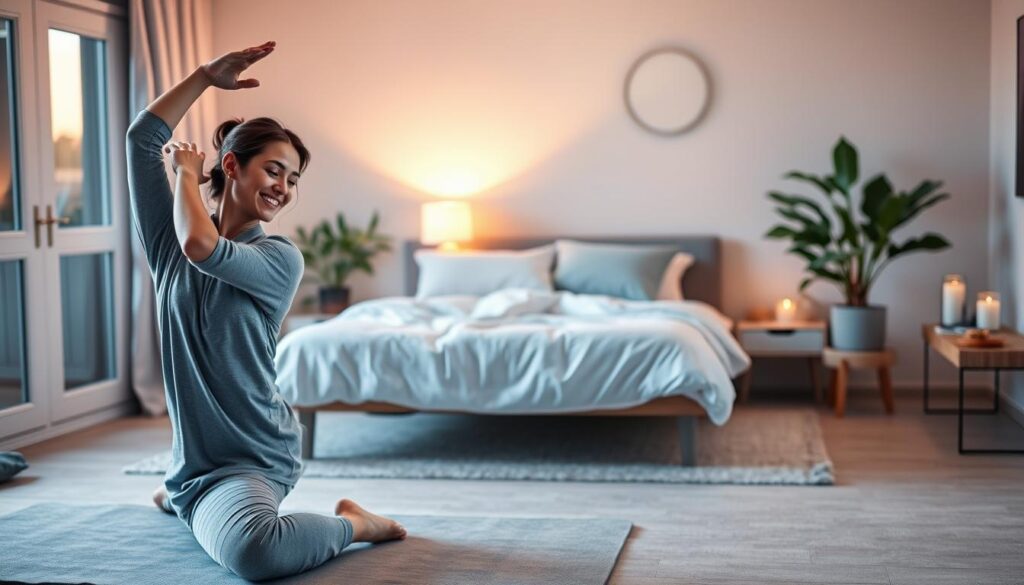
How gentle stretching lowers muscle tension and heart rate for better sleep quality
Gentle holds increase blood flow to tight areas and reduce muscle tension that keeps the body “on” at night. HSS clinicians Anna K. Ribaudo and Sheena Alva note this helps many people fall asleep faster.
When to stretch at night: the ideal 30–60 minutes pre-bed wind-down window
Do your routine 30–60 minutes before you plan to lie down. That window fits a wind-down period and makes consistency easier.
- Keep intensity low: avoid vigorous moves that raise heart rate and internal heat.
- Breathe: calm nasal inhales and longer exhales cue relaxation without lightheadedness.
- Expect results: easier time falling asleep, fewer wake-ups from tight calves or hamstrings, and less daytime stress carried into the night.
“Meditative movement like yoga and tai chi improves sleep quality, likely by lowering stress and increasing mindfulness.”
Want real-world practice? Read how one author tracked progress and improved rest on this short program: I tracked my sleep.
Set up for success: safe, calming stretching before bed
Set a calm scene with slow, supported holds that nudge your nervous system toward rest. Support your body—use the bed, floor, wall, or a doorframe—to find a position where you can breathe easily and release stress without straining.
Keep it gentle and static: why slow holds beat dynamic moves at night
Choose static over dynamic: fast movement raises arousal. Slow holds ease muscle tone and lower heart rate, helping the body settle toward sleep.
Breathe with intention: slow nasal inhales and relaxed exhales to cue relaxation
Use steady nasal inhales and soft, longer exhales. If you cannot keep a steady breath, ease the stretch.
Comfort first: floor, wall, doorframe, or bed support to reduce strain
Use props: a doorframe for chest opening, a wall for calf support, a strap for hamstrings, or a pillow under the neck. Hands on the floor or a bolster reduce joint load and protect posture.
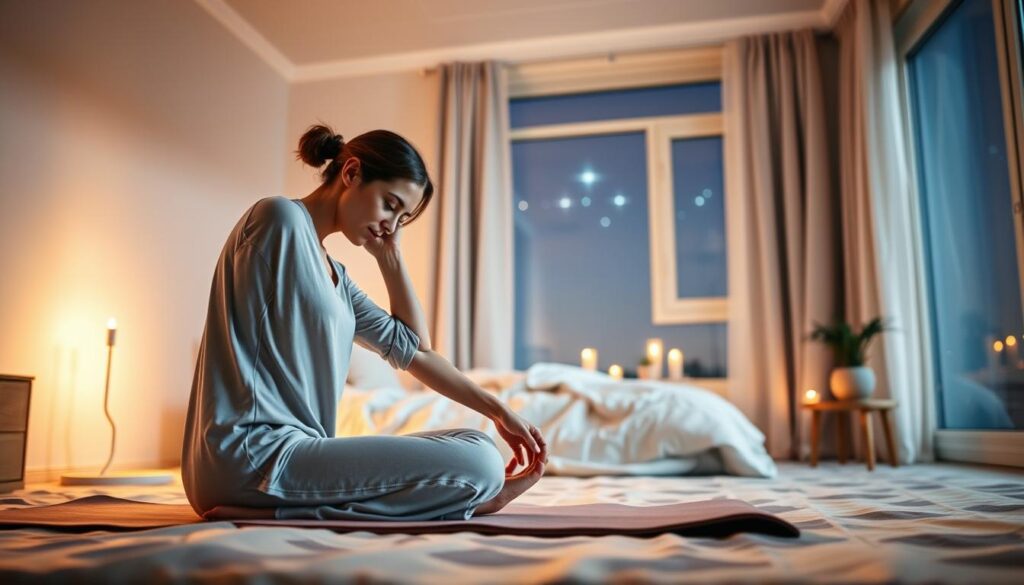
- Keep each position mild—aim to hold a stretch while talking calmly.
- Make this short routine part of wind‑down, not the last thing before lights out.
- Stop if you feel sharp pain, numbness, or tingling; adjust or skip and try a different stretch.
Want guided examples to pair with this setup? Try a short lukewarm deep routine at lukewarm deep routine or explore gentle somatic exercises.
Your 3-stretch bedtime routine to relax your body and mind
Do three targeted moves in order—Child’s Pose, Cat‑Cow, then a supine hamstring or single‑knee‑to‑chest—to release your back and spine while you steady the breath. Hold each position about 20–30 seconds (or use 10‑second Cat‑Cow phases), repeat calmly, and stop before pain.
Start on the floor or bed; keep each effort gentle and steady so muscles can let go.
Child’s Pose: release lower back, shoulders, and neck while syncing breath
Kneel with hips toward your heels and reach arms forward. Widen the knees if that helps the torso relax.
Hold ~30 seconds and repeat 3 times. Avoid forcing the head or chest to the floor to prevent back strain.
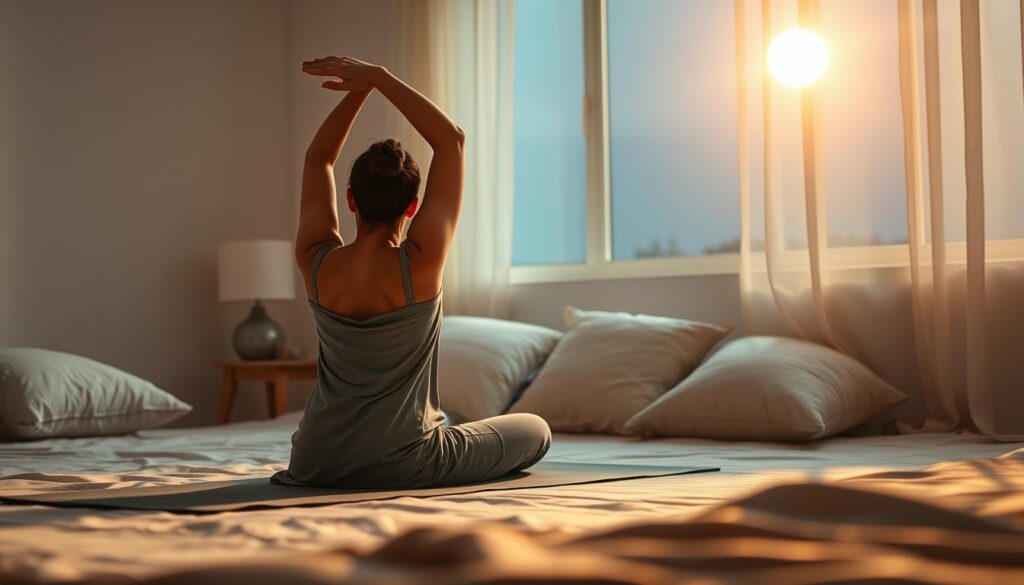
Cat‑Cow on hands and knees: mobilize the spine and ease back tension
Stack hands under shoulders and knees under hips. Round the back (cat) for 10 seconds, then sink the belly and lift the chest (cow) for 10 seconds.
Repeat 5–10 times, moving slowly to mobilize the spine without pain.
Supine hamstring or single‑knee‑to‑chest: unwind hips, glutes, and the back
Lie on your back. For a hamstring stretch, lift one leg and hold behind the calf or use a strap; keep the leg as straight as comfortable.
Or hug one knee to your chest for 30 seconds, 3 times per side; bend the opposite knee if your lower back needs support.
Breathing cadence and timing: holds of 20–30 seconds, repeated calmly
Use slow nasal inhales and soft, longer exhales. Time each hold 20–30 seconds and repeat 2–3 times so tissues adapt gently.
“Small, consistent routines calm the nervous system and reduce nightly tension.”
Need more guidance? See practical demos of stretches before bed to pair with this sequence.
Bedtime Stretches for Sleep
Keep your routine short and consistent: three stretches, calm breathing, and light holds are enough to prepare your body for night. Do them on the bed or floor—comfort first—so you actually practice them daily.
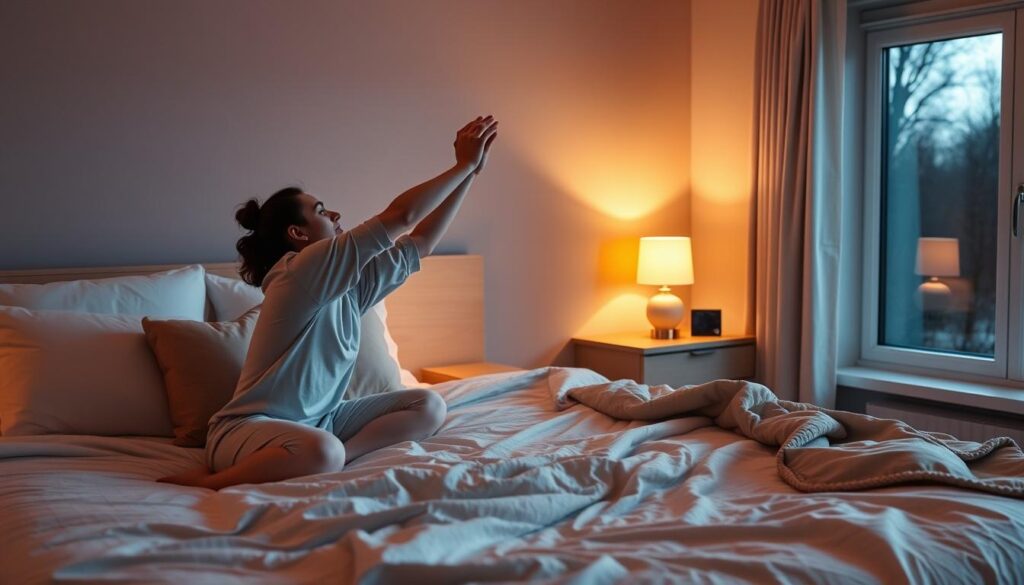
A short, calm sequence done 30–60 minutes before lights-out speeds up falling asleep and eases nighttime cramps. Gentle static holds lower muscle tension and cut the time it takes to drift off.
Your goals are simple: reduce tension, avoid pain, and find a position that feels safe and repeatable at the end of the day. Use a pillow under the knees on the bed or a mat on the floor if you need padding.
- Use timing you can stick to — 20–30 second holds, 2–3 rounds.
- Repeat the same routine nightly to train your body’s wind-down cue.
- If a stretch causes pain, shorten the range or swap to a gentler option.
- Calm, even breathing amplifies relaxation; notice longer exhales as your body lets go.
If you want to pair light movement with other tools, see authoritative melatonin guidance at melatonin guidance to learn how supplements might fit your night routine.
“Small, consistent practices done in a comfortable position deliver the biggest gains in sleep quality over time.”
Target common tension zones that disrupt sleep
Quick, repeatable positions calm the usual trouble spots—lower back, neck and legs—so you go to bed with less pain and tension. Use simple support from a wall or the floor to keep each position stable and easy to repeat nightly.
Quick, repeatable positions can ease the usual sources of nighttime tension and help your body relax.

Lower back relief: lying single knee-to-chest and seated forward reach
Lie on your back and hug one knee toward your chest. Hold 30 seconds and repeat 3 times each side.
Bend the opposite knee if your pelvis needs support. This targets the lower back without taxing the hips.
Add a gentle seated forward reach: hinge at the hips, keep the front of the torso long, and stop when you feel a safe stretch in the back.
Neck and shoulders: ear-to-shoulder, gentle twists, and the bear hug
Do ear-to-shoulder holds and slow neck twists for 20–30 seconds, 2–3 reps per side. These reduce desk-related neck tension.
Finish with a self bear hug: wrap your arms and press shoulders forward to soften the shoulder blades and ease muscle tightness.
Keep head and shoulder alignment easy; rest your hands on your lap if that feels better.
Legs and calves: standing calf and quad holds to prevent cramps
Face a wall for the calf stretch. Step one leg back, keep the rear heel down and hold up to 30 seconds.
For quads, stand tall, hold your ankle and keep the knee close to the other leg. Hold 30 seconds, 3 times per side to cut night cramp risk.
| Zone | Position | Duration & Reps |
|---|---|---|
| Lower back | Lying single knee-to-chest / Seated forward reach | 30 sec, 3 reps each side |
| Neck & shoulders | Ear-to-shoulder, neck twist, bear hug | 20–30 sec, 2–3 reps each |
| Legs & calves | Standing calf (wall) / Quad hold | 30 sec, 3 reps each side |
- Release the usual culprits before sleep—lower back, neck/shoulders, and legs—to reduce night-time discomfort.
- Use simple positions with a wall or floor for support so each stretch feels stable and repeatable.
If any move causes sharp discomfort, ease the range or choose a gentler option. For an extra quick relief routine aimed at restless legs, try this short guide: this 3-minute sequence.
“Small, supported holds reduce muscle tension and lower stress, helping you feel more comfortable at night.”
Make it yours: modifications, props, and positions
Adapt the routine to your body—props make stretches more comfortable so you actually do them every evening. Choose bed or floor positions that let you breathe easily without pain or discomfort.
Small changes to setup change how a stretch feels. Use what helps you relax and repeat the routine nightly.
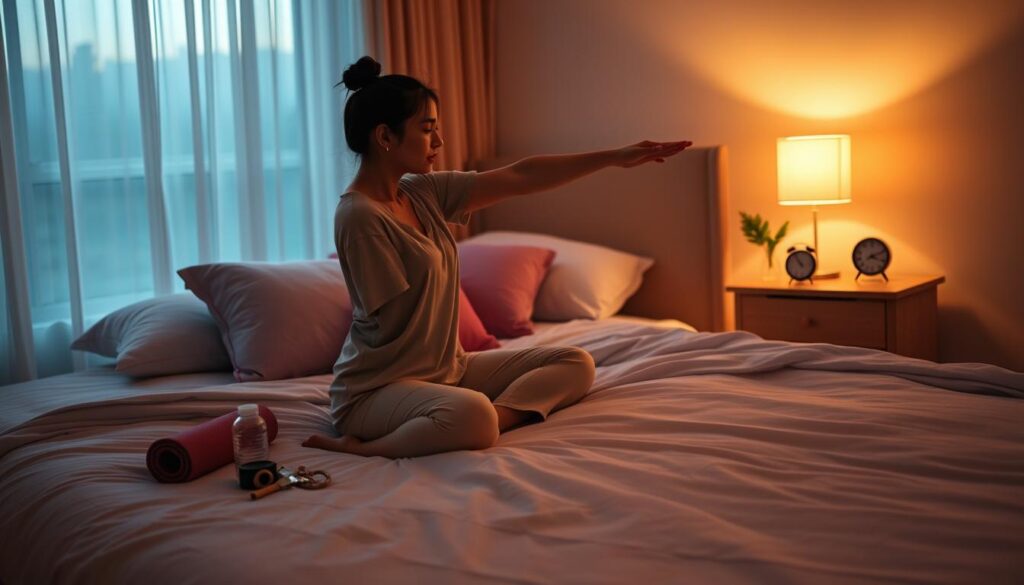
Use the wall, a strap, or pillows to support knees, hamstrings, and neck
A strap or towel looped behind the foot keeps a hamstring stretch gentle while your hands stay relaxed. This protects posture and lets the muscle let go.
Slide a pillow under your knees to ease lower back tension when lying on the bed. One under the neck reduces strain and helps the head rest in a neutral position.
Use the wall to stabilize calf and chest work, and to support balance during quad holds. Hands on the wall keep chest open without forcing range of motion.
Bedside options: stretches you can do on the bed or floor depending on comfort
Choose the bed when padding helps posture and the floor when you want firmer support. Both positions work if you keep movements gentle and pain‑free.
- Keep positions simple and repeat the same setup nightly to improve quality and predictability.
- If a stretch pinches or causes pain, ease the depth or pick a different position that feels right for your body.
- One calm minute per stretch is enough; prioritize relaxation over “going deeper.”
- Track which props helped—small notes make the next evening smoother and support long‑term habit.
“Use props to make each hold comfortable; comfort predicts consistency.”
Want more examples of supportive positions? See practical demos of helpful poses in this guide: 15 poses to help insomnia and a targeted explanation from a specialist here: a physical therapist explains.
What to avoid and when to stretch
Avoid vigorous or dynamic movements late in the evening—save high‑energy work for daytime. Start a gentle static routine about an hour before bedtime to support better sleep quality.
Fast, high-intensity activity raises arousal and can delay falling asleep. Choose slow holds instead. Most people benefit from 10–30 second holds that ease muscle tension without increasing heart rate.
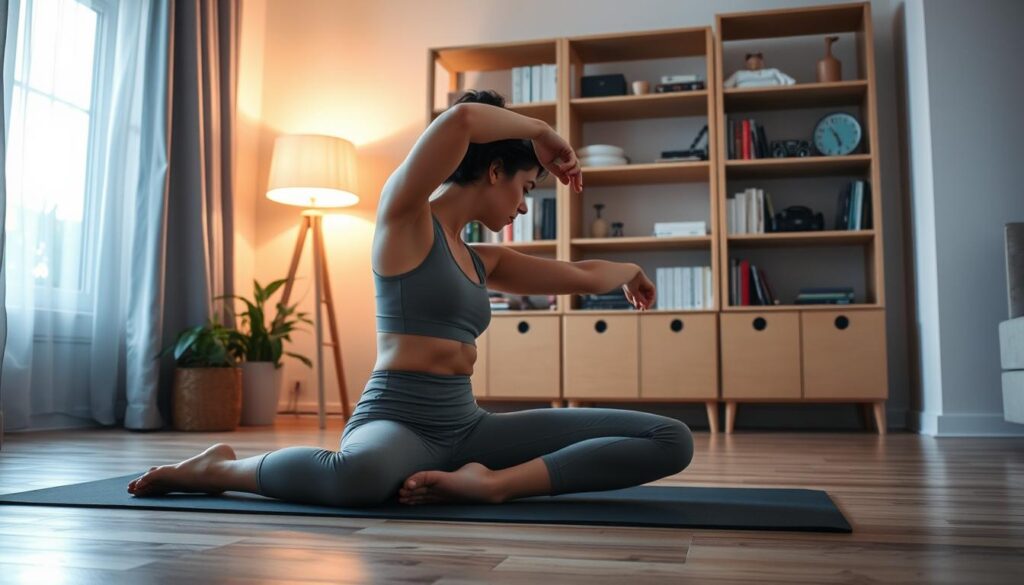
How to plan timing and intensity
- Skip dynamic movement late at night: brisk or bouncing routines raise stress and push sleep later.
- Keep holds gentle: aim for slight discomfort but never sharp pain; steady breathing should remain easy.
- Be consistent: a short routine at the same time each night beats one intense session a week.
- Protect your back and shoulders: reduce range or use support when tension feels high rather than forcing depth.
- If you use the bed: do stretching bed options earlier in the evening, not right before lights-out.
“Small, steady holds done at the right time calm the nervous system and help muscles let go.”
Want practical demos and evidence-based tips? See guidance on stretching before bed and learn about useful gear in this wellness gadgets under $50 roundup.
Conclusion
Keep it simple: three static moves, calm breath, and light holds are enough to relax your body and support better sleep tonight. Prioritize comfort, consistency, and form—this routine compounds benefits for your back, neck, and overall health.
With steady practice you build a wind‑down cue that helps you fall asleep faster and wake with less tightness.
Focus on a neutral spine, relaxed head and shoulders, and ease in the hips. Use the floor, wall, or bed and add pillows under the knees as needed to protect joints and reduce pain.
Short sessions done the same time each night beat occasional long sessions. Want a ready routine? Try a gentle GOWOD flow to guide timing and recovery: GOWOD sleep flow.
FAQ
What are the three essential pre-bed stretches that improve sleep?
The most reliable sequence includes a gentle child’s pose to release the lower back and shoulders, a slow cat-cow on hands and knees to mobilize the spine, and a supine single-knee-to-chest or hamstring stretch to relax hips and glutes. Each hold should be calm and controlled, about 20–30 seconds, repeated once or twice while breathing slowly.
How does a brief evening stretch routine help me fall asleep and stay asleep?
Gentle stretching lowers muscle tension and can reduce heart rate by activating the parasympathetic nervous system. That physical relaxation, paired with slow breathing, signals the body to unwind, improving sleep onset and stability through the night.
When is the best time to stretch before turning in?
Aim to stretch 30–60 minutes before bed as part of a wind-down routine. This window lets muscles relax and gives your nervous system time to shift into a restful state without being overstimulated from activity.
Should I use dynamic or static movements at night?
Keep it gentle and static before sleep. Slow holds reduce excitability and don’t spike heart rate. Save dynamic, high-intensity movements for daytime workouts to avoid alerting your body close to bedtime.
How should I breathe while I do these evening stretches?
Breathe with intention: slow nasal inhales and relaxed exhales. Match each stretch hold to several full breaths—this cadence deepens relaxation and helps lower stress markers that interfere with sleep.
What surfaces and props make nighttime stretching safer and more comfortable?
Comfort first: use the floor with a mat, the bed for supported options, a wall or doorframe for balance, and pillows or a strap to protect knees, hamstrings, and the neck. Props reduce strain and let you focus on calm holds.
How can I target lower back pain that wakes me at night?
Try lying knee-to-chest holds and gentle seated forward reaches to ease lumbar tension. Combine these with mindful breathing and avoid deep twisting or loaded spinal movements right before bed.
What stretches help neck and shoulder tension that blocks sleep?
Simple ear-to-shoulder stretches, gentle neck rotations, and a bear-hug chest opener can release tightness. Perform these slowly, with breath, and use a pillow under the head if the floor feels uncomfortable.
Can evening stretching prevent leg cramps or restless legs at night?
Yes—standing calf stretches and gentle quad or hamstring lengthening reduce nighttime cramp risk. Stretching the lower limbs, plus staying hydrated and checking electrolyte balance, helps prevent disturbances.
Are there safe bedside stretches I can do without getting onto the floor?
Absolutely. You can perform seated forward folds on the edge of the bed, spinal flexion/extension while on hands and knees on the mattress, and supine knee-to-chest pulls while lying down. Modify intensity with pillows for support.
When should I avoid stretching before bed?
Avoid vigorous, ballistic, or high-intensity movement close to bedtime. If a stretch causes sharp pain or increases heart rate, stop and try a gentler alternative. Consult a clinician if you have acute injury or severe chronic pain.
How long should my nightly stretch routine take to be effective?
A focused routine of 8–12 minutes, with three core stretches held 20–30 seconds each and repeated once, is sufficient for most people. Consistency matters more than duration—simple nightly practice delivers the biggest benefits.
Can stretching actually change sleep quality long term?
Regular gentle stretching can improve sleep quality by reducing chronic muscle tension, lowering physiological arousal, and establishing a calming pre-sleep ritual. Backed by relaxation science, small consistent habits yield meaningful improvements.
Do I need special training or certification to perform these stretches safely?
No special certification is required for gentle, foundational stretches, but follow basic safety: move slowly, avoid sharp pain, and use props. If you have medical conditions—spine issues, herniated discs, recent surgery—check with a healthcare provider first.



Don’t Miss These Picks