

A tight jaw, stiff shoulders, or a chest that never seems to settle can make even an ordinary day feel exhausting. When stress builds up, trying to think your way into feeling better doesn’t always work. Sometimes, paying attention to your body is a more comfortable place to start.
These five gentle somatic exercises use breathing, movement, touch, and sensory awareness to help you notice tension and encourage relaxation. You can practice most of them while sitting, lying down, or taking a short break. No special equipment, flexibility, or previous experience is needed.
Start with whichever exercise feels easiest. You don’t need to complete every movement or feel completely relaxed afterward. The goal is to find small, comfortable ways to respond to stress without adding more pressure.
Key Takeaways
- Somatic exercises focus on body awareness. They help you notice physical signs of stress and practice responding more gently.
- Five beginner-friendly techniques: breathing exercises, 5-4-3-2-1 grounding, Butterfly Hug, progressive muscle relaxation, and slow floor movements.
- Start with 2–5 minutes. Short sessions can fit into work breaks, evenings, or your bedtime routine.
- Equipment is optional. A chair, carpet, folded blanket, or exercise mat can make certain positions more comfortable.
- Comfort comes first. Avoid forcing your breath, stretching through pain, or continuing an exercise that increases distress.
Helpful Products at a Glance
For cushioning your knees, hips, and back during gentle floor exercises, the Gaiam Thick Yoga Mat offers an optional padded surface. You can also use a comfortable carpet or folded blanket.
- Extra-Thick Cushioning for Joint Comfort : Made with 10mm (2/5") high-density NBR foam, this mat delivers plush cushioning that helps reduce pressure on knees, hips, and joints—ideal for beginners, low-impact yoga, Pilates, stretching, floor exercises, and home workouts on hard surfaces.
- Comfort-Focused Surface for Controlled Movement : Textured foam surface helps reduce slipping on most hard floors during dry workouts and everyday exercise. The softer, cushioned feel prioritizes comfort and shock absorption over firmness, making it a great choice for floor-based and low-impact routines.

Why Somatic Exercises May Help Relieve Stress
Stress doesn’t affect only your thoughts. It can also change how you breathe, move, and hold your muscles. You might notice your shoulders creeping upward, your hands tightening, or your breathing becoming quicker without realizing it.
Somatic exercises bring your attention to these physical signals. Instead of trying to make uncomfortable feelings disappear, you practice noticing them and making small adjustments that may help you feel calmer.

How Breathing, Movement, and Touch Affect Relaxation
Your autonomic nervous system helps control automatic functions such as breathing and heart rate. One part supports the body’s stress response, often called fight-or-flight. Another helps manage rest and recovery.
When you’re stressed, your heartbeat may speed up and your muscles may tighten. Relaxation practices can help your body move toward a calmer state. According to the National Center for Complementary and Integrative Health (NCCIH), techniques such as slow breathing and progressive muscle relaxation may help reduce stress and anxiety symptoms.
Different somatic practices work in slightly different ways:
- Slow breathing: Gives you a steady rhythm to follow and may help lower physical arousal.
- Gentle movement: Helps you explore comfortable motion and notice where muscles feel restricted.
- Light touch: Provides a simple physical sensation that some people find reassuring.
- Sensory grounding: Shifts attention toward what you can see, hear, and feel around you.
- Muscle relaxation: Helps you recognize the difference between tightening a muscle and letting it relax.
These practices also build interoception, which means awareness of signals from inside your body, such as breathing, heartbeat, or muscle tension. Learning to recognize those signals may help you notice stress earlier.
However, not every technique has equally strong research behind it. General relaxation methods have more supporting evidence than claims that a particular somatic movement can reset the nervous system or release stored trauma.
For more background, explore our guide to somatic therapy and its mind-body approach.
Before You Begin: Create a Comfortable Space
You don’t need a perfect meditation room. A quiet corner, supportive chair, or clear section of floor is enough. Choose somewhere you can move without bumping into furniture or feeling rushed.
Soft lighting and comfortable clothing may make it easier to settle in. If possible, silence your phone for a few minutes and keep some water nearby.

Find a Position That Supports Your Body
If you’re sitting, rest your feet on the floor and let your back feel supported. If you’re lying down, bend your knees or place a folded towel beneath them if that feels better. Keep your neck comfortable rather than forcing your head into a particular position.
For floor movements, choose a stable surface that doesn’t slide underneath you. A carpet or folded blanket may provide enough padding, especially when you’re simply lying still or gently rocking your knees.
If the floor feels too hard, a dedicated exercise mat is another option. The Gaiam Thick Yoga Mat with Carrying Strap has a cushioned foam surface intended for floor workouts and stretching. Extra padding may feel more comfortable beneath your back or knees, although a soft mat can feel less steady during standing balance exercises.
You don’t need to purchase one to benefit from these techniques. Use whatever supportive surface you already have, provided it feels stable and comfortable.
- Extra-Thick Cushioning for Joint Comfort : Made with 10mm (2/5") high-density NBR foam, this mat delivers plush cushioning that helps reduce pressure on knees, hips, and joints—ideal for beginners, low-impact yoga, Pilates, stretching, floor exercises, and home workouts on hard surfaces.
- Comfort-Focused Surface for Controlled Movement : Textured foam surface helps reduce slipping on most hard floors during dry workouts and everyday exercise. The softer, cushioned feel prioritizes comfort and shock absorption over firmness, making it a great choice for floor-based and low-impact routines.
- Soft Foam Feel with Easy Care : Crafted from low-odor NBR foam that’s easy to maintain—simply wipe clean with a damp cloth. Initial foam odor may be present when first opened and typically fades after airing out for 24–48 hours.
- Versatile for Home Fitness & Recovery : Popular for yoga, Pilates, stretching, physical therapy, core workouts, and general home fitness. The extra-thick foam provides comfort on wood, tile, or concrete floors and is well-suited for regular bodyweight use.
Before starting, take a moment to check your jaw, shoulders, hands, and breathing. Notice any tightness without trying to correct everything immediately.
Keep your effort light. If you’re recovering from surgery, dealing with an injury, or managing a condition that affects movement or breathing, ask your healthcare professional which activities are appropriate.
5 Gentle Somatic Exercises You Can Do at Home
Each exercise below focuses on a different way of noticing and easing tension. Begin with one technique for a few minutes, then explore the others when you feel comfortable.
1. Box Breathing or 4-7-8 Breathing
Best for: Pausing during a stressful day, preparing for a difficult conversation, or settling down before bedtime.
Breathing exercises give your attention a simple rhythm. Many people find that slow, comfortable breathing makes it easier to notice and soften tension around the chest, shoulders, and jaw.
How to Practice Box Breathing
- Sit comfortably or lie on your back.
- Gently inhale through your nose for four counts.
- Hold your breath for four counts without straining.
- Exhale slowly for four counts.
- Pause for another four counts before inhaling again.
- Repeat for three to six comfortable cycles.
If four counts feel too long, try two or three. You can also skip the pauses and simply breathe in gently, then breathe out slowly.
How to Practice 4-7-8 Breathing
- Inhale gently through your nose for four counts.
- Hold your breath for seven counts.
- Exhale slowly through your mouth for eight counts.
- Repeat up to four cycles if the pattern feels comfortable.
The longer hold and exhale may feel demanding when you’re new to breathing exercises. Don’t force yourself to reach the full counts. If you become lightheaded or uncomfortable, stop the pattern and return to normal breathing.

What to notice: Does your jaw feel less tight? Are your shoulders resting more naturally? Is your breathing becoming easier? Even a small change is worth noticing, but you don’t need to feel an immediate difference.
2. The 5-4-3-2-1 Grounding Exercise
Best for: Moments when worries feel overwhelming or your thoughts keep returning to the same problem.
This exercise guides your attention toward your surroundings through the five senses. It’s especially convenient because you can practice it without lying down or changing clothes.
How to Do 5-4-3-2-1 Grounding
- 5 things you can see: Look around and identify five objects, colors, or shapes.
- 4 things you can feel: Notice your clothing, the chair beneath you, your feet touching the floor, or another comfortable texture.
- 3 things you can hear: Listen for sounds nearby and farther away, such as a fan, footsteps, or birds.
- 2 things you can smell: Notice two familiar scents if available. Don’t force yourself to find them.
- 1 thing you can taste: Notice a lingering taste or take a sip of water.
Move through the senses slowly. Instead of naming an object and rushing onward, spend a moment noticing its details.
For example, if you see a curtain, notice its color, folds, and movement. If your feet touch the floor, notice whether the surface feels warm, cool, firm, or soft.
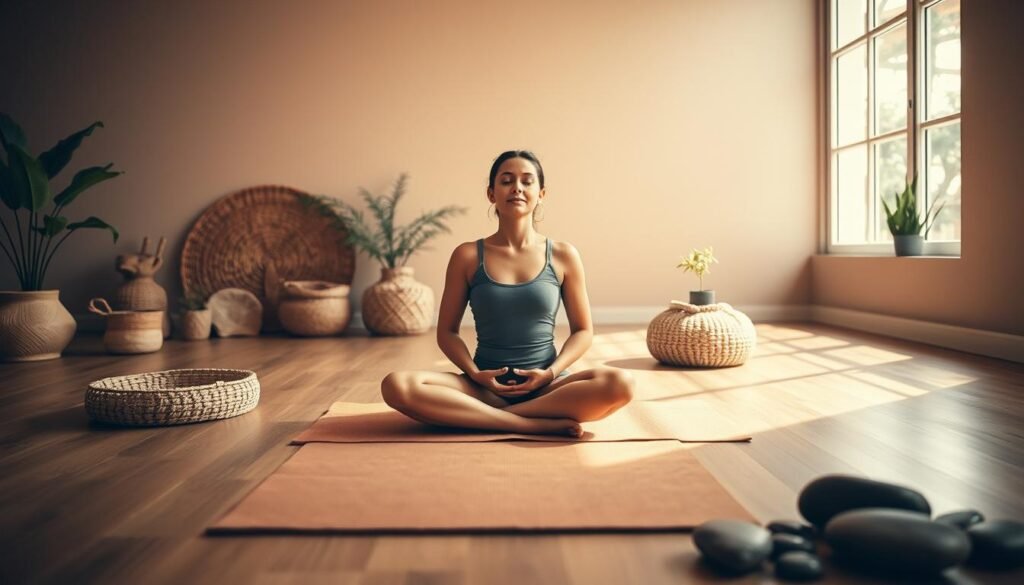
What to notice: You may become more aware of your surroundings and less caught up in racing thoughts. If focusing on body sensations feels uncomfortable, keeping your eyes open and concentrating on visible objects is a reasonable alternative.
3. The Butterfly Hug
Best for: Gentle self-soothing when you feel restless, emotionally unsettled, or tense.
The Butterfly Hug uses crossed arms and alternating taps. The steady touch may provide a comforting point of focus, although evidence for the technique as a standalone anxiety treatment remains limited.
How to Do the Butterfly Hug
- Sit in a comfortable position with your feet supported.
- Cross your arms over your chest, placing each hand on the opposite upper arm or shoulder.
- Relax your shoulders and breathe naturally.
- Tap gently with one hand, followed by the other.
- Continue alternating at a slow, comfortable pace for about 30–60 seconds.
- Pause and notice how your arms, chest, and breathing feel.
Keep the taps light. There’s no need to match a particular speed or apply pressure.
If crossing your arms feels uncomfortable, rest your hands on your thighs and gently alternate taps there instead. You can also skip the tapping and simply rest one hand over the other.
What to notice: Pay attention to the rhythm, warmth, and contact of your hands. If tapping makes you feel more distressed or brings up upsetting memories, stop and try looking around the room or placing your feet firmly on the floor.
4. Progressive Muscle Relaxation (PMR)
Best for: Recognizing muscle tension after a long workday or before going to sleep.
Progressive muscle relaxation involves gently tightening and then releasing different muscle groups. It helps you compare how tension and relaxation feel instead of relying on stretching alone.
How to Practice PMR
- Find a comfortable seated or lying position.
- Gently tighten your hands into loose fists for about five seconds.
- Release your hands and rest for 10–15 seconds.
- Lightly tighten your arms, then relax them.
- Raise your shoulders slightly toward your ears, then let them settle.
- Gently tighten your thighs and legs, then release.
- Finish by resting quietly and noticing which areas feel different.
Keep the tightening mild, not forceful. You should feel a small muscle contraction, not pain, cramping, or intense effort.
If your chest, back, or another area is uncomfortable, skip tightening that muscle group. You can simply focus on letting it rest. Avoid whole-body tensing if it causes strain.
What to notice: Your muscles may feel warmer, heavier, softer, or less tightly held. Some people notice very little at first, which is also normal.
The NCCIH guide to relaxation techniques describes progressive muscle relaxation as one practical way to encourage the body’s relaxation response.
5. Slow Floor Movements and a Gentle Shake-Out
Best for: Unwinding after sitting for long periods or noticing stiffness in your hips, back, and shoulders.
This sequence uses small, controlled movements rather than deep stretching. The idea is to explore what feels comfortable while paying attention to your body’s response.
How to Practice the Floor Sequence
- Start on your back: Bend your knees and place your feet flat on the floor, about hip-width apart.
- Rock your knees: Slowly allow both knees to move a small distance toward one side, then return to the center. Repeat toward the other side.
- Explore cross-body movement: If comfortable, reach one hand gently toward the opposite knee or across your body. Return to center and switch sides.
- Try a slow side roll: Use your hands and legs to guide a small roll onto one side, then return. Keep your head and neck supported.
- Pause and observe: Rest on your back or side and notice whether your movements feel easier or more restricted.
Use a smaller range if your back or hips feel uncomfortable. You don’t need to complete every movement, and a supported chair is a reasonable alternative if getting onto the floor is difficult.
Optional Standing Shake-Out
If standing feels comfortable, rise slowly and keep your knees soft. Gently shake your hands and arms for 15–30 seconds. You can add a small movement through your legs or torso without twisting forcefully.
Gradually make the movement smaller, then stand still for a few breaths. Notice how your feet feel against the floor.
What to notice: Pay attention to changes in stiffness, movement, and comfort. You don’t need large movements or strong sensations to make the practice worthwhile.
How to Make Somatic Exercises Part of Your Day
You don’t have to set aside a full workout session. Short periods of comfortable practice can help you build familiarity with the techniques and discover which ones you prefer.
Quick Somatic Exercises for Everyday Situations
- At your desk: Try three comfortable rounds of box breathing, followed by a gentle shoulder release.
- Before a meeting: Notice your feet against the floor and name three objects you can see.
- After a stressful conversation: Try light Butterfly Hug tapping or place your hands comfortably on your thighs.
- During a commute: Use simple visual or sound-based grounding while seated. Avoid closing your eyes or practicing distracting breath patterns while driving.
- Before bedtime: Try gentle muscle relaxation or slow breathing while lying comfortably in bed.
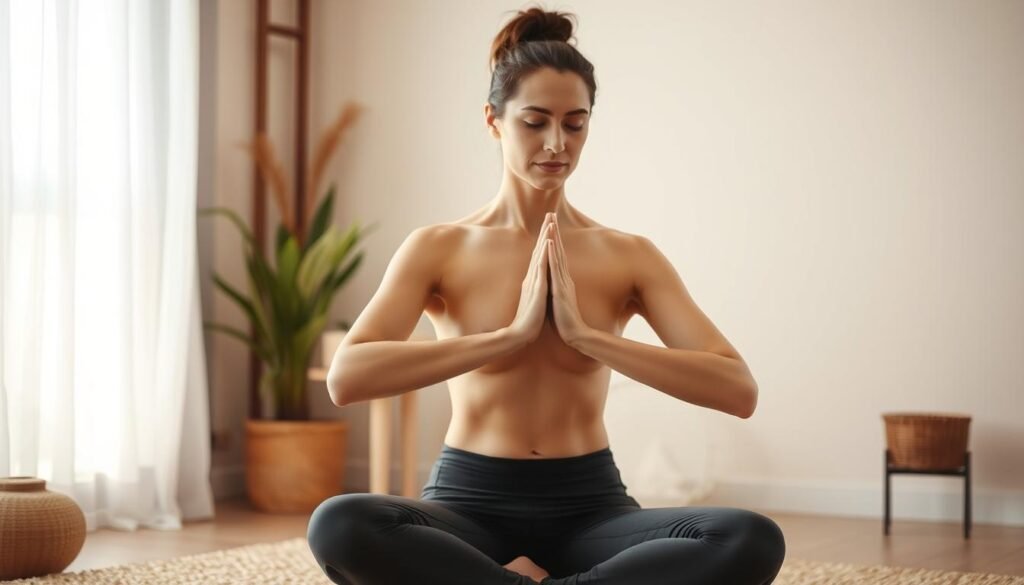
You can also use these techniques as a short break between household tasks, exercise sessions, or other responsibilities. Choose the one that feels most natural rather than trying to follow a complicated schedule.
A Simple 10-Minute Somatic Exercise Routine
If you’d like a complete practice, this routine combines breathing, muscle relaxation, movement, and quiet observation.
- Minutes 0–2: Gentle breathing. Sit comfortably and practice slow, easy breaths. Use box breathing only if the holds feel comfortable.
- Minutes 2–5: Muscle relaxation. Lightly tighten and release your hands, arms, shoulders, and legs, allowing a pause between each area.
- Minutes 5–8: Easy movement. Try slow knee rocks or a supported seated movement. Keep the range small and pain-free.
- Minutes 8–10: Quiet rest. Relax your hands, breathe naturally, and notice the sensations in your body without trying to change them.
Ten minutes is an option, not a requirement. On a busy day, choose just one exercise for a minute or two. If you’re tired, it’s fine to skip floor movements and remain seated.
How Often Should You Practice?
Start with a few minutes whenever you have time. You might practice after waking, during a work break, or before bed. Some people prefer a regular daily routine, while others find short sessions throughout the day easier to maintain.
Notice what changes over time. For example:
- Do you recognize shoulder or jaw tension sooner?
- Can you find a comfortable breathing rhythm more easily?
- Does one movement help you feel less stiff?
- Do you know which technique to try when stress starts building?
Progress isn’t always a dramatic feeling of calm. Sometimes, simply noticing tension and choosing a helpful response is a meaningful improvement.
Common Mistakes and How to Avoid Them
Somatic exercises are meant to be gentle. Trying too hard to relax can make the experience frustrating, particularly when you’re already feeling tense.
Six Common Mistakes
- Forcing deep breaths: Breathing harder isn’t necessarily more relaxing. Keep your breaths natural and comfortable.
- Holding your breath too long: Shorten or skip pauses if they cause dizziness, air hunger, or strain.
- Stretching into pain: Reduce your range of movement or choose another position instead of pushing through discomfort.
- Rushing through the exercises: Leave enough time to notice sensations between movements.
- Trying to eliminate every uncomfortable feeling: Focus on observing your experience rather than demanding an immediate change.
- Ignoring your body’s limits: Rest, adjust your position, or stop whenever an exercise feels wrong for you.
What If You Feel More Anxious During an Exercise?
Some people find that focusing closely on breathing, heartbeat, or internal sensations increases anxiety. Body-based practices aren’t equally comfortable for everyone, especially when trauma-related symptoms are present.
If you feel overwhelmed, try these adjustments:
- Open your eyes and look around the room.
- Place your feet on the floor and notice the surface beneath them.
- Return to normal breathing instead of following a counting pattern.
- Use visual grounding rather than concentrating on internal sensations.
- End the session and take a break if distress continues.
If your symptoms regularly worsen during self-guided practice, a licensed mental health professional can help you explore safer, more suitable approaches.
When to Seek Professional Support
Self-guided relaxation exercises can be useful alongside other forms of care, but they aren’t a replacement for treatment when anxiety, pain, or trauma-related symptoms are interfering with everyday life.
Consider speaking with a qualified healthcare professional if:
- Anxiety or panic repeatedly disrupts your work, sleep, or relationships.
- Physical tension or pain continues despite changing your activities.
- Breathing or movement exercises consistently cause distress.
- Trauma-related memories or sensations become difficult to manage.
- You’re unsure whether an exercise is appropriate for an existing injury or health condition.
New or severe chest pain, significant trouble breathing, or fainting should receive urgent medical evaluation rather than being treated as ordinary stress.
A qualified therapist may help you adapt body-awareness techniques to your needs. Depending on your symptoms, treatments such as cognitive behavioral therapy may also be appropriate.
For additional self-care ideas, see the Johns Hopkins somatic self-care resource.
Frequently Asked Questions
What are somatic exercises?
Somatic exercises are body-focused practices that encourage awareness of physical sensations, movement, and breathing. They may include gentle stretching, grounding, rhythmic touch, and muscle relaxation. Different approaches have different goals and levels of supporting evidence.
How long does it take to feel a difference?
Some people feel more comfortable after a few minutes, while others notice little immediate change. Results depend on the exercise, your symptoms, and personal response. Regular practice may help you become more familiar with stress signals, but there is no guaranteed timeline.
Can somatic exercises help with sleep?
Gentle breathing and progressive muscle relaxation may help some people unwind before bed. However, evidence for treating insomnia with relaxation exercises alone is limited. For ongoing insomnia, cognitive behavioral therapy for insomnia (CBT-I) has stronger research support.
Can I do these exercises if I have chronic pain?
Some breathing and sensory grounding techniques may be suitable because they require little movement. Avoid any exercise that aggravates painful areas, and ask your healthcare provider about muscle-tensing or floor movements when you have an injury or chronic pain condition.
Are somatic exercises the same as yoga?
Not exactly. Both may involve breathing and body awareness, but yoga can include postures, balance, strength, and flexibility work. Somatic exercises generally emphasize noticing physical sensations and exploring comfortable movement. Some practices overlap.
Can the Butterfly Hug release stored trauma?
There’s no strong evidence that tapping by itself removes stored trauma from the body. Some people find the rhythmic touch soothing, but trauma-related symptoms may require professional treatment. If tapping brings up distressing memories, stop and choose a more comfortable grounding method.
Do I need a yoga mat or special equipment?
No. You can practice breathing, grounding, the Butterfly Hug, and seated muscle relaxation without any equipment. A mat, pillow, or folded blanket may improve comfort during floor exercises, but these items are optional.
Should I practice every day?
Daily practice can help you establish a routine, but it isn’t necessary to force a session when you feel unwell or overwhelmed. Start with a few comfortable minutes, adjust the frequency to your needs, and focus on consistency rather than completing a fixed number of exercises.
Conclusion: Start With One Gentle Movement
Somatic exercises offer a simple way to pay closer attention to how stress feels in your body. Slow breathing, sensory grounding, gentle tapping, muscle relaxation, and easy movement can each provide a different way to pause and respond to tension.
You don’t need to master all five exercises or set aside a long session. Start with one that feels comfortable, practice for a few minutes, and notice what happens without judging the result.
Your next step: Choose one technique to try today. If it feels helpful, return to it tomorrow. If it doesn’t, explore another option or adapt the practice to your comfort level. Small, manageable steps are a better starting point than forcing relaxation.