

Can a simple shift in how your feet meet the earth change how your brain handles stress? A neurologist frames this practice as sensory input plus motor control that calms the stress response and sharpens attention.
Grounding means choosing a conscious connection to the earth element to boost stability, resilience, and clear-headed presence.
We’ll show how movement, posture, and breath regulate the nervous system so you feel steadier in your body and mind. Expect a neurologist-approved setup, an accessible sequence, breathwork to steady the nervous system, and cues that evoke an “earth beneath” sensation.
Simple alignment actions—pressing evenly through your base, engaging key muscles, and coordinating breath—send stability signals your brain trusts. Practice builds a foundation you can carry into work, relationships, and stress-heavy moments.
Key Takeaways
- Sensory + motor control calms the stress response and improves focus.
- Conscious contact with the earth element promotes resilience and balance.
- The article offers a safe, neurologist-approved sequence and breath cues.
- Small alignment actions create reliable stability signals for your brain.
- Consistent practice transfers calm and steadiness off the mat into daily life.
- Find more on how movement affects glands and nerves at this related guide.
Why Grounding Calms the Brain: A Neurologist’s Take
A steady base under your feet sends clear safety signals that quiet the brain’s alarm system. This simple input — steady contact, even pressure, and predictable footing — helps shift the nervous system away from hypervigilance and toward calm.

The earth element, safety signals, and your stress response
Predictable sensory input under the feet acts like a safety cue. Even pressure through the four corners of the base reduces threat detection and lowers noise in the stress response.
From feet to cortex: how a stable base sharpens attention and clarity
Consistent foot pressure and aligned joints simplify proprioceptive signals. That clarity frees working memory so the mind can focus on the present.
“A reliable base lets stabilizer muscles do their job, which supports spinal alignment and clears mental bandwidth.”
- Diaphragmatic breath lengthens exhalation and activates parasympathetic pathways to deepen calm.
- Non-slip mats and predictable footing matter; perceived safety is as important as real safety.
- Simple test: slow your breathing and soften your jaw while keeping even pressure under your feet.
| Input | Peripheral effect | Brain response | Practical cue |
|---|---|---|---|
| Even foot pressure | Stabilizer activation (ankle/knee/hip) | Reduced threat signaling | Press four corners gently |
| Predictable surface | Consistent sensory feedback | Lowered arousal | Use a high-grip mat |
| Long exhalation | Parasympathetic engagement | Calm, focused attention | Diaphragmatic breath (soft exhale) |
For practical techniques that pair body cues with calming strategies, see grounding techniques and a complementary take on movement and anxiety in pilates for anxiety.
Root Chakra, Earth Element, and the Body-Brain Connection
Muladhara—located at the base of the spine—serves as the energetic foundation for felt safety and balance. This center links simple physical cues to calmer brain states by reinforcing a reliable sense of support.
Muladhara, the root chakra, sits at the base of the spine and anchors stability, security, and presence. The earth element relates to bones, muscles, and connective tissues, which is why strength and steadiness feel so restorative.
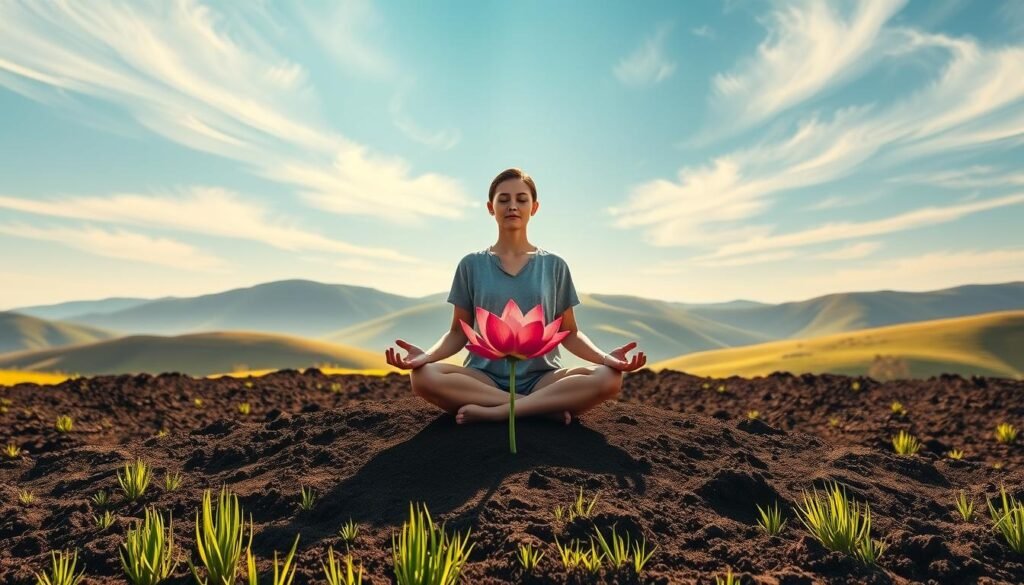
Muladhara at the base of the spine: stability, security, and presence
Use three simple somatic anchors to bring attention back to center:
- Visualize a warm red glow at the pelvic floor.
- Mentally or softly chant the bija “LAM” on the exhale.
- Notice contact points with the floor—seat or feet—and sense the earth beneath you.
Color, mantra, and somatic cues that anchor attention
These cues sharpen interoception so the nervous system gets clearer “I am safe” feedback. Slow exhales while sensing the ground amplify steadiness and reduce mental noise.
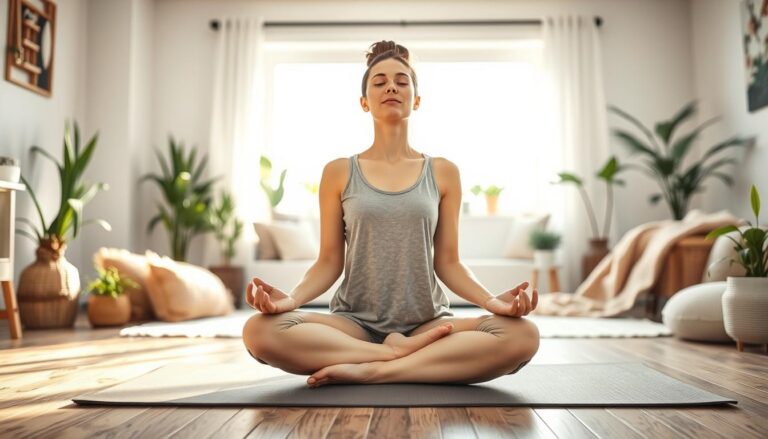
You don’t need to believe in chakras to benefit. Stable contact, aligned posture, and breath alone lower arousal and improve focus. Try a short practice: sit on a folded blanket, visualize red at the base spine, whisper LAM on exhale, and notice pelvic-floor release.
For guided sequences and practical variations, explore root chakra practices or movement that can also support your hormones.
How to Build a Stable Foundation Before You Move
Start by checking the points of contact under your feet to create a reliable foundation for movement. These small checks lower threat signals and let you move with more confidence.

Press the four corners, then engage the core
Press all four corners of the foot—base of the big toe, base of the little toe, inner heel, outer heel—to feel instant stability and alignment feedback.
- Stack joints: ankles under knees; knees track the second toe to protect ligaments.
- Light core brace: exhale to gently cinch around the waist; support the lumbar spine without gripping.
- Spread toes and place the foot with intent: this increases traction on the mat and signals steadiness.
- Use your hands as anchors: root through the mound under the index finger and thumb when palms touch the floor.
- Soft jaw, long neck: a relaxed upper chain helps breath flow and calmer attention.
| Action | Why it helps | Quick cue |
|---|---|---|
| Four-corners press | Even weight distribution, clear proprioception | Big toe, little toe, inner & outer heel |
| High-grip mat | Improves traction, reduces slips | Choose textured, non-slip surface |
| Light core engagement | Supports lower back, improves alignment | Exhale and gently draw in |
Adopt a “first contact” habit: before every transition check base, breath, and core. If you wobble, widen your stance or use a wall to keep form safe. For a related mobility tip from a clinician, try this physical therapist stretch.
Grounding Yoga Poses: A Neurologist-Approved List
This compact selection highlights postures that reinforce even pressure, spinal length, and calm breathing. Use these shapes to train balance, strength, and a steady nervous system in short, practical reps.
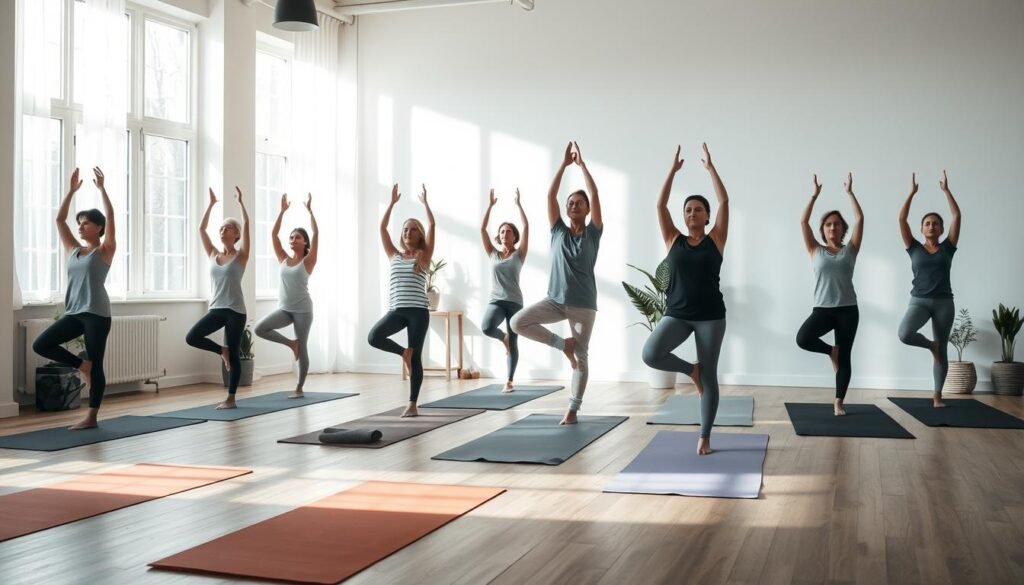
Mountain Pose — postural reset and clear-headed focus
Stand hip-width, press the four corners of each foot, lift the kneecaps, and lengthen through the crown. Slow inhalations and a soft exhale reset posture and sharpen attention.
Chair Pose — leg strength and steady breath
Send hips back, track knees over ankles, and press evenly through the base to build strength in the legs and engage the root center. Keep a steady exhale to pair effort with calm.
Warrior I & II — stability, hip opening, and gaze
Widen your stance, root the back foot, and adjust hip orientation for comfort. A fixed gaze and steady breath increase stability and confidence while the hips open.
Tree Pose — single-leg balance to train calm
Place the lifted foot above or below the knee, lengthen tall through the spine, and relax the jaw. This single-leg challenge teaches composure under mild instability.
- Downward Dog: spread the fingers, root through the index mound, lift sit bones, and lengthen the spine to relieve back tension.
- Garland: squat with toes turned out, press elbows to knees, and open the hips to invite a parasympathetic shift.
- Bridge: feet hip-width, press through feet and shoulders, then lower vertebra by vertebra to mobilize the back and reawaken the posterior chain.
- Bound Angle & Legs Up the Wall: sit tall with soles together or rest legs vertical for 5–10 minutes to soothe the groin and calm the nervous system.
Scale every shape with props or stance changes. Prioritize even pressure through your base and a slow, balanced breath to keep stability primary. For supporting research on movement and the nervous system, see movement and nervous system research.
Breathwork That Grounds the Nervous System
A calm, steady breath can re-tune your nervous system in minutes and anchor mental clarity. This section offers two simple, science-friendly techniques to slow arousal and steady attention.
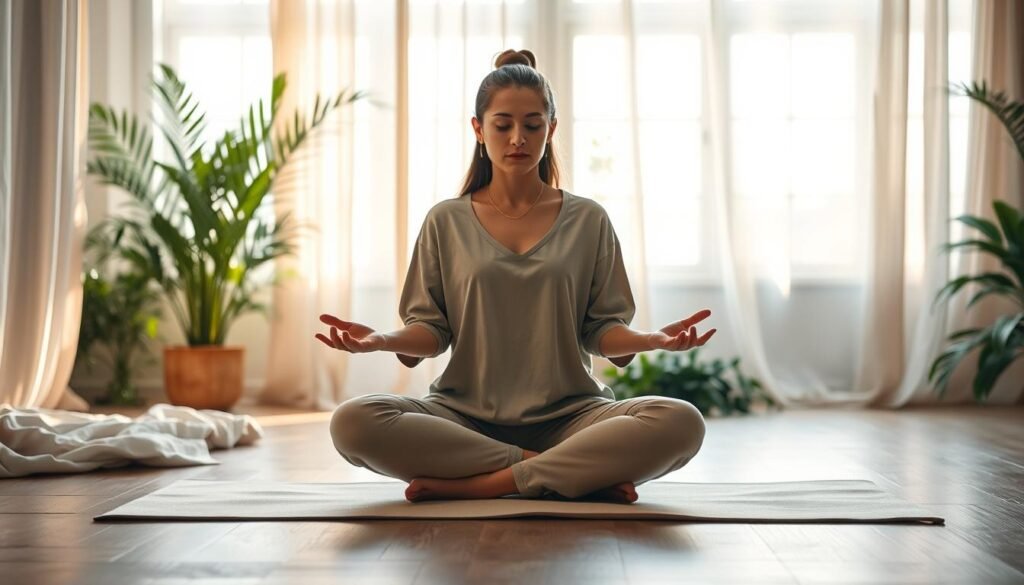
Dirga (three-part breath): belly → ribs → chest
Dirga fills the torso from low to high. Inhale first into the belly, then the side ribs, then the chest. Exhale slow and steady to signal safety and reduce sympathetic drive.
- Start with gentle segments: 4-4-4 for the inhale (belly, ribs, chest), and a smooth 6–8 count exhale if comfortable.
- Place one hand on the belly and one on the chest to track movement; keep the breath low and quiet.
- Use a long spine and soft jaw whether seated or lying so the breath travels freely through the body.
Sama Vritti (equal breathing): balance inhale and exhale
Sama Vritti equalizes autonomic tone. Try 4–6 counts in and 4–6 counts out to stabilize attention and energy. Keep breaths effortless and even.
Layer these cues onto movement: anchor the exhale in challenging shapes to maintain composure and efficient effort.
Practical plan: 3–5 minutes of either method before or after a short practice will carry calm into the day or a stressful moment.
Tip: If you feel lightheaded, stop and return to natural breathing. These tools are portable—use them in meetings, travel, or transitions to center your mind and body.
For complementary stretches that release emotional tension, try these emotional-hotspots stretches.
Cues That Create an “Earth Beneath” Sensation
Subtle changes where your foot meets the floor tell the brain to lower alertness and trust the base. Use simple tactile cues, breath, and micro-pauses to build a reliable sense of foundation and calm.
Visualize roots growing from each foot into the earth beneath you. This imagery tightens the mind–body connection and increases the felt sense of support.
Scan contact points—heels, balls of the feet, and the toes—and press evenly. Do this without gripping. A quality non-slip surface deepens the sense of safety.
“Pressing evenly through the base and letting the breath widen low in the torso quiets the nervous system.”
- Soften the jaw and breathe low to let cues register as calm, not effort.
- After each exhale, take a brief micro-pause and notice weight, warmth, and pressure where you meet the ground.
- Keep a steady gaze at eye level to cut visual noise and boost stability.
- If you wobble, widen your stance a step—more surface contact often restores balance faster.
- In single-leg shapes, imagine the standing foot spreading and suctioning to the floor for quiet control.
- Finish with stillness, feeling the foundation linger under your feet.
Want guided cues to practice this way? Try this concise sequence of grounding yoga poses for targeted, neurologist-backed steps: grounding yoga poses.
| Cue | Action | Immediate effect |
|---|---|---|
| Root visualization | Imagine roots from each foot | Stronger felt base |
| Contact scan | Even pressure heels/balls/toes | Clearer proprioceptive sense |
| Micro-pause | Hold briefly after exhale | Heightened body awareness |
Post-Travel Reset: Gentle Grounding Flow for Tight Fascia
When your legs and low back feel locked after a trip, small, flowing actions coax hydration back into the fascia. Allow about 30–40 minutes for soft tissues to regain fluid; sip water during this time to support recovery.
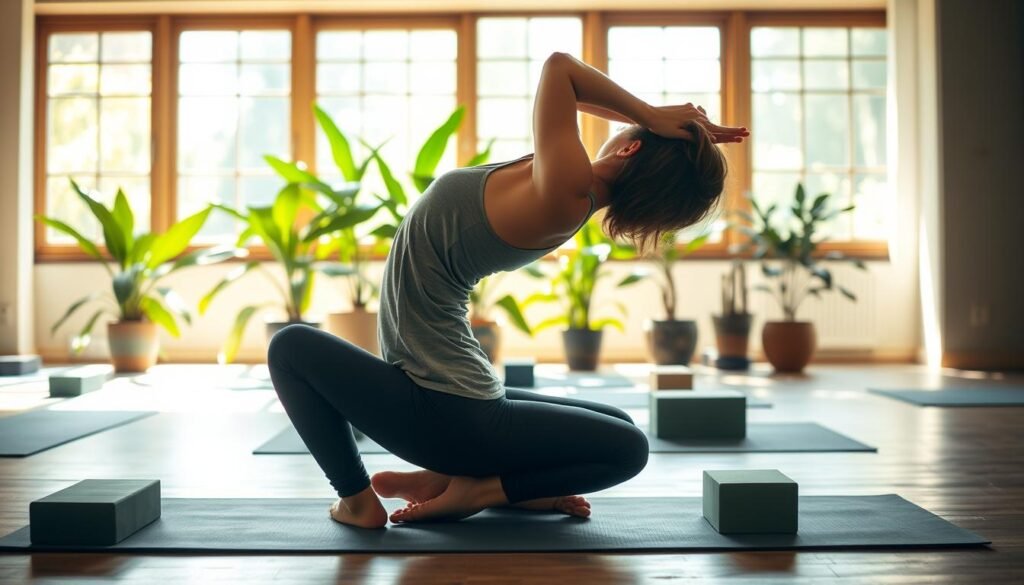
Hydrate fascia with fluid, buoyant micro-movements. Begin with easy, gliding motions rather than forced stretching. Keep movements small, rhythmic, and slightly bouncy to encourage inter-fascial glide.
Mini sequence to reawaken the legs, hips, and back
Tadasana → Baddha Konasana → Bridge → Chair → Warrior II. Move slowly through each shape, prioritizing steady foot contact and balanced effort. Practice on a non-slip mat, barefoot, and keep transitions unhurried.
- Start in Tadasana: reconnect feet to the floor, add gentle side bends and chest rotations to restore fluid motion.
- In Baddha Konasana, use subtle pulses—small hip open-close actions—to soften the groin and invite hydration.
- Bridge with slow spinal roll-ups and roll-downs to mobilize each vertebra and reawaken the back line.
- Chair reinforces functional strength: press through heels, keep a long spine, and breathe evenly to energize the legs.
- Warrior II opens hips and strengthens abductors; explore tiny torso micro-movements while legs stay steady.
Keep actions buoyant and smooth. Aim for a gliding quality that coaxes tissue rather than forcing range. If balance feels off, shorten stances or use a wall for light support while maintaining even pressure under the feet.
| Step | Main focus | Immediate effect | Quick cue |
|---|---|---|---|
| Tadasana | Re-establish foot contact | Centered base | Feel four corners, breathe |
| Baddha Konasana | Hip glide | Groin release | Small pulses, soft spine |
| Bridge | Back mobilization | Spinal ease | Roll up & down slowly |
| Chair → Warrior II | Leg strength & hip opening | Stable energy | Press heels; micro-move torso |
Finish with a minute of quiet standing. Notice weight distribution and the renewed sense of connection through the body. For a short, energizing lymphatic flow that complements this reset, try this 15-minute sequence: 15-minute lymphatic flow.
Safety, Props, and Mat Choice for Better Grounding
A steady surface and the right props let your joints find safe ranges and your breath settle naturally. These small choices make balance easier and cut sensory noise so your nervous system can calm.
A quick setup check reduces risk and improves results. Start by choosing a high-traction mat and arranging simple supports nearby.
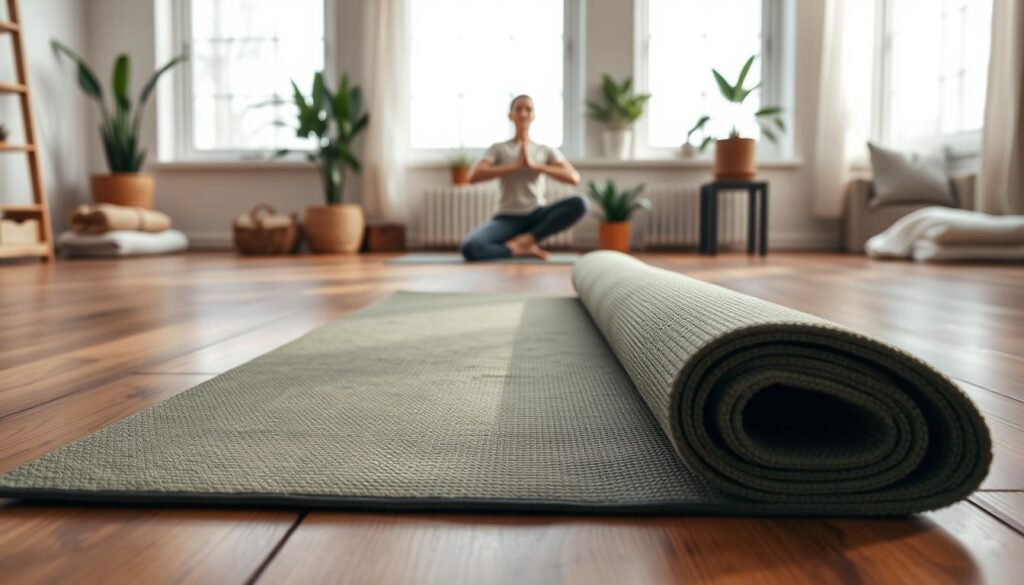
Blocks, blankets, and wall support to protect spine and hips
Use blocks to raise the floor in forward folds and deep squats so the spine stays long and the hips remain supported. A block under the sit bones in low squats helps maintain comfort and alignment.
Folded blankets under the knees or sacrum ease pressure and allow longer, calm holds. Work near a wall for balance; light fingertip contact gives safety while you refine even pressure through your base.
Non-slip mat and barefoot practice for reliable traction
Choose a non-slip mat to prevent sliding in standing and weight-bearing shapes. Reliable traction makes cues about the base and foundation consistent so your brain accepts them as true.
Practice barefoot when possible. Direct contact with the floor heightens tactile feedback and improves natural foot mechanics, which boosts overall stability during movement.
- Keep hands active when weight-bearing: spread fingers, press through the palm mounds, and align wrists beneath shoulders.
- Create a regular setup: same mat orientation and spacing signals safety to the brain and aids repeatable balance.
- Adjust stance: widen or shorten step length to protect joints and prioritize comfort over aesthetic form.
- Move slowly on and off the floor: transitions are when control often slips, so keep base awareness high.
- Use props wisely: good supports reduce system noise, letting breath and alignment do the stabilizing work.
| Support | Primary benefit | Quick cue | Best use |
|---|---|---|---|
| Block | Raises the floor to protect hips and lower back | Place under sit bones or hands | Forward folds, Malasana-style squats |
| Blanket | Cushions knees and sacrum, reduces joint strain | Fold to comfort, test thickness | Kneeling, seated holds, restorative rests |
| Wall | Provides light support for balance and alignment checks | Use fingertip contact or back support | Single-leg balance, transitional safety |
| High-traction mat | Prevents slips and makes base cues reliable | Choose textured, non-slip surface | Standing, weight-bearing, dynamic practice |
Want equipment recommendations? For sturdy, travel-friendly options and to shop helpful props, see shop helpful props.
From Mat to Life: Practices to Stay Centered Today
Small, repeatable practices during the day can keep your energy steady and your decisions clearer. Bring a few compact rituals into daily life to anchor your center and deepen your connection to present-moment signals.
Start with short, repeatable blocks: five minutes of breathwork, then five minutes of Tadasana-style cues. These quick habits create a reliable base you can return to before meetings or stressful moments.
Take your yoga practice outdoors when you can and go barefoot on grass or sand to enhance sensation and natural contact. If weather or safety prevents that, practice micro-pauses anywhere—under your desk, in line, or between calls.
- Micro-pauses: feel feet, soften the jaw, lengthen the exhale to reset the nervous system.
- Mobility snacks: do wall push-ups, hip openers, or calf lifts during breaks to maintain steady energy.
- Mantra moments: a soft exhale with a short sound reconnects you to calm during spikes of stress.
“One stable step, one slow breath, one aligned posture—clarity grows from steadiness.”
Invite a partner for short practices; shared focus and supportive touch build trust and make these rituals easier to keep. After busy days, journal a quick note: which cues grounded you best? Repeat those tomorrow.
| Practice | When | Quick benefit |
|---|---|---|
| 5-min breath + 5-min stance | Morning or before work | Anchors center; primes mind for decisions |
| Barefoot outdoors | Walk or short practice | Enhances sensory connection; calms energy |
| Micro-pauses | Throughout day | Lower reactivity; steady attention |
Conclusion
Simple shifts in foot contact and breathing give the brain immediate cues to lower arousal and sharpen attention. When your base is steady—press the four corners of each foot—and your breath is smooth, the nervous system accepts safety and focus follows. Practice these cues in Mountain, Bridge, or a short single-leg balance to train reliable body awareness you can use off the mat.
Start small: two or three shapes plus a few minutes of Dirga or Sama Vritti will build steady results over time. Use a non-slip mat, props when needed, and allow 30–40 minutes of gentle micro-movements after travel to let tissues rehydrate. For a concise guide to grounding poses in practice see grounding poses in practice, and learn how lymphatic work pairs with these methods at nervous system workouts. From a neurologist’s view, a stable base plus rhythmic breathing are simple, neurology-friendly tools that help your whole system organize toward calm, clarity, and confident movement.
FAQ
How do grounding poses influence the brain?
A neurologist would say that steady stances and stable footing send safety signals through the body to the brain, reducing amygdala-driven stress and improving prefrontal cortex function. Rooting the feet and aligning the spine boosts proprioceptive input, which sharpens attention and produces a calmer, more focused state.
Why does a stable base improve attention and clarity?
Pressing into the ground and engaging legs and core increases sensory feedback to balance centers and cortical areas that manage attention. When the body feels supported, the nervous system down-regulates threat responses, freeing cognitive resources for clearer thinking and better decision-making.
What is the connection between the root chakra and nervous system regulation?
The root center at the base of the spine relates to feelings of safety and bodily presence. Practices that emphasize grounding — like strong, footed stances and breath awareness — provide somatic cues that can lower sympathetic arousal and promote a sense of stability and embodied attention.
How do simple cues like pressing the four corners of the feet help before movement?
Pressing the heel, inner ball, outer ball, and big toe corner equalizes weight distribution and builds a reliable base. This alignment engages the posterior chain and core, protecting the spine and improving balance so movement can begin from strength rather than compensation.
Which standing exercises are best for a neurologist-approved grounding practice?
Effective options include Mountain (a postural reset), Chair (leg strength and steady breath), Warrior I and II (hip opening and stable gaze), and Tree (single-leg balance). These positions combine sensory input through the feet with spinal alignment to enhance cortical stability.
Can seated and supine poses also promote a grounded nervous system?
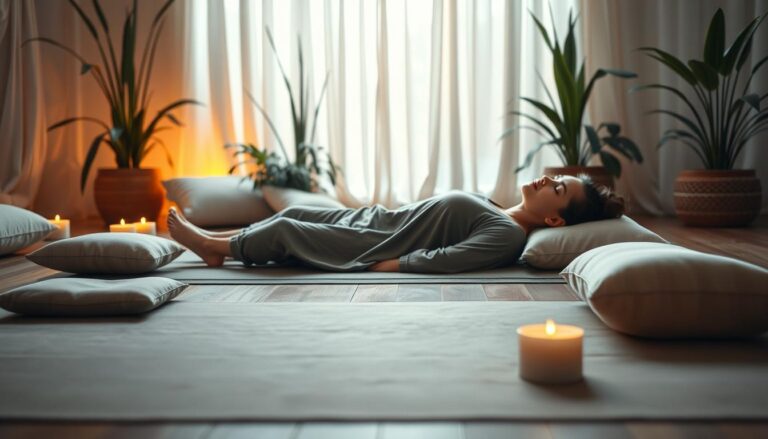
Yes. Poses such as Bound Angle and Legs Up the Wall soothe the groin and low back and encourage parasympathetic activation, while Bridge roots the feet and wakes the back body. These shapes support rest and recovery when standing work is too intense.
What breath techniques are most effective for calming the nervous system?
Three-part breath (Dirga) helps expand belly, ribs, and chest for full-body regulation, while equal breathing (Sama Vritti) balances inhale and exhale to steady autonomic rhythms. Both reduce perceived stress and amplify the calming effects of grounding postures.
What practical cues create an “earth beneath” sensation during practice?
Use tactile and visual cues: feel the four corners of each foot, soften knees slightly, draw the tailbone toward the feet, and lower the gaze to a steady focal point. These simple actions amplify proprioception and foster the embodied sense of support from the floor.
How can travelers use a brief sequence to reset tight fascia and nervous tone?
Hydrate, then move slowly through a mini flow: Mountain → Bound Angle → Bridge → Chair → Warrior II. Start with fluid micro-movements to mobilize fascia, progress to rooted standing shapes, and finish with steady breath to normalize nervous-system activity.
What props and mat qualities support safer, more reliable grounding work?
Use blocks, blankets, and wall support to protect the spine and hips and to offer tactile feedback. Choose a non-slip mat and practice barefoot when possible for better traction and proprioceptive connection to the floor.
How do these practices translate off the mat into everyday stability?
Build brief rituals: three-part breath before stressful calls, footed stance when standing in line, and regular balance drills to maintain neuromuscular control. These habits strengthen the body’s baseline sense of safety and improve emotional regulation throughout the day.