

Curious whether a guided body-and-breath practice can actually help you fall asleep faster and wake calmer? This method is a step-by-step way to settle the nervous system while you lie comfortably in savasana. It blends clear cues, gentle breath guidance, and a mental tour of the body to ease tension.
The session usually runs about 20–25 minutes and adapts well to bedtime or a midday reset. You’ll learn how a simple script supports rest, what to expect during rotation of awareness, and how to set up a comfortable practice space. No prior experience is required — just follow slow, steady instructions and stay as still as feels right.
Lineage and modern methods — from classical approaches to contemporary iRest-style guidance — inform many scripts, but the core promise is the same: steadier breath, a calmer body, and easier sleep onset. If you want a practical starter, explore a 15-minute example at this guided outline, or read about nervous-system approaches that complement the practice at related wellness resources.
Key Takeaways
- What it does: Guides awareness through the body and breath to calm the nervous system.
- Session length: Typical practice is ~20–25 minutes, with shorter versions effective too.
- Accessibility: No prior experience needed; follow the cues at a comfortable pace.
- Practical setup: Lie in savasana, use props for comfort, and minimize movement.
- Core components: Sankalpa, rotation of consciousness, breath awareness, visualization, and gentle return.
- Everyday use: Record a voice memo or follow a teacher to make practice regular and easy.
Why Try Yoga Nidra for Sleep Right Now
This method gives a simple, repeatable path to unwind without guesswork. It guides attention step by step so the body can let go while the mind follows calm cues.
When bed feels restless, a structured guided approach helps both body and mind settle. A recorded voice or a trusted teacher offers steady pacing, short pauses, and plain language that reduce mental effort.
Search intent at a glance: how a script supports deep rest
The core aim is practical: people want an easy, effective way to relax before bed. A clear script anchors awareness and moves it through the body in small steps. That reduces fidgeting and thought loops so the nervous system can downshift.
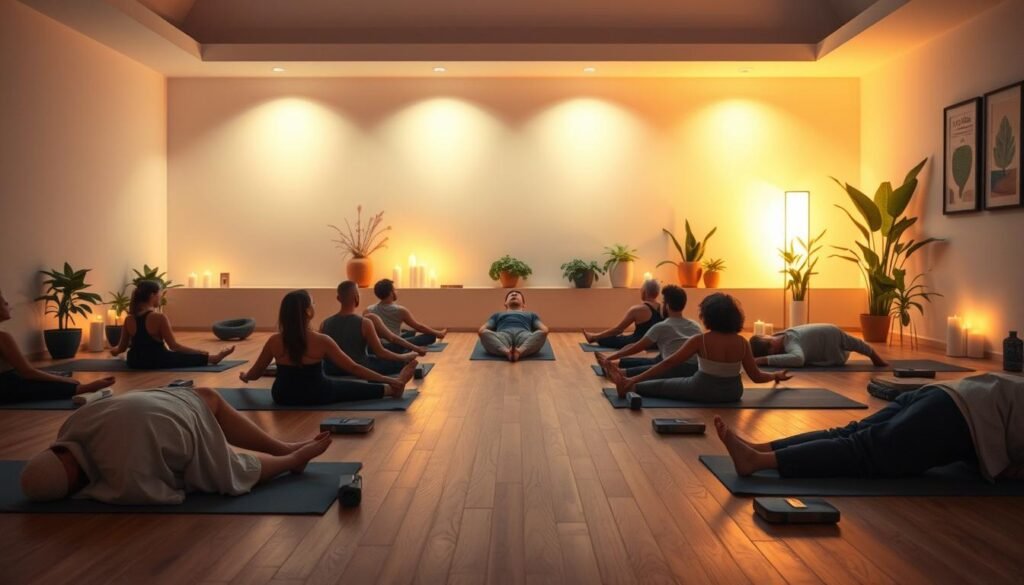
“Yogic sleep” explained in simple terms
Yogic sleep describes a guided state where the body rests deeply and the mind stays quietly alert. It is not ordinary sleep; it’s a restful, restorative experience that taps into subtle levels of awareness.
Many frameworks trace back to Bihar School teachings and modern models like iRest. If you want a practical primer on practice mechanics, read more about yoga nidra and explore how somatic methods relate to glands and stress at endocrine system and yoga.
- Make it portable: record a calm, slow voice on your phone to keep pacing consistent.
- Keep it short: brief, regular sessions build familiarity and make calm easier to reach.
Proven Benefits of a Yoga Nidra Practice for Better Sleep
A steady guided practice nudges the nervous system into recovery mode, making rest easier to reach. This shifts the body from fight-or-flight toward rest-and-digest, supporting deep relaxation and daytime recovery.
Clinical studies show regular practice can activate the parasympathetic system and lower physiological arousal. See research summaries at clinical reviews that discuss nervous-system effects.
Brief, consistent sessions—often about 20 minutes—can reduce nighttime awakenings and improve overall sleep quality. In therapeutic settings such as iRest, guided body and breath awareness helps regulate anxiety and trauma symptoms.
Practical perks:
- Quiets mental chatter and steadies the mind through structured cues.
- Supports emotional balance via gentle visualization and attention shifts.
- Accessible while lying on the back, side, or supported with props—no physical exertion needed.
Simple somatic cues, like noticing chest and back breathing, lower muscle tension and reduce fidgeting. Over time, repetition trains the nervous system to recall relaxation more quickly, making calm an easier daily experience.
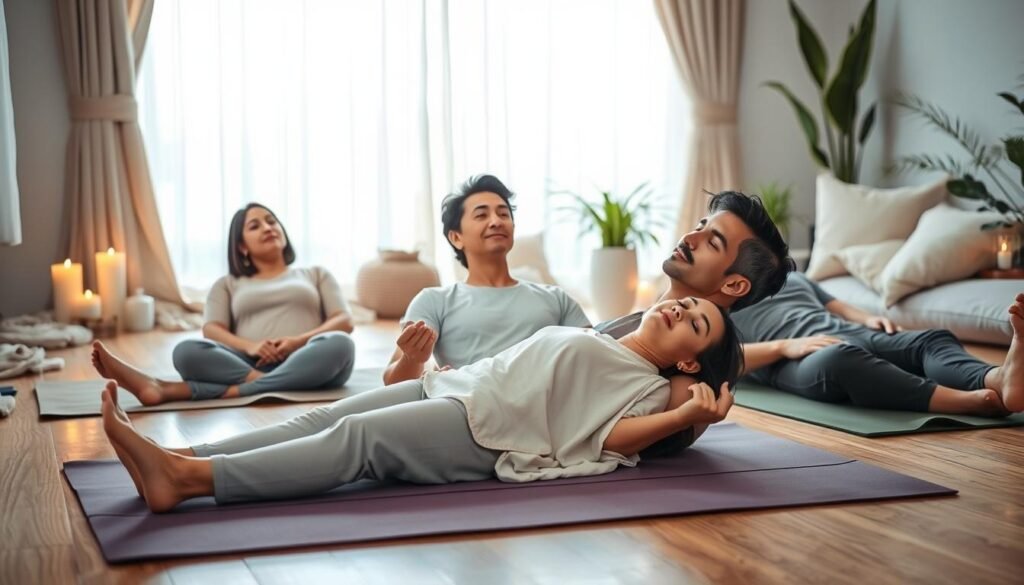
Explore movement-linked emotional release techniques at targeted stretches to complement this practice.
Setting Up Your Space: Comfort First for Whole-Body Stillness
Create a quiet, low-light space and bring simple props that let the physical body settle without strain. A clear setup reduces fidgeting and helps attention rest on gentle breath and body sensations.
Room, surface, and props: head, back, knees, eyes
Choose a calm room where interruptions are unlikely. Silence devices and dim screens.
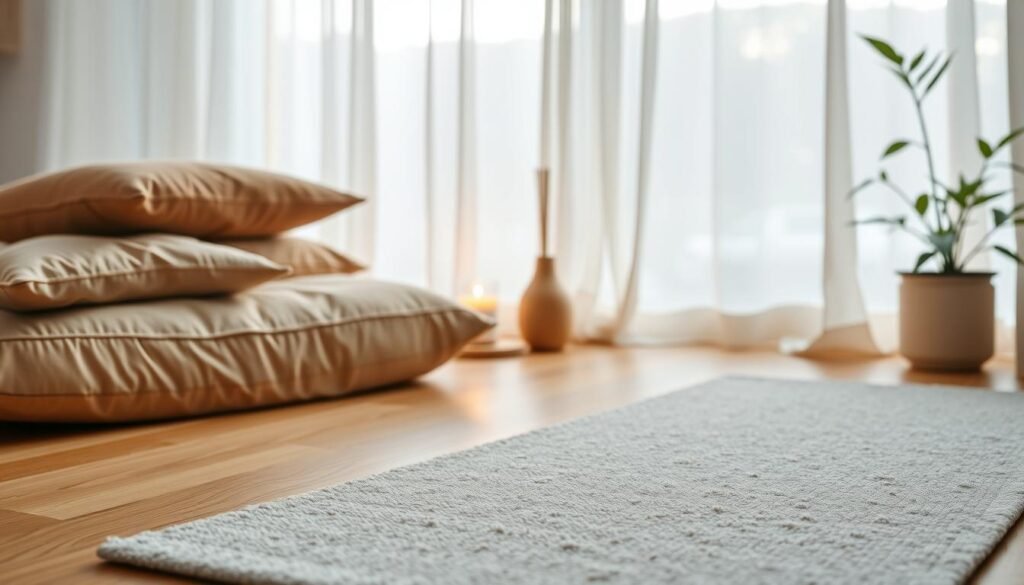
Lie on a firm but comfortable surface such as a mat plus a folded blanket. Support the head with a small folded blanket so the chin sits slightly lower than the forehead.
Slide a bolster or rolled blanket under the backs of the knees to ease the lower back. Keep a light blanket for warmth and a soft eye covering to reduce light and cue stillness.
Savasana alignment cues for the back body and neck
Lengthen the back of the neck gently and broaden the collarbones. Soften the chest without collapsing and relax the jaw.
Let the left side and right side ease equally. Adjust knees and legs until hips feel level and the legs rest effortlessly.
Safety notes and when to consult a teacher
Make small adjustments early on, then allow stillness to take over. If you have physical limitations, recent injuries, or mental-health concerns, consult an experienced teacher for a tailored prop setup and safety guidance.
| Item | Purpose | Placement | When to Adjust |
|---|---|---|---|
| Folded blanket (head) | Neutral neck alignment | Under the base of the skull | Any neck discomfort |
| Bolster / rolled blanket (knees) | Release lower back tension | Under backs of knees | If hips or low back feel strained |
| Light blanket | Maintain comfortable temperature | Cover torso and legs | If you feel cold or restless |
| Soft eye covering | Minimize light, signal rest | Over eyes | If breath feels restricted |
How to Use a Yoga Nidra Script for Deep Sleep
Lie quietly and scan contact points; once still, state a simple intention in the present tense. This clear start anchors attention so the rest of the practice unfolds with less effort.
Begin by settling: notice where the physical body meets the floor and bring awareness to the whole body. State a concise sankalpa—one short, positive sentence in present tense.
Structure: settle, intention, and rotation
Move through a steady rotation of consciousness. Name each part quickly and calmly and invite stillness without moving the body.
Breath awareness and gentle counting
Shift to simple breath cues: imagine breath rising from navel to throat or follow a soft so-hum rhythm. Use gentle counting (21 to 0 or 10 to 1) and restart if the count is lost.
Opposites, visualization, and mindful return
Explore opposites—heavy then light, warm then cool—to release held tension. Invite inner space (chidikasha) and observe images or darkness with detached curiosity. Offer a brief visualization of safety or supportive light.
Return slowly: feel the back, the right side and left side contact, deepen the breath, and reorient gently to the room. Keep pacing unhurried and leave small pauses so the mind can integrate.
“Count resets are normal — use them to anchor attention rather than to judge performance.”
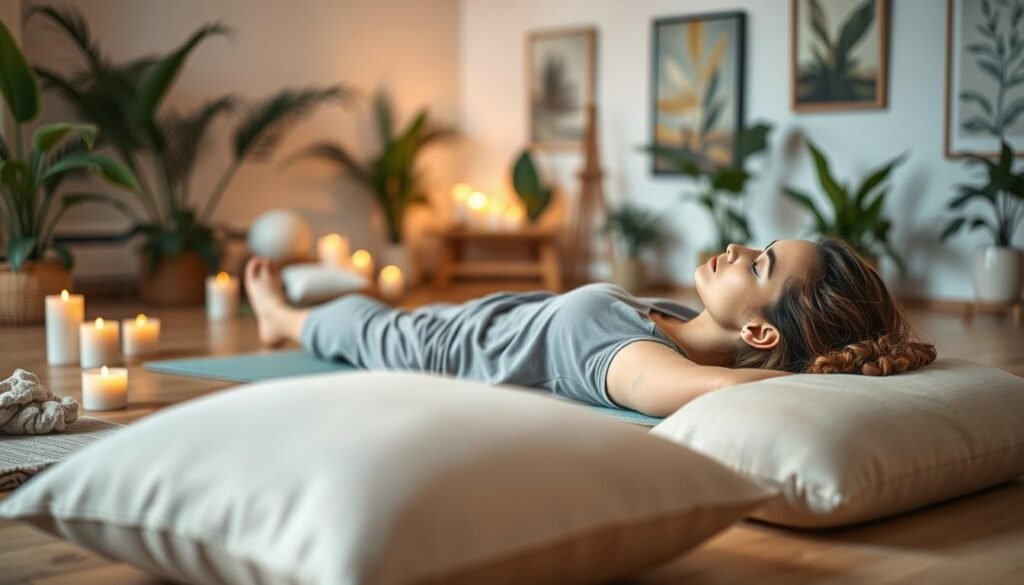
Mini Script: Guided Cues to Bring Awareness to the Whole Body
Settle with small, steady cues that orient attention without effort. This mini script guides breath and a slow rotation so the whole body can feel supported and safe.
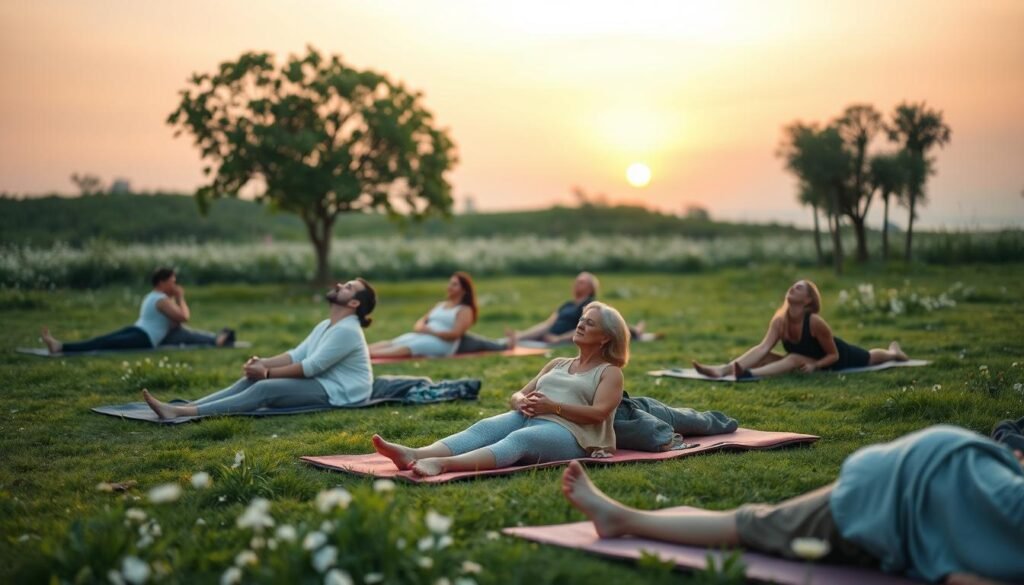
Settling and breath: soften jaw, eyes, and throat
Settle into your support and soften the jaw and tongue. Let the eyes rest and ease the back of the neck.
Notice how a relaxed throat invites calmer breath. Hold this soft attention for a few natural cycles.
Rotation highlights: right shoulder to fingertips, left side to toes
Bring awareness to the right shoulder, then name upper arm, elbow, forearm, wrist, palm, thumb to little finger.
Shift to the left side and scan down the left thigh, knee, leg, ankle, then toes—big toe to little toe. Mirror briefly back on the right.
Sense breath rising from the navel to the throat on each inhale and falling on the exhale.
Hear a soft so-hum under the breath and allow any remaining effort to dissolve. Then sense the whole body at once and feel whole and safe to rest.
- Quick cue: Name each part without moving.
- Opposites: Feel heavy, then light; let tension drop.
- Close: Wiggle toes and fingers, pause, then roll gently to the side.
| Landmark | Cue | Why it helps |
|---|---|---|
| Right shoulder → fingertips | Name each segment slowly | Focus steadies the mind and calms the nervous system |
| Left thigh → big toe | Scan down, pause at joints | Releases lower-body tension and completes the rotation |
| Back body and chest | Feel contact with the surface | Supports a felt sense of being held and safe |
To extend this mini practice, pair it with gentle somatic work such as the gentle somatic exercises that enhance body awareness and relaxation.
Tips for Practice and Teaching: From First Try to Confident Delivery
Keep your delivery calm, clear, and steady. Small choices in tone and pacing help listeners settle faster and trust the practice.
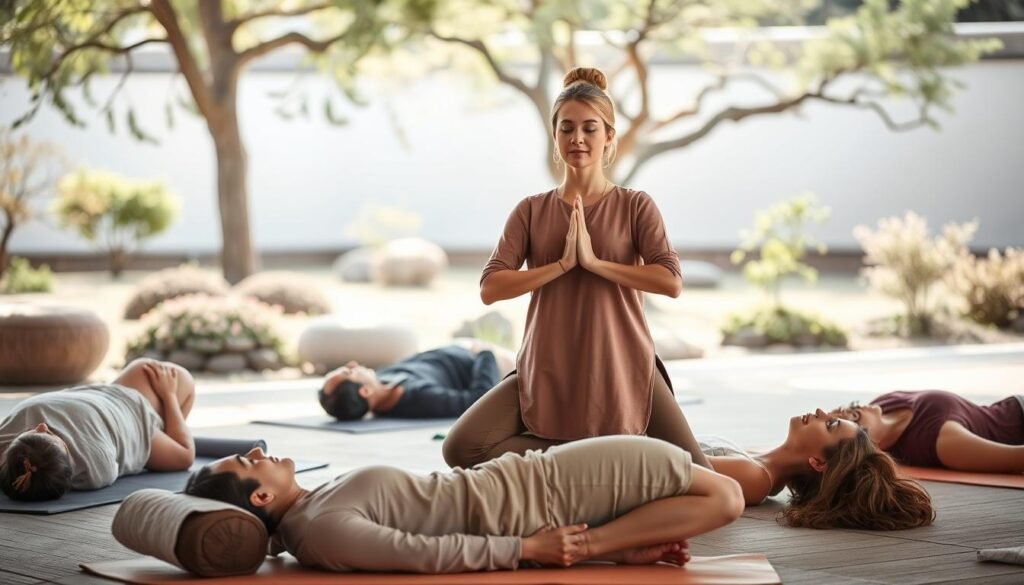
A gentle, practiced voice reduces uncertainty. Record a voice memo of your yoga nidra script at a slower pace than normal speech. Leave 3–5 second pauses after key cues so listeners have time to rest into sensation.
For self-practice: use sensory language that names contact with the floor and simple breath cues. Speak plainly and repeat consistent landmark phrases so the body recognizes them across sessions.
For yoga teachers: cultivate a steady, calm tone and resist over-explaining. Trust the structure of your nidra scripts; adapt imagery to the group and season, and offer clear options (eye covering, bolster, folded blanket).
- Adapt length: 20–25 minutes for fuller relaxation; short closings after a movement class to integrate practice.
- Practice out loud: mark pauses and counts in your text and rehearse transitions.
- Build a library: refine prompts based on student feedback and time of day.
| Area | Action | Why it helps |
|---|---|---|
| Recording | Make a voice memo, slow pace, 3–5s pauses | Consistent timing anchors attention and reduces drift |
| Language | Use sensory, simple cues; repeat landmarks | Familiar phrases help the body settle more quickly |
| Teaching tone | Steady, calm voice; avoid over-explaining | Builds trust and leaves space for internal experience |
| Session length | 20–25 min for full practice; shorter closings if needed | Matches intent: deep relaxation or quick integration |
Common Myths About Yoga Nidra
Many myths make this method seem mysterious or off-limits. Clear facts help you try it without worry and get practical benefits.
A quick note: this practice is structured, not a vague guided meditation. It follows a stepwise sequence that shapes how attention moves through the body and breath. You do not need special flexibility or beliefs to benefit.
“You must stay awake” and other misconceptions
Myth: “You have to stay awake.” Reality: drifting off can mean your body needed rest. Over time many people hover between rest and gentle awareness.
Myth: “It’s just guided meditation.” Reality: the practice uses rotation, breath work, opposites, visualization, and a calm return. Those layers matter.
Myth: “Only advanced teachers can lead it.” Reality: new teachers teach well with a clear plan and steady tone. Comfortable stillness, not flexibility, is the skill.
- Try variations: experiment with length and language to find what your body prefers.
- No special beliefs needed: follow steps and let the mind rest in a guided flow.
“A clear, paced guide reduces mental effort and lets the body settle into real relaxation.”
Conclusion
,A clear, repeatable sequence makes it simple to unwind each night and restore balance. Small steps—settle, set intention, scan the body, track breath, visualize, and return—create predictable calm.
Start small: record a short, steady script and practice in a dim, quiet space at the same time each evening.
Track how your body and mind feel after a week; note changes in sleep onset and morning energy. Bring awareness to the whole body, especially back body contact, the chest, and head as anchors.
Even brief sessions help. Adapt imagery and pacing to fit your room and light. When you’re ready, try a sample nidra outline linked here: sample nidra outline, or read a personal somatic therapy story to deepen body awareness at somatic therapy story.
Takeaway: small, steady steps lead to better rest—dim the lights, keep your brief script nearby, and begin tonight with a mini session.
FAQ
What is yogic sleep and how does it differ from regular rest?
Yogic sleep refers to a guided state of conscious relaxation where the mind rests deeply while awareness remains present. Unlike ordinary sleep, which is largely unconscious, this practice leads to a parasympathetic nervous system response—slower breath, reduced heart rate, and a sense of restoration—while you stay lightly aware of inner sensations. It’s used to improve sleep quality, reduce stress, and support emotional balance.
How long should a typical practice last to support nighttime rest?
Aim for 20–40 minutes for a full practice that includes settling, a resolve (sankalpa), a rotation of body awareness, breath work, and a gentle return. Shorter versions of 10–15 minutes can work as a calming pre-sleep routine. Choose a duration that fits your schedule and allows steady pacing; consistency matters more than length.
Can anyone practice this technique, including people with limited mobility?
Yes. The practice is highly adaptable. You can remain on your back, lie on a supportive surface, or use props under the knees and head to reduce strain. Cues can be verbal and non-movement-based (visualization or imagined attention) so those with limited mobility still gain full benefits. Consult a qualified teacher if you have recent injuries or specific medical concerns.
Is it a problem if I fall asleep during the session?
Falling asleep is common and indicates deep relaxation; it’s not a failure. Regular practice can increase the ability to remain gently aware while resting, but allowing your body to sleep when needed still offers restorative benefits. If your main goal is lucid awareness, shorten the practice and use slightly more alert cues.
How should I set up my space for whole-body stillness?
Choose a quiet, dim room and a comfortable surface such as a yoga mat with a blanket and pillow. Support the head and neck, place a bolster under the knees if the lower back feels strained, and cover your eyes with an eye pillow if helpful. Keep the temperature slightly cool to promote relaxation, and remove distractions like phones or bright lights.
What is a sankalpa and how do I create one?
A sankalpa is a short, positive intention stated in the present tense, for example, “I sleep deeply and wake refreshed.” Keep it concise, personal, and achievable. Repeat it mentally at the beginning and end of the practice to reinforce neural pathways associated with that intention.
Are there safety considerations or reasons to avoid this practice?
Most people can practice safely, but consult a healthcare professional if you’re experiencing untreated severe depression, PTSD, or recent psychiatric episodes, as deep inward focus can sometimes surface strong emotions. Also seek advice if you have cardiovascular issues or are pregnant—modifications may be recommended.
What role does breath awareness play and how should I use it?
Breath awareness anchors attention and shifts the nervous system toward relaxation. Use gentle, nonforced observation of inhalation and exhalation, or a soft counting method (for example, inhale 1–4, exhale 1–4). Avoid breath retention or vigorous techniques before sleep; prefer slow, steady rhythms that invite calm.
Can teachers adapt scripts for different groups or sleep issues?
Absolutely. Teachers tailor language, pacing, and cues to the population—athletes, older adults, or people with insomnia—while keeping core elements: settling, rotation, breath, opposites, and visualization. Use clear tone, pauses, and accessible imagery; offer options for movement or stillness and respect individual comfort levels.
How soon will I notice benefits like improved sleep quality or reduced anxiety?
Some people feel immediate relaxation after a single session, while consistent practice—several times a week—tends to produce measurable changes in sleep patterns and stress markers within a few weeks. Outcomes vary by individual, but evidence shows regular guided relaxation supports better sleep and emotional regulation over time.
What are simple cues I can use for a mini whole-body practice at bedtime?
Focus on a short settling sequence: soften the jaw and throat, notice the rise and fall of the chest, then briefly scan from the right shoulder to the fingertips, across the torso, and down the left leg to the toes. Pair each area with slow breath cycles and finish with a short sankalpa. This can take 5–10 minutes and signals the nervous system to unwind.
Do visualizations help, and which images promote restful states?
Yes. Calming images like a still lake, soft night sky, or warm light moving through the body encourage parasympathetic activation. Keep visualizations neutral and sensory—texture, color, and temperature—so the mind stays engaged without becoming emotionally charged.
How can I measure if my practice is effective?
Track sleep duration and quality (subjective scales or a sleep app), note ease of falling asleep, and observe daytime energy and mood. Reduce stress-related symptoms such as tension in the neck or shallow breathing. Improvements in these metrics over weeks indicate an effective practice.
Are there contraindications for people with trauma histories?
People with unresolved trauma may find deep relaxation and interoceptive focus triggering. Use trauma-informed approaches: shorter practices, grounding cues, choice-based options (eyes open, hands visible), and professional guidance from a trauma-aware teacher or therapist when needed.
Should I practice at night only, or is daytime practice useful too?
Both are beneficial. Evening sessions help with falling and staying asleep, while daytime practice reduces stress, resets the nervous system, and builds the skill of relaxed awareness. Regular daytime practice can enhance nighttime results.
What’s the difference between exploring opposites (heavy/light) and simple body scanning?
Opposites practice engages interoception by alternating sensations—heavy then light, warm then cool—to deepen sensory discrimination and trigger relaxation through contrast. A body scan moves attention sequentially through areas without contrast and often supports restful awareness; both techniques are complementary.
How can I teach pacing and voice use when guiding others?
Use a calm, steady pace with deliberate pauses—enough time for attention to settle on each cue. Soft, warm vocal tone and measured phrasing reduce cognitive load. Practice recordings to refine timing, and adjust based on group responsiveness.