

Stress often shows up in the body before it feels like a clear thought. A tight jaw, shallow breathing, raised shoulders, restless legs, or a clenched stomach can all be signs that your body is holding tension.
A short somatic routine gives you a way to pause and notice those signals. It does not force calm, and it is not medical or mental health treatment. It simply uses slow movement, breath awareness, pressure, and posture to help you feel more present in your body.
Quick answer
A 10-minute somatic routine can be useful when you feel tense, wired, stiff, scattered, or mildly overwhelmed. The goal is not to perform the movements perfectly. The goal is to move gently enough that your body can notice support, soften a little, and settle into the moment.
“The best somatic routine is the one you can do gently, safely, and consistently.”
Key takeaways
- Somatic exercises are body-awareness tools. They are not a cure for anxiety, trauma, panic, chronic pain, or nervous system disorders.
- Slow movement usually fits this routine better than deep stretching or intense exercise.
- If a movement feels sharp, dizzying, overwhelming, or irritating, reduce it or stop.
- Ten minutes can be enough when the routine is simple and easy to repeat.
- Comfort matters. A chair, wall, mat, or small pad can make the routine easier without turning it into a product-dependent practice.
Before you start
This routine is meant for gentle everyday stress, body awareness, light tension, and short movement breaks. It should not be used as a replacement for care if you are dealing with panic symptoms, trauma symptoms, ongoing dizziness, severe pain, fainting, unexplained numbness, chest pain, or symptoms that feel new or concerning.
If you are pregnant, recovering from an injury, managing a balance issue, or unsure whether a movement is safe for you, keep the range very small or ask a qualified professional for guidance first.
What somatic exercises mean in real life
Somatic work is about paying attention to physical sensations and using small, manageable movements to change how you relate to tension. That might mean noticing your feet on the floor, softening the shoulders, letting your exhale feel easier, or moving slowly enough to feel where your body is bracing.
The movements are often small on purpose. Bigger movement is not automatically better here. For many people, the value comes from slowing down enough to notice what is happening.
What this routine can and cannot do
This routine may support body awareness and self-regulation during ordinary stress, stiffness, or sensory overload. It cannot diagnose a nervous system problem, and it should not be described as a guaranteed fix for anxiety, trauma, panic, chronic pain, insomnia, or other health concerns.
Use it as one practical tool. Some days it may feel calming. Other days it may simply help you notice tension sooner, which is still useful.
When a short routine may be most useful
You do not need a perfect wellness setup. A short somatic sequence often fits best when your body feels mildly revved up, shut down, stiff, or scattered from everyday stress.
| Common moment | What to focus on | Realistic goal |
|---|---|---|
| After long sitting or screen time | Shoulders, posture, breath, foot pressure | Less stiffness and clearer body awareness |
| Before bed | Slower pacing, gentle rocking, easier exhales | A calmer transition into rest, not forced sleep |
| During a stressful work break | Chair support, grounding through the feet, simple shoulder release | Feeling less scattered and more present |
| When the body feels tense but the mind feels foggy | Small movements with clear physical feedback | Noticing where tension is being held |
A 10-minute somatic routine you can do almost anywhere
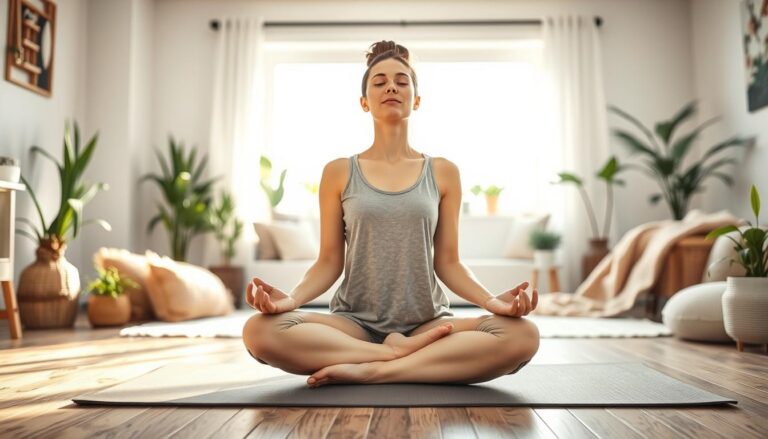
This routine uses five simple exercises for about two minutes each. You can do most of it seated, standing, or on the floor. If one position does not feel right, use a chair, shorten the time, or make the movement smaller.
| Exercise | Time | What to notice | Easier option |
|---|---|---|---|
| Orient and arrive | 2 minutes | Eyes, jaw, breath, contact with floor or chair | Stay seated and keep movements small |
| Shoulder rolls and chest softening | 2 minutes | Neck tension, rib movement, breathing pace | Move one shoulder at a time |
| Cross-body self-hold with gentle sway | 2 minutes | Pressure, support, stillness, or motion | Skip the sway and simply pause |
| Seated or standing side reach with breath | 2 minutes | Waist, ribs, one-sided tightness, breath depth | Use a chair and reduce the reach |
| Gentle rocking or heel-to-toe grounding | 2 minutes | Weight shift, foot pressure, steadiness | Place hands on a wall or countertop |
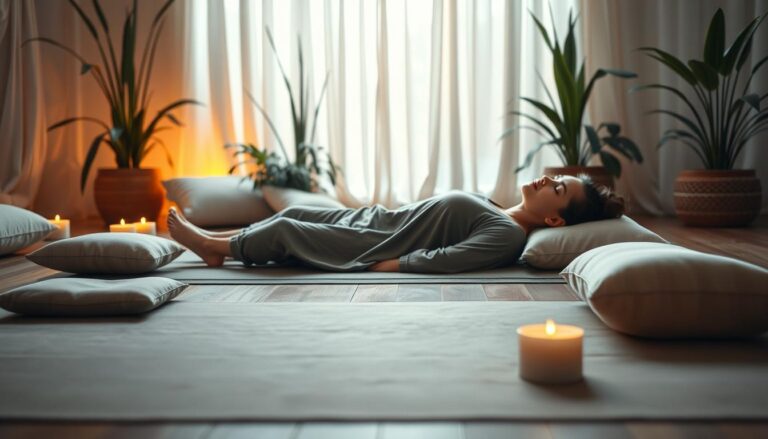
If you prefer doing part of the routine on the floor, a cushioned mat can make the setup more comfortable without changing the purpose of the practice.

1. Orient and arrive
Start by pausing. Let your eyes slowly look around the room. Notice shapes, light, corners, furniture, or any stable object nearby. Then notice where your body touches the floor, chair, bed, or wall.
You are not trying to think your way into calm. You are giving your body more information about where it is right now. Let the jaw unclench if it can, and allow the shoulders to drop slightly without forcing them.
2. Shoulder rolls and chest softening
Lift the shoulders a little, roll them back, then let them settle. Repeat a few times without trying to create a deep stretch. Keep the movement smooth and easy.
After that, place one hand over the upper chest or sternum and breathe normally for several breaths. This can be helpful after hours of hunching over a laptop or phone. The aim is not perfect posture. It is simply to reduce the feeling of bracing across the neck, chest, and upper ribs.
3. Cross-body self-hold with gentle sway
Wrap your arms across your chest as if giving yourself a light hug. Hold the upper arms or shoulders gently. From there, sway slowly side to side, or stay still if stillness feels better.
Some people find this kind of pressure grounding. Others prefer less input. Choose the version that feels more supportive, not the one that looks more impressive.
4. Seated or standing side reach with breath
Raise one arm and lean slightly to the opposite side. You can do this seated or standing. Keep the movement small enough that breathing still feels easy.
Take one or two calm breaths, return to center, and switch sides. Notice whether one side of the ribs, waist, or upper back feels more guarded than the other. Somatic work often starts with noticing before anything changes.
5. Gentle rocking or heel-to-toe grounding
Stand with both feet planted and slowly shift your weight forward and back. You can also rock gently from heel to toe. If standing does not feel stable, do the same thing seated by pressing your feet into the floor and noticing how the pressure changes.
This is a simple way to bring attention back to the lower body. When the mind feels busy, steady foot pressure can be more useful than trying to “just relax.”
How to make the routine easier and more comfortable
A good somatic routine should feel adjustable. You should be able to scale it down without feeling like you failed. That flexibility is part of what makes the routine easier to repeat.
- Use a chair or wall if standing work feels tiring or unsteady.
- Keep the range of motion smaller than you think you need.
- Move more slowly if your body already feels overstimulated.
- Rest between exercises if tension starts building instead of easing.
- Use padding under the knees, elbows, wrists, forearms, or sit bones during floor-based variations.

Extra padding is optional. It can make floor-based positions feel more comfortable, but it should never be used as a reason to push through sharp pain, numbness, joint irritation, dizziness, or symptoms that need medical attention.
If the only uncomfortable part of the routine is pressure from a hard floor, targeted padding may help you keep the movement gentle. If the movement itself causes pain or feels unsafe, padding is not the answer. Modify the position or stop.
When comfort tools actually help
A basic mat makes the most sense when you want one simple surface for slow floor work, gentle stretching, seated floor variations, or a repeatable home setup. If you already have soft carpet or a supportive mat, buying another one may add very little.
Readers who want to compare the mat used here can check this cushioned mat option on Amazon. Treat it as comfort support only. A mat does not regulate the nervous system, treat anxiety, fix pain, or make any movement medically safe for every person.
- High-Density & Extra Thick: Provides supportive cushioning for comfort and stability during poses. 68-inch by 24-inch mat.
- Comfortable & supportive – this mat offers maximum comfort and support with its extra thick 12 mm of padding to ensure your spine, hips, Knees and elbows stay cushioned.
- Convenient for traveling – the included carrying strap makes traveling from home to the gym simple and easy, so you don’t have to juggle your gym equipment. Simply roll up your mat, secure the strap, and carry it hands-free.
- Non-slip surface – The non-slip surface allows you to achieve maximum performance. Don’t worry about your hands slipping while performing down-dogs, Planks, or other exercises.
A knee pad is different from a full mat. It is more useful when the main problem is pressure under a specific contact point, such as the knees, elbows, wrists, forearms, or sit bones. It will not replace a full floor surface for lying down or longer mat-based routines.
If pressure under the knees, elbows, or forearms is the main reason you avoid floor-based variations, a small pad may be more practical than buying another full mat. You can see this knee-comfort option on Amazon if targeted cushioning fits your setup.
- SAY GOODBYE TO KNEE PAIN - Tired of wincing through your workouts? Our 15 mm thick NBR foam pad delivers unmatched knee support, making discomfort a thing of the past. Rediscover the joy of pain-free exercise.
- ECO-FRIENDLY COMFORT - Fed up with toxic odors and slippery surfaces? Our eco-friendly NBR material guarantees an odor-less, non-slip experience. Breathe easy, grip confidently, and enjoy every moment of your workout.
- DURABLE & SWEAT-FREE - Frustrated by flimsy, sweat-soaked knee pads that barely last? Our NBR foam design ensures durability and resistance to sweat and liquids. Say goodbye to constant replacements and hello to lasting quality. ADD TO CART now for the ultimate peace of mind.
- WORKOUT ANYWHERE, ANYTIME - Hate lugging around bulky gear? Our shrink-wrapped, portable knee pad brings convenience to your workouts. Unroll it, get into position, and feel the difference wherever you go.
When to slow down or stop
Gentle does not mean you should push through discomfort. If a movement makes you feel more agitated, dizzy, breathless, or physically uncomfortable in a sharp or alarming way, stop and reset.
- Pause if you feel lightheaded, nauseated, shaky, unusually breathless, or faint.
- Stop if a position causes sharp pain, numbness, tingling, or increased joint irritation.
- Reduce the range if the routine makes you feel more activated rather than more aware.
- Choose seated options if balance feels uncertain.
- Seek medical guidance if symptoms are new, severe, unexplained, or getting worse.
Frequently asked questions
Can somatic exercises cure anxiety, trauma, or nervous system disorders?
No. Somatic exercises may support body awareness and self-regulation for some people, but they are not a cure and should not replace medical or mental health care.
How often should I do a 10-minute routine?
Consistency usually matters more than intensity. You might do it once a day, a few times a week, or only when stress collects in the body. The best schedule is one you can repeat without dread.
Is it better to do these exercises in silence?
Not always. Some people prefer quiet, while others feel more settled with soft background sound, a fan, or familiar room noise. Choose the setting that helps you stay present without feeling overwhelmed.
What if I do not feel calmer right away?
That is normal. The shift may be subtle. You may only notice less gripping in the shoulders, easier breathing, or a clearer sense of where your body is in space.
Can I do this routine at work?
Yes. The easiest work-friendly options are orienting with the eyes, soft shoulder rolls, a seated self-hold, small side reaches, and foot grounding under the desk.
Conclusion
A 10-minute somatic routine does not need to look impressive to be useful. Keep the movements small, stay within a comfortable range, and pay attention to what your body is telling you.
The most helpful version is usually the one you can return to without pressure. Start gently, modify freely, and treat comfort as support for consistency rather than a requirement for the routine to work.