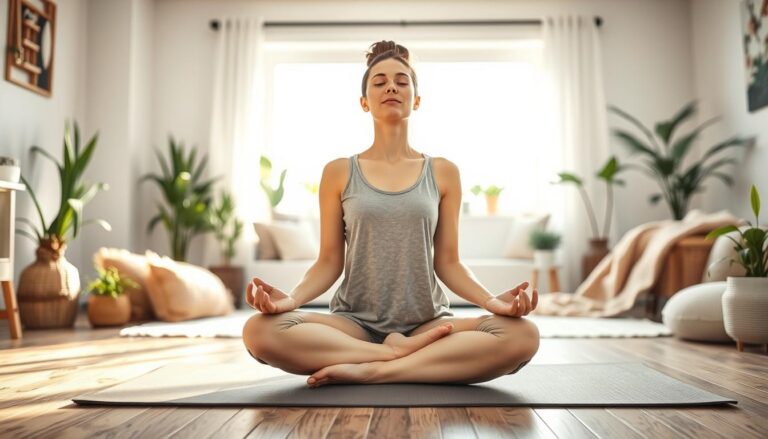


Have you ever wondered if a 20-minute guided rest can beat a daily sitting practice for a quick reboot?
This introduction sets the stage: you will learn how NSDR and meditation differ, where they overlap, and when to choose each to reduce stress, sharpen focus, and support nighttime rest.
Non-sleep deep rest is an umbrella term that includes yoga nidra, guided relaxation, and breathwork. Meditation covers attention and awareness practices that shape long-term mental patterns.
We preview brain and system effects, practical timing, and simple techniques. Expect clear definitions, research-backed benefits like lower cortisol and better focus, and honest limits: short sessions can calm the body and mind, but they do not replace full physiological sleep.
Key Takeaways
- NSDR offers fast, guided deep rest for quick stress relief and daytime focus.
- Yoga nidra is a practical entry to non-sleep deep rest through a body scan and breathwork.
- Meditation builds lasting attentional control and broad health benefits over time.
- Use short sessions for acute relief and regular practice for lasting change.
- NSDR complements nightly rest but is not a substitute for sleep’s full functions.
Quick Overview: What Are NSDR and Meditation, and Why They’re Not the Same
Two categories produce deep physical calm and better mental control, but they use different routes. One is structured audio-led rest rooted in yoga nidra; the other trains attention across many styles and postures.
Both approaches can ease stress and improve regulation of internal state, yet their goals and methods diverge. Guided non-sleep deep rest scripts use slow breathing, directed body scans, and sensory cues to create sustained deep relaxation while awake.

NSDR defined
Non-sleep deep rest commonly appears as yoga nidra recordings. These sessions are usually supine, fully guided, and designed to induce profound physical rest without actual sleep.
Meditation defined
Meditation is a family of practices: focused attention, open monitoring, and mantra work. It trains the mind and awareness over time and often uses seated postures.
Core overlaps and key differences
- Summary: Structured audio guides create an awake, deeply restful state with body scans and slow breathing. Meditation trains attention using varied techniques.
- Posture matters: Lying down favors letting go; seated yoga postures favor alert exploration.
- Quick heuristic: Use guided deep-rest for supported recovery; use daily attention practice to strengthen focus and long-term brain health.
| Feature | Guided Deep Rest (yoga nidra) | Attention Practices |
|---|---|---|
| Typical posture | Supine (lying down) | Seated or active |
| Guidance | Usually audio-led scripts | Guided or self-directed |
| Main goal | Deep physical recovery and relaxation | Train attention and awareness over time |
| Typical outcome | Immediate calm and rest | Improved focus, mood, and brain function |
For guided recordings and a research-backed primer, see Huberman Lab’s NSDR page. For practices that release held tension in the body, check these targeted stretches at go4healthnfitness.
The Science Snapshot: How Each Practice Influences the Nervous System
Short guided rest and focused attention drive different biological effects, each useful for daytime regulation and learning. Both can lower arousal, but they do so through distinct pathways that affect hormones, chemistry, and cognitive readiness.

Parasympathetic activation, cortisol reduction, and the “rest-and-digest” response
NSDR nudges the nervous system into parasympathetic mode — the body’s rest-and-digest response. Slow breathing and guided relaxation signal safety to the system, often lowering cortisol and easing sympathetic drive.
Dopamine, alertness, and cognitive gains after short sessions
Brief sessions can raise dopamine levels, sharpening focus and boosting brain performance for tasks that follow. These quick resets help motivation and short-term attention without long practice time.
By contrast, regular meditation trains attention, interoception, and emotion regulation. Over weeks, that rewiring supports sustained health and cognitive outcomes.
Why guided deep rest is not a replacement for sleep
Despite deep relaxation, non-sleep deep rest does not replicate key sleep functions. During real sleep the brain consolidates memory, clears metabolic waste, and coordinates hormone and cellular repair.
Practical frame: use guided rest for rapid downregulation and a dopamine-supported reset; use regular attention practice to build resilience. Track your response and pair both—without replacing nightly sleep—to optimize daytime performance.
Read a review of long-term effects and see how movement practices calm the system in this personal account: how Pilates calmed my nervous system.
NSDR Benefits for Sleep and Stress, Backed by Research
Daytime guided rest can teach your nervous system to switch off more quickly at night. Short, structured sessions train the body to enter a calm, alert state and lower pre-sleep arousal.
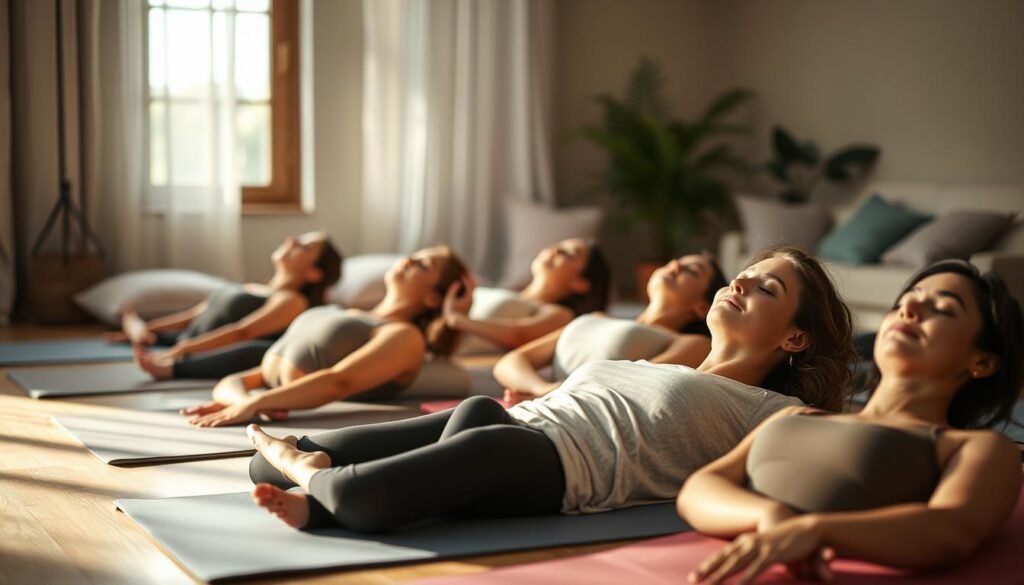
Daytime deep rest improving nighttime sleep quality and ease of falling asleep
Daytime yoga nidra practice helps people fall asleep faster and report better perceived sleep quality.
Ten to thirty minutes of guided deep rest—including lying down, slow breathing, and body awareness—teaches muscle release and lowers anxious thought loops. Over weeks, consistent practice can shift evening physiology toward calm.
Stress relief in minutes: slow breathing, body scan, and cortisol downshift
Short sessions deliver quick stress relief. Guided breathwork and progressive body scans cue parasympathetic activation and a measurable cortisol downshift.
Many users note improved mood and clearer focus after a single 10–20 minute session. While this practice supports nightly recovery, it is not a replacement for full nocturnal cycles that handle memory consolidation and cellular repair.
- Summary: Daytime yoga nidra trains the body to access deep relaxation and can improve perceived sleep quality with regular practice.
- Summary: Short sessions (10–30 minutes) reduce stress through breath and body cues that shift your physiological state.
| Effect | Typical session | Practical outcome |
|---|---|---|
| Cortisol reduction | 10–30 minutes, supine, guided | Lower pre-sleep arousal and less evening anxiety |
| Somatic release | Body scan and gentle cueing | Reduced muscle tension and fewer rumination cycles |
| Daytime focus | Brief mid-day reset | Improved mood and faster cognitive rebound |
Try a 10–20 minute mid-afternoon session to counter the slump, and test a gentle evening practice as a wind-down. Track notes on how sessions improve sleep and stress so you can fine-tune timing and frequency. For a research primer, see what is non-sleep deep rest.
Meditation Benefits for Sleep and Stress, Backed by Research
Consistent meditation cultivates awareness, emotional balance, and mental clarity, which together support better sleep by reducing cognitive and physiological arousal.
Mindfulness practices improve emotional regulation and lower burnout in high-stress roles. Research in nursing and clinical settings links these interventions to reduced anxiety and steadier mood.
Research shows that even brief courses enhance short-term memory, attention, and affect in healthy adults. Those cognitive gains create a calmer mind at night and fewer wake-ups.
Practical benefits and how to start
Bold summary: Research links meditation with lower stress and burnout, improved focus, and enhanced cognitive function, reinforcing its role in long-term wellness and health.
Core benefits include a calmer mind, steadier mood, and better attentional control—ingredients that help people fall asleep and stay asleep. Try a daily seated routine inspired by gentle yoga posture and breath.
- Start: 10 minutes per day, build to 20.
- Styles: focused attention, open monitoring, or mantra—pick what fits your mind.
- Track: note sleep onset time and mood for several weeks to see trends.
Summary: While single sessions feel calming, the cumulative rewiring matters. Over weeks, regular practice supports relaxation, cognitive function, and long-term health.
nsdr vs meditation: which helps sleep more
Choose a fast, guided routine for immediate downshifts; choose steady training for lasting changes. Both approaches lower arousal, but their timing, method, and goals differ.
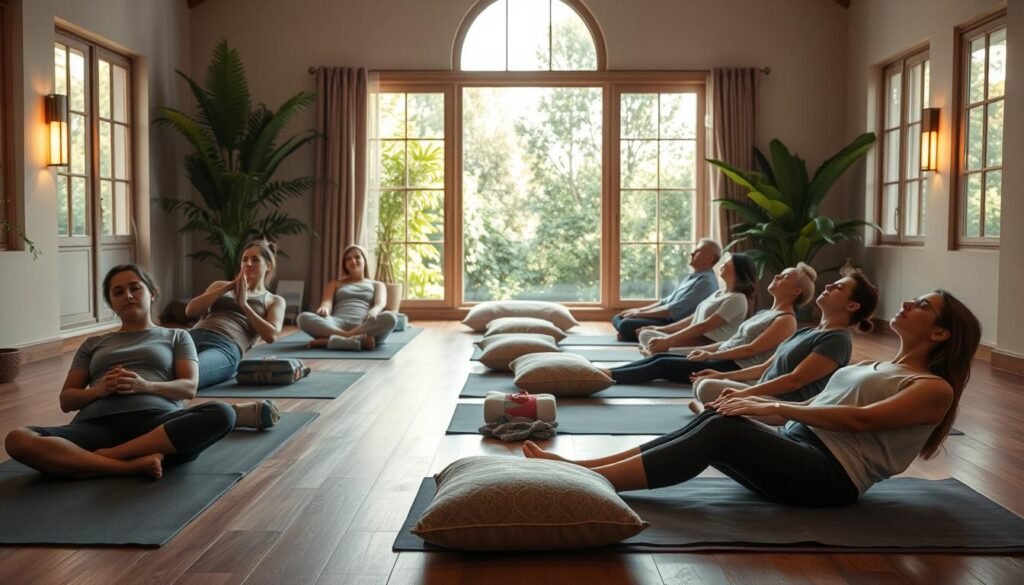
When you need quick deep relaxation or long-term improvement
If tonight’s rumination keeps you awake, a 10–30 minute guided session like yoga nidra often quiets the nervous system and readies you for bed. This term refers to a passive, supported rest that many people find simple to follow.
Short-term results vs. long-term consistency
Quick sessions produce rapid downshifts in arousal. Regular attention practice builds emotional regulation and improves overall sleep quality over weeks. Use the short option for acute stress spikes and a daily routine for durable gains.
Who benefits most
Insomniacs and “wired but tired” profiles often respond well to evening yoga nidra. High-stress roles gain when they add seated practice in the morning. A blended approach—guided rest at night and steady training during the day—helps many people.
| Use case | Immediate | Long-term |
|---|---|---|
| Typical timing | 10–30 minutes, evening | Daily, 10–20 minutes |
| Main benefit | Rapid calm and rest | Stronger attention and sleep quality |
| Best for | Travel, acute stress | Chronic insomnia, resilience |
Try a 4–6 week experiment and track time to fall asleep, awakenings, and morning mood. For related approaches to nervous system work, see nervous system workouts.
Yoga Nidra Inside NSDR: The Guided Path to Deep Relaxation
Yoga nidra offers a structured, audio-led journey that guides the body and mind into a receptive rest state while you remain awake.
Body scan, breathwork, and sankalpa for deep rest and re-patterning
Yoga nidra typically unfolds as a gentle sequence: an opening settle, a systematic rotation of awareness through the body, simple breath sensing, guided imagery, and a short sankalpa (personal resolve).
The progressive body scan reduces tension and anchors attention. Breath awareness steadies arousal and supports deep relaxation. The sankalpa is offered during a receptive window to help re-pattern limiting habits in the mind and consciousness.
Posture and accessibility: lying down vs. seated alertness
Supine practice (savasana) makes nidra widely accessible—an easy setup for those who find seated posture uncomfortable.
But lying down can increase drowsiness. Use props—an eye pillow, blanket, or a firmer surface—to stay lightly aware if the goal is wakeful rest.
Seated yoga keeps alertness higher and suits people aiming to practice without falling asleep. Experiment with timing and room temperature to avoid drifting off routinely.
“The sankalpa anchors intention; repeated at a receptive moment, it nudges behavior through subtle neural reinforcement.”
- Short timing cues: 5–7 minutes for a micro-reset; 10–20 minutes midday; 20–30 minutes for evening unwind.
- Practical props: eye pillow, blanket, and a firm support to reduce sleep onset if unwanted.
- Practice tip: stick with one guided script for a week to build familiarity before switching styles.
Guided techniques simplify adherence; over time, many learners self-guide or condense sessions. For a deeper comparison and resources on yoga nidra within guided rest formats, see yoga nidra vs NSDR.
Technique Matchmaking: Choose the Right Practice for Your Goal
Pick a practice based on outcome—wakeful recharge, sustained focus, or nighttime wind-down. Match timing, posture, and guidance to the result you want and test adjustments over two weeks.
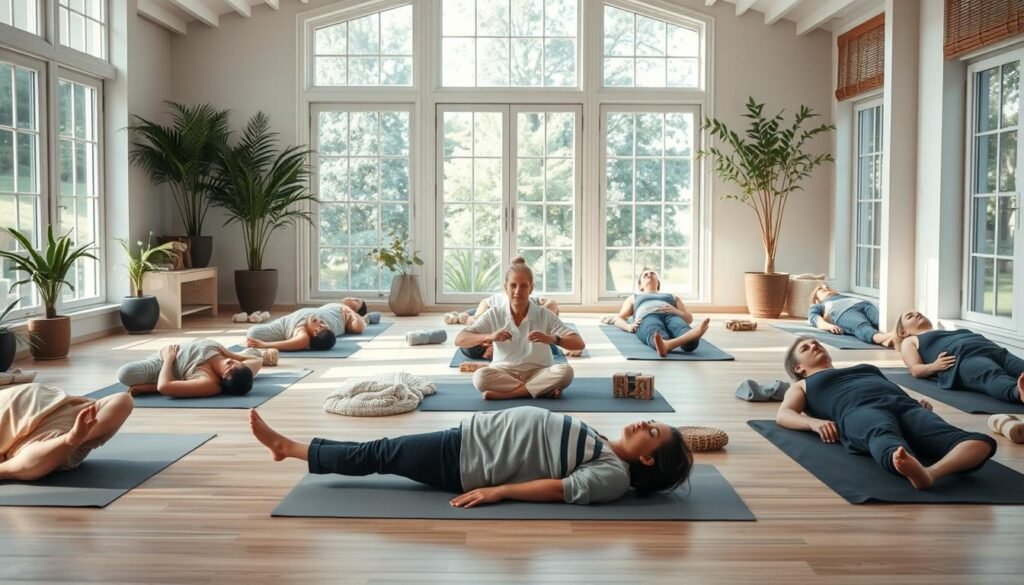
Improve sleep quality and recovery: pre-bed guided rest vs. earlier-day seated work
For better sleep and recovery, use pre-bed nsdr and yoga nidra. Huberman recommends short guided sessions for morning recharge, an afternoon reset, and a pre-bed wind-down.
Reserve seated practice earlier in the day to build attentional fitness without increasing nighttime drowsiness.
Boost focus and mental clarity: midday reset vs. steady mindfulness
To sharpen focus, try a 10–20 minutes midday guided reset. That can refresh concentration without caffeine. Pair it with daily mindfulness training for lasting gains in attention and overall wellness.
Stress and nervous system regulation: guided tracks or self-led practice?
Beginners often benefit from guided meditation and recorded scripts; goal-oriented users shift to self-guided work as skills grow. Lie down for surrendering practices; sit to keep alertness high.
Practical map: trouble falling asleep → pre-bed guided yoga nidra; fragmented nights → add daytime resets; chronic tension → daily seated training plus 2–3 guided rests weekly.
endocrine system and yoga can inform posture choices and recovery planning.
How to Structure Your Day: Minutes, Timing, and Frequency
Use a simple rhythm: morning recharge, afternoon reset, and a pre-bed wind-down. Keep sessions between 10 and 30 minutes so they fit real life and stack with a brief seated practice.
Plan small, predictable sessions across the day to get benefits without overdoing it. Start with a brief guided rest in the morning to clear brain fog. Follow with a short seated session to prime attention.
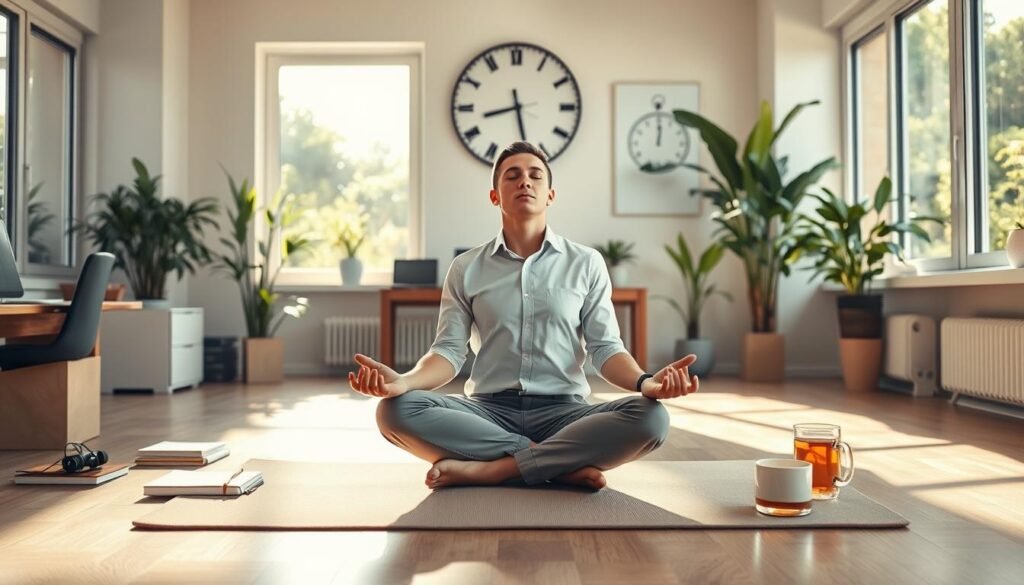
Morning recharge, afternoon reset, and pre-bed wind-down options
Morning: 5–15 minutes supine or seated to clear grogginess and boost focus for the day.
Afternoon: 10–20 minutes to refresh energy and cut caffeine dependence.
Evening: A gentle 15–30 minute guided track to ease into sleep; avoid activating breathwork late.
10–30 minute sessions: stacking NSDR with meditation without overlap
- Stacking tip: separate the guided rest and a short seated meditation by several hours to preserve alertness.
- Frequency: aim for 3–5 guided sessions weekly plus daily seated work as a starting practice.
- Track outcomes: note time to fall asleep, night awakenings, and morning energy over two weeks.
For a deeper primer on guided formats, see the non-sleep deep rest guide. If you use supplements or timetables, review this melatonin guide before combining approaches.
Practical Tips: Guided Recordings, Breathing Techniques, and Environment
Start with a high-quality guided track and build a brief, repeatable routine that fits your day. Optimize breathing, posture, and the room to deepen relaxation and support clear awareness.
Start simple: pick a guided track and design a short, repeatable routine that fits your day.
Quick wins: use Huberman Lab recordings or YouTube guides to make adherence easy. For a research-backed primer, try this non-sleep deep rest primer.
Choose breathing at 4–6 breaths per minute (slow nasal inhales and exhales) to downshift arousal. Avoid fast, activating patterns near evening.
For yoga nidra, lie on a firm surface with an eye pillow and light blanket to stay comfortable without dozing too fast. Start with 8–12 minutes and lengthen as the practice stabilizes.
- Reduce distractions: airplane mode, dim lights, and soft noise control.
- Use one recording for a week, then rotate styles or teachers.
- Set calendar reminders and pair sessions with lunch or an evening routine.
After a session, sit quietly for 2–3 minutes before standing to keep clarity. Journal two short lines on what worked to refine your techniques and track progress.
Safety, Myths, and What NSDR Cannot Replace
Wakeful deep-rest practices feel restorative, yet major brain-body housekeeping still waits for actual sleep. Use guided rest as a complement, not a substitute, and match practice to your health context.
How guided rest differs from night-time repair
Non-sleep deep rest mimics some restorative states but does not perform memory consolidation, glymphatic clearance, hormone balancing, or cellular repair.
Think of guided tracks as first aid for arousal, not a replacement for full biological recovery.
When to be cautious
Consider your mental health: people managing severe depression, trauma, or psychosis should consult a clinician or a qualified yoga therapist before beginning yoga nidra or similar recordings.
Strong emotions can surface during practice. Pause and seek professional support if processing feels overwhelming.
- Drifting off during practice is common and not harmful; try an earlier session or a cooler room to stay lightly aware.
- Avoid activating breathwork close to bed; it can raise arousal and delay sleep onset.
- Use short, guided tracks for acute stress and ensure neck and low-back support when lying down.
Keep expectations realistic: steady gains appear with regular, paced practice. For gear that supports comfort and gentle darkness, consider a silk eye mask in your wind-down routine at silk sleep masks.
Conclusion
Short guided rest gives fast downshifts; steady seated practice builds lasting regulation and resilience. Pairing both, timed well, delivers complementary benefits for focus, stress, and nightly recovery.
Use a brief guided session for immediate calm and pre-bed wind-down, and a daily seated routine to strengthen attention and emotion control.
Lie down for yoga nidra-style recovery and sit for alert training with gentle yoga. Remember: guided rest supports relaxation but cannot replace overnight brain and system repair that happens during full sleep.
Start small, track mood and focus, and adjust guidance levels as you progress. For an accessible primer and scripts, see this trusted primer. Align the tool to the task, stay consistent, and let gradual practice shape lasting wellness.
FAQ
What is non-sleep deep rest (NSDR) and how does it differ from meditation?
NSDR is a guided, restful protocol rooted in yoga nidra and systematic body scans that aims for deep physiological relaxation without actual sleep. Meditation typically trains sustained attention or open awareness and often requires an alert, seated posture. NSDR uses guided voice and progressive relaxation to drop into a deep rest state quickly; meditation builds lasting mental habits and attention control over time.
Can a short NSDR or yoga nidra session improve nighttime sleep?
Yes. Brief sessions (10–30 minutes) of guided NSDR or yoga nidra can reduce nighttime sleep latency and improve perceived sleep quality for many people by activating the parasympathetic nervous system and lowering cortisol. However, it complements — and does not replace — regular sleep hygiene and adequate nightly sleep duration.
Which practice reduces stress faster: a guided NSDR or a typical mindfulness session?
For immediate physiological downshift, guided NSDR usually produces quicker stress relief because it combines breathwork, body scanning, and progressive muscle relaxation. Mindfulness and other meditation practices reduce stress effectively too, but they often require consistent practice over weeks to show comparable cortisol and anxiety reductions.
How do these practices affect the nervous system and hormones?
Both activate the parasympathetic “rest-and-digest” response, lowering heart rate and shifting autonomic balance away from fight-or-flight. Short guided sessions can reduce cortisol and increase markers of relaxation. Meditation also supports long-term regulation of stress hormones and improves cognitive resilience with sustained practice.
If I’m “wired but tired,” which approach should I try first?
Start with short guided NSDR or yoga nidra sessions to get fast physiological calming and easier sleep onset. Pair that with a consistent meditation practice (mindfulness or focused attention) for daytime regulation, sustained emotional balance, and improved sleep over the long term.
How long should sessions be for meaningful benefits?
Effective sessions range from 10 to 30 minutes. Ten-minute guided rests can provide a noticeable reset; 20–30 minutes often produces deeper relaxation and better preparatory effects for sleep. Regular daily frequency (even brief) outperforms sporadic long sessions.
Can NSDR replace sleep if I’m short on time?
No. NSDR supplies deep relaxation and recovery-like benefits but doesn’t reproduce sleep’s full architecture, such as REM and slow-wave processes that support memory consolidation and metabolic regulation. Use NSDR as a complement when schedules are tight, not a substitute for nightly sleep.
Are there safety concerns or situations where I should be cautious?
Most people tolerate guided relaxation and meditation well. Caution is advised for individuals with severe trauma, certain psychiatric conditions, or those who dissociate; guided work can sometimes surface intense emotions. If you have a mental health diagnosis, consult a clinician before beginning intensive guided practices.
What’s the best time of day to practice each method for sleep and cognitive benefits?
For acute relaxation and pre-sleep wind-down, practice NSDR or yoga nidra in the evening. For focus and cognitive boosts, use a short NSDR as a midday reset. Establish meditation in the morning or early afternoon to build attention, emotional regulation, and long-term improvements in sleep quality.
Can I combine guided NSDR and meditation in the same day?
Absolutely. Combining a short meditation practice for attention and emotional balance with a guided NSDR reset later in the day or before bed is effective. Keep sessions distinct (e.g., seated mindfulness in morning; lying guided relaxation at night) to preserve each practice’s benefits.
Do these practices improve cognitive function and focus?
Yes. Regular meditation enhances attention, working memory, and mental clarity over time. Short NSDR sessions can transiently boost alertness and cognitive performance after rest, making them useful mid-day resets for clarity and productivity.
How do breathing techniques fit into these practices?
Slow, diaphragmatic breathing is central to NSDR and many guided relaxations; it helps shift autonomic balance and reduce cortisol quickly. Meditation also uses breath as an anchor in attention-based practices. Simple breath protocols work well across both approaches to regulate the nervous system.
Are recorded guided sessions effective, and where should I look for them?
High-quality guided recordings are effective and convenient. Look to reputable teachers, established meditation apps, university research labs, or clinicians who focus on sleep and stress. Choose recordings with clear instructions, appropriate pacing, and a calming voice to maximize results.
How long until I notice benefits for sleep or stress?
Immediate effects like reduced heart rate and calmer mind can appear after one session. Noticeable, sustained improvements in sleep quality, anxiety reduction, and cognitive function typically emerge with several weeks of consistent practice — often 4–8 weeks depending on frequency.
Who benefits most from NSDR versus meditation?
NSDR best serves people needing quick physiological downshifts — shift workers, high-stress professionals, or those with acute nighttime arousal. Meditation serves people aiming for long-term emotional regulation, attention training, and resilience. Many people benefit most from a blend tailored to their sleep profile and stress levels.