

Can a few minutes of simple practice change how your body handles stress?
Many people feel tense after a long day, yet few realize the link between breathing, heart rate, and digestion. This guide explains a short, science-backed vagus nerve reset routine at home that helps the parasympathetic nervous system nudge your body toward calm.
The vagus nerve connects the brain to the heart, lungs, and gut and carries most parasympathetic fibers that support digestion, mood, and hormone balance. You’ll learn easy techniques — slow breathing, gentle movement, humming, cold-face dips — that improve heart rate variability and help the system recover faster after stress.
Expect clear steps you can use in minutes, safety notes for people with heart issues, and simple ways to track progress with rate and HRV trends.
Key Takeaways
- Short, practical techniques can lower stress and support the parasympathetic nervous system.
- The vagus nerve links brain, heart, lungs, and gut to regulate digestion, mood, and rate.
- Breathing drills, humming, and cold-face dips boost heart rate variability as a measurable sign of progress.
- Routines are brief, stackable, and built for busy people, with safety limits for cardiac conditions.
- Nutrition, sleep, and social connection reinforce daily practice and long-term health gains.
What the Vagus Nerve Does in Your Body’s Parasympathetic Nervous System
This cranial pathway links the brain with organs that control breathing, digestion, and heart rhythm. It acts as the main parasympathetic channel that helps your body shift into rest-and-digest and calm energy.
The “wanderer” name fits. This tenth cranial nerve begins in the medulla oblongata and travels through the neck into the chest and abdomen. Along the way the nerve connects the gastrointestinal tract, heart, lungs, tongue, and pharynx to brainstem circuits and cortical areas.
Motor and sensory fibers carry information about pressure, stretch, temperature, and inflammation. Motor signals control throat muscles used for swallowing and speech, while sensory signals report organ state so the system can adapt.
- Key functions: slowing heart rate when needed, modulating breathing, aiding digestion, and supporting reflexes like coughing and swallowing.
- When balance between rest-and-digest and fight-or-flight is right, you feel grounded and focused. When it tilts, palpitations, shallow breathing, and digestive upset can appear.
- Because this pathway links gut and heart to the brain, it influences mood through gut–brain and heart–brain communication.
Small practices that stimulate this pathway produce wide effects across the body. For clinical context on stimulation and safety, see vagus stimulation. For gentle movement options that complement these signals, try these gentle somatic exercises.

How Vagal Tone Affects Stress, Mood, Heart Rate, and Digestion
Vagal tone describes how readily your body shifts from fight-or-flight into calm and steady function. Higher tone helps you recover faster, with steadier mood and smoother digestion.
Heart rate variability (HRV) is the simplest daily signal of tone: higher HRV shows better parasympathetic engagement and adaptability. Low HRV often means the autonomic system is taxed and less flexible.
Reduced tone links to common symptoms: anxiety, poor sleep, migraines, chronic pain, bloating, constipation, and fluctuating heart rate or blood pressure. Slow diaphragmatic breathing and light exercise reliably boost vagal activity and promote relaxation.
| Measure | Higher Vagal Tone | Lower Vagal Tone |
|---|---|---|
| HRV | Higher, more variability | Lower, rigid intervals |
| Mood & Anxiety | Calmer, less reactive | More worry and reactivity |
| Digestion | Smoother digestion | Bloating, constipation |
| Heart & Rate | Steady rate | Elevated or variable rate |
Track HRV trends and symptoms together to see what works. For guided exercises that target this pathway, try these vagus-focused practices.
Signs You May Need a Reset: Low Vagal Tone and Nervous System Clues
Frequent sleep trouble, headaches, or gut upset can be signs your autonomic balance needs attention. These clues help you spot when the system is favoring fight‑or‑flight over rest.
Common symptoms include insomnia, migraines, chronic pain, persistent anxiety, gas or bloating, constipation, and fluctuating heart rate or blood pressure.
An irritated pathway may also cause nausea, reflux, difficulty swallowing, or dizziness. Because these signs overlap with many conditions, consult a clinician for new or severe problems.

- Your body may ask for help if you stay wired after stress or struggle to wind down at night.
- Red flags: sudden swings in heart rate or blood pressure, persistent headaches, and slowed digestion like early fullness or constipation.
- Track patterns with a short daily log of sleep, mood, digestion, energy, and heart rate to spot trends.
- Pair notes with HRV data when possible to confirm your baseline and measure progress.
- If several clues appear, begin gentle, low-risk exercises aimed at improving tone and digestion.
Tip: Tailor your approach—focus on breathing if rate is jumpy, or on gut-friendly habits when bloating is the main issue. For more background on physiology and practical movement options, see this overview on the pathway and a guide to nervous system workouts: learn more and try complementary exercises.
Benefits You Can Expect from a Vagus Nerve Reset
Expect clearer daily calm and measurable shifts in heart rate variability within weeks of steady practice. Improvements often include better digestion, lower inflammation markers, and more stable mood and resilience.
Small practices add up. Stimulating the vagus nerve can raise HRV, which shows that the heart and autonomic system are more flexible under stress. Many report easier sleep onset and fewer spikes in heart rate after short-term consistent effort.
The clinical picture supports this. Implanted vagus nerve stimulation is FDA-approved for epilepsy and treatment-resistant depression, and noninvasive approaches show promise for anxiety, PTSD, migraines, and tinnitus. Breath work, light exercise, and cold exposure all boost HRV and build resilience.

| Benefit | Short-term (days–weeks) | Medium-term (weeks–months) |
|---|---|---|
| Heart rate variability | Noticeable rises in HRV | Steadier responses to stress |
| Digestion | Smoother transit, less bloating | Better appetite and regularity |
| Mood & inflammation | Lower reactivity, small mood lifts | Reduced inflammation markers; fewer depressive symptoms |
Realistic expectations matter: this is training, not an instant fix. Pairing breathing with mindful movement amplifies outcomes and speeds learning. For a real-world example of exercise supporting nervous system recovery, read how Pilates helped one writer regain calm via a personal Pilates story.
Tools That Help You Track Progress at Home
Use simple metrics to see if practice is improving your calming response. Wearables and a short symptom log make progress visible and repeatable.
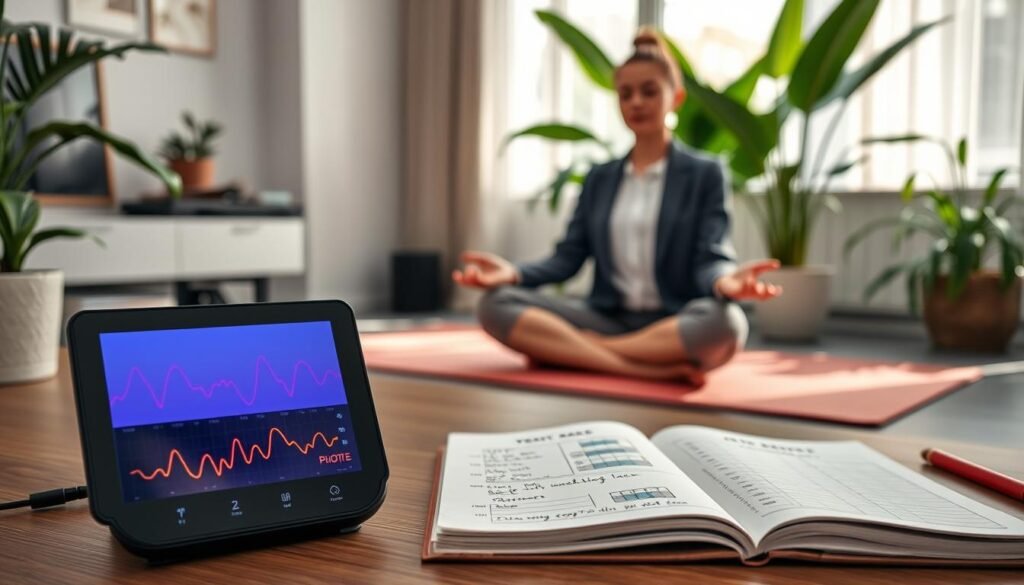
Heart rate variability (HRV) measures the time variation between heartbeats and links to vagal activity. Higher HRV usually means better adaptability, while frequent dips can suggest a taxed system (Ruscio Institute).
- Watch trends: rely on weekly HRV and resting heart rate reports from a smartwatch or tracker rather than a single value.
- Time your checks: note morning HRV for baseline and evening HRV to see daily accumulation of stress.
- Test techniques: log HRV after brief breathing or cold-face practice to see what shifts your numbers.
- Journal alongside data: track sleep, mood, digestion, and anxiety to pair symptoms with metrics.
| Metric | What it shows | When to check | Actionable note |
|---|---|---|---|
| HRV | Vagal activity & adaptability | Morning baseline; post-technique | Track 2–8 weeks for real trends |
| Resting heart rate | Overall physiological load | Morning first thing | Rises may signal fatigue or illness |
| Symptom log | Sleep, mood, digestion, anxiety | Daily | Use with HRV to validate changes |
| Device sessions | If you try noninvasive stimulation | Every session | Record settings, length, and side effects |
Try a short symptom journal alongside your wearable to spot what truly helps. Share multi-day trends with a clinician if you have health conditions or medication changes.
Vagus Nerve Reset Routine at Home
Brief, targeted practices help your body recover faster from stress and improve daily resilience. These micro-resets take little time but stack into meaningful change for mood, digestion, and rate control.
Morning: cold face immersion and diaphragmatic breathing
Start with a 20–30 second cold splash to trigger the diving reflex and slow heart rate. Follow with five minutes of diaphragmatic breathing focused on longer exhales.
Midday: posture check, side-eye drill, and humming break
Do a 60-second posture reset, then three side-eye holds (5 seconds per side). Add 1–2 minutes of humming you can feel in the chest to engage vocal pathways.
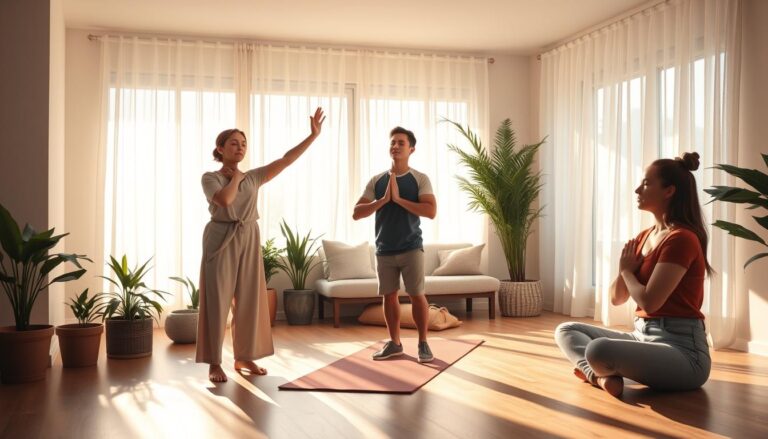
Evening: gentle yoga or stretching with 4-7-8 breathing
Pair 5–10 minutes of gentle yoga or stretches with 4-7-8 breathing to downshift the nervous system before sleep.
Anytime: orienting to safety and laughter to downshift fast
Name five things you see, hear, and feel, then add one minute of intentional laughter or a short funny clip to release tension. If heart rate spikes, prioritize slow exhales and a brief cold splash, then reassess.
| Session | Duration | Primary effect |
|---|---|---|
| Morning cold + breathing | 5–6 minutes | Lower heart rate, prime calm |
| Midday posture + humming | 2–4 minutes | Quick parasympathetic nudge |
| Evening yoga + 4-7-8 | 5–10 minutes | Prepares sleep, lowers arousal |
| Anytime orienting & laughter | 1–3 minutes | Interrupts anxiety loops |
Keep sessions short and consistent. Aim for 10–20 total minutes per day. Track what helps your body and repeat on demand. For a structured plan, see this guided reset plan.
Breathing Techniques That Stimulate the Vagus Nerve
Breath patterns directly influence heart rhythm and the body’s relaxation response. These methods are short, evidence‑based tools you can use before a meeting or at bedtime.

Diaphragmatic breathing with extended exhales
How to do it: Inhale gently into the belly while keeping the chest quiet. Make the exhale longer than the inhale to cue the parasympathetic nervous system.
Start with 2–5 minutes. Place a hand on your belly to feel low, smooth movement.
4-7-8 breathing for rapid downregulation
Inhale for 4, hold for 7, exhale for 8. The long exhale is the calm switch that slows heart rate and reduces anxiety.
If you feel dizzy, shorten holds or return to long exhales without counting.
Box breathing for steady focus and calm
Use 4-4-4-4 timing to steady attention and lower physiological arousal. Try one to three rounds before stressful calls.
- Start small: 2–5 minutes, 1–3 times daily.
- Pair breathwork with gentle movement or humming for stronger stimulation.
- Track HRV or resting rate over a week to see objective gains from practice.
| Technique | Timing | Primary effect | When to use |
|---|---|---|---|
| Diaphragmatic (long exhales) | 2–10 min | Increases relaxation | Morning, bedtime |
| 4-7-8 | 2–5 min | Rapid downregulation | After spike of anxiety |
| Box breathing | 1–5 min | Steadies focus and rate | Before meetings or exams |
Over time this simple meditation practice trains the body to default to calm. For a movement example that helped reduce anxiety, read this Pilates for anxiety.
Cold Exposure Made Safe and Simple
Cold on the face and brief cool exposures can trigger a fast calming reflex that changes heart rhythm and breathing. Used carefully, these techniques offer a low‑time, practical way to interrupt stress and improve autonomic balance.
A quick, controlled cold stimulus to the face can interrupt a stress spike and nudge the system toward calm. Brief 20–30 second face immersion or splashes prompt the diving reflex and often slow heart rate soon after stress.

How face immersion works
Trigger the diving reflex: immerse or splash your face with cool water for about 20–30 seconds to slow heart rhythms and return the body to steadier function. Small studies show 5–35 second applications speed recovery after stress.
Practical options: rollers, packs, and showers
Ice rollers, cool packs over the cheeks and forehead, or a short cool finish to a shower work well when immersion isn’t possible. An ice massage along the head or upper spine has improved HRV in small trials versus controls.
Safety and limits
Keep exposures brief and comfortably cold, not extreme. If you have heart conditions, arrhythmias, or fainting history, consult your clinician before trying cold techniques. Always stop if you feel dizzy, chest tightness, or a racing heart.
- Use cold first thing in the morning to energize calmly, or immediately after a stress spike to interrupt a spiral.
- Pair short exposures with long exhale breathing to amplify the calming effect.
- Track how you feel 1–3 minutes after: lighter breath and a smoother rate are good signs. Log method and time so you can repeat what helps.
Sound and Vibration: Humming, Singing, and OM Chanting
Vocal vibration is a compact, evidence‑friendly tool to calm the body and mind. Short humming or chanting sessions create steady resonance in the throat, ear, and chest that supports relaxation and reduces anxiety.
Why the throat and ear matter: branches that serve the larynx and outer ear respond to low, sustained vibrations. These signals travel to brain centers that regulate mood and breathing, making sound a direct route for parasympathetic stimulation.
How to hum you can feel in your chest
Gently cover your ears, choose a low comfortable pitch, and hum for 5–10 slow rounds. Aim for resonance you can sense across the chest and throat.
For OM chanting: inhale through the nose, then chant slowly, letting the sound roll forward into the face and chest for 3–5 rounds. Pair each round with a long exhale to deepen the effect.
- Use it: before hard conversations or midday stress.
- Signs it helps: softer breathing, warmth in the chest, calmer thinking.
- Tip: short singing lifts mood and eases anxious tension; it’s discreet and portable.
Movement, Yoga, and Gentle Exercise for Vagal Tone
Short bouts of walking and light strength work raise HRV and build physiological resilience. Regular, moderate movement is one of the most reliable ways to support parasympathetic activity and overall health.
Start simple: walk daily, pace in a conversational zone, and add two short resistance sessions per week. These approaches engage large muscles without stressing the system. Over weeks you should notice faster heart rate recovery after activity, a sign of improved tone.
Walking, aerobic, and resistance basics
Begin with 20–30 minute walks most days. Keep intensity moderate so you can speak in full sentences. Then layer in basic resistance: squats, rows, and lunges for 10–15 minutes twice weekly.
Consistency matters more than intensity. Moderate, steady exercise raises HRV more reliably than sporadic hard sessions.
Yin-style twists and forward folds with breath
Hold twists and forward folds for 2–4 minutes while practicing long exhales. These yin-inspired poses calm the system and ease tight muscles.
Finish movement with a brief body scan or two minutes of seated meditation to lock in the parasympathetic rebound.
- Keep intensity conversational: if you cannot speak comfortably, reduce effort.
- Short sessions help: five minutes of mobility plus two minutes of breathing still move the needle.
- Outdoor time boosts effect: sunlight and nature amplify the calming response.
| Activity | Duration | Primary effect |
|---|---|---|
| Daily walking | 20–30 min | Steady HRV gains, mood lift |
| Resistance basics | 10–15 min, 2× week | Muscle engagement, metabolic support |
| Yin twists / forward folds | 2–4 min per pose | Parasympathetic activation, mobility |
| Mobility + breath | 5–7 min | Quick downshift on busy days |
Hands-On Options: Safe Self-Massage Techniques
Gentle hands-on touch can ease tight muscles and send calming signals through ear and neck pathways. Simple, brief self-massage may support relaxation and reduce tension without special tools.
Ear massage (cymba concha) for quick calming
Gently massaging the cymba concha—the upper hollow of the ear—for about a minute may stimulate the auricular branch linked to calming responses. Use soft, circular pressure and stop if you feel pain, dizziness, or ear irritation.
Neck and upper-back care — safe approaches
Spend 1–2 minutes on tender spots in the trapezius and sternocleidomastoid to release guarding that reinforces stress signals. Pair hands-on work with slow, long exhales to amplify parasympathetic effects.
- Use short, frequent sessions—consistency matters more than intensity.
- Consider a warm shower or heat pack before massage to ease tissue stiffness.
- Avoid carotid sinus massage; this is a clinical maneuver with real risks like arrhythmia or stroke and should not be done at home.
- If you have cardiovascular or carotid artery disease, consult your clinician before trying neck work.
- If touch raises anxiety, start with ear-only work and keep sessions very brief.
- Log what helps most so you can repeat it when you need quick relief.
“Keep pressure light and sessions short — small, safe steps add up to meaningful relief.”
Nutrition, Sleep, and Daily Habits That Support the Parasympathetic Nervous System
Food choices, sleep patterns, and brief daily habits combine to boost recovery and calm. This section shows simple, evidence‑based moves you can use every day to support mood, digestion, and resilience.
Aim to include choline sources—eggs, lean meat, and nutritional yeast—because choline helps make acetylcholine, the main parasympathetic neurotransmitter. Add omega‑3 rich foods like fatty fish and walnuts and favor a Mediterranean-style pattern of fish, olive oil, yogurt, nuts, and colorful plants.
Protect sleep with a wind‑down window, consistent bed and wake times, and light/dark cues. Use short meditation or safe-place practices to reinforce calm brain circuits. Build social micro-moments—walks or quick check-ins—which strengthen pathways tied to relaxation and mood.
Laughter, music, and practical pairings
Play music you love during transitions; sing along when you can. Intentionally laugh each day—short clips or jokes improve mood and can raise HRV. Pair these habits with gentle exercise or yoga and your breathing practice for compounding benefits.
- Eat for acetylcholine and low inflammation.
- Sleep on a steady schedule.
- Connect briefly with others daily.
When to Consider Medical Vagus Nerve Stimulation and When to See a Clinician
Implanted devices exist as a medical option when standard care fails, and they require specialist evaluation. Noninvasive devices are available too, but protocols and risks vary, so expert guidance matters.
Implanted VNS for epilepsy and treatment‑resistant depression
Implanted vagus nerve stimulation is FDA‑approved for epilepsy and treatment‑resistant depression. Studies also explore uses for migraines, stroke rehab, obesity, tinnitus, and inflammatory conditions.
Know the tradeoffs: side effects can include voice changes, cough, breathing difficulty, implant‑site issues, and rare nerve complications.
Noninvasive ear and neck stimulation: basics and side effects
Transcutaneous auricular (taVNS) and cervical tVNS (ctVNS) target the ear or neck without surgery. Protocols are not standardized. Seek trained clinicians—neurologists, physiotherapists, or device-trained specialists—to guide settings and safety.
Red flags and practical next steps
- Consider implants if seizures or depression remain uncontrolled and your clinician recommends it.
- Report new chest pain, fainting, severe shortness of breath, or sudden neurological changes immediately.
- Share HRV and symptom logs with your provider and track device settings and side effects if you proceed.
“Device therapy is one option among many; pair it with lifestyle and behavioral measures for the best outcomes.”
| Option | When considered | Key risks |
|---|---|---|
| Implanted VNS | Refractory epilepsy, resistant depression | Hoarseness, cough, implant infection, rare nerve injury |
| taVNS (ear) | Exploratory treatment for pain, migraines, tinnitus | Skin irritation, inconsistent effect; protocols vary |
| ctVNS (neck) | Noninvasive trials, rehab contexts | Possible heart rhythm changes; clinician oversight advised |
Conclusion
Small, repeatable actions train the nervous system to recover faster and feel steadier. Noninvasive supports—slow breathing, a splash of cold, humming, gentle yoga, and laughter—are low‑cost ways to raise HRV and build resilience.
Make these tools easy to use and brief so you’ll stick with them over time.
Track heart rate and HRV to confirm progress and notice calmer days. If symptoms persist or you manage complex conditions, discuss options with a clinician. Medical device therapy is for specific cases and needs expert oversight.
For a clear, practical PDF guide on stimulation and safety, see how to stimulate your vagus nerve.
FAQ
What exactly does the vagus nerve do in the parasympathetic nervous system?
The vagus is a major cranial nerve that links the brainstem to the heart, lungs, and gut. It helps dial down stress responses, slow heart rate, support digestion, and promote rest-and-digest functions by activating the parasympathetic nervous system.
How does vagal tone influence stress, mood, and heart rate?
Higher vagal tone generally means better capacity to regulate stress, steadier heart rate and heart rate variability (HRV), improved digestion, and greater emotional resilience. Lower tone can show up as anxiety, mood swings, digestive problems, and less HRV.
What signs suggest I might have low vagal tone and need a reset?
Common clues include chronic anxiety or low mood, poor sleep, frequent GI discomfort (bloating, slow digestion), and noticeable shifts in resting heart rate or HRV. If symptoms are persistent or severe, consult a clinician.
What benefits can I expect from improving vagal tone with simple practices?
You can expect calmer baseline physiology, improved HRV, better digestion, reduced inflammation markers in some people, and mood support—helpful for anxiety and resilience to stress.
How can I track progress using wearables or simple measures?
Use HRV metrics from reliable wearables or apps to monitor trends over weeks, track resting heart rate, and note subjective changes in sleep, digestion, and stress. Look for gradual improvement rather than day-to-day swings.
What are safe, evidence-based techniques I can do on my own?
Effective options include diaphragmatic breathing with longer exhales, 4-7-8 or box breathing, cold-face immersion or brief cold showers, humming or singing, gentle yoga and walking, and targeted self-massage of the ear and neck—performed safely and consistently.
How should I practice breathing to stimulate parasympathetic activity?
Focus on slow diaphragmatic breaths with extended exhales (exhale longer than inhale), try 4-7-8 for rapid downregulation, or use box breathing to steady focus. Practice in a comfortable, seated or reclined position for a few minutes daily.
Is cold exposure safe and how does it help?
Brief cold-face immersion or short cold showers activate the diving reflex, which can lower heart rate and boost parasympathetic tone. Start with very short exposures and avoid cold protocols if you have uncontrolled heart conditions or circulation issues; consult your clinician first.
Why do humming and singing help with regulation?
Vocalization stimulates the muscles and tissues around the vocal cords and ears, which connect to parasympathetic pathways. Humming or chanting creates gentle vibration you can feel in your chest, promoting calm through increased afferent signaling.
Which movements or exercises support vagal tone?
Regular walking, moderate aerobic and resistance training, and gentle yoga (twists and forward folds paired with breath) support cardiovascular health, digestion, and autonomic balance. Consistency matters more than intensity.
Are there safe self-massage techniques I can try?
Yes—gentle ear massage (around the cymba concha), light neck and upper-back soft tissue work, and diaphragmatic self-release can help. Avoid carotid sinus massage or aggressive pressure near major vessels; those carry risks.
What lifestyle factors support parasympathetic function long-term?
A Mediterranean-style diet with omega-3s and choline, good sleep hygiene, regular mindfulness or meditation, social connection, laughter, and music all support autonomic balance and resilience.
When should I consider medical vagus nerve stimulation or see a clinician?
Seek medical advice if you have treatment-resistant epilepsy, major depressive disorder not responding to standard care, or persistent autonomic symptoms. Implanted VNS is a specialist treatment; non-invasive devices (taVNS/ctVNS) should be used under guidance due to possible side effects and contraindications.
Can I combine these practices safely with medications or chronic conditions?
Most noninvasive techniques are low-risk, but people with cardiovascular disease, implanted devices (pacemakers), epilepsy, or unstable conditions should consult their clinician before starting cold exposure, intense breathwork, or electrical stimulation.
How often should I practice these techniques for meaningful change?
Daily short practices (5–20 minutes) yield better results than occasional long sessions. Track HRV or subjective markers over weeks. Small, consistent habits—like morning breathwork, midday humming, and evening restorative movement—build lasting tone.