


Could a simple plant oil change how your cycle feels each month? This guide breaks down how gamma linolenic acid links to prostaglandins and why that matters to women tracking symptoms like breast tenderness, cramps, and mood shifts.
Think of GLA as a building block the body can use to make anti-inflammatory messengers. A gynecologist’s view helps translate lab pathways into real-world choices. You’ll learn why steady intake over weeks, not days, matters and what realistic timelines look like.
We’ll cover where this acid shows up in plant oils, why diet often falls short, and how clinicians gauge change. Practical steps, safety notes, and the best evidence — including a clinical review of trials — are linked to help you decide what to try and how to track progress.
Key Takeaways
- GLA links to prostaglandin pathways that can influence cyclical symptoms over weeks.
- Consistent intake for at least 8–12 weeks is usually needed to see change.
- Some trials show benefit; review clinical evidence here.
- Evening primrose and dosing guidance can inform choices; see practical dosing notes here.
- PMS is multifactorial; prostaglandins are one piece of the puzzle to consider alongside lifestyle and hormones.
Why GLA matters now: the present-day science behind PMS, inflammation, and hormones
Recent integrative reviews show that shifting essential fatty acids can steer prostaglandin balance and reduce inflammatory signaling. These studies link specific fatty acid inputs to higher PGE1 and E3 while tempering pro-inflammatory E2 and leukotriene activity.
Essential fatty acids feed signaling pathways that modulate inflammation and hormonal messaging in the body. At the tissue level, small changes in membrane acid composition change receptor behavior without large shifts in circulating hormone levels.

Clinical observations find that adjusting omega-6 fatty intake, including targeted sources of gla, can alter luteal-phase sensitivity. Those shifts often translate into measurable effects on common symptoms such as breast tenderness and bloating.
“Tissue responsiveness matters as much as blood levels when tracking cyclical change.”
Practical point: steady, modest changes in dietary oil patterns often outperform abrupt fixes. Track symptoms each cycle and compare trends over 8–12 weeks. For a focused review of evening primrose oil and real-world outcomes see evening primrose oil review.
GLA 101: an omega-6 fatty acid that feeds essential fatty acids pathways
Some plant seed oils supply a specific omega-6 that cells use to make calming signaling molecules. This section explains what gamma linolenic acid does and where it comes from.
What is gamma linolenic acid and how the body uses this fatty acid?
Gamma linolenic acid is a specific omega-6 fatty acid the body converts into anti-inflammatory messengers. Cells use this acid as a stepping stone to build compounds that can ease cyclical discomfort.
Compared with parent linoleic acid, gamma linolenic sits further along the conversion route. That matters when conversion enzymes are slow; taking oils with preformed gamma linolenic can bypass a bottleneck.

Essential fatty acids vs. omega-6 and omega-3: finding balance
Essential fatty acids cover both omega-6 and omega-3 families. The body draws from both to assemble signaling molecules.
Think of intake as materials for messaging. Omega-3 inputs like fish oil complement gamma linolenic by supporting the anti-inflammatory mix the body prefers.
Natural sources: evening primrose oil, borage oil, and black currant seed oil
Primary sources include evening primrose oil, borage oil, and black currant seed oil. Each oil lists total oil per softgel and a separate gla percentage to help you gauge dose.
| Source | Typical GLA % | Common softgel mg | Role |
|---|---|---|---|
| Evening primrose oil | 8–10% | 500–1000 mg | Modest source; widely used |
| Borage oil | 20–25% | 300–500 mg | Higher gla concentration per softgel |
| Black currant seed oil | 15–20% | 250–500 mg | Balanced mix of fatty components |
“Regular, measured intake supports a steady supply for cells without overwhelming the system.”
Practical note: capsules show total oil and the per-softgel gla value so you can compare labels. Clinicians stress consistent use over weeks to see tissue-level change.
GLA and Prostaglandins for PMS
Small changes in dietary oils can shift cellular messaging and ease luteal discomfort. This section maps the conversion route and explains why those shifts matter to women tracking premenstrual syndrome.
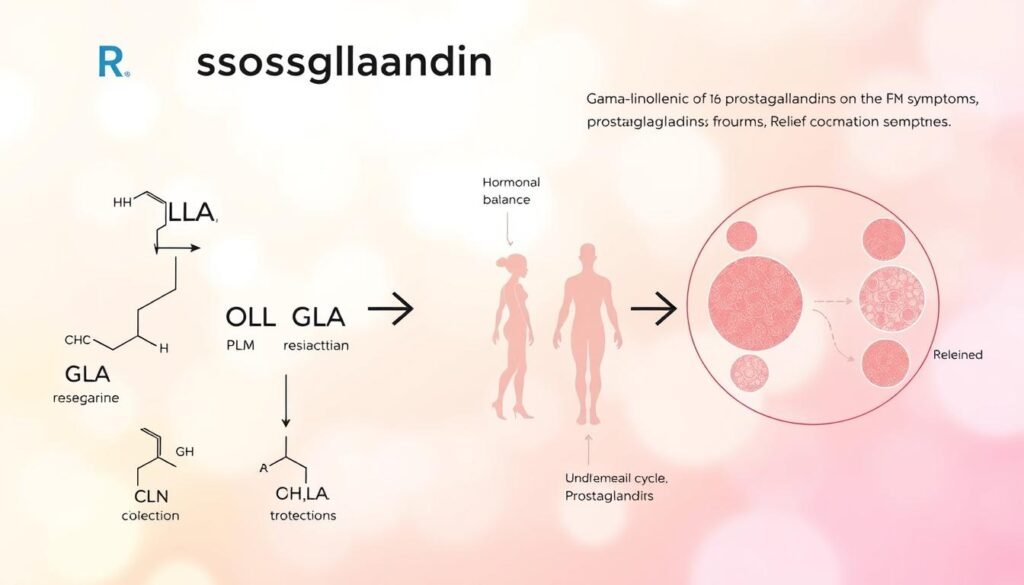
From linoleic acid to prostaglandin E1: the anti-inflammatory pathway
Linoleic acid converts into gamma linolenic acid, which feeds the enzymes that make prostaglandin E1 (PGE1). That route supplies calmer, anti-inflammatory signals during the luteal phase.
Prolactin sensitivity and luteal-phase symptoms
Tissues can react more strongly to similar prolactin levels. Boosting PGE1 signaling may buffer that sensitivity and reduce common pms symptoms without changing measured hormone levels.
Balancing prostaglandins to ease symptoms
Goal: support E1 and E3 while tempering E2 and leukotriene B4. That balance links to less breast tenderness, bloating, cramps, and mood swings.
Which symptoms tend to respond
Many women report steadier mood and lower breast soreness as targeted fatty acids accumulate. Practical vehicles include evening primrose and borage oil; split doses with food improve tolerability.
“This is a hormone-support strategy that changes upstream messaging, not a sedative.”
Try consistent intake for two to three cycles and pair tracking with good sleep, regular movement, and steady meals. For product guidance see gla evening primrose and starflower oils.
What the research shows: clinical studies, results, and timelines
Clinical trials offer a clear timeline: benefits often start after a few cycles and peak around month six. Steady, cycle-based supplementation produced the clearest results in randomized work, and real-world clinics mirror those timelines.
Key randomized evidence comes from a six-month trial of 120 women with symptomatic cycles. Participants took one or two capsules each day from day 15 until the end of the cycle. Each capsule supplied 210 mg gamma linolenic, 175 mg oleic acid, 345 mg linoleic acid, 250 mg other polyunsaturated fatty acids, and 20 mg vitamin E.

By the third cycle, active groups showed symptom improvement. Results grew stronger by month six, especially at the higher two-capsule dose (210–420 mg gla total). Placebo gains faded by the study end.
Why labs stayed the same matters: prolactin did not change at study end, suggesting symptom relief came from tissue-level shifts in prostaglandin signaling rather than altered circulating hormones.
- Practical dose range observed: 210–420 mg per luteal phase capsule regimen.
- Timing: start supplements on day 15 and continue through the luteal window (days 15–28).
- Vitamin E helps stabilize the oil blend and protect fatty acids during storage and digestion.
“Start with at least 8–12 weeks; expect fuller effects by 3–4 months with consistent use.”
Action plan: follow cycle-based scheduling, track symptom clusters, and reassess at 12 weeks and again near four months. Discuss dose and duration with your clinician and reference the trial specifics during that conversation. For complementary lifestyle approaches, see a focused review on hormone-supportive movement here, and for related trial reviews consult this clinical summary here.
Choosing a supplement: evening primrose oil vs. borage oil and how to dose
Pick an oil based on concentration, tolerance, and how you plan to take it. Higher-concentration products let you hit clinical targets with fewer softgels, while lower-strength oils may suit those who prefer a gentler start.

Compare sources by active content, not total oil. Borage oil usually delivers the highest percentage per softgel. Evening primrose oil contains less of the key acid per capsule but is widely used and well tolerated. Black currant seed oil sits in the middle.
How to read labels and plan dose
Look for mg of active acid per softgel, not just total oil milligrams. Add daily totals to match clinical ranges.
| Source | Typical active % | Typical softgel | Clinic note |
|---|---|---|---|
| Evening primrose oil | 8–10% | 500–1,000 mg | Often requires higher daily oil totals (3,000–6,000 mg) for pronounced symptoms |
| Borage oil (seed oil) | 20–25% | 1,000 mg (GLA‑160 style) | 4–6 softgels/day common to reach therapeutic levels |
| Black currant seed oil | 15–20% | 250–500 mg | Balanced profile; useful when combining with fish oil |
Pairing with fish oil
Stacking EPA/DHA from fish oil helps favor anti-inflammatory signaling. Many clinicians recommend adding a quality fish oil supplement to support outcomes and overall fatty balance.
Practical timing and quality tips
Options: continuous daily use or luteal-phase dosing (day 15 to menses). Start low, split doses with meals, and reassess at 8–12 weeks.
“Choose products with standardized active percentage, natural vitamin E for protection, and third-party testing when possible.”
For a focused comparison, see borage seed oil vs evening primrose.
Hormone health in context: PMS, PMDD, and menopausal symptoms
Hormone shifts change symptom patterns across the reproductive years and into midlife. This short guide explains who may benefit from targeted oil strategies and how to evaluate change.

Who may benefit most?
Prime candidates include women with cyclical breast tenderness, irritability or mood dips before a period, bloating, and cramp-prone cycles.
Perimenopause and menopause often bring hot flashes and dry skin or hair that respond when essential fatty acids are restored. Clinicians report modest daily amounts help some people, while others need higher intake.
- Start small, track closely: try evening primrose or borage oil based on active percentage and tolerance.
- Normalize variability: responses differ across bodies; titrate dose and monitor symptom trends.
- Whole-person basics: steady meals, sleep, and movement amplify benefits.
“Evaluate progress at 8–12 weeks, then again at 3–4 months to decide whether to continue or adjust.”
Note: complex conditions such as PMDD often need multiple treatments; targeted fatty strategies can be one supportive pillar. Discuss goals and timelines with your provider and consult a clinical review when planning a trial here or consider simple food swaps to support cycles here.
Safety, interactions, and quality: what women in the United States should consider
Safety checks matter when adding concentrated seed oil to your routine—especially if you take other medications. A brief review with your clinician helps match supplementation to your current treatment plan and health goals.
Who should pause or consult first?
Discuss use with your clinician if you take blood thinners or antiplatelet drugs. Blood levels and bleeding risk can change.
If you have a seizure disorder, pregnancy, or planned surgery, delay starting supplements until you get medical clearance.
How to pick quality: what labels should show
Choose products that list exact milligrams of active acid per softgel. Look for third-party testing and added natural vitamin E to protect oil stability.
- Start with supplements taken with food to ease digestion and boost absorption.
- Store bottles in a cool, dark place to preserve freshness and potency.
- More is not always better; match dose to goals and reassess regularly.
- Compare borage oil versus evening primrose oil by label, not marketing claims.
| Concern | Practical step | Why it matters |
|---|---|---|
| Blood-thinning meds | Talk to your clinician; avoid unsupervised dosing | Reduces bleeding risk and manages interactions |
| Seizure history | Delay use until neurologist clears supplement | Some oils may alter seizure threshold |
| Product quality | Check active acid mg, third-party test, vitamin E | Ensures accurate levels and limits oxidation |
“Track symptom changes and share them with your provider to tailor safe, effective supplementation.”
For practical user experience and tracking tips see the 30-day seed cycling diary.
Conclusion
This short summary links trial results to simple, practical steps you can try safely. Evidence and clinic experience show steady use of targeted seed oil regimens can reduce pms symptoms over several cycles.
This final note pulls together trial evidence and practical steps to help women decide whether targeted seed oil plans merit a trial. Studies report measurable results by three to six months when linolenic acid–rich supplements are used with consistent timing.
Action checklist: pick a primary source (evening primrose oil, borage oil, or black currant), confirm labeled active acid, consider adding fish oil, set dose and a luteal window if preferred, keep a symptom log, then review progress at 8–12 weeks and again at 3–4 months.
If symptoms disrupt daily life, discuss a measured plan with your clinician and track changes across the next three cycles to capture meaningful results.
FAQ
Gamma linolenic acid is an omega-6 fatty acid that the body converts into anti-inflammatory compounds, including prostaglandin E1. These products can help reduce inflammation, ease breast tenderness, and calm mood and bloating linked to the luteal phase. Think of it as feeding a natural pathway that supports a gentler hormonal response.
Which seed oils are reliable sources of this fatty acid?
Evening primrose oil, borage seed oil, and black currant seed oil are the most common dietary sources. Borage typically contains the highest percentage, evening primrose is widely available in supplements, and black currant offers a middle ground plus unique phytochemicals.
How long does it take to notice benefits after starting supplementation?
Clinical and clinical-observation timelines vary. Many people report initial relief in 8–12 weeks, with clearer results around 3–4 months. Some trials that used mixed fatty acid capsules observed improvements over six months.
Should I take fish oil or other omega-3s with this supplement?
Pairing with EPA and DHA from fish oil often enhances anti-inflammatory effects and supports a healthier balance between omega-6 and omega-3 pathways. Combining them can be especially useful for mood symptoms and generalized inflammation.
What dosage should I look for on supplement labels?
Pay attention to the amount of active fatty acid per softgel rather than just total oil. Effective trial dosages varied, but commonly used ranges are roughly 210–420 mg of the active component daily when included in mixed formulas. Check standardized percentage of the active fatty acid and follow product guidance or a clinician’s advice.
Are there safety concerns or interactions I should know about?
Yes. These oils can have mild blood-thinning effects and may interact with anticoagulant medications. They can also lower seizure threshold in susceptible people and are usually avoided during pregnancy or before surgery. Always discuss supplements with your healthcare provider if you take prescription medicines or have chronic conditions.
By supporting production of anti-inflammatory derivatives such as prostaglandin E1, the supplements may reduce tissue sensitivity to prolactin and mitigate certain luteal-phase symptoms like breast pain and mood swings. They act more on downstream signaling than on circulating hormone concentrations.
Can I expect relief for cramps and heavy bleeding?
Cramping and some inflammatory contributors to menstrual pain can improve, particularly if elevated inflammatory mediators are involved. Effects on heavy bleeding are less consistent; if heavy menstrual bleeding is a primary concern, evaluation by a clinician is recommended.
What quality markers should I look for when choosing a product?
Look for third-party testing, a stated percentage of the active fatty acid, vitamin E stabilization to prevent oxidation, and transparent sourcing. Reputable brands will list mg of the active fatty acid per serving and provide batch testing or certifications.
Who benefits most from this approach?
People with cyclical breast tenderness, mood changes tied to the luteal phase, bloating, and mild cramping often see the most benefit. Those with PMDD, severe gynecologic conditions, or complex medical histories should consult a specialist before starting supplements.