


Many women hear conflicting advice about vitamin D. One person says to take it every day. Another says it only matters in winter. Someone else says supplements are unnecessary unless a blood test shows a problem. It is easy to end up confused, especially when the real answer depends on more than one factor.
Vitamin D can support bone, muscle, and overall health, but the right schedule is not the same for everyone. Some women use a simple daily routine. Others are told to follow a different plan after testing low. The goal is not to guess what works for someone else. It is to match the frequency and dose to your own situation.
Quick answer
Some women may use vitamin D daily as a maintenance routine, while others may only need a different schedule after low levels have been confirmed. The best frequency depends on your lab history, the strength of the supplement, your diet, sun exposure, age or life stage, and whether a clinician is trying to correct a deficiency or simply maintain normal levels.
Why vitamin D schedules vary from person to person
Vitamin D is one of those nutrients that sounds simple until real life gets involved. Two women can have very different needs based on how much sunlight they get, what they eat, whether they spend most of the day indoors, and whether they have ever been told they were low before.
It also matters why vitamin D is being used. A daily maintenance routine is different from a short-term plan meant to correct a deficiency. That is where a lot of the confusion starts. People often hear about someone taking a high-dose capsule once a week and assume that must be the better option. In reality, that kind of schedule is usually tied to a specific medical reason, not a universal wellness rule.
| Factor | Why it matters |
|---|---|
| Past blood test results | A confirmed deficiency may call for a different plan than general maintenance. |
| Sun exposure | Women who spend most of the day indoors may not get the same support from sunlight as others. |
| Diet | Food habits can affect how much vitamin D support you get without supplements. |
| Life stage | Age, pregnancy, postpartum changes, or menopause can affect the bigger health picture. |
| Supplement strength | Frequency should always be considered together with dose, not as a separate decision. |
When daily vitamin D may make sense
For some women, daily use is the easiest and most practical approach. A lower-dose daily routine can be simpler to remember, easier to attach to a meal, and less confusing than taking something only once in a while. That can matter a lot for consistency.
Daily use may be a reasonable fit when a clinician has suggested basic maintenance, when you already know you do not get much sun, or when your normal routine makes regular support easier than occasional catch-up dosing. The key point is that daily use can be practical, but it is not automatically required for every woman.
It is also worth remembering that consistency matters more than perfection. Missing a day once in a while does not mean the whole routine has failed. What matters is whether the schedule makes sense for your actual life and whether it lines up with the reason you are taking it in the first place.
When weekly or less frequent vitamin D may be used
Some women are advised to take vitamin D on a weekly schedule or another less frequent plan, usually because a clinician is addressing a documented deficiency or using a higher-strength product. That is different from a basic daily wellness habit. It is a more specific correction plan, often with a reason behind it and sometimes with follow-up.
This is where self-prescribing can get messy. A schedule that made sense for a friend, a relative, or an online influencer may not fit your situation at all. Frequency only makes sense when you also understand the dose and the goal behind it.
What women often get wrong about vitamin D
- Assuming more is always better. Higher dose does not automatically mean smarter or safer.
- Treating sunlight like a simple guarantee. Time outdoors helps some people, but it does not erase every reason someone may still need guidance.
- Copying someone else’s schedule. The right routine depends on your own test history, lifestyle, and dose strength.
- Focusing only on frequency. A weekly product and a daily product can mean very different things depending on the amount in each serving.
- Using supplements for months or years without reviewing the bigger picture. Long-term routines make more sense when they are checked against real-life needs.
Real-life factors that can change the answer
There is a reason this topic feels confusing. Real life does not look the same for every woman.
A woman who works indoors, covers most of her skin outdoors, and rarely eats foods that contribute vitamin D may have a different routine from someone who spends regular time outside and already has a balanced intake. A woman who has been told she was low in the past may need a more structured plan than someone who is simply trying to support a steady routine.
Life stage matters too. Pregnancy, postpartum recovery, midlife changes, and older age can all be reasons to take a more thoughtful approach instead of relying on random advice online. That does not mean every woman in those stages needs the same supplement schedule. It means blanket rules are rarely useful.
If you want a simple routine option
If you already know a basic maintenance-style supplement fits your routine and you want a straightforward softgel, Nature Made Vitamin D3 1000 IU (25 mcg) is a practical no-frills option. It is most useful for readers who want a simple daily format and a larger bottle rather than a specialty product. You can check price on Amazon if you want to compare the size and format.
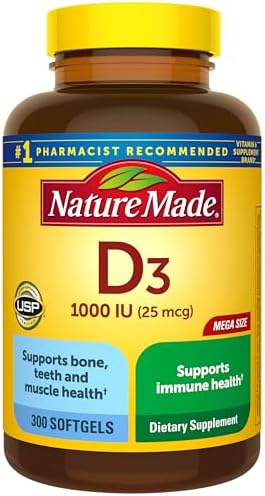
- Immune, muscle, teeth and bone health support supplement: contains one 300 count bottle of Nature Made Vitamin D3 1000 IU (25 mcg) Softgels for a 300-day supply
- Nature Made Vitamin D 1000 IU softgels support bone health, teeth health, muscle health, and provide immune support
- These Vitamin D 1000IU softgels help improve calcium absorption and contain 25mcg of Vitamin D 3, the body’s preferred form of Vitamin D
- Adults, take one Vitamin D3 softgel daily with water and a meal
The main tradeoff is straightforward too: this is a basic softgel, so it may not appeal to readers who prefer chewables. It also should not be treated as proof that every woman needs daily supplementation. It is simply a routine-support option for women whose needs and schedule already point in that direction.
If swallowing pills is the main barrier, a gummy format may be easier to stick with. MaryRuth’s Organic Vitamin D3 Gummies 1000 IU is one example for readers who care more about convenience, chewability, or vegan and organic preferences than bottle size. You can see details on Amazon if a gummy option feels more realistic for your routine.
When it makes sense to talk with a clinician
It is worth checking in with a clinician if you are unsure whether you need vitamin D at all, if you have been told you were low before, if you are using a higher-dose product, or if you have been supplementing long term without revisiting the reason. The same applies if you are pregnant, postpartum, managing a more complex health situation, or trying to make sense of symptoms that need proper evaluation.
The goal is not to make vitamin D feel intimidating. It is to stop treating it like a one-answer question when it often is not.
FAQ
Do all women need vitamin D every day?
No. Some women may use it daily, but others may need a different schedule or may not need the same routine at all. The answer depends on dose, diet, sun exposure, test history, and clinician guidance.
Is weekly vitamin D better than daily vitamin D?
Not necessarily. Weekly use is not automatically better. It is often tied to a different product strength or a clinician-directed plan. Daily and weekly schedules serve different purposes depending on the situation.
Can I decide my vitamin D schedule based on what worked for someone else?
That is not the best approach. Vitamin D routines are more useful when they match your own context rather than someone else’s experience.
Does getting sunlight mean I never need a supplement?
Not always. Sun exposure can help, but it does not answer every question about intake, routine, or past deficiency. It is only one part of the picture.
What is the biggest mistake people make with vitamin D?
Many people focus only on how often they take it and ignore why they are taking it, how much they are taking, and whether the plan actually fits their needs.
Conclusion
The most useful way to think about vitamin D is not daily versus weekly. It is whether the routine fits your reason for taking it. Some women do well with a simple daily habit. Others need a different schedule after testing low. The smartest approach is usually the least dramatic one: match the plan to your real life, review it when needed, and do not assume one schedule works for everyone.