


What if you could prevent pregnancy without hormones—and still choose a method that fits your life?
Non-hormonal options range from simple barrier tools to a long-acting intrauterine device. A copper iud is a T-shaped device wrapped in copper that sits in the uterus. It prevents pregnancy more than 99% of the time, can last up to 10 years, and can even be used as emergency contraception when placed within five days after unprotected sex.
Other choices include external and internal condoms, diaphragms, sponges, spermicide, the pH gel Phexxi, natural family planning, and permanent procedures. Most methods do not protect against STIs—except condoms—so think about both pregnancy and infection risks when you pick a plan.
This article maps real-world pros and cons, clear effectiveness numbers per year, and quick next steps so you can feel in control of your reproductive health. If you want a deep dive on the top-ranked options, see this concise review from a gynecologist: best non-hormonal options.
Key Takeaways
- Non-hormonal choices include copper IUDs, barriers, gels, behavioral methods, and permanent surgeries.
- The copper IUD is >99% effective and can last up to 10 years; initial heavier bleeding is common.
- Condoms are the only non-hormonal method that also reduce STI risk.
- Match a method to your lifestyle: on-demand vs long-acting, procedure tolerance, and STI concerns.
- Find a provider to discuss insertion, removal, and suitability for your health needs.
What “non-hormonal” birth control means today in the United States
Non-hormonal options prevent pregnancy without altering your hormone levels. In the U.S. today, this includes condoms, diaphragm, cervical cap, sponge, spermicides, Phexxi, copper IUDs, fertility awareness, outercourse, withdrawal, and sterilization.
Many people pick methods that don’t change ovulation or the endometrial lining. These choices work by blocking sperm, changing the vaginal environment, timing intercourse, or using a device placed inside the uterus.
Condoms are available over the counter and provide dual protection: they help prevent pregnancy and lower STI risk. External condoms have about an 87% typical-use effectiveness, while internal condoms show higher typical-use pregnancy rates in some studies.
A copper IUD is a long-acting option inserted into the uterus by a provider. It can last up to 10 years and offers over 99% effectiveness without daily action or timing.

| Method type | How it works | Typical-use effectiveness | STI protection |
|---|---|---|---|
| External condom | Barrier on penis | ~87% (typical) | Yes |
| Internal condom | Barrier inside vagina | Higher typical-use pregnancy rate (~21% in some data) | Yes |
| Copper IUD | Copper device in uterus | >99% | No (does not prevent STIs) |
| Barrier & chemical (diaphragm, spermicide, sponge) | Block or kill sperm at time of sex | Varies by method and correct use | No |
| Fertility awareness / withdrawal / sterilization | Timing, behavior, or surgical occlusion | Wide range: low to very high | No (except sterilization does not affect STIs) |
Choosing the right option depends on how much immediate access you want, whether you prefer on-demand use or a set-and-forget device, and how comfortable you are with procedures. If you want a concise review of non-hormonal options and clinical context, see this resource: non-hormonal birth control overview.
Non-Hormonal Birth Control Guide
Use this step-by-step guide to compare non-hormonal birth control by effectiveness, effort, and fit with your daily life. We explain when to combine methods (like condoms with spermicide) and when to see a provider for fittings or device placement.
Start by listing must-haves: do you want over-the-counter options for spontaneity, or a long-acting iud that you place once and forget for years?
Consider STI risk; only condoms reduce infection transmission, so many people pair a condom with another method to raise overall pregnancy protection and stay safer during sex.
For short notice, barrier choices like an external condom or internal condom are easy to get. Cervical devices and diaphragms often need a visit to a provider for fitting and instructions.

If preventing pregnancy is top priority, a copper iud offers >99% effectiveness and can be placed within five days after unprotected sex as emergency contraception.
Balance convenience with correct-use demands: methods used around hours sex or tied to timing work well if you follow instructions, but user errors raise pregnancy risk.
- Cost vs. lifespan: ongoing buys (condoms, spermicide) vs. one-time device costs over years.
- Comfort: insertion near the cervix, sensitivity to gels or latex, and whether you want reversibility.
- Family planning: reversible methods suit people who may conceive later; sterilization is permanent.
Plan a short visit with a provider if you’re considering a diaphragm, cervical cap, or iud. Ask about fit, side effects, and what to expect during and after placement.
For reliable, evidence-based basics on contraception options and access in the U.S., see the CDC contraception overview. For practical care and low-cost tools that support health choices, consider this short read on affordable biohacking tools: affordable tools for health.
How non-hormonal contraception works versus hormonal methods
Non-hormonal options block or disable sperm or create a local environment where fertilization is unlikely. Hormonal options typically stop ovulation or change the uterine lining; only condoms cut STI risk.
Barrier and chemical actions
Barrier tools like condoms, diaphragms, caps, and sponges place a physical blockade so sperm cannot reach the egg. Spermicides chemically impair sperm motility and survival before they travel through the cervix and uterus.
Copper device and pH modulation
The copper iud triggers a local foreign body response and releases copper ions that are toxic to sperm, reducing their ability to move and fertilize. Vaginal pH gels lower fertilization odds by keeping conditions hostile to sperm when used before sex.
Key differences at a glance
| Mechanism | What it affects | Typical effects | STI protection |
|---|---|---|---|
| Barrier (condoms, diaphragm) | Blocks sperm | On-demand, user-dependent | Yes (condoms) |
| Copper iud / intrauterine device | Copper ions, local uterine reaction | High effectiveness, possible heavier bleeding | No |
| pH gel / spermicide | Vaginal environment; sperm mobility | Used before sex; may irritate tissue | No |
Deciding between localized effects and systemic hormone changes matters for side effects, convenience, and pregnancy risk. Talk with a provider to see which option fits your routine and health needs.

Barrier methods: condoms, diaphragms, cervical caps, and sponge
Barrier methods physically block or disable sperm before they reach the cervix. Condoms uniquely reduce STI risk; most other barriers need correct placement and spermicide to work best.
External condoms — what to know
External condoms are over-the-counter and cut STI transmission while helping prevent pregnancy.
Typical use is about 87% effective. Check expiration dates and try latex-free options if you have sensitivities.
Internal (female) condoms — when they help
Female condoms line the vagina and protect against STIs. They fit with flexible rings for placement.
Typical-use pregnancy rates are higher in some studies (~21%). Use them when an external condom isn’t possible.
Diaphragm — fitting and timing
A diaphragm covers the cervix and needs a provider fitting. Always add spermicide and leave it in for 6–8 hours after sex.
Cervical cap — fit, wear time, and risks
The cervical cap fits snugly over the cervix and works best with spermicide. Keep it at least 6 hours after sex and remove by 48 hours.
Effectiveness can drop after a prior birth and some people report more UTIs.
Contraceptive sponge and spermicide
The sponge is single-use and preloaded with spermicide. Insert after wetting, leave at least 6 hours after sex, and do not keep it more than 30 hours inside vagina.
Spermicide comes as gels, foams, films, and suppositories. Alone it fails about 21% of the time and may irritate tissue; nonoxynol-9 can raise HIV risk if irritation occurs.
Quick practical tips
- Combine barriers (for example condom plus diaphragm) to lower pregnancy odds.
- Practice insertion and use a mirror to confirm placement near the top of the vagina.
- If a barrier breaks or slips, contact a provider about emergency options and STI testing.
The copper IUD (non-hormonal IUD): long-acting, reversible contraception
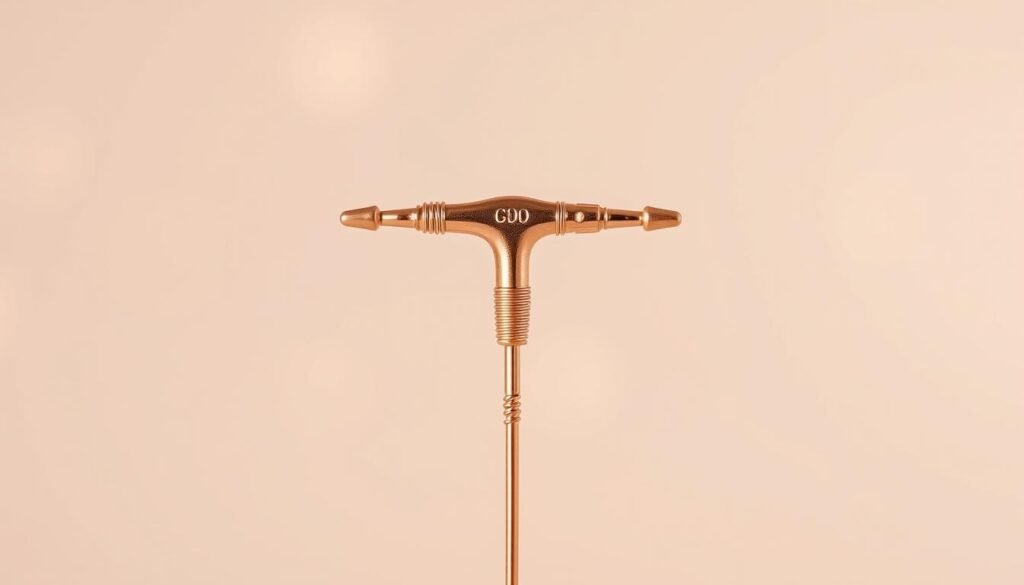
A copper IUD is a T-shaped device placed in the uterus by a provider that prevents pregnancy for years with one insertion. It can also serve as emergency contraception if placed within five days after unprotected sex, but it does not protect against STIs.
What it is and how it works
The intrauterine device is a small plastic frame wrapped in copper wire. Copper ions impair sperm motility and reduce the chance of fertilization without changing your hormones.
Effectiveness and duration
Effectiveness exceeds 99% in typical use. The device can remain effective for up to 10 years, offering long-term, low-maintenance pregnancy prevention.
Benefits
- No hormonal side effects; safe during breastfeeding.
- Set-and-forget protection so you can have uninterrupted sex without daily action.
- Reversible at any time by a trained provider.
Risks, side effects, and who should avoid it
Expect heavier periods, stronger cramps, and spotting during the first months; these effects often ease with time.
Rare risks include pelvic infection shortly after insertion and uterine perforation. Avoid a copper IUD if you have a copper allergy, Wilson’s disease, or uterine abnormalities that complicate placement.
Follow-up: check strings periodically and see your provider for severe pain, very heavy bleeding, fever, or unusual discharge. For more clinical details, see the copper IUD overview.
Natural family planning: tracking cycles, body temperature, and cervical mucus
Natural family planning uses daily observations to identify fertile days so you can avoid sex or use barriers during that window. It needs discipline and regular cycles; inconsistent tracking lowers typical effectiveness.
Tracking starts with the fertile window: sperm can survive several days and an egg lives about 24 hours, so highest pregnancy risk spans the days around ovulation.
How to read cervical mucus
Check mucus each day. Near ovulation it becomes clear, slippery, and stretchy—often like raw egg white—signaling high fertility.
Measuring basal body temperature
Take your body temperature first thing each morning with the same thermometer. A 1–2°F rise confirms ovulation and that fertile time has passed.
Effectiveness and who should avoid it
Perfect-use failure can be low (around 2%), but typical use ranges up to about 23% failures per year. People with irregular cycles, abnormal bleeding, pelvic infections, or on meds that change mucus or body temperature should choose other methods or consult a provider.

| Measure | What it shows | Practical tip |
|---|---|---|
| Cervical mucus | Fertile days (egg-white mucus) | Check daily, note clear/stretchy mucus |
| Basal body temperature | Post-ovulation confirmation (↑1–2°F) | Record each morning at the same time |
| Cycle charting | Patterns across months | Use an app or journal; combine with barriers on fertile days |
For step-by-step instructions and training resources on fertility awareness, see fertility awareness. If a fertile-day slip occurs, consider emergency options and pairing this approach with condoms for added control.
Behavioral choices: outercourse and the withdrawal method
Outercourse avoids vaginal penetration and prevents pregnancy, while withdrawal depends on precise timing and has a high typical-use failure rate. Neither reliably protects against STIs, so consider condoms to reduce infection risk.
Outercourse offers ways to be sexually close without vaginal sex and without risking conception. Partners can explore mutual stimulation, oral sex, massage, and other acts that keep sperm away from the cervix. STI risk varies by act, so weigh which activities are safer for both people.
Withdrawal asks the penis to leave the vagina before ejaculation. Typical-use failure runs near 22% per year. Pre-ejaculate can contain sperm, and timing during arousal is hard to manage in real time.
These options are free and immediately available, but they demand clear communication and a plan. Keep condoms handy to lower STI risk and to back up withdrawal if timing slips.
If an unprotected slip occurs, talk to a provider about emergency contraception and STI testing. For straightforward, evidence-based summaries on options that add protection, see this concise resource from WebMD: non-hormonal birth control options.

Vaginal gel (Phexxi): pH-based, on-demand contraception
Phexxi is a non-hormonal, on-demand gel that changes vaginal pH to reduce sperm movement. You apply it before sex, follow reapplication rules, and consider condoms for STI protection.
Phexxi is a prescription gel applied inside vagina using the provided applicator. Get a prescription from your provider and follow timing steps: apply before intercourse, then wait 15–30 minutes so the gel adjusts the environment.
Reapply if sex does not occur within about an hour, or before each separate episode of intercourse. The product’s effects are time-limited and event-based, so plan ahead and keep a small supply on hand.
Effectiveness and safety: Typical-use effectiveness is moderate—about 14 in 100 users may become pregnant in a year. Expect possible local side effects such as burning, irritation, or increased risk of yeast or bacterial infections. If symptoms persist, discontinue use and consult your provider.
This gel does not protect against STIs. Pairing it with an external condom can lower infection risk while preserving on-demand flexibility. Phexxi suits people who want to avoid daily pills or devices and are comfortable timing application before hours sex.

| Feature | What to do | Key notes |
|---|---|---|
| How to use | Apply inside vagina with applicator; wait 15–30 minutes | Reapply if >1 hour passes or for each new episode |
| Typical-use effectiveness | ~14% pregnancy per year | Moderate effectiveness; pair with condoms to reduce pregnancy risk |
| Side effects | Burning, irritation, possible infections | Stop and see a provider for persistent symptoms |
| STI protection | None | Use external condoms to reduce infection risk |
For planning help and to compare how this method fits your routine, read this short piece on preparedness and post-care: keep a small supply and routine.
Sterilization without hormones: tubal ligation, salpingectomy, and vasectomy
Sterilization offers permanent, non-hormonal birth control with very high effectiveness. Vasectomy requires follow-up ejaculations before it becomes reliable; female procedures usually work right away but carry a small ectopic risk if failure occurs.
Female options: ligation versus salpingectomy, recovery, and ectopic risk
Tubal ligation blocks or seals the fallopian tubes. A salpingectomy removes them entirely.
Both stop an egg from meeting sperm and are effective immediately in most cases. If a pregnancy happens after surgery, about one-third of those rare failures are ectopic.
Recovery time varies. Ask your provider about anesthesia, incision size, and typical return-to-work timelines.
Male sterilization (vasectomy): timing and follow-up
A vasectomy closes the vas deferens so sperm cannot enter semen. It is highly effective but not instant.
Use backup protection for at least eight ejaculations or up to 12 weeks. Confirm success with a follow-up semen analysis.
Permanence, reversals, and choosing surgery
These methods are considered permanent. Reversal is not guaranteed and can be costly.
Discuss risks—bleeding, infection, and pain—and long-term goals before you decide. Sterilization does not protect against STIs, so plan condom use if needed.
Effectiveness at a glance: comparing non-hormonal methods
Effectiveness varies widely—long-acting options like the copper iud and sterilization top the list, while on-demand barriers and timing-based methods depend on consistent use. Typical-use numbers reflect real life and are the best guide for everyday expectations.
Here’s a simple way to compare how likely each method is to prevent pregnancy over a year.
Typical-use failure rates (approximate per year)
| Method | Typical-use effectiveness | Notes |
|---|---|---|
| External condoms | ~87% effective (13% failure) | Best when used correctly from start to finish |
| Internal (female) condoms | ~79% effective (about 21% preg. per year) | Higher typical-use pregnancy rates than external condoms |
| Diaphragm | ~83% effective (≈17% preg. per year) | Needs proper fitting and spermicide; leave 6–8 hours |
| Cervical cap | ~78% effective (≈22% preg. per year) | Less effective after prior vaginal birth |
| Sponge | ~91% nulliparous / ~76% parous | Single-use; timing-sensitive |
| Spermicide alone | ~79% effective (≈21% preg. per year) | Higher failure; best as backup to a barrier |
| Natural family planning | Varies 2%–23% failures | Depends on tracking mucus and body temperature |
| Withdrawal | ~78% effective (≈22% preg. per year) | Timing challenges and pre-ejaculate risk |
| Copper IUD (copper) | >99% effective | Long-acting, set-and-forget; does not prevent STIs |
| Sterilization (tubal ligation / vasectomy) | <1% failure | Permanent; confirm long-term goals first |
- Combine barriers (for example a condom plus diaphragm) to layer protection and approach ~95% effectiveness.
- Diaphragms and caps need correct fit and spermicide left in place 6–8 hours to reach their best outcomes.
- Natural family planning depends on careful daily checks of mucus and body temperature across fertile days; casual tracking raises failures.
STI protection: when you need a condom
Use condoms whenever STI protection matters—most non-hormonal birth control methods don’t block infections. Combining condoms with another method creates a safer plan for both pregnancy and STI prevention during sex.
If you want to lower infection risk fast, add a condom. External condoms reduce transmission and are easy to buy. Internal condoms also protect and help when an external condom won’t work.
Keep in mind: the copper IUD, diaphragm, cervical cap, sponge, spermicide, and Phexxi do not protect against STIs. If exposure is possible, always add a condom to your routine.
Which methods reduce infection risk and when to combine methods
- If a condom slips or breaks during sex, contact a provider about emergency contraception and consider STI testing based on your partner network.
- New relationships or non-monogamy: make condoms standard while you share recent test results and build trust.
- Layer protection: pairing a condom with a highly effective method like an IUD gives strong dual protection without relying on perfect timing.
- Allergies and fit: choose polyurethane or nitrile if latex causes reactions; try brands for comfort to keep use consistent.
- Practical habits: store condoms in a cool, dry place, check expiration dates, and carry a backup so you can adapt in the moment.
- Routine care: include regular STI screening in your health plan; testing plus correct condom use keeps sexual health aligned with birth control goals.
Side effects and risks: what to expect and when to call a provider
Most non-hormonal methods cause local, manageable side effects to your body. Call a provider if you have severe pain, fever, foul-smelling discharge, allergic reactions, or signs of pregnancy.
Most people notice local effects first—bleeding changes, cramps, or mild irritation—depending on the method they choose.
From bleeding and cramps to infections: balancing pros and cons for your body
With a copper IUD expect heavier periods and stronger cramps at first. These side effects often ease over a few cycles as your body adjusts.
Rare but serious risks include pelvic infection soon after insertion and uterine perforation. Seek prompt care for intense pain, high fever, or very heavy bleeding.
Spermicides that contain nonoxynol-9 may irritate tissue and raise infection risk. Stop use and contact a provider if burning or persistent irritation occurs.
Phexxi can cause local irritation or increase infection risk. Watch for itching, changes in discharge, or pain and seek care if symptoms continue.
- Diaphragms and cervical caps can raise UTI risk for some people; follow removal and cleaning instructions to reduce problems.
- Sponges can irritate tissue and must not remain longer than 30 hours to avoid infection risk.
- Condoms rarely cause latex sensitivity; choose nitrile or polyurethane options if you or your partner react to latex.
Any method can fail with imperfect use. If your period is late or you notice pregnancy symptoms, test and contact your provider as soon as possible.
Trust your body signals and err on the side of caution—quick care preserves both reproductive health and overall well-being.
Choosing your best-fit option in the U.S.: lifestyle, cost, access, and timing
Your day-to-day schedule, relationship dynamic, and comfort with medical visits will narrow practical options quickly. Balance cost, access, and follow-up needs with your family planning goals and health profile.
Ask yourself three practical questions:
What to ask about personal routine and preferences
How often do you have sex? If frequent or unplanned, set-and-forget options may suit you better.
Are you comfortable with procedures or prefer over-the-counter methods like condoms? Be honest about how much planning you want to do on busy days.
Can you track fertile days reliably? If yes, fertility awareness could be an option; if not, consider a device or barrier method.
Access, cost, and logistics
Condoms are widely available and protect against STIs. Diaphragms and caps need a fitting; Phexxi requires a prescription. An iud or sterilization involves clinical visits or surgery.
| Factor | Quick note | What to ask your provider |
|---|---|---|
| Access | OTC vs. prescription vs. procedure | How soon can I get fittings or an iud placed? |
| Cost | Ongoing buys vs. one-time device fees | What will insurance cover and what are out-of-pocket options? |
| Timing | On-demand use vs. long-acting | How does this fit my schedule and relationship needs? |
If you want spontaneity and STI protection, keep condoms handy; for long-term, discuss a copper iud with your provider. For more help choosing the right option, see this short resource on choosing the right option.
Conclusion
Non-hormonal birth control offers a full menu—from on-demand condoms to long-acting copper iud and permanent sterilization. Choose the method that fits your time, comfort, and family planning goals, and revisit your plan as life changes.
A copper iud gives the highest effectiveness with minimal day-to-day effort; add a condom when STI protection matters. For spontaneity, keep condoms on hand and consider pairing them with a diaphragm or gel to lower pregnancy odds.
If your family is complete, discuss sterilization or vasectomy and plan timing carefully. Trackers and fertility awareness suit some people, but always have a backup for high-fertility days; see recommended tools like the best period tracking apps.
Watch side effects, set reminders for refills or follow-ups, and act fast after a slip—talk to a provider about emergency options and STI testing. Your best choice supports health, relationships, and goals today, and you can change it as your needs evolve.
FAQ
What does “non-hormonal” contraception mean in the United States?
Non-hormonal contraception refers to methods that prevent pregnancy without using synthetic hormones like estrogen or progestin. These include barrier methods (condoms, diaphragms, cervical caps, sponges), the copper IUD, fertility awareness / natural family planning (tracking cervical mucus and basal body temperature), spermicides, on-demand vaginal gels like Phexxi, behavioral options (withdrawal, outercourse), and permanent surgical options such as tubal ligation, salpingectomy, or vasectomy.
How do non-hormonal methods actually stop pregnancy?
Different mechanisms block conception: barrier methods physically prevent sperm from reaching the egg; the copper IUD creates a copper-rich intrauterine environment that impairs sperm mobility and creates a local foreign-body inflammatory effect toxic to sperm; pH-modulating gels alter vaginal acidity to reduce sperm viability; and fertility awareness avoids sex during the fertile window. Sterilization prevents egg or sperm transport altogether.
Are condoms effective and do they protect against STIs?
Condoms (external and internal/female condoms) are highly effective at reducing STI transmission when used correctly and consistently. Male latex or synthetic condoms also prevent pregnancy well in typical use; failure rates are higher than long-acting methods but much lower for STI protection. Internal condoms offer similar protection when inserted correctly and are a good alternative for people with latex allergies.
How do diaphragms and cervical caps work, and how long can they stay in place?
Diaphragms and cervical caps are silicone barriers placed over the cervix to block sperm. They must be correctly fitted by a provider (for diaphragms) or chosen for the right size (caps) and used with spermicide for best effectiveness. Generally, leave them in place for at least six hours after intercourse but no longer than 24 hours for diaphragms and typically 48 hours for some cervical caps—follow the device instructions and your clinician’s advice.
What about the contraceptive sponge and how many hours can it stay inside the vagina?
The contraceptive sponge is a single-use foam device containing spermicide. It can be inserted before sex and should remain for at least six hours after the last act of intercourse, but must be removed within 24–30 hours depending on brand instructions. Typical-use failure rates are higher than IUDs; effectiveness drops for people who have given birth previously.
Are spermicides safe and do they increase STI risk?
Spermicides (gels, foams, films, suppositories) contain agents such as nonoxynol-9 that immobilize sperm. They can cause vaginal irritation in some people; frequent use of nonoxynol-9 has been linked to increased HIV transmission risk due to mucosal irritation. Use spermicides as advised and combine with barrier methods when STI protection is needed.
How effective is the copper IUD and how long does it last?
The copper IUD is over 99% effective at preventing pregnancy and provides long-acting reversible contraception for up to 10 years depending on the device. It works immediately after insertion (and can also be used as emergency contraception if placed within five days after unprotected sex).
What side effects and risks come with a copper IUD?
Common side effects include heavier periods, stronger cramps, and spotting—especially in the first months after insertion. Less common risks include pelvic inflammatory disease (usually from an existing infection at insertion), device expulsion, and uterine perforation during insertion. People with copper allergy or Wilson’s disease should avoid copper IUDs.
How does fertility awareness (natural family planning) work and how reliable is it?
Fertility awareness tracks the fertile window using methods such as cervical mucus observation (look for clear, stretchy “egg-white” mucus), basal body temperature charting (a sustained post-ovulation rise), and cycle timing. With perfect use and good training, effectiveness can be high, but typical-use failure rates are substantially higher because it requires daily discipline and accurate interpretation. It’s less suited to people with irregular cycles or who cannot avoid sex during fertile days.
Can withdrawal (pulling out) and outercourse prevent pregnancy?
Outercourse (non-penetrative sex) carries essentially zero pregnancy risk and can be a reliable option for avoiding pregnancy, though it won’t prevent STIs if fluids are exchanged. Withdrawal reduces pregnancy risk compared with no method but has a relatively high typical-use failure rate because pre-ejaculate may contain sperm and timing can be imperfect. It’s best paired with other methods for higher protection.
What is Phexxi and how should it be used?
Phexxi is a prescription vaginal gel that temporarily lowers vaginal pH to reduce sperm motility. It is used on-demand before sex, following the manufacturer’s timing guidelines and may require reapplication for additional acts of intercourse. Some users experience vaginal irritation or increased infection risk; consult a clinician if you have recurrent symptoms.
What are the non-hormonal surgical options and are they permanent?
Female sterilization options include tubal ligation (tying or blocking fallopian tubes) and bilateral salpingectomy (removing the tubes). Male sterilization (vasectomy) cuts or seals the vas deferens. These procedures are considered permanent; reversals are possible but not guaranteed and can be costly. Vasectomy achieves sterility after follow-up ejaculations confirm zero sperm; female procedures are immediately effective once healed.
How do typical-use failure rates compare across non-hormonal methods?
Typical-use failure varies widely: condoms and withdrawal show higher failure rates than long-acting methods; diaphragms, cervical caps, sponges, and spermicides have intermediate to high typical-use failure rates, while the copper IUD has one of the lowest. Exact percentages depend on studies and user behavior—discuss numbers with your provider for personalized counseling.
When should I use a condom even if I use another non-hormonal method?
Use condoms whenever STI protection is required—no non-hormonal method (except condoms) reliably prevents STIs. Combine condoms with other methods (dual protection) if you need pregnancy prevention plus infection reduction, especially with new or nonmonogamous partners.
What side effects should prompt a call to a healthcare provider?
Seek prompt care for severe pelvic pain, heavy or prolonged bleeding, fever after IUD insertion, signs of infection, unusual vaginal discharge, severe allergic reaction, or if you suspect IUD expulsion or pregnancy while using a device. For surgical sterilization, report fever, increasing pain, or wound problems after the procedure.
How do I choose the best-fit option for my lifestyle and access in the U.S.?
Consider frequency of sex, desire for future fertility, tolerance for bleeding or device use, comfort with procedures, cost, and access to trained providers. Ask about fitting needs (diaphragm), prescription requirements (Phexxi), insertion visits (IUD), and insurance coverage. A clinician can help weigh trade-offs and arrange fittings or procedures.
Can I breastfeed and use a copper IUD or barrier methods?
Yes. The copper IUD and barrier methods are safe during breastfeeding because they do not release hormones that could affect milk supply. Discuss timing of insertion postpartum with your provider to balance infection risk and convenience.
Who should avoid the copper IUD or certain barrier products?
Avoid copper IUDs if you have a copper allergy, Wilson’s disease, unexplained vaginal bleeding, or certain uterine abnormalities. Avoid spermicides containing nonoxynol-9 if you have frequent vaginal irritation or are at high risk for HIV. Some silicone- or latex-based barrier devices aren’t suitable for people with material-specific allergies—check product labels and discuss alternatives with your clinician.