From IUDs to Apps: A Gynecologist Ranks the Best Non-Hormonal Contraceptives

From copper IUDs to fertility tracking apps, a gynecologist ranks the best non-hormonal contraceptives. Explore safe, effective options to make informed choices about birth control without synthetic hormones.

The copper IUD can protect against pregnancy for up to 10–12 years, making it the most durable option outside hormonal methods.

Table of Contents show

What you’ll read next: this guide ranks non-hormonal birth control from a clinician’s view so you can compare real-world effectiveness, ease of use, and protection against infections in one place.

By Emily Carter, certified health and wellness writer – Fact-checked and reviewed by our editorial team.

We cover a wide range of options: the copper iud, condoms (including latex-free materials), diaphragms and cervical caps, the sponge, spermicides, and even newer gels like Phexxi. You’ll also see fertility-awareness and withdrawal explained with clear real-world numbers.

This intro flags the big tradeoffs: some methods give long-term peace of mind, others require action at the time of sex. Condoms add STI protection, while barrier methods often work better when paired with a spermicide. We’ll also note when to talk to a provider about insertion, allergies, cost, and fit.

Key Takeaways

  • The copper IUD lasts up to 10–12 years and ranks highest for long-term effectiveness.
  • Condoms protect against pregnancy and most sexually transmitted infections.
  • Barrier options like diaphragms and caps work best with spermicide for added protection.
  • Some methods need daily or per-use action; others are set-and-forget.
  • Discuss allergies, refitting after birth, and insertion timing with your clinician.

How a Gynecologist Ranks Non-Hormonal Birth Control Today

A clinician ranks options by how well they prevent pregnancy in real life, how easy they are to use, what side effects patients notice, and whether they protect against STIs. These four factors shape practical recommendations.

Real-life reliability drives a clinician’s ranking of birth control options.

Ranking criteria: effectiveness, ease of use, side effects, STI protection

Effectiveness is shown as two figures: perfect use and typical use. Perfect use reflects ideal adherence. Typical use reflects normal human error.

Ease of use looks at whether a method is set-and-forget or needs steps before sex. Set-and-forget devices usually keep effectiveness steady over time.

Side effects include immediate issues like irritation and longer trends like heavier periods with copper IUDs. Clinicians weigh severity and duration.

STI protection matters. Only condoms cut STI risk among common barrier choices, so they score uniquely on that axis.

Typical use vs. perfect use: what these terms mean for real life

Typical use shows what most people can expect. Condoms, for example, have a 13% typical-use pregnancy rate versus 2% with perfect use.

Internal condoms show 21% typical use and 5% perfect use. Fertility awareness methods span 2–23% typical use and under 1–5% perfect use depending on training and cycle regularity.

The copper IUD stays under 1% with ongoing use and also works as emergency contraception. That set-and-forget nature explains why it ranks so highly for real-world protection.

  • Practical point: The wider the gap between typical and perfect use, the more a method depends on routine and discipline.
  • Lifestyle fit: If you don’t want steps at the time of sex, choose a long-acting option.
A clean, well-lit medical examination room. In the foreground, an array of non-hormonal birth control methods - from intrauterine devices to diaphragms and copper rings - arranged on a sterile tray. In the middle ground, a gynecologist in a white coat, studying the options with a thoughtful expression. The background is blurred, but conveys a sense of authority and expertise. The lighting is soft and natural, highlighting the medical instruments and the doctor's focused gaze. The overall atmosphere is one of clinical professionalism and meticulous evaluation of the various non-hormonal contraceptive choices.

FactorWhat it measuresWhy it matters
Effectiveness (typical vs perfect)Pregnancy rates in real life vs ideal useShows realistic protection and needed adherence
Ease of useDaily upkeep or on-demand stepsAffects long-term consistency and satisfaction
Side effectsImmediate and long-term symptomsImpacts tolerance and continuation
STI protectionReduces infection riskEssential when protection against STIs is required

Best Non-Hormonal Contraceptives


Choose a tier that matches how much you want to manage birth control day to day. Set‑and‑forget options give the most consistent protection; on‑demand choices work well when you plan each encounter.


If you want steady, long-term protection with minimal steps, top-tier options lead the pack. The copper IUD carries under 1% pregnancy risk per year and lasts up to 10–12 years. Permanent sterilization exceeds 99% effectiveness; note that a vasectomy requires follow-up tests to confirm no sperm remain.

Mid tier: reliable with correct use

Condoms offer dual benefits: pregnancy prevention and STI protection. External condoms show ~13% typical-use vs 2% perfect-use; internal condoms show ~21% vs 5%.

Reusable barriers like the diaphragm and cervical cap can reach high effectiveness when used with spermicide and fitted properly. Caps work less well after birth and need refitting after weight change or delivery.

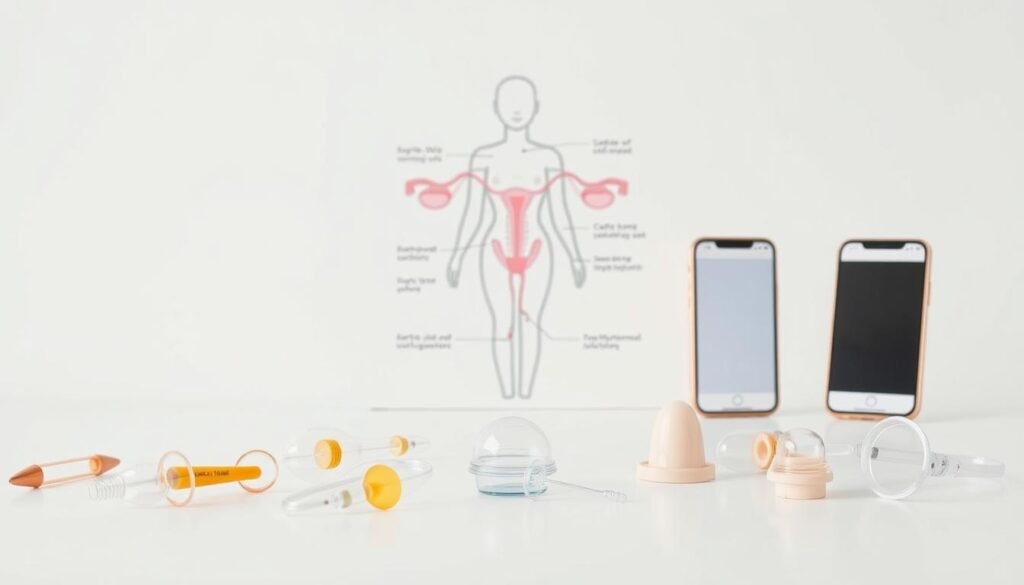
A well-lit, high-quality illustration showcasing various non-hormonal birth control options. In the foreground, an array of different contraceptive devices such as copper IUDs, diaphragms, cervical caps, and non-hormonal birth control apps are displayed on a clean, minimalist surface. The middle ground features a simplified anatomical diagram highlighting the placement and function of these contraceptive methods. The background has a soft, neutral tone that complements the medical and informative nature of the image. The lighting is bright and diffused, creating a sense of clarity and professionalism. The overall composition is balanced, visually appealing, and designed to educate and inform the viewer about the best non-hormonal contraceptive options.

Situational and low-reliability picks

The sponge, spermicides, and gels such as Phexxi are flexible and OTC, but failure rates are higher; the sponge’s typical use varies by prior birth (about 14% vs 27%). Spermicides alone show roughly 70% effectiveness in practice. Withdrawal and calendar-only methods carry about 20% typical-use failure and suit short-term or backup needs.

“Condoms deserve special recognition for dual protection—pregnancy prevention and STI reduction in one simple step.”

TierExamplesTypical-use pregnancyNotes
TopCopper IUD, Sterilization<1% (IUD); >99% (sterilization)Set-and-forget; long-lasting; vasectomy needs clearance test
MidCondoms, Diaphragm, Cervical capCondoms ~13% typical; diaphragm up to ~6% with correct useEffective when used correctly; condoms add STI protection
SituationalSponge, Phexxi, SpermicidesSponge 14–27% by parity; spermicides ~21% failuresOTC, use-timed, higher failure rates; Phexxi alters vaginal pH
LowWithdrawal, FABMs~20% typical (withdrawal); FABMs 2–23% typicalRequire discipline, training, or cycle regularity; consider as backup

For reading on fertility awareness and training, see fertility awareness-based methods. Match a method to your routine and ask your clinician about fit, refitting after birth, and layering condoms for STI protection.

Copper IUD: The Long-Lasting, 99% Effective, Hormone-Free Standout

The copper IUD provides durable, reversible birth control with under 1% failure per year and little day-to-day upkeep. It suits people who want set-and-forget protection and prefer a non-hormonal birth control option.

A copper intrauterine device (IUD) suspended against a clean, neutral background, with soft, natural lighting illuminating the metallic sheen of the device. The IUD should be in sharp focus, showcasing its intricate design and spiral shape, while the background remains slightly blurred to draw attention to the central subject. The overall composition should convey a sense of simplicity, elegance, and medical precision, reflecting the device's role as a long-lasting, highly effective, and hormone-free contraceptive option.

How it works and why it ranks first

The copper IUD releases copper ions into the uterus. These ions impair sperm motility and viability, making fertilization unlikely.

This device lasts about 10–12 years and keeps real-world protection close to perfect because it removes user steps from the equation.

Who it’s best for, side effects, and insertion considerations

Ideal users want long-term control, quick fertility return after removal, and to avoid hormones.

Side effects can include heavier periods, cramping, and spotting. Up to about 12% have removal in year one for these reasons.

Insertion is a brief office procedure; clinicians can offer pain control and explain string checks and follow-up.

Bonus: Copper IUD as emergency contraception

Placed within five days after unprotected sex, the copper IUD is the most effective emergency contraceptive to prevent pregnancy.

“The copper IUD stands out because it prevents pregnancy reliably over many years with minimal ongoing maintenance.”

FeatureQuick factsWhy it matters
Effectiveness<1% failure per yearVery low pregnancy risk in typical use
Duration10–12 yearsLong-term protection without daily steps
Side effectsHeavier bleeding, cramps; ~12% removal in year oneMay need short-term symptom management

Permanent Options: Female Sterilization and Vasectomy

When people are sure they do not want future births, sterilization provides durable, low-maintenance protection with very high effectiveness.

Both tubal procedures (ligation or removal) and vasectomy exceed 99% effectiveness for preventing pregnancy in the long term.

Effectiveness, procedures, and recovery basics

Procedures are usually outpatient and done under anesthesia. Most people go home the same day and return to normal activity within days to weeks.

Vasectomy requires a follow‑up semen analysis. Use backup contraception until the test confirms zero sperm in the ejaculate.

Reversibility realities and ectopic pregnancy risks

Reversal exists but success varies. Treat sterilization as permanent when planning your care.

Tubal reversal raises the chance of an ectopic pregnancy (about 4–8%), so careful counseling is essential if future conception is considered.

“Treat sterilization as permanent: plan carefully and discuss alternatives like IVF if future pregnancy might be desired.”

  • When to consider it: You want no more births and prefer a one-time solution.
  • What it doesn’t do: Sterilization does not protect against STIs — consider condoms when needed.
  • If plans change: Reversal is not guaranteed; IVF is an alternative for those who later seek pregnancy.
FeatureFemale sterilizationVasectomy
Effectiveness>99%>99%
Procedure typeTubal ligation or removal (laparoscopic or open)Office or minor outpatient surgery
Follow-upRoutine post-op check; counseling on ectopic risk if reversedSemen analysis; use backup until cleared
ReversibilityPossible but limited; higher ectopic risk after reversalPossible but not guaranteed; success varies

Condoms: Protection Against Pregnancy and STIs in One Step


Condoms are the only widely available method that protects against pregnancy and many STIs in a single, simple step. Use them correctly from start to finish to get the full benefit.


A still life arrangement featuring a selection of high-quality condoms in various colors and styles, set against a soft, neutral background. The condoms are arranged in an appealing, visually interesting manner, showcasing their form and highlighting their protective function. Lighting is natural and diffused, creating a warm, inviting atmosphere. The overall composition conveys a sense of responsible, modern contraception, emphasizing the condoms' dual role in preventing pregnancy and sexually transmitted infections. The image is captured with a close, focused lens to accentuate the details and textures of the condoms.

External condoms: effectiveness, lube compatibility, and pleasure tips

External condoms show about 13% typical-use and 2% perfect-use pregnancy rates. Put them on before any genital contact and keep them on from start to finish every time.

Add compatible lubricant to reduce friction and breakage. Latex needs water- or silicone-based lube. Extra lube can boost comfort, lower tear risk, and often improves pleasure.

Internal condoms: insertion timing and fit

Internal condoms offer a different fit and can help partners who dislike external condoms. Typical-use pregnancy is about 21%; perfect-use is about 5%.

They can be inserted up to eight hours before sex, giving flexibility. Practice insertion once so you can place it smoothly when it matters.

Latex-free choices: polyurethane, nitrile, polyisoprene, and natural membrane

For latex allergies, choose polyurethane, nitrile, or polyisoprene. These work with many lubes and still help prevent pregnancy and STIs.

Natural membrane condoms allow oil-based lube but do not reliably stop some infections. If STI protection matters, avoid natural membrane for that purpose.

“A well-stored, correctly applied condom protects in the moment — and practicing application can cut errors under pressure.”

  • Store at room temperature, check expiration dates, and keep a backup supply.
  • If a condom slips or breaks, consider emergency contraception and STI testing as indicated.
  • Pairing condoms with another method, such as a spermicide, can further reduce the chance of pregnancy.
TypeTypical-use pregnancyKey notes
External condom (latex)~13%Use water- or silicone-based lube; protects against STIs
Internal condom~21%Can be inserted up to 8 hours before sex; different fit and feel
Latex-free (polyurethane, nitrile, polyisoprene)Varies by productGood for latex allergies; polyurethane and polyisoprene allow some oil-based lubes; natural membrane does not protect against many STIs

For a broader guide to non-hormonal birth control options, including how methods compare and when to layer protection, see our linked resource.

Diaphragms and Cervical Caps: Reusable Barriers Used with Spermicide

These reusable barriers sit over the cervix and need a clinician fit and a spermicide to reach reliable protection. They give on-demand birth control without hormones but do not protect against STIs.

These devices must be fitted by a clinician. One-size options like Caya exist, but placement should be checked. Insert with fresh spermicide and leave the device in place for at least six hours after sex.

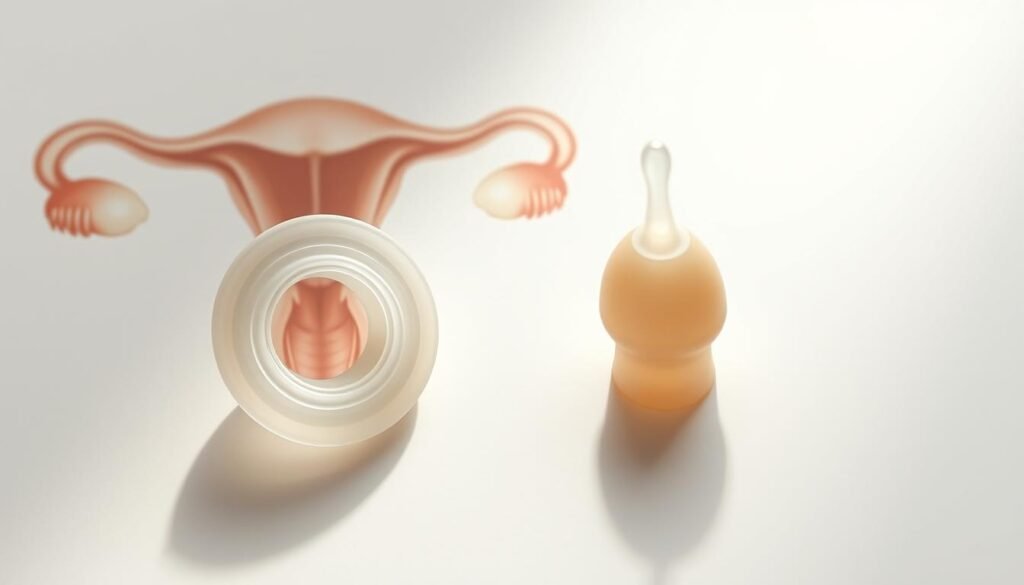
A detailed cross-section diagram showcasing a diaphragm and cervical cap contraceptive devices. The diaphragm is prominently displayed in the foreground, made of a flexible silicone material with a rigid rim. The cervical cap is shown in the middle ground, a smaller silicone cup designed to fit snugly over the cervix. Both devices are surrounded by an anatomically accurate illustration of the female reproductive system, including the uterus, fallopian tubes, and ovaries, rendered in a clean, technical style with muted colors. Subtle lighting from the side casts soft shadows, emphasizing the smooth contours and precise engineering of these reusable barrier contraceptives. The overall mood is informative and clinical, conveying the effectiveness and ease of use of these non-hormonal birth control options.

How should you time fitting and insertion?

Get a fitting visit so the clinician can teach insertion and removal. Ask about refitting after a vaginal birth, major weight change, or if it feels different during use.

  • Placement: The diaphragm and caps sit over the cervix and are always paired with spermicide.
  • Timing: Leave in place at least six hours after sex; remove within 24 hours for a diaphragm and 48 hours for a cap.
  • Care: Use water-based spermicides or lubricants—oil-based products can degrade the device or irritate the vagina.
  • STI note: These methods do not protect against STIs; add condoms if needed.

Who gets better protection, and how much?

Cervical caps work best in people who haven’t given birth—about 86% effectiveness in nulliparous users versus ~71% after vaginal birth. Diaphragm effectiveness improves with correct placement and consistent use of spermicide.

FeatureDiaphragmCervical cap
FitClinician fitted; Caya may need placement checkClinician fitted; refit after birth or weight changes
Leave in placeAt least 6 hours; remove within 24 hoursAt least 6 hours; remove within 48 hours
Effectiveness (typical)Varies with correct spermicide use~86% nulliparous; ~71% after birth
STI protectionNo — add condoms if neededNo — consider condoms for STI risk

For a deeper look at cap sizing and fitting, review the cervical cap fitting guidance and discuss options with your clinician.

Spermicides, Phexxi, and the Sponge: What to Know Before You Use


These on-demand options can fit some routines but require careful timing and attention to side effects. Use them with a barrier when STI protection matters.


Spermicides come as gels, foams, films, and suppositories and often use nonoxynol‑9. Apply near the cervix, wait 10–15 minutes to activate, and expect effectiveness for about an hour. Reapply for each act when spermicide is used.

Frequent use of nonoxynol‑9 may irritate the vagina and raise a small risk of HIV transmission. Users can get bacterial vaginosis or allergies. Pairing spermicide with a diaphragm or cap improves protection compared with spermicide alone.

A transparent glass vial filled with a clear, viscous liquid, resting on a white background. The liquid has a slight blue hue, subtly illuminated from below, casting a soft glow. The vial is positioned at a slight angle, highlighting its curved shape and the liquid's viscosity. The lighting is soft and diffused, creating a clean, clinical atmosphere. The focus is sharp, drawing the viewer's attention to the delicate details of the vial and its contents, conveying a sense of medical precision and care.

How does Phexxi work and what are the cautions?

Phexxi lowers vaginal pH to slow sperm movement. Insert it immediately or up to one hour before sex. Some users report burning or itching, yeast infections, and a slight rise in UTIs — discuss Phexxi if you have recurrent urinary infections.

Practical points on the contraceptive sponge

The sponge is single-use and has spermicide built in. You can insert it up to 24 hours before sex and must leave it at least six hours after. Do not wear it more than about 30 hours total. Effectiveness is higher if you have never given birth and falls after childbirth.

  • Quick tips: None of these methods protect against STIs — add condoms for infection prevention.
  • If irritation occurs, stop use and talk with your clinician about alternate methods.

“On-demand products work in the moment, but timing, reapplication, and irritation risk shape real-world protection.”

Apps and Natural Family Planning: Fertility Awareness-Based Methods

Natural family planning uses body signals and cycle data to identify fertile days so you can avoid or plan sex accordingly. With training and steady tracking, some methods approach low failure rates, but real-life results vary.

How BBT, cervical mucus, and symptothermal tracking work

Basal body temperature (BBT) rises after ovulation. Track it every morning to confirm that ovulation occurred.

Cervical mucus changes from sticky to wet and stretchy near ovulation, signaling higher fertility.

Symptom‑thermal methods combine BBT, mucus, and cycle notes for stronger signals than calendar-only approaches.

Why perfect use and typical use differ

Perfect-use failure can be under 1–5% for well-taught symptothermal methods. Typical-use ranges widely from about 2–23% depending on the method and user consistency.

Training, daily recording, and regular cycles shrink the gap between perfect and typical use.

When fertility awareness methods aren’t a good fit

If your cycles are irregular, you just gave birth, or you recently stopped hormonal birth control, predictions can be unreliable.

Apps can help chart data, but do not rely on app estimates alone to prevent pregnancy. On fertile days, abstain or add a barrier like condoms.

“Symptom‑based tracking works best for people who can record daily signs and adapt plans when fertile days appear.”

MethodHow it tracks fertilityTypical-use failure
Calendar / Standard DaysCycle length rules and fixed fertile windowUp to ~23%
TwoDay / BillingsCervical mucus observation~4–20% depending on adherence
Symptom‑thermalBBT + mucus + symptoms~2–5% with training; higher with inconsistent use

For guided learning and certified instructors, see fertility awareness. Reassess your choice if life or cycles change, and add condoms when STI protection is needed.

Withdrawal, Non-Penetrative Sex, and LAM: Situational or Short-Term Options

For brief windows, several low‑intervention options can reduce pregnancy risk, but each needs rules and a backup plan. Use them when you want flexible birth control while arranging a longer-term choice.

Withdrawal relies on pulling out before ejaculation. With typical use, failure runs about 20–21%; with near-perfect timing it falls to ~4%.

Pre-ejaculate may contain sperm, so withdrawal raises risk even when partners are careful. Set a clear signal, practice good timing, and have emergency contraception lined up if needed.

Non‑penetrative sex lets partners enjoy intimacy without vaginal intercourse. It prevents pregnancy as long as semen does not contact the vulva or vagina.

If activity might lead to penetration or genital‑to‑genital contact, add protection like condoms to cut risk and STIs. Keep a backup plan for moments when excitement changes the plan.

Lactational amenorrhea (LAM) works only under strict rules in the first six months after birth. Its perfect‑use failure is about 1–2% when: no menses, near‑exclusive breastfeeding, and frequent feeds (roughly every 4 hours by day and every 6 hours at night).

Once any criterion slips—or at six months—switch promptly to another method to maintain control.

“These strategies suit short timeframes. They are not replacements for long-term protection and do not protect against STIs.”

  • Quick tips: Treat withdrawal and non‑penetrative sex as situational options, not primary birth control.
  • Plan transitions with your clinician and keep emergency contraception accessible if a use fails.
  • None of these options prevent STIs—use condoms when infection risk exists.
OptionTypical‑use failureWhen it fits
Withdrawal~20–21% typical; ~4% perfectShort-term, disciplined partners; have EC as backup
Non‑penetrative sexEffectively 0% if no semen contact; risk rises with penetrationWhen you want sex without vaginal intercourse or pregnancy risk
LAM~1–2% with strict criteria in first 6 monthsExclusive breastfeeding, no menses, frequent feeds; transition at 6 months

For clinical guidance on postpartum and breastfeeding options, see the WHO guidance.

Choosing Your Best Fit in the United States Right Now

Match how you live now to a birth control option that fits your habits and goals. This helps narrow choices quickly: some control options need actions every time you have sex; others work for years without daily thought.

Match your lifestyle: set-and-forget vs. every-time methods

Set-and-forget: If you want long-term coverage, consider a copper iud. It gives durable, reversible protection over many years with little ongoing use required.

Every-time methods: If you prefer on-demand control, choose condoms or on‑demand products like the sponge or gels. Condoms also lower the risk of stis, so they’re the logical layer when infection risk matters.

Allergies, STIs, and access: what to discuss with your provider

Tell your clinician about latex allergies; ask about polyurethane, nitrile, or polyisoprene condoms and compatible lubricants.

Discuss side effects you want to avoid—heavier periods can follow a copper iud, while spermicides may irritate some users. If you need training for fertility awareness, ask about certified instructors and practice plans.

  • Practical checklist: Fitting needs for diaphragms/caps, vasectomy follow‑up, and permanence of sterilization.
  • Cost and access: some methods are OTC; others need a clinic visit—ask about financial help at Planned Parenthood or community clinics.
  • Backup plan: keep condoms handy, know emergency contraception timelines, and schedule a provider check‑in after starting any new birth control method.
Decision pointSuggestionWhy it matters
Daily effortSet-and-forget (copper iud)Low maintenance over years
On-demand controlCondoms, sponge, PhexxiControl each time; condoms add STI protection
Allergies & fitLatex-free condoms; diaphragm fittingComfort, safety, and correct placement

For more detail on other nonhormonal birth control options and how they compare, see nonhormonal birth control options.

About the Author

Emily Carter is a certified health and wellness writer with over 7 years of experience in evidence-based fitness, nutrition, and lifestyle content. As the lead author of Go4HealthnFitness.com, she’s passionate about simplifying science-backed wellness advice for everyday readers. When she’s not writing, you’ll find her strength training, hiking, or exploring natural supplements that actually work.

Editorial Process Note

Our Commitment to Accuracy: This article was medically reviewed for accuracy and fact-checked by our editorial team.

Medical Disclaimer: The information in this article is for informational purposes only and is not intended to be a substitute for professional medical advice, diagnosis, or treatment. Always seek the advice of your physician or other qualified health provider with any questions you may have regarding a medical condition.

Conclusion

Match how you live now to a practical plan: set‑and‑forget devices lower daily steps, while on‑demand choices need attention at the moment.

The copper IUD remains the most effective reversible non-hormonal birth option and can serve as emergency contraception. Sterilization exceeds 99% for permanent control; vasectomy needs post‑procedure follow‑up. For data on comparative effectiveness, see this effectiveness review.

If STI protection matters, make condoms a default or layer them with another birth control method. Training and consistent use improve outcomes for fertility awareness and user‑dependent methods.

FAQ

What non-hormonal birth control methods are most effective?

The most effective non-hormonal options are the copper IUD and permanent sterilization (female tubal ligation or vasectomy). The copper IUD offers long-term protection with a typical-use failure rate near 1%, while sterilization approaches essentially eliminate pregnancy risk after recovery.

How does typical use differ from perfect use?

Typical use reflects how people actually use a method (including missed steps), while perfect use assumes the method is used exactly as intended every time. For example, condoms and diaphragms have higher failure rates with typical use because human error (late application, removal too soon, incorrect fit) reduces effectiveness.

Can the copper IUD be used as emergency contraception?

Yes. A copper IUD can be inserted up to five days after unprotected sex (or within five days of ovulation) and is the most effective emergency option. It also provides ongoing contraception after insertion.

Do condoms protect against STIs and pregnancy?

Yes. External (male) and internal (female) condoms provide barrier protection against most sexually transmitted infections and reduce pregnancy risk when used correctly. Consistent and correct use is key: use a new condom for every act of vaginal, anal, or oral sex and pair with water- or silicone-based lubricant if needed.

What are the pros and cons of diaphragms and cervical caps?

Diaphragms and cervical caps are reusable barrier devices used with spermicide. Pros: no hormones, user-controlled, reusable. Cons: need fitting and refitting after childbirth or weight change, must be inserted before sex and left in place for a specified time after, and they offer no STI protection.

How effective are spermicides, Phexxi, and the contraceptive sponge?

Spermicides alone have modest effectiveness and are best used with another barrier; they may increase HIV risk with frequent use. Phexxi is an on-demand vaginal gel that alters pH to reduce sperm function and has moderate effectiveness for users who meet criteria. The contraceptive sponge provides single-use protection; its effectiveness is lower in people who have given birth. None of these protect against STIs.

Are fertility awareness apps and natural family planning reliable?

Fertility awareness-based methods (FABMs) can be effective with perfect use, which requires daily tracking of basal body temperature, cervical mucus, and/or cycle data and often provider guidance. Typical-use failure rates are higher, especially with irregular cycles or inconsistent tracking. Good training and regular cycles improve success.

Is withdrawal a reasonable option to prevent pregnancy?

Withdrawal reduces pregnancy risk somewhat but is less reliable than barrier or long-acting methods. Pre-ejaculate can contain sperm, and human error (timing) increases failure rates. It may be used as a short-term or situational strategy but not as a primary method when high effectiveness is desired.

What is lactational amenorrhea (LAM) and when does it work?

LAM provides effective pregnancy prevention for up to six months postpartum if three strict criteria are met: exclusive breastfeeding on demand, no return of menstruation, and the infant is younger than six months. If any criterion isn’t met, another contraceptive method should be used.

How do I choose between set-and-forget and every-time methods?

Match a method to your lifestyle. Set-and-forget options (copper IUD, sterilization) suit people seeking minimal daily action. Every-time methods (condoms, diaphragms, spermicide, sponge) require planning or action at sexual activity. Consider effectiveness goals, STI risk, desire for future fertility, and comfort with device use when deciding.

Are there allergy or material concerns with barrier methods?

Yes. Latex condoms can cause allergic reactions in some people; alternatives include polyurethane, polyisoprene, or nitrile condoms and internal devices. Natural membrane condoms (lambskin) prevent pregnancy but do not reliably block viruses. Discuss material sensitivities with your provider and choose compatible lubricants.

Do cervical barrier methods need refitting after childbirth?

Often, yes. Childbirth can change cervical and vaginal anatomy, affecting fit. Diaphragms and cervical caps typically require refitting after vaginal delivery and sometimes after significant weight change. Schedule a fitting with a clinician to ensure continued effectiveness.

Can non-hormonal methods cause pelvic infections?

The risk is low with proper use. IUD insertion carries a small, short-term risk of pelvic infection around the time of placement, so screening for STIs beforehand is standard. Spermicides and frequent use of some devices may irritate mucosa, potentially increasing infection risk. Follow instructions and consult your provider with concerns.

How soon after vasectomy or tubal ligation am I protected?

Vasectomy requires follow-up semen testing; protection is confirmed once tests show no sperm (usually after several weeks and ejaculations). Tubal ligation is effective immediately after the procedure for many techniques, but confirm timing with your surgeon and use backup contraception as advised during recovery.

Are there non-hormonal options that also reduce urinary tract infection (UTI) risk?

No non-hormonal contraceptive is proven to lower UTI risk routinely. Some users report fewer UTIs after switching from diaphragms to other methods, but evidence is mixed. Phexxi may be associated with increased UTI symptoms in some users, so discuss UTI history with your clinician when choosing a method.

Where can I get help deciding which method fits my needs?

Start with a visit to an OB-GYN, family planning clinic, or primary care provider experienced in contraceptive counseling. Bring your health history, STI concerns, plans for future pregnancy, and preferences about routine versus on-demand methods. Many clinics offer same-day IUD placement and fittings for diaphragms or caps.

Emily Carter
Emily Carter

Emily Carter is a certified health and wellness writer with over 7 years of experience in evidence-based fitness, nutrition, and lifestyle content. As the lead author of Go4HealthnFitness.com, she’s passionate about simplifying science-backed wellness advice for everyday readers. When she’s not writing, you’ll find her strength training, hiking, or exploring natural supplements that actually work.

Articles: 429