

The way you breathe can affect how stressed, calm, or focused you feel. Even a few minutes of slow, comfortable breathing may help settle your heart rate, ease tension, and change how your nervous system responds to stress.
Most adults breathe about 12–20 times per minute while resting. We rarely notice those breaths until something changes. During anxiety, breathing may become faster or deeper. When we relax, it often becomes slower and more regular. These patterns can influence carbon dioxide levels, blood acidity, and signals traveling between the brain and body.
But does conscious breathing really improve your health? Research suggests it can help with stress, mood, and certain physical symptoms, although the benefits vary. This guide explains the science, five practical breathing techniques, and how to practice safely without special equipment.
Key Takeaways
- Blood chemistry: Breathing controls how much carbon dioxide leaves your body, helping regulate blood pH.
- Stress and mood: Gentle, slow breathing may reduce physical arousal and help you feel calmer.
- Heart health: Regular practice may modestly support blood pressure and heart-rate regulation.
- Sleep and focus: Short breathing sessions can support relaxation, although improvements aren’t guaranteed.
- Getting started: Try 2–5 minutes of comfortable breathing daily. Avoid forcing deep breaths or holding your breath.
What Is Conscious Breathing, and Why Does It Matter?
Conscious breathing means paying attention to your breath or deliberately changing its pace, depth, or rhythm. Unlike ordinary breathing, which happens automatically, it gives you some control over a process connected to your heart, lungs, and nervous system.
For example, anxiety can make your breathing quicker, while a calm breathing rhythm may help reduce the physical feeling of stress. This two-way connection makes breathing a useful relaxation tool.

A 2018 systematic review of slow breathing found links between controlled breathing, heart-rate variability, brain activity, and feelings of relaxation. However, the researchers also noted that the studies were small and used different methods.
Conscious breathing is particularly appealing because it requires very little preparation. You can practice while sitting at your desk, resting before bed, or taking a short break from daily activities.
How Breathing Changes Your Blood Chemistry
To understand conscious breathing, start with two gases: oxygen and carbon dioxide. Both are essential to normal body function, but they play different roles.
Oxygen, carbon dioxide, and blood pH
When you inhale, oxygen enters your lungs and passes into your bloodstream. Your blood carries it to organs and tissues. When you exhale, your body removes carbon dioxide (CO2), a gas produced as cells use energy.
Carbon dioxide also helps regulate blood acidity, measured as pH. Your body carefully controls this balance through breathing and other processes, including kidney function.
Here is what happens when breathing patterns change:
- Breathing too quickly or deeply: You may release more CO2 than your body produces, lowering its concentration in the blood.
- Breathing more slowly: CO2 levels may change depending on how deeply you breathe and how much air you move overall.
- Breathing comfortably: Your body usually maintains oxygen and CO2 within healthy ranges without conscious effort.
Excessive breathing, called hyperventilation, can lower CO2 enough to cause dizziness, tingling, or lightheadedness. It may also temporarily narrow blood vessels supplying the brain, as explained by Cleveland Clinic.
Does slower breathing improve oxygen delivery?
Not automatically. Healthy adults usually have blood oxygen levels that are already close to normal saturation. Slowing your breath does not necessarily add more oxygen to the bloodstream.
Carbon dioxide does influence blood-vessel diameter and how readily hemoglobin releases oxygen to tissues. However, these effects are carefully regulated. The goal of relaxation breathing is not to raise CO2 deliberately or chase higher oxygen readings.
The practical goal is a comfortable breathing pattern that avoids unnecessary overbreathing. You do not need to feel air hunger, take enormous breaths, or hold your breath to benefit.
How Conscious Breathing Calms the Nervous System
Your autonomic nervous system controls many functions you don’t consciously manage, including heart rate, digestion, and blood-vessel activity. It has two important branches:
- Sympathetic: Helps prepare your body for action during stress or danger.
- Parasympathetic: Supports recovery, rest, and everyday body maintenance.
Slow breathing can influence the balance of activity in these systems. It also changes the natural rhythm of your heartbeat as you inhale and exhale.
The vagus nerve connection
The vagus nerve carries signals between the brain and organs, including the heart and lungs. It helps regulate many automatic functions.

During slow breathing, changes in chest pressure, heartbeat timing, and signals from the lungs interact with the brain’s control systems. Researchers are still studying exactly how these processes contribute to relaxation.
A review of the respiratory vagal stimulation model discusses how breathing may influence parasympathetic activity and emotional regulation.
You may notice the result as a slower pulse, more comfortable breathing, or less physical tension. However, these sensations do not prove that your vagus nerve has been directly stimulated or permanently strengthened.
Seven Potential Benefits of Conscious Breathing
1. Lower stress and anxiety
Stress often brings a racing heartbeat, tense muscles, and irregular breathing. A gentle breathing rhythm can interrupt that pattern and give your attention something steady to follow.
In a 2023 randomized study, researchers compared several five-minute daily breathing exercises with mindfulness meditation over one month. All groups improved in certain measures of mood, while breathwork showed greater improvement in positive feelings, particularly with prolonged-exhale breathing.
The findings are encouraging, but breathing exercises are not a guaranteed way to stop a panic attack or treat an anxiety disorder.
2. Better emotional control and mood
When you’re upset, reacting immediately may make a difficult situation worse. Taking a brief breathing break creates an opportunity to notice your feelings before responding.
Try this simple response when tension builds:
- Stop what you’re doing and relax your shoulders.
- Notice whether your breathing feels rushed or uncomfortable.
- Take several gentle breaths with slightly longer exhales.
- Return to the situation when you feel ready.
Breathing won’t remove the cause of your frustration, but it may make the physical stress response easier to manage.
3. Support for blood pressure and heart health
Slow breathing can affect heart rate and heart-rate variability (HRV), which describes changes in the time between heartbeats. Those changes reflect interactions between breathing and cardiovascular control.

A 2024 meta-analysis of 15 studies reported modest reductions in blood pressure and heart rate with breathing exercises. However, the studies used different techniques and had methodological limitations.
Slow breathing may be a useful addition to a heart-healthy lifestyle. It should not replace prescribed blood pressure medication, exercise, or other recommended care.
4. Improved sleep and evening relaxation
Racing thoughts and physical tension can make bedtime frustrating. Slow breathing offers a simple way to wind down without trying to force sleep.
A 2026 systematic review examined nine studies involving 457 participants. Slow breathing before bed was linked to better self-reported sleep duration and quality, although objective sleep measurements showed mixed results.
For a simple bedtime routine:
- Dim the lights and put away distracting screens.
- Find a comfortable resting position.
- Inhale gently for about 3–4 seconds.
- Exhale comfortably for about 4–5 seconds.
- Continue for 3–5 minutes without straining.
There is no need to force an unusually slow breathing rate. Breathwork has not been shown to reliably increase melatonin release, prevent awakenings, or treat sleep apnea.
5. Less muscle tension and easier pain management
Stress and discomfort often occur together. When you feel pain, you may tense your jaw, tighten your shoulders, or hold your breath without noticing.
Slow breathing can help you relax those muscles and change how you respond to discomfort. Some experimental studies also suggest that paced breathing can alter pain perception, although the biological mechanisms remain uncertain.
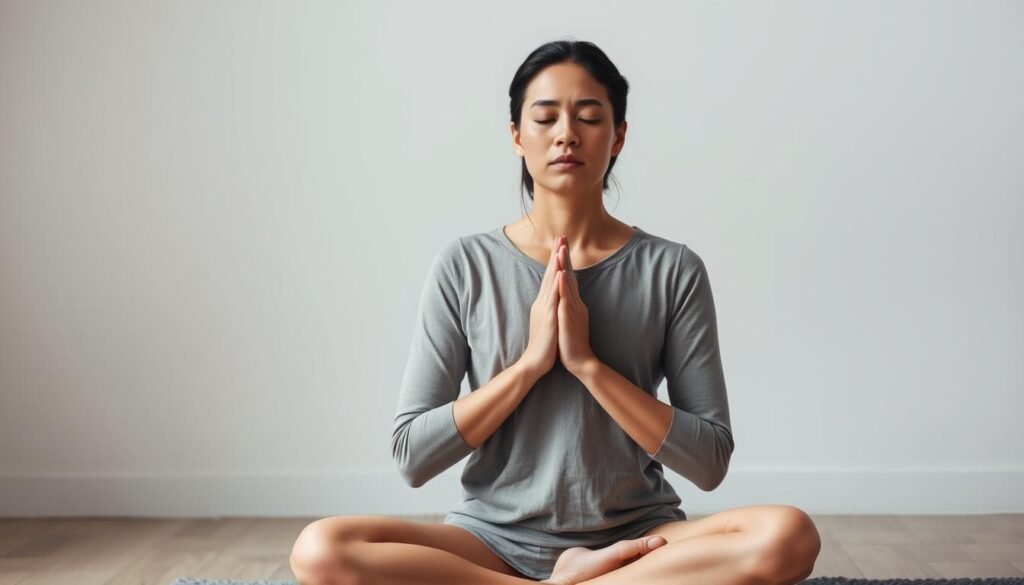
Try combining gentle breathing with these actions:
- Neck and shoulder tension: Lower your shoulders and unclench your jaw during each exhale.
- Headaches: Rest somewhere comfortable and avoid forced breathing.
- Exercise: Exhale during the difficult part of a movement instead of repeatedly holding your breath.
- Ongoing pain: Use relaxation as a supporting technique while following appropriate treatment.
Evidence that ordinary slow breathing prevents migraines or works through natural opioid release remains limited. Seek medical evaluation for new, severe, or worsening pain.
6. Sharper attention and clearer thinking
Concentrating can be difficult when you’re anxious or mentally overloaded. A short breathing break may help you settle before returning to a demanding task.
Breathing patterns interact with brain systems involved in alertness, attention, and emotional processing. However, evidence does not establish that coherent breathing makes the two brain hemispheres communicate more efficiently or consistently improves reaction time.
Try two minutes of comfortable breathing before a presentation, study session, or challenging conversation. Treat it as a focus routine rather than a guaranteed performance boost.
7. Support for breathing comfort and physical activity
Some breathing exercises have particular value for people managing respiratory symptoms. For example, pursed-lip breathing can help people with chronic obstructive pulmonary disease (COPD) slow their breathing and release trapped air.
The American Lung Association explains how pursed-lip and diaphragmatic breathing can support breathing efficiency in people with certain lung conditions.
Stress reduction may also make digestive discomfort feel less intense for some people. Still, claims that conscious breathing directly improves enzyme production, metabolism, or gut blood flow need stronger evidence.
Five Conscious Breathing Techniques to Try
Different techniques suit different situations. Start with one that feels natural rather than trying all five in a single session.
1. Physiological sigh: For moments of stress
This technique uses two inhales followed by a longer exhale. It is closely related to the cyclic sighing method studied by Stanford researchers.
- Take a comfortable inhale through your nose.
- Add a smaller second inhale if it feels easy.
- Exhale slowly and gently through your mouth.
- Return to normal breathing or repeat a few times if comfortable.
Best for: A short pause when you feel overwhelmed or tense. Stop if repeated sighs cause dizziness or discomfort.
2. Pursed-lip breathing: For controlling airflow
This method is especially useful for some people who experience shortness of breath during everyday activities.
- Sit comfortably and relax your neck.
- Inhale gently through your nose for about two seconds.
- Purse your lips as though blowing out a candle.
- Exhale slowly for about four seconds without forcing air out.
Best for: Managing breathing during activity, particularly when recommended by a respiratory clinician. It is not a substitute for urgent treatment of new or severe breathlessness.
3. Box breathing: For structured attention
Box breathing divides a breath into four equal phases.
- Inhale gently for four seconds.
- Hold for four seconds if comfortable.
- Exhale for four seconds.
- Pause for four seconds before repeating.
Best for: A structured focus break. Beginners can use shorter counts or skip the holds. Never push through discomfort to finish a cycle.
4. Coherent breathing: For a steady daily rhythm
Coherent breathing usually involves around five to six breaths per minute. Some people use it to practice regular, comfortable breathing and observe their heart-rate rhythm.
- Sit upright with your shoulders relaxed.
- Inhale gently for five seconds.
- Exhale gently for five seconds.
- Repeat for two to five minutes if comfortable.
If this pace feels too slow, use three seconds in and four seconds out instead. Comfort matters more than reaching a particular number.
5. Diaphragmatic breathing: For everyday relaxation
Diaphragmatic, or belly, breathing helps you become more aware of your main breathing muscle.
- Sit comfortably or lie on your back with your knees bent.
- Place one hand on your upper chest and another on your belly.
- Inhale gently and allow your abdomen to move outward.
- Exhale slowly while keeping your shoulders relaxed.
- Continue for one to three minutes initially.
The goal isn’t to push your belly outward or take the biggest possible breath. Let the movement remain natural.
Do You Need a Breathing Device or Guided App?
No. Most relaxation breathing exercises only require a comfortable place and a few minutes of attention. Counting silently, following a clock, or using a basic phone timer can help you maintain a steady rhythm.
Some people prefer a visual breathing guide that changes light or displays a moving shape to signal when to inhale and exhale. This can be useful if counting seconds feels distracting, particularly during a desk break or bedtime routine.
However, the breathing pace should be adjustable or comfortable enough to follow without strain. Devices that encourage resistance training serve a different purpose from relaxation breathing. A product’s marketing claims do not establish that it treats anxiety, improves oxygen delivery, or provides medical benefits.
Start with a free method. Consider additional tools only if they make regular practice easier.
How to Build a Safe Daily Breathing Routine
Consistency can be more practical than long sessions. Choose a routine that fits your day and adjust it based on how you feel.
A simple seven-day starting plan
- Days 1–2: Practice comfortable belly breathing for one to two minutes while seated.
- Days 3–4: Increase to three minutes and experiment with slightly longer exhales.
- Days 5–6: Try a gentle paced rhythm during a work break or before bed.
- Day 7: Review which technique feels easiest and choose one to continue.
After the first week, a five-minute session once or twice daily may be reasonable if you tolerate it well. You do not need to increase the duration indefinitely.
Instead of measuring success by the lowest breathing rate, notice useful changes: Do you feel less tense? Is the exercise comfortable? Does it help you return to your day?
Breathing Exercise Safety: What to Avoid and When to Get Help
Gentle breathing exercises are generally well tolerated by healthy adults, but controlled breathing can sometimes feel uncomfortable. Forced deep breaths, rapid breathing, or prolonged breath-holding may trigger symptoms rather than relieve them.
Common mistakes to avoid
- Breathing too deeply: Large repeated breaths can cause overbreathing and dizziness.
- Forcing slow breathing: An uncomfortable pace can increase air hunger or anxiety.
- Holding your breath excessively: Long holds aren’t necessary for basic relaxation.
- Practicing in unsafe places: Never perform breath-holding or techniques that could cause dizziness while driving, swimming, or in water.
- Ignoring symptoms: Stop if breathing exercises make you feel faint, distressed, or unusually short of breath.
Who should seek individualized guidance?
Speak with a qualified healthcare professional before attempting intensive breathing exercises if you have unstable heart disease, significant lung disease, blood pressure problems, a history of fainting, or other conditions affecting breathing. During pregnancy, gentle breathing may be appropriate, but avoid forceful practices and prolonged holds without individualized guidance.
People with panic disorder may find that focusing closely on breathing sometimes increases anxiety. If that happens, try a different grounding method or seek guidance from a mental health professional.
Seek emergency medical help for severe or new breathing difficulty, chest pain, fainting, or other alarming symptoms. Do not assume these symptoms are simply anxiety or try to manage them with breathwork alone.
For persistent breathing problems, asthma, COPD, or unexplained breathlessness, a clinician or respiratory therapist can help determine which breathing exercises are suitable.
Conclusion: Start With a Few Comfortable Breaths
Conscious breathing can influence blood carbon dioxide, heart-rate patterns, and nervous-system activity. Research supports its potential as a simple tool for relaxation, stress management, and certain respiratory symptoms, although many broader health claims still need stronger evidence.
You don’t need to master an advanced technique or follow a perfect breathing rhythm. Start with two to five minutes, breathe gently, and choose a method that feels comfortable.
The most useful routine is one you can practice consistently without strain. Over time, those small pauses may help you manage stressful moments and develop a more relaxed daily rhythm.
Frequently Asked Questions
Can conscious breathing change blood chemistry within minutes?
Yes. Changes in breathing rate and depth can alter carbon dioxide levels and influence blood pH within a short time. The direction and size of those changes depend on how much air you move. Relaxation exercises should not aim to manipulate blood gases aggressively.
Can slow breathing increase carbon dioxide to dangerous levels?
Ordinary comfortable breathing is generally regulated by the body. However, deliberately restricting ventilation or holding the breath for long periods can be unsafe. Avoid trying to raise CO2 levels through forced techniques.
How quickly can breathing exercises reduce anxiety?
Some people feel calmer after a few comfortable breaths, while others need several minutes or experience little immediate change. Research suggests regular five-minute sessions may improve mood, but breathing exercises are not a guaranteed treatment for anxiety disorders.
Is nasal breathing better than mouth breathing?
The nose warms, filters, and humidifies incoming air. Nasal breathing may feel helpful during quiet relaxation, but mouth breathing is appropriate during heavy exertion or when nasal airflow is limited. Nasal breathing alone has not been shown to reliably treat snoring or sleep apnea.
Does diaphragmatic breathing stimulate the vagus nerve?
Slow diaphragmatic breathing influences pressure changes, heart-rate rhythms, and pathways associated with vagal regulation. These interactions may support relaxation, although feeling calm does not prove a direct increase in vagus nerve activity.
Can breathing exercises lower blood pressure?
Some studies report modest reductions with regular slow breathing. Results vary, and breathing exercises should complement—not replace—prescribed treatment and established blood pressure management.
Can conscious breathing reduce pain or migraines?
Gentle breathing may help manage muscle tension and the emotional response to discomfort. Evidence that it reliably prevents migraines or treats chronic pain remains limited. New or worsening headaches require appropriate medical evaluation.
Is conscious breathing safe during pregnancy?
Comfortable, gentle breathing is often suitable during pregnancy. Avoid forceful hyperventilation, prolonged breath-holding, and practices that cause dizziness. Ask your pregnancy care professional about exercises appropriate for your circumstances.
What is the best breathing technique for beginners?
Gentle diaphragmatic breathing or a comfortable paced rhythm is a reasonable starting point. Try three seconds in and four seconds out for one to three minutes, adjusting as needed. There is no single ideal pace for everyone.
How often should I practice conscious breathing?
Start with two to five minutes once daily. If comfortable, add another session at a convenient time. Regular practice matters more than achieving a particular number of breaths or completing long sessions.