


Have you ever wondered why saying goodbye to a beloved companion can leave your body feeling shattered as well as your heart?
When an animal who shared your daily routine dies, biology reacts fast. Brain scans show areas that light up during human bereavement also respond after a companion is gone. Oxytocin drops, while Cortisol rises — and that shift can wreck sleep, appetite, and energy.
In the United States, 67% of households care for a pet and Americans spend roughly $75 billion yearly on them. That social weight helps explain why this kind of loss feels like losing family.
This article maps the neurobiology behind that pain and gives clear, evidence-informed steps to lower stress hormones and support healing. You’ll find practical advice on sleep, gentle movement, social buffering, and when to seek professional help. For sleep-focused strategies, see this guide to better rest during bereavement.
Key Takeaways
- Biological responses after loss include oxytocin drops and cortisol spikes that affect mood and sleep.
- High cortisol can cause insomnia, appetite changes, and irritability — symptoms you can address.
- Simple actions — sleep hygiene, gentle exercise, and social support — help lower stress hormones.
- Recognize disenfranchised reactions and seek validating support to protect your healing.
- When distress is severe or prolonged, professional care and hotlines in the United States are appropriate next steps.
Why Pet Loss Hits Hard in the United States
American households often treat a companion as a daily source of comfort, routine, and identity. This closeness shapes how deeply people feel when that companion is gone.
The scale of companionship: households and spending

About 67% of households—roughly 85 million families—have a companion animal at home. Annual spending on care now nears $75 billion, reflecting more than utility; it shows emotional and financial investment over time.
From “owner” to family member: an evolving bond
Language follows feeling. Surveys find 95% of owners call a companion a family member. That shift matters: people report treating that companion like kin, even prioritizing hard-to-get medicines for them over non-family members.
| Measure | Data | What it signals |
|---|---|---|
| Household prevalence | 67% (~85M families) | Wide exposure to daily routine changes when a companion dies |
| Annual spending | $75 billion | Depth of care and role in family identity |
| Deathcare demand | ~1.9M funerals (2012 est.) | Growing need for rituals to mark loss |
These facts explain why a companion’s death often feels like losing a member of the household. Daily rhythms—wake-ups, walks, meals—are shared. When routine vanishes, emotion and stress rise.
For more on why this pain is real and common, see why losing a pet hurts so.
The Science of Attachment, Oxytocin, and Cortisol After a Pet’s Death
Attachment forms a safety loop: daily contact with a companion trains your nervous system to expect comfort. When that loop ends, biochemical signals shift quickly. This is a body-and-brain response, not a moral failing; it explains why feelings can be intense and persistent.

How attachment creates a secure base
Attachment theory shows that proximity seeking, safe-haven behavior, and a secure base apply to close animal relationships as much as human ones.
Research finds dogs and cats display attachment patterns similar to children. That pattern means a companion often regulates mood and routine for many people.
Oxytocin withdrawal and emotional freefall
Regular touch, eye contact, and play raise oxytocin, which calms vigilance and supports sleep. When those interactions stop, oxytocin falls and people report that sudden emptiness feels like a freefall.
Why cortisol surges after a bond breaks
Loss triggers a stress response: cortisol rises, heart rate increases, and sleep cycles can fragment. Neuroimaging even shows overlap between networks active after losing a companion and those seen with human bereavement.
- Summary: Attachment makes a companion a secure base. When that bond breaks, oxytocin falls and cortisol rises, producing physical symptoms that are normal and addressable.
- Understanding this pattern points to body-first steps that help: sleep, gentle movement, and steady routines.
| Mechanism | What happens | Typical effect |
|---|---|---|
| Attachment (Bowlby) | Proximity seeking and safe-haven | Sense of security tied to daily contact |
| Oxytocin | Rises with touch and play | Calms vigilance; drops after absence |
| Stress hormones | Cortisol surge after bond ends | Sleep disruption, appetite change, heightened arousal |
For a deeper look at the neuroscience, read this science of pet grief. To explore nervous-system practices that aid recovery, see this guide on nervous-system workouts.
Pet Loss Grief and Cortisol in the U.S.
Elevated stress hormones after a companion’s death show up as sleep problems, appetite shifts, and mood changes. These are bodily signals that your system is reacting — not a sign of weakness.
After such a loss, many people notice nights that fragment and energy that vanishes. Elevated cortisol can delay falling asleep, trigger early waking, and leave daytime fatigue.
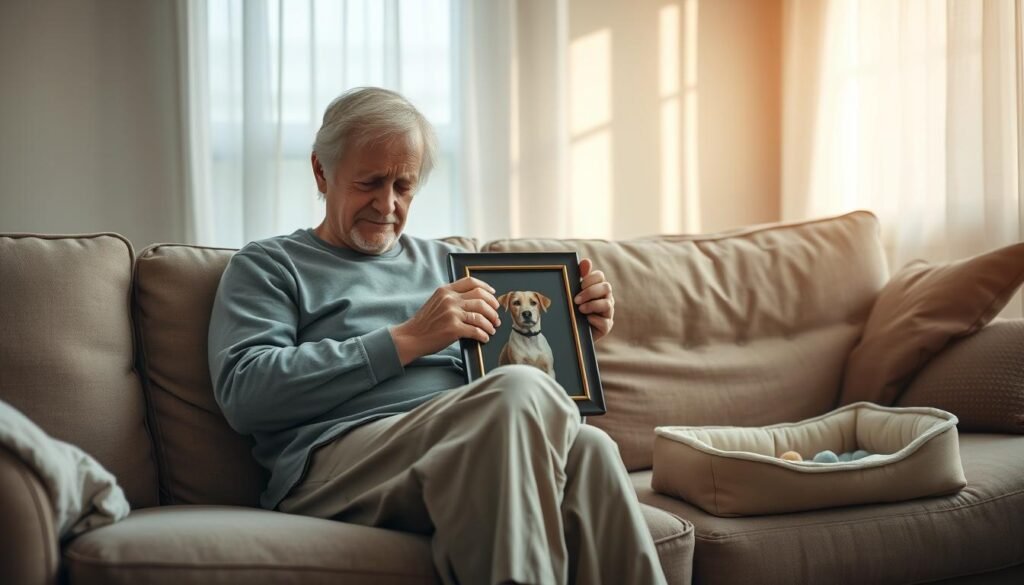
How elevated hormones disrupt sleep, appetite, and mood
Sleep: Nighttime hormone spikes can keep you alert when you should rest. Stabilize light exposure, and keep consistent bed and wake times to help reset rhythms.
Appetite: Some lose hunger; others overeat. Aim for steady protein, fiber, and hydration to support recovery of normal appetite.
Mood & energy: Irritability, numbness, and fog are common while the nervous system runs hot. Grounding breaths and short walks lower arousal and restore focus.
When normal mourning becomes complicated
“If yearning, rumination, or functional decline persist for months, consider structured care.”
Prolonged impairment may signal complicated grief and raises risks for anxiety, depression, or PTSD. Rarely, extreme stress has led to stress cardiomyopathy — a reminder that emotional pain can affect the heart.
- Summary: Elevated hormones fragment sleep, dull appetite, and push mood toward irritability or numbness.
- Most healing softens over time, but persistent dysfunction warrants professional evaluation.
For deeper reading on the neuroscience, see the science of pet grief, and to explore nervous-system practices that help recovery, read how Pilates calmed a nervous system in one account.
Disenfranchised Grief: When Society Minimizes Your Loss
Many mourners face a second hurt: social dismissal that makes recovery harder. Naming disenfranchised grief and building validation helps lower stress and restore social scaffolding.
Dr. Kenneth Doka calls this type of mourning disenfranchised grief — a loss that is not openly acknowledged or publicly mourned. When people hear dismissive phrases, they often feel isolated and ashamed.

“It’s just a pet”: how invalidation amplifies stress
Minimizing language can raise shame, boost physiological arousal, and stall healing. This social invalidation removes predictable social comfort and makes everyday tasks harder.
Creating validation: language, networks, and rituals
Choose clear, validating words like “family member” or “companion” to name the depth of the bond. Map two to three friends or family who will check in and listen without minimizing.
- Use rituals: write an obituary, hold a small service, or build a photo wall to honor memory.
- Ask for specific support: meals, short visits, or help with routine care during the first weeks.
- Invite friends and family members who knew your companion; their presence normalizes mourning.
Advocate at work when you need flexibility. And remember: validating your own experience is a protective act that makes room for healthy recovery. For further reading, see this piece on why we should take it more and a practical guide on emotional-hotspots stretches.
Evidence-Informed Ways to Lower Cortisol and Cope with Pet Loss
Start with the body: steady sleep, gentle movement, and balanced meals blunt stress responses and help restore normal rhythm. These practical strategies reduce arousal, ease tension, and create a stable base for emotional healing.

Body-first strategies: sleep, movement, nutrition
Rebuild routine first. Set a consistent bed and wake time, get morning light, and stop screens an hour before bed to help reset sleep hormones.
Move gently: daily walks, restorative yoga, or light strength work metabolize stress without draining depleted energy.
Eat anchored meals with protein, fiber, and colorful plants. Limit alcohol and processed snacks that can worsen anxiety or depression.
Short, scheduled check-ins with trusted friends give steady comfort. Ask people for specific forms of care—meals, errands, or brief visits—to reduce decision fatigue.
National hotlines offer live support. The ASPCA Pet Loss Hotline (877-474-3310; 12 p.m.–12 a.m.) and Lap of Love (855-955-5683; 7 a.m.–11 p.m.) provide compassionate guidance when you need it.
Rituals and memorials that help regulate feeling
Create rituals that name the relationship: write an obituary, hold a small service, plant a tree, or assemble a memory book. These acts convert private pain into shared meaning.
Include children with simple roles—reading a note or placing flowers—and use age-appropriate language to validate feelings and offer comfort.
When to seek therapy or specialized support
Consider professional care for prolonged impairment, severe anxiety or depression, traumatic euthanasia memories, or sleep that won’t recover.
Specialists and counselors who focus on companion loss can address guilt, replayed scenes, and disrupted routines with targeted therapy and coping plans.
“Start with body-first strategies, layer social support and memorials, and bring in therapy if symptoms persist.”
| Strategy | Quick actions | What it helps |
|---|---|---|
| Sleep hygiene | Consistent schedule, morning light, screen curfew | Reduce nighttime arousal; restore energy |
| Gentle movement | Daily walk, yoga, light resistance | Metabolize stress hormones; lift mood |
| Nutrition | Protein-rich meals, vegetables, hydrate | Stabilize appetite and mood |
| Social & memorial | Scheduled check-ins, hotlines, ceremonies | Validation, comfort, lowered isolation |
Summary: Start with body-first routines to lower stress, add steady social support and meaningful memorials, and seek therapy if daily function or mood stays impaired. For practical guidance on behavioral signs and support during bereavement, see this resource on coping and support.
Conclusion
Saying goodbye reshapes daily routines, hormones, and how a home feels for weeks or months. Understanding attachment, oxytocin shifts, and stress responses helps you choose clear, practical steps to feel steadier.
This is a whole-body, whole-life event that can raise stress and make sleep, appetite, and mood wobble for a while.
You are not alone: millions of people face similar pain each year, and asking for support is wise, not weak.
Honor the relationship with validating language, rituals, and shared memory. Focus on what you can control—steady sleep, gentle movement, and balanced meals—to calm your body so your mind can process the loss.
If healing stalls, seek a therapist who understands companion bereavement. Give yourself time and compassion; steady calm returns in steps as life and home adjust.
FAQ
How common is companion animal ownership in U.S. households and why does it matter?
Ownership rates are high across the United States, with millions of families sharing daily routines, sleep patterns, and emotional care with their animals. That frequent contact builds deep attachment, so when an animal dies, people can experience intense sorrow similar to losing a human family member. This close bond helps explain why hormonal and psychological responses can be strong.
How does attachment to an animal trigger hormonal changes after death?
Close, daily caregiving boosts oxytocin and other bonding chemicals; ending that relationship removes regular comfort and social contact. The sudden absence can raise stress hormones that regulate arousal and mood, disrupting sleep and appetite while amplifying sadness and anxiety.
What role does oxytocin withdrawal play in emotional pain?
Oxytocin supports feelings of safety and connection. After the loss of a companion, lower oxytocin signaling can make emotions feel rawer and reduce resilience to stress, contributing to sensations of emptiness and emotional freefall that many people describe.
How do elevated stress hormones affect everyday functioning?
Higher stress hormones commonly disturb sleep, appetite, and cognition. That leads to fatigue, poor concentration, mood swings, and physical symptoms such as headaches or digestive upset. These changes can prolong recovery and make daily tasks harder.
When should grief after an animal’s death prompt concern about anxiety or depression?
If intense sadness lasts beyond a few months, or if persistent insomnia, social withdrawal, suicidal thoughts, or severe anxiety appear, it may signal complicated grief or a mood disorder. Seek evaluation from a mental health professional when symptoms interfere with safety, work, or basic self-care.
What is disenfranchised grief and how does it affect healing?
Disenfranchised grief happens when others minimize or dismiss the loss—phrases like “It was just an animal” can invalidate feelings. That social invalidation raises stress, isolates people, and slows recovery. Validation and ritual help reduce this added burden.
How can family and friends offer meaningful support?
Offer direct acknowledgment, listen without judgment, and avoid minimizing statements. Practical gestures—bringing meals, checking in, remembering routines—signal care. Suggest memorials or shared stories to create validation and social buffering.
Which daily practices help lower stress hormones and ease emotional pain?
Prioritize consistent sleep routines, gentle movement like walking or yoga, balanced meals, and brief relaxation techniques (deep breathing, progressive muscle relaxation). These body-first steps reduce physiological arousal and improve mood regulation.
Are there evidence-based therapies for severe or prolonged grief?
Yes. Cognitive behavioral therapy (CBT), complicated grief therapy, and trauma-informed approaches address intrusive thoughts, avoidance, and heightened arousal. Licensed therapists, grief counselors, and support groups experienced with animal bereavement can provide tailored care.
What memorials or rituals help with processing and memory-making?
Personalized rituals—small ceremonies, photo albums, planting a tree, writing letters, or creating an online tribute—provide structure and symbolic closure. Public or private memorials help name the loss and restore a sense of meaning.
Where can U.S. residents find immediate emotional support specific to animal bereavement?
Many non-profit hotlines and local veterinary clinics maintain lists of grief counselors and support groups. National organizations like the Humane Society and the American Veterinary Medical Association offer resources and referrals. If in crisis, contact local emergency services or the National Suicide & Crisis Lifeline at 988.
How can parents support children grieving the death of a companion animal?
Use age-appropriate language, encourage questions, and invite children to share memories. Maintain routines and offer choices for memorial activities. Validate feelings and seek a child therapist if changes in behavior, sleep, or school performance persist.
Can guilt or second-guessing make physiological stress worse?
Yes. Rumination and guilt heighten stress responses and prolong elevated hormones. Practical steps—talking with trusted friends, journaling, or discussing events with a veterinarian—can reduce uncertainty and ease rumination.
Are there specific nutritional or supplement strategies to support recovery?
Focus on balanced meals with protein, healthy fats, and whole grains to stabilize blood sugar and mood. Omega-3s, vitamin D, and B vitamins support brain health, but consult a primary care provider before starting supplements, especially if taking medications.
How long does it typically take to recover from intense sorrow after an animal’s death?
Grief timelines vary widely. Many people notice gradual improvement over weeks to months, while others need longer. Healing usually moves in waves—periods of progress and setbacks. If impairment persists or worsens, professional help is appropriate.
Move at your own pace. Begin with low-pressure social contact and explain your needs to close friends. Honor the memory with small rituals before social events. Over time, engagement typically feels less burdensome and guilt decreases.