


Have you ever wondered how you can perform at work yet feel like you’re running on fumes? That nagging emptiness or low energy can creep up slowly and change how your body, mood, and relationships feel day to day.
Burnout is a chronic state of depletion, not just a rough week. It quietly chips away at productivity, sleep, and overall health if left unchecked.
This short guide previews five practical red flags to watch for so you can intervene early. We’ll clarify how this differs from depression and point to simple, evidence-based steps and support to help you recover.
For context on how workplace overload affects health and performance, see research and clinical perspectives like those shared by community health experts and a therapist’s breakdown of core symptoms at go4healthnfitness.
Key Takeaways
- Chronic depletion can appear even when you keep meeting job demands.
- Watch for persistent exhaustion, loss of interest, and physical complaints.
- Long-term stress harms sleep, immunity, and mood if not addressed.
- Burnout often ties to a role or environment and can overlap with depression.
- Small boundary changes, better sleep, and timely support aid recovery.
Why Burnout Builds Over Time in the United States Today
Long-term overload doesn’t arrive overnight — it builds when recovery time evaporates. Repeating high-output days, late hours, and constant messages squeeze out rest. Over weeks and months, motivation and emotion drain away even if you still meet job demands.

How does stress differ from depletion?
Stress feels like too much to handle right now; it spikes energy and worry. In contrast, long-term depletion shows up as low motivation and emotional flatness. Spotting that shift helps you act before health and performance decline.
What modern pressures push people over the edge?
Unmanageable workloads, tight deadlines, unclear tasks, and limited manager support steadily erode resilience. Always-on communication and overtime compress recovery time so weekends stop refilling your tank.
- Lifestyle hits: not getting enough sleep, skipped meals, and fewer restorative activities speed depletion.
- Personal and cultural drivers: perfectionism and a “never say no” habit make people take on more than they can recover from.
- Home-life spillover: work strain shrinks bandwidth for family and self-care, which multiplies fatigue and irritability.
If you notice more mistakes, shorter patience, or blank days where you feel numb, those are early symptoms. Try small course corrections: set clearer hours, protect a 7–8 hour sleep window, and add one short enjoyable activity midweek to see if energy rebounds.
Learn more about emotional and physical that often precede bigger changes at work and in life.
Burnout Warning Signs
Spotting early changes in energy, mood, and focus helps you act before health and work suffer. When several of these shifts cluster and persist over weeks, they point to more than routine stress.
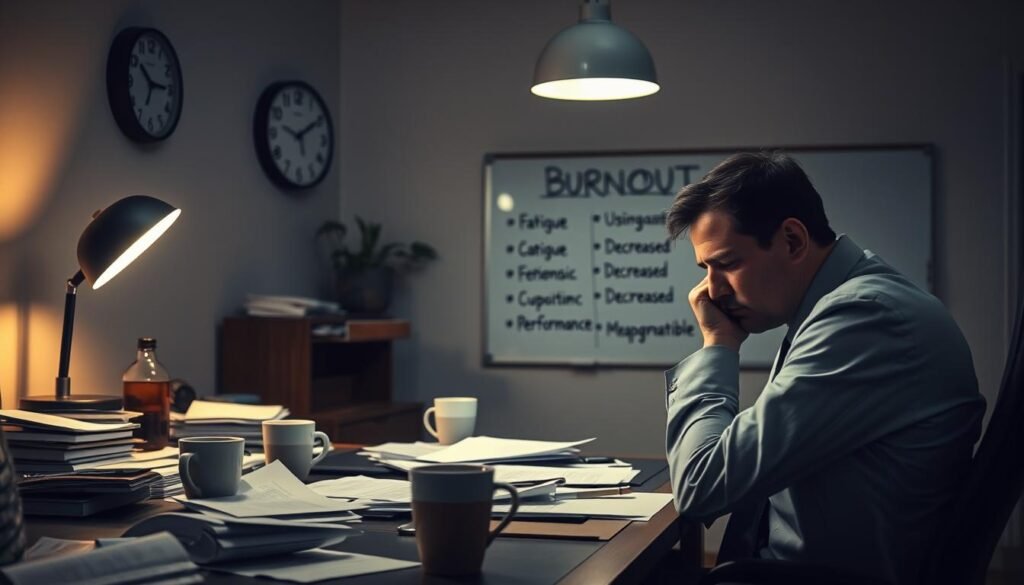
Exhaustion that rest doesn’t fix
Feeling tired after a long day is normal, but persistent fatigue that sleep or naps don’t erase is not. You may drag through meetings and still feel depleted at day’s end.
Alienation and cynicism toward work and people
You pull back from colleagues and people you usually enjoy. Tasks feel meaningless and you respond with sarcasm or indifference more often than before.
Reduced performance and concentration
Simple tasks take longer, errors rise, and focus fades—especially late in the day. Tracking daily energy and attention can reveal clear patterns.
Physical symptoms: headaches, sleep trouble, and weakened immunity
Recurring headaches, GI flares, frequent colds, and disrupted sleep are common early physical symptoms. For a clinical overview of these physical markers, see this summary at WebMD on physical symptoms.
Hopelessness, negativity, and a sense of failure
If your inner voice turns critical and you feel ineffective despite effort, that negativity can amplify decline in mood and work quality.
| Cluster | Common Examples | What to track |
|---|---|---|
| Energy & sleep | Persistent fatigue, early waking | Daily energy rating, sleep hours |
| Social & mood | Withdrawal, cynicism | Interaction frequency, mood notes |
| Body & immunity | Headaches, frequent infections | Physical symptoms log, doctor visits |
| Performance | Concentration loss, more mistakes | Task completion time, error count |
Sign One: Constant Mental and Physical Exhaustion
Some people perform fine on the outside while their internal energy meter barely ticks over. This steady depletion shows up as both mental fog and physical weariness, and it won’t clear with a single weekend.
How persistent fatigue shows up in your body
Your brain may feel foggy and slow. Muscles often feel heavy. You can wake up after a full night of sleep and still be feeling tired.
- Common body clues: tension headaches, jaw clenching, tight shoulders, and gut churn.
- Physiology in plain terms: chronic stress hormones keep you on edge and reduce deep sleep, so restorative cycles shorten.
- Health effects: more aches, slower healing, and weaker immunity can follow sustained exhaustion.

Two days off can’t erase five high-output work days. Without short daily resets, fatigue compounds day after day.
Simple corrections that help: add 10-minute walks, breathing breaks, and a reliable stop time each day. Track your energy three times daily for one time block to find where a brief reset helps most.
If exhaustion remains after practical changes, see a clinician to check sleep, nutrition, and other health factors that can sustain this pattern.
Sign Two: Losing Interest in Activities and Relationships
You might notice that hobbies, friends, and free time no longer lift your mood as they once did. This emotional distancing quietly narrows joy and connection, and it often shows up before other symptoms do.

How to spot the shift
You say no to plans more often and skip hobbies you used to enjoy. You may feel like you’re just moving through the day with little curiosity.
Why it happens
Long-term stress narrows focus to survival and reduces pleasure. Activities that once boosted your mood can feel like chores, and free time stops restoring energy.
Relationship impact and next steps
You may grow more irritable, less patient, or emotionally unavailable, which strains personal and work relationships.
- Try one low-effort activity this week, like a short walk with a friend.
- Tell someone you trust you’re stretched; a short check-in can lower anxiety.
- If nothing improves, seek brief counseling to evaluate overlap with depression.
For gentle movement and grounding practices that help reconnect, try these gentle somatic exercises. Early, small steps and simple support often restore a sense of choice and pleasure in life.
Sign Three: Irritability, Cynicism, and a Short Fuse
When frustration becomes a default reaction, small problems feel personal and energy drains faster. This pattern often shows as sharp replies, sarcasm, or withdrawing during meetings, and it signals that stress is changing how you relate to work and people.

Minor hassles spark outsized reactions. A quick comment from a coworker can feel like an attack.
Left unchecked, that frustration hardens into cynicism. You start to resent tasks, roles, or people you once respected.
High-risk roles: healthcare, education, caregiving
Health professionals, teachers, and caregivers face emotional labor, long hours, and constant responsiveness. These job demands raise the risk that irritation will become chronic.
Caregivers often struggle to disconnect, so workplace stress follows them home and affects relationships and health.
- Look for sarcasm replacing problem-solving or shutting down in meetings.
- Batch messages, protect focus blocks, and set a firm stop time to reduce triggers.
- Ask a manager, mentor, or peer for workload support before resentment builds.
| Pattern | Real-world clue | What to track | Quick fix |
|---|---|---|---|
| Outsized reactions | Snapping at small requests | Incidents per week | Pause and breathe for 30 seconds |
| Cynical tone | Sarcasm in emails | Feedback from people | Use neutral phrasing, then step away |
| Spillover | Short fuse at home | Relationship strain notes | Schedule end-of-day reset |
If these patterns persist across life settings, screen for co-occurring anxiety or mood conditions and consider brief therapy for skills-based stress reduction and support.
Sign Four: Your Body’s Red Flags You Can’t Ignore
Your body often alerts you to chronic stress before your mind names it. Pay attention to sleep shifts, recurring pain, and immune or gut changes—these physical clues often precede bigger problems at work and in life.
Your physical health can show early symptoms of prolonged strain. Notice headaches, neck or jaw tension, and muscle aches that don’t resolve with rest.

Sleep, appetite, and recurring pain
Trouble falling or staying asleep, waking too early, or appetite swings often come first. Chronic insomnia or sudden loss of appetite reduce energy and deepen exhaustion.
Immune dips and gut issues from chronic stress
Frequent colds, slow recovery, reflux, or IBS-like symptoms signal that stress is affecting immunity and digestion. These body responses feed back into mood and focus.
- Track sleep length, appetite shifts, and pain episodes for two weeks.
- Adjust meals, hydration, and caffeine timing; add a consistent wind-down routine.
- If changes persist, consult a clinician to rule out other conditions and to treat stress-related health problems while you address root causes.
Sign Five: Feeling Ineffective, Stuck, or Hopeless
At some point, pushing harder stops producing results and starts costing your health and sense of progress. This shift often shows as a steady loss of momentum across work and life, even when you keep trying.
Overload and the “work harder” trap
When results slip, many people double down—more hours, more urgency—hoping to recover productivity. That approach usually yields diminishing returns, especially if sleep and recovery are irregular.
You may feel ineffective no matter how hard you push. Basic tasks feel heavier and your sense of progress fades.
- Name the trap: extra effort replaces recovery but performance plateaus.
- Interrupt the loop: define “enough for today” and cap after-hours work.
- Reclaim wins: break big tasks into smaller steps to restore momentum and reduce anxiety.
“One real night of good sleep plus a shorter task list often clarifies what truly moves productivity.”
If persistent hopelessness or flat feelings spread beyond the job, consider a professional check-in—these can overlap with depression and need care. Talk with your manager about priorities or test a brief role adjustment or leave to protect recovery.
Burnout vs. Depression: Key Differences and Why It Matters
If low energy and mood mostly track with your job or caregiving role but lift when you step away, that points to a context-bound issue rather than a global mood disorder. Knowing which you’re facing guides whether boundaries and role change or clinical treatment are the right next steps.
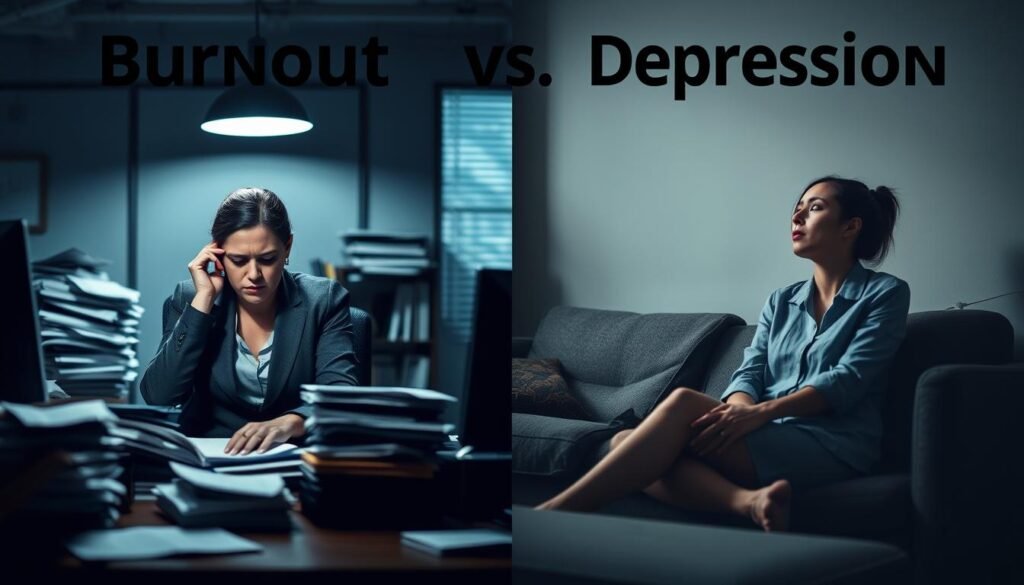
How do the two conditions differ in scope?
Context-bound exhaustion usually links to a specific setting, like a high-demand job or caregiving role. Rest, clearer limits, and workload shifts often ease the problem.
Clinical depression affects most parts of life and feels persistent across days, weeks, and activities. It usually needs professional care to improve.
When should you consider therapy, medication, or both?
Both states can share low mood, sleep and appetite changes, and poor focus. If symptoms persist outside work, into weekends and free time, seek a mental health evaluation.
Treatment may include role changes or boundary work for work-linked issues, and therapy, medication, or combined care for depression. Many people have both; treating depression can restore the sense of capacity to address workplace drivers.
“Early, accurate diagnosis speeds recovery and prevents deeper decline.”
What Drives Burnout: Types, Stages, and Risk Factors
Patterns at work can quietly reshape your energy and focus before you notice a major breakdown. Knowing common types and how the process unfolds helps you act early and protect your health and productivity.
Four common types
Overload: doing too much, working longer hours, and pushing despite fatigue.
Under-challenged: boredom, no growth, and a flat sense of purpose at the job.
Neglect: feeling helpless or like an imposter and avoiding tasks rather than fixing them.
Habitual: a chronic pattern that can cross into depression if left unaddressed.
Progression from urgency to collapse
Stress accumulates in stages: early overcommitment, sleeplessness, denial, conflict, withdrawal, depersonalization, emptiness, and eventual collapse. Time and repeated stressors push people down this curve.
| Stage cluster | Examples | What to watch |
|---|---|---|
| Early drive | Proving worth, long hours | Extra hours per week |
| Middle strain | Conflict, sleep loss, irritability | Sleep hours, mood shifts |
| Late decline | Withdrawal, depersonalization, despair | Persistent exhaustion, low energy |
Who’s most at risk? Unmanageable workloads, unfair treatment, unclear roles, and weak manager support raise risk. Personal traits like perfectionism and a strong need for control add vulnerability.
Act early: spotting symptoms burnout in mid-stages allows targeted changes—rebalance hours, clarify roles, and train managers to reduce anxiety and improve team productivity. For workplace resources, see this psychology fact sheet on workplace burnout.
Evidence-Based Steps to Recover and Protect Your Health
Start with small, reliable actions that rebuild energy and reduce overwhelm. These practical recovery steps focus on daily routines you can keep, not dramatic overhauls you can’t sustain.
Rebuild the basics: sleep, nutrition, and movement
Protect a consistent sleep window and aim for balanced meals and brief daily movement to stabilize energy and mood.
If getting enough sleep is hard, try an earlier wind-down of 30–60 minutes, cut late caffeine, and remove devices from the bedroom.
Set boundaries: workload, hours, and communication
Cap work hours and define communication windows. Use do-not-disturb blocks for focused time and a firm stop time each day.
Mindfulness, journaling, and relaxation without overwhelm
Introduce calm in tiny doses: five minutes of meditation or a short journal check-in. Build these activities slowly so they stick.
Social support: coworkers, family, and professional help
Ask for help when you need it. Share tasks with teammates, schedule reset time with family, and lean on friends who recharge you.
Make structural changes: role shifts, leave, or values alignment
If demands outpace what you can sustain, discuss role adjustments, temporary leave, or priority changes with your manager. Partnering with a clinician can tailor a recovery plan and rule out other health issues.
- Track one helpful action per day to reinforce progress and discover what truly moves the needle.
- Use small wins—short walks, a consistent sleep window, or a single no—to rebuild momentum.
- For workplace-focused guidance, see this preventing burnout resource.
“Small, consistent changes protect health and restore capacity over time.”
When to Seek Professional Help and Where to Find Support
If self-care stops helping and daily function slips, it’s time to ask for professional support. Early evaluation can prevent a deeper decline and connect you with effective care.
Which red flags need prompt attention?
Know when to act quickly. Increasing alcohol or drug use, thoughts of self-harm, or steady impairment at work, school, or in relationships need urgent help.
Also seek evaluation if symptoms persist into weekends and rest days or if daily hours of functioning shrink dramatically.
What treatment options are effective?
Many clinics use integrated care that pairs primary care with behavioral health. This model treats physical and psychological contributors in one place.
- Brief therapy and skills-based stress management help reduce anxiety and depression that can complicate this condition.
- Medication may be appropriate when symptoms meet clinical thresholds and improve recovery speed.
- Combine clinical care with simple practices like short guided meditation to stabilize mood between visits.
How to build a safety plan and ask for workplace support
Tell trusted people you need practical help. Explore employee assistance programs or temporary adjustments to workload and hours.
Scheduling a first appointment, even if you’re unsure, is a strong step. Early help reduces the chance symptoms spread to other life areas.
| Red flag | What to do | Where to go |
|---|---|---|
| Increased substance use | Contact clinician or crisis line | Primary care, behavioral clinic |
| Thoughts of self-harm | Seek immediate emergency or crisis services | Emergency dept, crisis line |
| Persistent impairment beyond work hours | Schedule mental health evaluation | Integrated care clinics, therapists |
“Early evaluation and combined medical and behavioral support often speed recovery and protect relationships and work.”
For practical guidance on recognizing when to get help, see recognizing signs and when to seek. For personal grounding practices that supported nervous-system recovery, read how Pilates calmed my nervous system.
Conclusion
A few consistent habits can stop gradual decline and restore clearer thinking, steadier mood, and better sleep. Addressing early changes in energy and focus saves time, protects health, and preserves work and life quality.
Start small: protect a reliable sleep window, set one clear stop time for work today, and add a single recovery practice to your day.
If simple changes don’t help or problems spread beyond work, seek professional support to speed recovery and rule out anxiety or depression. You’re not alone—many people recover fully with targeted steps and steady support.
For practical, low-cost tools to improve sleep and routine-building, try this guide to affordable biohacking picks that can boost recovery and daily energy: affordable sleep and recovery tools.
FAQ
How can I tell if my constant tiredness is more than normal fatigue?
Persistent mental and physical exhaustion that doesn’t improve after rest, weekends, or vacation is a red flag. Look for steady low energy, slower thinking, and trouble completing routine tasks. If sleep, nutrition, and activity are adequate but you still feel drained for weeks, consult a clinician or occupational health specialist.
What’s the difference between stress and burnout?
Stress is typically short-term and tied to specific demands; it ramps up alertness and motivation. The condition described here develops slowly and leaves you emotionally depleted, cynical about work or people, and less effective. If you feel overwhelmed but still engaged, it’s likely stress; if you’re disengaged and worn out, consider professional evaluation.
Can physical symptoms like headaches and sleep trouble be caused by prolonged work demands?
Yes. Chronic work-related strain often shows as headaches, insomnia, appetite changes, recurring aches, and more frequent colds. These bodily signals reflect long-term stress hormones affecting immune, digestive, and nervous systems. Addressing lifestyle basics and seeking medical advice can help rule out other causes.
I’m still meeting deadlines but feel disconnected—should I be concerned?
Functioning while feeling detached and cynical is common and important to notice. Emotional distancing and reduced satisfaction are early indicators that the problem is growing. Early action—setting limits, restoring sleep, and getting social support—usually prevents worsening.
How fast does this condition usually develop, and what increases risk?
It often builds gradually over months or years. High workloads, unrealistic deadlines, blurred home–work boundaries, unfair treatment, and little control or recognition increase risk. People in high-responsibility roles like healthcare, education, and caregiving face higher odds.
Are mood changes and irritability normal reactions?
Mild mood shifts under pressure are normal, but persistent irritability, cynicism, or a short temper—especially when directed at loved ones—suggest deeper strain. If these feelings disrupt relationships or work, seek guidance from a mental health professional.
Context matters. If symptoms are primarily tied to work and improve when conditions change, they’re likely context-bound. Depression usually includes pervasive low mood, loss of interest across many life areas, significant sleep or appetite changes, and suicidal thoughts. If symptoms are severe, widespread, or include self-harm, contact a mental health provider immediately.
What practical steps help recovery without feeling overwhelmed by self-care advice?
Start small and concrete: prioritize consistent sleep, a simple nourishing meal pattern, brief daily movement, and one clear boundary at work (a defined stop time or reduced meetings). Add one supportive habit—talking to a trusted colleague or friend—and consider short-term therapy or coaching for coping strategies.
When should I seek professional help and what kind of provider is best?
See a clinician if symptoms persist for weeks, include significant sleep or appetite disruption, substance use, self-harm thoughts, or major functional decline. Primary care, licensed therapists (psychologists, LCSWs), and psychiatrists can help. Integrated care teams and employee assistance programs are good starting points.
Can workplace changes really make a difference, and what should I ask for?
Yes. Practical changes—reduced hours, clearer role expectations, workload redistribution, scheduled breaks, and flexible work arrangements—often improve outcomes. Request a meeting with HR or your manager with concrete proposals and, if needed, documentation from a healthcare provider to support accommodations.
Are there proven techniques to reduce reactivity and improve focus?
Mindfulness exercises, brief breathing practices, and targeted journaling can reduce reactivity and restore focus. Cognitive-behavioral strategies help reframe unhelpful thoughts. Start with two to five minutes daily to avoid overwhelm, and build as you notice benefit.
How do sleep problems and immune issues relate to long-term work strain?
Chronic stress disrupts sleep architecture and increases inflammation, which weakens immune responses and can cause gut disturbances and recurring infections. Stabilizing sleep habits, reducing late-day screen time, and addressing stress with evidence-based interventions support both sleep and immunity.
What resources are available in the U.S. for immediate support?
For urgent concerns, call 911 or the 988 Suicide & Crisis Lifeline. For ongoing care, check primary care providers, employee assistance programs, community mental health centers, and directories like Psychology Today. National sites such as NIH and CDC offer guidance and links to vetted providers.
Strong social networks, regular movement, reliable sleep, and clear work boundaries reduce recurrence risk. Plan realistic, sustainable changes rather than intense short-term fixes. Ongoing check-ins with friends, mentors, or a therapist help maintain gains.