


Stress and burnout can feel similar, but they are not the same thing. Stress can be acute or chronic, while burnout is specifically associated with prolonged workplace stress that has not been successfully managed.
Stress is the body’s psychological or physiological response to demands or pressures. Acute stress may be short-lived and can sometimes sharpen attention, while chronic stress can persist when pressures do not let up.
Burnout, according to the World Health Organization, is an occupational phenomenon associated with chronic workplace stress that has not been successfully managed. It is characterized by exhaustion, increased mental distance or cynicism toward one’s job, and reduced professional efficacy.
This guide explains the key differences, warning signs, common workplace drivers, and practical ways to protect sleep, mood, energy, and overall health.
For another research-informed comparison, see this overview from professional counselors on stress, anxiety, and burnout.
Key Takeaways
- Stress can be acute or chronic; burnout is specifically linked to unmanaged chronic workplace stress.
- Burnout commonly involves exhaustion, cynicism or mental distance from work, and reduced professional effectiveness.
- Poor sleep, unclear expectations, excessive workload, low control, and inadequate support can make recovery harder.
- Sleep, movement, boundaries, mindfulness, and social support can help, but persistent workplace problems may also require changes to the work itself.
- Persistent exhaustion, anxiety, depression, or impaired daily functioning deserves professional evaluation rather than being assumed to be burnout.
Helpful Products at a Glance
For people whose sleep environment is too bright, the Manta PRO Sleep Mask offers an adjustable light-blocking option; it is an optional sleep-environment tool, not a treatment for stress or burnout.
- INSTANTLY BETTER SLEEP — Every aspect made to give you ultimate comfort and total blackout for better, deeper sleep
- UNBEATABLE SIDE SLEEP COMFORT — A slim angled strap and C-shaped eye cups guarantee comfort even on your side

Why Understanding Stress and Burnout Matters Right Now
Recognizing the pattern behind exhaustion can help you choose a more appropriate response. A difficult week, chronic stress, depression, anxiety, sleep loss, and occupational burnout can overlap in how they feel, but they are not interchangeable.
Rising work demands, blurred boundaries, long hours, low control, and limited recovery time can contribute to chronic workplace stress. When that stress remains unmanaged, some people may develop burnout.
The World Health Organization describes burnout as an occupational phenomenon rather than a medical condition and limits the term to the workplace context. That distinction matters because exhaustion related primarily to caregiving, illness, grief, or family pressures may still be serious but should not automatically be labeled occupational burnout.

- Spot the signs: irritability, sleep disruption, exhaustion, and reduced focus are signals worth paying attention to.
- Map the causes: role overload, low control, unclear expectations, and inadequate support can point toward workplace changes that matter.
- Protect recovery: adequate sleep, breaks, social support, and boundaries can reduce the amount of strain carried from one day into the next.
Understanding the pattern helps you decide whether you mainly need short-term recovery, changes to ongoing stressors, workplace support, or professional evaluation.
Stress vs Burnout: Key Differences That Impact Your Mental Health
Knowing whether you’re dealing with an acute stress response, ongoing chronic stress, or occupational burnout changes what may help.
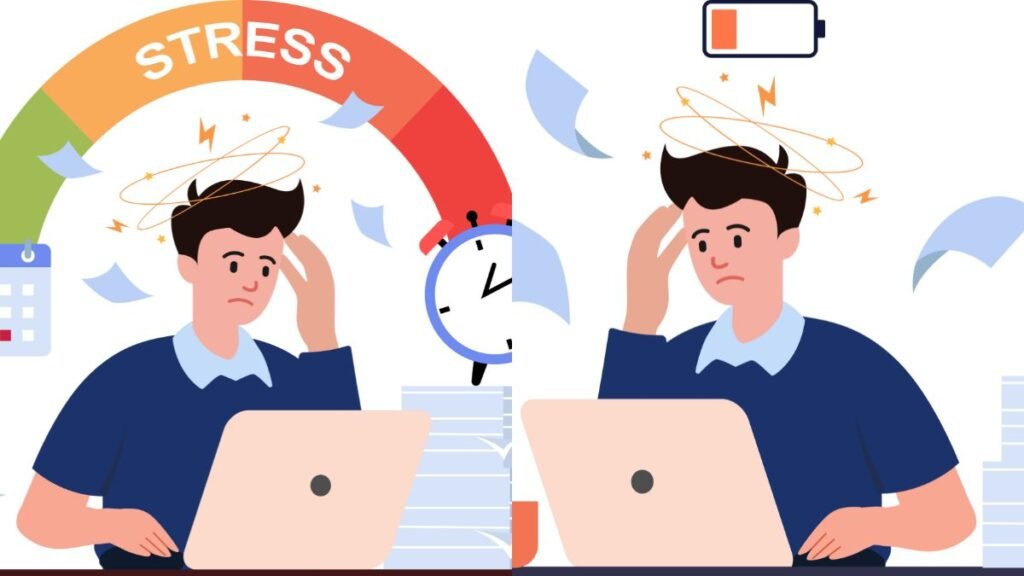
How long it lasts
Stress does not have one fixed duration. Acute stress may fade after a challenge passes, while chronic stress can continue for weeks, months, or longer when the underlying pressures remain.
Burnout develops in the context of prolonged workplace stress that has not been successfully managed. Rest may provide temporary relief, but recovery may also require changes to workload, control, expectations, support, or other workplace conditions.
Feelings and emotion
Stress can produce worry, tension, irritability, restlessness, and a sense of being overloaded. A person may still feel highly engaged with the problem and keep trying to solve it.
Burnout is more characteristically associated with emotional or physical exhaustion, increased mental distance from work, cynicism or negativism about the job, and reduced professional efficacy.
Body, motivation, and course
Stress can contribute to headaches, muscle tension, digestive symptoms, sleep disruption, difficulty concentrating, and fatigue. These symptoms are not unique to stress and can have many other causes.
With burnout, the more distinctive pattern is how prolonged workplace strain affects energy, attitude toward work, and perceived effectiveness.
- Acute stress: often tied to a specific immediate challenge and may resolve relatively quickly.
- Chronic stress: persists when pressures or stressors continue.
- Burnout: occupational exhaustion, cynicism or mental distance, and reduced professional efficacy related to unmanaged chronic workplace stress.
Recognizing the Signs and Symptoms
Look for patterns in your mood, body, sleep, and ability to function rather than relying on one symptom.
Stress may show up as headaches, muscle tension, digestive upset, irritability, trouble concentrating, or difficulty sleeping. Chronic stress may also leave you feeling persistently fatigued.
These symptoms are nonspecific. Sleep disorders, depression, anxiety disorders, anemia, thyroid problems, medication effects, chronic illness, and other health conditions can produce similar complaints.

- Stress signals: worry, irritability, sleep disruption, shorter attention, headaches, muscle tension, or digestive problems.
- Burnout pattern: persistent work-related exhaustion, increasing cynicism or mental distance from the job, and reduced professional efficacy.
- Behavior flags: procrastination, withdrawal, repeated mistakes, missed deadlines, or difficulty completing normal responsibilities.
Timing and context matter. If symptoms persist, worsen, or appear across many parts of life rather than mainly around work, it is worth considering other explanations instead of assuming burnout.
For another overview of common signs and questions to discuss with a healthcare professional, see this guide to burnout symptoms and signs.
What Drives Chronic Stress and Work Burnout?
Workplace burnout usually reflects more than simply having a busy week. Excessive workload, limited control, unclear responsibilities, long hours, poor communication, and inadequate support can all contribute to persistent occupational stress.
Work demands and low job satisfaction
Work stress can increase when goals are unclear, demands repeatedly exceed available resources, recognition is limited, or employees have little control over how their work is done.

Team dynamics and caregiving load
Lack of support from managers or colleagues can make workplace stress harder to manage.
Outside work, caregiving responsibilities, appointments, household logistics, and family demands can also consume time and emotional energy. These pressures are better described as sources of chronic stress rather than occupational burnout themselves, but they may reduce the recovery time available between workdays.
Isolation, perfectionism, and health strain
Isolation can make difficult periods feel harder to manage. Perfectionism and harsh self-criticism may also contribute to unrealistic workloads, reluctance to delegate, and difficulty mentally switching off from work.
Chronic illness or ongoing pain can add another source of physical and emotional strain and may independently contribute to fatigue or sleep problems.
Relationship change and early signals
Conflict, separation, grief, and other major life changes can reduce the energy available for work and recovery. Again, these experiences can cause substantial stress without necessarily meeting the workplace-specific definition of burnout.
- Assess demands: identify which responsibilities are actually creating the most strain.
- Clarify priorities: ask which tasks matter most when everything cannot reasonably be completed.
- Use available support: talk with managers, colleagues, family members, or other appropriate supports.
- Protect recovery: preserve realistic periods for sleep, meals, movement, relationships, and time away from work.
Ways to Reduce Stress and Prevent Burnout, Backed by Research and Therapy
Personal habits cannot fix every workplace problem, but they can strengthen recovery while larger stressors are addressed. Organizational changes may also be necessary when workload, staffing, schedules, expectations, or management practices are driving chronic workplace stress.
Start with basic recovery. Sleep, regular physical activity, realistic boundaries, and social connection provide a foundation for coping with pressure.
Prioritize Sleep and Protect Your Sleep Environment
According to the CDC, adults ages 18–60 generally need at least seven hours of sleep per night, while recommended amounts vary somewhat with age. Keeping a consistent schedule and reducing disruptive light can make a sleep routine easier to maintain.
If your bedroom is already dark and comfortable, you do not need special equipment. Blackout curtains, turning off unnecessary lights, or covering bright electronics may be enough.
If environmental light is still difficult to control, a sleep mask can be an optional convenience. The Manta PRO Sleep Mask uses repositionable C-shaped eye cups, an adjustable strap, and ventilated materials. Those design features make it particularly relevant for someone who wants a customizable light barrier or sleeps on their side. The trade-off is that it is a dedicated wearable, so people who dislike having anything around the face may prefer room-darkening changes instead.
A sleep mask does not treat stress or burnout. Its role here is simply to help control environmental light when that is interfering with an otherwise appropriate sleep routine.
- INSTANTLY BETTER SLEEP — Every aspect made to give you ultimate comfort and total blackout for better, deeper sleep
- UNBEATABLE SIDE SLEEP COMFORT — A slim angled strap and C-shaped eye cups guarantee comfort even on your side
- 100% BLACKOUT — Blocks out all light, even in broad daylight for instant deep sleep, anytime and anywhere
- COOLING VENTILATION — Ventilated, cooling materials allow air to move freely through your mask
Exercise Regularly: Movement to Support Physical and Mental Health
The CDC physical activity guidelines recommend at least 150 minutes of moderate-intensity aerobic activity each week for adults, plus muscle-strengthening activity on two days per week.
You do not have to complete the weekly target all at once. Walking, cycling, swimming, recreational sports, strength training, or shorter bouts of activity can all contribute.
Practice Mindfulness and Meditation
Brief breathing exercises, mindfulness, or meditation can provide a structured pause from rumination and may help some people manage perceived stress and anxiety.
Start with a few minutes if a longer session feels unrealistic. The goal is consistency rather than turning relaxation into another demanding task.
Set Boundaries and Manage Time
Reduce unnecessary task switching, protect focused work periods, and clarify which requests are truly urgent.
When workload itself is unreasonable, better time management alone may not solve the problem. Discuss priorities, staffing, deadlines, responsibilities, or accommodations with the appropriate person at work when possible.
| Action | Practical Target | Potential Role |
|---|---|---|
| Sleep routine | At least 7 hours for most working-age adults | Supports recovery, attention, and mood |
| Physical activity | 150 min/week moderate activity plus strengthening | Supports physical and mental health |
| Mindfulness | Short, sustainable sessions | May help reduce rumination and perceived stress |
| Social support | Regular meaningful contact | Provides emotional and practical support |
| Workplace changes | Address the actual stressors | Targets contributors such as workload, schedules, or low control |
Other practical steps: eat regular balanced meals, stay hydrated, avoid relying heavily on alcohol to unwind, limit late caffeine if it interferes with sleep, and take genuine breaks from work when possible.
A weekly review can also help you identify tasks that can be delayed, delegated, simplified, or removed.
When to Seek Professional Help
If exhaustion, mood changes, anxiety, concentration problems, or sleep difficulties persist or interfere with normal life, professional evaluation can help clarify what is happening.

What signs mean you need support?
Pay particular attention to persistent changes in functioning.
- Seek help when ongoing exhaustion, depression, anxiety, or insomnia is interfering with relationships, work, self-care, or caregiving.
- Consider an evaluation when symptoms remain despite adequate rest or changes to obvious stressors.
- Talk with a clinician when physical symptoms such as severe fatigue, persistent pain, or major sleep changes could have a medical cause.
- Hopelessness, inability to function safely, or thoughts of self-harm require prompt support.
How does therapy help?
Therapy can help identify the stressors involved and build practical coping strategies.
Depending on the situation, therapy may address negative thinking patterns, perfectionism, workload decisions, sleep habits, communication, boundary-setting, anxiety, depression, or other factors affecting recovery.
When the main problem is occupational, therapy may help you respond to workplace stress, but it cannot substitute for organizational changes when excessive workload, unsafe conditions, poor staffing, harassment, or other systemic problems are driving the situation.
| Reason to Seek Help | What Evaluation May Address |
|---|---|
| Persistent exhaustion or impaired focus | Sleep, workload, mood, medications, physical health, and other possible causes |
| Depression or increasing anxiety | Assessment and evidence-based treatment options |
| Work or caregiving problems | Coping strategies, boundaries, communication, and practical planning |
| Thoughts of self-harm | Immediate safety assessment and crisis support |
When in doubt, ask for a professional evaluation or explore this overview of stress versus burnout.
If you are in the United States and experiencing thoughts of suicide or self-harm, call or text 988 for the Suicide & Crisis Lifeline. If there is immediate danger, call 911 or go to the nearest emergency department.
Conclusion
Stress and burnout overlap, but the distinction matters. Stress can be acute or chronic and can arise from many areas of life. Burnout, in the WHO framework, specifically refers to the effects of unmanaged chronic workplace stress.
Sleep, regular movement, mindfulness, clearer boundaries, and social support can strengthen recovery, but they should not be used to shift responsibility entirely onto the individual.
If the workplace itself is driving the problem, reducing workload, improving role clarity, increasing support, changing schedules, or addressing other organizational stressors may be necessary.
For broader workplace guidance, see the World Health Organization’s resources on mental health at work and this overview of organizational approaches to burnout prevention.
FAQ
What’s the main difference between stress and burnout?
Stress is a response to internal or external demands and can be acute or chronic. Burnout is an occupational phenomenon associated with chronic workplace stress that has not been successfully managed. Its core features are exhaustion, increased mental distance or cynicism toward one’s job, and reduced professional efficacy.
How quickly can stress turn into burnout?
There is no fixed timeline. Burnout develops in the context of prolonged workplace stress, but people differ considerably in their workload, resources, health, support, and recovery opportunities. A difficult week alone does not establish burnout.
What physical signs indicate someone is moving from stress to burnout?
There is no specific physical symptom that proves someone is progressing toward burnout. Headaches, muscle tension, digestive problems, fatigue, and disturbed sleep may occur with stress, but they can also result from many medical or psychological conditions. Burnout is better recognized by the overall occupational pattern of exhaustion, cynicism or mental distance, and reduced professional efficacy.
Can burnout cause depression or anxiety?
Burnout can overlap with symptoms of depression and anxiety, but overlap does not prove that burnout directly caused either condition. Persistent low mood, loss of interest, severe anxiety, or symptoms extending well beyond work deserve professional assessment.
Which work conditions can increase burnout risk?
High demands, limited control, unclear expectations, long hours, inadequate staffing, poor workplace support, difficult interpersonal environments, and insufficient opportunities for recovery can contribute to chronic occupational stress.
How does caregiving or chronic illness affect burnout risk?
Caregiving and chronic illness can add substantial physical and emotional stress and reduce recovery time. Under the WHO definition, however, burnout specifically refers to the occupational context. Caregiving-related or illness-related exhaustion may require support even when it is not workplace burnout.
What practical steps reduce the chance of burnout?
Protect adequate sleep, stay physically active, take genuine breaks, maintain supportive relationships, set reasonable work boundaries, clarify priorities, and address workplace conditions that are producing persistent strain. When workload or expectations are unreasonable, individual coping strategies alone may not be enough.
How can I set boundaries at work without harming my career?
Use clear, practical language. Explain your current workload, ask which tasks should take priority, offer realistic alternatives, and document important decisions when appropriate. Framing the conversation around sustainable performance and clear priorities can make boundaries easier to discuss.
Are mindfulness and meditation proven to help?
Mindfulness-based practices have evidence supporting benefits for stress and anxiety in some people, although effects vary and they are not a substitute for addressing major workplace stressors. Short, regular sessions may be more realistic than demanding lengthy daily practice.
When should I seek professional help for burnout or ongoing pressure?
Seek support when exhaustion, depression, anxiety, concentration problems, or sleep disturbance persist, worsen, or interfere with work, family life, relationships, or normal daily tasks. A clinician can also check for medical and psychological conditions that may resemble burnout.
How does therapy help with burnout?
Therapy may help with coping skills, negative self-talk, perfectionism, communication, boundary-setting, sleep difficulties, problem-solving, anxiety, or depression. When the primary driver is the workplace, meaningful recovery may also require changes to the source of occupational stress.
Can changing lifestyle habits reverse burnout?
Sleep, exercise, healthy eating, social connection, and time away from work can support recovery, but they may not be sufficient if major workplace stressors remain unchanged. Addressing workload, control, expectations, staffing, support, or other organizational problems may be equally important.
Supportive relationships can provide perspective, emotional connection, and practical help during periods of high stress. Social support is one part of a broader recovery strategy rather than a substitute for addressing persistent workplace problems.
Are there physical tests that diagnose burnout?
No single laboratory test diagnoses burnout. Clinicians may evaluate sleep, mood, medical history, medications, physical symptoms, and daily functioning to determine whether another condition could explain persistent exhaustion or concentration problems.
How should employers help prevent burnout among staff?
Employers can address the sources of chronic workplace stress by reviewing workloads, clarifying roles, improving communication, supporting reasonable schedules, providing adequate staffing and resources, increasing employee control where possible, and creating psychologically safer working conditions.
Does perfectionism increase the risk of burnout?
Perfectionistic habits can contribute to stress when they lead to unrealistic expectations, excessive hours, repeated checking, difficulty delegating, or an inability to disengage from work. They are one possible contributor rather than the sole cause of burnout.
What immediate actions help if I feel overwhelming pressure today?
Reduce the immediate load where possible. Step away briefly, slow your breathing, take a short walk or movement break, identify the most important one to three tasks, postpone nonessential demands, and contact someone supportive if you need help. If the pressure is severe, persistent, or accompanied by thoughts of self-harm, seek professional or crisis support promptly.