


Ginger and turmeric are often compared as if one works quickly while the other works slowly but lasts longer. The research does not support that as a universal rule. What matters more is the problem being studied, the form used, the dose, and how long researchers followed participants.
Ginger has comparatively useful human evidence for pregnancy-related nausea and menstrual pain. Curcumin, one of turmeric’s major compounds, has encouraging evidence for osteoarthritis pain and physical function in studies that often run for several weeks. Those different research patterns do not prove that ginger is inherently faster or that turmeric always produces longer-lasting effects.
Form also matters. Fresh ginger, ginger powder, standardized ginger extracts, turmeric spice, concentrated curcuminoids, and enhanced-bioavailability curcumin products are not interchangeable. That distinction is important when comparing benefits, safety, and what a supplement label actually means.
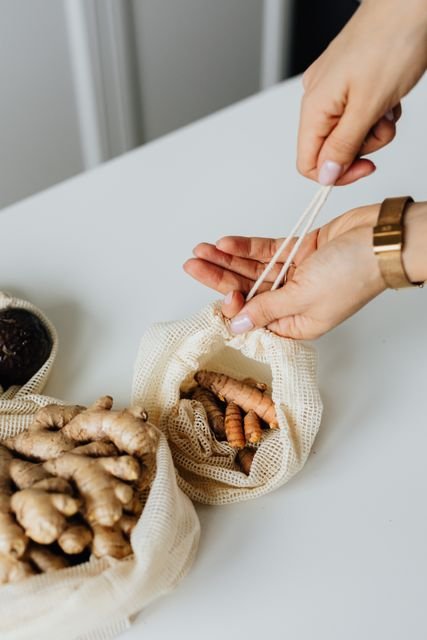
Key Takeaways
- There is no well-established rule that ginger always works faster while turmeric lasts longer.
- Ginger has some of its clearest human evidence for pregnancy-related nausea and menstrual pain, although results vary by indication.
- Curcumin has encouraging evidence for osteoarthritis pain, stiffness, mobility, and function, but formulations differ substantially.
- Turmeric spice and concentrated curcumin supplements should not be treated as equivalent products or doses.
- Changes in markers such as CRP or IL-6 do not automatically mean a person will notice meaningful improvements in pain, mobility, or wellbeing.
- Concentrated supplements deserve more caution than normal culinary use, especially during pregnancy or when medications and significant health conditions are involved.
Ginger vs Turmeric at a Glance
Ginger and turmeric come from the same botanical family, but their commonly discussed active compounds and research histories are different.
Ginger, or Zingiber officinale, contains compounds including gingerols and shogaols. Research has examined ginger for nausea, menstrual discomfort, osteoarthritis, and several other symptoms. The strength of evidence is not the same for each use.
Turmeric, or Curcuma longa, contains curcuminoids, including curcumin. Curcumin receives much of the research attention, particularly in studies involving osteoarthritis and inflammatory outcomes. A concentrated curcumin extract may contain a very different amount of active compounds from ordinary turmeric powder used in cooking.
| Form | What It Means | Why It Matters |
|---|---|---|
| Fresh ginger | Whole ginger rhizome | Common in food and tea; not dose-equivalent to an extract |
| Ginger powder | Dried, ground ginger | Concentration and composition differ from fresh ginger |
| Ginger extract | Concentrated preparation | May state standardization or extract strength on the label |
| Turmeric spice | Ground turmeric rhizome | Contains curcuminoids but is not the same as purified curcumin |
| Curcumin extract | Concentrated curcuminoids | Commonly used in clinical research and supplements |
| Enhanced-bioavailability curcumin | Curcumin combined with a delivery strategy | May change absorption, exposure, interactions, and safety |
Which One Fits Your Goal?
The most useful comparison is not “Which herb wins?” but “Which ingredient has better support for the outcome I care about?” Even then, research findings apply to the studied formulation and population, not automatically to every tea, spice powder, or supplement.
| Goal | Better-Supported Option | Research Timeframe | Studied Form | Main Limitation |
|---|---|---|---|---|
| Pregnancy-related nausea | Ginger | Generally assessed over short treatment periods | Varied ginger preparations | Results do not apply to every ginger supplement or every type of nausea |
| Menstrual pain | Ginger | Typically around the menstrual period | Powder or other oral preparations | Studies vary and safety reporting has been limited |
| Osteoarthritis pain and function | Curcumin | Usually studied over multiple weeks | Various curcumin formulations | Formulations and doses differ considerably |
| Motion sickness | No clear winner | Short-term | Ginger has been studied | Most studies have not shown consistent benefit |
| General culinary use | Either | Not a treatment timeline | Fresh or powdered food forms | Culinary use should not be equated with clinical-study dosing |
Ginger for Nausea, Menstrual Pain, and Short-Term Symptoms
Ginger’s strongest practical reputation is often tied to nausea, but “nausea” covers several different conditions. Evidence should be separated rather than treated as one broad indication.
Pregnancy-associated nausea has comparatively supportive human evidence. Research summaries suggest ginger can improve nausea for some pregnant people, although the effect on vomiting appears less consistent and study formulations vary. That does not mean every ginger supplement is appropriate during pregnancy or that a person should choose a dose without discussing it with a clinician.
The evidence is less convincing for other nausea settings. Motion-sickness studies have generally not shown consistent benefit, while evidence for postoperative and chemotherapy-related nausea remains uncertain. It is therefore inaccurate to describe ginger as a proven remedy for all forms of nausea and vomiting.
Ginger has also been studied for primary dysmenorrhea, or menstrual pain. A recent systematic review found a reduction in pain intensity compared with placebo. Some included studies also compared ginger with nonsteroidal anti-inflammatory drugs, but the evidence base was heterogeneous and safety reporting was limited. That makes ginger promising in this context, but not a proven replacement for standard pain medication.

Turmeric and Curcumin for Joint Pain and Inflammatory Outcomes
Curcumin’s clearest practical evidence is not that it “treats inflammation” throughout the body. A better-supported example is osteoarthritis, where researchers have examined pain, stiffness, mobility, and function.
A 2024 umbrella analysis of randomized-trial meta-analyses reported improvements across several osteoarthritis outcomes, including commonly used pain and function measures. That is encouraging, but it does not mean all turmeric or curcumin products work equally well. Studies have used different doses, extract compositions, delivery technologies, treatment periods, and comparison groups.
This distinction matters because turmeric spice in a curry is not the same intervention as a concentrated curcuminoid formula used in a clinical trial. Even two curcumin supplements may produce very different exposure depending on their formulation.
Inflammatory markers such as CRP or IL-6 can also change in supplement research, but those measurements are surrogate outcomes. A lower laboratory marker does not automatically mean a person has less pain, better mobility, or a clinically meaningful improvement in health. Symptom and function outcomes are more useful when the question is whether someone actually feels or functions better.

Does Ginger Really Work Faster Than Turmeric?
There is no verified direct comparison showing that ginger is broadly fast-acting while turmeric or curcumin is inherently slow but longer-lasting.
The impression partly comes from the kinds of problems researchers study. Ginger trials involving nausea or menstrual discomfort may look at symptoms over relatively short periods. Curcumin trials involving osteoarthritis often follow people for several weeks. Those different study designs create different timelines, but they do not establish a universal pharmacologic rule.
Formulation adds another complication. Fresh ginger, powdered ginger, concentrated extracts, turmeric powder, standard curcumin, and specialized curcumin delivery systems can behave differently. Even within one ingredient, the onset and magnitude of a measurable effect can change with the preparation.
A more useful question is therefore: How long was this particular form studied for this particular outcome? That keeps expectations tied to evidence instead of turning two complex ingredients into a simple fast-versus-slow story.
Turmeric, Curcumin, Ginger Powder, and Extracts Are Not Equivalent
Supplement labels can make ginger and turmeric look simpler than they are. “Turmeric,” “curcumin,” “ginger root,” and “ginger extract” describe different preparations.
A turmeric supplement may contain ground turmeric root, a turmeric extract, concentrated curcuminoids, or a delivery system designed to alter absorption. Similarly, a ginger product may contain plain root powder or a more concentrated extract with a stated standardization.
That means a milligram number by itself is not enough to compare two products. The ingredient identity, concentration, standardization, serving size, and delivery method all matter.
Curcumin Bioavailability and Delivery Systems
Curcumin is often described as having low oral bioavailability, which has led manufacturers to use piperine, lipid-based systems, phospholipid complexes, and other delivery approaches.
The widely repeated claim that piperine increases curcumin bioavailability by about 2,000% came from a small pharmacokinetic study that used specific doses of curcumin and piperine. It should not be interpreted as proof that adding black pepper to food or choosing any piperine-containing supplement will improve clinical results by the same amount.
Newer pharmacokinetic work also questions simple comparisons based only on total measured curcumin in blood. Different analyses can measure curcumin metabolites and unconjugated curcumin differently, which changes how “bioavailability” is interpreted.
More absorption is not automatically better, either. Highly bioavailable curcumin formulations have been linked to liver-injury reports in some users. A delivery system should therefore be considered part of a product’s safety profile, not simply a feature that makes the supplement stronger.
Ginger Forms and Standardized Extracts
Fresh ginger, dried powder, and concentrated extracts should also be distinguished. A clinical study using a defined oral preparation does not automatically support the same expectation from a cup of ginger tea or an unrelated retail extract.
For that reason, it is better to look at the exact form used in relevant research instead of assuming that fresh ginger is inherently faster or that a more concentrated extract is automatically more effective.
Food, Tea, or Supplement?
Food and tea are reasonable ways to use ginger and turmeric as culinary ingredients. Fresh ginger works well in soups, stir-fries, teas, and smoothies, while turmeric can be added to curries, eggs, soups, sauces, and other dishes.
These uses should not be presented as equivalent to clinical treatment. A ginger tea may contain a very different amount of active compounds from a research preparation, and turmeric used as a spice delivers far less concentrated curcuminoid exposure than many supplements studied in osteoarthritis research.
Supplements can provide more defined amounts, but greater concentration also brings more responsibility. Instead of choosing a product based only on a large milligram number, check exactly what the stated amount refers to and whether the label identifies an extract, curcuminoid content, ginger standardization, or a specialized delivery system.
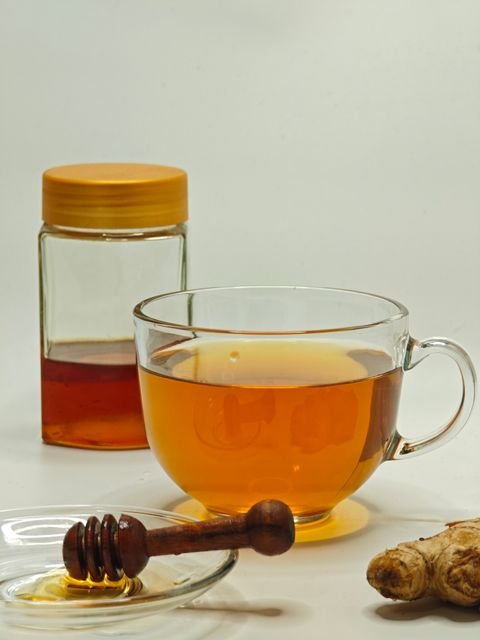
Safety, Interactions, and Who Should Ask a Clinician First
Culinary use and concentrated supplements should be treated differently. Amounts used in normal cooking generally create much lower exposure than standardized extracts or enhanced-bioavailability formulations.
Ginger supplements can cause digestive side effects in some people. Turmeric and curcumin supplements can also cause gastrointestinal symptoms, and some highly bioavailable curcumin products have been associated with liver injury.
Medication interactions deserve particular attention. Turmeric and curcumin may interact with several medicines, including anticoagulants such as warfarin and other blood-thinning therapies. Concentrated ginger products may also warrant caution when medications or health conditions increase bleeding concerns.
Pregnancy requires more nuance than simply calling an herb safe or unsafe. Ginger has been studied for pregnancy-associated nausea, but that evidence does not make every ginger supplement, dose, or formulation appropriate. Supplemental turmeric during pregnancy deserves greater caution.
People considering concentrated ginger or curcumin supplements should discuss them with a clinician when they use prescription medicines, are pregnant, are preparing for surgery, have significant liver or gallbladder concerns, or have another medical condition that could make supplement interactions more important.
How to Choose a Supplement
If you decide to compare supplements, start with the ingredient identity rather than the marketing claim on the front of the bottle.
- Check what the ingredient actually is. “Turmeric root” is not the same as a defined curcumin or curcuminoid extract.
- Read the amount per serving. Make sure you know whether the listed number refers to whole root, extract, curcuminoids, or another component.
- Look for standardization details when provided. For ginger extracts, the label may state a standardized amount of gingerols or related compounds.
- Identify the delivery system. Curcumin products may use piperine, lipids, phospholipids, or another bioavailability strategy.
- Check additional ingredients. Combination formulas can make it harder to know which ingredient is responsible for an effect or side effect.
- Be cautious with vague proprietary blends. Hidden ingredient amounts make it harder to compare a product with published research.
- Do not assume “more absorbable” means universally better. Increased exposure can also affect tolerability, interactions, and safety.
Bottom Line
There is no single winner between ginger and turmeric. Ginger has comparatively useful evidence for pregnancy-related nausea and menstrual pain, while curcumin has a more developed research base for osteoarthritis symptoms and function. Other uses have weaker, mixed, or less directly relevant evidence.
The biggest mistake is treating all forms as interchangeable or reducing the comparison to “ginger works fast and turmeric lasts longer.” A better approach is to match the ingredient and formulation to the specific outcome that has actually been studied, then weigh the evidence, limitations, and safety considerations before deciding whether a concentrated supplement makes sense.
FAQ
Are turmeric and curcumin the same thing?
No. Turmeric is the whole rhizome or spice derived from Curcuma longa. Curcumin is one of its major curcuminoids. A concentrated curcumin supplement can contain a very different amount of active compounds from ordinary turmeric powder.
Can ginger and turmeric be taken together?
They can both appear in foods, teas, and combination supplements, but there is not strong evidence showing that combining them creates a proven “quick plus long-lasting” therapeutic effect. A combination also adds more ingredients to consider when evaluating dose, tolerability, and medication interactions.
Does black pepper make curcumin work better?
Piperine can alter curcumin pharmacokinetics under specific study conditions, but the frequently repeated absorption percentage comes from a small dose-specific study and should not be treated as a universal rule. Different delivery systems work differently, and greater measured exposure does not automatically translate into greater clinical benefit.
What should I look for on a ginger or curcumin supplement label?
Look for the exact ingredient form, amount per serving, whether the product contains whole root or an extract, any stated curcuminoid or gingerol standardization, the delivery system, added ingredients, and clear quality information. Avoid assuming that two products with similar milligram numbers are equivalent.
When should I discuss these supplements with a clinician?
Clinician input is especially important if you are pregnant, take prescription medications such as anticoagulants, are preparing for surgery, have significant liver or gallbladder concerns, or have other medical conditions that could increase the importance of supplement interactions or side effects.