


Surprising fact: simple breathing plus movement can shift up to 30% more fluid through your tissues than rest alone, helping your body’s clean-up crew move waste more efficiently.
This guide explains how targeted yoga, grounded in physiology, supports the system that clears waste and helps the immune system work better throughout body. We focus on breath, gentle compression and smart movement to create pressure shifts that move fluid.
The core idea is simple. Diaphragmatic breathing acts like a pump. Joint-centered moves and gentle inversions use compression and gravity to encourage flow. No costly tools required.
Read on to learn clear, step-by-step practice tips, safety notes, and small routines you can do at home. For background reading, see this helpful guide on the topic at yoga for lymphatic drainage.
Key Takeaways
- Breath drives flow: diaphragmatic breaths increase pressure shifts that help move fluid.
- Movement matters: gentle joint-focused moves and inversions support circulation without strain.
- Consistency beats intensity: regular short practice improves results more than occasional hard sessions.
- Safety first: modify inversions and consult a provider if you have medical concerns.
- Whole-body impact: this approach supports immune function and overall health across the system.
Why Does Immune Health Need Lymphatic Support Now?
The immune system depends on fluid movement and timely messaging to respond quickly. Gentle, regular practice and breath work support those pressure changes so your body can clear waste and signal where help is needed.
Immune resilience depends on more than antibodies; it needs fluid movement and timely signals.
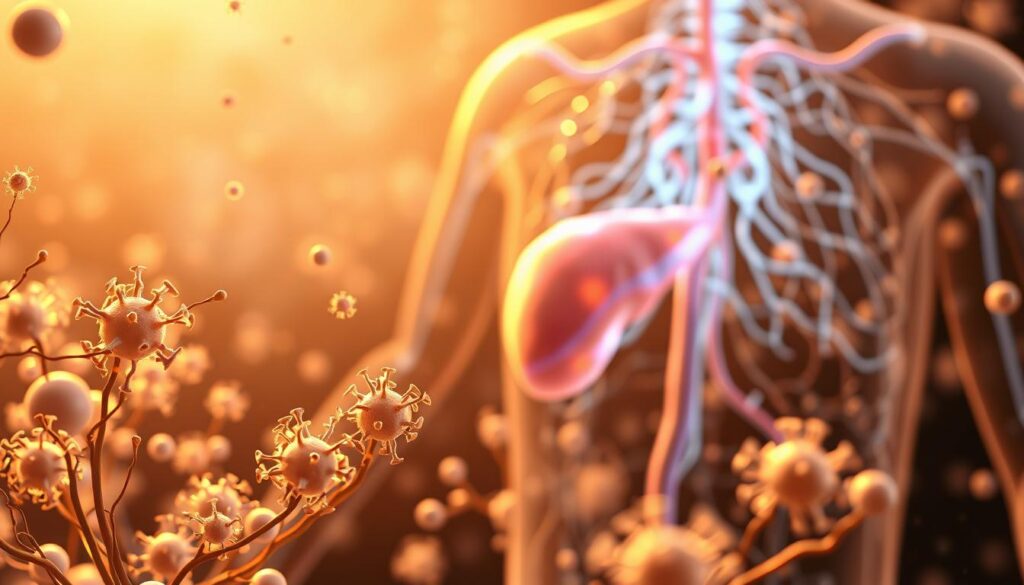
What is the lymphatic system’s role in your immune response?
The lymphatic system transports cellular waste and toxins from tissues into circulation and acts as a local immune communication hub. Because it lacks a central pump, lymph depends on muscle and diaphragm action to move. That movement shapes how fast an immune response reaches damaged or infected tissue.
Why does “movement as medicine” matter today?
In modern, often sedentary life, lymph can slow and immune signaling stalls. Simple, consistent movement—including short sessions of yoga—creates rhythmic compression around joints and soft tissues that propels lymph and supports lymphatic flow and lymphatic drainage.
Practical note: brief daily practice and breath-centered routines reduce stress and help your system adapt when threats appear.
How Does Your Lymphatic System Work as the Body’s Cleanup and Immune Communication Network?
This network collects tissue waste and routes it to checkpoints where immune cells monitor health. It relies on valves, pressure shifts, and everyday motion rather than a central pump.
Think of this network as your body’s neighborhood cleanup crew, gathering debris and toxins in tiny channels called vessels.
What does lymphatic fluid do, and how does drainage work?
The lymphatic fluid carries cellular waste back toward the bloodstream for filtering. One-way valves keep that flow moving in the right direction. This process is called drainage.
Where do lymph nodes congregate?
Superficial lymph nodes cluster near high-motion sites: the neck, armpits, abdomen, and groin. These hubs sit around joints so normal movement helps push fluid through the system.
How do pressure changes and valves move fluid throughout body?
Simple pressure shifts from breathing and joint motion squeeze vessels, nudging lymph past valves. That action bathes nodes in immune cells so the system can scale inflammation up or down.
- Practical note: understanding where nodes congregate and how valves work helps you target routines more effectively.
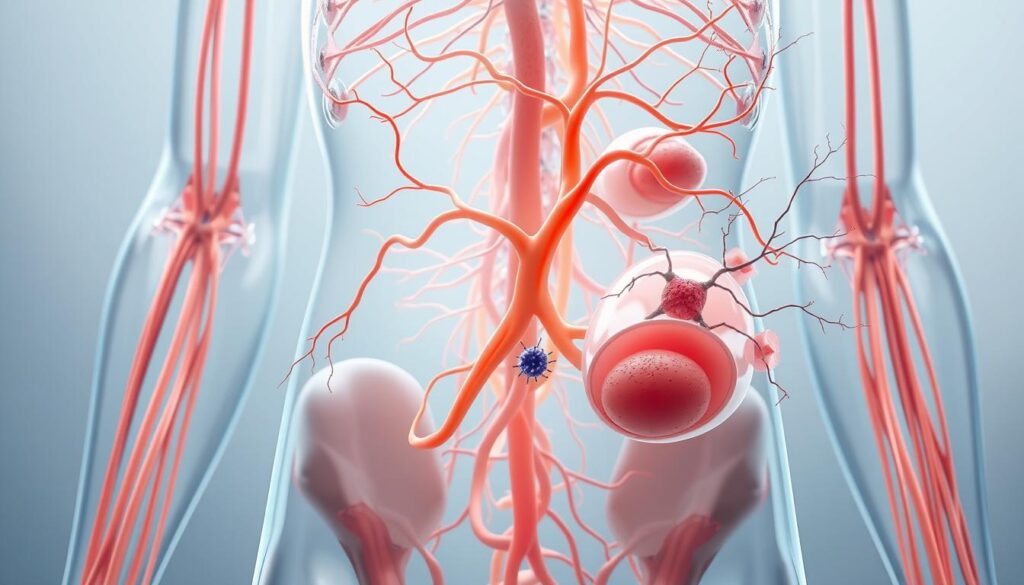
See this guide to lymphatic health for more background before you try the practical routines that follow.
How Does Yoga Support Lymphatic Flow and Immune Function?
Short, intentional movements and paced breath create measurable pressure shifts that move fluid through soft tissues and prime immune hubs. These simple inputs use compression, gravity, and thoraco-abdominal pressure to support cleanup and signaling across the body.
How do gentle movement and joint-centric pressure shifts act as a pump?
Gentle movement compresses vessels around joints where many lymph nodes collect. That compression pushes fluid past one-way valves and toward central channels.
This is a natural pump. It does not require force. Repeated, joint-focused motion keeps flow steady and helps immune cells sample tissue more efficiently.
How does diaphragmatic breathing work as a central pump for deeper vessels?
Diaphragmatic breathing changes intra-abdominal and thoracic pressure with each breath. That pressure shift pulls fluid from deeper vessels toward the chest.
In practice, slow belly breaths coordinate with movement to increase overall flow and feel like a central pump for the system.
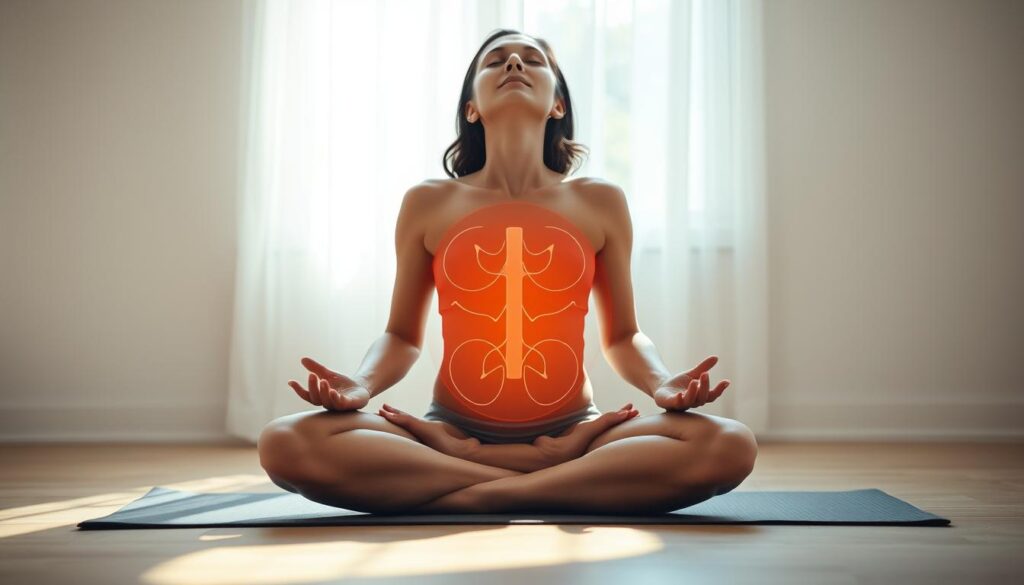
Can inversions and twists assist return and reduce stress?
Mild inversions use gravity to help return fluid from the limbs. Twists add gentle compression and encourage drainage from the torso.
Breath-led pacing keeps intensity low, lowers stress, and supports a balanced immune response. This is a great way to complement daily activity without pushing harder.
- Takeaway: purposeful joint pressure, diaphragmatic breath, and mild inversions combine to pump lymphatic fluid efficiently.
- Practice tip: pair slow breaths with small, joint-centered moves for best results.
- Further reading: see a practical guide at yoga for lymph.
“Breath and movement are the low-cost tools that match how the body moves fluid and signals immune action.”

- Stay Steady & Grounded: Features silicone grip dots on the bottom to keep the towel firmly in place over your yoga mat, …
- Super Absorbent & Quick-Drying: Made from high-quality microfiber that absorbs sweat fast and dries quickly—no more slip…
- Full Mat Coverage: Sized at 72″ x 24″, it fits standard yoga mats perfectly to give you full-body coverage and hygiene p…

- LIGHTWEIGHT & THICK YOGA MAT: These durable, yet lightweight exercise yoga mats are extra thick for the additional cushi…
- STICKY NON-SLIP TEXTURE: Yoga mat features a textured sticky non-slip surface for excellent traction and superior grip a…
- NON-TOXIC & 7P FREE – PVC yoga mat is a healthier choice for you and the planet and free of DEHP, DBP, BBP, DINP, DIDP, …

- Extra-Thick Comfort Mat: 71 in. x 24 in. x 1 in. exercise mat cushions spine, hips, knees, and elbows on hard floors; cr…
- Non-Slip Design: Double-sided textured surface prevents shifting and slipping, giving you stability for poses, stretches…
- Durable and Easy to Clean: Moisture-resistant technology resists sweat and dirt; simply wipe with soap and water for qui…
What Are the Key Lymphatic Yoga Benefits?
Targeted breath plus gentle movement helps the body move fluid and strengthen immune signaling. This approach supports clearance of tissue waste and improves how immune cells sample tissues.
How this works in practice:
How can practice boost immune response and help the system eliminate waste toxins?
Breath-led motion creates pressure changes that draw fluid toward chest pathways. That flow exposes nodes to circulating immune cells, improving surveillance and response.
Short sessions help the body clear waste toxins and byproducts so the system helps eliminate what tissues don’t need. You do not need long or intense practice to see an effect.
How does it support drainage around joints and areas where nodes congregate?
Gentle compression and release near the neck, armpits, abdomen, and groin nudges fluid through superficial channels. Joint-centered movement keeps pathways open so lymph and fluid can flow past valves toward immune hubs.
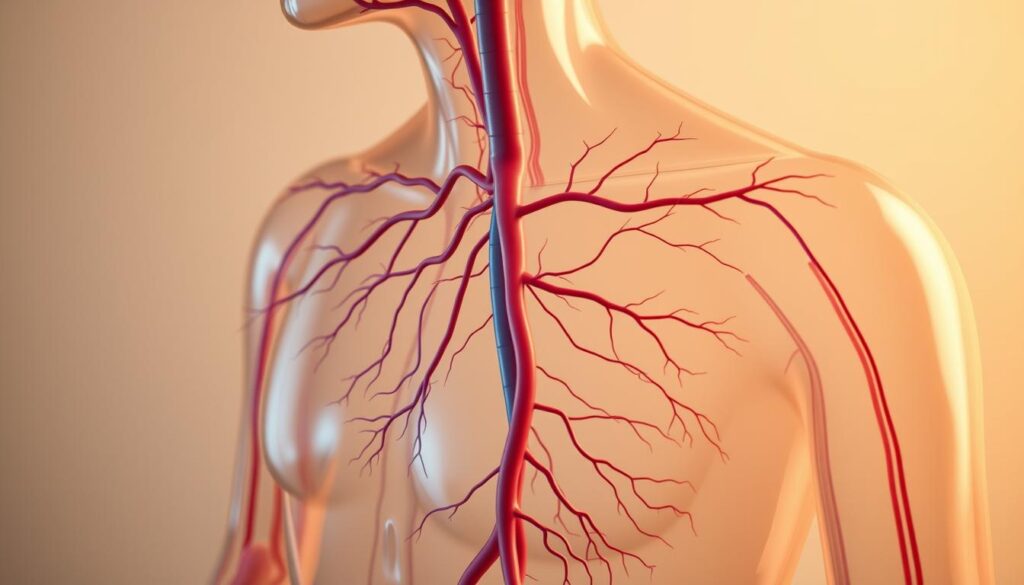
- Breath-led movement is a great way to nudge flow along pathways that pass through immune hubs.
- Benefits include more efficient clearance of waste toxins as the system helps eliminate unwanted byproducts.
- Gentle compression around joints supports lymphatic drainage where nodes congregate.
- Exposing nodes to circulating immune cells helps the body identify local challenges faster.
- Short, steady practice acts like a supportive pump for the whole lymphatic system.
For a practical how-to that pairs breath with targeted sequences, see this short guide on practice for immune support.
What Is a Step-by-Step Lymphatic Yoga Practice You Can Do at Home?
This short sequence primes the chest as a central pump, then opens key pathways so fluid and immune cells can move more freely. Follow the order below for a smooth, pain-free routine you can repeat in a few minutes each day.
A simple home routine pairs breath with small movements to boost flow and ease tension.
Diaphragmatic breathing (start supine)
Lie down with feet floor if that feels comfortable. Feel belly rise on the inhale and fall on the exhale. Ten slow breaths prime the central pump and set the rhythm for the rest of the practice.
Neck-focused seated releases
Sit tall. Add gentle twists and slow neck releases to mobilize tissues around joints in the neck. Move slowly and stop if you feel sharp pain.
Low-lunge pumping for chest and arms
From a low-lunge, raise the arms, clench and release fists above heart level with each exhale. This small pulse acts like a local pump to encourage return from the arms and chest.
Bridge pose to open the chest
Lie back, bend knees, press into the feet, and lift hips to a comfortable height. Hold for several breaths to open the chest and add a mild inversion that supports drainage.
Legs up the wall for return
Finish with legs wall. Rest pelvis and extend legs up the wall for 5–10 minutes to let gravity assist return from the lower limbs. Breathe slowly and relax.
| Step | Duration | Key cue | Main effect |
|---|---|---|---|
| Diaphragmatic breathing | 1–2 minutes | Feel belly rise/fall | Primes central pump |
| Neck releases | 1–2 minutes | Gentle twists | Stimulates superficial nodes |
| Low-lunge pumping | 2–3 minutes | Clench/release fists above heart | Pumps arms/chest pathways |
| Bridge pose | 1–2 minutes | Bend knees, press feet, lift hips | Opens chest; mild inversion |
| Legs up the wall | 5–10 minutes | Legs vertical, relax | Gravity-assisted return |
Practice tips: keep transitions smooth, favor steady rhythm over intensity, and set a timer for the minutes you can repeat consistently. Expect simple cues you can feel—soft shoulders, a pulsing fist, and gentle chest lift—to guide your body.
“Small, daily inputs compound into meaningful, body-wide effects when you prioritize gentle rhythm.”

What Breathwork Foundations Will Power Your Practice?
Diaphragmatic breathing anchors the work. Short, steady breath segments teach your body to use the diaphragm as a central pump, and linking breaths to movement amplifies fluid return without strain.
Beginner: How do you use simple belly breathing with feet on the floor?
Lie on your back with your feet floor. Place one hand on your chest and one on your belly. Inhale through the nose and feel belly rise, then exhale and feel it fall.
Repeat this for one to two minutes to recruit the diaphragm gently. This trains the central pump without forcing posture or big breaths.
- Stay Steady & Grounded: Features silicone grip dots on the bottom to keep the towel firmly in place over your yoga mat, …
- Super Absorbent & Quick-Drying: Made from high-quality microfiber that absorbs sweat fast and dries quickly—no more slip…
- Full Mat Coverage: Sized at 72″ x 24″, it fits standard yoga mats perfectly to give you full-body coverage and hygiene p…
- LIGHTWEIGHT & THICK YOGA MAT: These durable, yet lightweight exercise yoga mats are extra thick for the additional cushi…
- STICKY NON-SLIP TEXTURE: Yoga mat features a textured sticky non-slip surface for excellent traction and superior grip a…
- NON-TOXIC & 7P FREE – PVC yoga mat is a healthier choice for you and the planet and free of DEHP, DBP, BBP, DINP, DIDP, …
- Extra-Thick Comfort Mat: 71 in. x 24 in. x 1 in. exercise mat cushions spine, hips, knees, and elbows on hard floors; cr…
- Non-Slip Design: Double-sided textured surface prevents shifting and slipping, giving you stability for poses, stretches…
- Durable and Easy to Clean: Moisture-resistant technology resists sweat and dirt; simply wipe with soap and water for qui…
Intermediate: How does breath-centric movement amplify the pump?
Sync slow inhales and exhales to small, joint-friendly motions. Coordinate arm pulses, gentle twists, or low lunges with each breath.
- Keep breathing unhurried and nasal when possible to sustain calm focus.
- Aim for smooth waves of pressure rather than big volume—the gentle rhythm moves lymph and boosts flow.
- Use 60–120 seconds of focused breath between pose blocks to refresh the rhythm and maintain steady lymphatic flow.

“Short breathwork segments before and during movement increase internal pressure changes and improve propulsion without adding strain.”
What Safety Tips, Modifications, and Red Flags Should You Know Before You Start?
Start smart: a few precautionary steps let you get the most from gentle movement without unnecessary risk. If you have major health issues, check with a healthcare provider first. Simple changes keep practice safe and effective for most people.
Who should consult a provider before starting?
If you have a history of cancer, lymphedema, recent surgery, acute illness, or a new injury, talk to your healthcare provider before beginning any movement practice.
Also consult a provider when symptoms include unexplained swelling, severe pain, or sudden changes in energy. Your provider can tailor restrictions and clear safe ranges.
How can you use gentle movement, props, and pain-free ranges for every body?
Work only within pain-free ranges. Stop if you feel sharp or persistent discomfort and contact your provider.
- Use props (pillows, bolsters, towels) to support joints and keep alignment while still encouraging flow.
- Prioritize comfort and breath over depth—this protects tissue and keeps the system responsive.
- Short sessions count: consistent, low-intensity practice supports the immune system without draining resources.
- When fatigued, reduce inversion time and lengthen breathwork to emphasize calm circulation.
- After surgery or during treatment, follow your provider’s limits; adjust transitions with slow roll-downs and extra padding.
| Risk or Condition | Immediate action | Modification | When to call a provider |
|---|---|---|---|
| Cancer or active treatment | Check with healthcare provider | Reduce intensity; avoid aggressive inversions | Before starting or if new swelling appears |
| Recent surgery or injury | Follow surgical restrictions | Use props; limit range of motion | Persistent pain, redness, or warmth |
| High fatigue or illness | Prioritize rest and breathwork | Shorten session; extend slow breathing | Worsening symptoms or fever |
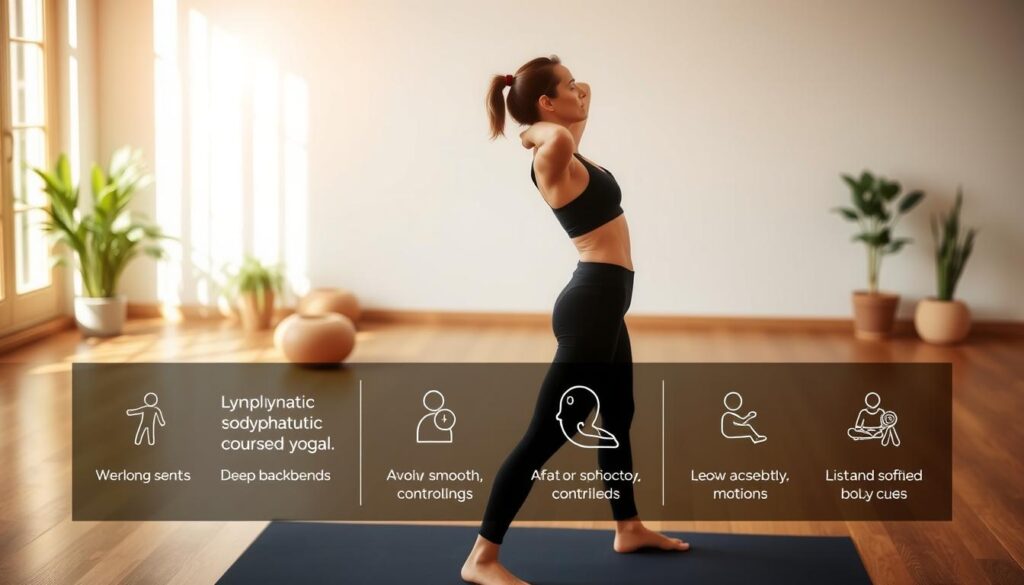
“Move with care—small, consistent inputs support flow and recovery far better than occasional intense sessions.”
Conclusion
Short, breath-led sessions that pair diaphragmatic breathing with gentle joint moves create useful pressure shifts that support circulation and immune readiness. These small inputs build steady momentum for whole-body flow.
The practical takeaway: favor brief, consistent practice that starts with belly breath and moves through the torso and limbs. This approach can assist lymphatic drainage, help eliminate waste toxins, and prime the immune system without strain.
Use the step-by-step routine as a template, then adjust time and intensity to suit your day. For a deeper primer, see this guide on yoga for lymph health.
Next step: schedule two or three short practices this week to build the habit your body can rely on. When special medical issues arise, align with your care team and modify accordingly.
FAQ
What is the lymphatic system’s role in your immune response?
The lymphatic system transports fluid, proteins, and immune cells between tissues and lymph nodes, where immune surveillance and activation occur. It helps clear cellular waste and pathogens, supports antibody distribution, and coordinates immune signaling so your body responds to infection and injury efficiently.
Why does “movement as medicine” matter in the present day?
Modern lifestyles often limit daily movement and prolonged sitting can slow fluid return from the limbs. Regular, intentional movement stimulates circulation and drainage, reducing swelling and supporting immune health. Short, consistent sessions are a practical way to offset sedentary patterns and improve overall resilience.
What does lymphatic fluid do, and how does lymphatic drainage work?
Lymphatic fluid carries excess interstitial fluid, proteins, metabolic waste, and immune cells from tissues to lymph nodes and then back to the venous system. Drainage relies on one-way valves, pressure changes from muscles and breathing, and rhythmic compression to move fluid toward central collection points.
Where do lymph nodes congregate—neck, armpits, abdomen, and groin?
Yes. Major lymph node clusters sit in the neck, armpits, chest/abdomen (including the cisterna chyli region), and groin. These hubs filter fluid, present antigens to immune cells, and are common sites where swelling or tenderness may indicate infection or inflammation.
How do pressure changes, valves, and one-way flow move fluid throughout the body?
One-way valves in lymph vessels prevent backflow. Muscle contractions, joint movement, and breathing create alternating pressure that compresses vessels, pushing fluid forward. This coordinated mechanical action, not a central pump like the heart, is how the system maintains circulation.
How do gentle movement and joint-centric pressure shifts act as a lymph pump?
Gentle range-of-motion and rhythmic contractions around joints compress nearby lymphatic vessels and open valves, propelling fluid. Repeating small, pain-free movements—especially around the shoulders, hips, and knees—amplifies return from extremities toward central channels.
How does diaphragmatic breathing work as a central pump for deeper lymphatics?
Deep belly breathing changes thoracic and abdominal pressures, creating a suction effect that moves fluid from peripheral channels into central ducts like the thoracic duct. Slow, full diaphragmatic breaths support movement of deeper lymph that limb movement alone may not reach.
Can inversions and twists assist lymphatic return and reduce stress?
Mild inversions (legs-up positions) and gentle twists can encourage gravity-assisted return and stimulate abdominal pressure changes. They also engage the nervous system, lowering stress hormones. Use cautious modifications and avoid prolonged or extreme inversions if you have cardiovascular or eye conditions.
How can yoga boost immune response and help the system eliminate waste and toxins?
Combining movement, breath, and postural shifts enhances mechanical drainage and immune cell trafficking. Improved clearance of metabolites and reduced stagnation may lower inflammation and support refreshed immune surveillance—especially when paired with sleep, hydration, and nutrition.
How does it support drainage around joints and areas where nodes congregate?
Targeted joint mobility and soft-tissue work near node clusters (neck, armpits, groin) gently compress and release lymph pathways, helping local fluid move toward central collecting ducts. Gentle stretching and light compression around joints reduce pooling and improve comfort.
How do you feel your belly rise and fall to drive deeper flow during diaphragmatic breathing?
Sit or lie with one hand on your belly. Inhale slowly through the nose so your abdomen expands under your hand; exhale fully so it softens. Aim for calm, slow cycles of 5–8 breaths per minute. This motion increases abdominal pressure changes that assist central lymph movement.
Which gentle neck twists and releases support flow in a seated practice?
Keep the spine tall. Perform slow chin-to-chest nods, gentle side-to-side rotations, and soft ear-to-shoulder tilts within a pain-free range. Add light skin stretches at the base of the skull and collarbone region to ease local tension and encourage drainage toward supraclavicular nodes.
How do you clench and release above heart level in a low-lunge lymphatic pumping sequence?
In a low lunge, raise the arms overhead and perform rhythmic gentle fist clench-and-release or micro-pulses of the arms above heart level. The combination of limb elevation and repeated small muscle contractions assists return from the hands and forearms toward central circulation.
How do you lift hips in bridge pose to open the chest and aid circulation?
Lie on your back with knees bent and feet hip-width. Press into the feet, lift the hips while keeping the ribs soft, and open the chest by drawing the shoulder blades toward each other. Hold briefly, then lower slowly. This hip lift and chest opening encourage thoracic drainage and venous return.
How can you use legs up the wall to support return in minutes?
Lie on your back with legs extended up a wall so hips are near the wall. Relax the arms and breathe deeply for 5–15 minutes. Gravity helps fluid return from the legs, while slow diaphragmatic breathing amplifies central drainage for a quick restorative effect.
How do you use simple belly breathing with feet on the floor as a beginner?
Sit or lie with feet flat. Place one hand on the belly and one on the chest. Inhale so the belly rises while the chest stays relatively still; exhale fully. Practice 5–10 minutes, aiming for smooth, unforced breaths to engage the diaphragm and support lymph movement.
How does breath-centric movement amplify the pump for intermediate practitioners?
Coordinate inhale-exhale with flowing movements—such as dynamic twists, cat–cow, or slow sun salutations—so pressure shifts align with joint compression. This synchronization increases rhythmic mechanical forces that move fluid more efficiently than breath or movement alone.
Who should consult a healthcare provider before trying this practice (cancer, lymphedema, illness, or injury)?
Anyone with active cancer, lymphedema, recent surgery, infection, uncontrolled cardiovascular or kidney disease, or acute injury should consult their physician or lymphedema specialist. A provider can recommend safe modifications and ensure practices won’t worsen swelling or interfere with treatment.
How can you use gentle movement, props, and pain-free ranges for every body?
Use blocks, bolsters, folded blankets, and a wall to reduce strain and limit ranges to pain-free motion. Prioritize slow repetitions, shorter holds, and support under joints. If swelling or discomfort increases, stop and seek guidance from a physical therapist or certified lymphedema therapist.
What immediate signs suggest you should stop and seek medical advice?
Stop if you experience sudden or worsening swelling, sharp pain, warmth or redness suggesting infection, unexplained shortness of breath, chest pain, or new neurological symptoms. Those signs warrant prompt evaluation by a healthcare professional.



Don’t Miss These Picks