


Surprising fact: by age 30, many adults see measurable shifts in sleep, metabolism, and mood tied to changing hormone levels — and simple food swaps can make a big difference.
Hormones are chemical messengers that steer energy, fertility, appetite, and blood sugar. What you eat each day can help balance signals that guide your body.
This short guide highlights nutrient-dense options and meal ideas that support cortisol, insulin, thyroid and reproductive hormone production. You’ll learn which choices supply vitamin D, omega-3s, iodine, selenium, iron, zinc and B12 — and how protein, fiber, and healthy fats work together to steady appetite and blood sugar.
Practical tips pair science with simple swaps and a realistic lifestyle approach. If you want evidence-based eating patterns and meal pairings that reduce stress-driven spikes and improve sleep, this list is for you. For a deeper primer on how diet affects hormones, see this overview at balance hormones.
Medical disclaimer: This article is for informational purposes and does not replace professional medical advice. Consult your healthcare provider before making major diet or lifestyle changes.
Key Takeaways
- Hormones control metabolism, mood, sleep, and blood sugar — and diet influences them daily.
- Include protein, fiber, and healthy fats at meals to support steady insulin and appetite signals.
- Seek omega-3s, vitamin D, iodine, selenium, iron, zinc, and B12 from whole foods.
- Specific items like fatty fish, eggs, legumes, whole grains, and nuts support hormone production.
- Combine food choices with sleep, stress reduction, and movement for stronger results.
Why Hormones Matter More After 30 for Women in the United States
After 30, normal shifts in several hormones can alter energy, appetite, and the menstrual cycle. Small lifestyle changes and nutrient-focused eating help steady hormone levels and reduce risks tied to insulin resistance and thyroid issues.
After 30, shifts in key chemical messengers change how your body handles appetite, sleep, and stress. Western diets high in refined carbs and long sedentary days can worsen insulin resistance and amplify hormone changes.
These hormonal shifts affect weight, mood, and metabolism. You may see irregular periods, fatigue, sleep trouble, hair changes, or stronger cravings. Such signs can indicate underlying hormone imbalances or disease that deserve medical review.
Practical note: Eating nutrient-dense meals, moving daily, and fixing gaps in vitamin D, iron, zinc, iodine, selenium, and B12 often improves symptoms. Track repeat patterns across months—cycle changes or ongoing low energy are reasons to seek targeted testing and care.

- Lifestyle matters: stress, sleep, and activity shape hormone signaling.
- Diet matters: whole foods help buffer changes and support long-term health.
| Factor | How it affects hormones | Action |
|---|---|---|
| Dietary pattern | Refined carbs raise insulin swings | Prioritize protein, fiber, healthy fats |
| Stress & sleep | Elevated cortisol disrupts appetite and cycle | Improve sleep hygiene and stress habits |
| Nutrient gaps | Low iodine/selenium impact thyroid conversion | Eat seafood, nuts, leafy greens; test if needed |
The Top Ten Foods That Help Balance Hormones Naturally
These ten staples provide omega-3s, antioxidants, minerals, and fiber that support hormone production and steady blood sugar. They target insulin sensitivity, cortisol regulation, and thyroid cofactors using simple, real-food choices.
Simple, whole-food swaps—centered on omega-3s, colorful plants, and fiber—help maintain balanced hormone signaling and stable energy.
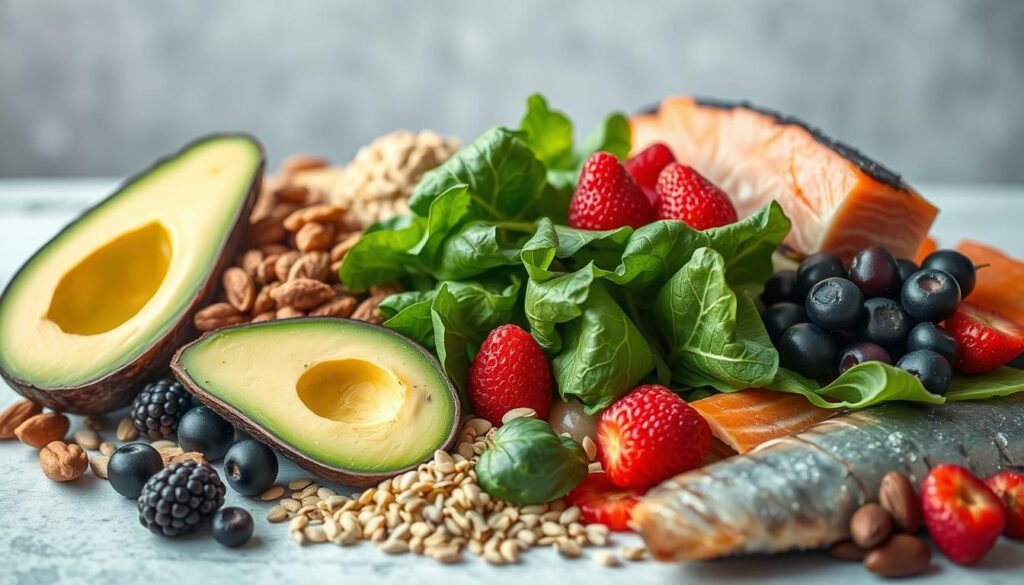
Fatty fish
Salmon, tuna, sardines: Rich in omega-3 fatty acids that improve insulin sensitivity and may blunt stress-related cortisol responses.
Leafy greens
Spinach, kale: Provide folate, magnesium, and antioxidants that support cortisol balance and supply thyroid-friendly micronutrients.
Berries
Blueberries, cherries: High in polyphenols that reduce inflammation; tart cherries also contain compounds that support natural melatonin rhythms.
Whole grains
Quinoa, oats, brown rice: Add viscous fiber to slow glucose absorption and support gut health, helping keep post-meal blood sugar steady.
Nuts and seeds
Walnuts, flax, chia: Offer healthy fats and lignans that support sex hormone balance; ground flax is an easy mix-in for yogurt or oatmeal.
Avocado and olive oil
Monounsaturated fats support steroid hormone production and keep meals satisfying between snacks.
Eggs and dairy
Provide protein, vitamin D, choline, and tryptophan—nutrients linked to reproductive hormone support and improved sleep quality.
Legumes
Lentils, chickpeas, and beans supply fiber, iron, and zinc that back thyroid cofactors and help manage insulin when paired with protein.
Cruciferous vegetables
Broccoli and Brussels sprouts contain sulfur compounds that support estrogen metabolism; roasting enhances flavor and regular intake.
Brazil nuts & selenium-rich foods
Just one to two Brazil nuts often meets daily selenium needs, aiding thyroid conversion (T4 → T3) and antioxidant defenses.
| Food Group | Key Nutrients | Primary Hormone Benefit | Serving Tip |
|---|---|---|---|
| Fatty fish | Omega-3 fatty acids, vitamin D | Improves insulin sensitivity; lowers inflammation | 2 servings/week; bake or grill with lemon |
| Leafy greens & berries | Folate, magnesium, polyphenols | Supports cortisol control and antioxidant defense | Add to smoothies or salads daily |
| Whole grains & legumes | Fiber, iron, zinc | Stabilizes blood sugar and supports thyroid cofactors | Combine with protein at meals |
| Nuts, seeds & selenium foods | Healthy fats, lignans, selenium | Supports sex hormones and thyroid conversion | Use as snacks or toppings; 1–2 Brazil nuts/day |
For a practical meal plan that emphasizes these items, see a detailed guide on a hormone-balancing diet.
Hormone-Balancing Foods for Women
Build plates around protein, healthy fats, and viscous fiber to help balance hormones tied to appetite, energy, and mood. Add vitamin D and omega-3 sources to support sex hormone production and steadier levels.
Aim to build each plate so meals support steady appetite, stable energy, and long-term hormone health.
Healthy fats, fiber, and protein at every meal
Aim for 25–30 g protein per meal. That amount boosts satiety hormones and lowers ghrelin so you feel full longer. Pair protein with viscous fiber such as oats, beans, or chia to slow digestion and smooth your glucose curve.
Vitamin D and omega-3s to support production and mood
Include sources of vitamin D—salmon, egg yolks, or fortified milk—several times weekly to support reproductive hormone production and mood. Add omega-3-rich fish or walnuts to improve insulin sensitivity and blunt stress responses.
Use a simple plate formula: protein palm + two plant handfuls + thumb of fat + optional smart carb. Small food changes repeated daily help your body find better balance over time.

Stabilize Insulin Levels with Smart Food Pairings
Combine protein, fiber, and healthy fats at each meal to steady insulin response and flatten blood sugar spikes. These simple plate templates help balance appetite, reduce cravings, and support sustainable weight management.
Simple plate template: protein + slow carb + healthy fat. For example, chicken or tofu with beans and olive oil improves insulin action by slowing glucose absorption.

Build plates that steady glucose
Breakfast: eggs with spinach and whole grain toast keeps blood sugar stable through the morning.
Lunch: a quinoa bowl with lentils, arugula, roasted veggies, and tahini slows digestion and satisfies the body.
Dinner: salmon, farro, and garlicky broccoli with olive oil supports insulin sensitivity and overall balance.
Snack ideas to curb cravings
- Apple + peanut butter — quick fiber and fat to blunt sugar swings.
- Greek yogurt + chia — protein and soluble fiber for satiety and gut support.
- Carrots + hummus or cheese + whole grain crackers — smart options that help balance evening hunger.
Tip: Add an unsweetened ferment like kefir or sauerkraut to meals to support the gut and post-meal glucose control. Pair carbs with protein or fats rather than eating carbs alone to reduce rapid levels spikes.
Support Cortisol and Mood with Anti-Inflammatory Choices
Pick antioxidant-rich plants, omega-3s, and warming spices to buffer stress pathways and stabilize cortisol dynamics. These choices can support better mood and improve sleep when combined with routine movement and mindful caffeine or alcohol habits.
Picking antioxidant-rich items and omega-3 sources can blunt the daily wear of stress on metabolism and mood. Blueberries, leafy greens, and legumes deliver polyphenols and fiber that may help temper inflammatory effects tied to higher levels of cortisol.

Turmeric, dark chocolate, and berries to calm inflammation
Use turmeric with black pepper in soups and scrambles. Add cocoa-rich dark chocolate (≥70%) and berries to snacks for flavanols and antioxidants. Include salmon or sardines twice weekly for omega-3 support of calmer hormone signaling.
Mind caffeine and alcohol to reduce spikes
- Swap one coffee for green tea or herbal infusion to lower cortisol levels.
- Limit alcohol on work nights to improve evening sleep and restfulness.
- Anchor afternoons with a protein-and-fiber snack to avoid the caffeine cycle that raises cortisol.
For meal plans that include anti-inflammatory choices, see a practical hormone-balancing diet guide.
Thyroid Health Essentials in Your Diet
Your thyroid needs iodine, selenium, iron, zinc, B12, and vitamin D to support steady production of thyroid hormones and keep metabolism efficient. Consistent calories and carbohydrates protect output; prolonged under-eating can lower hormone levels and energy.
A focused mix of iodine, selenium, iron, zinc, B12, and vitamin D helps your thyroid make hormones efficiently.

Where to get iodine and selenium
Sprinkle iodized salt in home cooking or enjoy seaweed snacks occasionally to help iodine-dependent hormone synthesis.
Include one to two Brazil nuts most days and add tuna or eggs weekly for selenium, which supports T4-to-T3 conversion.
Iron, zinc, and B12 to sustain energy
Rotate legumes, lean beef, chicken thighs, pumpkin seeds, and broccoli to supply iron and zinc that back metabolic processes.
Add eggs, dairy, fish, or fortified yeast for B12—critical if you avoid many animal proteins.
Vitamin D and steady calories
Use fortified milk or juice, egg yolks, and salmon to boost vitamin D. Test levels if fatigue or low mood persist.
Avoid prolonged low-calorie plans: under-fueling can depress thyroid production and slow the body’s metabolism.
If you suspect thyroid conditions or have family history, seek labs and clinical guidance; lifestyle and diet help, but medical review prevents long-term disease impact. For practical diet and supplement guidance, see thyroid diet recommendations.
Foods That Nurture Sleep and Melatonin Balance
Evening foods that supply tryptophan and magnesium may help improve sleep onset and continuity. Tart cherries, dairy, eggs, and fatty fish support natural melatonin production and a calmer mood.
A few simple night‑time snacks supply the amino acids and minerals your brain uses to wind down. Tryptophan sources include dairy, eggs, nuts, seeds, and bananas. Magnesium appears in nuts, milk, leafy greens, legumes, and whole grains.

Tryptophan and magnesium-rich choices to enhance sleep quality
Build a wind‑down snack: Greek yogurt with tart cherry concentrate and chia. This pairs protein + tryptophan + magnesium to support nightly hormone rhythms.
Try a small glass of tart cherry juice 60–90 minutes before bed; its polyphenols and melatonin content can support sleep timing.
Tart cherries, milk, eggs, and fish to support natural melatonin
- Include magnesium-rich sides—sautéed spinach, black beans, or pumpkin seeds—with dinner to promote muscle relaxation.
- Add eggs or salmon at evening meals to supply tryptophan and B vitamins that aid neurotransmitter production.
- Limit caffeine after midday and cap alcohol in the evening to protect melatonin levels and reduce sleep fragmentation.
- Keep lights dim and screens off before bed to avoid stimulating effects on hormones that set your circadian clock.
“If hunger wakes you, a small balanced pairing—cottage cheese plus kiwi—can stabilize overnight glucose with minimal sleep disruption.”
Simple Meal Planning for Women Over 30 to Help Balance Hormones
A weekly diet plan that prioritizes protein, fiber, and healthy fats can help balance key hormones with minimal effort. Batch-cook basics, stock smart snacks, and include fermented foods to support your gut.
Batch cooking saves time and reduces late-night sugar choices. Aim for 25–30 g protein per meal to boost satiety hormones and steady appetite.
Use the 3-2-1 grocery rule: three proteins (salmon, chicken, tofu), two whole grains (quinoa, oats), one legume (lentils). Add colorful produce—target five colors a week—to feed the gut and diversify polyphenols.
- Keep quick nuts and seeds on hand for crunch and added healthy fats.
- Pre-portion apple + cheese or hummus + peppers to blunt afternoon sugar cravings and support weight control.
- Batch sheet-pan fish, grain bowls, or bean-and-greens meals to meet macros without fuss.
- Include fermented options (plain yogurt, kefir, sauerkraut) a few times weekly for microbiome diversity.
Match planning to your lifestyle: cook extra on weekends and simplify busy nights. Small routines add up and help the body find long-term balance and better health.
Lifestyle Habits That Elevate Your Hormone Health
Daily movement, stress reduction, and 7+ hours of sleep amplify the hormonal benefits of a Mediterranean-style diet. Cut added sugar—especially sugary drinks—to improve levels tied to appetite and energy.
Everyday habits shape hormone action as much as what you eat. Regular exercise improves insulin sensitivity even without weight loss. Short walks, strength work, or interval sessions most days boost receptor response and overall health.
Create a simple wind-down routine to protect sleep quality. Consistent bed and wake times help recovery hormones and cut late-night snacking triggers.
Practical habits to adopt now
- Move most days: 20–40 minutes of walking, weights, or intervals to improve insulin and sex hormone signaling.
- Short stress resets: box breathing, 5-minute outdoor breaks, or mobility flows to blunt cortisol’s effects and reduce weight gain risk.
- Slash added sugar: swap soda and juice for sparkling water + citrus to lower sugar load and insulin strain.
- Mediterranean template: olive oil, fish, legumes, whole grains, and crucifers support estrogen balance and lower disease risk over time.
- Track easy wins: count walks or sugary drinks skipped each week to reinforce steady lifestyle and diet changes.
Plan habits that feel enjoyable, not punitive. Small, consistent steps yield durable balance in hormone activity and better long‑term health.
Conclusion
Prioritize whole foods with protein, fiber, and unsaturated fats, add omega-3 fatty acids and vitamin D, and include iodine/selenium to support thyroid production. Pair these diet steps with movement, sleep, stress reduction, and less added sugar to steady hormone levels and improve overall health.
Simple meal patterns and steady routines help your body resist large insulin swings and soothe stress-driven hormone shifts. Build plates around protein + fiber + healthy fats, include fatty acids from fish and nuts, and top up vitamin D and thyroid cofactors.
Use habits—regular activity, better sleep, less sugary drinks, and fermented or high‑fiber swaps—to protect gut and blood responses. If cycles, energy, or weight changes persist, seek testing and tailored care to address possible hormone imbalances or related conditions.
Research note: For more on dietary compounds like phytoestrogens and hormone effects, see this review at PMC.
The information in this article is for informational purposes only and is not intended to be a substitute for professional medical advice, diagnosis, or treatment. Always seek the advice of your physician or other qualified health provider with any questions you may have regarding a medical condition.
FAQ
What are the best nutrient groups to include at every meal to help balance hormones?
Include healthy fats, lean protein, and fiber-rich carbohydrates at each meal. This mix helps steady blood sugar and insulin, supports hormone production and satiety, and stabilizes energy and mood. Examples: salmon with quinoa and steamed spinach, or a chickpea salad with avocado and olive oil.
Which specific foods supply omega‑3s and why do they matter?
Fatty fish like salmon, tuna, and sardines are top sources of EPA and DHA omega‑3 fatty acids. These fats support insulin sensitivity, reduce inflammation, and can blunt stress-related cortisol responses—helping overall hormone balance and cardiovascular health.
How do leafy greens and cruciferous vegetables affect hormones?
Leafy greens (spinach, kale) provide antioxidants and micronutrients that support thyroid function and help manage cortisol. Cruciferous vegetables (broccoli, Brussels sprouts) supply compounds that assist healthy estrogen metabolism and can aid weight management by improving metabolic pathways.
Yes. Berries like blueberries and cherries contain polyphenols and natural melatonin precursors that reduce inflammation and support sleep quality. Their antioxidants also protect cells involved in neurotransmitter synthesis, which influences mood and stress resilience.
How do whole grains and legumes help with hormone regulation?
Whole grains (oats, quinoa, brown rice) and legumes (lentils, chickpeas, beans) provide fiber to stabilize blood sugar and feed a healthy gut microbiome. They also offer protein, iron, zinc, and B vitamins that support thyroid cofactors and sustained energy—key for hormonal balance.
What role do nuts, seeds, and Brazil nuts play in hormone health?
Nuts and seeds (walnuts, almonds, flax, chia) deliver healthy fats, lignans, and plant protein that support sex hormone balance and reduce inflammation. Brazil nuts are especially high in selenium, a mineral critical for thyroid hormone conversion and antioxidant defense.
Are eggs and dairy beneficial for reproductive hormones and sleep?
Yes. Eggs and some dairy supply high‑quality protein, vitamin D, and tryptophan. These nutrients support reproductive hormone synthesis, promote serotonin and melatonin production, and can improve sleep and mood when consumed in balanced amounts.
How can I build meals to stabilize insulin and prevent cravings?
Pair lean protein with fiber and healthy fats at each meal. For snacks, choose options like Greek yogurt with berries, a handful of nuts with an apple, or hummus with raw vegetables. These combinations slow glucose absorption and reduce insulin spikes that drive cravings and weight gain.
Which foods help lower cortisol and improve mood during stress?
Anti‑inflammatory choices like turmeric, dark chocolate (70%+), berries, and fatty fish can reduce systemic inflammation and support stress recovery. Also limit excess caffeine and alcohol, as they can amplify cortisol spikes and disrupt sleep.
What sustains healthy thyroid function through diet?
Ensure sufficient iodine (seafood, iodized salt), selenium (Brazil nuts, seafood), iron (lean meats, legumes), zinc (pumpkin seeds, meat), and B12 (animal products or fortified foods). Maintain consistent calorie intake and vitamin D status to support hormone production and metabolic energy.
Which foods promote better sleep and natural melatonin production?
Tryptophan‑rich foods (eggs, milk, turkey, fish), magnesium sources (leafy greens, nuts, seeds), and tart cherries can support melatonin and sleep quality. A balanced evening snack combining protein and a small carbohydrate can also help sleep onset.
How should a woman over 30 plan meals to support hormone balance?
Focus on a Mediterranean-style pattern: plenty of vegetables, fatty fish, whole grains, legumes, nuts, seeds, olive oil, and moderate dairy or eggs. Keep meals regular, include protein and fiber, and reduce added sugars to protect insulin and weight regulation.
What lifestyle habits complement a hormone‑supportive diet?
Prioritize regular sleep, consistent physical activity, stress reduction (meditation, breathwork), and limit added sugars and late‑night eating. These behaviors amplify dietary effects on cortisol, insulin, and overall hormonal health.
Can dietary changes reverse hormone imbalances like PMS or weight gain?
Diet can significantly reduce symptoms by improving blood sugar control, lowering inflammation, and supporting thyroid and sex hormone pathways. However, persistent or severe symptoms warrant evaluation by a clinician to rule out conditions like thyroid disease, PCOS, or nutrient deficiencies.
Should I take supplements to balance hormones?
Some people benefit from targeted supplements (vitamin D, omega‑3s, selenium, magnesium) when deficiencies exist. Always check levels with a healthcare provider and choose evidence-based doses—unmonitored supplementation can cause harm or interact with medications.
How quickly will I notice benefits after changing my diet?
Some improvements—better energy, steadier appetite, improved sleep—can appear within days to weeks. Changes in menstrual symptoms, weight, or lab values often take several weeks to months. Consistency matters, along with sleep, stress management, and movement.