

Do you want a nearly invisible sensor that watches your sleep, or a wrist device that guides live workouts and maps runs? That choice defines how you collect recovery, fitness, and health data.
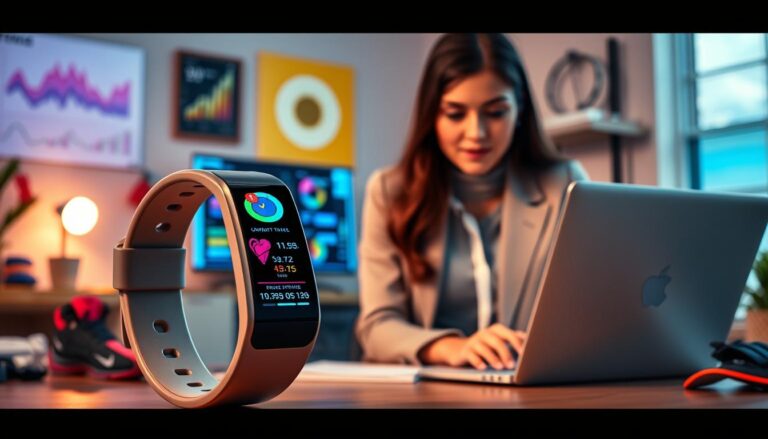
Rings are made for passive, continuous sensing—lightweight, easy to wear to bed, and tuned for HRV, temperature, and sleep trends. Watches act like tiny computers with screens, GPS, ECG options, notifications, and apps for real‑time coaching.
For biohackers the goal is simple: pick the tool that matches your primary objective. If recovery and multi‑day battery life matter, a finger device often wins. If route accuracy, live heart‑rate response, and interactivity matter, a wrist device is stronger.
We’ll compare how each device measures, where accuracy changes with activity, and which features actually drive better results in 2025. You can also explore top stress‑tracking rings for monitoring or affordable biohacking tools for added context via these resources: best stress‑tracking rings and budget biohacking tools.
Key Takeaways
- Rings favor discreet, multi‑day monitoring and excel at sleep and resting metrics.
- Watches add GPS, ECG, apps, and live coaching for workouts and navigation.
- Choose based on primary goals: recovery tracking or interactive fitness data.
- Comfort and battery life differ: rings often win for overnight wearability.
- Accuracy varies by activity; high‑intensity stats tend to favor wrist sensors.
Why this comparison matters in 2025 for biohackers and serious self‑trackers
Wearables have shifted from passive loggers to proactive wellness partners in 2025. That change makes the choice between a discreet finger device and a full wrist computer tactical — not just cosmetic.
AI now turns continuous sensing into daily readiness scores, nudges, and personalized coaching. Devices like Samsung’s new offerings add Energy and Wellness Tips so users get clear guidance about when to push or rest. This affects recovery, training, and overall life balance.
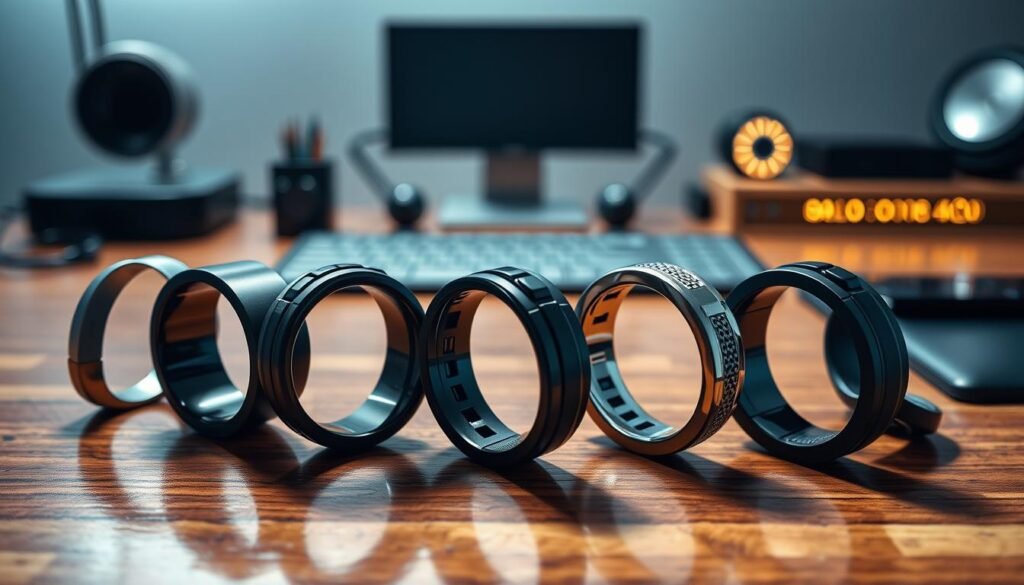
For biohackers, timely, high‑quality signals matter. Rings favor multi‑day battery life and easy overnight wear, which improves sleep and HRV baselines. A watch collects richer workout data — GPS, ECG, and blood pressure where supported — and delivers on‑wrist coaching in real time.
- Consistency wins: wearing a device through the night builds stronger longitudinal data for trends and recovery.
- Battery life and routines: multi‑day rings reduce charging friction, while watches need a charging plan to avoid missed sleep windows.
- Privacy and portability: evaluate app exports and integrations before committing so your data stays useful for deeper analysis.
Want a deeper cost/benefit look or a 2025 value check? See this cost‑benefit analysis and an industry perspective on whether a ring is worth it in 2025.
What each device is and how it works: from finger-based sensors to wrist computers
How a device sits on your body changes what signals it captures and how reliable those signals are. This matters for sleep, recovery, and real‑time feedback.
Minimalist finger devices: sensor suite and design
Compact, low‑profile design focused on continuous physiology. These rings house PPG LEDs, accelerometers, and temperature sensors inside titanium or stainless shells.
The PPG light shines into the skin at the finger to measure blood volume changes, which supports accurate resting heart metrics and sleep staging.
Because the finger has dense capillary beds and a snug fit, PPG noise falls and overnight tracking improves.
Wrist computers: displays, GPS, and interactive features
Watches act as small computers with screens, processors, and richer sensors. They add dual‑band GPS, ECG, NFC payments, LTE, and a full app ecosystem.
This makes them better for navigation, live coaching, and on‑device controls during workouts. Battery tradeoffs arise from the display, GPS, and frequent radio use.
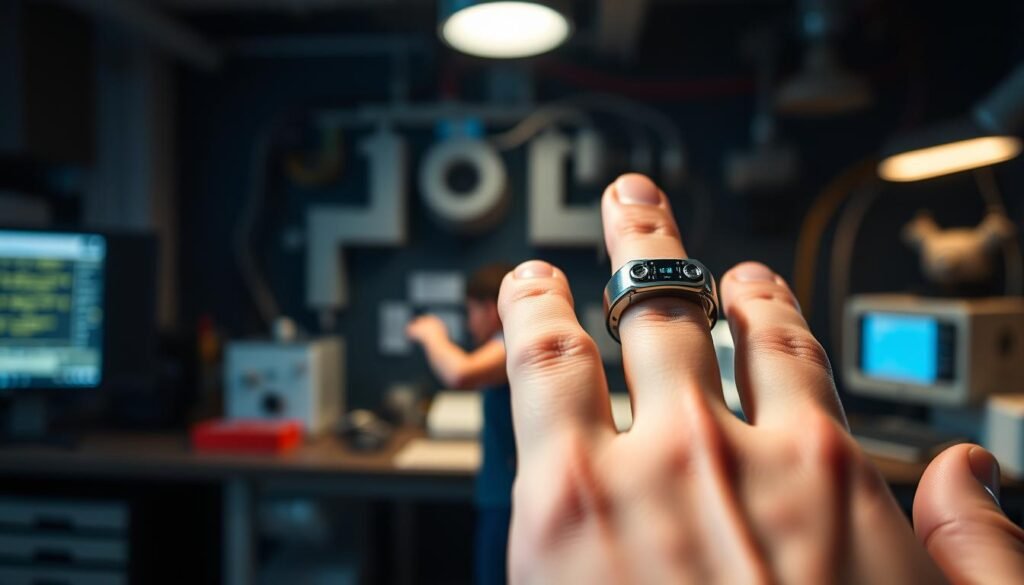
Data capture and sync: continuous logging and companion apps
Both solutions log 24/7 tracking and sync via Bluetooth to a phone app. Watches may also use Wi‑Fi or LTE for direct cloud sync and calls on the go.
Data flows into companion apps for scores, trends, and exports — a must for biohackers analyzing long‑term baselines. For sleep-focused workflows, see this study on wearables and sleep validation and a practical 30‑day tracking account here.
| Feature | Finger device | Wrist computer | Typical benefit |
|---|---|---|---|
| Sensors | PPG, accelerometer, temperature | PPG, ECG, GPS, accelerometer | Focused physiology vs broader metrics |
| Placement | Finger — tight skin contact | Wrist — larger contact area | Stable overnight PPG vs glanceable stats |
| Connectivity | Bluetooth to phone apps | Bluetooth, Wi‑Fi, LTE options | Simple sync vs on‑device cloud access |
| Battery & size | Multi‑day battery; tiny size | Shorter runtime with bright display | Low friction wear vs interactive features |
Measurement depth and accuracy where it counts: sleep, heart, stress, and workouts
Not all sensors are equal when it comes to deep sleep, spikes in heart activity, or high‑intensity intervals. This section compares where finger devices and wrist devices truly differ so you can match tools to goals.
Sleep tracking and readiness
Rings keep a snug fit and capture skin temperature trends that boost sleep stage estimates and readiness scores. Multi‑night battery life means fewer charging gaps and stronger baselines for HRV and resting heart metrics.
For deeper context on readiness scoring and HRV interpretation, see this guide to Oura ring data explained.
Heart rate and workouts
At rest and steady states, finger sensors often lead in smooth rate readings. During sprints and intervals, wrist devices with advanced optical sensors and dual‑band GPS maintain accuracy and deliver pace and route precision for outdoor fitness.
Women’s health and temperature trends
Temperature‑informed cycle trends are a strength for rings, while watches (for example, the Apple Watch) add wrist temperature and cycle apps that give retrospective ovulation clues.
AI-driven insights
AI scores translate sleep, heart rate, and recent activity into simple coaching tips. Features like Energy or Readiness scores tell you to push workouts or prioritize recovery, turning raw tracking into practical guidance.
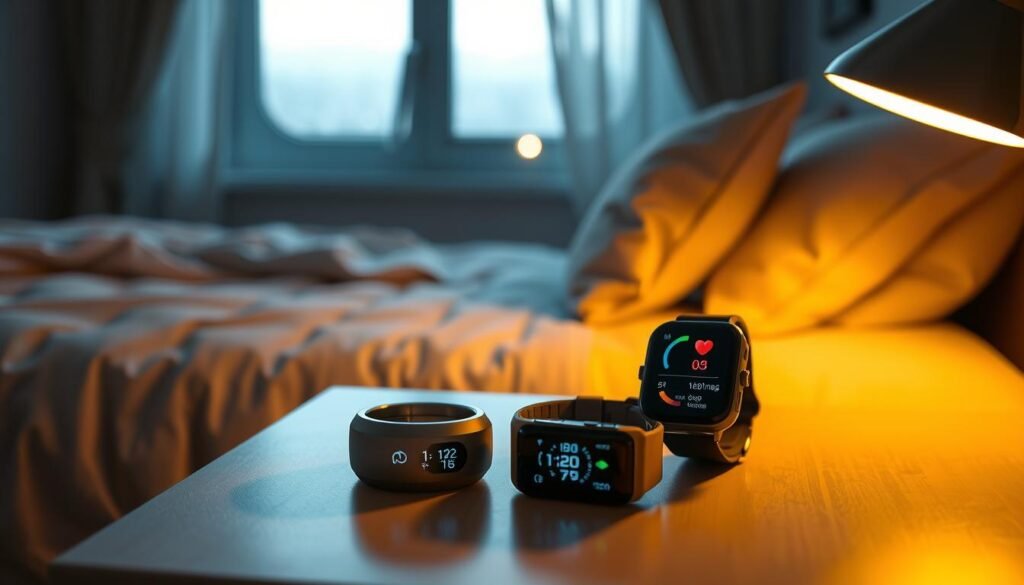
- Takeaway: choose rings for recovery fidelity and sleep tracking; choose a watch for live performance, GPS, and structured workouts.
- For an accuracy comparison of ring fitness tracking and wrist devices, see this analysis: AI ring fitness accuracy.
Smart Ring Vs Smartwatch: comfort, battery life, and feature trade‑offs
How a device feels on the body often decides whether you’ll wear it through the night. That simple behavior drives data quality more than raw specs. If a tool is light and unobtrusive, you get continuous signals; if it’s bulky, you risk gaps.
All‑day comfort and overnight wear matter for real tracking.
All‑day comfort and overnight wear
Rings are tiny and often under 5 g, so they disappear on the finger for long days and sleep. Many vendors include sizing kits to ensure a snug fit. Note: rings can scuff during heavy hand work, so removal for weightlifting or gardening helps preserve the finish.
Watches deliver on‑wrist controls and glanceable stats, but some users find them intrusive at night. Straps are easy to swap and adjust for size and comfort.
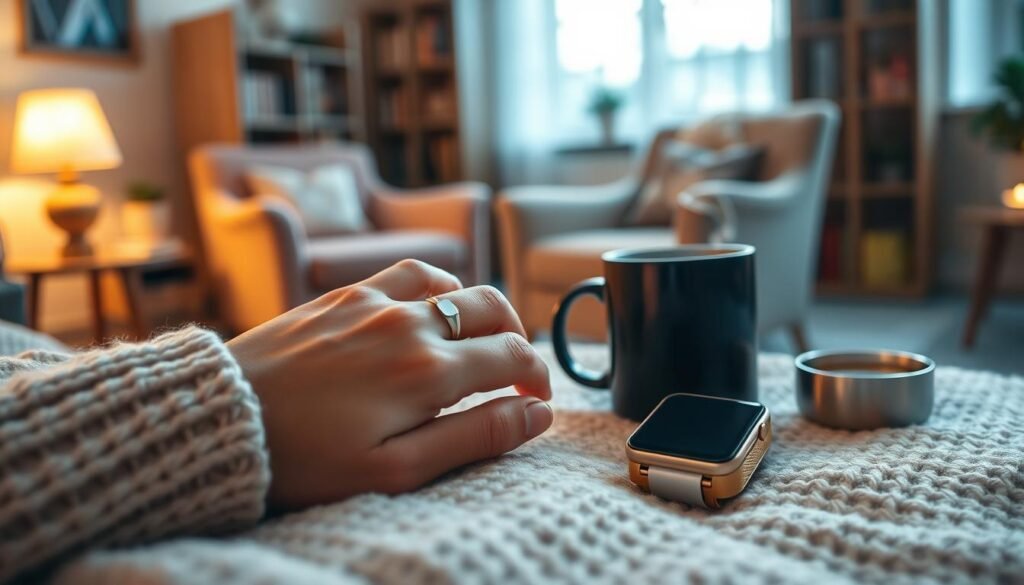
Feature set and ecosystem
Battery cadence and feature density shape daily routines. Rings can span nearly a week per charge (Galaxy models advertise up to seven days depending on size). Watches offer GPS, ECG, payments, LTE, and apps — and may last ~48 hours with power saving.
- Comfort edge: slim rings win for overnight wear; watches win for immediate controls and wrist feedback.
- Sizing: accurate ring size keeps signals stable; watch bands adjust quickly for day use.
- Battery life: rings reduce charging friction; watches need a charging plan to avoid lost sleep data.
- Features: watches integrate broadly with third‑party apps; rings focus on clean health dashboards and readiness scores.
For a deeper ecosystem look and budget accessories, see this comparison and an affordable gadgets roundup: device comparison and budget biohacking tools.
Practical buying factors for biohackers: sensors, durability, and data workflows
Start with purpose: decide whether you need continuous recovery signals or live training metrics. This guides which sensors, build, and apps matter most for your workflow.
Sensors that matter
Prioritize sensors by goal. For recovery and sleep, choose HRV, skin temperature, and accurate resting heart readings. For training, value GPS, ECG options, and advanced motion sensors for reliable activity tracking.
Note: SpO2 and body composition are useful for specific use cases, but ECG and blood pressure on watches often require age or calibration rules and should be treated as wellness aids unless validated for clinical use.
Durability and design
Build affects daily wear. Titanium or stainless rings with 10ATM/IP68 ratings survive showers and sweat. Performance watches add MIL‑STD toughness, dual‑band GPS, and higher water and impact resistance for outdoor sessions.
Fit and size matter: a correct ring size stabilizes PPG readings. Watches give multiple case sizes and interchangeable bands for wrist comfort during long activities.
Data portability and workflows
Map how data moves. Check if apps export CSV, sync to cloud platforms, or push to training services. Confirm phone compatibility and whether notifications or controls meet your daily needs.
- Battery life: rings often last longer between charges, easing overnight baselines; watches need charging plans for heavy GPS use.
- Notifications & controls: watches deliver calls, messages, and music control on the wrist; rings keep alerts minimal to reduce disruption.
- Workflow tip: wear a ring for 24/7 baselines, then use a watch for live workouts and route mapping. Export weekly data for deeper analysis.
Which should you choose? Scenario-based recommendations for different users
Start with the problem you need to solve: recovery fidelity or live performance? Pick the device that answers that question and you’ll get useful data with less hassle.
Sleep-first minimalist: choose a smart ring for comfort, recovery, and low distraction
If overnight comfort and battery life matter most, favor a ring. It stays on during sleep, records temperature trends, and builds stable readiness baselines over days.
Less charging and fewer alerts means better long‑term recovery data and fewer interrupted nights.
Metrics-heavy athlete: choose a smartwatch for GPS, ECG, live stats, and coaching
If you prioritize pace, routes, and interval coaching, a watch wins. Dual‑band GPS, on‑wrist metrics, and ECG options make workouts precise and actionable.
Top ecosystems like the Apple Watch or Galaxy Watch add apps, payments, and navigation for serious training days.
The hybrid approach: ring for 24/7 health and watch for workouts and connectivity
Combine a ring and a watch to cover both recovery and performance. Wear a ring for always‑on baselines and a watch for live sessions, maps, and on‑device coaching.
- Travel and busy schedules: rings reduce charging friction and protect sleep data when routines shift.
- Data rhythm: use ring‑derived readiness to guide daily intensity and watch session data to validate progress.
- Battery life: if you forget to charge, a ring’s week‑long cadence is forgiving; use a watch with power‑saving GPS for long events.
Bottom line: align your choice to the main constraint—sleep compliance and minimalism versus live metrics and connectivity—and iterate as goals evolve.
For a detailed device comparison, see the ring vs watch guide, and for cycle-aware users consider pairing with period tracking tools from this review of period tracking apps.
Conclusion
Choose the device you will wear every day and night; sustained use yields better health data than perfect specs. Match the tool to your priority—sleep and recovery or live workout performance—and keep data workflows simple.
For sleep and HRV baselines, smart rings deliver comfort, snug skin contact, temperature trends, and multi‑day battery life.
For on‑the‑go workouts, a watch brings ECG, dual‑band GPS, pace, and app coaching to the wrist.
Many serious users combine both: wear a ring 24/7 for readiness and a watch for intervals and navigation. Keep exports and app sync clear so your heart rate and sleep tracking feed meaningful analysis. If you’re refining training habits, see this short guide about feeling lost in your workout for practical tips: feeling lost in your workout.
FAQ
What are the main differences between a smart ring and a smartwatch for health tracking?
The two form factors prioritize different trade-offs. A ring focuses on continuous, low-profile physiological monitoring—heart-rate variability (HRV), skin temperature, sleep stages, and RESTful metrics—with long battery life and minimal distraction. A wrist device adds active features like GPS, real-time heart-rate during workouts, ECG capability on some models, on-screen coaching, music and payment options, and a richer app ecosystem. Choose based on whether you value passive 24/7 biosensing or on-demand performance data and connectivity.
How accurate are finger-based heart and sleep measurements compared with wrist-based devices?
Finger sensors often deliver stable PPG signals for nocturnal HRV and sleep staging because of good circulation and secure fit. Wrist devices perform well for steady-state heart rate and workout metrics, but high-intensity movements can introduce noise. For sleep and multi-night recovery trends, finger-mounted sensors typically provide higher consistency; for GPS-linked pace and real-time training data, wrist units are superior.
Devices with skin-temperature sensing can detect subtle nocturnal temperature shifts that inform cycle phase and ovulation prediction. Rings that measure continuous temperature while you sleep often offer clearer, multi-night baselines. Wrist devices can contribute too, but temperature noise from movement and ambient exposure may reduce sensitivity. For cycle-aware users, look for validated temperature algorithms and robust multi-night baselines.
Which device is better for athletes who need GPS and live workout stats?
A wrist-worn device is the better pick for athletes who require GPS, cadence, real-time heart-rate zones, and live coaching. Watches integrate satellite positioning and deliver immediate feedback during intervals, runs, and rides. Pair a watch with a ring if you want the watch for training and the ring for continuous recovery and sleep insights.
How does battery life compare and why does it matter for long-term tracking?
Rings typically last several days to a week or more on a single charge because they focus on passive sensing without bright displays or continuous GPS. Watches often need daily or multi-day charging, especially with heavy GPS use or always-on screens. Longer battery life improves adherence for multi-night sleep and circadian trend analysis, which matters for biohackers tracking recovery and load.
Are there differences in comfort and user adherence between finger devices and wrist devices?
Many people find rings more comfortable for 24/7 wear and sleep because they are lightweight and unobtrusive; that increases nightly adherence. Watches can feel bulkier overnight and may interfere with sleep for some users, but modern, lighter wrist models mitigate this. Comfort drives consistent data capture, so pick the form factor you’ll wear without thinking about it.
What sensors should biohackers prioritize when choosing a device?
Prioritize HRV-capable photoplethysmography (PPG), continuous skin temperature, reliable heart-rate monitoring, SpO2, and—if you need clinical-level cardiac data—ECG availability. GPS and accelerometry matter for activity and training metrics. Also evaluate sensor fusion quality and the vendor’s algorithm transparency for meaningful insights.
How do data portability and integrations compare between rings and watches?
Watches typically tie into large app ecosystems with third-party sports, health, and nutrition integrations, making export and live coaching easier. Rings often emphasize clean longitudinal exports and integrations with sleep and readiness platforms, plus CSV or API access on some models. If you plan deep analysis, check for open data export, Apple Health/Google Fit sync, and third‑party compatibility.
Can a ring replace a watch, or is a hybrid approach better?
For many users, a hybrid approach works best: a ring for 24/7 recovery, sleep, and baseline physiology; a watch for workouts, GPS, notifications, and on-wrist controls. If you only want unobtrusive sleep and readiness monitoring, a ring can replace a watch. If you need live training metrics and connectivity, the watch remains essential.
How do I evaluate durability and materials for long-term wear?
Look for corrosion-resistant alloys such as titanium or surgical stainless steel for finger devices, and water resistance ratings (ATM or ISO) plus toughened glass and reinforced cases for watches. Consider scratch resistance, warranty, and hypoallergenic finishes if you have sensitive skin. Durable design keeps devices functional during sports and daily life.
Are AI-driven readiness and coaching features equally useful across both device types?
Both form factors now offer AI-derived readiness, sleep coaching, and recovery scores, but the input data differs. Rings provide stable nocturnal baselines that improve readiness accuracy; watches contribute activity, GPS, and immediate exertion context. Evaluate the algorithm’s evidence base, transparency, and how actionable its recommendations are for your routines.
What privacy and data-security factors should I check before buying?
Review the vendor’s privacy policy, data encryption practices, third-party sharing rules, and whether data can be deleted or exported. Prefer companies that store anonymized metrics, provide local data controls, and support secure cloud sync. For sensitive health information, check compliance with regional regulations and strong user-consent practices.
Which mainstream brands are recommended for each use case?
For discreet, recovery-first tracking with strong temperature and HRV features, devices from reputable ring-focused makers are popular. For training, GPS, ECG options, and broad app ecosystems, established wrist-device brands and major smartwatch manufacturers remain top choices. Match brand reputation, independent validation studies, and customer support to your priorities before purchasing.