


Can a smarter, cheaper system out-cool a premium mattress topper and still save you money over time?
This guide cuts through marketing to show which systems actually win on total price, reliability, and everyday usability.
We use current data—MSRP, subscription costs, and user reviews—to compare water-based pads, air units, and smart toppers. You’ll see hard numbers, like the Chilipad Dock Pro WE Dual Zone at $2,499 vs the Pod 5 Dual Zone at $3,348 and where a $199+/yr subscription changes the math.
Trust indicators matter: one maker scores 4.0 on Trustpilot while the other sits near 2.5. We break down temperature ranges (55–115°F vs 55–110°F), which features are free, and which are behind a paywall.
Expect a clear, side-by-side look at cooling, temperature control, controls, and long‑term ownership so you can pick the right solution for comfort and budget. For broader context on smart beds and related products, see this short guide from smart bed picks.
Key Takeaways
- Price vs value: Compare MSRPs and subscription totals, not just launch price.
- Features matter: Some systems include schedules and integrations free; others lock them behind fees.
- Temperature range: A wider range can help both hot and cold sleepers more than marketing claims.
- Trust & reviews: Real-world ratings reflect support and long-term durability.
- System view: Evaluate pad, control unit, and app together to avoid overpaying for single features.
- Practicality: On-device controls and airplane mode matter for reliability and privacy.
Commercial intent decoded: who should shop for an Eight Sleep alternative right now
If you dislike mandatory cloud features or ongoing fees, look for systems that work well offline and offer on-device controls. Alternatives can save money and protect privacy without sacrificing nightly comfort.
Subscription-averse shoppers will prefer solutions that include scheduled temperature changes and thermal alarms free of charge. Many rivals provide these features without a $199+/yr fee, so the total cost of ownership can be lower from month one.
Privacy-minded customers should avoid products that require constant sleep tracking and Wi‑Fi. Choose a system that lets you set temperatures manually and use airplane mode when you want no cloud dependency.
Households with adjustable or split beds need hardware that routes pads or hoses safely around moving frames. Dual‑zone solutions that give each partner independent settings matter a lot if you and your partner want different night temperatures.
Light sleepers and frequent travelers often prefer tactile buttons and quick local controls. Systems with on‑device buttons, remembered schedules, and offline resilience reduce late‑night app fumbling and downtime.
For more on habit change and daily routines that affect rest, see this short profile on practical sleep habits. If you’re curious how personal tracking can help, read this first‑hand account of someone who improved their rest after 30 days of logging: tracking and improvement.

- Choose alternatives if subscription costs, mandatory tracking, or constant Wi‑Fi don’t fit how you manage sleep.
- Prefer local controls and airplane mode for privacy and reliable night settings.
- Check compatibility with your bed type and partner needs before buying.
Eight Sleep Pod 5 vs leading alternatives: pricing, subscriptions, and real-world features
Comparing upfront price and ongoing costs reveals how much you really pay over time. Look at warranty, serviceability, and which core features need a subscription.
Price comparison by size
The price gap is consistent: the Chilipad Dock Pro WE Dual Zone lists at $2,499 (Queen) and $2,699 (King/Cal King) vs the Pod 5 Dual Zone at $3,348 (Queen) and $3,548 (King/Cal King). That’s a clear $849 difference before subscriptions.
Single‑zone shoppers can start with the Chilipad ME line at $1,299 (Queen) or $1,499 (King/Cal King) and add a second unit later if needed. That keeps upfront cost lower while preserving dual zone options.
Subscription math
Subscriptions change the calculus fast. The Pod requires roughly $199+/yr for key features. Chilipad includes schedules and the Warm Awake feature free, so total cost of ownership is lower from year one.
Over three years that subscription plus the higher upfront unit price can free up hundreds for bedding or a new pillow.
Trust signals and reviews
Trustpilot scores (Nov 2025) add context: Chilipad sits near a 4.0 (“Great”), while the Pod scores about 2.5 (“Poor”).
Reddit threads raise consistent concerns about leaks and slow support for the higher‑priced system. Many buyers weigh those reports equally with specs when choosing a product.
Feature availability at a glance
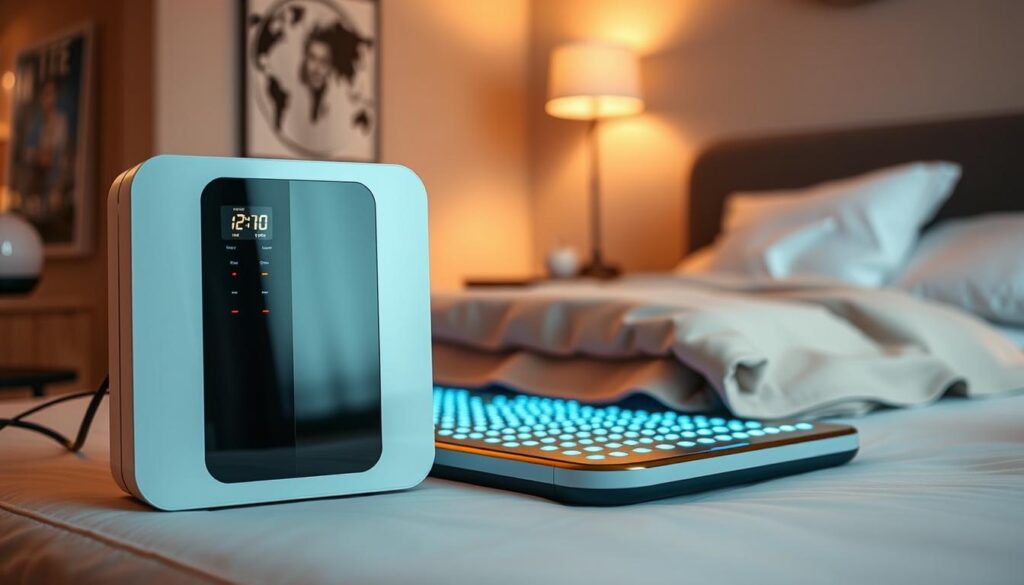
Feature reality matters more than marketing. Chilipad provides on‑device display and buttons, airplane mode, Google integration, free schedules, and a half‑bed option. The Pod ties several core features to a paid plan and often requires Wi‑Fi for full functionality.
- Dual zone — Chilipad uses a unit per side for redundancy; the Pod runs both sides through one system.
- Temperature — Ranges differ slightly (55–115°F vs 55–110°F); extremes matter for some rooms.
- Serviceability — Independent units can reduce downtime if one side needs service.
For a quick look at affordable gear that complements any cooling system, check this roundup of affordable biohacking tools.
| Model / Item | Queen MSRP | King MSRP |
|---|---|---|
| Chilipad Dock Pro WE Dual Zone | $2,499 | $2,699 |
| Pod 5 Dual Zone | $3,348 | $3,548 |
| Chilipad Dock Pro ME Single Zone | $1,299 | $1,499 |
Chilipad Dock Pro vs Eight Sleep Pod 5: water cooling, dual zone options, and app control
Water-based systems look similar until you test range, controls, and independence from subscriptions. These differences shape nightly comfort and long-term costs.
Water, temperature, and dual‑zone design matter more than brand blurbs.
How far the temperature range goes and real heating/cooling performance
The Chilipad Dock Pro offers a wider span (55–115°F) versus the rival’s 55–110°F. Those extra degrees at the top help in cold rooms or when someone wants a warmer surface.
Cooling to 55°F is comparable on both, but the broader span can give steadier control across seasons. Room size, pad placement, and insulation still affect results.
Which features are free, and when a subscription kicks in
Chilipad includes schedules and the Warm Awake thermal alarm without a subscription. That keeps basic automation and morning routines free.
The competing system ties several core features to a paid plan and needs constant Wi‑Fi, so offline use is limited.
Setup, compatibility, and upkeep for real bedrooms
Chilipad supports adjustable and split beds and uses machine‑washable components, which eases maintenance and extends life.
It also favors one control unit per side, so a single failure won’t down both sleepers. The rival uses one unit for the whole bed, simplifying install but risking a single point of failure.
Ecosystem: local controls, Wi‑Fi dependence, and developer access
On‑device buttons, airplane mode, and Google Assistant support make Chilipad a practical choice for privacy and reliability. Developer APIs enable custom automations for advanced users.
“Local controls matter at 2 a.m. — you want a button, not a required app login.”
- Control: On‑device display vs app‑only changes how quickly you adjust settings.
- Maintenance: Machine‑washable pads and replaceable parts reduce downtime.
- Dual zone: Separate units isolate settings and service needs per side.
| Feature | Chilipad Dock Pro WE | Rival unit |
|---|---|---|
| Temperature range | 55–115°F | 55–110°F |
| Schedules / Warm Awake | Included (no subscription) | Locked behind subscription |
| On‑device controls | Yes (display & buttons) | No (app required) |
| Adjustable / split beds | Supported | Limited support |
| API / integrations | Google Assistant, developer APIs | Limited / removed |
BedJet and air-based systems vs Eight Sleep: cooling method, mattress feel, and noise trade-offs
Air units cool by moving air above and around you, while water pads change the sleep surface directly. That choice affects mattress feel, portability, and nightly noise.
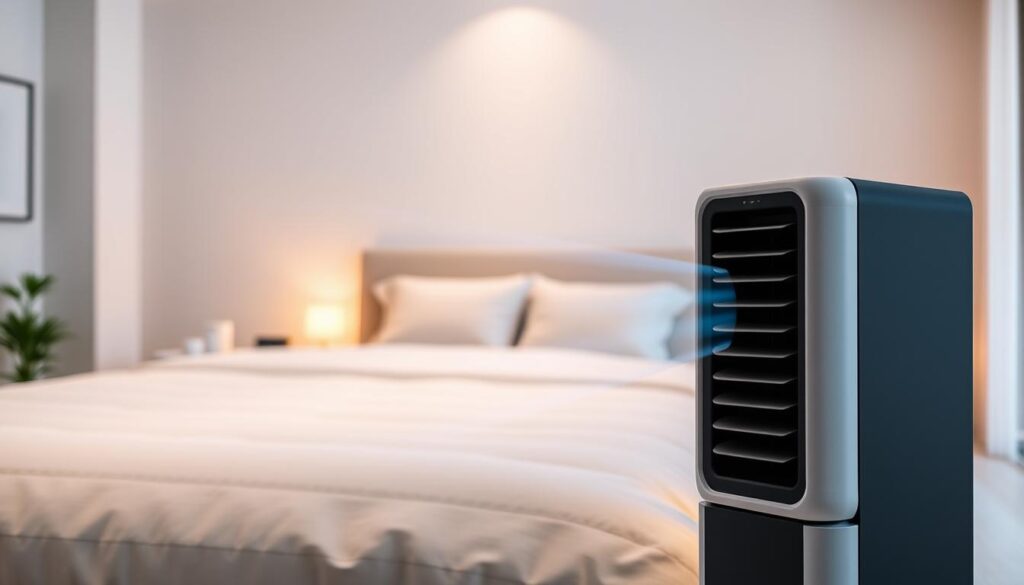
Air systems steer airflow into the microclimate under sheets. This avoids pads, hoses, and extra layers and keeps your mattress feel unchanged.
How air compares to water for feel and compatibility
Air vs water is the first decision: BedJet uses air that works with any mattress and moves with you to future beds.
Eight Sleep‘s ActiveGrid is integrated into its mattress and can feel thick or lumpy if the molded PVC shifts.
Temperature, noise, and comfort dynamics
Air delivery cools fast and can drop roughly 10°F below ambient, which helps in warm rooms. Water systems often reach lower surface temperatures but need time to stabilize.
Air units tend to be louder than quiet water pumps. Placement and sheets can reduce perceived sound near the pillow.
Practical trade-offs and foam sensitivity
No subscription or plumbing is a clear practical benefit for air devices. They keep operation simple and portable for new mattresses.
If you care about foam response or pressure mapping, avoiding a pad keeps mattress performance intact.
| Feature | Air (BedJet) | Water (integrated) |
|---|---|---|
| Mattress feel | No change | Alters surface (PVC grid) |
| Compatibility | Works on any mattress | Tied to specific mattress |
| Cooling speed | Immediate airflow | Slower, more uniform |
| Noise | Moderate to loud | Quieter pumps |
| Portability | High | Low |
Want a deeper comparison of integrated designs and mattress platforms? See this detailed review of mattress integrations for more context.
“Air systems give portability without changing your mattress; water systems trade that flexibility for uniform conductive cooling.”
Smart Topper-style alternatives vs Eight Sleep: autonomous thermoregulation and operating costs
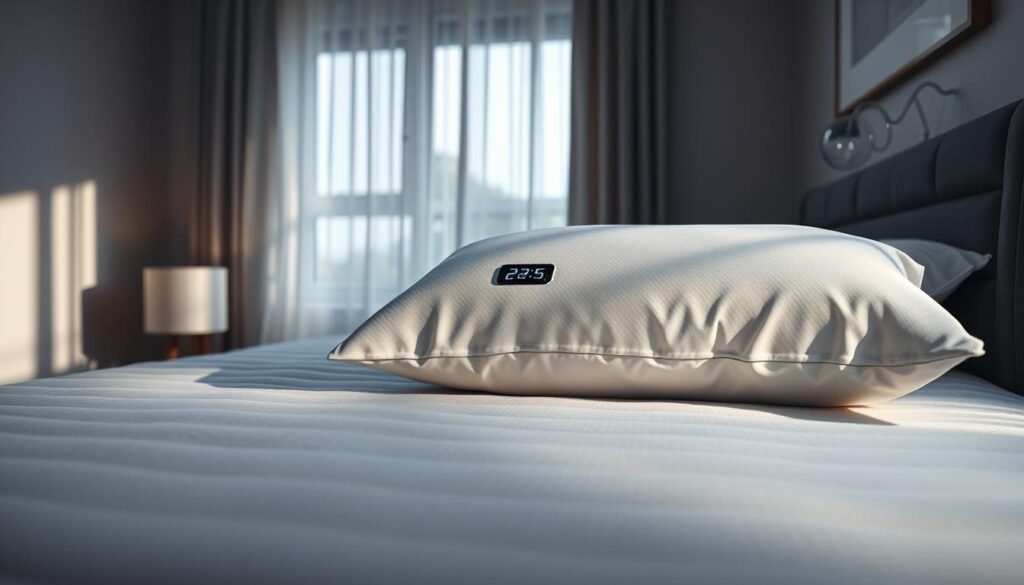
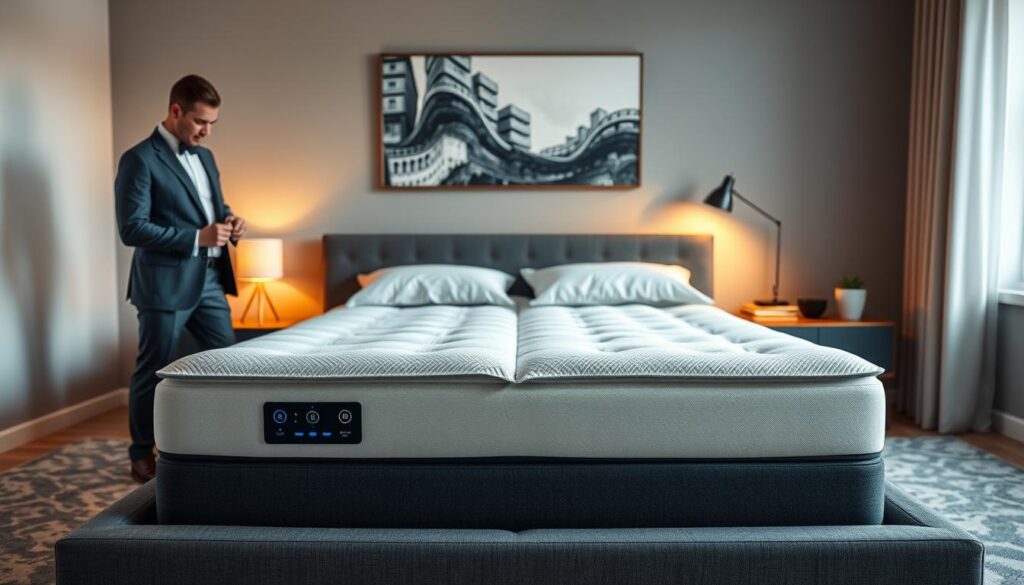
These topper-style units use active airflow and a 3D surface to shape a full-body microclimate without water reservoirs. They trade plumbing for fans and sensors, promising fast, targeted cooling and simple upkeep.
How active cooling works and real-world gains
Manufacturers say these units remove up to 52% more body heat at 72°F and more than 100% in an 80°F room. The patented 3D structure displaces warm air so cooling scales as room heat rises.
Health, safety, and thermal features
Zero condensation and ambient-neutral airflow avoid pad moisture and sinus drying. Certified electric heating (up to 100W) adds foot-warming and preheat without hoses or refills.
Controls, energy, and longevity
Temperature regulation is autonomous to ±10°F from skin and accurate to 0.2°F with thousands of nightly adjustments. Use the app for fine tuning or manual buttons for quick control offline.
- Low energy: ~7.4W average (~$4.32/yr).
- Durable fans: rated ~40,000 hours for multi‑year use.
- Maintenance: no reservoirs, no flushing — simpler upkeep over weeks and years.
Best Eight Sleep Pod 5 Alternative 2026: choose by temperature, comfort, and total cost
Decide based on real trade‑offs—temperature reach, mattress feel, and whether you want a subscription. That frames how you should compare systems for nightly comfort and long‑term value.
Who should pick each solution?
Hot sleepers who want the coldest surface often prefer a water approach that reaches 55°F; airflow toppers can feel stronger across the body in very warm rooms.
Couples needing dual zone benefit from independent units per side for redundancy and separate settings; a single controller is simpler but risks a full bed outage.
Adjustable bed owners will favor systems designed for split and moving frames so hoses and pads route safely.
Subscription‑averse shoppers should pick systems that include schedules and wake features without a $199+/yr fee to lower three‑year costs.
Total cost of ownership: what to add up
Upfront price matters—an $849 MSRP gap between two dual zone units changes the baseline cost.
Subscriptions can add hundreds over years; factor recurring fees into your shopping math and prefer units that work offline when possible.
Operating cost & support vary: some smart toppers claim near negligible energy use (~$4.32/yr), while water pumps and air blowers run differently. Check trust signals and user reports for real support performance.
- If you change mattresses often, choose an above‑sheet air unit to preserve mattress feel and avoid foam changes.
- If foam contour matters, avoid thick water pads that alter pressure mapping during long night sessions.
- For on‑device reliability, prefer systems that remember schedules and let you adjust settings without the sleep app.
“Compare upfront cost, subscription commitments, energy use, and support history to calculate true ownership over weeks and years.”
For a quick look at cooling gear and broader context, see this guide to bed cooling systems and a short rundown of affordable tools that pair well with any setup: affordable biohacking tools.
| Factor | What to compare | Why it matters |
|---|---|---|
| Upfront MSRP | Unit price gap | Sets baseline cost |
| Subscription | Annual fees | Alters multi‑year total |
| Operating cost | Wattage / pumps | Small ongoing electricity impact |
Conclusion
Pick the setup that reduces late‑night friction and keeps your body at steady temperatures through the night. Practical controls, reliable reviews, and clear multi‑year costs beat one‑time specs every time.
Think about range, how the system alters your mattress feel, and whether you want on‑device buttons or an app‑first flow.
Chilipad earns points for a wider 55–115°F span, included core features, and on‑device control that works offline. Air units like BedJet preserve mattress feel and stay portable. Smart toppers offer very low energy and autonomous temperature control for minimal upkeep.
The Pod model gives integrated tracking and water‑based temperature control, but its app dependence and paid features may not suit every household. Weigh trust signals (Chilipad ~4.0 vs Pod ~2.5 on Trustpilot) along with specs.
Match features you’ll actually use—schedules, thermal wake, and local controls—and follow real reviews. For more buying context, see alternatives of Eight Sleep and a practical Oura ring cost‑benefit analysis.
FAQ
What should I look for when shopping for an Eight Sleep alternative right now?
Focus on temperature range, cooling method (water vs air), dual-zone capability, app and on-device controls, subscription requirements, and compatibility with your mattress or adjustable bed. Prioritize reliable cooling at night, clear warranty and support, and low ongoing operating costs if you dislike recurring fees.
How do water-based systems like Chilipad Dock Pro compare to air-based systems like BedJet?
Water-based systems typically deliver steadier full-mattress temperature control and quieter steady-state operation, while air-based systems provide above-the-sheets airflow without pads and preserve mattress feel. Water units can offer greater temperature precision; air units are generally easier to set up and move between beds.
Are subscription fees required for alternative temperature-control sleep systems?
Not always. Some brands (including several Chilipad models) include core features without subscriptions, while others may charge for advanced analytics, cloud storage, or smart integrations. Always check what basic scheduling, on-device control, and firmware updates cost before buying.
Is noise a major factor between different cooling technologies?
Yes. Water-loop circulators often run quietly once up to temp; airflow systems use fans that can be louder during peak cooling. Noise level varies by model and placement—look for measured dBA specs or user reviews to match your bedroom sensitivity.
How important is app control versus on-device controls and offline modes?
App control adds convenience and scheduling, but on-device buttons and an airplane/offline mode increase reliability and privacy. If you want minimal Wi‑Fi dependence or plan to travel with the unit, prioritize models with local controls and robust offline features.
Can these systems work on split or adjustable beds?
Many modern units offer split-bed or dual-zone attachments and flexible pad designs compatible with adjustable bases. Check manufacturer notes for hinge-friendly hoses, slim pad profiles, and compatibility lists to avoid interference with bed articulation.
Do smart toppers and pad systems cause condensation or mattress damage?
Properly designed systems prevent condensation by managing dew point and using insulated hoses and durable pad materials. Look for products that advertise zero-condensation operation, have machine-washable covers, and include clear maintenance guidance to protect the mattress.
How precise are temperature ranges across alternatives (example: 55–115°F vs 55–110°F)?
Stated ranges indicate capability, but real-world precision depends on system power, mattress insulation, ambient bedroom temperature, and pad coupling. Expect a few degrees of variance; higher flow rates and larger reservoirs usually give faster response and steadier control.
What are realistic operating costs and energy use for active cooling sleep systems?
Energy use varies: small circulators and fans often consume low to moderate wattage (tens to low hundreds of watts). Annual costs depend on nightly hours and local electricity prices. Topper-style units with efficient fans usually cost less than central HVAC cooling, but check manufacturer wattage specs for accurate estimates.
How do warranty and support compare between big brands?
Warranty lengths and support responsiveness vary; established brands usually offer multi-year warranties and clearer replacement policies. Check Trustpilot, Reddit threads, and official support channels for real-world service experiences before buying.
Are there health or safety certifications I should look for?
Yes. Seek ETL/UL electrical safety approvals, RoHS for material safety, and compliance statements on condensation and heating elements. Certified electric heating and documented safety testing reduce risk and are especially important for electrically active toppers or pads.
Do any alternatives offer accurate sleep tracking like some smart beds?
Some temperature-control systems include basic sleep tracking via apps, but they generally don’t match dedicated smart mattresses or wearable trackers for full sleep-stage accuracy. If detailed sleep staging matters, pair a climate system with a validated wearable or a sleep-tracking mattress surface.
What maintenance should I expect for water-loop systems versus air-based units?
Water-loop systems need occasional filter changes, periodic checks for leaks, and flushing per manufacturer guidelines. Air-based units require less plumbing maintenance but may need filter or fan-care and regular dusting. Both benefit from removable, washable covers where offered.
Which solution is best for couples who need different temperatures on each side?
Choose a dual-zone system with independent temperature zones or split-bed compatibility. Some water-loop pads and select toppers provide true dual-zone control, enabling each partner to set distinct temperatures without affecting the other.
How does mattress feel change when adding a pad or topper temperature-control system?
Thin pads are designed to minimally alter mattress feel; air-based systems that sit above sheets preserve the original feel entirely. Thicker toppers may change comfort layer firmness and pressure relief, so test firmness implications if you care deeply about mattress feel.
Can these units integrate with smart home ecosystems like Google Home or Apple HomeKit?
Integration varies by brand. Some manufacturers offer Google Assistant or Alexa support and limited APIs; HomeKit support is rarer. If home automation matters, confirm specific integrations and whether they require ongoing subscription services.



Don’t Miss These Picks