

Have you ever wondered whether an inversion could actually make cramps worse? This question challenges a common gym-floor belief and invites a closer look at classic guidance.
Menstruation is a sensitive phase where listening to the body matters most.
Traditional teachers, like Sannyasi Bhakti Ratna at Yoga Vidya Gurukul, warn that inversions can reverse apana vayu, overstretch ligaments, and increase vascular congestion. Contemporary experts debate risks, yet many women find gentler options ease cramps and reduce discomfort.
This short guide shows which movements to skip and offers safe swaps, breath tools, and simple sequences that respect your energy and cycle. You’ll get practical swaps and class-friendly modifications so your practice supports long-term health.
Curious for specific swaps and evidence-based notes? Read our practical guide and learn more about hormone-supporting alternatives on this helpful page: supporting poses for PMS and hormones.
Key Takeaways
- Inversions may disrupt the downward flow of energy and can increase discomfort for some during menstruation.
- Gentle forward bends, supported backbends, mild twists, and legs-up options can relieve cramps.
- Cooling and calming breathwork helps when energy is low; skip heat-building pranayama.
- Respecting your cycle means adapting intensity rather than pushing through pain.
- Simple class modifications let women participate safely without overexertion.
Before You Roll Out the Mat: Safety First and Your Intent Today
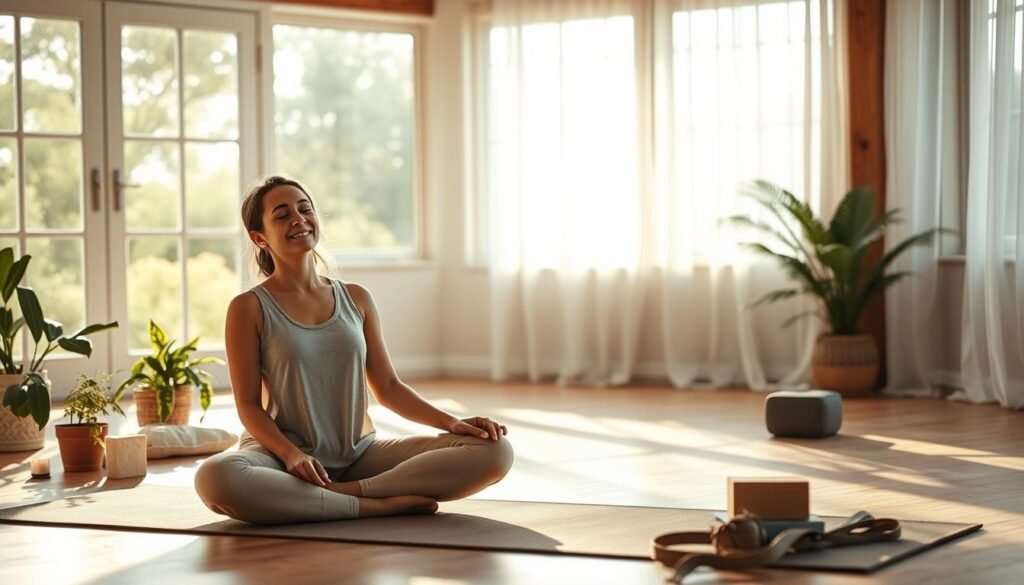
Start by asking: how does my body feel right now, and what is my aim for this session? Set a clear intention: reduce cramps, protect energy, and support your menstrual cycle. Match your yoga practice to how you feel—less is often more.
If symptoms spike, scale down to breathwork and rest; if energy is moderate, choose gentle movement and longer, supported holds.
Traditional guidance from Yoga Vidya Gurukul highlights individual differences: some women rest for one to two days, while others prefer mild motion. Favor gentle forward bends, supported backbends, soft twists, and calming pranayama such as bhramari and anulom vilom when you need relief.
- Clarify your aim: pain relief, mood stability, or light mobility—your intent guides your pace and choices.
- Use a quick self-check: rate cramps, fatigue, and mood from 1–10. High scores mean shorter sessions and gentler practice.
- Respect variability: the first one or two days often call for breathwork and rest; later days may allow more movement.
- Keep an exit plan: if pain rises, stop and end with 5–10 minutes of diaphragmatic breathing or yoga nidra.
Track what helps on different days and discuss adaptations with a trusted teacher before class. For hormone-focused context and gland-supporting approaches, see this helpful overview on the endocrine system and.
Yoga Poses to Avoid During Period
Some movements increase internal pressure and can amplify cramps or heavy bleeding if practiced at full intensity. Use this quick list to protect the pelvic region and keep your session gentle and safe.
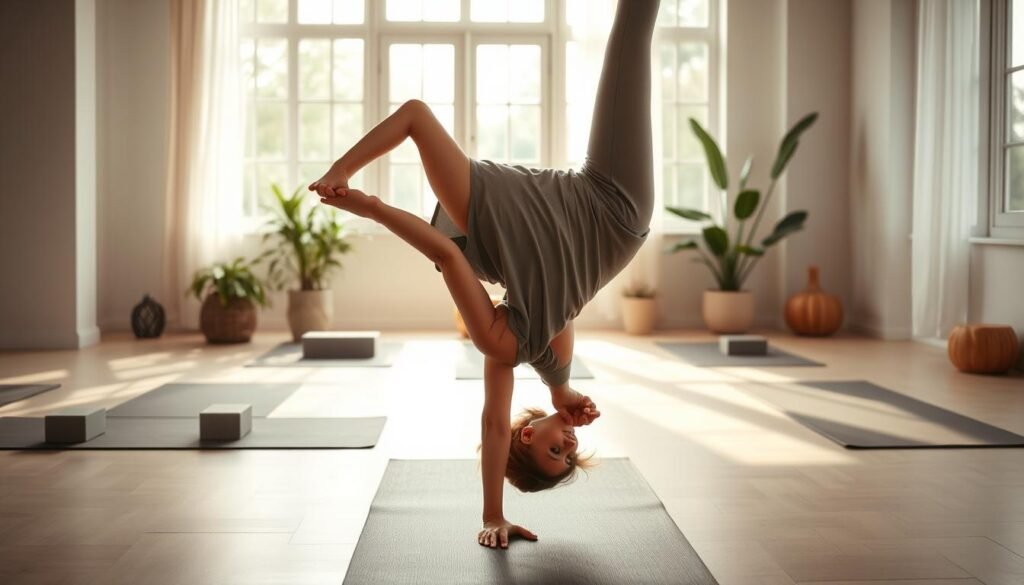
- Skip inversions like headstand, shoulderstand, and plow. These inversions can reverse apana vayu, overstretch uterine ligaments, and may add venous congestion that worsens bleeding.
- Avoid strong backbends, deep twists, and arm balances. Strong backbends and intense twists increase front-body strain and create excessive pressure in the pelvic region.
- Do not practice bandhas or heat-building sequences. Bandhas redirect energy upward and raise abdominal heat; both can be counterproductive when bleeding is heavy.
- Keep fast flows mild and skip power sequences if bleeding is heavy or pain spikes. Vigorous standing work raises intra-abdominal pressure and systemic heat, which can amplify cramping and fatigue.
If in doubt, use the “pressure test”: any asana that feels like bearing down or creates pulsing low in the abdomen is likely inappropriate today.
For balanced guidance and evidence-based tips, see this research on yoga and menstruation.
Why These Moves Can Backfire During Menstruation
Classical texts describe a downward current that supports menstrual shedding; reversing that current can disrupt comfort and circulation. The idea is simple: when the body relies on a natural downward flow, opposing it often creates more harm than benefit.
Apana vayu explained in plain terms: apana vayu is the body’s “downward current” that helps elimination and the menstrual cycle. Inversions can counter this direction and pull pelvic organs upward, which may strain ligaments and sensitive tissues.
Apana vayu and the downward current
Apana vayu supports shedding and low-phase recovery. When practice reverses that flow, women sometimes report heightened cramps and disrupted circulation.
Vascular and mechanical stress
Mechanical factors matter: pulling the uterus upward can overstretch broad ligaments. That added strain can make the pelvic region tender.
- Veins may partially collapse under altered load while arteries keep pumping, which can lead to pelvic congestion and increased blood flow.
- Added heat from forceful movement may dilate vessels and worsen bleeding for those prone to heavier flow.
- Deep abdominal compression raises intra-abdominal pressure and can amplify cramps and other symptoms.
Net effect: these stresses often increase symptoms with little upside. Respecting physiology now usually means faster recovery and steadier energy later.
For practical guidance on exercising through a cycle, see this working-out guide for the menstrual cycle, and for gentle, circulation-focused sequences try this 15-minute lymphatic flow.
Gentle, Period-Safe Alternatives That Help You Feel Better
Soft, supported movements can ease cramps and protect energy without reversing natural pelvic flow. These choices focus on pressure reduction, gentle abdominal massage, and calming the nervous system.
Start slowly and use bolsters, blocks, or folded blankets for support. Hold shapes longer with easy breaths rather than pushing for depth.
Calming forward bends and child-style rests
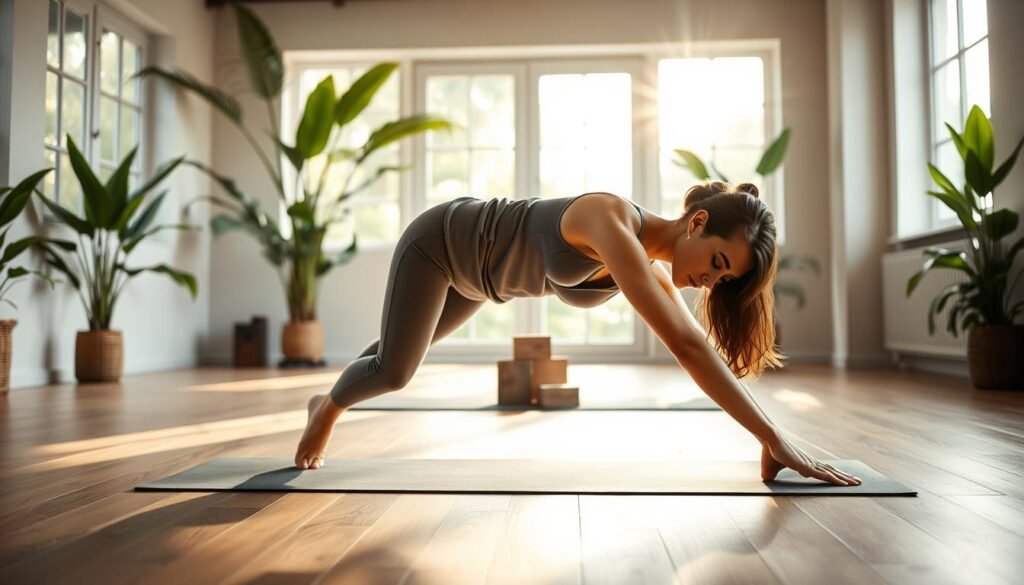
Try seated forward bend (Paschimottanasana) or half forward bend (Ardha Paschimottanasana) with a bolster on the thighs. These forward bend variations offer light abdominal compression and comforting pressure without strain.
Use knees-apart child’s pose (Shashankasana) with cushions under the torso or forehead to release low back tension and soften the belly.
Supported backbends for back pain relief
Rest in supported butterfly (Supta Titaliasana) or Supta Vajrasana with a bolster under the chest. These supported backbends relieve back pain while avoiding pelvic compression.
Gentle twists, cat/tiger for mobility
Mild twists like vakrasana type 1 or supine gentle twists should feel open and light—no force. Add Marjariasana (cat) and Vyaghrasana (tiger) to mobilize the sacrum and ease pelvic floor tightness.
Legs up the wall for leg refreshment
Place legs up the wall with the pelvis resting on the floor. This drains leg fatigue and keeps the natural downward flow intact—do not lift the pelvis.
Quick action list
- Choose floor-based shapes that soothe and support the abdomen.
- Favor forward bends, supported backbends, soft twists, cat/tiger, and legs-up without pelvic lifts.
- Hold poses with full, easy breaths and add props for comfort.
- If sharp pain appears, back out, add more support, or rest.
| Recommended Alternative | Main Benefit | How to Modify |
|---|---|---|
| Paschimottanasana / Ardha Paschimottanasana (seated forward bend) | Gentle abdominal massage; calming | Use bolster on thighs; keep spine long; stop if pressure feels sharp |
| Child’s pose (knees apart) | Low back release; eases pelvic tension | Place cushion under torso or forehead for support |
| Supta Titaliasana / Supta Vajrasana (supported) | Relieves back pain; opens chest without pelvic compression | Bolster under chest; small pillow under knees if needed |
| Gentle twists; Marjariasana & Vyaghrasana | Spine mobility; pelvic floor relaxation | Keep movements slow and small; breathe into each turn |
| Legs up the wall (no pelvic lift) | Drains legs; refreshes circulation while keeping downward flow | Pelvis on floor; props under sacrum only if comfortable |
For targeted stretches that also help sciatica or psoas tension related to low-back pain, try this stretch that releases sciatic and psoas.
Breathwork and Mindfulness to Soothe Cramps, Swings, and Stress
Gentle breath practices calm cramps and nervous-system stress. They’re low effort and high impact when energy is low.
Breathe slowly for 3–5 minutes to signal safety and ease pelvic guarding. Start with diaphragmatic deep breathing: inhale into the belly, exhale fully, and keep a steady, even pace.
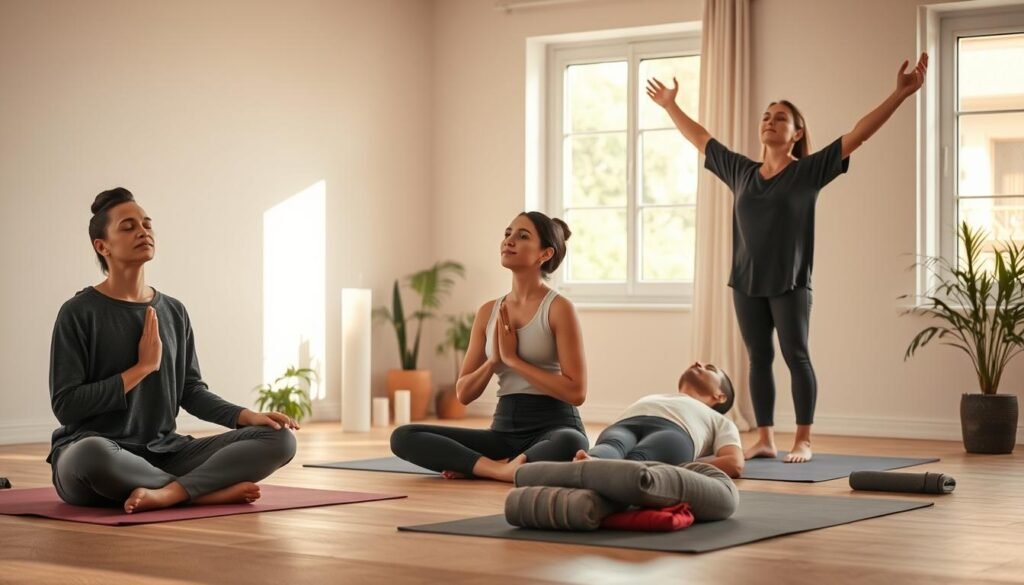
Which breathing practices help most?
- Deep breathing: Use it first to reduce tension and restlessness.
- Bhramari (humming): Soft humming downshifts stress and can lower pain perception.
- Anulom vilom: Alternate nostril breathing balances the nervous system—no holds.
- Ujjayi: Gentle, ocean-like breath for steadying the mind; stop if you feel heat.
- Cooling breaths (sheetali/sitkari): Use these when warmth or irritation rises.
What to avoid right now
Avoid fast, heat-building techniques and breath retentions. Skip kapalabhati, bhastrika, right-nostril-only work, bandhas, and long holds. These raise intra-abdominal pressure and can amplify symptoms.
“When energy dips, slow the breath first—movement can follow if you feel steady.”
Mindfulness and rest practices
Finish with 10–20 minutes of yoga nidra or a short breath-focused meditation. This aids relaxation, eases anxiety, and often improves sleep and mood swings.
If anxiety or mood swings rise, shorten movement and lengthen breathwork; this swap often eases symptoms faster.
| Practice | Main Benefit | When to Skip |
|---|---|---|
| Deep diaphragmatic breathing | Reduces pelvic guarding; quick calming | Never—safest starter for most women |
| Bhramari (humming) | Decreases stress response; pain relief | If humming causes dizziness, stop |
| Anulom vilom (alternate nostril) | Balances mood and focus | Avoid breath holds or forceful inhalations |
| Ujjayi | Stabilizes rhythm and attention | Stop if you feel heat or breathlessness |
| Cooling breaths (sheetali/sitkari) | Lowers internal temperature and irritation | Avoid if you have dental sensitivity or throat issues |
For calming nervous-system-focused practices and gentle flows, see this nervous-system workouts guide. Keep sessions short and repeatable so you can use them any time symptoms spike.
Follow-Along Mini Sequences for Different Days of Your Cycle
Match your sequence to the day: go ultra-gentle on heavier or crampy days; add modest flow when symptoms ease.
Keep practice time short and repeatable—10 to 20 minutes is often enough to shift your mood and ease discomfort.
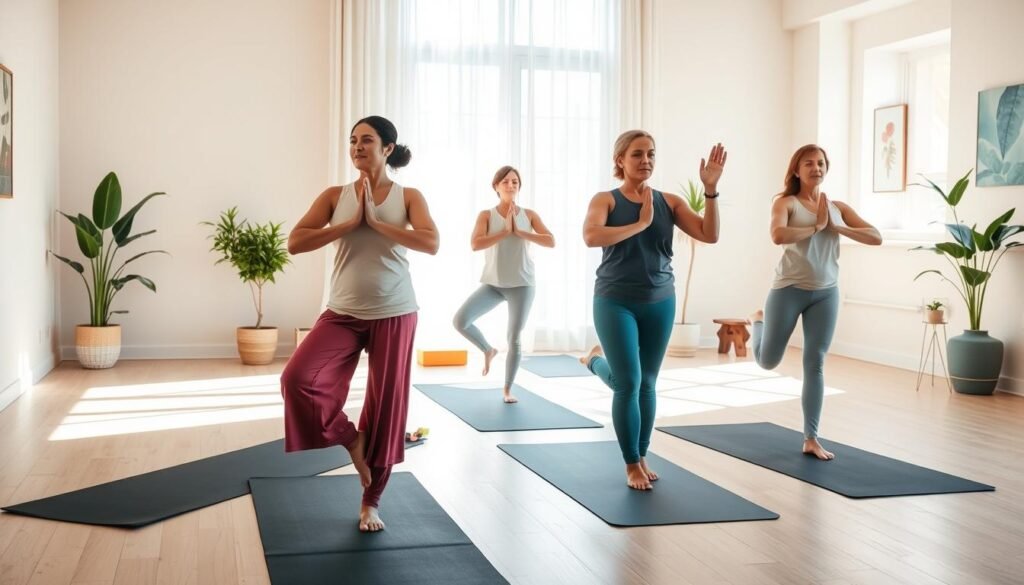
Very gentle day (10–15 minutes)
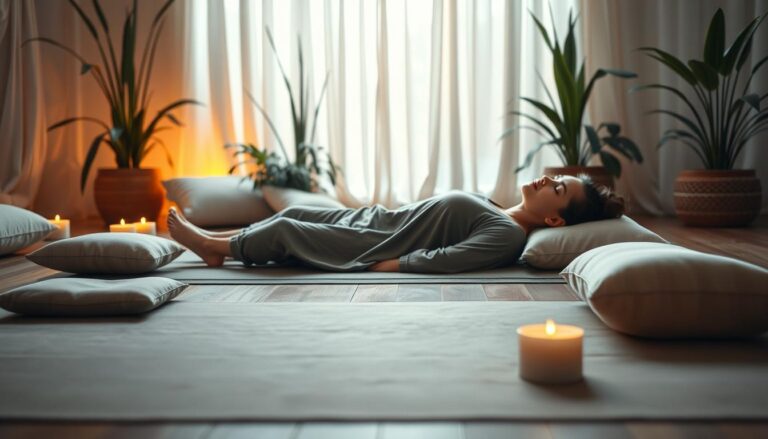
Sequence: supported child’s pose → seated forward bend with bolster → supine butterfly on a bolster → diaphragmatic breathing → short yoga nidra.
Focus on soft belly, long exhales, and comfortable holds. Add props or stop if any pose raises pressure.
Light day flow (15–20 minutes)
Sequence: 3–4 rounds of slow Half Sun Salutation (no jumps), butterfly (3 min), gentle seated twist, legs up the wall (pelvis down), savasana.
Keep breath steady and cool; if cramps return, switch back to full restorative work.
- Use timers: 2–4 minutes per pose prevents overdoing it.
- Try morning mini-sessions for mood and evening ones for sleep.
- Track what helps and repeat that mix on similar days of your cycle.
| Day Type | Practice Time | Main Focus |
|---|---|---|
| Very gentle | 10–15 min | Restorative holds, breath, gentle abdominal relief |
| Light flow | 15–20 min | Slow movement, mild mobility, circulation |
| Repeatable plan | 2 short sessions/day | Boost mood, conserve energy |
For sequence templates that align with cycle phases, see this guide on moon-cycle postures and a phase-based workouts overview at best workouts by cycle phase.
Going to Class on Your Period: Communicate and Modify Wisely
Tell your teacher you’re on your cycle if you can; it helps them offer safe options. Bring a short list of non-negotiables so you can modify with confidence.
Discreet modification checklist and safe swaps
Many teachers encourage home practice when flow is heavy, but studio sessions work if you adapt and speak up.
- Speak up: say you’re on your period. A trained yoga teacher or one with solid teacher training will offer alternatives.
- Set non-negotiables: no inversions, no bandhas, no deep backbends—decide these before class.
- When cued to invert: use legs-up-the-wall (pelvis down) or a seated forward fold with props.
- Swap strong twists for gentle supine or seated twists; keep the belly soft and the breath easy.
- Replace deep backbends with supported butterfly or Supta Vajrasana on a bolster.
- If class is vigorous: move at half pace, rest in child’s pose often, and shorten ranges of motion.
- Step out if needed: restorative rest is fine — your practice and health come first.
| Common Cue | Safe Swap | Quick Note |
|---|---|---|
| Headstand or shoulderstand | Legs up the wall | Keep pelvis on floor |
| Deep twist | Supine gentle twist | Soft breath, short hold |
| Strong backbend | Supported butterfly | Bolster under chest |
Note which swaps helped and bring that checklist next class. For a teacher-facing resource, see this guide on yoga whilst menstruating and read how an exercise physiologist suggests you match your workout to your menstrual.
Conclusion
During heavy days, train smart, not hard: skip high-pressure work and choose calming, supported shapes instead.
Simple breathwork and short meditation reduce stress and steady mood; brief, steady practices support long-term health.
Respect the body’s downward flow in this menstrual phase; that protects pelvic comfort and eases cramps.
Keep it simple: pick 2–4 restorative shapes, add gentle breath, and finish with a short relaxation. Consistent, mild work builds resilience across your life.
In class, speak up early and modify confidently; your well-being matters more than any sequence. Track what lifts energy and repeat those choices on similar days for reliable relief.
FAQ
Which inversions are risky while menstruating and why?
Inversions such as headstand, shoulderstand, plow and deep leg-up variations can increase intracranial pressure and reverse the body’s natural downward flow that supports menstrual shedding. They may worsen cramping, cause light-headedness, or feel uncomfortable, so opt for non-inverting alternatives or skip them on heavy-bleeding days.
Are strong backbends and deep twists unsafe during my cycle?
Strong backbends and deep twists place extra strain on ligaments and the pelvic area and can increase discomfort or bleeding for some women. Choose supported gentle backbends or mild seated twists that feel relieving rather than forceful—always soften the range and follow your body’s signals.
What about arm balances and vigorous standing flows?
Arm balances and vigorous standing sequences raise core and pelvic pressure and can be tiring or destabilizing when energy is low. If you usually practice these, replace them with slower, strength-maintaining moves (e.g., supported plank variations) or rest them out until energy and flow return.
Should I avoid bandhas and heat-building practices while on my cycle?
Yes—practice caution with bandhas (root locks) and intense pranayama that build internal heat or increase pelvic pressure. These techniques can interfere with the natural downward energy of the cycle. Focus on cooling, gentle breathwork instead.
Which breathing techniques are best for cramps and mood swings?
Deep diaphragmatic breathing, bhramari (humming breath), and alternate-nostril breathing (anulom vilom) are calming and can reduce cramp intensity and anxiety. Gentle ujjayi and cooling breaths may help; avoid kapalabhati, bhastrika, single-nostril heating practices, and long breath retentions on heavy days.
Can restorative or supported backbends help with back pain during menstruation?
Yes. Supported backbends like supta vajrasana with bolsters or a supported butterfly can relieve lower-back tension without aggressive extension. Use props, keep the pelvis neutral, and stop if you feel increased pain or pressure.
Is “legs up the wall” safe while bleeding heavily?
Generally yes—legs up the wall (without lifting the pelvis) is a gentle way to reduce leg fatigue and encourage venous return without disrupting flow. Avoid elevating the hips or engaging strong core contractions while doing this on heavier days.
How should I scale my practice depending on cycle intensity and symptoms?
Listen to energy, bleeding, and pain. On heavy or painful days, favor short restorative sequences, seated forward folds, gentle twists, and breathwork. On lighter days, introduce slow flows and mild standing postures. Modify duration, intensity, and inversions based on how you feel.
Are there simple mini-sequences I can follow for different cycle days?
Yes—very gentle days work well with bolster-supported forward folds, reclined breathing, and restorative holds. Light days can include a slow salutation, seated butterfly, soft twists, and an extended savasana with breathwork. Keep transitions smooth and avoid jarring movements.
What should I tell my teacher when attending class on my cycle?
Communicate discreetly: mention you’re menstruating and whether you need modifications (no inversions, gentle backbends, less heat). Ask for safe swaps and spot cues. Most instructors welcome this and can offer effective, respectful adjustments.
When is it necessary to skip practice entirely and seek medical advice?
Pause practice and consult a healthcare provider if you experience severe pain unrelieved by rest, very heavy bleeding (soaking through a pad or tampon hourly), fainting, or symptoms that markedly interfere with daily life. These may indicate an underlying issue needing medical evaluation.