

Can ten focused minutes on your mat really change how your day unfolds? This short sequence proves it can.
Start grounded. Begin in Child’s Pose to reconnect with breath and release the lower back and hips. Move through Cat–Cow to mobilize the spine, then build steady heat with Downward Dog and standing poses that foster balance and confidence.
Breath cues like “inhale to lengthen, exhale to stabilize” and alignment tips — knee over ankle, shoulders back, core engaged — keep the practice safe and efficient. Expect clear transitions and muscle-focused cues so each pose feels accessible without extra equipment beyond a mat.
The structure guides you from grounding to gentle movement, into standing strength and core activation, then back to calm. Repeat this routine to create a reliable anchor that boosts energy, steadies focus, and carries a small win into your workday.
Key Takeaways
- Ten minutes can reduce stress and improve flexibility and strength.
- Begin with grounding poses and follow breath-led movement for safety.
- Simple alignment cues protect joints and enhance muscle engagement.
- The sequence is adaptable — choose gentler or stronger options by feel.
- Make the mat visible to turn this short practice into a daily habit.
- See a full example routine for beginners in this 10-minute sequence guide.
Why a short morning yoga routine sets up a productive day
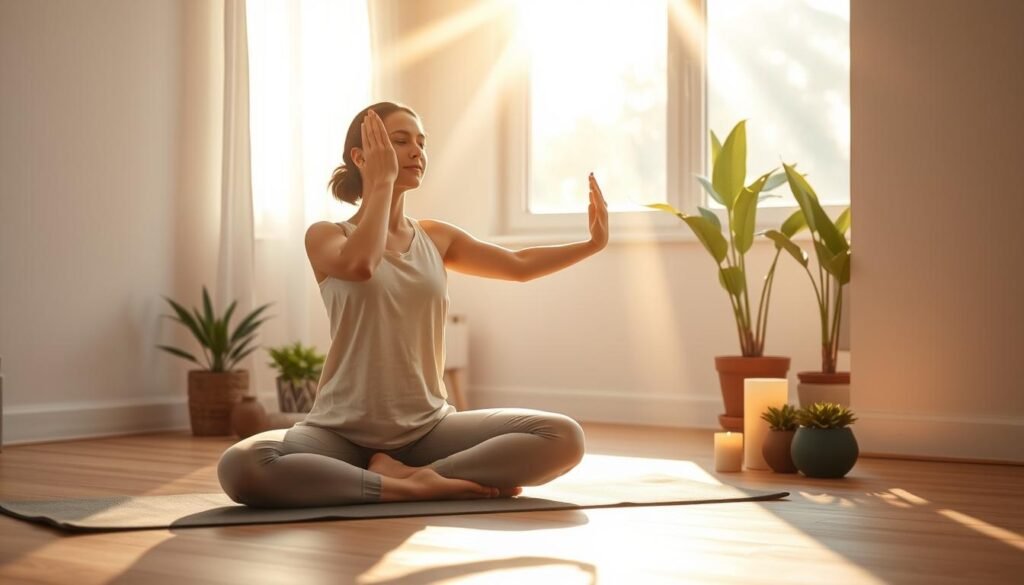
A brief, consistent practice primes your body and brain so you arrive at tasks feeling alert, steady, and less stressed. This short routine uses breath with gentle movement to warm muscles, mobilize the spine, and open hips and the front of the body.
Benefits you’ll feel today: energy, focus, less stress
Expect immediate gains. Ten focused minutes boost circulation and clear mental fog. Breathing with movement wakes legs and the back without extra time on the floor.
Gentle spinal mobilization and hip opening reduce morning stiffness. You’ll notice improved balance and posture, plus a calmer stress response that helps sustain focus through the day.
Who this flow is for: true beginners to seasoned yogis
This sequence is inclusive. Clear, simple cues keep beginners safe. Optional intensifications—longer holds or added core work—keep experienced practitioners engaged.
- Fast and repeatable: front-load a small win so you don’t run out of time later.
- Joint-friendly: progress in a smart order that respects knees, hips, and thighs.
- Self-check cues: knee over ankle, spine long, hips steady to protect form.
For a deeper look at how poses affect glands and whole-body balance, see this short primer on the endocrine system and.
Quick setup: mat, breath, and body prep in under a minute
Start with two clear breaths and tidy your alignment so movement feels easy and safe. This small pause primes posture, core support, and mental focus before you move.
Start with a simple standing check to prime posture, breath, and mental focus in under a minute.
Unroll your mat where you can stand and step. Face a calm point to settle your head and neck. Root evenly through the four corners of each foot and feel the ground under your feet.
In Mountain Pose, engage the lower abdominals so the spine has support. Let the tops of your shoulders release away from the ears as you raise your arms overhead into Urdhva Hastasana. Keep the triceps active and avoid hiking the shoulders.
Use slow nasal breaths. On the inhale, lengthen through the crown. On the exhale, firm the core and steady the body. Place hands lightly on the ribs and feel lateral expansion, then return arms to your sides.
Keep the pelvis neutral and the knees soft so the lower back stays free of compression. Stay light on the floor and distribute weight evenly so transitions are smooth.
“One focused minute of setup reduces stiffness and improves how you move for the rest of the practice.”
Spend two slow breaths visualizing the sequence. When you feel ready, inhale to prepare and exhale to begin. If you want extra breath guidance, try a short primer on breathing rituals for busy Americans, or read about calming practices like Pilates for anxiety.
Your 10-minute Morning Yoga Flow sequence
Follow this compact sequence to mobilize joints, awaken muscles, and set a steady breath rhythm. Each pose focuses on simple alignment cues so you move safely and efficiently.
Child’s Pose — reconnect and release
Child’s Pose (60 seconds): on all fours, spread knees wide, big toes touch and sink hips toward heels. Let the stomach fall between the thighs and rest the forehead on the floor. Breathe into the back body to soften the lower back and hips.
Cat–Cow — articulate the spine
Cat–Cow (5 slow rounds): hands under shoulders, knees under hips. Exhale to round the spine and let the head fall. Inhale to lift the chest and tail. Feel the core warm as the spine moves.
Downward Dog — lengthen the posterior chain
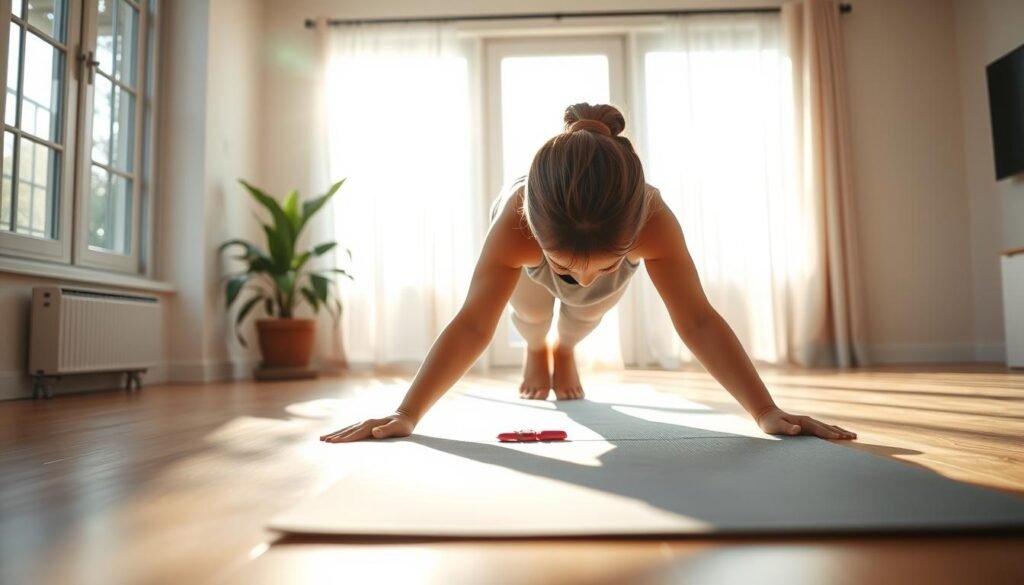
Downward Dog (45–60 seconds): place hands shoulder-width, spread the fingers, and press the palms. Lift knees away from the floor, tailbone up. Bend knees as needed to protect the back and lengthen the hamstrings.
- Warrior I (30–45 seconds each side): step the left foot back about one leg’s length, angle the back foot, lunge the front knee over the ankle, square the hips, and stretch arms overhead.
- Warrior II / Triangle (30–45 seconds): open to the side for Warrior II; or straighten the front leg for Triangle and place a hand on the shin or a block. Stack the shoulders and lengthen both sides.
- Extended Side Angle (30–45 seconds): rebend the front knee, place the forearm on the thigh, and reach the top arm long through the fingers to energize the side body.
- Baby Cobra or Cobra (3 x 5 breaths): lie prone, hands under shoulders, elbows in. Draw shoulders back and lift the chest without compressing the lower back.
- Forearm Plank or Boat (30–45 seconds): in Plank, form a straight line from head to heels on your forearms. In Boat, lift shins and lengthen the spine while engaging the abdominals.
- Return to Child’s Pose (30–60 seconds): rest the head, slow the breath, and set a simple intention to carry into the day.
| Pose | Primary focus | Key cue |
|---|---|---|
| Child’s Pose | Lower back & hips | Big toes touch, forehead to floor |
| Cat–Cow | Spine mobility | Stack joints; move with breath |
| Downward Dog | Hamstrings & shoulders | Press palms; keep back long |
| Warrior I / II | Leg strength & hip stability | Front knee over ankle; square hips |
| Cobra / Baby Cobra | Chest opening & low-back protection | Anchor pelvis; lift through chest |
Quick tips: keep the knee over the ankle, distribute weight evenly through both feet, and relax the toes. If you want a guided variant of this routine, try the full example in this 10-minute practice.
Alignment cues to protect knees, hips, shoulders, and spine
Small, consistent adjustments reduce strain and keep practice safe. These cues help you move with less pain and more control.
Start with where you meet the floor. Place your hands shoulder-width and spread the fingers so pressure travels through the palms, not just the wrists. In Downward Dog, roll the upper arms outward and draw the shoulder blades toward the tailbone to protect the shoulders and free the neck.
Feet and knees
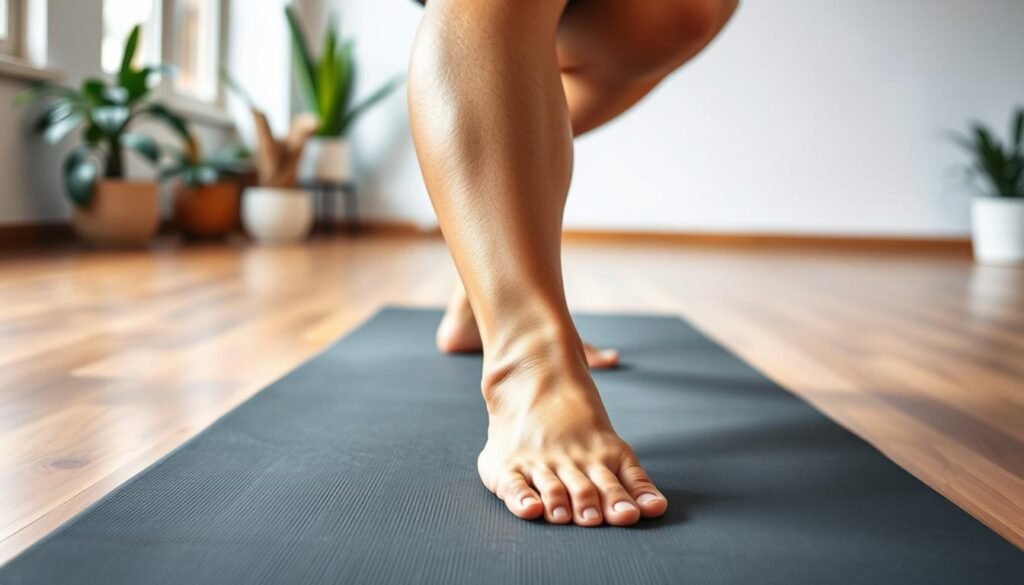
Track the knee over the ankle in lunges and Warrior shapes. If you feel tight, soften and bend the knees so the spine can stay long rather than forcing straight legs.
Hands and shoulders
Place your hands shoulder-width and press through the fingers and palms. Roll the shoulders back and widen the collarbones to keep the chest open.
Hips and lower back
Lengthen the tailbone and lightly engage the core to stabilize the hips and protect the lower back. In Cobra, keep the pelvis grounded, hug elbows to the ribs, and lift only as high as you can without compressing the lumbar.
- Press the outer edge of the back foot in standing angles to support the front of the body.
- Adjust the toes and foot angle (about 45–75°) for comfort and stability.
- If a knee caves, micro-bend or widen the stance to protect the joint.
Final note: a few reliable corrections—hands placed well, knees tracked, chest open—compound into safer, stronger movement as you progress through each pose.
Modifications and progressions for any morning
When minutes are limited, choose depth over quantity to keep progress. Small changes let you protect joints, strengthen key muscles, and keep the practice useful on busy days.
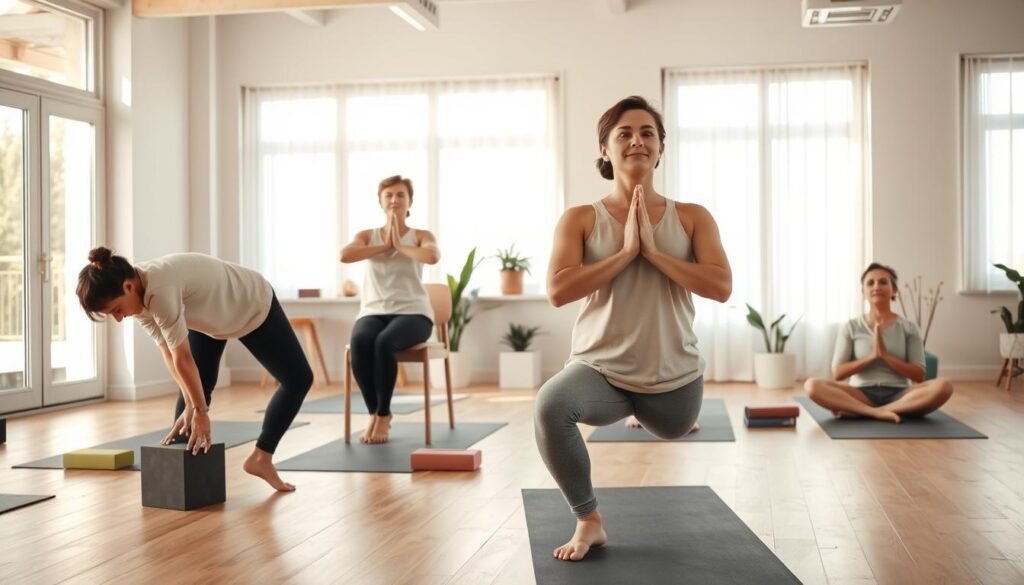
Short on time? Hold one standing warrior pose longer instead of cycling through multiple shapes. A single long hold builds heat in the legs and thighs while improving balance and focus.
Short on time? Swap Warrior II and Triangle for a single long hold
Pick one standing shape and hold it for 45–60 seconds. This saves transitions and gives the muscles a steady challenge. To progress, step the left foot back slightly more and root through the outer edge to engage the side body.
Tight hamstrings? Keep a generous bend in the knees in Downward Dog
It’s fine to bend knees to protect the lower back and keep the spine long. Focus on lifting the hips back, distributing weight evenly through the hands and feet, and pressing through the palms.
Ready to advance? Add Bridge or Boat after Cobra for extra core and glutes
After Cobra, try Bridge: lie on your back with feet under knees, press palms and feet, and exhale to lift hips. This targets glutes and thighs. Or choose Boat to work the core and hip flexors—sit tall, lift shins to about 45°, extend arms, and keep the chest lifted to protect the lower back.
- Wrist-friendly option: lower to forearms for Plank; keep elbows under shoulders and engage forearms evenly.
- For tight hips: shorten the stance and micro-bend the front leg to maintain alignment without strain.
- If balance wobbles: narrow the stance slightly or keep a light touch to a wall for support.
| Goal | Modification | Why it helps | Quick cue |
|---|---|---|---|
| Save time | Hold one standing pose longer | Builds heat without many transitions | Distribute weight through feet |
| Protect low back | Bend knees in Downward Dog | Keeps spine long and reduces hamstring strain | Lift hips back; press palms |
| Build glutes/core | Add Bridge or Boat after Cobra | Targets glutes, thighs, and abdominals | Chest broad; tailbone lengthened |
| Wrist sensitivity | Forearm plank | Reduces wrist load while keeping shoulder work | Elbows under shoulders; engage forearms |
Keep cues simple: track the knee over the ankle, lengthen the tailbone, and distribute weight through the feet. For more time-saving options and a practical guide, see a concise routine guide or explore how targeted stretches free tight hips and psoas tension from a physical therapist.
Make it a consistent morning routine that actually sticks
A two-pose rule removes friction and keeps your practice live when time is tight. Keeping the minimum tiny—Downward Dog plus Child’s Pose—makes it easy to show up every day.
Pair the sequence with a cue like after coffee, before email, or right after waking. A fixed trigger turns decision-making into habit and reduces friction.
Keep your mat unrolled and visible so your body links that floor space to movement and calm. Lay out clothes and set a one-minute timer the night before to make action effortless.
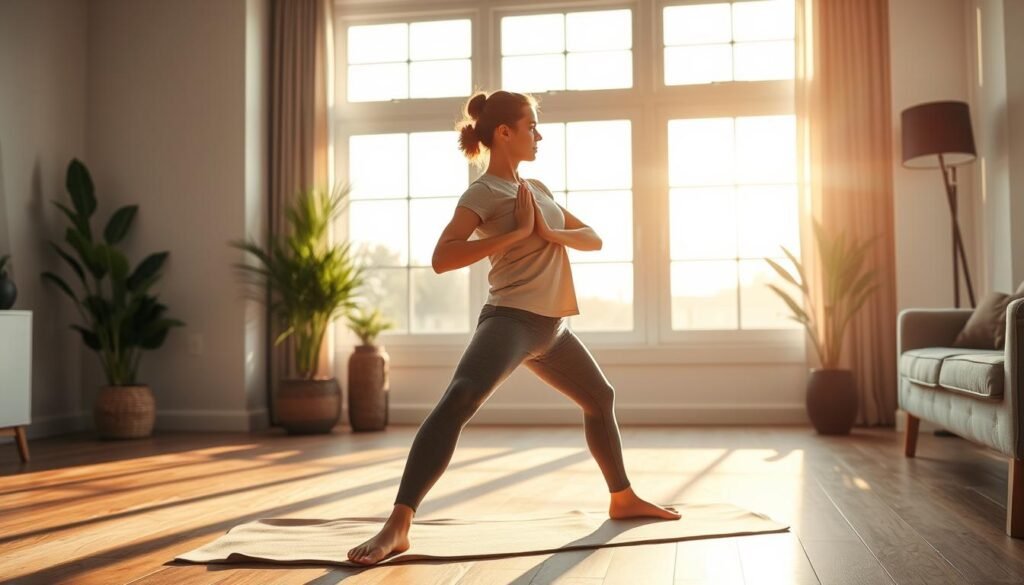
Set a two-pose minimum on busy days to keep the habit alive
Commit to at least Downward Dog and Child’s Pose when time is scarce. One minute in each keeps circulation moving, mobilizes the back and legs, and preserves momentum.
Pair your flow with a cue: after coffee, before email, or right after waking
Use a simple rule—like “stretch arms before shoes”—to bypass choice overload. Track streaks and tiny wins; one minute counts and supports gradual growth.
- Balance your week: alternate mobility and strength-focused mornings within your 10-minute window.
- Community option: try a local heated or power class occasionally to boost accountability and alignment; these formats can reinforce at-home practice and form.
- Keep intention visible: revisit your why weekly so the routine stays meaningful and sustainable.
For a practical guide to starting a healthy habit, see this short guide on building a routine. To explore community formats and breath-led studio options, check this piece on nervous-system workouts and heated classes: studio formats and benefits.
Conclusion
Spend ten mindful minutes to wake muscles, organize breath, and shape a calm, productive day. This brief routine uses clear alignment and simple sequencing so your arms, legs, and core work safely from the mat to the floor.
Keep it simple: roll out the mat, set an intention, and let breath guide movement. Align hands and palms, track the knee and hip positions, and lengthen the spine to protect the lower back and shoulders.
Repeat this short routine until it feels natural. When energy dips, rest in Child’s Pose or an easy side angle; when you have time, extend holds or add a progression. For a guided variant, try the wake energizing practice or explore targeted emotional-release stretches to free tight hips and chest.
FAQ
What if I only have five minutes—can I still get benefits?
Yes. Even a focused two-pose mini sequence—Child’s Pose to reset breath then Downward Dog to lengthen the spine and hamstrings—boosts circulation, calms the nervous system, and primes your focus. Treat it like a habit anchor: short, consistent practice builds strength in the hips, shoulders, core, and balance over time.
How should I modify poses to protect my knees and lower back?
Track the knee over the ankle in lunges and Warrior variations, and soften or bend knees in standing and Downward Dog to reduce tension in hamstrings and the lumbar spine. Use props—a folded blanket under knees for Child’s Pose or a block between hands in Forward Fold—to keep hips level and avoid compressing the lower back.
Can beginners safely do Warrior I and Warrior II?
Absolutely. Start with a shorter stance, keeping the front knee stacked over the ankle and the back foot turned slightly inward for stability. Square the hips toward the front in Warrior I and maintain a long spine; in Warrior II, stack shoulders over hips and press through the outer edge of the back foot to protect knees and ankles.
What’s the best way to breathe during this routine?
Follow a simple diaphragmatic pattern: inhale to lengthen the spine and expand the chest, exhale to deepen a pose or engage the core. In movement sequences like Cat–Cow, match inhalations with lengthening and exhalations with rounding. This steadies the nervous system and improves oxygenation for better focus.
How do I progress safely if I want more challenge?
Add controlled progressions such as moving from Baby Cobra to full Cobra, or from Forearm Plank to Boat to increase core and glute engagement. Increase hold times gradually and prioritize alignment—especially hips, shoulders, and spine—so the muscles strengthen without joint strain.
Is it okay to practice right after waking or should I wait?
You can practice immediately if you feel comfortable; a gentle warm-up like Cat–Cow and seated breath work helps mobilize the spine and wake the body. If you feel stiff, take extra time to bend the knees and lengthen the tailbone before deeper hamstring stretches like Downward Dog.
Which poses help relieve tight hips and lower back pain?
Child’s Pose and Extended Side Angle with a long torso are excellent for releasing hips and decompressing the lower back. Add gentle hip openers and keep the core engaged to avoid dumping into the lumbar spine. Consistent practice reduces tension in the thighs and sacroiliac area.
How can I adapt the sequence when I have shoulder pain?
Reduce loading through the shoulder by using Forearm Plank instead of high Plank or by widening hand placement in Downward Dog. Press through the fingers, keep shoulders away from ears, and avoid overextending in Cobra—lift the chest without collapsing the lower back to protect the shoulder girdle.
What equipment or props are most useful for this routine?
A non-slip mat is essential. Use blocks to bring the floor closer in standing or Triangle poses, a strap for hamstring assistance, and a folded blanket under knees for comfort in kneeling poses. These tools support proper alignment in hips, knees, and feet while maintaining balance.
How do I make this practice stick as a daily routine?
Pair the practice with a reliable cue—after brewing coffee, before checking email, or right after waking—and set a two-pose minimum on busy days to keep momentum. Consistency matters more than duration: even short sessions improve posture, spinal mobility, and readiness for the day.