

Can five simple actions really help you calm anxiety and feel steady while you rush through city life? This introduction shows how small, practical steps connect your nervous system to the present and reduce stress fast.
The next few minutes will give you quick, real-world options you can use at a desk, on transit, or in a tiny apartment. These five city-friendly practices show how grounding techniques work in daily routines.
You’ll learn both sensory and mental methods, short how-tos, and simple cues to keep the mind engaged. Try rating distress from 1–10 before and after a practice to track what helps your anxiety and overall health.
Want more outdoor inspiration for urban life? Check this short guide on staying connected to nature while in the city for extra ideas: city nature ideas.
Key Takeaways
- Five compact ways let you return to the present in minutes.
- Use sensory or mental options depending on space and energy.
- Track distress before and after to measure what reduces anxiety.
- Practice when calm to build skill for stressful moments.
- If symptoms persist, seek professional support to protect health and life.
Why Does Grounding Matter in City Life?
City environments can heighten sensory load, rumination, and stress—grounding offers a reliable way to reset your nervous system. By focusing on immediate sights, sounds, and simple tasks, you interrupt fight-or-flight and return to the present in almost any place.
Urban noise, crowds, and nonstop alerts push the mind into threat mode. That fuels anxiety, tense emotions, and racing thoughts.
These short methods lower stress hormones and calm the body by shifting attention to concrete input: what you see, hear, touch, or do next.
- Why it helps: Simple actions signal safety to the body during a panic or flashback.
- Who it can help: People with anxiety, depression, dissociation, or PTSD often get quick relief from tiny, repeatable steps.
- How to use it: Practice regularly, rate distress from 1–10 before and after, and avoid judging your surroundings.
Track your results and, if spikes or flashbacks continue, bring them to a licensed clinician for targeted support.
| Urban Setting | Quick Action | Expected Benefit |
|---|---|---|
| Transit or subway | 5‑4‑3 sensory scan | Immediate focus; lowers acute anxiety |
| Office or elevator | One slow breath + fingertip touch | Reduces stress, steadies the mind |
| Busy street | Step counting or texture notice | Interrupts rumination; restores present awareness |
Want a quick journaling complement? Try these therapist-backed journal prompts to track mood and change over time.
What’s Your Two-Minute City Grounding Quick Start?
In two minutes you can steady your system with a short breath cycle plus a senses scan. Use these steps at a desk, on a bus, or in a lobby to reduce anxiety and regain focus quickly.
Three deep breaths to anchor attention
Sit or stand with relaxed shoulders and an unclenched jaw. Inhale slowly through your nose and silently say “in”, feel chest and belly expand, then exhale and say “out.”
Repeat three times, keeping eyes soft. This breathing move lowers heart rate and calls your attention back to the present moment.
The 5‑4‑3‑2‑1 senses scan at your desk or on transit
Quietly list: 5 things you see, 4 you can touch, 3 you hear, 2 you smell, 1 you can taste.
Notice small color shifts, temperature, or distant sounds. If taste is absent, sip water or imagine a familiar drink. Use the sequence to help distract looping worries.
| Action | Where to do it | Quick benefit |
|---|---|---|
| Three deep breaths | Desk, elevator, transit | Slows heart rate; anchors attention |
| 5‑4‑3‑2‑1 scan | Line, waiting room, commute | Engages senses; reduces acute anxiety |
| Two‑minute routine | Morning or breaks | Restores focus; tracks changes with 1–10 ratings |

For more ideas and a short list of accessible options, try these 5 simple grounding options to build a quick habit that fits your place and time.
How Do You Breathe and Sense at Home or Work?
Use breath patterns and sensory focus to create a steady anchor in familiar spaces. These steps work at home or at your desk without special equipment and calm the body through repeatable cues.
Box and belly breathing to calm stress and panic
Box breathing follows equal counts: inhale 4, hold 4, exhale 4, hold 4. Repeat four cycles to ease arousal and steady heart rate.
Belly breathing asks you to place one hand on your chest and one on your abdomen. Aim for the belly hand to rise more than the chest hand. This deeper breath signals safety to your body and lowers anxiety.
Desk-side touch and texture: objects, fingertips, and palms
Slowly explore a mug, pen, or fabric. Note temperature, weight, edges, and the texture under your fingertips.
Use precise color words—indigo, charcoal, mustard—to sharpen focus and quiet mental chatter. Keep a small kit at work: a smooth stone or soft cloth fits discreet pockets.
Sound mapping: letting city noise orient you to time and place
Close your eyes briefly and map sounds from nearest to farthest: HVAC hum, keyboard clicks, distant siren. Note direction and distance to reconnect with the present.
When stress spikes, rinse your hands with warm then cool water and compare sensations across palms and backs of hands.
- Quick combo: Pair three minutes of box or belly breathing with one minute of touch mapping for a fast reset.
- If panic rises: lengthen the exhale slightly to nudge your nervous system toward calm.
- Practice idea: Try these guided somatic moves for home use: gentle somatic exercises at home.
| Action | Where | Why it helps |
|---|---|---|
| Box breathing (4‑4‑4‑4) | Desk, kitchen, waiting area | Balances breath rhythm; lowers arousal |
| Belly breathing | Chair, couch, bed | Deepens relaxation; signals safety to the body |
| Touch and texture | Workstation, pocket, bag | Engages fingertips; reduces rumination |
| Sound mapping | Home, office, balcony | Orients time/place; calms scattered attention |
How Can Micro‑Movement Walks Ground You on Busy Streets?
Short, intentional movement turns a hurried walk into a calming practice fast. Count steps, notice heel‑to‑toe contact, and add a 60‑second stretch circuit to steady the nervous system on the go.
Even short bursts of movement while walking can pull attention back into the body. Try choosing a small number of steps—20, for example—and count each stride.

Count your steps and notice heel‑to‑toe sensations in feet and toes
Focus on heel, arch, and toes as each foot rolls. Feel pressure at push‑off and the soft contact at landing.
Compare left and right without judging. Listening for footfalls or nearby rope sounds can also situate you in place and reduce anxiety.
Mini stretch circuit: neck rolls, arms overhead, cat‑cow standing
Use a corner or storefront as a discreet start/stop marker. Do two slow neck rolls each way, lift arms overhead for two breaths, then do a gentle standing cat‑cow to loosen the back.
If you pause at a light, ground through both feet and notice your hands on a bag strap. In parks, briefly step on grass or feel ground temperature underfoot.
- Quick tip: Keep the focus on neutral physical things—rhythm, contact, and sway—to avoid spirals.
- If a panic attack feels likely, slow your pace, lengthen the exhale, and name three nearby sounds to anchor attention.
- For deeper somatic context, read about how somatic work releases stored emotions.
Can Water and Temperature Shifts Bring Instant Presence?
A brief temperature shift can snap you into the present and quiet rising alarm. Use water, ice, or a cool splash to anchor attention when anxiety surges.
A simple sink routine uses clear contrasts to change how the body feels. Try 20–30 seconds in warm water, then switch to 20–30 seconds of cool. Move your hands so you compare fingertips, palms, and the backs of your hands as the temperature changes.
Hands in warm then cool water to reset the body
Notice texture and warmth in each area. Describe the sensations out loud or silently—this engages multiple senses and grounds you in the present moment.
Ice cube hold: noticing changing sensations moment to moment
Hold an ice cube and track the shift: initial sharpness, the numbing, then slow melting. Let the changing feeling be the focus without judgement.
Cool splash to face or back of neck during rising anxiety
If you can’t access a sink, splash water on your wrists, face, or the back of your neck. A chilled can or cool compress pressed to your palm or cheek for 10–15 seconds works well in public.
- Sink method: 20–30 sec warm → 20–30 sec cool; note differences across palms, fingertips, and backs of hands.
- Briefly feel the ground through your feet after the temperature change to amplify place awareness.
- Pair one slow breath with a slightly longer exhale to reinforce calming signals.
- Keep tools handy: reusable ice pack, small towel, or a thermos with ice.
| Action | Where | Why it helps |
|---|---|---|
| Warm→cool hand soak | Sink, restroom, kitchen | Provides clear sensory contrast; redirects attention to the body |
| Ice cube hold | Home, office, quiet corner | Sharp-to-numb sensations slow thinking and anchor the moment |
| Cool splash or chilled can | Public places, transit, street | Discrete reset; signals safety and presence |

Finish with a quick check-in: name one sound, one sight, and one touch to stabilize. For related somatic ideas, see what is somatic therapy.
What Mental Focus Resets Can You Do Anywhere?
Simple cognitive tasks shift the mind from rumination to neutral focus. Use categories, anchoring statements, and short math drills to steady thoughts in any space.
When anxiety rises, try a quick mental game. Pick a category—colors, songs, or green foods—and name as many items as you can. Switch letters (A to Z) for extra challenge.
Categories and short lists
Make a brief list of five things in your bag or three routes home. Keep words factual and concrete to reduce mental load.
Anchoring statements to reorient
Use a one-line anchor: “I am [name], I am at [place], it is [time & date], I see [2 items], I hear [1 sound].” Say it silently if you’re in a meeting or on transit.
Math, memory, and song recall
Count backward by threes from 60, recite times tables, or sing a familiar chorus. If your mind wanders, restart without judgment.
Describe a routine step by step
Explain making coffee or locking a door as if teaching someone else. Name tiny actions and order. This structured description pulls attention back into the present.
Tip: If feelings intensify, add a quick sensory cue—touch a ring or feel the seat edge—to anchor the reset. For more clinical context on similar strategies, read about grounding techniques and a personal somatic therapy month story.
| Reset Type | Where | Quick benefit |
|---|---|---|
| Categories (colors, foods) | Anywhere | Redirects scattered thoughts |
| Anchoring statements | Meetings, transit | Reorients person to place and time |
| Math & memory | Queues, lines, walks | Occupies the mind; lowers worry |
| Step-by-step task | Desk, kitchen | Restores attention; builds action |

Which Soothing Practices Settle Emotions Fast?
Comfort-focused actions can quickly soften emotional spikes. Use kind words, music, and brief contact with nature to calm anxiety and reconnect with yourself.
Self-kindness phrases to steady emotions and thoughts
Repeat gentle lines like “I am safe in this moment,” or “It’s OK to feel this.”
Say them slowly 5–10 times while breathing out longer than the inhale. These words shift the mind away from judgment and lower emotional intensity.
Music as a mood shifter: an “emergency calm” playlist
Build a short playlist of three to five tracks that slow your breath. Choose songs with soft instruments or steady rhythms and note one lyric or instrument to focus on.
Keep the list on your phone so you can cue it without deciding when stressed.
City nature moments: shoes off on park grass, mindful touch of a tree
Stand on grass barefoot for 20–30 seconds and notice pressure under your feet. Touch a tree or railing and name three neutral qualities—cool, smooth, ridged.
If you’re at home, sit with a pet and feel fur and warmth; if away, visualize that texture and breath pattern. Petting animals lowers cortisol and supports calm.
“Small, repeatable comforts—words, music, touch—can change how quickly a person returns to balance.”
- Quick public option: silent phrases + slow exhales.
- Keep one line and one song saved on your phone for instant access.
- Notice small wins: softer jaw, slower pulse, clearer mind.
| Practice | Where | Immediate effect |
|---|---|---|
| Self-kind phrases | Transit, office, home | Reduces shame and lowers anxiety |
| Emergency playlist | Phone, headphones | Shifts arousal; steadies breathing |
| Bare feet on grass / tree touch | Park, green space | Reorients senses; grounds feet and attention |
| Pet contact or visualization | Home or imagined anywhere | Lowers cortisol; increases calm |

For practical self-soothing ideas backed by psychology, see self-soothing strategies.
Grounding Techniques: How Do They Work, What Practice Tips Help, and When Should You Get Help?
These methods shift attention from threat cues to neutral sensory data and simple tasks. Practice when calm, track results over time, and seek care if panic or PTSD symptoms persist.
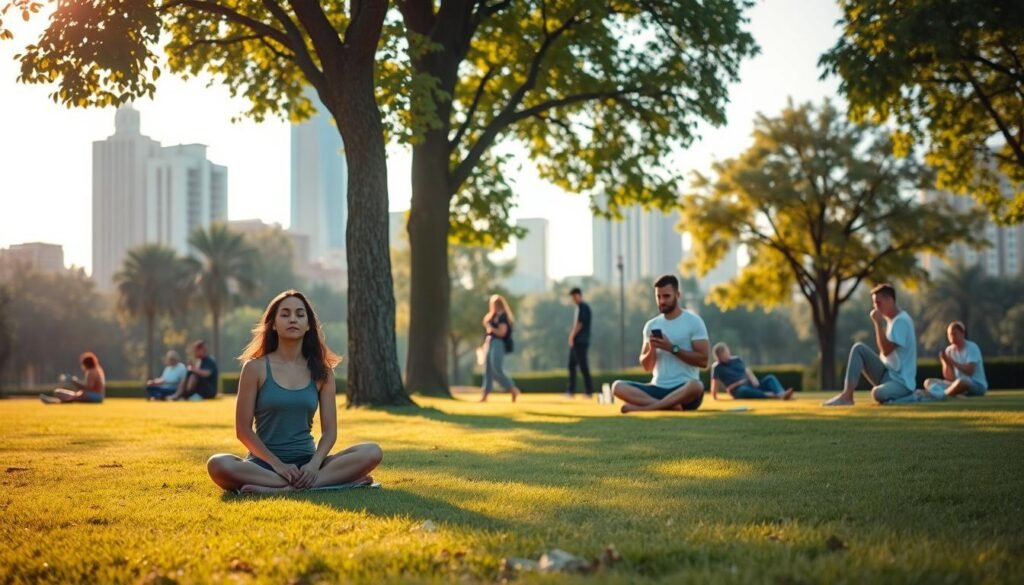
What’s happening in your body: During a panic or high stress, the fight‑or‑flight response raises heart rate, tightens muscles, and floods the mind with alarmed thoughts. Simple sensory input — sights, sounds, touch — sends safety signals back to your nervous system. That redirect helps lower arousal and bring you into the present moment.
Practice smarter: check distress and keep it simple
Rate distress from 1–10 before and after each brief exercise. Note which move helped, where you were, and how long until you felt calmer.
- One clear exercise: pick a single breathing pattern, a five‑sense scan, or a short cognitive game.
- Avoid judgment: name facts (colors, sounds, distances) not value labels about people or places.
- Posture matters: relax your arms, soften the head, and open the chest instead of hunching the back.
- If one method doesn’t work, try another; different contexts call for different approaches.
When to seek professional support
If panic attacks, recurring flashbacks from PTSD, or dissociation continue, consult a licensed mental health professional. Therapy can treat the root causes and add evidence‑based care for an anxiety disorder or trauma‑related symptoms.
Treatment helps people by integrating simple sensory exercises with structured therapies. Music, soothing tools, and pet contact can ease cortisol and help you engage in clinical work more effectively.
What’s the Bottom Line on City Grounding?
Regular practice makes returning to the present easier and reduces distress faster over time. Keep your toolkit small, practice when calm, and seek professional support if symptoms persist.
Make two go-to moves you can do at home, work, and outside—for example, a 3‑breath cycle plus a quick five‑sense scan. Repeat them in short sessions across the day so your body learns the cue-response.
Track what helps in real time so you personalize your plan and save mental effort later. Aim for steady practice, not perfection; each brief reset builds clearer thoughts, less anxious energy, and improved daily health and life.
If symptoms like frequent panic or PTSD-related flashbacks interfere with routines, book time with a clinician to expand your options. Keep a favorite phrase, song, or small object handy to anchor attention instantly.
Over weeks, expect easier shifts back to the present and a calmer baseline in your body. For a simple complement you can try at home, see these simple stretches that target emotional hotspots.
FAQ
What are quick, practical ways to ground yourself in a busy city?
Try three slow, deep breaths to anchor attention, perform the 5‑4‑3‑2‑1 senses scan (name 5 things you see, 4 you can touch, 3 you hear, 2 you smell, 1 you taste), or press your palms together and notice the pressure. These short actions redirect focus from racing thoughts to the present moment and can be done on transit, at a desk, or walking between meetings.
Why does this kind of grounding matter when you live in an urban environment?
City life constantly floods the senses and can keep the nervous system stuck in alert mode. Brief grounding steps help lower physiological arousal, reduce anxiety, and clarify thinking so you can make better choices. They reconnect your body and mind to immediate cues—time, place, and physical sensations—making stress more manageable.
What’s a reliable two‑minute grounding routine I can use anywhere?
In two minutes: take three deliberate deep breaths, do the 5‑4‑3‑2‑1 sensory scan, and name the current date and location out loud. This combo calms breath, reorients attention to senses, and re-establishes safety by anchoring to facts about your environment.
How should I breathe to calm panic or stress at work or home?
Use box breathing (inhale for four, hold four, exhale four, hold four) or gentle belly breaths—slowly inhale into the lower ribs, pause briefly, then exhale fully. Both slow heart rate and reduce adrenaline, making them effective first responses to rising panic or anxiety.
What simple touch or texture practices work at a desk?
Keep a small tactile object—smooth stone, stress ball, or textured fabric—and explore it with your fingertips or palms. Notice temperature, grain, and pressure. Deliberate tactile focus shifts attention from rumination to present sensations and can lower tension in the neck and shoulders.
Can I use city sounds to help ground myself?
Yes. Try sound mapping: identify three distinct sounds (traffic, footsteps, conversation), estimate their direction, and notice how they change. Treating ambient noise as orienting information helps place you in time and space rather than making noise feel chaotic.
What are micro‑movement walks and how do they help on busy streets?
Micro‑movement walks involve short mindful actions—counting steps, noticing heel‑to‑toe sensations in feet and toes, or doing small stretches at a crosswalk. These increase body awareness, break automatic anxious thinking, and ground attention through movement even in crowded areas.
Which mini stretch moves are practical during a commute?
Do neck rolls, gentle arm raises overhead, and a standing cat‑cow (soft spine flexion and extension). Each move relieves tension, stimulates breath, and brings focus back to bodily sensations without needing much space.
Can water or temperature changes quickly bring me back to the present?
Yes. Running hands under warm then cool water, holding an ice cube briefly, or splashing cool water on your face or the back of your neck produces clear, changing sensations that interrupt panic and re‑anchor attention to the body.
Are there mental focus tricks I can do anywhere to stop rumination?
Try listing categories (colors, songs, foods), reciting times tables, counting backward from 100, or describing a routine step‑by‑step (making coffee). These tasks engage working memory and attention, pulling you out of repetitive anxious loops.
What quick verbal anchors help when emotions feel overwhelming?
Use anchoring statements like “I am [name], I am in [place], today is [date], I am safe right now.” Combine this with a few deep breaths. Self‑kindness phrases—“This is hard, I can handle it”—also reduce shame and ease the nervous system.
How can music or brief nature contact be used as an emergency calm tool?
Have an “emergency calm” playlist of low‑tempo, familiar songs to lower heart rate and mood. When possible, take shoes off on a patch of park grass or touch tree bark; brief contact with nature—even in a city—shifts perspective and soothes stress responses.
What’s happening in the body during panic, and how does grounding affect it?
Panic triggers fight‑or‑flight—fast heart rate, rapid breathing, narrowed attention. Grounding re-engages the senses and vagal pathways, slowing breath and heart rate and moving the nervous system back from hyperarousal toward regulation.
How should I track what grounding methods actually help me?
Rate your distress on a 1–10 scale before and after a practice and note which actions reduced your score. Keep a simple log (what you did, where, and the outcome) to identify reliable strategies for specific situations.
When should I seek professional help for panic, PTSD, or dissociation?
If panic attacks, intrusive memories, flashbacks, or dissociation are frequent, worsening, or interfere with work and relationships, consult a mental health professional—psychologists, psychiatrists, or licensed therapists can offer evidence‑based treatments such as CBT, EMDR, or medication when appropriate.
How can I practice these grounding steps so they work better during a crisis?
Rehearse short routines daily in low‑stress moments—two‑minute breath and senses scans, tactile object practice, or micro‑walks. Regular practice builds familiarity so the steps become automatic and more effective when anxiety spikes.