


Could a beam of gentle, non‑heat light really help rebuild the skin you thought years had worn away?
This short guide explains how targeted wavelengths can support skin repair and boost collagen production without UV damage. I’ll clarify the science in plain terms, show what the research says, and outline realistic expectations you can trust.
Photobiomodulation—also called low‑level laser or non‑thermal LED treatment—uses specific red wavelengths that cells absorb to increase mitochondrial energy. That extra cellular fuel helps fibroblasts make structural proteins and calms low‑grade inflammation that breaks down tissue.
Outcomes depend on device power, wavelength, and dose. Professional systems tend to act faster, while at‑home tools can still help with steady use. Short‑term use looks safe when instructions and eye protection are followed, though long‑term data remain limited.
For a clinic perspective and deeper research context, see this clinical overview, and for a practical at‑home account, read a 30‑day experiment report.
Key Takeaways
- Specific wavelengths can boost cellular energy and support collagen synthesis.
- Benefits are gradual; device power and dosing shape real results.
- At‑home units work with consistency; clinics deliver stronger, faster effects.
- Short‑term use appears safe with proper guidance and eye protection.
- Pair sessions with sunscreen and a simple skincare routine to protect gains.
Red light therapy for skin health today: what it is, why it’s trending, and what evidence really says
Visible red wavelengths are used to support skin function—aiming to improve texture, soften fine lines, and calm redness without UV exposure.
At‑home panels and clinic devices offer different power and timelines, and published data show promise but remain mixed.

In plain terms, this approach uses specific visible wavelengths to nudge cells toward repair. It’s non‑thermal and not ultraviolet, so it feels gentle.
Why the buzz? Early NASA studies and easy access to masks, panels, and wands made the method popular with consumers and pros. Clinics still use a version paired with topical drugs to treat some lesions—that is a different medical process.
| Use | Typical claim | Evidence strength | Device type |
|---|---|---|---|
| Wound healing | Faster closure | Moderate (small trials) | Clinic panels, LED pads |
| Acne and inflammation | Reduced redness and lesions | Moderate (variable protocols) | Masks, handhelds |
| Photoaging | Smoother texture, fewer fine lines | Promising but inconsistent | High‑power clinical devices |
Bottom line: many studies report benefits, but sample sizes and protocols vary. Expect gradual results that depend on dose, frequency, and device power. Follow instructions, protect your eyes, and read a reputable clinical overview like this red light therapy overview before adding a new tool to your skincare routine.
How red light activates collagen at the cellular level
Specific visible wavelengths increase cellular energy and set off a chain of repair signals in skin tissue. This shift helps explain how treatment can translate to firmer, smoother skin over time.
Mitochondria and photobiomodulation: turning light into cellular energy
Mitochondria act as the cell’s power plants. When certain bands are absorbed, they can raise ATP, the energy currency cells use to repair and maintain tissue.
Wavelengths and depth: how visible versus near‑infrared reach skin
Visible wavelengths penetrate superficial to mid‑dermis. Near‑infrared reaches deeper tissue. Choose a band that matches your target depth and goals.
Fibroblast activity and protein synthesis
Boosted energy encourages fibroblasts to increase production of structural proteins like elastin and collagen. Over weeks, this can improve texture and reduce fine lines.
Blood flow and inflammation: vasodilation’s role
Widened vessels improve oxygen and nutrient delivery. Lowering low‑grade inflammation also preserves the extracellular matrix and supports healing.
“Cellular energy and blood flow together create the best environment for matrix repair.”

| Mechanism | Primary effect | Target depth | Clinical outcome |
|---|---|---|---|
| Mitochondrial activation | Increased ATP | Superficial–mid | Improved cell function |
| Fibroblast stimulation | Protein production | Mid‑dermis | Smoother texture |
| Vasodilation | Better nutrient flow | All dermal layers | Faster recovery |
Quick note: device settings, dose, and frequency shape real effects. See clinical context at this PubMed review and a practical 30‑day user report here.
Red Light Therapy for Collagen: a step-by-step how-to protocol
Good outcomes begin with straightforward prep, conservative dosing, and a plan to monitor change. This section gives a clear routine you can follow at home to support skin structure with visible wavelengths.
Prep your skin and set expectations before your first session.
- Cleanse and dry. Remove makeup and mineral sunscreen; take consistent “before” photos.
- Plan time. Expect 8–12 weeks of regular sessions to notice texture and firmness changes.
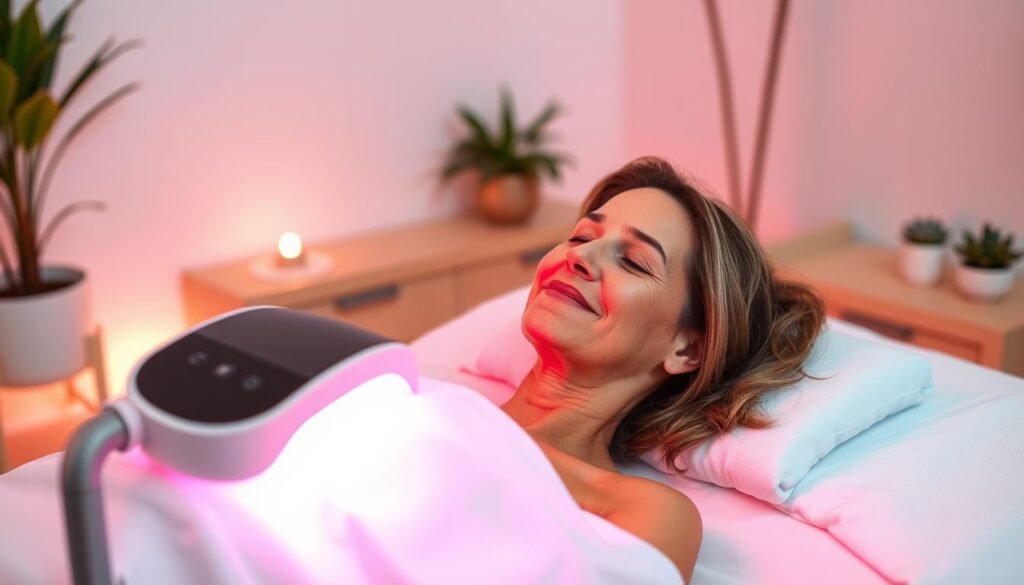
Choosing a device and wavelengths
Panels cover larger areas; masks and wands target spots. Pick gear that lists its spectrum and irradiance and, if possible, FDA clearance. Longer wavelengths reach deeper tissue.
Session distance, duration, and frequency
Start conservatively: 10–20 minutes per area, 2–3 sessions weekly, keeping the maker’s recommended distance. Track time and distance in a short log.
Progressing safely and pairing with skincare
Watch for temporary redness or tightness. If irritation appears, shorten sessions or reduce frequency and consult a dermatologist when needed.
- Morning: apply broad‑spectrum SPF 30+ after sessions on exposed days.
- Night: use gentle hydrators (hyaluronic acid, glycerin) and avoid strong exfoliants the same night.
- Acne or active treatments: alternate nights if you use retinoids or benzoyl peroxide to cut irritation risk.
For a clinic-style how-to, see this step-by-step face guide, and for practical sleep insights tied to home use, read the biohacker’s guide.
At-home devices vs. in-clinic treatments in the United States
Choosing between a home panel and a clinic plan comes down to power, cost, and how quickly you want to see change. Both paths can improve skin over time, but they differ in dose control, oversight, and price.
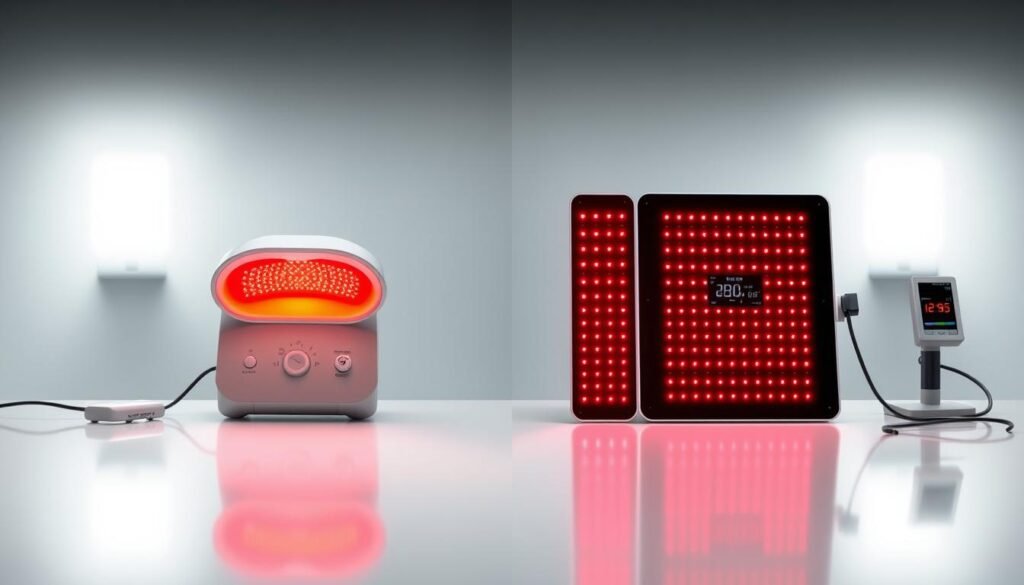
Power, FDA clearance, and why professional devices often deliver more
Clinic systems typically offer higher irradiance and more precise dosing than consumer models. That higher output often speeds visible improvements in texture and firmness when protocols are optimized.
FDA clearance usually addresses safety and intended use, not universal proof of effectiveness. Read labels and ask clinics what wavelengths and joules they use per session.
Cost, time commitment, and realistic outcomes in each setting
At-home devices usually cost about $100–$1,000 and need consistent use several times weekly over weeks to months. Clinic series cost more per visit but may need fewer sessions to reach similar results.
Insurance rarely covers these treatments. If you have complex skin conditions or take photosensitizing medication, professional oversight reduces risk.
- Power & precision: clinics = higher irradiance; home = steady convenience.
- Time trade-off: clinics require scheduling; home use demands discipline.
- Outcome expectations: both work, but clinics can show earlier results.
| Feature | At‑home devices | In‑clinic systems |
|---|---|---|
| Typical cost | $100–$1,000 | $100–$500+ per session (series common) |
| Power (irradiance) | Low–moderate | High, tightly controlled |
| Time to visible change | Weeks–months with consistency | Fewer sessions; faster when optimized |
| Regulatory note | Some cleared for safety | Often FDA‑cleared devices used with clinical protocols |
| Best use case | Maintenance, budget control | Kickstart treatment, complex conditions |
“Consider starting with a clinic series to jumpstart results, then maintain gains with a reliable home device under guidance.”
Benefits you can reasonably expect for wrinkles, texture, and even skin tone
Steady, properly dosed sessions tend to deliver gradual, measurable changes rather than dramatic overnight shifts. Expect a mix of cosmetic and functional gains tied to skin repair, circulation, and lower inflammation.
Visible change timeline: early, mid, and longer-term results
- Early (2–4 weeks): a healthier glow, less surface tightness, and reduced redness as inflammation eases and hydration improves.
- Mid (6–12 weeks): modest smoothing of fine lines and improved texture as protein production and remodeling accumulate.
- Longer term (3–6 months+): firmer appearance and smoother texture continue to build, then often plateau without maintenance.
Who tends to respond best—and when results may plateau
People with mild-to-moderate photoaging and consistent habits usually see the clearest gains. Deep, etched wrinkles rarely resolve with light-based treatments alone and may need combined approaches.

| Goal | Typical timeline | Most responsive |
|---|---|---|
| Wrinkle softening | 6–12 weeks | Mild‑to‑moderate depth |
| Texture smoothing | 2–12 weeks | Consistent users |
| Even skin tone | 4–12 weeks | Inflammation‑driven redness |
Practical note: consistency matters. Use a sensible routine, pair with sunscreen and supportive skincare, and see a clinician for layered treatment plans. For a deeper practical overview, consult this guide to benefits.
Safety, side effects, and who should talk to a dermatologist first
Most people tolerate devices well when they follow timing and distance instructions. Still, some medications and skin conditions change risk and deserve professional review before starting.

Short-term use is generally safe. The most common reactions are temporary redness, tightness, or mild irritation. If you feel stinging or burning, stop the session and let skin recover.
Short-term effects, eye protection, and proper device use
- Protect your eyes. Wear goggles when advised and never stare into LEDs. Eyes are sensitive to intense light exposure.
- Follow the clock. Stick to manufacturer times and distances. More time or closer proximity can cause irritation, not better results.
- Space sessions. Allow recovery time between visits to lower risk of overexposure and support healthy remodeling.
- Device care matters. Clean panels and lenses as directed to maintain output and reduce infection risk.
Photosensitizing meds, skin conditions, and when to avoid treatment
Some drugs make skin light-reactive (certain antibiotics, isotretinoin, diuretics). If you take these, consult a dermatologist first.
Delay sessions after peels, resurfacing, or microneedling until a clinician clears you. If a persistent rash, swelling, or worsening redness appears, stop and seek medical advice.
“When in doubt, pause treatment and ask a pro—better safe than sorry.”
Where the research stands—and where it’s still evolving
Clinical trials paint a mixed but instructive picture about how visible wavelengths affect skin repair. Evidence shows biological activity, yet study differences limit sweeping claims. Read on to see what is fairly well supported and what remains unsettled.
What studies show for skin rejuvenation, acne, and wound healing
Small randomized trials and clinical reports suggest modest improvements in texture and fine lines. These gains likely stem from increased cellular energy, blood flow, and reduced inflammation.
In acne, anti-inflammatory effects have reduced lesion counts in some trials when combined with standard care. Consistency matters more than occasional use.
Wound healing data are mixed. Some studies report faster early closure or less swelling, while others find no difference by six weeks. Results vary by condition and protocol.

Limits of current evidence, device variability, and long‑term safety
Heterogeneity in wavelengths, irradiance, session length, and frequency makes apples‑to‑apples comparisons difficult. FDA clearance often focuses on safety, not guaranteed benefit.
Short‑term use appears low risk with proper eye protection. Long‑term safety and broad claims about pain or general wellness still need larger, sham‑controlled trials with standardized dosing.
“Choose transparent devices that list wavelengths and output, follow evidence‑informed protocols, and track your own results.”
- Practical takeaway: pick devices with published specs and realistic claims.
- Research need: larger, standardized trials would clarify which protocols deliver reliable results.
Conclusion
Consistent, evidence‑informed use offers the best chance of gradual improvement in skin tone, texture, and firmness.
Choose transparent devices, follow dosing guidance, protect your eyes, and pair sessions with sunscreen and simple skincare.
When used thoughtfully, this method can support collagen production and smoother-looking skin over weeks to months. Start with conservative sessions, track progress with photos, and adjust based on your response.
Clinic systems often speed results; home panels can maintain gains. If you have medical conditions or take photosensitizing medication, ask a dermatologist before beginning.
For a detailed clinical trial summary and objective measures of intradermal protein increase, see this clinical trial summary.
FAQ
What is photobiomodulation and how does it stimulate collagen?
Photobiomodulation is the process by which specific wavelengths of visible and near-infrared light are absorbed by cellular chromophores, primarily within mitochondria. This increases mitochondrial activity and ATP production, which fuels fibroblasts to synthesize more collagen and elastin. In short, targeted light boosts cellular energy so skin-repair cells work more effectively.
Which wavelengths penetrate skin best to reach fibroblasts and support protein synthesis?
Wavelengths in the approximate 630–850 nm range penetrate epidermal and dermal layers most effectively. Shorter visible wavelengths tend to act more superficially, while near-infrared reaches deeper tissues. Devices marketed for skin rejuvenation typically combine wavelengths in this band to target fibroblasts and microcirculation.
How long and how often should I use a device to see improvements in texture and fine lines?
Typical home protocols recommend 3–5 sessions per week for the first 6–12 weeks, with sessions lasting 5–20 minutes depending on device power and distance. Early improvements in texture or redness can appear in weeks; measurable collagen changes and wrinkle reduction commonly require 8–12 weeks of consistent use.
Are at‑home panels as effective as in‑clinic treatments?
Professional clinic devices usually deliver higher irradiance and larger, more consistent treatment areas, producing faster and often greater clinical results. At‑home devices can still help with maintenance and gradual improvement but may take longer and require stricter adherence. Look for FDA-clearance or published irradiance specifications.
Can this form of light worsen acne or cause pigmentation issues?
For many people, appropriately dosed treatment reduces inflammation and can improve acne. However, if you use photosensitizing medications or have active inflammatory skin conditions, light exposure could worsen symptoms or increase pigmentation risk. Always consult a dermatologist before starting treatments when in doubt.
What short-term side effects should I expect and how can I reduce risk?
Short-term effects are usually minimal: transient warmth, mild redness, or dry skin. Use eye protection for near‑infrared sessions, avoid overexposure, and follow manufacturer distance/time guidelines. If you experience persistent irritation, stop treatment and see a clinician.
Do I need to avoid skincare products when using a device?
Clean, dry skin is ideal for consistent light delivery. Avoid occlusive topical agents right before a session. After treatment, apply hydrating, non-irritating products and sunscreen when exposed to daylight. Some ingredients—like retinoids or strong chemical exfoliants—may increase sensitivity, so timing matters.
Which medications or conditions make treatment unsafe or require dermatologist clearance?
Photosensitizing drugs (certain antibiotics, retinoids, and some herbal supplements) and active cancers in the treatment area require professional clearance. Autoimmune photosensitivity disorders and recent skin grafts also need evaluation. Ask a dermatologist if you take prescription meds or have complex medical history.
How soon will blood flow and inflammation changes occur after a session?
Vasodilation and improved microcirculation can occur within minutes to hours after a session, reducing local inflammation and supporting tissue repair. These acute effects contribute to short-term improvements in skin tone and recovery from minor injuries or irritation.
Is there strong clinical evidence that this approach helps wound healing and surgical recovery?
Clinical trials and systematic reviews show promising results for accelerated wound healing, reduced scar formation, and improved tissue repair when properly dosed. However, outcomes vary by device, wavelength, and treatment protocol, so clinical supervision is recommended for post‑surgical use.
Can combining this treatment with other modalities improve results?
Combining it with microneedling, topical peptides, or growth-factor serums can be synergistic because enhanced blood flow and cellular energy improve delivery and uptake. Always sequence treatments safely—generally, use light therapy after invasive procedures once the clinician approves—and monitor skin response.
How do I choose a safe, effective consumer device in the United States?
Prioritize devices with clear irradiance specs, known wavelength ranges in the 630–850 nm band, and reputable brands with third‑party testing or FDA clearance. Read clinical studies or manufacturer data, check reviews, and consult a dermatologist if you’re unsure about power, treatment area, or protocol.
Are eye risks significant and how should I protect my eyes?
Near‑infrared light is not visible but can still affect retinal tissue at high doses. Use supplied eye shields or approved goggles during sessions, and avoid directing beams at the eyes. People with macular degeneration or other retinal issues should consult an eye specialist before use.
When might results plateau and what can I do if improvements stop?
Plateaus often appear after several months of consistent treatment as initial repair processes taper. To overcome this, clinicians may increase session frequency, adjust irradiance, or combine therapies like topical peptides or in‑clinic procedures. Always make adjustments under professional guidance to avoid overuse.
What are realistic expectations for wrinkle reduction and even skin tone?
Expect modest but meaningful improvements—smoother texture, decreased fine lines, and reduced redness—over 2–4 months with regular use. Deep wrinkles or significant laxity typically require adjunctive professional treatments such as lasers, radiofrequency, or injectables for dramatic change.
Where can I find trustworthy research and clinical guidance?
Look for peer‑reviewed studies indexed on PubMed, systematic reviews from credible journals, and guidance from academic dermatology centers or the Mayo Clinic. Manufacturer claims without published data should be treated cautiously; rely on clinical evidence and professional advice.