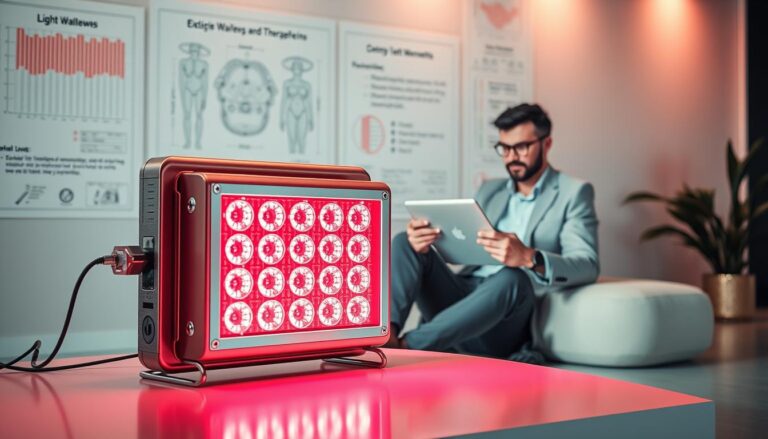


Can red light therapy really improve your skin and sleep in just 30 days? That’s what I wanted to find out with a simple at-home routine, weekly skin photos, and daily sleep notes.
After one month, the changes were modest. My skin appeared slightly smoother and calmer, but I couldn’t identify a consistent improvement in sleep duration or quality. There was no dramatic transformation, and the results were harder to judge than the glowing claims online suggest.
In this guide, I’ll share the routine and observations, explain what research actually supports, and help you understand whether an at-home red light therapy device is worth considering. I’ll also cover device choices, safety, and what to expect if you continue beyond 30 days.
Key Takeaways
- Skin changes were subtle: After 30 days, I noticed slightly smoother texture and a calmer appearance, not major wrinkle reduction.
- Sleep results were unclear: A more structured bedtime routine felt helpful, but sleep duration and efficiency showed no consistent improvement.
- Research supports some skin and hair benefits: Studies suggest red light may improve fine lines and certain types of hair loss, although results vary.
- Device settings matter: Wavelength, light intensity, treatment distance, and session length all influence exposure.
- Safety comes first: Follow the manufacturer’s instructions, use recommended eye protection, and check for light-sensitive conditions or medications.
Helpful Products at a Glance
Hooga HG300 Red Light Therapy Panel: A compact tabletop option with red and near-infrared light for targeting larger areas than a handheld wand. Its small size makes full-body coverage impractical.
- RED & NEAR-INFRARED LIGHT FOR DAILY WELLNESS – The Hooga HG300 features 60 LEDs delivering 660nm red light and 850nm near-infrared light, two popular wavelengths used in at-home red light routines for skin-focused care, workout recovery routines, sleep prep, energy support, and overall wellness.
- COMPACT PANEL, TARGETED SESSIONS – Designed for convenient, targeted use on smaller areas of the body. The HG300 is ideal for daily wellness sessions at home, whether you are using it in the morning, after exercise, while winding down at night, or as part of your regular self-care routine.

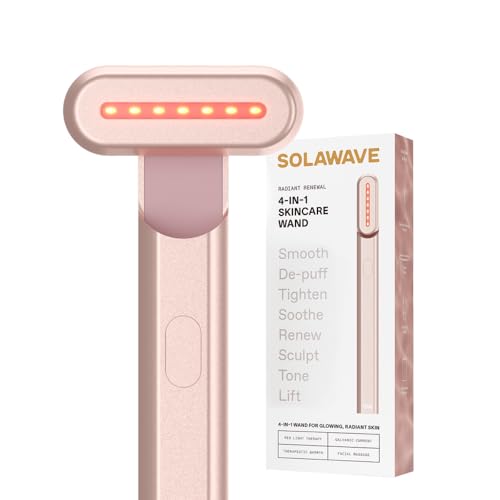
Solawave 4-in-1 Red Light Therapy Wand (Rose Gold): A handheld option for targeted facial and neck care. It also uses warmth, massage, and galvanic current, so it isn’t a red-light-only device.
- FOUR TECHNOLOGIES, ONE SESSION: Red Light, Galvanic Current, Therapeutic Warmth & Facial Massage smooth, depuff & rejuvenate skin.
- FDA-CLEARED, VISIBLY FIRMER SKIN: Red light (630nm) helps reduce the look of fine lines & wrinkles over time.
What Is Red Light Therapy, and Does It Actually Work?
Red light therapy is a noninvasive treatment that exposes skin to specific wavelengths of red or near-infrared light. It’s also called photobiomodulation, or PBM.
Unlike ultraviolet (UV) light from the sun, red light therapy doesn’t rely on UV exposure. Instead, researchers believe certain wavelengths can affect how cells produce energy and respond to stress.
It’s commonly used or studied for:
- Skin aging: Improving fine lines, rough texture, and redness.
- Hair thinning: Supporting some hair growth in people with hereditary pattern hair loss.
- Skin recovery: Investigating ways to manage inflammation and support healing.
- Muscle and joint concerns: Exploring possible benefits for soreness and certain pain conditions.
However, the evidence is stronger for some uses than others. The American Academy of Dermatology explains that improvements in skin appearance and hereditary hair loss are possible, but treatment results aren’t guaranteed.
How Does Red Light Therapy Work?
Inside your cells are tiny structures called mitochondria. Think of them as energy-producing centers that help cells perform their everyday jobs.
Scientists believe certain red and near-infrared wavelengths interact with light-sensitive molecules inside cells. This can change cell signaling and energy-related processes, potentially influencing inflammation, collagen production, and tissue repair.
Collagen is the protein that helps keep skin firm and supported. Some studies suggest red light therapy may encourage collagen-related activity, which could explain gradual improvements in skin texture.
But the process isn’t as simple as shining more light to produce more energy. Too much exposure may offer no additional benefit, and different devices can produce different results.
Which Wavelengths Matter?
- Red light, roughly 630–660 nm: Commonly used in devices designed for facial skin concerns.
- Near-infrared light, often around 810–850 nm: Penetrates farther into tissue and is studied for several applications.
- Other wavelengths: May serve different purposes, but having more colors doesn’t automatically make a device more effective.
Wavelength alone doesn’t determine results. Light intensity, treatment time, distance, and the condition being treated also matter. A clinical laser that deliberately damages tissue is different from the lower-energy light used in photobiomodulation.
My 30-Day At-Home Red Light Therapy Routine
I wanted a routine that was easy to repeat without making major changes to my skincare products or bedtime habits.
The experiment involved a home red-light panel, consistent positioning, short evening sessions, weekly skin photos, and notes about sleep. I also tried brief scalp sessions twice a week, although a month is far too short to judge hair growth.
The Daily Routine
- Cleanse: Start with clean, dry skin and avoid introducing new active skincare ingredients during the experiment.
- Position the device: Keep it at the distance recommended in its manual rather than guessing.
- Use a timer: Follow the device-specific treatment schedule. Session lengths shouldn’t be copied from a different device.
- Protect the eyes: Use the manufacturer’s recommended eye protection when instructed.
- Moisturize afterward: Continue with a gentle, familiar moisturizer.
- Record observations: Note skin appearance, irritation, session details, and sleep quality.
I avoided changing multiple skincare products at once because that would make it harder to judge what contributed to any improvement.
How to Track Results More Reliably
Weekly photos can help, but only when the lighting, camera angle, distance, and facial expression remain similar. Otherwise, a brighter photo can make skin appear smoother even when nothing has changed.
For sleep, I tracked bedtime, total sleep time, and perceived restfulness. These observations are useful for noticing patterns, but a personal diary or smartwatch cannot prove that red light caused a change.
My Results After 30 Days: Skin, Sleep, and Side Effects
The biggest lesson from this experiment was that small changes are easier to notice than to measure. Some improvements felt encouraging, but they weren’t strong enough to establish cause and effect.
1. Skin Texture and Fine Lines
By the end of the month, my skin looked slightly smoother and less irritated. Fine lines appeared a little softer, especially in areas that received more consistent exposure.
However, there was no obvious lifting effect or dramatic wrinkle reduction. The improvement was subtle enough that lighting, ordinary skincare, and natural day-to-day variation could have influenced what I saw.
This is consistent with the general direction of some published research, although my observations shouldn’t be treated as clinical evidence.
2. Skin Tone and Pigmentation
Some areas looked calmer and more even. Dark spots, however, didn’t show a clear transformation within the month.
Red light therapy may improve certain types of discoloration, but pigment changes depend on their cause. Sun-related spots, melasma, and marks left after acne aren’t necessarily going to respond in the same way.
3. Sleep Quality
This was the least convincing part of the experiment.
Using the device in the evening created a predictable wind-down routine. That made bedtime feel more organized, but total sleep time and sleep efficiency didn’t improve consistently.
It’s possible that setting aside quiet time helped relaxation independently of the light. Without a control period, I couldn’t separate those effects.
4. Side Effects and Unexpected Observations
- Temporary warmth: Occasionally noticeable during treatment.
- Mild redness: Brief redness settled without ongoing irritation.
- No major skin transformation: Improvements remained subtle.
- Changes after a short break: The skin appeared less glowy after two days without sessions, but that doesn’t prove treatment effects had worn off.
- No clear hair change: Twice-weekly scalp use over one month wasn’t enough to assess regrowth.
Overall, the experience was encouraging for skin appearance but inconclusive for sleep. Personal observations are not the same as a blinded, controlled study.
Choosing an At-Home Red Light Therapy Device
Devices come in several shapes, and the right design depends on which area you want to treat. A full-face mask, a tabletop panel, and a small wand aren’t interchangeable.
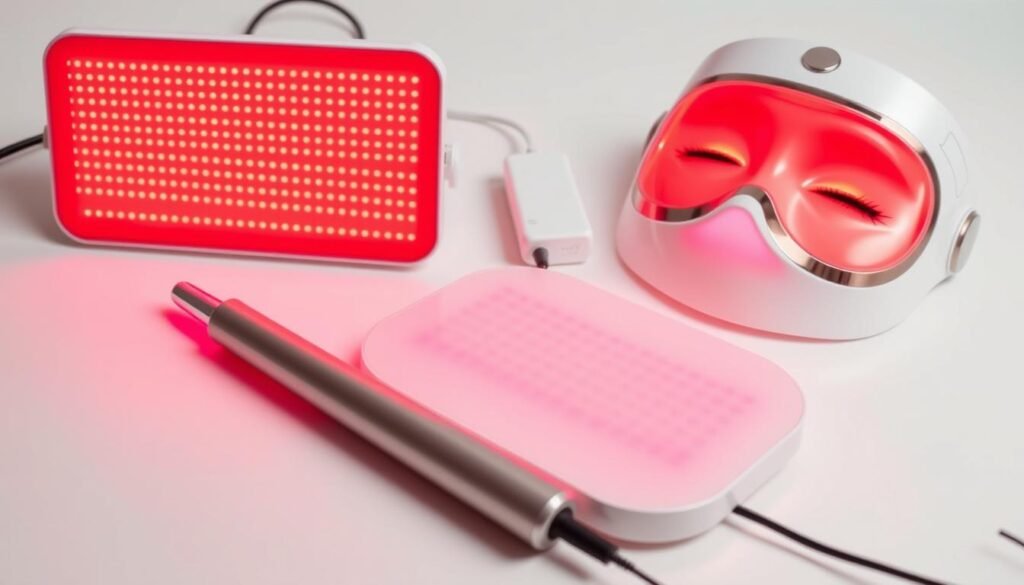
Panels: Better for Flexible Coverage
A tabletop panel can expose a wider area than a small wand. It may be convenient when your routine involves the face, neck, or another body area, provided the manufacturer supports that use.
The Hooga HG300 is one example worth comparing. It has 60 LEDs using 660 nm red and 850 nm near-infrared light, plus a built-in timer and adjustable stand.
Its main advantage is practical positioning: you can set the panel in place rather than continuously moving a handheld device. The limitation is coverage. It’s compact, so larger areas require repositioning, and its specifications shouldn’t be taken as proof that it treats a medical condition.
- RED & NEAR-INFRARED LIGHT FOR DAILY WELLNESS – The Hooga HG300 features 60 LEDs delivering 660nm red light and 850nm near-infrared light, two popular wavelengths used in at-home red light routines for skin-focused care, workout recovery routines, sleep prep, energy support, and overall wellness.
- COMPACT PANEL, TARGETED SESSIONS – Designed for convenient, targeted use on smaller areas of the body. The HG300 is ideal for daily wellness sessions at home, whether you are using it in the morning, after exercise, while winding down at night, or as part of your regular self-care routine.
- HIGH-OUTPUT PERFORMANCE IN A SMALL FOOTPRINT – Delivers over 73 mW/cm² irradiance at 6 inches, with high-quality 5W LEDs, precision optics, and active cooling to provide strong, consistent light output in a compact and easy-to-use panel.
- EASY DESKTOP & TABLETOP SETUP – The adjustable tabletop stand makes it simple to position the panel on a desk, counter, nightstand, or table. Use red light, near-infrared light, or both together with independent controls to customize each session.
Handheld Wands: Better for Small Facial Areas
A handheld device makes more sense when you want to focus on smaller areas, such as the forehead, cheeks, or around the jawline. It’s less convenient when you want broad, even coverage.
The Solawave 4-in-1 Red Light Therapy Wand (Rose Gold) combines 630 nm red light with galvanic current, warmth, and facial massage. Its compact design is intended for targeted face and neck use.
Because several technologies operate together, you can’t attribute any change exclusively to red light. It also requires hands-on treatment rather than allowing you to sit in front of a panel. Anyone seeking a simple light-only routine may prefer a different device type.
- FOUR TECHNOLOGIES, ONE SESSION: Red Light, Galvanic Current, Therapeutic Warmth & Facial Massage smooth, depuff & rejuvenate skin.
- FDA-CLEARED, VISIBLY FIRMER SKIN: Red light (630nm) helps reduce the look of fine lines & wrinkles over time.
- HYDRATED, REFRESHED LOOK: Galvanic Current supports a hydrated, refreshed look and boosts absorption of your Activating Serum.
- SOOTHING WARMTH, ENERGIZING MASSAGE: Warmth reduces the look of puffiness; Facial Massage helps skin feel lifted and sculpted.
What About Facial Masks and Hair-Growth Caps?
LED facial masks offer hands-free treatment across much of the face. Fit, eye protection, and the specific treatment purpose matter more than how futuristic the mask looks.
Hair-growth caps, combs, and helmets are designed to expose the scalp to light. Some FDA-cleared devices are intended for hereditary pattern hair loss, but they aren’t proven solutions for every cause of shedding.
Before buying any device, check its intended use, instructions, wavelength information, warranty, return policy, and whether its specific model has FDA clearance for the concern you want to address.
What Does Research Say About Red Light Therapy Benefits?
Red light therapy is more than a social media trend, but the evidence doesn’t support every claim made about it.
Skin Aging and Wrinkles
The American Academy of Dermatology describes a study involving 90 patients who received eight facial LED treatments over four weeks. More than 90% reported some improvement, including smoother skin or reduced redness.
That’s encouraging, but patient satisfaction doesn’t prove every device works equally well. Research protocols differ, and some studies are small or lack strong comparison groups.
For realistic expectations, think in terms of possible gradual improvements over weeks or months, not a guaranteed facial transformation.
Hair Growth
Research is reasonably promising for low-level light therapy in androgenetic alopecia, also called hereditary pattern hair loss.
Some controlled trials report improved hair density or thickness. One study discussed by the American Academy of Dermatology found benefits from combining low-level laser treatment with minoxidil.
However, hair growth usually requires several months of treatment. A device won’t reliably restore hair lost from scarring or address every medical cause of thinning.
Sleep and Mood
Sleep research is developing, but it’s important to distinguish specialized research treatments from ordinary facial skincare devices.
A 2026 systematic review and meta-analysis evaluated five randomized trials involving 240 participants. Researchers found a possible improvement in reported sleep quality, but noted that the evidence was limited and treatment methods varied.
Those findings don’t establish that using a consumer red-light facial panel before bed improves insomnia. They also don’t prove that evening sessions provide the same benefits as the specialized protocols studied.
For persistent insomnia, proven sleep treatments and a consistent sleep schedule should take priority over buying a red light device.
Muscle Recovery and Pain
Some studies suggest photobiomodulation may help certain pain or recovery outcomes. However, treatment methods vary widely, and benefits from a particular research device cannot automatically be applied to every home panel.
The Cleveland Clinic provides a useful overview of the benefits being investigated and why stronger evidence is still needed for many claims.
Safety: Side Effects, Eye Protection, and FDA Clearance
Red light therapy appears reasonably safe for many people during short-term use when instructions are followed. But safe use depends on the device, your skin, and your health circumstances.
Potential Side Effects
- Temporary skin redness, warmth, or irritation.
- Discomfort if treatment is too intense or prolonged.
- Eye discomfort or possible injury from improper exposure.
- Possible worsening of certain light-sensitive skin conditions.
Stop using the device if you develop persistent redness, pain, significant irritation, or vision symptoms. Don’t increase exposure simply because results seem slow.
Who Should Check With a Clinician First?
Extra precautions matter if you:
- Take medication that increases sensitivity to light.
- Have lupus or another photosensitive condition.
- Have a history of significant hyperpigmentation or melasma.
- Have active or previously treated skin cancer in the intended treatment area.
- Recently underwent a chemical peel, laser treatment, or another procedure that left skin sensitive.
People with darker skin tones may be more prone to certain pigment changes from visible light. The American Academy of Dermatology recommends discussing treatment with a dermatologist before using an at-home device.
Does FDA-Cleared Mean It Works?
No. FDA clearance is not a guarantee of results.
For devices that go through the FDA’s 510(k) process, clearance generally means the agency determined that the device is substantially equivalent to an appropriate legally marketed device for its intended use. Safety and performance information form part of that review.
It doesn’t mean the FDA independently proved every advertised benefit, and it isn’t the same as FDA premarket approval.
You can learn more from the FDA’s device clearance guidance.
How to Evaluate Your Own Results Over 8–12 Weeks
Thirty days can reveal whether a routine is practical and whether early skin changes are noticeable. A longer observation period may offer a clearer picture, although additional time still doesn’t guarantee improvement.
If you continue within the manufacturer’s instructions, use a simple checklist:
- Record your baseline: Take clear photos before starting.
- Keep conditions consistent: Use similar lighting, angles, skincare products, and photo timing.
- Track weekly: Note texture, redness, irritation, and visible changes.
- Record sleep separately: Compare bedtime, wake time, awakenings, and perceived restfulness.
- Review after several weeks: Look for patterns rather than focusing on one particularly good photo or night.
- Reconsider if needed: If you see no meaningful benefit, weigh the cost and inconvenience before continuing.
It’s also reasonable to skip a device entirely. Gentle skincare, moisturizer, daily sunscreen, and evidence-based treatments for specific concerns remain useful options without adding another piece of equipment.
Frequently Asked Questions
Can red light therapy improve skin in 30 days?
Possibly. Some studies report improvements within several weeks, but home results may be subtle. Significant wrinkle or pigment changes shouldn’t be expected after just one month.
Does red light therapy really help you sleep?
Research suggests possible benefits under some treatment protocols, but evidence is limited. There’s no strong basis for assuming that an ordinary red-light skincare device improves sleep or treats insomnia.
How often should I use red light therapy?
It depends on the specific device and intended treatment. Some instructions recommend several sessions weekly, while others use different schedules. Always follow the manual rather than applying a universal session time.
Can I use red light therapy with retinol?
Some skincare routines may be compatible, but retinoids and strong exfoliating products can cause sensitivity. Review your product instructions and ask a dermatologist if your skin is irritated or you’ve recently had an intensive skin treatment.
Is red light therapy safe for the eyes?
Eye protection requirements vary by device. Follow the manufacturer’s instructions, wear the specified goggles when required, and avoid staring directly into bright LEDs. Don’t assume ordinary sunglasses provide suitable protection.
Can red light therapy cause skin cancer?
Red and near-infrared therapy doesn’t use the same cancer-causing UV radiation associated with tanning. Research hasn’t established that properly used red light therapy causes skin cancer, but long-term safety information remains limited.
How long does red light therapy take to work for hair loss?
Hair growth is usually evaluated over several months rather than weeks. Results depend on the cause of hair loss, the device, and continued treatment. A dermatologist can help determine whether light therapy fits your situation.
Final Verdict: Is At-Home Red Light Therapy Worth It?
After 30 days, the most reasonable conclusion from my experience was that red light therapy may offer modest improvements in skin appearance, but the sleep benefits were not clear.
I noticed slightly smoother-looking skin and a calmer appearance. However, without a control group or standardized clinical measurements, I can’t confidently say red light alone caused those changes.
If you’re considering a device for skin concerns, choose one designed for your goal, check its safety information, and set realistic expectations. Give a suitable routine enough time to evaluate without exceeding the recommended treatment schedule.
Most importantly, don’t confuse a promising technology with a guaranteed result. Red light therapy can be an optional addition to a sensible skincare plan, but it doesn’t need to replace proven care—or become an expensive nightly habit that delivers no noticeable benefit.