


Could a tiny molecule rewrite how we think about aging and daily energy? Many companies promise quick fixes, but the science is more nuanced and worth a clear look.
The coenzyme nicotinamide adenine dinucleotide plays a central role in cellular energy, DNA repair, and metabolic function. Its levels fall as we age, which may link to fatigue, brain fog, and metabolic slowdown.
This guide lays out what the latest research says, how oral precursors compare to IV approaches, and why lifestyle—exercise, diet, and sleep—matters for cellular resilience. We aim to give practical, science-backed clarity so you can separate marketing from meaningful results.
Key Takeaways
- Understand what this coenzyme does and why its decline matters for aging and energy.
- See how precursors like NR and NMN are studied, plus typical oral dose ranges.
- Learn why lifestyle choices influence cellular levels and long-term health.
- Get a balanced view of early human research and where stronger trials are needed.
- Find guidance on safety, regulation concerns, and how to evaluate claims.
- Explore a clear summary and a trustworthy link to further reporting: NAD+ Supplement Benefits.
What Is NAD? The coenzyme found in every cell and why it matters now
A small but powerful molecule helps cells generate energy, fix DNA, and send vital signals. As levels fall with age, you may notice fatigue, brain fog, and metabolic shifts. This section explains what that molecule does and why it matters for day-to-day health.
Nicotinamide adenine dinucleotide: roles in energy, DNA repair, and cellular signaling
nicotinamide adenine dinucleotide is a coenzyme found every place cells need fuel and repair. It helps mitochondria make ATP, powers enzymes that mend DNA, and enables signaling that controls metabolism.
Levels decline with aging and can fall faster during perimenopause and menopause. That decline ties to common signs aging: low energy, slower recovery, weight shifts, and sleep disruption.
- Cellular impact: Lower levels change processes that link food to ATP and enzyme function.
- Brain links: Human studies connect brain levels to ATP production and membrane turnover, which affect cognition.
- Lifestyle note: Diets with vitamin B3 and regular exercise support pathways that help maintain healthy levels.
How NAD metabolism works: from precursors to cellular energy
NAD metabolism links what you eat to how your cells make ATP—the energy that powers movement, memory, and daily function. It also helps set circadian rhythms that shape sleep, appetite, and daytime alertness.
A short intro: think of this system as an internal battery charger. The nad pair shuttles electrons inside mitochondria to drive ATP production and keep energy steady in the body.
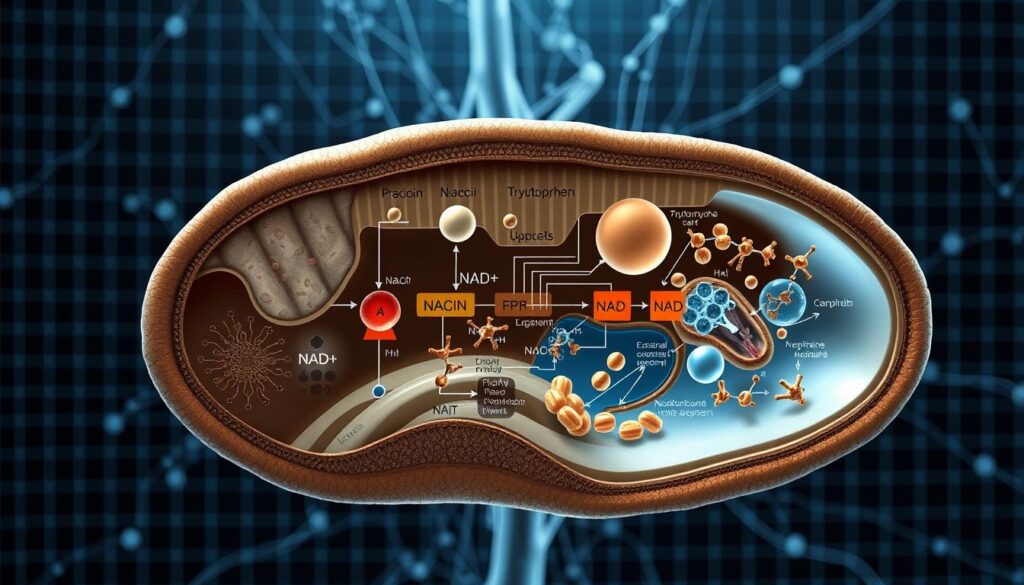
How electron shuttles drive ATP and circadian timing
Inside mitochondria, the nad/NADH pair hands electrons to the respiratory chain. These simple processes generate most cellular ATP.
Metabolic signals tied to redox balance also feed the clock machinery. Small changes in nad and ratios can shift sleep–wake timing and daytime energy patterns.
Key aging pathways: sirtuins, repair, and inflammation
Sirtuins are enzymes that rely on this chemistry to regulate genes, boost mitochondrial biogenesis, and manage stress responses.
Adequate levels support DNA repair proteins and help limit neuroinflammation in animal models. Exercise similarly activates these pathways in muscle, improving mitochondrial function in young and old tissue.
Practical note: the science in animals is compelling, but human translation needs more clinical testing. Understanding these mechanisms explains why people combine lifestyle steps like training and sleep hygiene to support cellular repair and sustained energy.
NAD+ Supplement Benefits
Think of this as a practical look at what boosting coenzyme activity may deliver for daily energy, focus, and cellular resilience. Early human and animal research points to steadier ATP production, clearer cognition, and metabolic support, but long‑term anti‑aging claims remain unproven.
Energy and metabolism: ATP synthesis, insulin sensitivity, and body composition
When cells have more of the right cofactors, mitochondria often make ATP more effectively. That can translate into better stamina and recovery for some people.
Small human trials report shifts in body composition and muscle metabolites with nicotinamide riboside, and an NMN trial in women with prediabetes improved insulin sensitivity over 10 weeks. These are promising but limited in size and duration.
Brain health and mental clarity: neuroinflammation, mitochondrial function, and cognition
Animal work shows reduced neuroinflammation and improved mitochondrial function after boosting pathways tied to this coenzyme.
That aligns with anecdotal reports of sharper focus, though rigorous cognition trials in people are still few.
Healthy aging and longevity: what animal and early human studies suggest—and don’t
Models link cofactor support to sirtuin activation, DNA maintenance, and longer healthspan in some species.
However, human data do not yet confirm clear lifespan effects. Treat animal results as mechanistic clues, not guarantees.
DNA repair and cellular resilience: protecting gene expression under stress
Reviews highlight roles in gene expression control and damage responses, suggesting a buffer against stressors that accumulate with age.
For clinicians and curious readers, see a clinical review summarizing molecular and translational research.
- Bottom line: The most discussed benefits center on steadier energy, sharper cognition, and metabolic support. Early studies are encouraging, but avoid overstating longevity effects.
- Practical note: Effects often build slowly and depend on baseline levels, diet, and training—track markers and work with a clinician.
Forms of NAD supplementation: NR, NMN, NADH, NAD+—and lifestyle boosts
Most people begin with oral precursors because they are practical and supported by early human data.
Clinic-based IV therapy is available, but it isn’t FDA-approved and has limited proof for longevity.
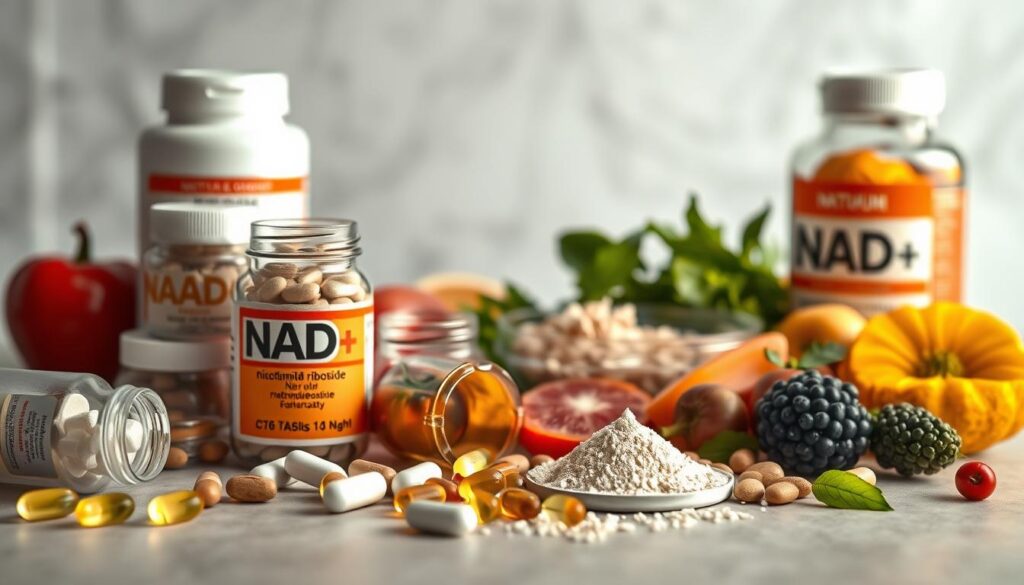
Oral precursors explained: Nicotinamide riboside and nicotinamide mononucleotide are the most common precursors used to raise cellular levels.
How NR and NMN compare
Both convert into the active coenzyme inside the body. NR typically converts to NMN first, then to the active form. NMN sits one step closer in the pathway.
Clinician picks often include Tru Niagen or Thorne ResveraCel for nicotinamide riboside, and ProHealth or Alive by Nature for nicotinamide mononucleotide.
NADH and IV therapy: practicality and regulation
NADH provides reducing equivalents tied to ATP, but routine use is less established than oral precursors.
IV infusions are offered at spas and clinics but are not FDA-approved as antiaging therapy and carry contamination risks when compounded outside pharmaceutical standards.
Exercise, sleep, and diet: natural ways to support levels
Structured exercise boosts pathway activity in muscle across ages. Good sleep and niacin-rich foods—meat, fish, dairy, cabbage, cucumbers—support metabolism.
Practical tip: Start with one precursor, monitor how your body responds, and pair it with training, consistent sleep, and a nutrient-dense diet for best results.
| Form | Practical use | Regulatory note | When to consider |
|---|---|---|---|
| Nicotinamide riboside (NR) | Daily oral; well-studied in short trials | Available as over-the-counter formulations | Daily energy and metabolic markers |
| Nicotinamide mononucleotide (NMN) | Oral or sublingual; one step closer to active form | OTC; quality varies by brand | Training recovery or targeted metabolic goals |
| NADH | Oral; targets reducing power | Less clinical consensus on routine use | Specific fatigue protocols or clinician-guided plans |
| IV NAD+ therapy | Clinic infusions | Not FDA-approved for longevity; contamination risk if compounded | Reserved for supervised medical contexts with clear indication |
- Bottom line: Oral precursors are the pragmatic first step; therapy via IV is experimental and should be considered only with medical supervision.
- Lifestyle matters: Exercise, sleep, and a vitamin-rich diet may help maintain healthy levels and make any therapy more effective.
Suggested dosages, timing, and stacking: what studies and clinicians use
Practical dosing focuses on consistent daily use so you can track changes in sleep, energy, and recovery. Start modestly, monitor responses, and adjust with clinical oversight.
Typical ranges and clinical recommendations
Common study and clinic ranges: nicotinamide riboside 300–500 mg/day (some trials up to 1 g/day) and nicotinamide mononucleotide 250–500 mg/day (sometimes up to 1 g/day).
Start low, go slow: clinicians advise beginning at the lower end and reassessing after 4–8 weeks.
When to take, how long to wait, and combining with antioxidants
Many people prefer morning dosing with food to support daytime energy and avoid sleep disruption.
Expect subtle, gradual effects; cellular changes often show over weeks, not hours. Track sleep, HRV, and training logs to spot trends.
Stacking is common: some combine one precursor with antioxidants like resveratrol or quercetin. Begin with a single agent for a month before adding layers so you can isolate effects.
Safety, side effects, and monitoring
Side effects reported in studies are usually mild: headache, nausea, flushing, rash, abdominal discomfort, and diarrhea. Reduce dose or pause if symptoms occur and consult your clinician.
Share any nad supplement list with your healthcare team, especially if you use insulin, blood thinners, or chemotherapy agents. While routine lab testing for levels isn’t standard, monitor metabolic panels and functional outcomes to judge benefit.
- Quick summary: NR 300–500 mg/day, NMN 250–500 mg/day; start low, reassess at 4–8 weeks, prefer morning dosing, and pick one precursor before stacking.
Evidence check: what current research supports—and key uncertainties
Researchers have mapped convincing molecular mechanisms, but real-world outcomes in people remain uncertain. Randomized trials are the clearest way to test claims about therapy and longevity; until then, treat big claims cautiously.

Human data versus animal models: where the evidence is strongest
Mechanistic work in cells and animals shows clear pathways. These include sirtuin signaling, DNA repair, and mitochondrial function.
Early human studies report targeted metabolic and body composition signals. These results suggest potential clinical roles, not proven anti‑aging effects.
Why randomized controlled trials matter
Randomized trials remove bias, separate placebo responses, and define real safety profiles. David Seres and other experts stress that anecdotes do not replace trials.
“Controlled studies are essential to move from plausible mechanisms to proven clinical outcomes,”
| Evidence type | Strength | Key findings | Open questions |
|---|---|---|---|
| Cell and animal studies | Strong for mechanisms | Show sirtuin activation, improved mitochondrial markers | Translation to human aging is uncertain |
| Short human trials | Moderate | Metabolic changes, insulin sensitivity, body composition signals | Small size, short duration, limited populations |
| IV and clinic reports | Weak | Anecdotal symptom changes; procedural effects | Placebo, contamination risk, lack of FDA‑backed trials |
| Systematic reviews | Growing | Summarize mechanisms and early safety data | Need long-term endpoints and diverse cohorts |
Bottom line: The basic biochemistry—how these cofactors support nad metabolism and repair—is solid, but top‑line claims about age reversal or lifespan are not proven in people.
Leading voices, including Charles Brenner, note that nicotinamide riboside may lower inflammation in certain contexts, yet it is not a longevity drug. For readers who want deeper analysis, see a recent clinical review.
Practical takeaway: Use supplements as one tool among proven habits—sleep, exercise, and nutrition—while watching for results from larger randomized studies.
Risks, side effects, and interactions: staying safe with NAD supplements
All therapies carry trade-offs; understanding common side effects helps you decide what’s safe for you. Most oral precursors are well tolerated, but mild reactions and interactions occur.
Common mild reactions and who should be cautious
Typical reports include headache, nausea, flushing, skin rashes, abdominal discomfort, and diarrhea. These effects are usually dose-related and fade when dose is reduced.
People on insulin, anticoagulants, or chemotherapy should consult their clinician first. Age and cardiovascular or metabolic conditions raise the risk of adverse events and call for medical oversight.
IV therapy concerns in the United States
Clinic-based IV therapy is not FDA-approved for anti‑aging. Bypassing gut and liver protections introduces extra risk because contaminants or compounding mistakes go straight into the blood.
Perception of immediate energy can reflect placebo or procedural effects—not proof of long-term benefit. Verify clinical credentials and ask for sterility testing if infusion is considered.
| Risk or effect | How it shows | Who is most at risk | Mitigation |
|---|---|---|---|
| Gastrointestinal upset | Nausea, diarrhea, abdominal pain | Higher doses or stacking agents | Start low, take with food, pause if persistent |
| Flushing / lightheadedness | Warmth, drop in blood pressure | Those with low BP or on vasoactive meds | Monitor vitals, sit/lie down, seek care if severe |
| Drug interactions | Altered insulin or anticoagulant effects | People on insulin, warfarin, or chemo | Share all products with your care team; adjust meds as advised |
| IV contamination risk | Infection, sepsis, allergic reactions | Clinics using non-pharma compounding | Prefer certified pharmacies, ask about sterility tests |
- Bold Summary: Most people tolerate oral precursors; mild side effects can occur—especially at higher doses or when stacking too soon. Start conservatively and monitor response.
- Bold Summary: Be cautious with IV therapy: it’s not FDA-approved for age reversal, carries contamination and quality risks, and perceived boosts may be placebo.
Bottom line: Weigh potential effects and costs against uncertain long‑term gains. Favor oral approaches with better safety data and keep your healthcare team informed about any products you take.
How to choose high-quality NAD supplements in the U.S. market
Choose products that show independent verification, clear dosing, and honest sourcing. These clues cut risk and help you match a product to real goals like energy, metabolic health, or cognitive support.
Third-party testing, transparency, and brand considerations
Prioritize USP or NSF verification and lot testing. A certificate of analysis (COA) from an independent lab reduces variability and contamination risk.
Avoid vague labels or proprietary blends that hide milligrams per serving. Clear mg counts let you match doses used in research and studies.
Aligning product choice with goals: energy, metabolic health, or cognitive support
Match form to purpose. For daily energy and training recovery, clinicians often point to nicotinamide riboside options like Tru Niagen or Thorne ResveraCel.
For metabolic aims, some prefer nicotinamide mononucleotide brands such as ProHealth or Alive by Nature, including sublingual forms for those focused on absorption.
Cost, formulations, and practical buying tips
Compare cost per effective daily dose, not just sticker price. Capsules are simple; sublingual NMN may cost more but can suit absorption-focused users.
Share all products with your clinician if you take blood thinners, insulin, or chemotherapy. Safety checks matter.
| Criteria | What to look for | Why it matters |
|---|---|---|
| Third‑party testing | USP/NSF seal, COA, lot testing | Verifies potency and purity; lowers contamination risk |
| Label clarity | Exact mg per serving, no proprietary blends | Allows study-aligned dosing and easier tracking |
| Form factor | Capsule, sublingual, or combination formula | Matches absorption needs and tracking simplicity |
| Brand reputation | Clinician recommendations, transparent sourcing | Predictable quality and better customer support |
| Cost planning | Cost per effective dose, subscription transparency | Ensures consistent use over months for measurable change |
- Bold Summary: Prioritize quality: choose brands with USP or NSF verification, transparent labels, and lot testing.
- Bold Summary: Match the product to your goals—daily energy, metabolic markers, or cognitive support—and budget for consistent use over months.
Practical close: Start with a single, well‑tested product, track sleep, training, and labs, and pair purchases with lifestyle upgrades—exercise, sleep, and a nutrient‑dense diet—to get the most from every dollar.
Conclusion
The molecule at the heart of this story is found every cell and helps power energy, DNA repair, and signaling. Because levels decline with age, targeted use of oral precursors and strong lifestyle habits may help sustain day‑to‑day energy and resilience.
Practical path: Start with one precursor at study-aligned doses (NR 300–500 mg/day; NMN 250–500 mg/day), prioritize sleep and exercise, and track changes before adding layers.
IV therapy remains an experimental route with added risk; large randomized trials are needed to confirm broad anti‑aging claims. For deeper reading, see this clinical review that summarizes current human and mechanistic evidence.
Bottom line: Thoughtful use of precursors, paired with nutrition (vitamin‑rich foods) and sensible lifestyle choices, offers the clearest path to steady improvements in how your body feels and performs.
FAQ
Is NAD+ supplementation the real fountain of youth?
There’s no single “fountain of youth.” Boosting nicotinamide adenine dinucleotide levels shows promise in animal studies for improving cellular repair, energy metabolism, and some measures of healthspan. Early human data are encouraging for energy and metabolic markers, but large, long-term trials proving lifespan extension in people are still lacking. Think of current evidence as hopeful but not definitive—useful for targeted goals like energy or cognitive support, not a guaranteed anti‑aging cure.
What is nicotinamide adenine dinucleotide and why does it matter now?
Nicotinamide adenine dinucleotide is a coenzyme present in every cell that helps drive energy production, DNA repair, and cell signaling. As levels decline with age, cells can struggle to make ATP, repair damage, and regulate inflammation, which links to fatigue, cognitive changes, and altered metabolism. Maintaining healthy levels supports those core processes.
Lower levels are associated with reduced mitochondrial function (less efficient energy), slower DNA repair, and altered signaling through proteins like sirtuins. Clinically, people may notice increased tiredness, brain fog, slower recovery from exercise, and metabolic shifts. These links are biologically plausible, though individual symptoms vary.
How does NAD metabolism work—from precursors to cellular energy?
Cells make NAD from dietary precursors such as tryptophan, nicotinamide, nicotinamide riboside (NR), and nicotinamide mononucleotide (NMN). Inside mitochondria, NAD/NADH cycles help drive the electron transport chain and ATP synthesis. NAD also participates in circadian rhythm regulation and fuels enzymes involved in repair and inflammation control.
Sirtuins are NAD-dependent enzymes that influence gene expression, metabolism, and stress responses. Adequate NAD helps sirtuins and PARP enzymes function, supporting DNA repair and reducing chronic inflammatory signaling—processes central to cellular resilience and healthy aging.
What practical effects have studies shown for energy and metabolism?
Early trials using NR or NMN commonly report modest improvements in markers like insulin sensitivity, mitochondrial function, and subjective energy. Results vary by dose, population, and study length. Improvements tend to be clearer in metabolic measures than in dramatic energy boosts.
Can boosting NAD levels improve brain health and mental clarity?
Preclinical work shows benefit for mitochondrial function and reducing neuroinflammation. Small human studies suggest potential cognitive and mood benefits, but evidence is preliminary. NAD pathway support may help brain resilience, especially when combined with sleep, exercise, and a nutrient‑dense diet.
Do animal longevity studies translate to humans?
Animal models (mice, worms) show lifespan and healthspan benefits from NAD precursors, but translating those results to humans is complex. Humans age differently, and long-term controlled trials are required to confirm meaningful effects on human longevity and age-related disease.
What are common forms of supplementation and how do they differ?
Common forms include nicotinamide riboside (NR), nicotinamide mononucleotide (NMN), and stabilized NADH; there are also IV NAD+ therapies. NR and NMN are oral precursors that cells convert into NAD; they differ slightly in absorption and stability. NADH and IV approaches aim to raise levels more directly but can be more costly, less convenient, and in the case of IV, less standardized.
How do NR and NMN compare in absorption and practical use?
Both are effective precursors with supportive clinical data. NR has longer human-study history and commercial availability; NMN is metabolically close to NAD and shows good tissue uptake in some studies. Individual responses differ; product quality and dosing matter more than the label alone.
Do lifestyle choices affect NAD levels naturally?
Yes. Regular exercise, adequate sleep, a balanced diet rich in tryptophan and B vitamins, and intermittent fasting or time‑restricted eating can support NAD metabolism. These strategies enhance mitochondrial health and work synergistically with precursor supplementation.
What doses do researchers and clinicians commonly use for NR and NMN?
Human studies often use NR in the range of 250–1,000 mg per day and NMN around 250–500 mg per day, though some trials explore higher or lower doses. Clinicians individualize dosing based on goals, tolerability, and emerging evidence. Start low and follow guidance from a qualified clinician.
When can users expect to feel effects and how should supplements be timed?
Some people report subjective changes (energy, mental clarity) within days to weeks, while measurable metabolic or cellular changes often take weeks to months. Taking precursors with food or in the morning may fit circadian biology and reduce nausea; follow product instructions and clinician advice.
Are there recommended combinations or “stacks” to enhance effects?
Clinicians sometimes combine NR/NMN with antioxidants (vitamin C, polyphenols), NADH, or lifestyle interventions like exercise to optimize outcomes. Evidence for specific stacks is limited, so prioritize quality products and proven lifestyle habits before complex combinations.
How strong is the current research and where are uncertainties?
Evidence is strongest in animal models and in short-term human metabolic studies. Key uncertainties include long-term safety, optimal dosing, effects in diverse populations, and definitive proof of slowed human aging. Large randomized controlled trials are needed to answer those questions.
What mild side effects and risks are associated with NAD precursors?
Common mild effects include nausea, digestive upset, flushing, or headaches. People with active cancer, certain autoimmune conditions, or those on specific medications should consult a physician. Pregnant or breastfeeding individuals should avoid use unless advised by a clinician.
What should I know about IV NAD+ therapy in the United States?
IV NAD+ is offered by some clinics for fatigue and addiction recovery, but it’s not well regulated and carries risks like infection or contamination if not performed under strict medical standards. Evidence for IV superiority over oral precursors is limited; weigh risks, cost, and clinician credentials carefully.
How can I choose a high-quality product in the U.S. market?
Look for third‑party testing (USP, NSF, or independent labs), transparent ingredient lists, and brands that provide certificate of analysis (COA). Prefer manufacturers that follow GMP and offer clear dosing guidance. Read reviews cautiously and consult a healthcare professional when uncertain.
How do I match product choice to my goals—energy, metabolic health, or cognitive support?
For metabolic or insulin‑sensitivity goals, NR and NMN both have supportive data. For perceived energy or mitochondrial support, some people try NADH or higher‑dose precursors. If cognitive goals are primary, prioritize lifestyle measures and consider a clinician‑supervised trial of a reputable precursor combined with exercise and sleep optimization.
How much do quality products typically cost and are they worth it?
Prices vary widely: NR and NMN supplements can range from modest monthly costs to premium pricing. Higher cost doesn’t always equal better quality; prioritize third‑party testing, transparent sourcing, and clinical backing. Value depends on goals, budget, and clinical guidance.




Don’t Miss These Picks