


Could a simple group stroll reshape how communities approach fitness and hope? This trend blends gentle movement with social connection to support overall health in a practical, evidence-aligned way.
Across the United States, organizers reframe exercise as a shared experience rather than a performance test. These community-led events remove pressure about distance or pace and lower barriers so first-timers feel safe, supported, and seen.
Research and practice show pairing movement with mindful attention boosts mood and stress resilience. For context and science-backed guidance, see a national overview of walking trends and benefits at walking trends and benefits and walking meditation research at walking meditation science.
NAMI plays a central role as a trusted leader, helping scale education, support, and public awareness across communities. This guide previews how the events work, their national reach, how to find an event, and simple ways to join or support today.
Key Takeaways
- Community strolls reframe fitness into inclusive, low-pressure gatherings.
- Pairing movement with mindfulness yields measurable mood and stress benefits.
- NAMI offers trusted resources and national coordination for these events.
- Accessible formats make it easy for first-time participants to show up and belong.
- Participants often report greater connection and renewed hope after attending.
The rise of community-powered walking for well-being in the United States
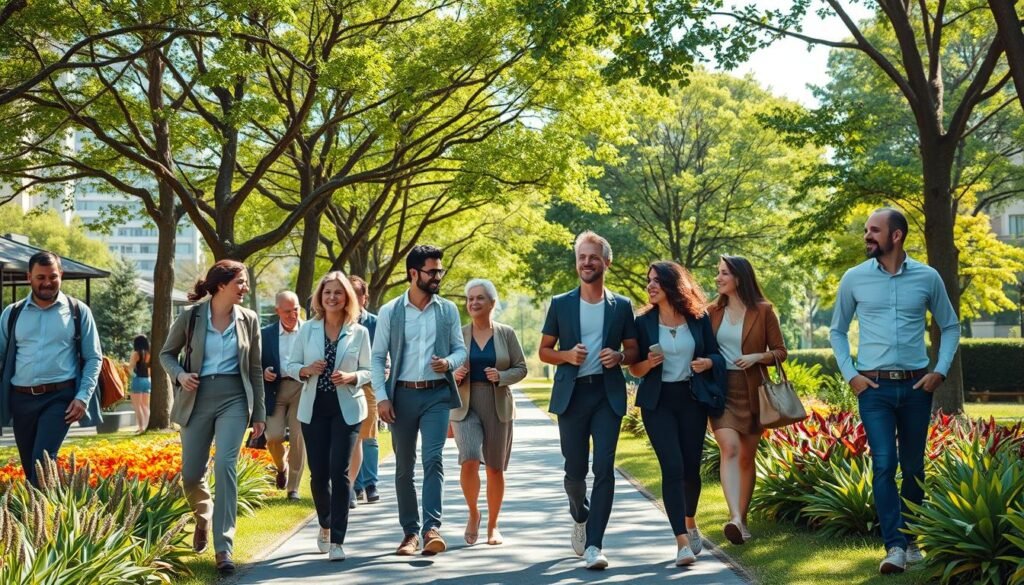
Local groups are turning short, social strolls into a simple, reliable way to connect and support one another. These events offer an easy entry point: little gear, no training, and clear chances to join others.
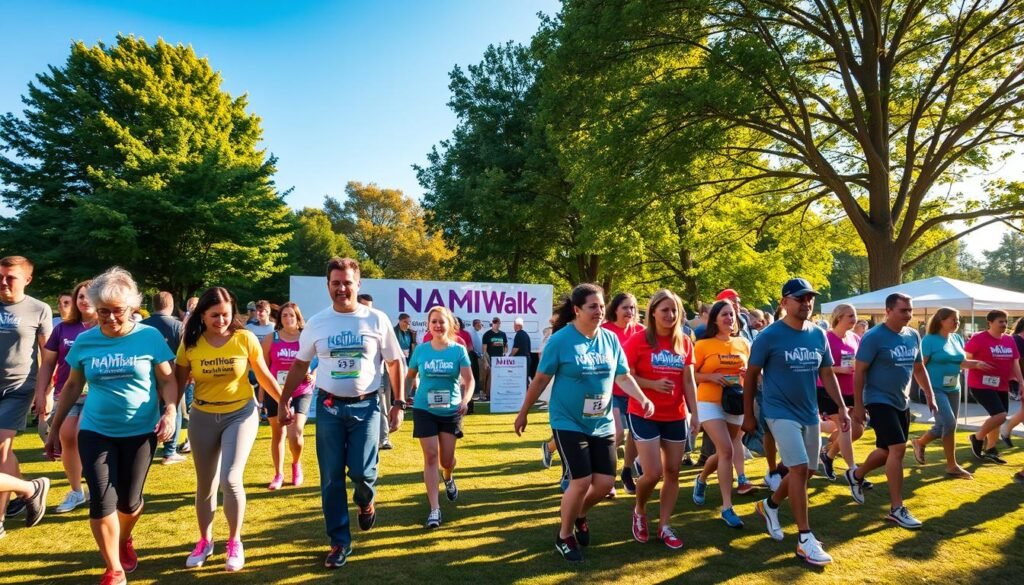
NAMIWalks is the largest national series, running in more than 200 locations. The program invites supporters to share stories, build community, and join a walk described as the walk with no finish line.
Group movement helps people re-engage with routines while providing social support and accountability. It’s a low-barrier way to show solidarity with those living with mental illness and to promote education and advocacy.
- Find a local date and route using the NAMI event finder and view walk-day details.
- Register early, invite a friend, and pick a route that fits your comfort level.
- Need questions answered? Call the NAMI HelpLine M–F, 10 a.m.–10 p.m. ET at 800‑950‑6264, text “NAMI” to 62640, or email; in a crisis, dial or text 988 (24/7).
For a personal perspective and tips on joining, read my experience swapping gym sessions to see how easy this way to move can be.
Mental Health Walks: what they are, why they matter, and where they happen
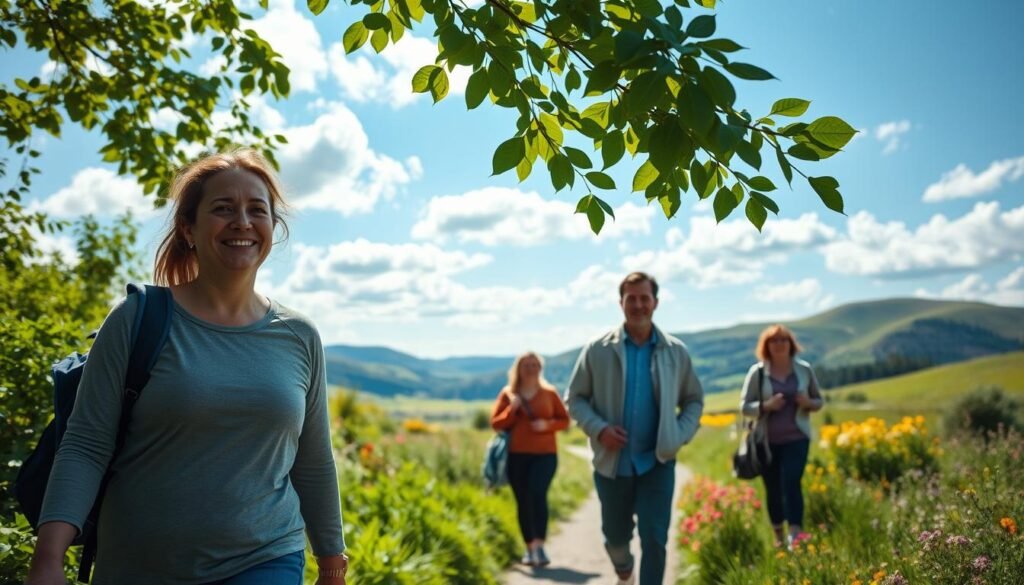
Community-led strolls now serve as welcoming, low-pressure gatherings that center stories and support. These events turn brief movement into shared purpose and practical connection.
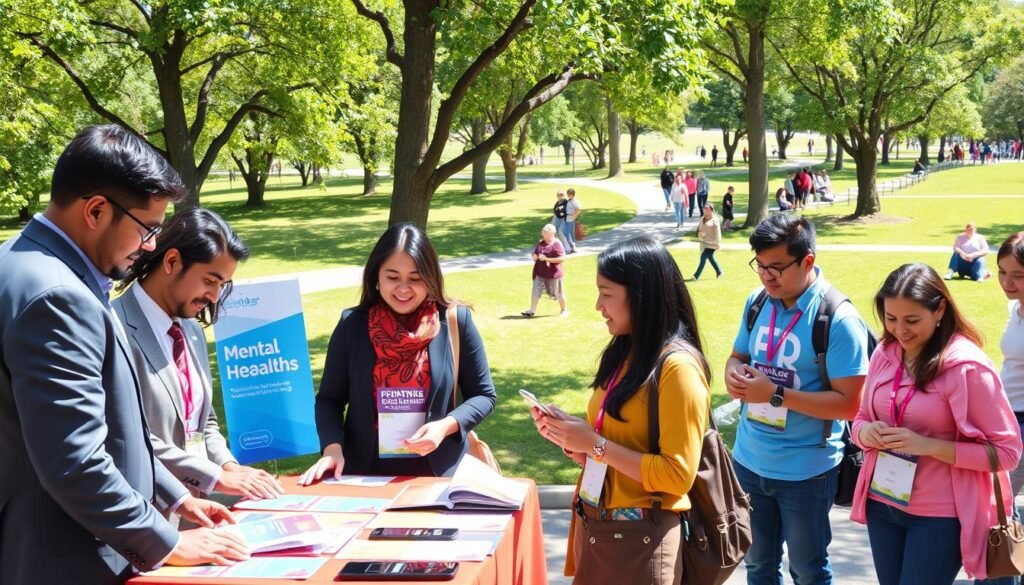
What is the format? It’s a community walk that centers mental health, celebrates lived experience, and invites anyone to show up—no finish line required. Routes are short and flexible so participants set their own pace. Organizers add resource tables, speakers, and safe zones for quiet or conversation.
Definition and national scope
NAMIWalks is the largest national series, active in 200+ locations and known as the walk that has no finish line — only countless new beginnings. Community groups, employers, and families join together to share stories and build local networks.
Benefits and why the “no finish line” matters
- Movement and mood: Gentle aerobic activity supports mood and stress regulation.
- Shared experience: Showing up together increases belonging and resilience.
- Ongoing progress: The no-finish-line ethos reduces pressure and honors steady steps forward.
Safe, inclusive spaces and support pathways
Events welcome individuals, families, and caregivers affected by mental illness. Routes and activities are intentionally accessible, and local nami leaders help adapt plans for comfort and safety.
Need immediate guidance? Call the NAMI HelpLine M–F, 10 a.m.–10 p.m. ET at 800-950-6264 or text “NAMI” to 62640. In a crisis, call or text 988 any time.
| Feature | What to Expect | Who It Helps |
|---|---|---|
| Format | Short, flexible route; resource fair; quiet spaces | Individuals, families, caregivers |
| Ethos | No finish line; focus on stories and progress | Those seeking connection and support |
| National Reach | 200+ locations; local chapters and teams | Communities across the United States |
For practical tips on pairing movement with mindful attention, see research on walking benefits and a first-person month-long experiment with walking meditation at mental benefits of walking and walking meditation experience.
Event directory spotlight: past NAMIWalks examples and how to find today’s events
Use the national directory to locate upcoming events and view registration pages in one place. These past listings illustrate a typical schedule, on-site resources, and local contacts so you can plan travel and arrive early.
Find a NAMIWalks near you:
Find a NAMIWalks near you: use the National Alliance on Mental Illness event finder
Search the national calendar to see dates, cities, and registration links. The event finder centralizes details so you can confirm time, parking, and volunteer options before you go.
Palm Desert, CA — Civic Center Park (Past: Saturday, Nov. 15, 2025)
Address: Palm Desert Civic Center Park, 43-900 San Pablo Ave., Palm Desert, CA 92260.
Typical schedule: registration/resource fair opens 9 a.m.; opening ceremony 10 a.m.; walk begins 10:30 a.m.; event ends 12:30 p.m. PT.
Route length: 5K (3 miles) — two loops around the park. Local contact: NAMI Coachella Valley, P.O. Box 4015, Palm Desert, CA 92261; Christine Thomstad, (760)-333-0839, christine@namicoachellavalley.or.
Orange County, CA — Angel Stadium (Past: Nov. 15, 2025)
“Together, we made hope visible.” Angel Stadium showcased fundraising tools, team guides, and volunteer roles that help teams build momentum and community.
Accessibility and on-site amenities: resource fairs, opening ceremonies, and leashed pets are common. Check the finder for the latest weather notes and site changes, and plan extra time for parking and check-in.
For simple pre-event practices to ease tension, see gentle somatic tips you can try at home.
Get involved: registration, fundraising, volunteering, and support
Signing up is simple: pick a date, complete registration, and map out whether you’ll spend the morning or the afternoon at the event.
Plan your walk-day timing. Typical schedules follow a clear a.m./p.m. rhythm. For example, Palm Desert lists Registration/Resource Fair at 9 a.m.; opening at 10 a.m.; walk start at 10:30 a.m.; and end by 12:30 p.m. PT. Save a local organizer’s email or phone for last-minute questions.
How to get involved, step by step
- Complete registration early and confirm route length and schedule.
- Arrive early for check-in, visit the resource fair, and join the opening ceremony.
- Save the local contact (example: Christine Thomstad) and an email for quick questions.
Put the “fun” in fundraising
Set a clear goal and use official toolkits like team captain checklists and participant guides. Personalize your story and invite colleagues or a company sponsor to amplify impact. Thank donors promptly and post periodic updates to keep momentum.
Volunteer power and inclusive ways to help
- Roles: check-in tables, route support, cheering sections, and resource-fair staffing.
- Downloadable guides make team organization easy—team captain and volunteer guides streamline tasks.
- If walking isn’t feasible, staff a table, spread the word, or support a team captain—your help matters.
| Action | Example timing | Contact |
|---|---|---|
| Registration/Resource Fair | 9 a.m. | Local nami email / phone |
| Opening ceremony | 10 a.m. | Event organizer |
| Walk start / end | 10:30 a.m. / 12:30 p.m. | Volunteer desk |
One small nudge: pick an event today, send one email to invite a friend, and set calendar reminders so your plan sticks.
For organized volunteer options, see local volunteer opportunities. For inspiration on simple daily practices that support well‑being, read this journal prompts experiment.
Conclusion
A short, deliberate stroll can become a steady practice that links people and purpose. Aligning movement with connection supports mental health and overall health while strengthening local community ties.
Take one step today: find a nearby event, register with a friend, or join a team to turn intention into action.
Remember: every walk is part of an ongoing journey. Showing up matters for people living with mental illness and for those who support them.
Essentials: confirm the date and location, note the a.m. start window, plan travel time, and save local contacts in your phone.
For support and information, call the NAMI HelpLine M–F, 10 a.m.–10 p.m. ET at 800‑950‑6264 or text “NAMI” to 62640. In a crisis, call or text 988 any time. To read a related personal experiment, see what changed after pilates. Whether you walk, volunteer, or donate, your presence helps people feel seen and invites others to get involved.
FAQ
What are these walks and why are they gaining popularity?
These community walking events blend physical activity with peer support and public awareness. They offer a low-barrier way to connect, raise funds, and reduce stigma about mental illness while encouraging regular movement. Many people find the combination of social connection and purposeful exercise more motivating than solo workouts.
Who organizes most of these events nationwide?
The National Alliance on Mental Illness (NAMI) runs a large network of events, including NAMIWalks in more than 200 locations across the United States. Local affiliates handle logistics, so event size and format vary by community.
How do I find a walk near me and check the date and time?
Use the NAMI event finder on their official website to locate nearby walks and get up-to-date schedules. Listings include a.m. and p.m. start times, route details, registration links, and contact emails for local organizers.
Are these events accessible for people with disabilities?
Yes. Most organizers prioritize accessibility with flat routes, ADA-compliant facilities, and on-site support. Check the event page or contact the local affiliate by email for specific accommodations before attending.
Can I bring my pet to a walk?
Many events welcome leashed pets, but policies vary by location. Event pages often note pet rules and on-site resources; when in doubt, confirm with the local organizer ahead of time.
What should I expect on walk day?
Expect registration/check-in stations, opening remarks or a short ceremony, a mapped route with volunteers, and resource tables or fairs. Routes range from short loops to longer paths; start times may be scheduled for morning or afternoon.
How do I register and is there a fee?
Registration is typically online via the event’s NAMI page or a regional portal. Fees vary—some events request donations or fundraising commitments while others offer free participation with optional giving. Registration pages list deadlines and on-site check-in procedures.
How can I fundraise or support a team?
Most events provide fundraising tools, team pages, and tips for outreach. You can create a personal or team fundraising page, share via email and social media, and explore corporate matching programs to increase impact.
Are volunteers needed and how do I sign up?
Yes—volunteers run check-in, route staffing, and resource booths. Volunteer guides and sign-up forms are available on local event pages. Contact the affiliate’s volunteer coordinator by email to learn about roles and shift times.
What safety measures are in place for larger gatherings?
Organizers implement crowd management, first-aid stations, clearly marked routes, and volunteer marshals. Event pages list emergency contacts and on-site medical resources; attendees are encouraged to review safety info before arrival.
Can I attend if I’m currently in crisis or receiving treatment?
These events create supportive, nonjudgmental spaces, but they are not a substitute for clinical care. If you’re in crisis, contact local crisis lines or emergency services first. Event staff can provide information about crisis resources and referrals.
Where can I see examples of past events for planning ideas?
Past event pages and photo galleries—such as listings for Palm Desert, CA (Civic Center Park) and Orange County, CA (Angel Stadium)—show set-ups, resource fairs, and participant activities that help with planning and expectations.
Who should I contact for more information about a specific location?
Each event page lists a local organizer’s contact email and phone number. Use those details to ask about registration, route length, accessibility needs, fundraising tools, or volunteer roles.