

Walking meditation is mindfulness practiced while moving. Instead of trying to clear your mind, you deliberately notice what is happening as you walk: the contact of your feet with the ground, the movement of your legs and body, your natural breathing, or sounds and sensations around you.
You do not need special equipment, a perfectly quiet setting, or an unusually slow pace. A beginner can start with a safe route, a comfortable walking speed, and one attention anchor. The important part is noticing when your attention wanders and gently bringing it back.
Research on walking meditation is promising in some areas, particularly perceived stress, but it is much smaller and less consistent than broad claims online sometimes suggest. This guide separates what is known about walking itself, mindfulness generally, and walking meditation specifically so you can practice without expecting guaranteed health outcomes.
Key Takeaways
- Walking meditation means intentionally paying attention while walking; extremely slow movement is optional, not required.
- Foot contact, whole-body movement, natural breathing, sounds, or surroundings can all serve as attention anchors.
- Some studies suggest mindful walking may reduce perceived stress or short-term anxiety in selected groups, but results should not be generalized to everyone.
- Physical activity benefits from a mindful walk may partly come from the walking itself, so mindfulness-specific effects should be considered separately.
- Environmental awareness always comes first around traffic, uneven surfaces, stairs, or other hazards.
What Is Walking Meditation?
Walking meditation uses the ordinary act of walking as the setting for deliberate, present-moment attention. Rather than walking mainly to reach a destination, exercise at a certain intensity, or distract yourself, you pay attention to the experience of moving.
A common anchor is the changing pressure across the foot as the heel, sole, and toes contact the ground. You might instead notice the movement of your legs and hips, your posture, your natural breathing, or sounds in the environment. When thoughts pull your attention away, you notice that distraction and return to the chosen anchor.
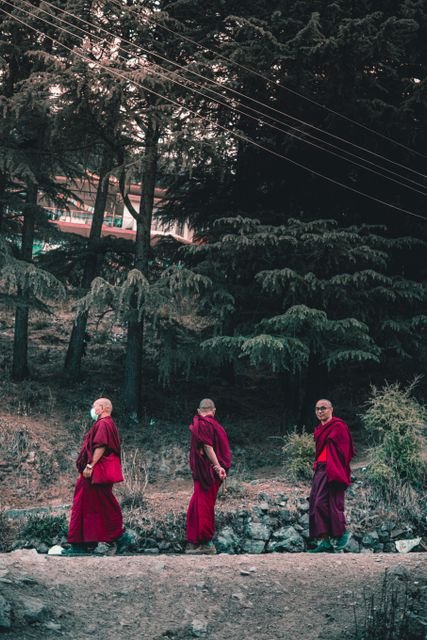
Formal Buddhist traditions include several structured forms of walking meditation. For example, Insight Meditation Center’s walking-meditation instructions describe practice on a short back-and-forth path, with attention often placed on sensations in the legs and feet. Pace can vary rather than remaining extremely slow.
Soto Zen kinhin is more formal and tradition-specific. Soto Zen instructions for kinhin describe a particular posture, clockwise movement, slow steps, and a breath-linked rhythm. Those details are useful for understanding one established tradition, but they are not requirements for someone doing a simple modern mindful walk.
How Walking Meditation Differs From Normal Walking and Seated Meditation
A normal walk can certainly become mindful, but most everyday walking is organized around transportation, exercise, conversation, music, or getting somewhere. In walking meditation, attention itself becomes part of the purpose.
That does not mean the walk has to look unusual. You can walk at a natural pace while deliberately noticing each step. Slowing down can make subtle sensations easier to detect, especially during formal practice, but moving slowly is not what defines walking meditation.
Compared with seated meditation, walking gives you more obvious physical sensations to work with. That can appeal to people who become restless when sitting still. Seated meditation, however, removes some of the navigation and balance demands of walking. Neither format is automatically better; they simply give attention a different setting.
What Does the Evidence Say About Walking Meditation Benefits?
Claims about walking meditation are easy to overstate because three different bodies of evidence often get blended together: ordinary physical activity, mindfulness or meditation in general, and studies that specifically test mindful or meditative walking.
Some benefits come from walking itself
A mindful walk is still a walk. Time spent moving can contribute to daily physical activity, and a walking session naturally replaces sitting during that period. Those physical-activity effects should not automatically be credited to mindfulness.
One small study illustrates the distinction. In a group of 44 university students, participants completed a guided mindful walk of about 0.85 miles lasting roughly 35 minutes. They averaged approximately 1,726 steps during that specific session. The study also recorded higher state mindfulness and lower state anxiety and stress afterward. However, it did not establish that walking meditation universally “adds 1,700 daily steps” or independently reduces overall sedentary behavior. It was one guided session in a small population without a design capable of separating all the possible effects of walking, mindfulness, the environment, and expectations. See the guided mindful-walk study in university students.
Stress has some direct walking-meditation evidence
A randomized trial in psychologically distressed adults studied 74 participants assigned either to a four-week mindful-walking program or to a wait-list control. The intervention involved eight sessions combining ordinary walking, mindful walking, and discussion. Participants in the program reported greater reductions in perceived psychological stress and improvements in some quality-of-life measures.
That makes stress one of the more defensible potential benefits to discuss, but the intervention was more structured than taking an occasional five-minute mindful walk. The study also did not compare mindful walking with another active treatment, so it cannot tell us how much of the effect came specifically from the mindfulness component.
Anxiety findings are promising but limited
The university-student study above found lower state anxiety immediately after one guided mindful walk, and other movement-plus-meditation research has reported encouraging findings. That supports cautious language such as “mindful walking may help some people feel less anxious in the short term.” It does not show that walking meditation treats an anxiety disorder or reliably lowers anxiety for everyone.
Broader mindfulness research also needs careful interpretation. NCCIH’s overview of meditation and mindfulness research notes potential benefits across several areas while also emphasizing that meditation practices and study designs vary considerably and that results have sometimes been interpreted more strongly than the evidence warrants.
Sleep, cognition, pain, and balance need more context
Sleep claims are less certain. Some studies combine walking, mindfulness, and nature exposure, making it difficult to know which part of the intervention mattered. It is therefore premature to say that walking meditation reliably improves sleep or that benefits should appear after a particular number of weeks.
Cognition is also an early research area. A small proof-of-concept study in older adults examined eight supervised 30-minute mindful-walking sessions over one month. The work is useful because it shows cognition is being investigated, but it does not establish protection against cognitive decline, dementia prevention, or broadly improved “cognitive aging.”
Walking meditation has also been studied in specific clinical situations. For example, a randomized trial in people with chronic low back pain examined an eight-week mindful-walking program. That does not justify a general claim that walking meditation relieves chronic pain.
Similarly, a randomized balance study in older adults with a history of falls shows that meditative walking has been investigated in a supervised higher-risk population. It should not be interpreted as proof that unsupervised walking meditation is suitable for everyone with balance problems.
Choose Your Walking-Meditation Style
There is no single version that fits every situation. The most useful setup depends on why you are practicing and where you are walking.
| Your Goal | Useful Setup | Good Attention Anchor | Main Caution |
|---|---|---|---|
| Workday reset | Short indoor hallway or quiet loop | Foot contact or whole-body movement | Keep it simple instead of trying several techniques at once |
| Formal attention practice | Short back-and-forth path | Feet, legs, posture, or stepping rhythm | Do not assume slower always means better |
| Outdoor sensory practice | Quiet park, yard, or low-hazard path | Sounds, air, light, and movement | Maintain situational awareness |
| Movement break | Normal comfortable walking pace | One recurring cue, such as every footfall | Do not turn the session into a step-count competition |
| Mobility-adapted practice | Seated or supported mindful movement when walking is not appropriate | Pressure, posture, hand movement, or breathing | Do not assume it provides the same physical outcomes as walking |
The framework matters more than the label. Pick a version that lets you pay attention without compromising safety or turning the practice into another performance task.

A Simple 5–10 Minute Beginner Walking Meditation
1. Choose a safe route
Use a quiet hallway, room, garden path, or other location where you can walk without constantly dodging traffic, stairs, obstacles, or other people. A short back-and-forth path works well because you do not need to think much about navigation.
2. Stand for a moment before moving
Notice your posture, the pressure under your feet, and any obvious tension in your shoulders, jaw, or hands. Let your breathing remain natural. You do not need to take unusually deep breaths.
3. Begin walking at a comfortable pace
Walk normally enough that your movement feels stable and sustainable. If a slower pace makes it easier to notice sensations, slow down. If moving very slowly feels awkward or destabilizing, use a more natural rhythm.
4. Pick one attention anchor
Choose one simple target instead of trying to notice everything at once. Useful options include:
- pressure and contact under each foot;
- movement in the legs, hips, and torso;
- the natural rhythm of your breathing;
- sounds around you;
- air temperature or other neutral body sensations.
5. Notice distraction and return
Your mind will wander. You may start planning, replaying a conversation, or thinking about how well you are meditating. That is not a failed session. Notice what happened and bring attention back to the anchor without criticizing yourself.
6. Finish deliberately
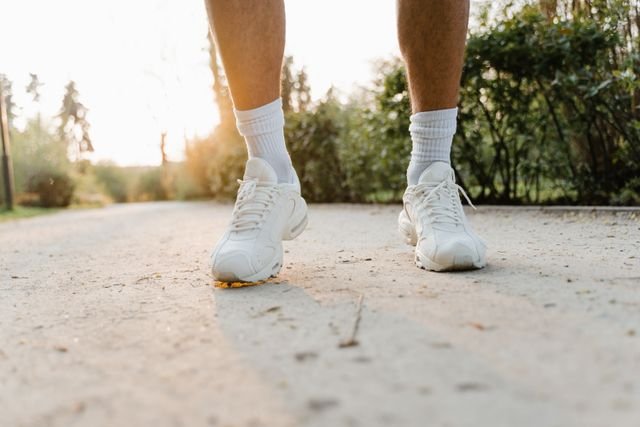
At the end of the route or time period, stand still briefly. Notice how your body feels and whether attention feels easier, harder, or simply different. There is no need to manufacture a sense of calm or judge the session as successful.
Do You Need to Match Your Breath to Your Steps?
No. Breath-step coordination appears in some formal traditions and research protocols, but it is optional for a general beginner.
If you enjoy using breathing as an anchor, simply notice its natural rhythm while you walk. You can experiment with letting a few steps occur during an inhale and a few during an exhale, but there is no ideal ratio you need to maintain.
Do not restrict your breath, hold it, or force yourself to match a count that feels uncomfortable. If you become dizzy or unsteady, stop walking, stabilize yourself, and return to normal breathing.
Optional Techniques and Variations
Once the basic routine feels familiar, you can vary the attention anchor without changing the core practice.
Sensory walking
Choose one external sense at a time. Notice nearby sounds, changing light, the temperature of the air, or visual details along a safe path. Outdoor practice does not have to mean deep immersion in nature; the point is deliberate attention.
Counting
Count a few steps and restart when attention wanders. The number itself does not matter. Counting simply gives the mind something concrete to return to.
Simple phrases
You can quietly use a neutral cue such as “step,” “moving,” or “here.” Keep it short enough that the phrase supports awareness rather than becoming another mental task.
Walking before or after seated meditation
Some people find movement useful after sitting for a while, while others prefer walking first because it helps settle restlessness before seated practice. There is no requirement to combine the two.
Safety and Accessibility
Walking meditation should never require you to ignore your surroundings. Environmental awareness takes priority over any meditation technique.
Avoid becoming deeply inward-focused while crossing streets, walking beside traffic, navigating stairs, moving over slippery or uneven terrain, or using a route where cyclists, vehicles, animals, or other hazards require continuous attention.
If you have substantial fall risk, significant dizziness, severe mobility limitations, or unstable symptoms that affect safe walking, a self-guided walking practice may not be appropriate without individualized guidance. Some walking-meditation research has involved supervised clinical populations, which is different from practicing alone.
If conventional walking is difficult, seated or supported mindful movement can still be used to practice present-moment attention. You might notice posture, pressure against the chair, gentle hand movements, or comfortable upper-body movement. These adaptations can preserve the attentional element without implying that they produce the same physical, balance, mobility, or clinical effects as walking.
Common Mistakes That Make the Practice Harder
Trying to empty your mind
The goal is not to eliminate thoughts. The skill is noticing that attention moved and returning it to the present activity.
Forcing an unnaturally slow pace
Slow walking is used in some traditions, but it is not automatically more mindful. Use a pace that lets you remain stable and attentive.
Using too many anchors at once
Trying to monitor breath, feet, posture, sounds, smells, emotions, and thoughts simultaneously can become mentally busy. Start with one anchor and broaden attention only when that feels useful.
Turning the session into a performance
Distance, speed, step totals, streaks, and session length can be useful for some habit goals, but they are not measures of meditation quality. A distracted session in which you repeatedly notice and return can still be valuable attention practice.
Practicing where safety demands divided attention
A busy road crossing is not the place to narrow awareness to your feet or breath. Use full situational attention first and resume deliberate meditation only when the environment becomes safe.
How to Build the Habit and Judge Progress
Instead of waiting for a dramatic change in mood or sleep, look for signs that the skill itself is developing. You might notice distractions sooner, return attention with less frustration, or remember to use a brief mindful walk during a natural break in the day.
Consistency can be tracked without turning meditation into a clinical experiment. A simple note such as “practiced today” may be enough. If you also want to monitor how much walking you do, a phone or wearable may already provide sufficient step data.
For readers who prefer a dedicated device without a full smartwatch, the 3DTriSport is a simple pedometer designed for step tracking. It can be useful for recording walking activity, but it is not necessary for meditation and should not be treated as a measure of mindfulness quality.
- 🚶🏼 ✅ ACCURATELY TRACK YOUR ACTIVITY BY REALALT ✅ - The 3DTriSport Walking 3D Pedometer by Realalt uses the latest 3D Tri-Axis Sensor Technology to Track your Daily Activity with Superb Accuracy. It records your Steps (Walking & running), Distance (km & miles), Calories Burned & Exercise Time. It also stores up to 30 Days of your Daily Records, Helping you keep Track of your progress & stay motivated to achieve your Fitness Goals.
- 🚶🏼 ✅ REALALT PEDOMETER EASY TO SET UP & USE ✅ - Looking for a Simple Pedometer to Set Up? The 3DTriSport Pedometer by Realalt is the Perfect Choice! Easy to follow User Manual or count the helpful Setup & Operation Videos to guide you through. No Bluetooth, Downloads or smartphone Connections are required. Perfect for all ages (Adults, Seniors & Children).

Step totals can tell you that you moved; they cannot tell you whether you were attentive, less stressed, sleeping better, or becoming more skilled at meditation. For the practice itself, the more relevant question is whether you are getting better at noticing where your attention went and bringing it back.
Frequently Asked Questions
Does walking meditation have to be slow?
No. Some formal traditions intentionally use a slow pace, but established practice guidance also allows pace to vary. The defining feature is deliberate awareness while walking, not moving at a particular speed.
Is walking meditation the same as taking a normal walk?
Not quite. A normal walk may involve exercise, transportation, conversation, music, or thinking about other things. Walking meditation deliberately gives attention to the experience of walking or to another present-moment anchor. Physically, however, both involve walking, so some benefits of a mindful walk may simply come from movement itself.
Do I need to synchronize breathing with every step?
No. Breath-step coordination is an optional technique. Natural breathing should take priority. If counting changes your breathing in an uncomfortable way or makes you lightheaded, stop the counting and breathe normally.
Can I practice outdoors?
Yes, when the environment is safe. A quiet path or park can provide useful sensory anchors, but traffic, road crossings, uneven ground, and other hazards require full situational awareness. Safety takes priority over maintaining an inward focus.
How do I know whether I am improving?
Look at the attention skill rather than expecting a specific health outcome. You may begin noticing distraction sooner, returning attention more easily, or practicing more consistently. Mood, sleep, anxiety, or other health changes can fluctuate for many reasons and should not be used as proof that the meditation is working.
Final Takeaway
Walking meditation does not require special gear, a fixed breathing pattern, or an extremely slow pace. Start with a safe place, walk comfortably, choose one attention anchor, and return to it whenever your mind wanders.
The research supports cautious optimism rather than sweeping promises. Some direct studies suggest potential benefits for perceived stress and short-term anxiety in selected groups, while claims about sleep, cognition, chronic pain, balance, and other outcomes remain more limited or population-specific. The most practical reason to try walking meditation is simpler: it gives you a structured way to practice attention while moving, and you can adapt that practice to fit ordinary daily life.