


Which root really helps when stiffness spikes—one that works fast or one that builds steady repair? I spent two weeks testing both to see which gave faster relief and which supported long-term mobility. The results surprised me.
One root delivers quick effects: compounds that peak in the blood within an hour and ease acute discomfort and nausea. The other contains curcumin, a slower-acting compound that targets COX, LOX, and NF-κB pathways and needs absorption help like black pepper or specialized formulations to reach full impact.
Clinical evidence shows a bioavailable curcumin dose can match NSAIDs for osteoarthritis with fewer side effects, while ginger doses speed relief for short-term issues. Combining them often gives the best of both—a steady anti-inflammatory base plus fast-acting symptom control. Learn practical formats, dosing tips, and safety notes in the sections ahead, and review quick recipes and supplement options linked from trusted coverage like this primer on golden tea and comparative guides such as an evidence review and a synergy deep dive.
Key Takeaways
- Fast vs steady: One root gives quicker relief; the other offers sustained anti-inflammatory support.
- Curcumin needs absorption enhancers like piperine or liposomal forms to be most effective.
- Use ginger on high-discomfort days and curcumin-forward supplements for chronic management.
- Combining both (often a 5:2 ratio) can amplify inflammation reduction and broaden benefits.
- Watch drug interactions and start with low doses; consult a clinician if you take anticoagulants.
Why compare turmeric and ginger now? What my two-week test set out to answer
This short, pragmatic trial measured daily comfort and real mobility, not lab markers. I wanted to know whether a quick-acting root or a steady, bioavailable extract changed how I moved and felt over 14 days.
I tracked daily pain scores, morning stiffness, step tolerance, and time-to-movement after sitting. I logged flare-up relief after workouts and any nausea or digestion changes.
The two-week check: what I measured, how I dosed, and what “better” meant
Standardized dosing: I used an enhanced curcumin supplement (equivalent to 500–1000 mg/day with black pepper to aid absorption) and took about 1–2 g ginger daily to match common routines. Timing was controlled: the quick-acting root before activity, and curcumin with a meal and fat source each day.
I judged “better” by fewer high-pain hours, faster morning mobility, reduced mid-day flare severity, and less reliance on OTC pain relief. Movement tests included stair climbs, squats, and recovery by next morning.
Side effects and digestion were logged: heartburn, bruising, unusual bleeding, or GI upset. On several days I combined both to test a 5:2 ginger turmeric blend and watched for additive benefit.
| Measure | Why it matters | How I recorded | Expectation |
|---|---|---|---|
| Daily pain score | Captures overall relief | Morning/evening 0–10 diary | Quick drop with ginger; steady fall with curcumin |
| Morning stiffness | Shows chronic benefit | Time-to-comfort after waking | Improvement by week two with curcumin |
| Activity tolerance | Real-world mobility | Step count, stairs, squats | Faster recovery with ginger around workouts |
| Digestion / nausea | Linked to flare symptoms | Daily notes | Ginger helps acute nausea; curcumin eases gut inflammation |
I cross-checked mechanisms: curcumin targets COX/LOX and NF-κB and can match NSAIDs when bioavailable; ginger’s gingerols/shogaols peak in blood at ~45–60 minutes. For deeper reading, see an evidence review, a pharmacologist’s take, and real-user context in this user experience summary.
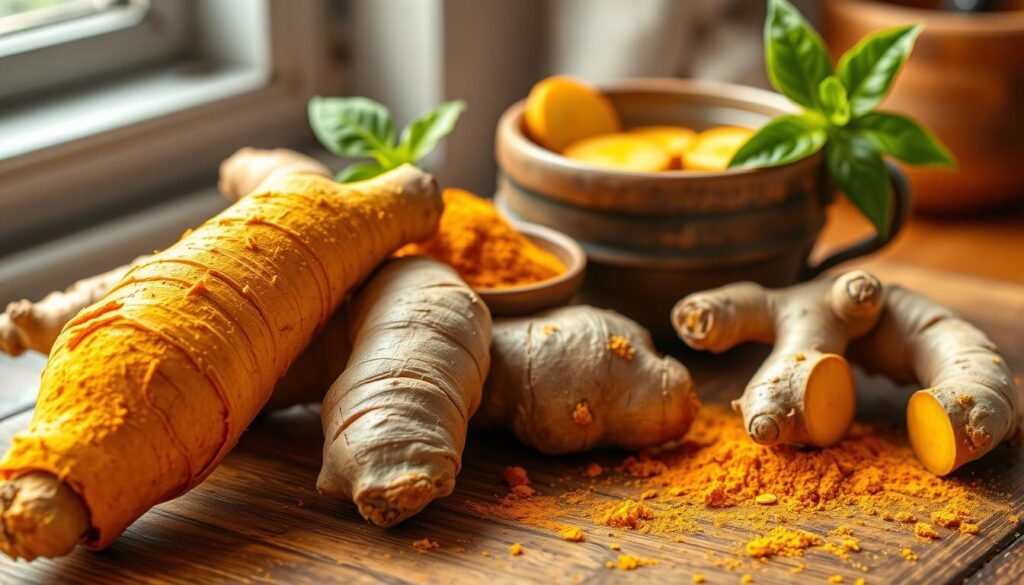
Turmeric and ginger at a glance: compounds, absorption, and onset that shape results
Compounds, absorption, and timing decide whether effects arrive in minutes or after consistent use. Match the format to your goals: quick digestive or workout relief, or steady anti-inflammatory support.
From compounds to outcomes: fresh ginger delivers gingerols that peak in about 45–60 minutes and ease acute discomfort and nausea. Curcumin makes up ~2–8% of the dried root and works on NF-κB, COX, and LOX but has poor oral absorption unless paired with black pepper or advanced formulations.
Choose fast action (fresh ginger or ginger shots) before activity and a bioavailable curcumin supplement for ongoing support. Combining both can reduce inflammatory markers more than either alone. For topical or clinical data, read the topical curcumin study and an absorption and formulation review. For supplement experiences, see this real-user summary.
Practical rule: use ginger situationally and prioritize enhanced curcumin when managing chronic joint pain. Start low, watch side effects, and check interactions with medications.
FAQ
Why compare turmeric and ginger now? What did the two-week test set out to answer?
The goal was to compare two popular root-based remedies side-by-side under consistent conditions: symptom tracking, dosing, and timing. I wanted to see which provided faster relief, how each affected swelling and stiffness, and whether side effects like nausea or digestive changes appeared. The test also looked at absorption — including the role of piperine (black pepper) in improving curcumin uptake — and practical matters like convenience and taste.
What did the two-week joint pain check measure, and how were doses chosen?
I tracked daily pain scores, morning stiffness duration, mobility during activity, and any digestive or skin reactions. Doses matched commonly recommended amounts: a standardized curcumin supplement with black pepper for one arm and a standardized ginger extract for the other, each taken twice daily. “Better” meant consistent, noticeable reductions in pain and stiffness without intolerable side effects.
How do the active compounds and absorption affect results?
The main active compound in the yellow root is curcumin, which has strong anti-inflammatory action but low natural bioavailability — that’s why black pepper (piperine) or fat-based formulations are used. The spicy root contains gingerols and shogaols, which absorb more readily and act quickly on pain pathways and nausea. Faster absorption often translates to quicker symptom changes, while curcumin’s effects may build more gradually but can be more potent when well absorbed.
Which provided faster relief over two weeks — the curcumin-based regimen or the ginger extract?
In this short test, the ginger extract tended to give quicker reductions in acute stiffness and nausea within days, while the curcumin formulation showed steady improvement in pain and mobility toward the second week, especially when paired with black pepper for absorption. Individual response varies, though, so “quicker” can differ by person and symptom type.
Are there safety concerns or common side effects to watch for with either option?
Both are generally well tolerated at moderate doses. The yellow root can cause mild digestive upset or, rarely, elevated liver enzymes at high doses — and absorption enhancers like piperine can alter medication levels. The spicy root can cause heartburn, mild gastric discomfort, or increased bleeding risk in high doses. If you take blood thinners, diabetes meds, or have gallbladder issues, consult your clinician before starting either regularly.
Does adding black pepper or fat matter with supplements?
Yes. Black pepper (piperine) and dietary fat both increase curcumin’s bioavailability substantially, meaning more active compound reaches tissues to exert effects. Many curcumin supplements include piperine or are formulated with lipids for that reason. Ginger extracts typically don’t need such enhancers to be effective.
How should someone choose between these options for ongoing use?
Base your choice on symptoms and priorities. If you want fast relief for stiffness or digestive benefits, ginger may be preferable. If you need stronger long-term anti-inflammatory support and use a well-absorbed curcumin formula, the yellow root could be the better option. You can also combine them under medical guidance for complementary effects.
Can fresh forms like ginger shots or ground yellow root powder work as well as extracts?
Fresh preparations and culinary use provide healthful compounds, but doses are lower and effects less consistent than standardized extracts. Ginger shots can help with acute nausea and inflammation, while powdered root or culinary use supports daily health. For targeted symptom control, standardized supplements give more predictable dosing.
How long should someone try a supplement before judging effectiveness?
Give a fair trial of 4–8 weeks for most formulations, though ginger can show changes within days. For curcumin, especially formulations relying on absorption enhancers, expect gradual improvements that become clearer after several weeks. Track symptoms and any side effects to make an informed decision.
Can these remedies interact with medications or underlying conditions?
Yes. Both can affect blood clotting and metabolic pathways. The yellow root, when combined with piperine, can increase blood levels of certain drugs. The spicy root may interact with anticoagulants and diabetes medications. Discuss supplements with your healthcare provider if you take prescription drugs, have liver disease, or are pregnant or breastfeeding.
Are there practical tips for adding either root to a daily routine safely?
Start with low to moderate doses and monitor response. Take curcumin supplements with a meal that contains fat or choose formulas with piperine for better absorption. For the spicy root, use standardized extracts or fresh slices in food or tea to avoid high concentrated doses unless directed. Keep a symptom log and consult a clinician if you plan long-term use or take other medications.



Don’t Miss These Picks