


Turmeric and ginger are closely related roots that have been used in cooking and traditional medicine for centuries. Both contain plant compounds with anti-inflammatory and antioxidant activity, but that does not mean they work equally well for every health goal.
The practical difference is this: curcumin, the best-known compound in turmeric, has promising human evidence for knee osteoarthritis pain and stiffness, although the research is not yet strong enough to call it a proven treatment. Ginger has better support for pregnancy-related nausea and menstrual cramps, while evidence for motion sickness, joint pain, and several other uses is less consistent.
Your choice should therefore depend on what you want help with, whether you are using the roots as food or taking concentrated supplements, and any medicines or health conditions that could change their safety.
Key Takeaways
- Turmeric and ginger belong to the same Zingiberaceae plant family but contain different major active compounds.
- Turmeric may be the more relevant option for knee osteoarthritis symptoms. Early evidence for curcumin is encouraging, but higher-quality studies are still needed.
- Ginger has better evidence for pregnancy-related nausea and menstrual cramps. Most studies of motion sickness have not shown a clear benefit.
- Cooking with the roots is different from taking concentrated extracts. Clinical studies usually use defined supplement preparations rather than normal food amounts.
- Supplement forms can interact with medicines and cause side effects. Highly bioavailable curcumin products have also been linked to rare liver injury.
Helpful Products at a Glance
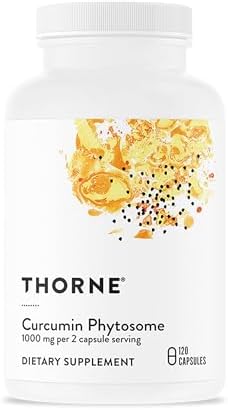
For readers considering a concentrated curcumin supplement: Thorne Curcumin Phytosome uses a formulated curcumin-phospholipid complex rather than ordinary turmeric powder. A formulated product may improve absorption, but it still cannot guarantee relief from joint pain.
- Mobility: Reduces joint stiffness*
- Comfort: Promotes flexibility by providing relief from minor aches and muscle soreness*
For readers who prefer a simple ginger capsule: NOW Ginger Root provides 550 mg of ginger root per capsule. Its labeled serving is not automatically equivalent to the higher total amounts used in some clinical trials, so study results should not be assumed from the product alone.
- PROMOTES GI COMFORT*: Ginger root has been used since antiquity to support digestive function*
- CARDIOVASCULAR HEALTH*: Studies have demonstrated that ginger may help to maintain healthy GI flora, aid the digestion of dietary fats, and calm and soothe the digestive tract*

Why Turmeric and Ginger Are Often Compared
Both plants grow from underground stems called rhizomes, both appear in traditional Asian cooking, and both contain compounds that researchers have studied for inflammation. That overlap makes them look interchangeable, but their strongest areas of research are different.

For someone mainly interested in chronic knee discomfort, a curcumin preparation may be more relevant. For someone dealing with pregnancy-related nausea or menstrual cramps, ginger has more directly applicable evidence. For general wellness, neither root needs to be treated like medicine: using both in meals can simply be part of a varied diet.
Turmeric vs. Ginger: What Is the Difference?
Turmeric (Curcuma longa) and ginger (Zingiber officinale) are members of the same botanical family. Fresh turmeric has vivid orange-yellow flesh and an earthy, slightly bitter flavor. Ginger has pale yellow flesh and a hotter, sharper taste.

Turmeric is common in curries, rice dishes, lentils, soups, and spice blends. Ginger works well in stir-fries, marinades, baked foods, sauces, and tea. Those culinary amounts can add flavor and useful plant compounds, but they should not be confused with concentrated extracts used in supplement research.
Curcumin vs. Gingerol: Their Main Active Compounds
Curcuminoids are a group of compounds in turmeric, with curcumin being the best known. Laboratory research shows that curcumin can influence several pathways involved in inflammation and oxidative stress. Human research has focused especially on osteoarthritis and inflammatory markers.
Gingerols and shogaols are important compounds in ginger. They also have anti-inflammatory and antioxidant properties, but ginger research in people has produced its clearest results in areas such as nausea and menstrual discomfort rather than broad treatment of chronic inflammation.
Why absorption matters with curcumin
Curcumin is not absorbed especially well in conventional forms. Manufacturers therefore use approaches such as phospholipid complexes, other enhanced-delivery systems, or piperine from black pepper. The National Center for Complementary and Integrative Health (NCCIH) notes that piperine is one way to improve curcumin bioavailability, but formulations differ substantially.
Higher absorption is not automatically better for everyone. NCCIH also reports that liver injury has occurred in some people taking highly bioavailable curcumin products. That makes dose, formulation, medications, and individual health history important considerations.
Which Is Better for Inflammation and Joint Pain?
For knee osteoarthritis, turmeric-derived curcumin currently has the stronger argument. Several reviews of clinical trials have reported improvements in pain, stiffness, mobility, or function, but the evidence varies because researchers have used different curcumin products, doses, and study designs.
NCCIH describes the early osteoarthritis evidence as positive while emphasizing that higher-quality research is still needed. That is more accurate than saying curcumin has been proven equal to ibuprofen or other anti-inflammatory medicines.

Ginger has also been studied for knee osteoarthritis and exercise-related soreness. Some studies have been encouraging, but the overall evidence is less certain. NCCIH notes that much of the research on ginger for knee osteoarthritis has been of poor quality.
A formulated curcumin option
If someone specifically wants a supplement instead of culinary turmeric, a formulated product can solve one practical problem: ordinary turmeric powder does not provide the same concentrated, standardized preparation used in many trials.
Thorne Curcumin Phytosome is one example. Its current 120-capsule Amazon listing uses a curcumin phytosome formulation designed to improve absorption. That makes it more relevant to the research discussion than simply taking extra turmeric powder, but it should still be viewed as an optional supplement rather than a treatment for arthritis.
- Mobility: Reduces joint stiffness*
- Comfort: Promotes flexibility by providing relief from minor aches and muscle soreness*
- Healthy Response: Helps maintain a healthy response in the joints, muscles, GI tract, liver, brain, eyes, and nerves*
- Superior Absorption: Thorne’s Meriva is the most clinically-studied curcumin on the market and as a phytosome complex it provides superior absorption compared to other curcumin extracts
Ginger for Nausea and Menstrual Cramps
This is where ginger has a clearer advantage. According to NCCIH’s review of ginger research, supplements may help nausea and vomiting associated with pregnancy and may reduce the severity of menstrual cramps.
One important correction is motion sickness. Ginger is often promoted for travel nausea, but most studies of motion sickness reviewed by NCCIH have not shown that it is helpful. Evidence is also uncertain for chemotherapy-related and postoperative nausea.
That distinction matters because “ginger helps nausea” is too broad. Results depend on the cause of nausea, the preparation used, and the person taking it.
A simple ginger capsule option
Fresh ginger, powdered ginger, and tea remain useful choices if your main goal is flavor or a soothing drink. A capsule is mainly about convenience and a consistent measured amount.
NOW Ginger Root 550 mg contains 550 mg of ginger root per vegetable capsule. The current Amazon listing includes 100 capsules, while the manufacturer recommends one capsule daily. Because clinical trials use different preparations and total daily amounts, do not assume that one capsule reproduces a particular study result.
- PROMOTES GI COMFORT*: Ginger root has been used since antiquity to support digestive function*
- CARDIOVASCULAR HEALTH*: Studies have demonstrated that ginger may help to maintain healthy GI flora, aid the digestion of dietary fats, and calm and soothe the digestive tract*
- DIGESTIVE SUPPORT*: Ginger possesses a number of constituents that may support healthy cardiovascular function and promote a balanced immune system response*
- GMP Quality Assured: NPA A-rated GMP certification means that every aspect of the NOW manufacturing process has been examined, including our laboratory/testing methods (for stability, potency, and product formulation)
What About Digestion and Immune Support?
Ginger has a long history of use for digestive discomfort, and many people find warm ginger tea pleasant when their stomach feels unsettled. However, clinical evidence varies depending on the specific digestive problem, so it should not be presented as a treatment for every type of stomach trouble.
Turmeric and ginger also show interesting immune, antimicrobial, and antiviral effects in laboratory research. Human evidence is much less convincing. Neither root should be used as a substitute for vaccination, prescribed antiviral treatment, or medical care for an infection.
Do Turmeric or Ginger Help Blood Sugar, Cholesterol, or Blood Pressure?
Researchers have studied both supplements for blood glucose, cholesterol, blood pressure, and other metabolic markers. Some trials and meta-analyses report modest improvements, but the findings depend heavily on the population, formulation, dose, and length of treatment.

For that reason, blood sugar, cholesterol, or blood pressure is not a good reason to replace proven treatment with either supplement. If you already use medicines for diabetes, hypertension, cholesterol, or another chronic condition, discuss concentrated herbal supplements with your clinician because they may affect treatment or interact with medication.
Turmeric vs. Ginger: Which Should You Choose?
| Goal | More Relevant Choice | What the Evidence Suggests |
|---|---|---|
| Knee osteoarthritis discomfort | Curcumin/turmeric extract | Promising evidence for pain and function, but not yet definitive |
| Pregnancy-related nausea | Ginger | May reduce nausea and vomiting; supplement use during pregnancy should be discussed with a clinician |
| Menstrual cramps | Ginger | Research suggests ginger supplements may reduce severity |
| Motion sickness | Neither clearly proven | Most ginger studies reviewed by NCCIH have not shown benefit |
| General cooking and diet | Both | Useful spices that can be included without treating them as medicine |
You can also use turmeric and ginger together in food. There is no need to decide that one root must completely replace the other. What matters is separating normal culinary use from concentrated supplements and matching any supplement to a realistic goal.
How to Use Turmeric and Ginger
In everyday food
- Add turmeric to lentils, soups, curries, roasted vegetables, rice, or eggs.
- Grate ginger into stir-fries, marinades, dressings, soups, or baked foods.
- Use both together when their flavors fit the recipe.
As tea
For a simple drink, simmer sliced ginger in water and add a small amount of turmeric. Lemon or honey can be added for flavor. Think of tea mainly as a food-based way to enjoy the roots rather than as a way to reproduce supplement trials.

As supplements
Do not assume that every turmeric or ginger supplement is interchangeable with products used in research. Check the amount per serving, exact extract or formulation, other added ingredients, suggested use, and warnings on the label.
Avoid choosing a dose simply because one study used it. Research doses can refer to whole root, concentrated extract, curcuminoids, or specialized delivery systems, which are not equivalent milligram for milligram.
Side Effects and Important Safety Considerations
Food amounts of turmeric and ginger are generally easier to tolerate than concentrated supplements. Ginger supplements can cause abdominal discomfort, heartburn, diarrhea, and irritation of the mouth or throat.
Turmeric or curcumin supplements can cause nausea, reflux, stomach upset, diarrhea, or constipation. NCCIH also warns that liver injury has been reported with some products formulated for increased curcumin absorption. Stop a turmeric or curcumin supplement and seek medical advice if symptoms such as dark urine, jaundice, unusual fatigue, nausea, or poor appetite appear.
- Check with your clinician before using concentrated turmeric or ginger if you take prescription medicines, especially medicines that affect bleeding or blood sugar.
- Discuss ginger supplements with your prenatal clinician if you are pregnant.
- Turmeric supplements may be unsafe during pregnancy, according to NCCIH.
- If you have gallbladder, liver, or other significant medical problems, discuss concentrated herbal supplements before using them regularly.
Conclusion: Is Turmeric or Ginger the Better Anti-Inflammatory?
There is no single winner for every purpose. If your main concern is knee osteoarthritis discomfort, curcumin has more relevant human research, although the evidence is still not strong enough to treat it as a replacement for standard care.
If your main concern is pregnancy-related nausea or menstrual cramps, ginger has the clearer evidence. Claims that ginger reliably treats motion sickness, chronic inflammation, immune problems, or every type of digestive discomfort go beyond what current research supports.
For everyday use, there is little reason to choose only one. Cook with both if you enjoy them. Consider supplements only when you have a specific goal, understand what formulation you are buying, and have checked whether it fits safely with your medicines and health conditions.
FAQ
Are turmeric and ginger from different plant families?
No. They both belong to the Zingiberaceae, or ginger, family. They are different plants with different major bioactive compounds and flavors.
Which is better for joint inflammation?
Curcumin has more promising evidence for knee osteoarthritis pain and function. However, results vary across studies, and NCCIH says better-quality research is still needed before firm conclusions can be made.
Is ginger good for nausea?
It depends on the cause. Ginger may help pregnancy-related nausea, but most research on motion sickness has not shown a clear benefit. Evidence is also uncertain for chemotherapy-related and postoperative nausea.
Does black pepper make turmeric work better?
Piperine from black pepper is one method used to increase curcumin bioavailability, but it is not the only option. Phytosome and other enhanced-delivery formulations are also used. Greater absorption does not automatically mean a product is safer or more effective for every person.
Can I take turmeric and ginger together?
Using both as normal foods or spices is common. Concentrated supplements deserve more caution because dose, formulation, medications, pregnancy, and existing medical conditions can change their safety.
Which form is best: fresh root, powder, tea, or supplement?
Fresh roots and powders are useful for cooking and flavor. Tea is a convenient food-based option. Standardized supplements provide more consistent amounts and may resemble clinical research products more closely, but they also bring more potential for side effects and interactions.