


Can swishing a spoonful of edible oil for 10–20 minutes truly cleanse your body, or is that just wellness lore? That question drives this guide.
Oil pulling is an ancient Ayurvedic practice that resurged online, but popularity doesn’t equal proof. In this article we explain what the practice involves, where it comes from, and what trials actually show.
Short trials report fewer oral bacteria, lower plaque, and improved gum markers when this routine complements standard care. A clinical review and specific studies — including findings summarized on dental research sites — support some local benefits.
However, claims about whole-body detox lack credible evidence. The liver and kidneys handle systemic cleansing, not the mouth. We’ll separate real effects from hype, cite research, and give practical safety tips so you can decide if the practice fits your routine.
Key Takeaways
- Oil pulling is a traditional mouth-rinsing practice with some short-term oral benefits.
- Research shows reductions in certain bacteria and plaque but trials are small.
- Detox claims go beyond evidence; the body’s organs — not the mouth — remove toxins.
- Use as an add-on, not a replacement for brushing and flossing.
- For a personal trial plan and everyday tips, see a detailed 14-day account here.
Oil Pulling, Detox Claims, and What the Evidence-Based Lens Says Today
Evidence supports modest oral benefits, but detox claims overreach. Your body’s cleaning systems run through the liver and kidneys — not the mouth.
Ancient Ayurvedic texts mention this mouth regimen, and its history oil pulling frames traditional aims like balancing bodily systems. In the past few years, the practice surged in the United States after social feeds and influencers pushed dramatic results.

Dental professionals urge caution. A dentist-led, evidence-based view separates local oral gains from broad health promises. Short trials show fewer bacteria and reduced plaque in the mouth, but these findings do not prove whole-body detox.
Why detox claims persist
Detox messaging sounds appealing and simple. Still, it conflicts with basic physiology: the liver and kidneys filter and clear metabolites. Swishing edible oils—coconut, sesame, or sunflower—may help oral hygiene, but it cannot replace organ function.
Consider the practice as a complementary oral habit, not a cure-all. Weigh evidence over popularity, keep regular dental care, and consult a professional before making major health changes. For deeper reviews and mechanisms, see this detailed review on oral care and a breakdown of how lipids affect bacteria.
Oil Pulling Science: What research really shows about bacteria, plaque, and gum health
Studies published in dental and health journals suggest swishing edible oils can lower oral bacteria and reduce plaque when used alongside regular brushing. This is not a miracle cure, but the data show consistent short-term oral gains.
What happens to bacteria and plaque?
Less bacterial load often means better gum markers and fresher breath. A Journal of Clinical and Diagnostic Research trial found coconut reduced Streptococcus mutans, a key agent in tooth decay.
How quickly do gums improve?
A 2017 study published in Complementary Therapies in Clinical Practice reported noticeable drops in plaque-induced gingivitis within one week. A 2020 European Journal of Dentistry study found significant plaque reduction after 30 days.
Do cavities get repaired?
Swishing lowers risk factors for tooth decay by cutting plaque and bacteria. It does not repair cavities or reverse structural tooth damage.
What about bad breath and whitening?
Comparisons show sesame performed similarly to chlorhexidine for halitosis-related bacteria in controlled trials, including a 2017 International Journal of Health Sciences report and earlier 2009 work.
Claims of whitening remain anecdotal; current studies do not support strong whitening effects versus normal dental care.
Does mouth rinsing detox the body?
The idea of whole-body detox from a rinse lacks credible evidence. Your liver and kidneys perform systemic cleansing, not the mouth. For a deeper review of oral hygiene research, see this summary on oral rinses and oral health.
| Outcome | Key finding | Notable study | Practical note |
|---|---|---|---|
| Bacterial reduction | Lower Streptococcus mutans | Journal of Clinical and Diagnostic Research | Supports reduced decay risk factors |
| Plaque | Significant reduction | European Journal of Dentistry, 2020 | Best as an adjunct to brushing |
| Gingivitis | Improvement within 1 week | Complementary Therapies, 2017 | Early gum-marker gains possible |
| Halitosis | Comparable to chlorhexidine | Int J Health Sci, 2017 & 2009 | Useful for fresher breath short-term |
How to Try Oil Pulling Safely and Effectively (Step-by-Step)
Here’s a clear, step-by-step routine to try oil pulling safely without disrupting your regular oral care. Treat this as a small add-on to brushing and flossing, not a replacement.
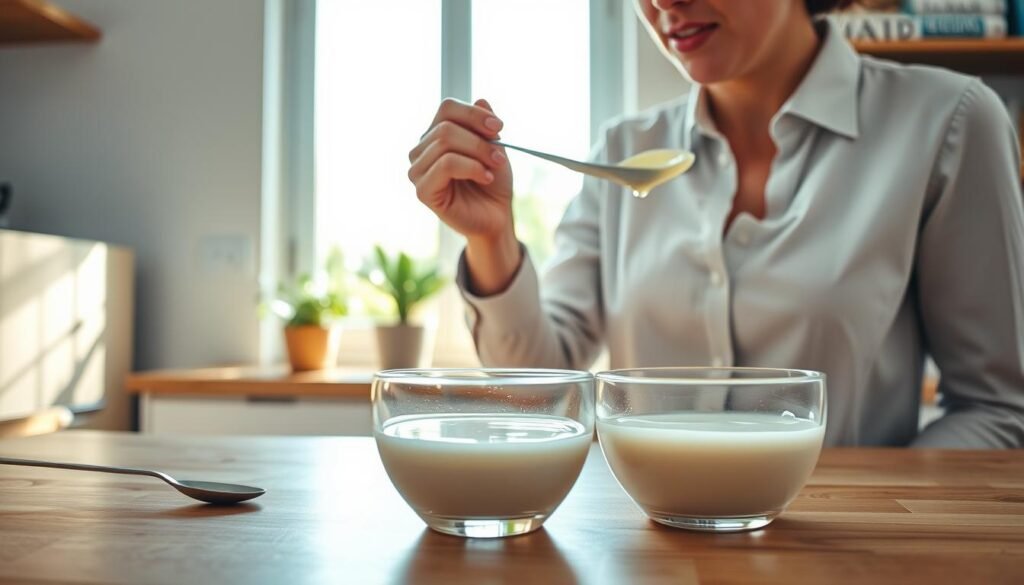
- Timing: Aim for 10–20 minutes in the morning before eating or drinking. Consistency matters more than intensity.
- Measure: Put roughly a tablespoon of coconut oil, sesame, or sunflower in your mouth. Use an edible, food-grade option.
- Technique: Gently swish the oil around your mouth. Do not gargle. Pause if your jaw tires and resume slowly.
- Dispose: Spit into a trash can—never the sink—to avoid drain clogs. Rinse with warm water afterward.
- Aftercare: Brush your teeth and continue flossing as usual. Schedule regular visits with your dentist for checks.
Choose oils with a purpose. Coconut and coconut oil contain lauric acid that may reduce certain bacteria. Sesame and sunflower are neutral, traditional options that work well for most people.
Safety notes
A few precautions keep the practice safe. Avoid swallowing the oil. Supervise older children if they try this. Stop if you notice irritation or unusual gum sensitivity.
“Treat this method as a simple oral hygiene habit that complements — but never replaces — proven dental care.”
| Step | What to do | Why it matters |
|---|---|---|
| Timing | 10–20 minutes in the morning | Allows contact time without eating or drinking first |
| Amount | About one tablespoon | Enough to swish without jaw strain |
| Disposal | Spit into trash, rinse, brush | Prevents plumbing issues and completes oral care |
| Frequency | Start once daily or several times weekly | Adjust for comfort and results; consistency helps |
For a concise review of oral hygiene practices and related evidence, see this summary on oral care and routine.
Realistic Benefits vs. Hype: What oil pulling can and cannot replace
The practice can add value to daily hygiene, yet it cannot replace professional cleaning or repair. Think of it as a supplemental step that may lower plaque and improve breath for some people, not a cure for disease.
Influencer claims vs. dentist guidance in current practice
Influencers often show dramatic before-and-after clips. Those posts can blur the line between honest reviews and paid promotion. A dentist judges benefits against clinical evidence and patient risk.
Why this doesn’t replace brushing, flossing, or professional dental care
Daily brushing and interdental cleaning remove soft plaque; only a clinician can remove hardened tartar. Regular professional exams also screen for early gum disease and other oral issues.
- Realistic: Short trials and research note reduced plaque and better gum markers as an adjunct.
- Unrealistic: It does not cure cavities, reverse structural tooth damage, or replace cleanings.
- Practical tip: Keep your routine—brush, flossing, and attend checkups—and treat this as a bonus habit.
“Enjoy small gains without sacrificing foundational dental care.”
For a balanced review and patient-focused guidance, see this dental center summary.
Conclusion
When paired with regular dental care, a brief swishing routine may support gum health and help control bad breath. Evidence from small trials and a recent study published shows reductions in oral bacteria and some plaque when this practice complements brushing and flossing.
Keep expectations realistic: it does not reverse cavities, cure tooth decay, or detox your body.
If you try oil pulling, swish an edible option like coconut oil, sesame oil, or sunflower oil for 10–20 minutes, use about a tablespoon, spit into the trash, then rinse and brush. Track changes in your gums and teeth and consult your dentist for persistent concerns. Small, steady habits and professional care beat influencer hype every time.
FAQ
What is the historical origin of oil pulling and why has it become popular again?
Oil pulling comes from Ayurveda, a traditional Indian system of medicine, where clinicians used swishing oils as part of oral and whole-body routines. It regained popularity in the United States and online wellness circles because influencers and some holistic practitioners highlighted simple, low-cost benefits like fresher breath and improved gum comfort. Modern interest grew alongside research exploring antibacterial effects of certain oils such as coconut and sesame, but renewed use is mostly driven by consumer curiosity and anecdotal reports rather than strong, large-scale clinical proof.
Does oil pulling actually “detox” the body?
No — the idea that swishing oil removes systemic toxins is not supported by credible evidence. The liver and kidneys handle systemic detoxification. Swishing oil can reduce some oral bacteria and plaque temporarily, which may improve mouth odor or gum inflammation for some people, but it should not be seen as a substitute for medically supported detox processes or treatments.
What does research show about oil pulling reducing oral bacteria and plaque?
Clinical studies and dental-journal papers show that swishing certain oils can lower bacterial counts and reduce plaque levels compared with no treatment. Results vary by study design, oil type, and duration. Reductions are typically modest and comparable to some mouthrinses for short-term measures, but long-term benefits and effects on hard outcomes like tooth loss remain less certain.
I heard about a 2017 study that helped gingivitis in a week — what did it find?
A 2017 trial reported improvements in plaque-induced gingivitis symptoms after regular swishing with certain oils over a short period. Participants showed reduced inflammation and plaque scores versus controls. While promising, the study size and follow-up length limit broad conclusions, and researchers urged more rigorous, larger trials to confirm sustained clinical benefits.
Can oil swishing prevent cavities or repair tooth decay?
Oil swishing may reduce some cavity risk factors, like bacterial load and plaque, but there’s no evidence it repairs enamel or reverses established cavities. Preventing decay relies primarily on fluoride use, regular brushing and flossing, dietary control of sugars, and professional dental care. Consider oil swishing an adjunctive hygiene habit, not a restorative therapy.
Is oil swishing effective for bad breath compared to conventional mouthwashes?
Some studies comparing sesame oil or coconut oil to chlorhexidine and standard mouthrinses showed similar short-term reductions in halitosis measures. However, medicated rinses often have stronger, more predictable antimicrobial action. For persistent bad breath, see a dentist to rule out underlying causes rather than relying solely on swishing.
Will swishing oil whiten my teeth?
Evidence for whitening is limited and mostly anecdotal. Mechanical removal of surface stains through swishing may produce mild cosmetic differences for some people, but it’s unlikely to match professional whitening or peroxide-based products. If whitening is your goal, consult a dental professional for safe, effective options.
How long should I swish, and how often is recommended?
Typical guidance from studies and practitioners suggests swishing gently for 10–20 minutes once daily, usually in the morning before brushing. Shorter sessions (5–10 minutes) may still offer some benefit while reducing jaw fatigue. Start with what feels comfortable and safe for you.
How much oil should I use and how should I discard it?
Use roughly one tablespoon of oil. Swish gently around the mouth without gargling or vigorously sucking. After the session, spit the oil into a trash can (not the sink) to avoid plumbing clogs, then rinse your mouth and brush your teeth as usual.
Which oils are recommended for swishing and why?
Commonly used oils include coconut, sesame, and sunflower. Coconut oil contains lauric acid, which has documented antimicrobial properties in lab studies. Sesame and sunflower oils have also shown some antibacterial and anti-inflammatory effects in trials. Choose a high-quality, food-grade oil and avoid flavored or adulterated products.
Are there safety concerns I should know about?
Yes. Avoid swallowing the oil, as it contains bacteria and debris from the mouth. Supervise children and those with swallowing difficulties. Stop if you experience jaw pain or fatigue; reduce session length or frequency. People with lipid metabolism disorders should discuss use with their healthcare provider. Always combine swishing with standard dental care rather than substituting for it.
Can oil swishing replace brushing, flossing, or professional dental visits?
No—dentists and dental associations emphasize that swishing complements but does not replace brushing with fluoride toothpaste, daily flossing or interdental cleaning, and regular professional care. Those practices have robust evidence for preventing cavities and periodontal disease, while swishing offers modest, adjunctive oral benefits at best.
How should I follow up after a swishing session?
Spit out the oil into the trash, rinse your mouth with water, and brush your teeth. Floss as usual. This aftercare helps remove loosened debris and maintain oral hygiene. If you have concerns about gum bleeding, persistent bad breath, or other symptoms, consult your dentist.
What should I expect if I try swishing for several weeks?
Some people notice fresher breath and reduced gum sensitivity or mild decreases in plaque and gum inflammation. Changes vary widely and often appear within days to weeks. Track results and continue standard oral hygiene routines. If you see no improvement or notice negative effects, stop and speak with your dental provider.
Are there credible guidelines or systematic reviews on this practice?
Systematic reviews summarize modest short-term benefits for oral markers like plaque and gingivitis but underline limitations: small trials, variable methods, and short follow-ups. Trusted sources such as PubMed-indexed reviews and dental association statements recommend more high-quality research before making broad clinical recommendations.
Can certain health conditions make swishing risky?
People with swallowing difficulties, recent oral surgery, open wounds, or a high aspiration risk should avoid swishing. If you are immunocompromised or have specific medical concerns, consult your physician or dentist before starting any new oral practice.
How do influencer claims compare to dentist guidance?
Influencer claims often highlight dramatic, anecdotal results without context or evidence. Dentists base guidance on clinical studies and standard preventive care. Treat influencer advice as personal testimony; consult dental professionals for individualized, evidence-based recommendations.
Where can I find reliable studies or further reading?
Look for peer-reviewed articles on PubMed, systematic reviews in dental journals, and guidance from reputable organizations such as the American Dental Association and National Institutes of Health. These sources provide balanced, evidence-based information to help you evaluate benefits and risks.