


Want to move easier, lift stronger, and feel fewer aches with just five short routines? This guide lays out the five essential moves, why they work, and how to fit them into a busy life.
Mobility means moving a joint through its full range with control and stability, a definition used by physical therapists like Amy Hutson, DPT, and Winnie Yu, DPT, CSCS.
Spending 5–10 minutes on simple drills can improve joint health, neuromuscular control, and blood flow. That boosts everyday tasks like dressing and walking and makes your workout sessions safer and more productive.
Begin with short sessions and build consistency. For practical options and easy drills you can do anywhere, see this helpful overview from Kaiser Permanente.
Key Takeaways
- Five core moves target hips, spine, and shoulders for daily function.
- Short sessions (5–10 minutes) improve range motion and blood flow.
- Start slow: 2–3 sessions weekly, build toward 4+ times per week.
- Clear cues and progressions help make each repetition safe and effective.
- Consistency beats duration — brief, regular practice compounds results.
Why Mobility Belongs in Every Workout Plan
Mobility is the missing piece that ties strength, cardio, and recovery together. It improves how your joints move so every workout feels better and delivers more.
Adding short joint-focused work to your routine makes every training session safer and more effective.
Research links higher mobility scores with fewer injuries, and experts suggest 5–10 minutes a day or 2–4 sessions weekly to see gains.
When joints move through a healthy range, movement becomes efficient. Power transfers cleanly and you generate strength without compensations that stress the knees or foot.
Mobility practice restores control at end ranges, reducing injuries where breakdowns usually happen. It also supports posture and a steady chest position for safer lifts.
- Quick time investment: Five to ten minutes can re-educate movement patterns and prime the nervous system.
- Performance boost: Better range unlocks fuller squats, smoother lunges, and stronger overhead positions.
- Longevity: The result is fewer aches and a training plan that’s easier to sustain over months and years.
| Benefit | Why it matters | Practical time |
|---|---|---|
| Injury reduction | Restores control at end ranges and reduces compensations | 5–10 min/session |
| Better performance | Improves range for stronger lifts and efficient running | 2–4 sessions/week |
| Joint health | Keeps knees, foot, hips, and chest posture mobile and resilient | Short daily practice |
What Mobility Is and How It Differs from Flexibility, Stretching, and Stability
Mobility blends strength and control through movement; flexibility is passive length; stability holds positions against disturbance. Understanding these differences helps you train the right quality at the right time.
Mobility is the skill of moving a joint with strength and precision, not just how far a muscle can lengthen. It requires muscles and the nervous system to guide safe motion through a full range.
How does mobility demand active control?
Mobility asks for coordinated force across the hips, spine, and shoulder. You practice moving into ranges while resisting collapse or wobble.
What about flexibility and stretch?
Flexibility measures passive tissue length — think a seated toe touch. A stretch targets soft tissue and can be static or dynamic, but it doesn’t train you to use the length under load.
And stability?
Stability holds a position or resists unwanted motion. Planks and single-leg balance teach your body to keep key segments steady while other parts move.
“You can be flexible without being able to move well; training all three builds usable range and safer strength.”

Daily Mobility Exercises
Consistent, brief practice teaches your nervous system safer, stronger ranges of motion. A short routine of five to ten minutes can cover hips, spine, shoulders, and ankles and fit into warm-ups or cooldowns.
Consistent practice helps you hold better positions and move with less effort. Experts recommend near-daily work, with just 5–10 minutes most days to see measurable gains.
- Keep it short: Aim for focused reps that train the whole chain, not fatigue.
- Target limits: Pick drills that address your tightest joints while still moving connected areas.
- Repeatable positions: Simple, reliable positions increase adherence on busy schedules.
- Progress safely: Begin in gentle ranges, breathe, and expand motion as tissues warm.
- Use timing wisely: Fit this work before a session to groove patterns or after to restore range motion.
Track which moves help most so you can prioritize them when time is short. Over weeks, small consistent gains compound into noticeable freedom and stronger movement.
Science-Backed Benefits: Range of Motion, Injury Reduction, and Strength Gains
Mobility supports joint health, reduces injury risk, and helps you express strength through full range motion. Better control equals better performance and longer training longevity.
Improve joint health and neuromuscular control
How does better control protect joints?
Training usable movement improves synovial fluid flow and tissue elasticity. That keeps cartilage and soft tissue nourished and less prone to stiffness.
Controlled range motion builds tolerance at end ranges and teaches the nervous system to coordinate leg and arms actions efficiently.

Why does fuller range make lifts and runs stronger?
When hips and ankles move freely, squats and lunges feel deeper and more powerful. Thoracic mobility lets the chest stabilize under load so you press and carry with less compensation.
Studies link higher mobility scores with fewer injuries — PeerJ 2021 found better screens predict lower injury rates, likely from balanced loading.
Aging well: Keeping joints lubricated and resilient
Yes. Short, regular sessions keep synovial fluid moving and maintain tissue elasticity so you feel less creaky over time.
Ultimately, mobility multiplies your training by giving every rep cleaner mechanics and more efficient force transfer — a clear win for long-term health.
Who Should Prioritize Mobility Work and When to Do It
Everyone benefits — athletes, desk workers, and active agers should add brief joint sessions to their routine. Slot this work before a workout to prime movement or after training to restore tissue and reduce stiffness.
You don’t need pain to start; short targeted sessions help build usable range and confidence in daily movement.
If you’re new, begin with 2–3 sessions a week and increase frequency as your body adapts. Aim to build toward 4+ sessions weekly or 5–10 minutes most days when you can.
Use this work as a primer for strength or cardio so your first sets or strides start with better mechanics. On recovery days, keep intensity low and focus on breathing and gentle ranges to aid circulation and tissue health.
Short micro-sessions spread through the day help busy people maintain range and reduce stiffness. If one joint feels limited, give it priority while keeping a balanced whole-body approach.
| Audience | When to Do It | Typical Time | Primary benefits |
|---|---|---|---|
| Athletes | Pre-workout and post-session | 8–12 minutes | Improved performance and fewer compensations |
| Desk workers | Morning and breaks during the day | 3–6 minutes each session | Reduced stiffness and better posture |
| Active agers | Morning or evening gentle sessions | 5–10 minutes | Maintains joint range and comfort |
Time and Equipment: What You Need to Get Started Today
You can start today with a mat and your bodyweight; five to ten minutes goes a long way when practiced consistently. Minimal props such as a foam roller, blocks, and bands help you find better position and reduce strain without adding complexity.
Keep setup simple so practice becomes a habit. A small kit lets you move from your desk or living room in seconds.
Minimal gear to keep it easy
- Mat: Comfort and traction for floor-based work.
- Foam roller: Support for myofascial release and gentle leverage.
- Blocks: Help you adjust angles to protect joints.
- Bands: Add mild resistance or assist ranges as needed.

Five to ten minutes: movement snacks that fit any day
Treat short sessions as quick resets to break long sitting and restore comfortable hip and shoulder position.
- Pick two or three moves you can do anywhere — spinal articulation and hip rock-backs work well.
- Keep a kit nearby so starting takes seconds, not minutes.
- Use controlled tempo and breathable ranges to protect joints and build usable range.
For simple sequences and more guided drills, check this concise guide on mobility exercises to expand your routine as time allows.
Safety First: Form, Tempo, and Pain versus Productive Discomfort
Quality beats intensity. Smooth motion, steady breathing, and aligned joints protect you and accelerate progress.Train each rep like a skill: move slowly, stack joints, and stop at cues your body gives you.
Train each rep like a skill: slow, aligned, and deliberately controlled to avoid harm.
Keep reps controlled. Use a measured tempo so you learn where your spine and shoulders are in space. Slow motion teaches stability and reduces the risk of injuries.
Listen to tension, not pain. Mild stretch or firm tension can be useful. Sharp, burning, numb, or pinching sensations are red flags. If that happens, ease off, change the angle, or pick an easier regression.
- Stack joints: ribs over pelvis; knee over midfoot; wrist under shoulder.
- Pause: Brief holds at end range build control—avoid bouncing.
- Breathe: Exhale on effort to reduce guarding and let tissues adapt.
- Progress with consistency: Good form repeated often beats occasional intensity.
“Controlled, repeatable motion is the safest way to add usable range and protect long-term function.”
| Focus | Safe cue | When to regress |
|---|---|---|
| Spine control | Segmented movement, neutral ribs | Reduce range, use hands for support |
| Shoulders | Scapula glide, no shrug | Limit elevation, use band assistance |
| Hips & knees | Knee over midfoot, steady tempo | Shorten range, add support |
Warm-Up Primer: Prep Hips, Ankles, Spine, and Shoulders Before You Move
Start with breath-led, small-range articulation to prime joints and calm the nervous system. Use gentle progressions so tissues warm, cues register, and your first working set is safer and cleaner.
A short, deliberate warm-up readies the body for load without wasting time. Begin slow and expand range with control. Below are focused cues and practical progressions you can use before strength or cardio work.
Breath-led spinal articulation
Use spinal waves synced to the breath. Inhale to create length through the neck and ribs. Exhale to round the tailbone, then reverse the pattern for smooth segmental motion.
Keep cues simple: ribs down, long neck, light core brace. Two to three slow reps per direction reduce morning stiffness and teach control.
Gentle hip and ankle openers
Start with hip rock-backs and ankle drives to wake end ranges. Keep the motion small, then add range as tissues allow.
- Hip: add half-kneeling hip flexor lifts on the left leg and the right for balance.
- Ankle: perform ankle drives with a planted foot and soft knee bend.
- Finish with a few controlled shoulder circles to prime overhead patterns.

End the primer with 1–2 reps of a full-body flow such as tall plank to downward dog to link spine, hips, and shoulders for smooth range motion.
How to Do the Five Essential Daily Mobility Exercises
Use clear, repeatable patterns to teach your body safer hip, spine, and shoulder motion. Each move links rotation, lunge mechanics, and spinal flow so you can move with control.
World’s Greatest Stretch
Start in plank with wrists under shoulders. Step the right foot outside the right hand and keep the left leg long.
Drop the right forearm, rotate through the mid-back, then reach the right arm toward ceiling. Stack the shoulders and avoid flaring ribs.
Do: 8–10 reps each side, breathe through each rotation.
90/90 Hip Switch
Sit tall with heels planted and knees bent. Rotate both knees side to side, driving rotation from the hips while keeping the torso upright.
Do: 6 controlled reps. Pause to own the end range and keep foot pressure light.
Cat-Cow
On hands and knees, align knees under hips and hands under shoulders. Inhale to round and tuck the pelvis; exhale to lift the sternum and extend.
Do: 8 reps with 2–3 second holds, segmenting the spine from tailbone to head for smoother back motion.
Downward Dog Hip Opener
From plank, push into downward dog and lengthen the back. Lift a leg, open the hip, then slowly lower and switch sides.
Do: 8 reps total, keep the supporting foot grounded and arms long.
Half-Kneeling Adductor Rock
Set a half-kneeling position with the lead foot stepped wide. Maintain a neutral spine and light core brace.
Rock the hips laterally toward the lead side to glide the inner thigh. Avoid dumping weight into the low back or collapsing the knee.
Do: 8–12 reps per side with even, controlled motion.
- Tip: Use lunge and hip rotation patterns to connect hips and spine under gentle load.
- Alignment: Keep shoulders relaxed, distribute weight through each foot, and steady your gaze for balance.
- Progress: Shorten range on stiff sides—quality reps beat quantity and times should be consistent.
| Move | Reps | Primary cue |
|---|---|---|
| World’s Greatest Stretch | 8–10 each side | Right foot outside right hand; rotate and reach right arm toward ceiling |
| 90/90 Hip Switch | 6 reps | Heels planted; drive rotation from hips, keep torso tall |
| Cat-Cow | 8 reps | Segment spine; 2–3s holds; inhale/exhale rhythm |
| Downward Dog Hip Opener | 8 reps total | Support foot grounded; open hip without twisting ribs |
| Half-Kneeling Adductor Rock | 8–12 per side | Neutral spine; rock hips laterally; protect knee |
Form Cues for Each Move: Hips, Knees, Ankles, and Spine Alignment
Focusing on joint stacking and breathing turns loose range into usable control. These simple cues protect joints and make each repetition teachable and repeatable.
Start each drill by checking your base: foot pressure, knee tracking, and a neutral ribcage. Small adjustments save strain and build stronger ranges over time.
Foot pressure and knee tracking over toes
- Keep a soft brace and a neutral ribcage so the spine stays long while the hips explore range on each side.
- Track the knee over the second and third toe; avoid caving inward. Feel even pressure across heel, big toe, and little toe.
- Maintain ankle alignment by preventing an excessive inward roll; widen stance if balance falters.
Neutral ribcage and shoulder positioning
- Shoulders stay down and back, not shrugged; head aligns with the spine to reduce neck tension.
- Position wrists under shoulders and knees under hips during quadruped patterns for consistent feedback.
- If a knee wobbles, slow the motion, shorten range, and re-establish a stable foot before progressing.
- Breathe through end ranges to lower guard and increase usable motion with less effort.
- Film from the side to check joint stacking and refine cues over time.
| Focus | Quick cue | When to regress |
|---|---|---|
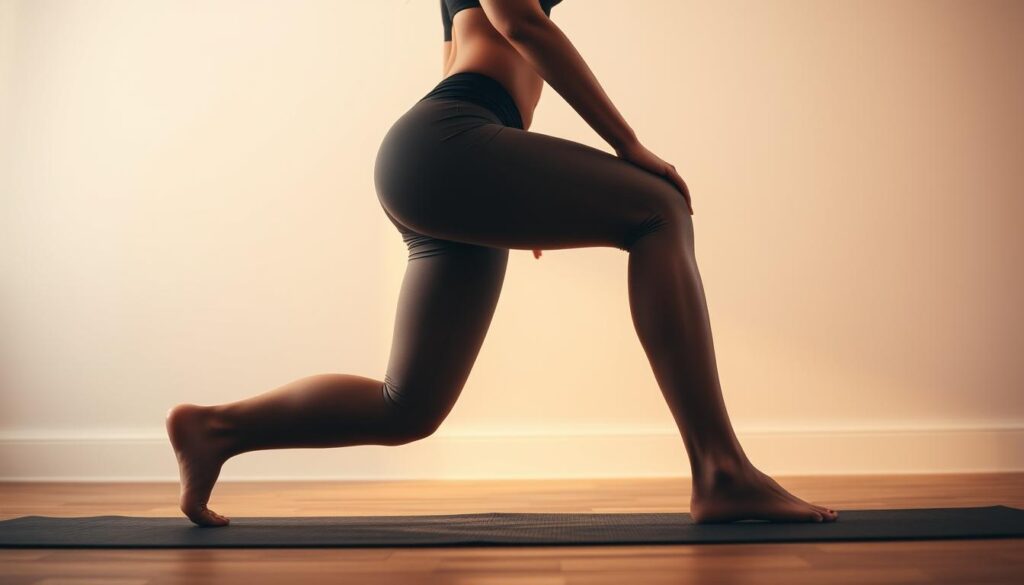
| Hips | Neutral ribcage; soft core brace | Reduce range; use support |
| Knee & foot | Knee over 2nd-3rd toe; foot tripod | Shorten step; steady foot |
| Ankle & side balance | Avoid inward roll; adjust stance width | Hold support; slow tempo |
| Spine & shoulder | Stack joints; shoulders down/back | Limit rotation; use band aid |
Programming Your Mobility Workout: Sets, Reps, Frequency, and Progression
Treat your mobility work like a short skill session that builds usable range, not fatigue. Programed sets and clear progression keep gains steady while protecting your strength sessions.
Start each block with intention: choose 3–5 drills and prioritize the tightest side. Use controlled reps and short holds so you train control at end range, not endurance.
Beginner to advanced: From two to four days per week
Beginners: aim for 2–3 sessions per week, 6–8 reps per drill, and 1–2 second holds at the end range.
Progression: move to 4+ days or sprinkle short blocks most days as control improves. Total session length should stay near 5–15 minutes so consistency stays high.
Tempo, holds, and adding rotation or load for challenge
Use a slow tempo — two counts on the way in, controlled return, and brief holds. When form stays crisp, add gentle rotation, longer holds, or a small weight (a light kettlebell) to introduce load.
- Start with 6–8 reps and 1–2s end-range holds; progress to 10–12 reps as control improves.
- Program two to four days per week or short bursts most days; adjust times around strength training and recovery.
- Progress by adding rotation, longer holds, or light weight while keeping smooth motion.
- Rotate emphasis by side to fix asymmetries without fatiguing stabilizers in one session.
- Use blocks: keep volume steady for 3–4 weeks, then add a new challenge if form is solid.
- If range stalls: regress to easier angles, reinforce alignment, and rebuild tempo before loading.
| Level | Sessions/week | Reps & holds | Progression |
|---|---|---|---|
| Beginner | 2–3 | 6–8 reps, 1–2s hold | Improve control, increase reps |
| Intermediate | 3–4 | 8–10 reps, 2s hold | Add rotation or light weight |
| Advanced | 4+ or short daily blocks | 10–12 reps, varied holds | Longer holds, added load, side bias |
Regressions and Progressions: Customize to Your Body and Goals
Find the right entry point and a clear path forward: use simple props to protect joints, then add load or single‑leg work when your position stays consistent. Progress slowly — smooth reps and steady alignment tell you when to step up the challenge.
Start by shortening levers and adding support if hips, shoulder, or spine feel stiff; later, work lateral and rotational patterns to build resilient range.
Use props and shortened ranges for tight hips or shoulders
Elevate hands on yoga blocks or place the foot on a low step to shorten the lever and keep the joint position high quality.
For tight shoulders, reduce overhead reach or use a dowel to guide the path so the ribs stay neutral and the shoulder blade tracks well.
Advance to Cossack squats, thoracic extensions, and windmills
Work partial Cossack squats first, keeping the extended leg active and the heel down to train lateral hip control.
Add thoracic extension over a foam roller to open the spine, then fold that motion into windmills to combine rotation and stability.
- Regress: elevate hands, shorten range, or use a wall for balance to protect position and technique.
- Assist: bands can help rotation or add gentle resistance that teaches control at end ranges.
- Progress: move from bilateral stances to split and single‑leg patterns to challenge balance and side‑to‑side control.
- Rule: advance only when reps feel smooth and joint positions stay consistent across the leg and arm paths.
- Smart move: return to regressions whenever form degrades — regress to progress is a valid strategy.
“Use support to protect the joint and progress to challenge the nervous system; quality of position trumps depth every time.”
| Goal | Regression | Progression |
|---|---|---|
| Hip control | Partial Cossack, heel supported | Full Cossack squat, loaded lateral squat |
| Thoracic opening | Foam roller with small arches | Large extensions + windmills with light weight |
| Shoulder range | Reduced overhead angle, dowel guidance | Band‑assisted reach, loaded windmill |
Integrate Mobility into Your Day: Morning, Pre-Workout, and Bedtime Routines
Slot 5–10 minutes where you’ll stick with it—morning, before training, or at night. Small, regular deposits compound into lasting gains for joint range and overall health.
Morning: Use breath-led spinal articulation and gentle hip openers to turn morning stiffness into smooth movement. Keep reps slow and breathe long exhales to wake the nervous system without strain.
Pre-workout: Pick joint drills that mirror your main lift or run. Brief, specific practice primes motor patterns so your first working sets feel safer and stronger.
Bedtime: Choose a slower tempo and longer exhales to downshift the system and support recovery. Light spinal flows and gentle hip rocks help you relax and sleep better.
- On hectic days: do 2–3 quick “movement snacks” between tasks to keep hips and shoulders loose.
- Build a trigger habit: attach the routine to a stable cue like coffee or teeth-brushing so it becomes automatic.
- Track adherence: note sessions each week and aim for most days to build momentum and lasting benefit.
“Consistency matters more than duration—short, focused sessions usually beat longer, sporadic efforts.”
| Time of Day | Focus | Typical Length |
|---|---|---|
| Morning | Breath-led spinal flows, hip openers | 5–10 minutes |
| Pre-workout | Joint-specific priming to match the workout | 5 minutes |
| Bedtime | Slow tempo, long exhales for recovery | 5–8 minutes |
For quick ideas you can try before a session, see this concise mobility primer that matches short routines to common goals.
How to Track Mobility Progress Without Fancy Tools
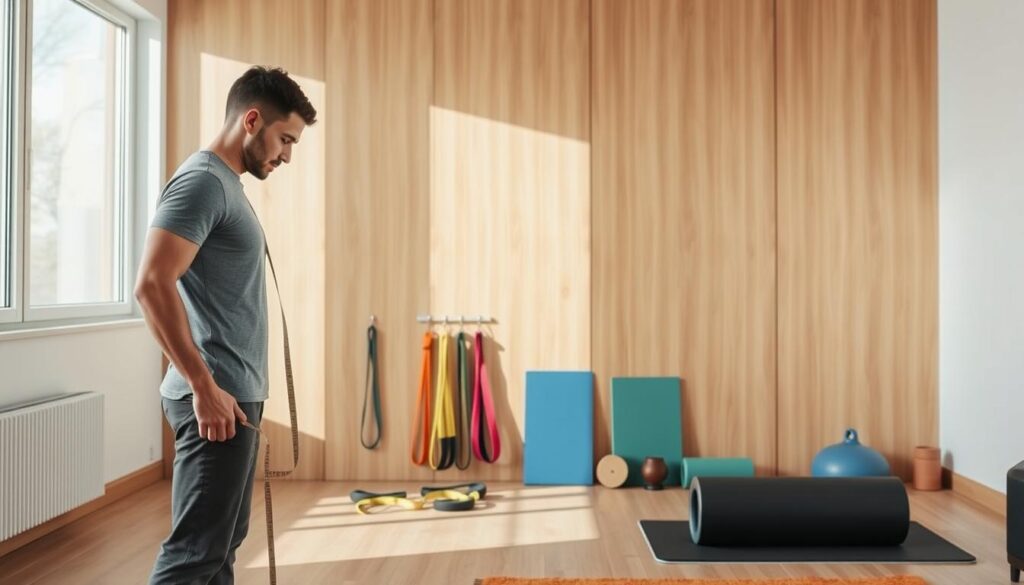
You don’t need expensive gear to measure change — small, repeatable checks reveal real gains. Self-filming, quick journal notes, and simple benchmarks give clear feedback on range and form so you can adjust routines sensibly.
Self-filming is the fastest way to spot technical issues and to celebrate small wins over weeks.
How can videos reveal changes in movement?
Record short clips from the front and side. Watch joint stacking, knee tracking, and smoother range motion across sessions.
Review footage monthly to see trends — deeper squats, cleaner lunges, or improved overhead reach are easy visual wins.
What should you write in a quick workout journal?
After a session, note which drills felt best, where stiffness lived, and energy levels. Rate stiffness 1–10 and note differences between sides.
Keep entries short and actionable so tracking stays sustainable. Track adherence (days practiced) alongside how you feel.
When is it time to see a coach or PT?
If pain persists, technique stalls, or you see big asymmetries, consult a qualified coach or physical therapist. They can assess patterns and give a personalized plan.
- Record clips front and side to check joint stacking and form.
- Journal quick notes: best drills, limited joints, energy.
- Rate stiffness 1–10 and compare sides to guide sessions.
- Use simple benchmarks: squat depth, overhead reach, lunge control.
- Keep data light — enough to adjust, not so much it becomes a chore.
- If uncertainty or pain persists, consult a professional for tailored guidance.
For more guided drill ideas you can pair with tracking, check this roundup of top mobility options to match tests with targeted practice.
Common Mistakes That Limit Results and How to Fix Them
Little habits—like holding your breath or bouncing into a stretch—quietly limit gains. Fixing tempo, breath, and regional balance yields faster, safer progress and fewer setbacks.
Rushing reps, holding breath, and forcing range
Move with intent. Fast, sloppy motion weakens learning and often flares the lower back and knees.
Hold a slow tempo. Exhale as you get to end range so the body relaxes and accepts new motion.
Avoid forcing depth; accumulate small, clean repeats instead of chasing a single deep rep.
Neglecting ankles and thoracic spine
The ankle often caps squat and run mechanics. Add simple ankle drills to unlock knee‑friendly patterns.
The thoracic spine feeds shoulder health and posture. Weekly rotations and gentle extensions protect the upper back and help breathing.
- If a drill pinches, change the angle or reduce range until motion is smooth.
- Alternate regions across the week so ankles, hips, and spine each get attention without overload.
- Use checkpoints: steady tempo, calm breath, and stable joints to prevent common injuries.
“Small technical fixes compound into real gains—and they keep you training longer without setbacks.”
Special Considerations: Runners, Desk Workers, and Active Aging
Target your routines to the demands of your day — running, long sitting, or aging joints need different priorities. Small, specific drills for the ankle, hips, and thoracic spine pay practical dividends for form, posture, and long-term health.
Runner focus: calves, hips, and hamstrings for better form
Prioritize ankle drives and calf work to improve push-off and reduce load on the knees. Add hip mobility patterns to free the stride and protect the low back.
Include hamstring-friendly hinges to build leg tolerance and smoother ground contact on each side. These changes often reduce shin and knee irritation during higher mileage.
Desk relief: hip flexors, adductors, and thoracic rotation
Open tight hip flexors and adductors to restore pelvic position and ease pressure on the spine. Follow with thoracic rotations to lift the chest and improve shoulder posture.
Pair short mobility sets with walking breaks to reset posture and cut end‑of‑day tightness. Small shifts during work hours are highly effective.
Active aging: safe ranges, balance, and gait carryover
Use slower tempo and stable stances to protect joints while keeping control. Emphasize balance and gait-friendly drills that transfer to stairs, walking, and chores.
Keep sessions brief and frequent so they support joint lubrication, confidence, and long-term health without causing fatigue.
- Runners: ankle drives, calf mobility, hip patterns to lower knee stress.
- Desk workers: hip flexor/adductor opening + thoracic rotation to restore chest and shoulder mechanics.
- Active agers: slower reps, supported stances, balance work for gait and daily tasks.
- If a drill triggers discomfort, narrow stance, reduce depth, and rebuild from a supported base.
| Group | Primary Targets | Key Benefit | Quick Cue |
|---|---|---|---|
| Runners | Calves, ankle, hips, hamstrings | Better stride mechanics; less knee stress | Ankle drives + hip swings, hinge with soft knees |
| Desk workers | Hip flexors, adductors, thoracic spine | Upright chest; reduced low back and shoulder strain | Half‑kneel hip openers + seated thoracic twists |
| Active aging | Balance, gait, joint control | Improved function for stairs and walking | Slow weight shifts, supported single‑leg stands |
Sample Ten-Minute Daily Mobility Flow for Busy Days
Two short rounds of the five core moves give fast, reliable gains you can do before work or between meetings. Keep tempo steady, breathe, and prioritize position over speed so each rep teaches control.
Two rounds of five essentials with smart rest
Round 1 (about 5 minutes): World’s Greatest Stretch x 6 per side; 90/90 Hip Switch x 6 total; Cat‑Cow x 8; Downward Dog Hip Opener x 6; Half‑Kneeling Adductor Rock x 8 per side.
Rest 20–30 seconds between moves. Keep your arms relaxed and breathe easy to manage cumulative fatigue.
Swap-in options: figure-four windshield wipers and thread the needle
Round 2 repeats the sequence at a steady tempo and maintains position quality as legs and hips warm up.
- Figure‑four windshield wipers: gently rotate both legs side to side and slowly lower to end range, then return with control.
- Thread the needle: reach under, then open the thoracic spine; move smoothly and avoid forcing end ranges.
Keep the flow light on weight and high on control. If the right leg or left leg feels tighter, add one extra rep on that side without upsetting symmetry. Finish with three calming breaths in child’s pose or tall kneeling to reset before your next task.
Conclusion
A few focused minutes done regularly build meaningful, lasting gains in joint control. Short, controlled practice protects your body and improves how you move through a full range of motion.
A consistent approach supports joint health, lowers the risk of injuries, and gives clear performance benefits in lifts, runs, and everyday tasks.
Stick with the five essentials, progress patiently, and adjust your workout to fit what actually works for you. Keep safety first, track changes, and use evidence-based cues to make gains that last.
For a quick primer on why brief sessions help, see the benefits of just 10 minutes and how to fit them into a busy week.
FAQ
What exactly is mobility and how is it different from flexibility and stretching?
Mobility is the ability to control movement through a joint’s full range with strength and coordination. Flexibility and stretching focus on passive muscle length — like holding a hamstring stretch — while mobility pairs range with active control and stability so you can move safely under load or at speed.
How often should I perform the five essential mobility moves?
Aim for short daily sessions or at least 3–4 times per week. Five to ten minutes per session—what many call “movement snacks”—is enough to maintain joint health and build progressive control without disrupting your schedule.
Can mobility work reduce my risk of injury?
Yes. Mobility training improves joint lubrication, neuromuscular control, and movement symmetry, which lowers the chance of overload injuries. It won’t prevent every injury, but it reduces risk when combined with strength and proper training load management.
Do I need special equipment to start a mobility routine?
No. Minimal gear works well: a mat for comfort, a foam roller for soft-tissue work, and a resistance band or block for regressions and progressions. Many effective drills require only bodyweight and space.
Are mobility exercises safe if I have low back pain or a sore knee?
Often yes, but with caveats. Use regressions (shortened range, supported positions) and prioritize pain-free motion. If pain is sharp, worsening, or accompanied by numbness, stop and consult a physical therapist before continuing.
How long until I notice improvements in range of motion and movement quality?
Some people feel short-term gains in stiffness and comfort in days; measurable range and strength improvements typically appear in 4–8 weeks with consistent practice and progressive challenge.
Should I do mobility before or after strength training?
Use a brief mobility warm-up before strength sessions to prime joints and breathing-led spinal articulation. Reserve longer mobility or targeted work for after workouts or separate sessions to focus on control and progression.
What are safe tempo and form cues to follow during these drills?
Move with control, breathe smoothly, and avoid jerky movements. Emphasize foot pressure and knee tracking over toes, neutral ribcage, and aligned shoulders. Slow eccentric control and short holds build both range and strength.
How do I progress a mobility exercise when it becomes easy?
Increase range, add rotation or longer holds, add light load (bands or dumbbells), or advance to more challenging variants such as Cossack squats, thoracic windmills, or single-leg loaded patterns.
Can mobility work improve my athletic performance, like running or lifting?
Yes. Better hip, ankle, and thoracic mobility improves mechanics, power transfer, and efficiency. Runners benefit from ankle and hip range; lifters benefit from stronger, safer ranges under load—both help performance and longevity.
How can I track progress without specialized tools?
Self-filming movement patterns, keeping a short journal (noting stiffness, symmetry, and reps), and simple range tests (knee-to-wall ankle tests, hip internal rotation) let you track meaningful change over weeks.
What common mistakes limit mobility gains and how do I fix them?
Rushing reps, holding your breath, forcing range, and ignoring ankles or the thoracic spine. Fix this by slowing tempo, adding breathing cues, using regressions, and addressing neglected regions with targeted drills.
Who should prioritize mobility work and when is it most important?
Everyone benefits, but it’s especially important for runners, desk workers, weightlifters, and older adults. Prioritize it before workouts to prepare movement and after or separately to build control and restore range.
Are there special mobility considerations for desk workers and older adults?
Yes. Desk workers need hip flexor, adductor, and thoracic rotation work to counter prolonged sitting. Older adults should emphasize gentle progressions, pain-free ranges, and consistency to keep joints lubricated and resilient.
What should a sample ten-minute mobility flow look like for busy days?
Two rounds of the five essential moves—World’s Greatest Stretch, 90/90 hip switches, Cat-Cow, Downward Dog hip openers, and half-kneeling adductor rocks—performed with controlled tempo and short rests makes an efficient, effective session.




Don’t Miss These Picks