

Is it possible that the fastest route to fitness also needs a pause? More coaches are blending intensity with presence to protect long-term health and sharpen focus.
What if a sprint and a breath could teach the same lesson? Recent classes from Studio B’s LIFTED and Adam Rosante’s People’s Bootcamp layer short meditations into high-output sessions. CorePower Yoga adds empowering mantras to keep breath steady through hard sets.
This shift is not just a trend — it’s a smarter approach to the mind‑body connection. Trainers report better form, lower stress, and workouts clients actually keep doing. That matters in a fitness world that once prized only peak output.
Later, this guide will help you compare Mindful Movement vs HIIT Training and design a weekly plan that mixes both styles without burnout. For real examples that show how mental fitness pairs with physical work, read this short piece on mental benefits of exercise: mental fitness exercises.
Key Takeaways
- Trainers are combining meditation and breath cues to improve focus and form during intense workouts.
- Blending presence with pace can reduce stress and support long-term health.
- Examples like LIFTED and People’s Bootcamp show practical ways to pair calm and effort.
- Choosing the right approach depends on goals: speed, endurance, or lasting habit.
- Later sections will give a weekly plan to mix both styles smartly and safely.
From Sweat to Stillness: Why the Fitness World Is Shifting Focus
A growing number of instructors start class with breath-led focus instead of launching straight into intervals. This simple change reflects a wider change in how the fitness world programs classes and supports people’s long-term health.
The rise of “conscious movement” in U.S. studios and classes
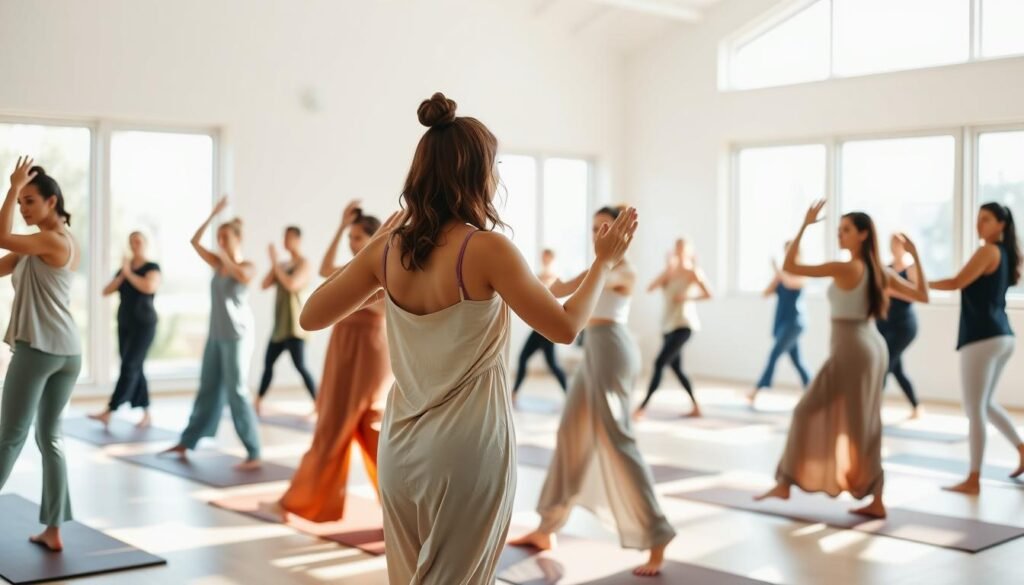
U.S. studios now blend traditional conditioning with short, targeted mindfulness practices. These cues keep participants in the present moment and improve posture, form, and resilience.
How meditation made its way into bootcamps, barre, and sculpt
Trainers like Adam Rosante open bootcamps with moving meditation so breath and effort sync under stress. CorePower Yoga adds mantras to cardio and sculpt formats to steady breath through tough sets.
- Why it matters: People want effective workouts that respect limited time and avoid needless hustle.
- Top trends: Pilates, yoga, and purposeful walking are rising as low-impact practices that last.
- Inclusivity: These classes meet people where they are while still delivering results.
| Class Type | Typical Length | Main Focus | Common Benefit |
|---|---|---|---|
| Bootcamp with breath cues | 30–45 min | Conditioning + meditation | Better focus under stress |
| Barre / Sculpt with mantras | 45–60 min | Strength + presence | Improved form and endurance |
| Yoga / Pilates | 45–75 min | Control, posture, breath | Longevity and mobility |
| Purposeful walking | 20–60 min | Low-impact activity | Daily resilience |
For a deeper look at how this approach scales across studios and franchises, see this short piece on the future of pilates: pilates franchise trend.
Mindful Movement vs HIIT Training: Definitions, Principles, and What Sets Them Apart
Two clear approaches shape modern fitness: one emphasizes breath, attention, and control; the other emphasizes intervals, pace, and output. Both build capacity, but they do so on different priorities — quality of motion versus time efficiency.
Mindful practices explained: presence, breath, and control
Practices like yoga, pilates, and tai chi focus on breath-led cues and slow, purposeful motion. Trainers say this attention improves form, joint positioning, and muscular recruitment before adding load or speed.
HIIT fundamentals: intensity, intervals, and time efficiency
Short, intense intervals with limited rest tax the cardiovascular system and maximize results in less time. Timers, work-to-rest ratios, and all‑out pushes define these sessions.
Breath and awareness versus output and pace
- Core distinction: one method elevates attention and breath to refine movements; the other prioritizes performance metrics in tight windows.
- Practical cues: breath-led checkpoints and slower tempos guide mindful classes; timers and pace targets anchor high-intensity work.
- Outcome: both can increase fitness, but start with control to reduce injury risk before adding speed or load.
For evidence on mind-body benefits, see this review: mind‑body benefits. If you need accessible options, consider these free at-home routines.
The Mind-Body Payoff: Stress, Focus, and Performance Benefits
When breath and intent guide effort, performance and recovery both improve. Simple mental skills help athletes and everyday exercisers keep form, lower tension, and push farther under fatigue.

How attention and meditation boost athletic focus
Mental stamina is trainable. Meditation practices keep breath steady during hard efforts. That steadiness helps athletes maintain attention and stay motivated when a set gets uncomfortable.
Coaches report better rhythm and fewer technique lapses after adding short focus drills. Rosante’s moving meditation trains attention under physical stress, which translates to less distracted thinking in life’s high-pressure moments.
Breathwork in action: practical cues that work
Syncing movement and breath steadies heart rate, reduces perceived stress, and keeps you in the present moment. Mantras like “Yes you can!” anchor intention and sharpen the mind‑body connection under fatigue.
- Take five strong, deep breaths when thoughts urge you to stop — the reset often extends performance.
- Use breath checkpoints between intervals to lower tension and improve pacing.
- Repeat a short mantra to lock attention and improve neuromuscular timing.
“Five deep breaths can change a state from panic to control in seconds.”
Performance carryover: training attention while moving becomes part of resilience for sport and daily life. Calmer breathing patterns reduce stress, improve pacing, and help you finish workouts without unraveling.
Safety, Form, and Longevity: What Trainers Worry About with HIIT
Good form protects progress more than raw speed ever will. Prioritizing control helps the body adapt safely so fitness lasts for years, not just weeks.
David Higgins stresses longevity and postural control over quick fixes. He warns many clients lack the basic control needed for safe HIIT execution. Slower, precise work reveals imbalances and improves range before adding intensity.
Control before intensity: reducing injury risk and improving form
Many trainers push control before pace because stable joints and balanced muscles protect the body during high effort. Clean movement patterns cut strain on vulnerable tissues and lower long-term injury risk.
- Common pitfalls: Racing through reps without technique increases load on tendons and joints and shortens career longevity.
- Mindful prep: Use tempo control, range checkpoints, and corrective moves to build resilient muscles and better movement quality.
- Practical checks: Keep a neutral spine, maintain proper foot pressure, and show full-range control under load to reduce injuries.
Think of HIIT as one tool in a broader approach. Use it after you establish control so training drives progress without sacrificing joint health or long-term well‑being.

“Consistent attention to form today prevents overuse tomorrow.”
Which Fits Your Goals? Fat Loss, Strength, Recovery, and Healthy Aging
Pick methods that match your goal and schedule — fast calorie burn or steady gains that protect the joints. Both interval formats and slower, controlled practices can deliver results when programmed with recovery and intent.
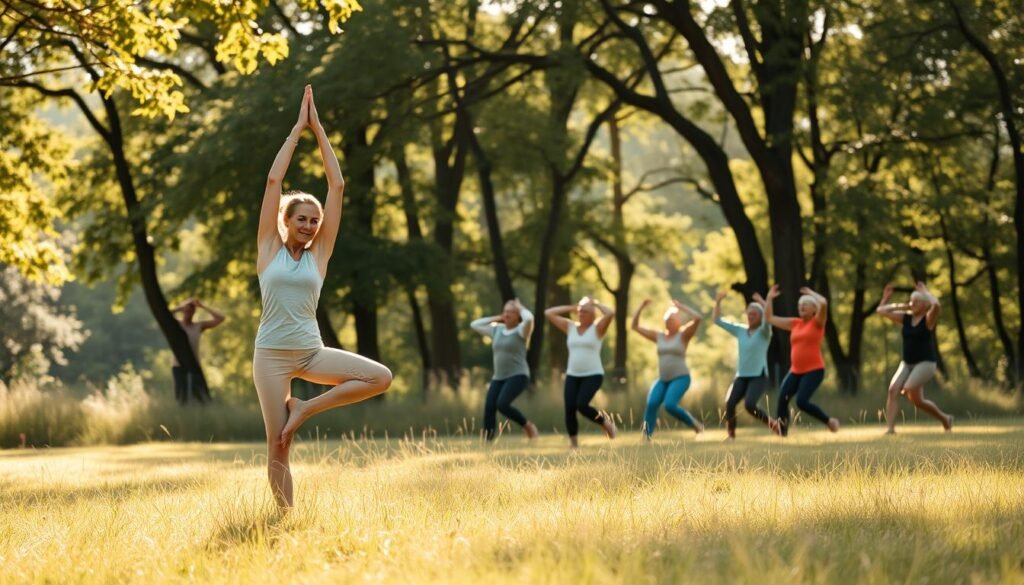
Map your priorities first: if fat loss is the target, short intense blocks paired with proper rest can be efficient. If durability and joint health matter, favor controlled tempo work that builds alignment and strength.
- For strength: blend slow eccentrics and isometrics with heavier lifts to reinforce body control and protect joints.
- For recovery: choose breath-led sessions, walking, or gentle flows to lower stress and keep momentum.
- For busy people and athletes: use brief high-effort intervals on some days and measured-pace sessions on others to balance nervous system load and focus.
Make a weekly plan that ties each workout to a purpose. Add short mindful movement touchpoints so every session serves strength, fat loss, or long-term health. For practical, free ideas to mix formats, see this guide on free smart ways to stay fit.
Beyond the Binary: Hybrid Classes and Emerging Methods
Hybrids combine intensity, breath cues, and lower-impact options so people can build fitness without burning out. These classes help you train strength, endurance, and awareness in one practical session.
LIIT, LISS, and active recovery offer easy entry points. LIIT uses low-intensity intervals to raise heart rate with less joint stress. LISS means steady, slower cardio that builds endurance. Active recovery blends mobility, breathwork, and light strength to help tissues repair.
Case study snapshots
LIFTED opens with a short meditation to set presence, runs interval blocks, then closes with another meditation to cement a positive state. This pairs performance with attention in the same class.
CorePower’s mindful sculpt folds meditation and mantra cues into yoga-inspired strength and cardio to keep form and breath steady under load.
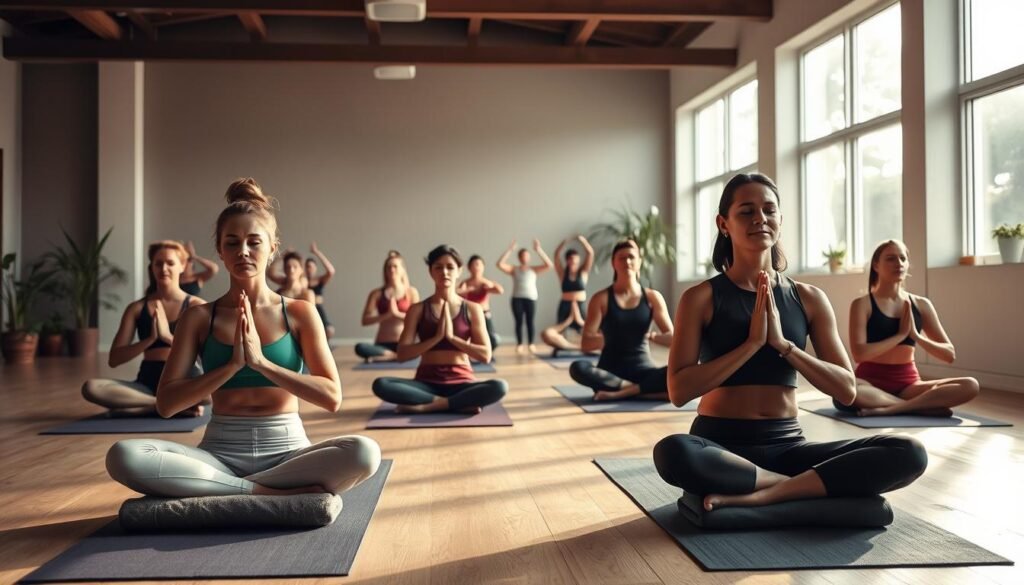
Walking as purposeful practice
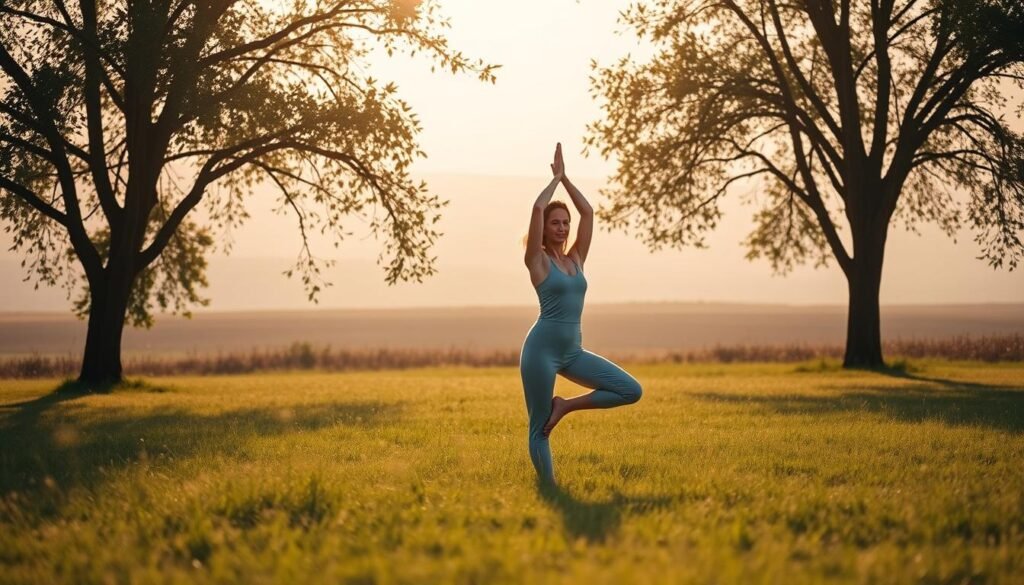
Walking has regained popularity as low-friction physical activity. Done with intention, it becomes a daily way to practice mindful exercise, boost longevity, and anchor recovery between harder days.
- Rotate formats: mix strength, steady cardio, and active recovery across the week.
- Keep it simple: short meditations and breath checks before and after workouts reinforce attention.
- Carry it forward: hybrids teach skills you use off the mat — better posture, steady breath, and focused effort.
| Method | Typical Session | Main Benefit |
|---|---|---|
| LIIT | 20–30 min | Low-impact intervals; joint-friendly conditioning |
| LISS | 30–60 min | Endurance, steady-state aerobic base |
| Active recovery | 15–40 min | Mobility, reduced soreness, nervous system reset |
| Walking (purposeful) | 20–60 min | Daily resilience, longevity, accessible practice |
“Hybrids let you train hard and come back ready to do it again.”
Programming Your Week: Practical Frameworks to Mix Mindful and Intense Workouts
Balance short, focused efforts with slower, restorative sessions to sustain gains and reduce injury risk. Pairing deliberate breath cues and brief resets with hard sets keeps attention sharp and workouts efficient.
Clever scheduling makes consistency realistic for busy people and athletes alike. Use alternating days to protect recovery and preserve progress.
Sample schedules for busy people and athletes
Busy people: three 20–25 minute high-effort workouts per week. Add two 30–45 minute gentle sessions with mobility and breathing work on alternate days.
Athletes: one focused 25-minute interval session, one skill or strength session, and two longer presence-led sessions for endurance and joint care.

Micro-practices: five deep breaths, mantras, and present-moment resets
Insert five deep breaths between sets to reset heart rate and clear distracting thoughts. Use a short mantra on the last tough rep to lock attention.
- 60-second reset: pause before cool-down and focus on the present moment.
- Breathing rituals: nasal inhales, longer exhales, or box-breathing when arousal spikes.
- Track quality: note movement feel, breath control, and mental clarity, not just metrics.
Start classes with brief centering and close with a short pause to “bottle” the endorphin clarity — it helps people return the next session.
Mindset Over Metrics: Building a Sustainable Relationship with Movement
Small, regular choices shape long-term fitness more than a single heroic workout. Shift your focus from numbers to habits and you build a pain‑resistant, long-lived body.
David Higgins stresses that modern life — long sitting, screens, and poor posture — accelerates tension and weakens control. Short, frequent breaks for walking and shoulder resets deliver outsized returns compared with one hard session each week.
Mitigating modern life: posture, daily activity, and mind-body connection
Use simple cues during the day: neutral spine, chin tuck, and gentle rib control. These tiny corrections keep the body organized before workouts.
Sprinkle brief activity across the day: standing breaks, 5–10 minute walks, and shoulder mobility sets. This reduces stress on joints and lowers chronic tension.
- Shift the lens: prioritize awareness over metrics to support lasting fitness and health.
- Daily control cues: neutral spine, chin tuck, and breath checks to stabilize movement quality.
- Build a practice: short moments of attention and connection add up into meaningful life change.
“Small, consistent actions beat sporadic extremes when it comes to mobility and resilience.”
Reframe success by how the body feels and recovers, not just by numbers. Choose consistency and kindness to extend active years and reduce stress.
| Action | Duration | Immediate Benefit |
|---|---|---|
| Posture check (neutral spine + chin tuck) | 30–60 sec | Reduced neck and back tension |
| Shoulder mobility set | 2–4 min | Improved range and less upper‑body tightness |
| Walking break | 5–15 min | Lower stress and increased blood flow |
| Breath awareness pause | 60 sec | Reset state and sharpen control before tasks |
Conclusion
When calm focus meets measured intensity, fitness becomes both effective and sustainable.Choose practice over perfection: build control, then add speed so workouts last across years.
The simplest rule is powerful: refine awareness, breath, and form, then layer short, focused effort for time‑efficient gains. This mix creates a resilient, adaptable approach to exercise that reduces stress and improves strength.
Start small: try a short meditation before a session, sync breath with reps, and close with a mindful cool‑down to “bottle” clarity. Yoga, walking, hybrid classes, and accessible practices meet people where they are and still build muscle and health.
Make mindful movement the foundation and add hiit blocks strategically. For more on mental benefits and practical routines, see mindful movement and mental wellness.
FAQ
What is the difference between mindful movement and high-intensity interval training?
Mindful movement emphasizes present-moment awareness, breath control, and deliberate form in practices like yoga, pilates, and tai chi. High-intensity interval training focuses on short bursts of maximal effort separated by rest or low-intensity periods to maximize cardiovascular and metabolic output. One prioritizes internal awareness and control; the other prioritizes power, speed, and time-efficient calorie burn.
Why are some trainers shifting from HIIT to conscious movement approaches?
Trainers are responding to concerns about injury risk, chronic stress, and burnout. Conscious movement preserves joint health, reinforces proper motor patterns, and improves mental resilience. It also helps clients develop long-term consistency by reducing overuse injuries and improving recovery, attention, and breathing mechanics.
Can mindful practices improve athletic performance or are they only for relaxation?
Yes—breathwork, focused attention, and controlled movement enhance motivation, concentration, and mental stamina, which translate to better practice, execution, and recovery in competitive sports. Athletes often use breath drills and mobility work to lower stress hormones, sharpen focus, and support more efficient training sessions.
If I want fat loss and strength gains, should I stop doing intense workouts?
Not necessarily. Strength and metabolic improvements come from progressive overload and sufficient intensity. Combining lower-impact, awareness-based sessions with targeted high-effort workouts—or LIIT/LISS days—can optimize results while lowering injury risk and supporting recovery. Program both modalities around clear goals and recovery windows.
Are hybrid classes (mixing intense intervals and meditation) effective?
Hybrid formats can be effective when well programmed. They leverage the cardiovascular benefits of intervals and the nervous-system regulation of breath and stretching. Look for classes that sequence intensity with cooldowns and guided breath to ensure clients leave stronger, calmer, and less sore.
How should a busy person structure a week to include both approaches?
A practical framework: two focused strength or interval sessions, two mobility or breath-focused sessions, and one active recovery walk or low-intensity cardio day. Short micro-practices—five deep breaths, posture resets, or a 10-minute restorative session—fit into busy schedules and maintain continuity.
What safety considerations should trainers emphasize when using high-intensity formats?
Emphasize control, correct form, and progressive loading. Screen for movement limitations, teach regression options, and prioritize warm-up and cooldown. Monitoring fatigue and teaching breathing strategies helps reduce compensatory tension and injury risk.
Can walking be considered a meaningful part of a mind-body program?
Absolutely. Walking practiced with attention to breath, posture, and cadence becomes a low-impact, sustainable tool for longevity, stress reduction, and daily activity. It’s accessible, promotes circulation, and supports recovery between harder sessions.
How do breath techniques differ between mindful classes and high-intensity workouts?
Mindful classes use slow, diaphragmatic breathing to anchor attention and regulate the nervous system. High-intensity workouts call for pacing breath with effort—shorter, rhythmic inhalations and exhalations to support power output. Teaching both patterns helps clients switch state intentionally.
What role does attention training play in physical practice?
Attention training improves movement quality, motivation, and skill retention. Directing focus to alignment, muscle engagement, and breath reduces wasted tension and makes sessions more efficient. It also builds mental habits that carry into daily life—better posture, less reactive stress, and clearer decision-making.
Are there evidence-based benefits to adding meditation elements to group fitness?
Yes. Research links short meditative practices to reduced perceived stress, improved focus, and better sleep. Integrating brief guided breathwork or mindful cool-downs into classes offers measurable benefits for recovery and long-term adherence.
How do I choose between lower-impact options like LIIT and more intense interval work?
Base your choice on goals, injury history, and lifestyle. LIIT and LISS are excellent for building aerobic base and movement quality with less stress. Reserve higher-intensity intervals for targeted metabolic or performance objectives, and schedule them when recovery resources—sleep, nutrition, and mobility—are sufficient.
What micro-practices are most useful for staying present during daily life and workouts?
Short tools that reduce reactivity and improve focus: five deep diaphragmatic breaths, a quick body-scan to release shoulder tension, a 30-second posture reset, or a single intentional mantra before a workout. These are simple, evidence-aligned, and easy to repeat throughout the day.
How do posture and daily activity affect long-term fitness and aging?
Consistent posture work and regular low-level activity maintain mobility, reduce chronic pain, and support functional strength as you age. Small, daily practices—walking mindfully, brief mobility sessions, and strength maintenance—compound into better movement economy and healthier aging.