


Can ten minutes on a cushion really change how your body and mind respond to stress? This brief practice uses simple poses, clear breath cues, and minimal props to produce steady results fast.
Begin in Shavasana with three calm breaths—this is where the sequence invites the body to arrive. From there, short mobilizations wake the spine, hips, and core. The routine moves through knee hugs, raised-leg work, controlled scissors, and mindful spinal twists to help energy settle toward the earth.
The sequence needs only a cushion, bolster, or tie and suits any schedule. It guides gentle mobilization, breath-driven stabilization, and a quiet seated close in Sukhasana with Namaskar Mudra. Use an optional candle or essential oil for a subtle sensory cue.
For a related short routine you can try right now, see this 7-move 10-minute sequence that shares practical timing and breath cues.
Key Takeaways
- Ten minutes is enough: a focused routine can lower stress and steady the nervous system.
- Minimal props work: cushion or bolster supports alignment and comfort.
- Breath guides stability: nasal breathing links movement to calm energy.
- Simple sequence arc: arrive, mobilize, awaken core, support spine, close in seated stillness.
- Accessible for most bodies: options keep the practice safe for beginners and returners.
Why a 10-minute practice works right now
Short, consistent sessions calm the nervous system and produce noticeable benefits fast. They pair controlled breath with joint-friendly motion so even limited time feels restorative.
Start in Shavasana with three steady breaths, then move slowly through mobilizations and light core work. This order helps the body relax while it gains stability. Gentle activation supports posture and balance without fatigue.
Brief blocks reduce barriers to consistency. A focused ten-minute yoga segment fits into real schedules and builds a reliable habit. Paired with slow nasal breath, the sequence down-shifts stress responses and conserves energy.
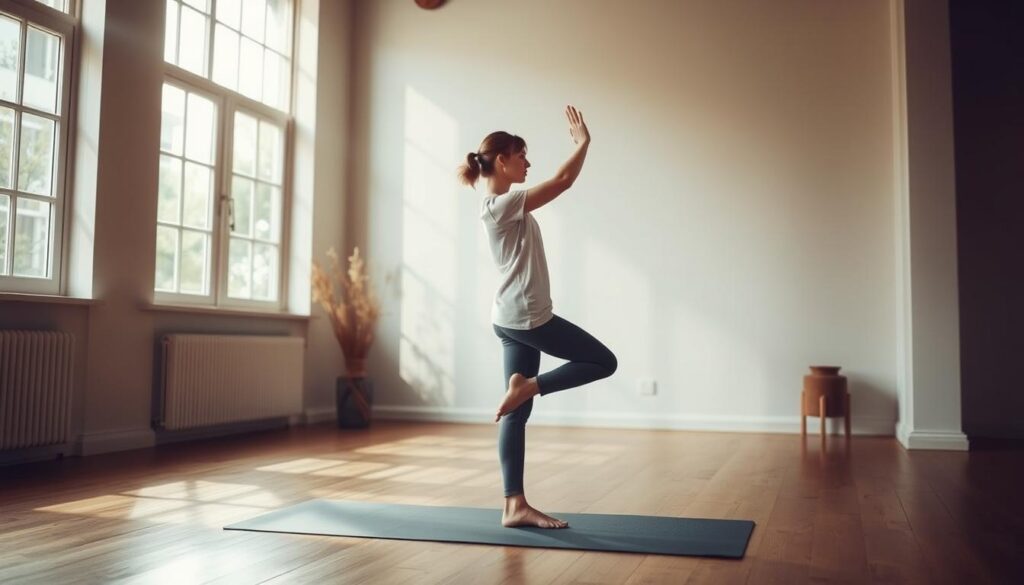
- Consistency over length: small daily sessions create measurable calm in the mind and body.
- Movement snacks: joint lubrication and light core engagement happen quickly on the mat.
- Tactile cues: pressing the foot and hands into the earth element signals safety and steadies attention.
- Repeatable sequence: returning to the same pose order links breath with motion and builds confidence.
For a gentle evening option, try this pre-bed routine that follows similar timing and breath cues.
Grounding basics: what it is and why it matters
Grounding links your senses and breath to the earth so your attention settles and your nervous system calms.Invoking the earth element through clear physical cues builds steady posture and mental clarity fast.
Feeling steady starts with a few intentional cues that anchor your attention to the body and the ground beneath you. The earth element (Prithvi/Bhumi) represents stability and strength, and it maps to the muladhara, the root chakra at the base of the spine.
The importance of a calm, centered mind
When you press the feet into the mat and breathe slowly, the nervous system receives safety signals. That simple contact helps thoughts slow and presence sharpen. Over time, a short practice trains muscles and balance so responses to stress become more measured.
The earth element and root chakra connection
Think of visualizing roots through the mat while taking deep breaths. Directing energy downward toward the base supports both bone strength and mental resilience.
- Body–mind coordination: poses and breath shift energy to the base of the spine.
- Practical cue: Mountain Pose as a template—even weight through both feet, tall spine, relaxed jaw.
- Benefit: steadier knee tracking, improved posture, and easier balance on and off the mat.
For a related somatic approach, read this somatic mind–body practice to deepen the connection between body and earth.

Set the scene: space, props, and intention
Create a calm, uncluttered space and keep one clear intention for your session. Simple setup reduces friction and helps the body and mind arrive quickly.
Make room for a brief ritual: a slip‑free mat, a cushion or bolster, and a gentle sensory cue like a candle or a single flower. Place props within arms reach so alignment feels easy from the first position.
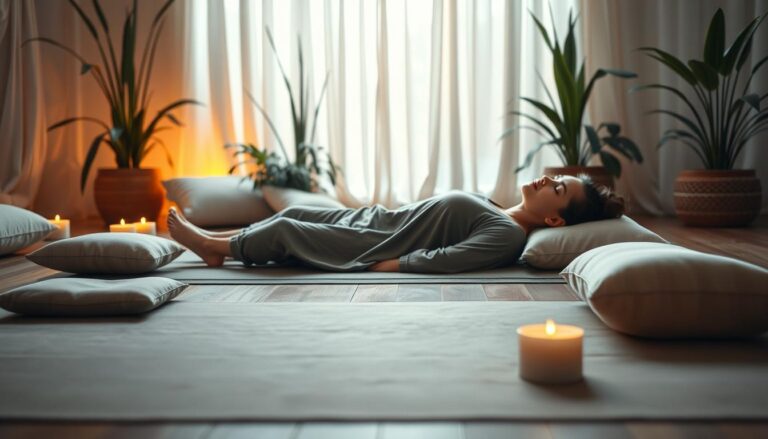
Begin in Shavasana with three deep breaths to settle. Notice how the ground supports you, then let breath lengthen and tension melt from the spine and shoulders.
Props, sensory cues, and mat setup for stability
- Quiet space: keep the area tidy so your attention can return to breath when the mind wanders.
- Sensory cue: a drop of essential oil, incense, or a flower can recall the earth beneath and steady focus.
- Tabletop hands: spread the hands wide for full contact; gaze between them and keep a neutral spine.
- Seated ease: elevate the hips on a cushion if hips feel tight so the body can lengthen without strain.
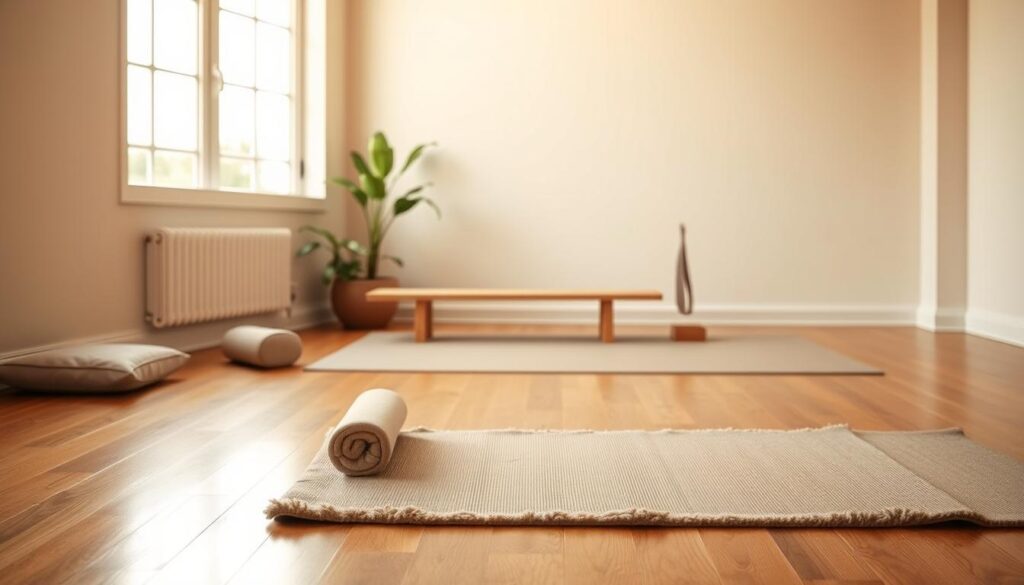
For a related short routine, try this 20-minute grounding yoga sequence for timing and cue ideas.
Grounding Yoga Flow: a step-by-step 10-minute sequence
Start supine and use three steady breaths to register the body on the mat. This short sequence moves from supine arrival to seated stillness, targeting the legs, spine, and shoulders with clear, timed cues.
Arrive and connect
Start on your back with feet falling wide and palms up. Take three deep breaths to settle the head and chest. Sweep the arms overhead, point the toes, then hug both knees to the belly in Apanasana.
Rock side to side and circle the knees to lubricate hips and the lower back.
Core and unwind
Alternate nose-to-knee crunches: draw one knee in while the opposite leg extends long or hovers. Do 2–3 slow reps per side.
Follow with a spinal twist: hand to outside knee, extend the other arm, turn the head, and breathe evenly for 2–3 breaths each side.
Legs like roots and slow strength
Lift into Uttanpadasana. Mobilize ankles, toes, knees, and hips with circles and toe bends. Build control with scissors, cycling, and a slow straight‑leg lower.
- Practice the Dirga “wave” breath: belly → ribs → chest while resting hands on heart and belly.
- Rock up to Sukhasana; do neck rotations, chest sweeps, shoulder shrugs, and elbow circles to ease the upper back and arms.
- Move to Tabletop: inhale into Cow (lift chest, tail up), exhale into Cat (round back, head heavy).
- Sit in Dandasana, engage heels and legs, then hinge into Paschimottanasana with a strap to keep the spine long.
- Finish with Ardha Matsyendrasana each side—cross the foot over the knee, lift, and twist to wring out the side body.
“Close the practice in Sukhasana with Namaskar Mudra—notice warmth in the hands and calm across the knees and shoulders.”
| Pose | Target | Benefit |
|---|---|---|
| Apanasana | Lower back, hips | Releases tension; mobilizes spine |
| Uttanpadasana | Legs, ankles, knees | Builds joint awareness and leg control |
| Cat–Cow | Spine, belly, chest | Improves spinal mobility and breath coordination |
| Ardha Matsyendrasana | Side body, shoulders | Detoxifies and restores balance |
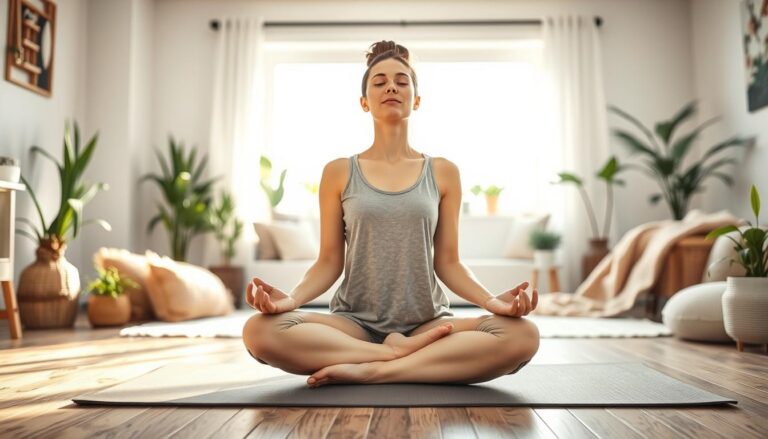
Seal the practice: Return to Sukhasana, bring hands to Namaskar Mudra, and rest in stillness for a few deep breaths.
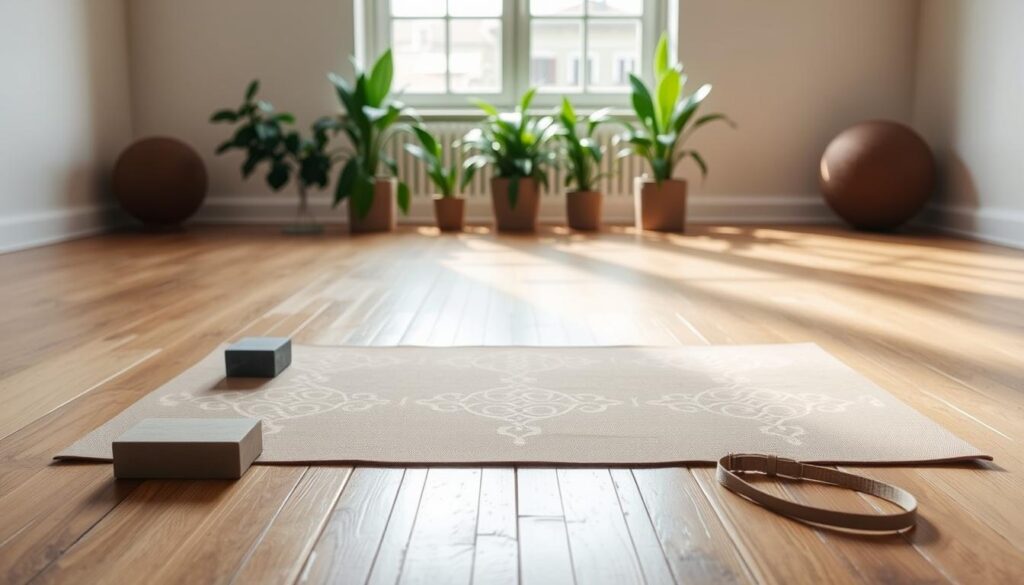
Breathe to ground: pranayama that steadies body and mind
A few intentional breaths can turn restlessness into calm in under two minutes. These two simple techniques — Dirga and Sama Vritti — organize the inhale and even the rhythm so the body and mind settle quickly.
A short practice of breath before movement can reset the nervous system. Try these cues while sitting tall or lying supine.
Dirga (Maha) complete breath — the wave from belly to chest
Place one hand on the belly and one on the chest. Inhale to fill the belly first, then the ribs, then the upper chest. Exhale fully so each out-breath is complete and cleansing.
Keep breaths unforced and feel the spine lengthen as the ribs expand.
Sama Vritti (equal breathing) — even counts for balance
Use a steady count like 4–4: inhale four, exhale four through the nose. This evens the rhythm so the mind follows the breath and energy becomes more balanced.
- Why it helps: breath is the fastest way to ground; Dirga organizes inhale mechanics while Sama Vritti steadies tempo.
- How long: 1–2 minutes of practice or 4–6 rounds of equal breaths restores focus during a short yoga practice.
- Finish: end with one or two deep breaths and notice warmth across the chest and a quieter mind.
“Use the hands as tactile feedback — they show you exactly where the wave travels.”
Smart modifications and alignment for diverse bodies
Small supports and clear alignment make poses safer and more sustainable for most people. These options protect knees, hips, wrists, and the lower back while keeping the practice accessible.
Small adjustments and simple props let most bodies access each pose with comfort and safety.
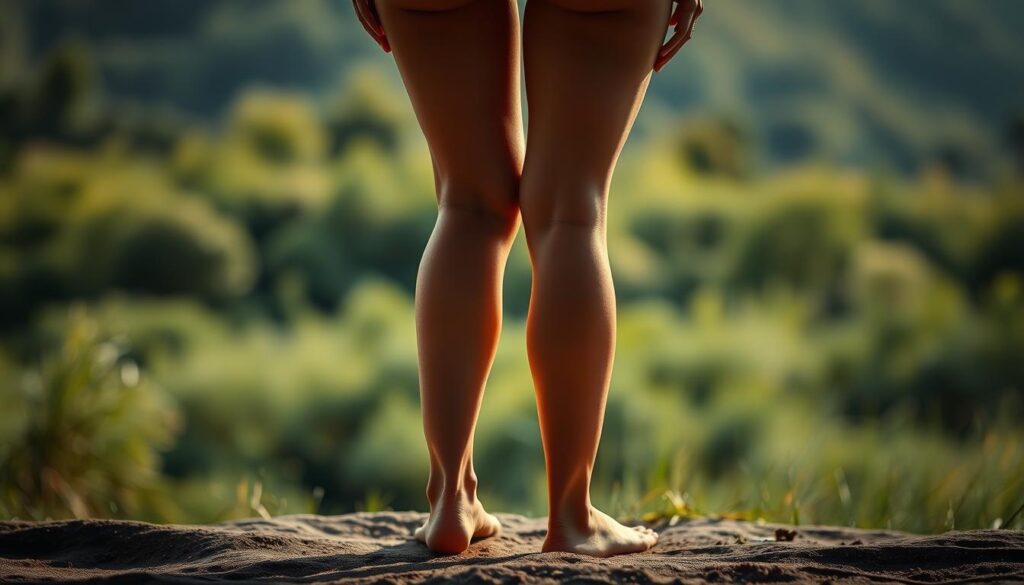
Knees, hips, and lower back: cushions, bolsters, ties, and blocks
Elevate the sit bones in Sukhasana with a cushion or bolster to ease strain on the knee and protect the lower back.
- Forward folds: use a tie around the feet in Paschimottanasana to keep the spine long and spare the lower back.
- Hip openers: place a block under the glute in Pigeon or Lizard to keep hips level and shield the right knee.
Finding steadiness in standing and balance poses
Keep the front knee stacked over the ankle in lunges and step wider on the mat if balance wobbles. Ground the back foot fully in Warrior II and Trikonasana and relax the shoulders so the arms stay long but easy.
Wrists and shoulders: hand placement and load management
In Tabletop and plank-like work, spread the hands wide, press evenly through the hand, and align wrists under shoulders.
“When in doubt, reduce range, slow the tempo, and breathe—your safest alignment is the one you can hold without gripping.”
- If feet or ankles feel tender, add a folded blanket under them and shorten stance.
- Use Mountain Pose principles everywhere: even weight through both feet, soft knees, tall spine, and engaged yet relaxed arms.
Take grounding off the mat
Daily micro-practices—like a standing breath or a mindful bite—anchor calm across the day. Small, repeatable habits help the body and mind carry steadiness beyond formal time on the mat.
Build a simple ritual: set a consistent time for a short yoga practice so the brain learns to expect steadiness each day.
Daily routines and small rituals
Make a short, reliable practice part of morning or evening. Even five minutes signals the nervous system that it can settle.
Nature time and barefoot contact
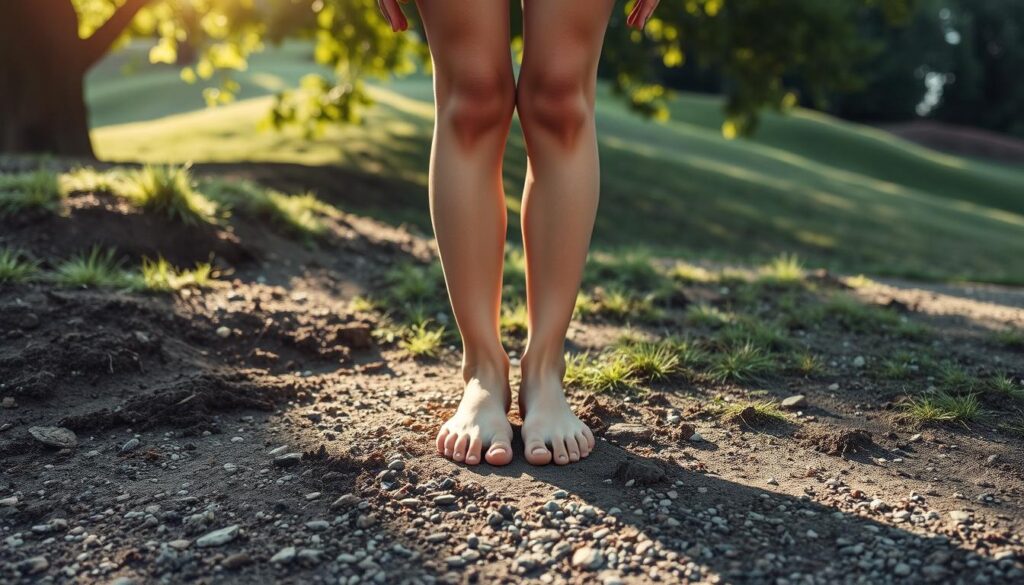
Stand barefoot on grass for a minute. Feel the earth beneath your feet and breathe evenly to deepen your connect earth through sensation.
Short mindful walks work well too—match steps to breath and scan the hips and spine for ease.
Practical habits for home and work
- Try Mountain Pose while waiting: spread toes, soften knees, and take three slow breaths to steady energy.
- Mindful eating: use gratitude prompts to shift attention from future worry to the body in the present.
- Props at hand: a chair or block supports Malasana-like squats and safer folds off the mat.
- Quick reset: place one hand on the belly, one on the chest, and breathe evenly on stressful days.
- Relational practice: partner poses or a steady hug can build trust through safe touch.
| Habit | How to do it | Benefit |
|---|---|---|
| Barefoot nature pause | Stand on grass for 1–2 minutes, breathe evenly | Increases sense of connection to the earth; calms the mind |
| Five-minute daily practice | Same time each day; short sequence or breath work | Builds consistency and lowers reactivity |
| Mindful eating prompt | Take three slow breaths before a meal; notice taste | Shifts energy to present sensations and digestion |
| On-the-spot Mountain Pose | Stand tall, spread toes, soften knees, breathe 3 counts | Improves posture and steady focus during the day |
Conclusion
Ten minutes on the mat can steady energy, mobilize joints, and soothe the nervous system.Use breath‑led movement and simple pose choices to make that change easy, repeatable, and safe.
You don’t need extra time—just a repeatable practice and a few steady breaths. The sequence from Shavasana to seated stillness calms the nervous system, frees the spine, and strengthens legs and core.
Props and smart knee and foot positioning keep each pose accessible for the body you have today. Dirga and Sama Vritti enhance regulation and help the head and chest settle quickly.
Carry the earth element off the mat: short routines, barefoot pauses, and gratitude moments extend benefits into daily life. Learn more about the power of these habits at the power of grounding.
FAQ
What makes a 10-minute practice effective for grounding right now?
A focused 10-minute session offers consistent sensory and breath cues that calm the nervous system and reset attention. Short, regular practices improve posture, hip and ankle mobility, and spinal flexibility while training the mind to return to the present — ideal for busy schedules and stress management.
How does the earth element and the root chakra relate to this short routine?
The earth element symbolizes stability and support; activating the root chakra encourages feelings of safety and balance. Simple standing and seated poses that emphasize feet, hips, and legs help transmit that stabilizing sensation from the ground through the spine to the chest and head.
What props should I set up to feel more stable and connected?
Use a non-slip mat, a firm cushion or bolster under the hips, blocks for hand support, and a strap for tight hamstrings. Sensory cues like a folded blanket beneath the feet or a soft eye pillow in savasana also deepen physical and mental grounding.
Which starting poses help me arrive and connect quickly?
Begin with a brief shavasana or full-body stretch to scan the body, then move into apanasana or a supine hug to release the lower back. These set the breath pattern and prime the spine, shoulders, and belly for the sequence ahead.
What core and spinal moves are best for a calming 10-minute sequence?
Gentle nose-to-knee movements, spinal twists, and slow “wave” breaths like dirga encourage belly-to-chest breathing and a coordinated spine response. These actions improve lumbar mobility, shoulder ease, and diaphragmatic function.
How do I make my legs feel like strong roots during practice?
Exercises such as Uttanpadasana variations with ankle, knee, and hip mobilization strengthen hip flexors and ankle stability. Ground your feet, press through the arches, and imagine energy moving down through the soles to increase steadiness.
Which slow-strength moves protect the lower back and build control?
Controlled scissors, cycling the legs, and slow straight-leg lowers engage the core while minimizing lumbar strain. Keep the spine long, soften the shoulders, and use props under the sacrum when needed to protect the lower back.
What cues help when rising to seat and releasing neck and shoulders?
Move slowly to sukhasana, draw the shoulders down the back, and lengthen the neck by nodding chin-to-chest then lifting. Gentle shoulder rolls and hand positions like namaskar mudra support chest opening and breath expansion.
How do tabletop and Cat-Cow support spinal health in a brief practice?
Tabletop into Cat-Cow mobilizes the entire spine, decompresses vertebrae, and coordinates breath with movement. Focus on pelvis tilts and rib-cage lift to protect the back while energizing the belly and diaphragm.
What are effective seated forward-line poses for a short routine?
Start with dandasana to establish long lines through the legs and spine, then move into a gentle paschimottanasana variation. Keep knees slightly bent or use a strap to maintain a neutral lower back and steady breath.
How can a half-spinal twist aid detox and balance in ten minutes?
Ardha matsyendrasana encourages rotational mobility of the thoracic spine, massages internal organs, and helps release tension in the hips and shoulders. Perform it with mindful inhalations and longer exhalations to support digestion and parasympathetic tone.
What’s the best way to seal the practice for lasting calm?
Return to sukhasana, bring hands to namaskar mudra, and take several dirga breaths. Close with a moment of stillness, focusing on the feet’s connection to the ground and the breath’s rhythm to extend the practice off the mat.
Which breathing techniques steady the body and mind quickly?
Use dirga (complete) breath to create a smooth wave from belly to chest, and sama vritti (equal counts) to balance sympathetic and parasympathetic activity. Both reduce heart rate variability and enhance focus within minutes.
How do I adapt poses for knees, hips, and lower-back sensitivity?
Employ cushions or bolsters under the knees and hips, use blocks for hand support, and keep micro-bends in the knees. Modify ranges of motion, favor supine or seated alternatives, and prioritize breath to avoid strain.
What adjustments support wrists and shoulders during ground-based work?
Spread weight evenly through the palms, tuck fingers slightly, or use fists or forearms to reduce wrist load. Place a folded mat under the knees and use blocks at an appropriate height for shoulder-friendly alignment.
How do I maintain steadiness in standing or balance poses during a short practice?
Anchor through the standing foot, micro-bend the supporting knee, engage core muscles, and soften the gaze. Use a wall or chair for support if needed, and build balance progressively over time.
How can I take grounding off the mat throughout my day?
Integrate short routines like foot massage, mindful walking outside, gratitude pauses, or breath breaks at your desk. Consistent small actions—standing tall, rooting through the feet, and slow diaphragmatic breaths—transfer stability into daily life.


Don’t Miss These Picks