

Can four minutes of guided breath and grounding really stop a sudden rush of fear? That question changed my view during an intense episode. I learned a compact, step-by-step practice that calmed my racing heart and steadied my body fast.
Quick setup: place one hand above your belt and one on your chest. Use gentle exhale cues, paced inhales through the nose, and slow mouth exhales to guide your body back from a stress response.
This short method targets physical symptoms like tight chest, dizziness, sweat, and a fast heart by slowing air flow, improving blood oxygen balance, and interrupting frantic thoughts. Practice two to three times daily so it becomes automatic when you need it most.
Want clear steps and grounding add-ons you can use anywhere? Read the guided diaphragmatic routine at this diaphragmatic breathing guide and try simple somatic moves at home somatic exercises. If chest pain feels different than usual, seek medical care immediately.
Key Takeaways
- Four minutes of paced breath and grounding can reduce acute symptoms quickly.
- Hands on abdomen and chest give feedback to ensure diaphragmatic movement.
- Short daily practice builds confidence and automatic use during episodes.
- The 5-4-3-2-1 grounding helps shift focus from fear to the present.
- If pain is severe or unusual, get medical evaluation—this is a supportive tool, not a substitute.
Why Breathing Helps During a Panic Attack
Short summary: Your body shifts into a rapid stress response that speeds the heart and shortens the breath. Simple, slow patterns can lower arousal and reconnect you with steady air and calmer sensations.
When panic begins, the nervous system prepares you to act. Muscles tense, heart rate climbs, and you move into shallow chest breathing. That change alters carbon dioxide levels in the blood and can cause dizziness, tingling, and a tight chest.
Those sensations feel threatening, but they are usually the body’s alarm doing its job too well. If you can speak, you are still getting air. Focused breath control can reset the autonomic response and bring the heart down within minutes.
- Stress response: raises rate and muscle tension, which magnifies normal feelings.
- Shallow breathing: shifts blood gas levels and fuels lightheadedness and tingling.
- Reset option: exhaling slowly lengthens vagal tone and calms the system.
| Symptom | Common cause | Quick reassurance |
|---|---|---|
| Tight chest | Upper-body tension, fast breath | Often anxiety-related; seek care if unusual |
| Dizziness, tingling | Low CO2 levels from shallow breaths | Slow exhale and belly breath restore balance |
| Sweat, nausea | Autonomic surge | Signals calm once rate drops |
If you want guided practice, review a clinical handout on paced exercises at paced breathing guide or read how movement helped anxiety at a Pilates and anxiety report. If chest pain is new or severe, treat it as a medical issue first.
The 4-Minute Breathing Exercise: Step-by-Step Guide
Two clear actions: get into a simple, supported position and follow an exhale-first rhythm to reset shallow chest patterns. These steps use hands-on feedback and a gentle count to restore a calmer rate in just four minutes.
Set your position and pace
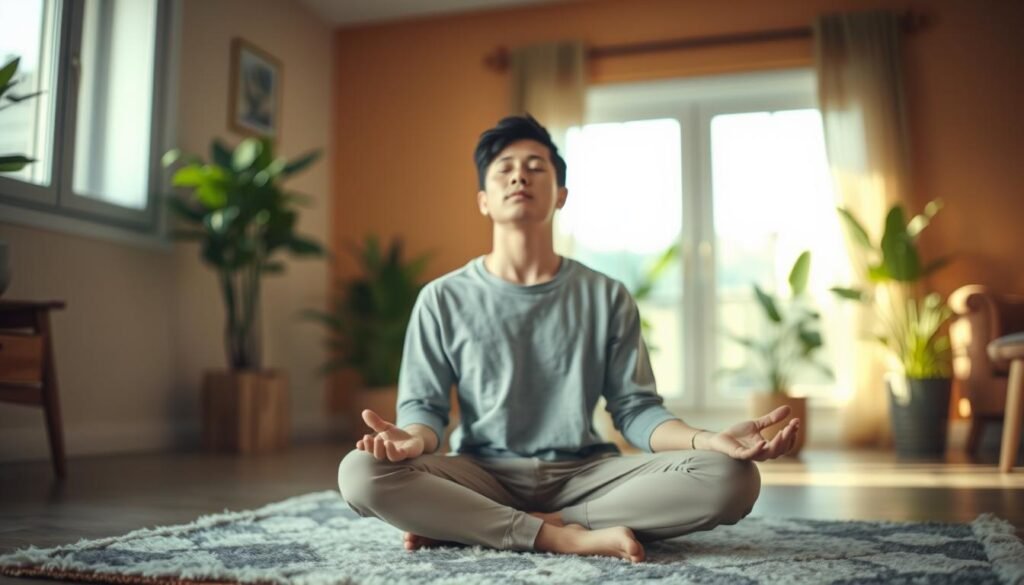
Sit upright with a supported back, feet flat, and shoulders soft. Place one hand on your chest and the other on your belly to monitor movement.
Exhale first
Open your mouth and sigh gently to release tension. Dr. David Carbonell highlights this step: exhaling first primes the diaphragm and eases the upper chest.
Inhale low and slow
Close the mouth, pause, then inhale through the nose. Let the belly rise under your lower hand while the chest hand stays mostly still.
Count and repeat
Pause briefly, then exhale through the mouth as the belly falls. Try a light count like 4 in, 6 out and aim for about 6–8 cycles in four minutes.

- Reset tip: if you feel lightheaded, take several normal breaths and resume.
- Practice: repeat daily so the pattern becomes automatic during stress or a panic attack.
- Want alternatives? Compare box breathing with 4-7-8 in this short box breathing vs 4-7-8 comparison.
Breathing Techniques for Panic Attacks: Proven Methods You Can Use
These targeted methods calm the body fast and are easy to learn. Pick a short routine that fits the moment: longer exhale work at night, compact cycles during a commute, or a steady nose-centered method to lower blood pressure.
Small, deliberate cycles of air and pause calm the nervous system and steady an anxious heart.
4-7-8: a simple downshift
How to: tip the tongue to the roof of the mouth, exhale with a soft whoosh, inhale through the nose for 4, hold for 7, then exhale through the mouth for 8.
Start with three to four cycles and work up to eight. You should notice a slower heart rate and quieter thoughts.
Box breathing (4-4-4-4): quick, portable calm
How to: exhale 4, hold 4, inhale 4, hold 4. Use it seated or standing before meetings or during symptoms surge.
If holds feel tense, shorten the counts and keep the flow smooth to avoid strain or lightheadedness.
Alternate nostril and release options
Alternate nostril: sit upright. Use your right thumb to close the right nostril and your ring finger on the left to switch. Exhale and inhale one side, then switch. Repeat several breaths to steady air flow and may lower blood pressure.
Lion’s breath: inhale through the nose, open the mouth wide, stick the tongue toward the chin, and exhale audibly “Ahh” to release jaw and throat tension. Use it sparingly to discharge built-up stress.
| Method | Count/Pattern | Best Use |
|---|---|---|
| 4-7-8 | 4 in · 7 hold · 8 out | Evening wind-down, acute anxiety |
| Box breathing | 4·4·4·4 | Short resets, public settings |
| Alternate nostril | Alternate sides, steady pace | Centering, blood pressure control |
| Lion’s breath | Inhale nose · forceful open-mouth exhale | Release jaw and throat tension |
- Tip: If hold breath moments raise strain, reduce holds or skip them.
- Practice: Repeat in calm moments so the movements become automatic during an attack.
Master Belly Breathing: The Foundation for Every Technique
Mastering a low, hand-guided pattern helps the body shift away from tense chest use. This small skill builds reliable relaxation that supports every other breathing exercise in this guide.
Master Carbonell’s steps: place one hand above the beltline and one over the breastbone. Start with a soft sigh to relax the upper body, pause, then inhale through the nose by pushing the stomach out. Pause, exhale through the mouth while pulling the belly in, pause, and repeat.
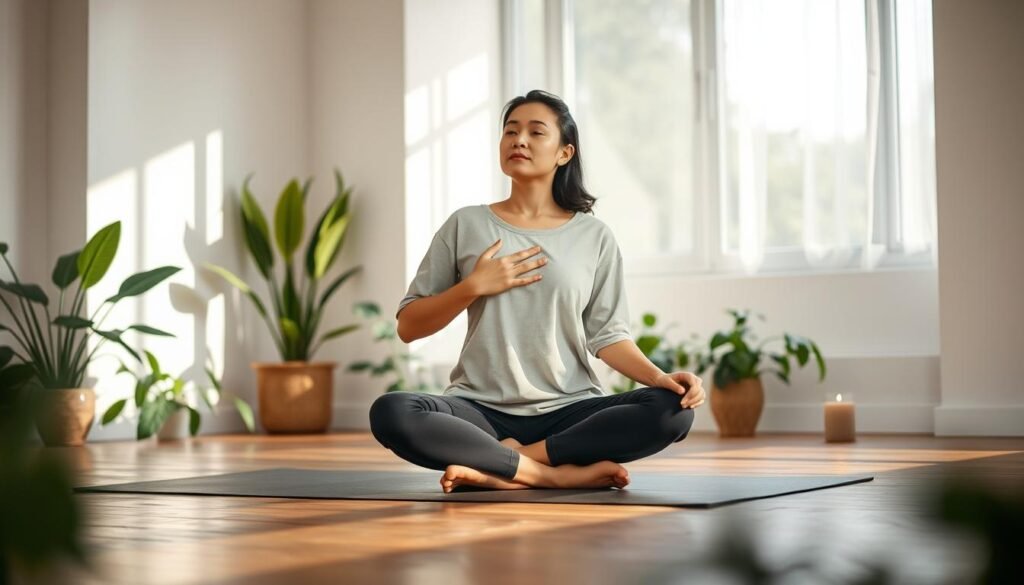
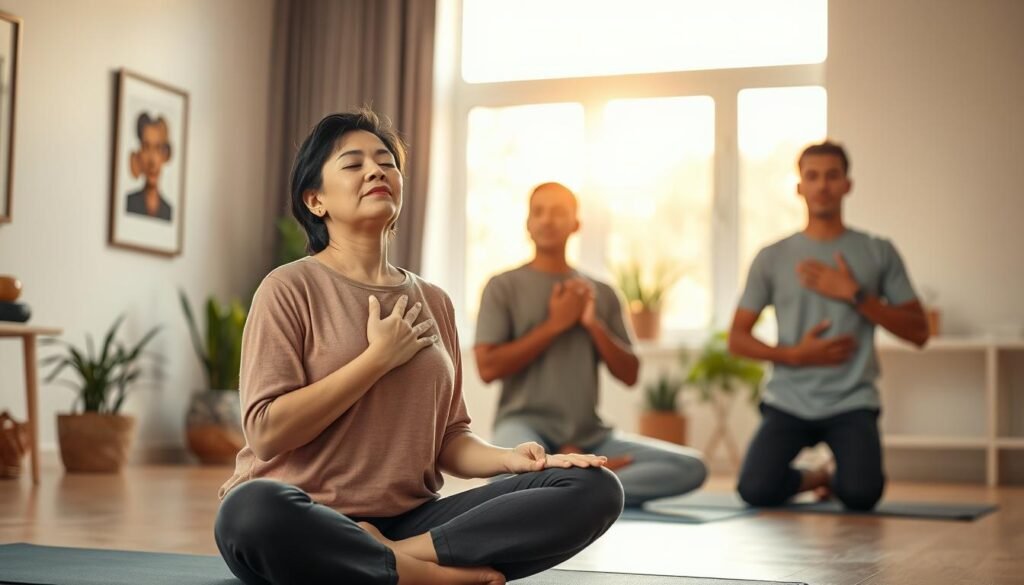
Hand-on-chest and hand-on-belly biofeedback
Use your hands as simple sensors. One hand on the belly should rise on the inhale while the chest hand stays mostly still. If the chest lifts, reset with a gentle sigh and relax your shoulders.
Exhale, pause, inhale through the nose, and slow your rate
Exhale first to clear upper-body tightness and let the diaphragm lead. Keep pauses brief and easy—comfort matters more than counts. If you feel lightheaded, slow down or take a few normal breaths and then resume.
| Cue | Action | Why it helps |
|---|---|---|
| Hands | One on belly, one on chest | Shows true diaphragmatic movement |
| Inhale | Nose → belly rises | Conditions air and slows rate |
| Exhale | Mouth → belly falls | Releases upper-body tension |
Practice one to two minutes several times daily in a supported position. When you link this foundation to methods like 4‑7‑8, box breathing, or an alternate nostril routine, those tools become easier to use during stress or anxiety spikes. For guided steps, see a practical guided breathing resource or read on nervous system workouts at nervous system workouts.
Add-Ons That Help in the Moment
Grounding and quick body work can shorten an episode and reduce symptoms fast. These small practices pair well with a slow, guided breath and give you immediate, portable support.

How to use the 5-4-3-2-1 grounding exercise
Engage your five senses to return to the present. Find five things you can see, four you can feel, three you can hear, two you can smell, and one you can taste.
Say the list quietly or in your head while keeping a steady, slow exhale. This anchors racing thoughts and reduces anxiety quickly.
Progressive muscle relaxation to release chest and body tension
Tense a muscle group for 5–7 seconds, then release for 10–15 seconds. Move through feet, legs, hips, belly, chest, hands, shoulders, and face.
Notice how easing chest and shoulder tightness helps your breath feel easier and lowers panic-related tension in the body.
Lion’s breath to discharge built-up stress
Inhale through the nose, open the mouth wide, stick the tongue toward the chin, and exhale with an audible “Ahh.” Repeat for a few rounds to soften jaw and throat tightness.
Use this when you need an expressive release; pair it with a calm belly cue and gentle hands-on feedback.
- Layer grounding with your breath: pair the 5-4-3-2-1 method with a slow, controlled exhale to anchor mind and body.
- Keep one or two go-to exercises: choose grounding for racing thoughts and muscle work for body tension.
- Practice when calm: rehearsal makes these tools automatic during an attack.
| Add-on | Action | Best moment |
|---|---|---|
| 5-4-3-2-1 | Sense-based list, speak quietly | Racing thoughts, disorientation |
| Progressive muscle relaxation | Tense 5–7s, release 10–15s, top-to-bottom | Full-body tension, tight chest |
| Lion’s breath | Nose inhale → open mouth → audible “Ahh” | Jaw/throat tightness, need to release |
| Quick pairing tip | Layer with slow exhale and hand cues | Use early in an episode for fast relief |
Want guided options and movement add-ons? Try a practical set of somatic stretches or simple yoga moves at this stretch guide or explore paced practice at an app with guided exercises.
Practice Tips, Safety, and When to Seek Help
Practice short sessions regularly to make calm responses automatic. Know how to avoid lightheadedness and when chest symptoms need urgent care.
Regular short practice builds muscle memory so calm responses come faster when stress spikes. Try two to three brief sessions each day at consistent times to see steady improvement.
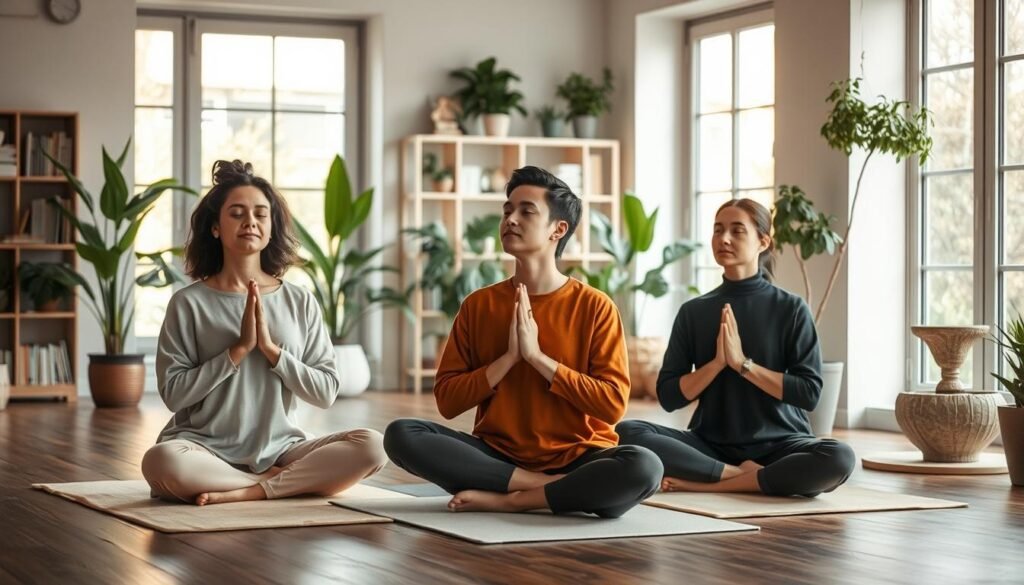
How often to practice and how to avoid lightheadedness
Practice two to three times daily for a few minutes at set times (after waking, midafternoon, before bed). This repeated exposure helps lower baseline stress levels and improves your rate control.
If you feel lightheaded, pause and breathe normally for several minutes. Then resume at a gentler pace: shorten holds, slow the count, or reduce depth until you feel stable.
Tracking triggers and timing: building a routine that works
Keep a simple log noting environment, what you were doing, time of day, and feelings. A short journal helps you spot patterns and tailor practice to real triggers.
- Pair practice with daily habits so people stick with it.
- Use gentler counts when stress levels are high; comfort beats perfect numbers.
- Track progress by noting how many minutes you practice and any change in symptoms.
Panic attack vs. heart attack: signs, caution, and medical care
Shortness of breath, sweating, dizziness, nausea, chest pain, and a sense of doom occur in both panic and cardiac events. When in doubt, seek medical evaluation to rule out urgent causes.
After a clinician clears heart or blood concerns, continue practice to support blood pressure and heart rhythm under stress. Share your plan with a therapist or provider if episodes remain frequent.
| Action | Recommended times | Benefit | Warning |
|---|---|---|---|
| Short practice | 2–3 times daily | Builds automatic calm | Stop if dizzy; resume gently |
| Trigger log | After each episode | Identifies patterns | Keep notes brief and private |
| Medical check | Any new chest pain | Rules out heart causes | Call emergency services if severe |
| Clinician review | After clearance | Integrates therapy and practice | Adjust counts to comfort |
If you need trusted background on diagnostic guidance, review resources at NIMH guidance or read one person’s nervous-system account at this Pilates report.
Conclusion
Small, repeatable steps give your nervous system a reliable way back to calm. Practice two to three minutes daily with an exhale-first, belly inhale pattern and slow counts to strengthen that response over time.
A simple four-minute routine—exhale first, inhale into the belly, and use gentle counts—can interrupt panic and help the body settle. Keep two or three trusted methods ready so you can choose quick focus, deeper calm, or tension release when needed.
Add grounding (5-4-3-2-1) and progressive muscle relaxation to anchor attention and ease tight areas. Most people benefit rapidly and can use these exercises almost anywhere.
Prioritize safety: get medical care for new or severe chest discomfort, then continue practice. See an evidence summary of paced practices at this review and try a four-minute journaling reset with therapist-backed prompts to build a habit.
FAQ
What immediate steps can I take when a panic episode begins?
Start by sitting upright with relaxed shoulders and hands resting on your lap or belly. Exhale fully, then breathe slowly through your nose using diaphragmatic (belly) breathing. Count your breaths or use a simple pattern like 4-4-4-4 (inhale-hold-exhale-hold) to steady your heart rate. Keep this up for a few minutes until symptoms ease.
Why does focusing on breath reduce heart rate and anxiety?
Slow, controlled breathing activates the parasympathetic nervous system, which calms the body’s stress response. That lowers heart rate, reduces muscle tension, and helps blood pressure stabilize. Paying attention to the breath also shifts focus from catastrophic thoughts to a physical rhythm, interrupting the fear cycle.
How do I perform the 4-minute sequence you describe?
Find a comfortable seated position, shoulders relaxed. Exhale first to release air, then inhale low into the belly for a slow count, pause briefly, and exhale fully. Repeat gently in steady cycles for about four minutes. Adjust counts so you remain comfortable and avoid breathlessness.
What is the 4-7-8 method and when should I use it?
The 4-7-8 pattern is inhale for 4 seconds, hold for 7, exhale for 8. It slows breathing and reduces sympathetic arousal, which can lower heart rate and calm anxiety. Use it when you need quick regulation—avoid holding long if you feel lightheaded or have respiratory issues.
Can box breathing help during sudden episodes outside the home?
Yes. Box breathing (4-4-4-4) is discreet, portable, and easy to do anywhere. It organizes inhale-hold-exhale-hold into even counts, creating predictable rhythm that reduces panic symptoms and helps you regain composure in public settings.
How does alternate nostril breathing help stress and blood pressure?
Alternate nostril breathing balances parasympathetic tone and can produce a calming effect on the nervous system. Some studies show modest reductions in stress markers and short-term blood pressure. Use it as a gentle tool alongside other coping strategies, not as a replacement for medical care.
What is belly (diaphragmatic) breathing and how do I check I’m doing it right?
Belly breathing means filling the lower lungs so the abdomen rises more than the chest. Place one hand on your chest and one on your belly—aim for noticeable movement under the belly hand while the chest stays relatively still. This improves oxygen exchange and reduces chest tightness.
Are there quick add-ons that make breathing exercises more effective?
Yes—grounding techniques like the 5-4-3-2-1 sensory exercise can redirect attention from fear. Progressive muscle relaxation helps release tension in the chest and shoulders. Energetic releases like lion’s breath can rapidly discharge built-up stress, but use them where you feel comfortable.
How often should I practice these methods to get better at them?
Practice daily for short sessions—five to ten minutes—to build familiarity and reduce lightheadedness during longer holds. Consistent practice makes these strategies automatic when an episode strikes and helps lower baseline anxiety over time.
What should I do if I feel dizzy or lightheaded while doing a pattern?
Slow down and shorten your counts, breathe more shallowly, or take normal breaths until the symptom passes. Stop breath-holding if dizziness occurs. If lightheadedness persists, sit or lie down and seek medical advice before resuming structured patterns.
How can I tell a panic episode from a heart attack?
Panic attacks often include rapid breathing, trembling, hot flashes, and a sense of doom. Heart attack symptoms may include pressure or crushing chest pain, pain radiating to the arm or jaw, sweating, and nausea. If chest pain is severe or associated with numbness, fainting, or shortness of breath, call emergency services—don’t assume it’s just anxiety.
When should I seek professional help for recurring episodes?
Seek help if episodes are frequent, impair daily functioning, or if you’re unsure about medical causes. A primary care physician can rule out physical conditions, and a mental health provider can offer evidence-based treatments like cognitive behavioral therapy and guided exposure. Medication may also be appropriate in some cases.
Are there safety concerns for people with asthma or cardiovascular conditions?
Yes. People with respiratory or heart conditions should consult their healthcare provider before starting breath-hold techniques or prolonged patterns. Stick to gentle, low-resistance breathing and avoid long holds if you have pulmonary or cardiac issues.
Can I combine these exercises with yoga or meditation practices?
Absolutely. Diaphragmatic and paced breathing are foundational to many yoga and mindfulness routines. Integrating short sessions into a regular mindfulness or yoga practice can improve resilience and lower baseline stress levels over weeks to months.
What small items can help when I feel an episode coming on?
Carrying a discreet timer or using a smartphone app for guided breath pacing helps maintain counts. A small stress ball or textured object supports grounding, and wearing comfortable clothing can reduce chest constriction. Having a practiced plan—like a favorite breathing pattern—reduces decision stress in the moment.