

Can a short, focused pause change your nervous system in under five minutes? It sounds bold, but slow, deliberate exhalations shift nervous activity toward calm and can reduce stress quickly.
This section previews a simple, science-informed reset you can use anywhere. The method asks you to lengthen the exhale slightly longer than the inhale. That small change may help lower sympathetic arousal and invite relaxation fast.
No equipment is needed — just a comfortable seat, a timer, and attention. The guide that follows shows a four-minute routine, safe variations, and cues on how to avoid lightheadedness.
Evidence shows coherent rhythms like six seconds in and six seconds out or the popular 4-7-8 breathing pattern can promote a relaxed state when practiced for several minutes.
Key Takeaways
- Short, controlled breathing routines can reduce stress and calm nervous reactions.
- Extend the exhale slightly longer than the inhale to activate relaxation.
- Four minutes is enough to notice calmer thoughts and steadier heart rate.
- Most adults can use these deep breathing exercises at work, home, or before bed.
- If you feel lightheaded, slow the pace and sit or lie down until it passes.
Why a fast breathing reset works when anxiety spikes
A short, targeted reset can flip your body from alarmed to settled in under a few minutes. It nudges the nervous system away from fight-or-flight and toward a calmer state.
From fight-or-flight to relaxation response
Anxiety triggers a sympathetic response: faster breaths, higher heart rate, and tense muscles. These changes prime the body for action, but they also intensify stressful thoughts.
Stopping that cascade with a measured pause helps the body center. Notice the heart rate and tension soften as the system downshifts.
Exhale length, the parasympathetic system, and calm
Extending the exhale nudges the parasympathetic response and signals safety to your nervous system.
Slow, steady patterns — such as six seconds in and six seconds out — often improve heart rate variability and lower blood pressure reactions to stress.
Keep rhythm gentle. Fast, forceful breaths can cause hyperventilation and reduce oxygen-rich blood flow to the brain. That may make dizziness or lightheadedness worse.
| What happens | Short reset effect | Practical cue |
|---|---|---|
| Sympathetic upshift | Slows breathing and heart rate | Start with a long, gentle exhale |
| Gas exchange imbalance | Restores steadier blood chemistry | Breathe at a measured six-second rhythm |
| Anxious thoughts | Lose urgency as body calms | Notice tension release and slower heart rate |
Repeatable and discreet, this reset works at work, on public transit, or before sleep. If you want tools that pair well with these pauses, try short somatic routines like the gentle somatic exercises to support longer-term regulation.
The 4-minute Breathing Hack for Anxiety: a step-by-step guide
Settle into a steady position that supports an open chest and relaxed shoulders. This short routine uses simple counts to switch your nervous system toward calm.
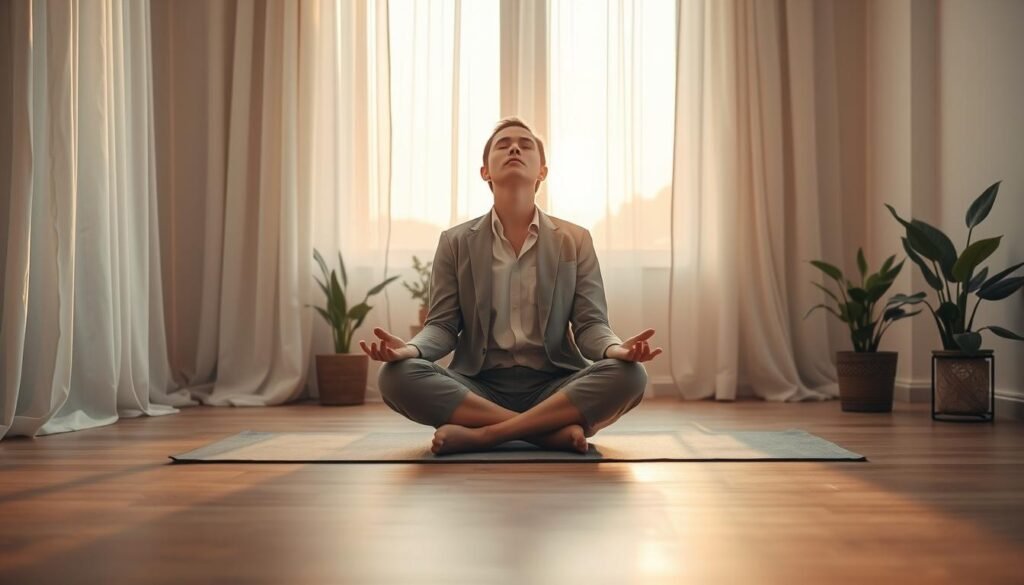
Set a timer for two to four minutes and choose a comfortable chair or a spot on the floor. Sit tall with the chest open and the neck long. Keep shoulders soft.
Get into position
Place one hand on the chest and one hand on the belly. Feel the belly rise on the inhale and soften on the exhale. This cue helps the diaphragm do the work.
Prime with a long exhale: 4 in, 6 out
Start with a full, gentle exhale. Then inhale for a count of four seconds and exhale for six seconds through the nose or softly through the mouth.
Coherent rhythm: 6 seconds in, 6 seconds out
When you’re ready, shift to nasal inhales for six seconds and nasal exhales for six seconds. Keep airflow quiet and steady; the goal is rhythm, not volume.
Timing and hand cues
Two to four minutes of steady, paced breaths often gives a noticeable change. If you lose the count, glance at a clock or use a pacing app.
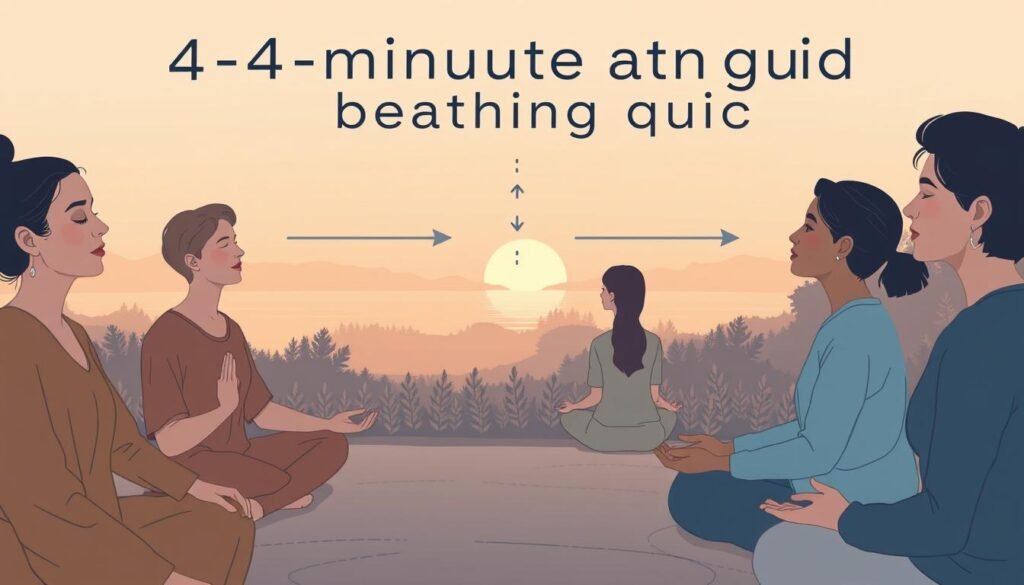
| Step | Count | Where to place hands | Why it helps |
|---|---|---|---|
| Prime exhale | 4 in / 6 out | One hand on belly, one on chest | Starts parasympathetic shift |
| Coherent rhythm | 6 in / 6 out | One hand on belly, one hand steady | Stabilizes heart rate and breath |
| Session length | 2–4 minutes | Hands remain for feedback | Quick, repeatable reset |
Practice this sequence daily so it becomes easy to use during spikes of anxiety at work or before a meeting. Try the 4-7-8 method or read a box vs 4-7-8 comparison to expand your tools.
Form matters: posture, nose vs. mouth, and pacing your breaths
Good form makes each short pause more effective and reduces the chance of dizziness. Simple posture and airflow cues help the body move air efficiently and keep the rate steady under pressure.
Small adjustments in posture and mouth position can change how quickly your body settles.
Should I inhale through the nose and exhale through the mouth?
Inhale gently through the nose with the mouth closed. Nasal inhales filter and humidify air and encourage diaphragmatic motion.
This reduces over-breathing and keeps the breaths calm. You may exhale through the nose or use a gentle mouth exhale when you need more control.
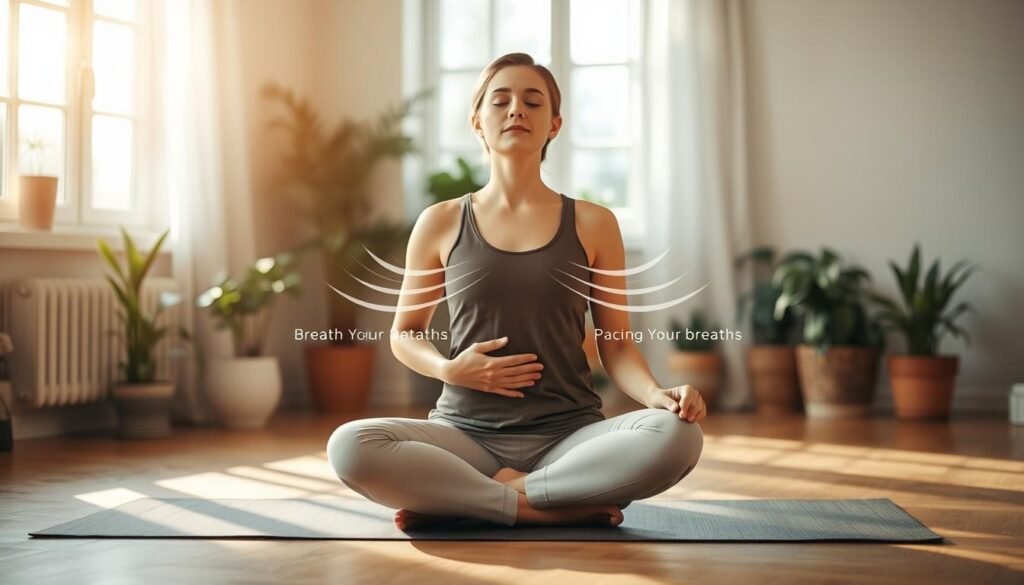
When should I use pursed lips to slow airflow?
Try pursed lips on the exhale to slow the outflow and lower the breathing rate. Clinicians use this method to manage shortness of breath.
- Keep posture tall but relaxed—open chest and soft shoulders support efficient mechanics.
- Let the belly lead the inhale while the ribs expand; avoid upper-chest heaving.
- Avoid forcing air; quiet, light airflow keeps the rate moderate and eases stress.
- If breaths race, extend the exhale or pause briefly before the next inhale.
- Practice short sets so muscle memory makes this technique automatic under pressure.
If you feel tingling or lightheaded, reduce depth and slow the pace until you feel centered again. For more on pairing posture with movement, read my Pilates experience.
Try these proven breathing techniques if you want options
Several quick, research-backed patterns can help steady heart rate and quiet the mind. Each method below offers an easy way to practice calm with minimal setup.
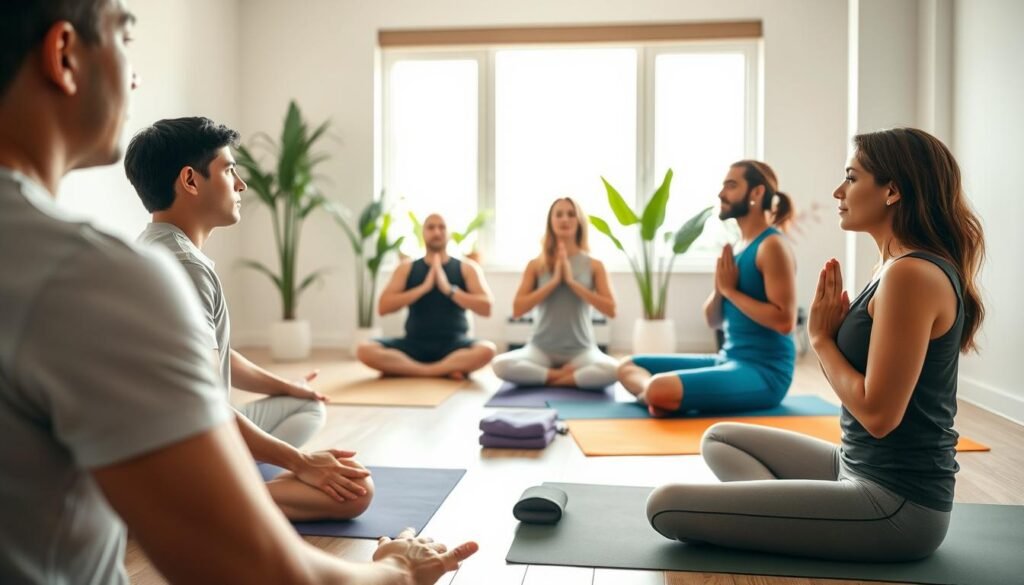
Pick one pattern and practice it for a few minutes to learn how your body responds.
4-7-8 (relaxing breath)
Inhale for 4 seconds, hold for 7 seconds, then exhale for 8 seconds. Start with up to four cycles and build slowly. If the hold feels long, use a shorter ratio like 2-3.5-4 seconds.
Equal breathing
Match the inhale and exhale counts (try 4-4 or 5-5). This simple rhythm is ideal at a desk or before a short meditation session.
Diaphragmatic (belly) breathing
Place one hand on the chest and one on the abdomen. Train the belly to rise on the inhale while the chest stays still. Practice several minutes daily to strengthen this technique.
Alternate nostril
Close one nostril at a time and switch sides in slow cycles for up to 10 minutes. This method balances airflow and is common in many yoga and meditation traditions.
Lion’s breath and box breathing
Lion’s breath uses a forceful “ha” exhale to release tension in the jaw and face. Box breathing (4-4-4-4) steadies attention with even segments.
“Choose a pattern that fits the moment — silent equal counts at work or 4-7-8 before sleep.”
Many people combine these with short guided breathing exercises or complement them with gentle yoga flows to deepen the effect.
The science behind the calm: what your body is doing
Slow, steady inhale-exhale cycles trigger measurable shifts in how your nervous system responds. These shifts help the body reduce arousal and support clearer thinking during stress.
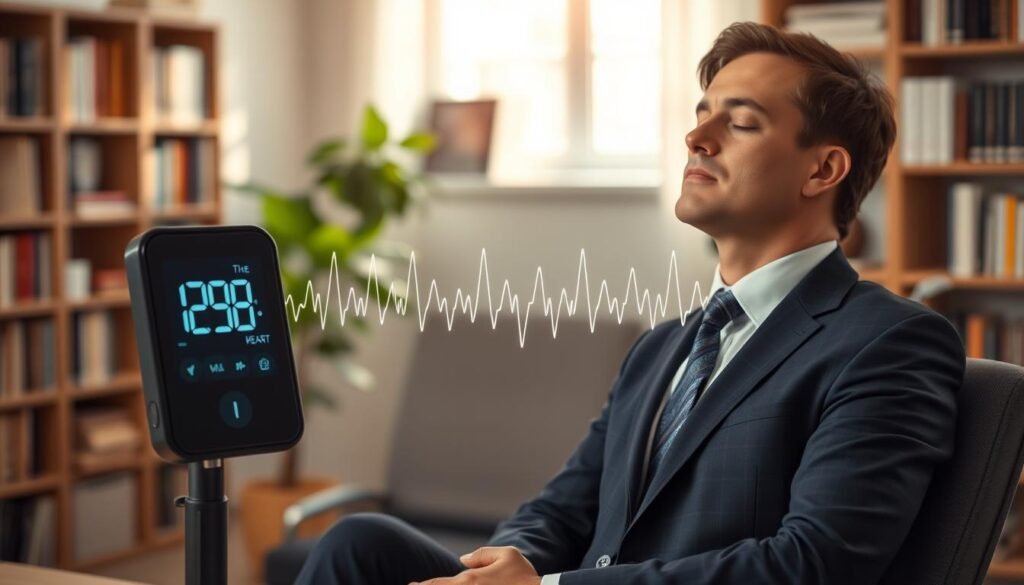
How the vagus nerve acts as a brake
The vagus nerve links the chest and gut to the brain and acts like a brake on arousal. Slow, deep breathing stimulates this pathway and lowers sympathetic drive. That reduces alarm signals and promotes calmer digestion, mood, and heart function.
Heart rate variability, blood pressure, and mood benefits
Resonance or coherent patterns often improve heart rate variability. Higher variability means the body adapts to stress better and recovers faster.
Studies also show lower blood pressure responses during stress and more positive mood after regular practice. Research quality varies, but findings point to real health gains in attention and resilience.
Practice matters. Repeating short sessions conditions the nervous system to shift toward calm faster. Track mood and energy to see what changes for you, and read a practical take on long-term nervous-system work in my Pilates experience or a summary review at Medical News Today.
Safety first: avoid hyperventilation and manage lightheadedness
Slow, gentle practice keeps you safe and prevents lightheadedness.If symptoms start, shorten the counts and sit or lie down until you feel steady.
Feeling dizzy during a session is common; the fix is a gentler count and a seated position.
Shorten counts but keep ratios
Reduce absolute seconds while preserving the inhale-to-exhale proportion. For example, use a 2–3.5–4 pattern instead of 4–7–8. That keeps the calming ratio but cuts strain.
Signs to pause and reset your breath
If you feel tingling, faintness, chest discomfort, or rising panic, stop immediately and breathe normally while seated or lying down.
- Keep airflow soft and avoid forceful inhales.
- Limit initial rounds; build slowly as comfort grows.
- Do not hold breath beyond comfort — ease off before form degrades.
- People vary; match counts to your current energy and state.
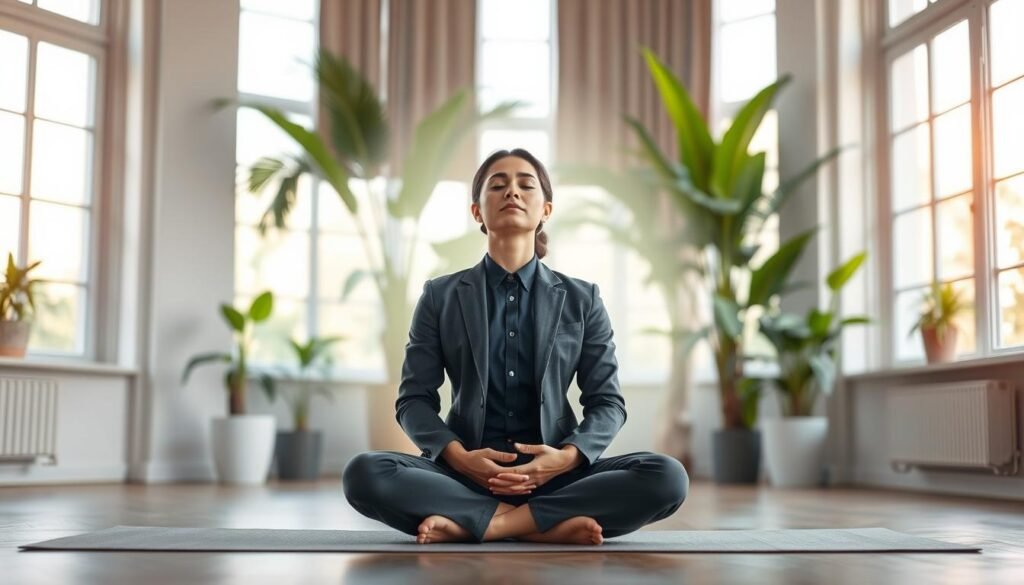
| Issue | Quick fix | Why it helps |
|---|---|---|
| Dizziness | Shorten counts to preserve ratios (e.g., 2-3.5-4) | Reduces hyperventilation risk and steadies blood chemistry |
| Balance loss | Practice seated or lying down | Prevents falls and makes recovery safe |
| Tingling or chest discomfort | Pause, breathe normally, seek care if persistent | Signals over-breathing or other medical issues |
If you want guided pacing or more cues, try a curated set of guided breathing exercises or read practical somatic guidance from a trauma therapist at this somatic release guide.
Make it a habit: when, how often, and helpful tools
Treat brief respiratory practice like any other workout—short, regular reps build skill and resilience. Schedule simple sessions several times a day to train your nervous system to shift faster when you need calm.
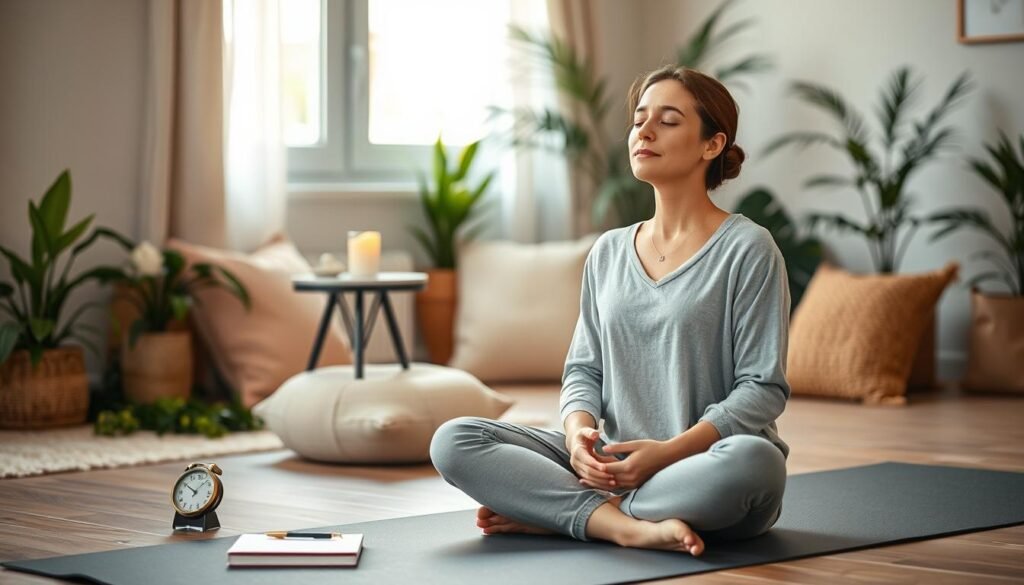
Daily routine: two to three short sessions a day
Start small. Do two to three short sessions each day—morning, midday, and evening—to build consistency.
Keep each session to two to five minutes at first. Gradually increase time as it feels natural.
Mix patterns across the week: use coherent breathing exercises during work hours and the 4-7-8 sequence once or twice a day before bed.
Guided audio and apps to pace your rate
Use guided audio or a pacing app to keep six-in/six-out timing without counting. Haptic cues or voice prompts smooth the rhythm when stress pushes your rate up.
- Anchor sessions to routines—after coffee, before lunch, or pre-bed—to make them automatic.
- Track times practiced and note mood to see progress.
- Pair with one minute of meditation to reinforce mental quiet and deepen the effect.
Keep it practical: even one minute before a meeting can reset focus. Like any exercise, small, regular reps create lasting benefits.
Conclusion
This short, repeatable routine trains the nervous system to shift toward calm in minutes. Use simple posture, belly-led motion, and longer exhales to get reliable, measurable relief.
Make the four-minute sequence your go-to tool and practice it often. Position yourself on a chair or the floor, place one hand on the chest and one on the belly, and keep counts flexible. Seconds guide the rhythm; shorter rounds still help.
Notice how your heart rate steadies as breaths smooth. Track sessions and choose patterns that fit the moment—coherent pacing for focus or the 4-7-8 ratio before sleep. Read about longer exhalations and vagal work at longer exhale benefits or try a practical morning routine at this morning practice.
If dizziness appears, shorten counts, keep ratios, and sit or lie down until steady. Over time, these small exercises become a dependable way to ease stress and support balance in daily life.
FAQ
What is the 4-minute breathing method and how quickly can it reduce anxiety?
It’s a short, paced breathing routine that uses longer exhales and steady counts to trigger the relaxation response. Most people notice reduced heart rate, calmer thoughts, and less physical tension within two to four minutes when practiced correctly.
Why does slowing the exhale help calm the nervous system?
A longer exhale stimulates the parasympathetic system (via the vagus nerve), which lowers heart rate and blood pressure. Extending the out-breath shifts the body from fight-or-flight into a more relaxed state.
How do I perform the exact step-by-step 4-minute practice?
Sit or lie comfortably with an open chest and relaxed shoulders. Start with an inhale for about 4 seconds and a 6-second exhale to prime the pattern. Then move to balanced, slow cycles—commonly 6 seconds in, 6 seconds out—keeping one hand on your belly and one on your chest to feel diaphragmatic movement. Continue for two to four minutes.
Should I breathe through my nose or mouth?
Prefer nasal inhalation to warm and filter air and to naturally slow the rate. Exhale can be nasal or gentle pursed-lips depending on comfort; pursed lips help slow airflow and prevent over-breathing.
What if I feel lightheaded or dizzy during the practice?
Pause, return to a comfortable, natural breathing pattern, and shorten counts while keeping the same ratio (for example, 3 in, 4 out). Sit down, place a hand on your belly, and breathe gently until symptoms ease. If dizziness persists, stop and consult a clinician.
How often should I do this to get lasting benefits?
Aim for two to three short sessions daily plus on-demand use during spikes of stress. Regular practice improves heart rate variability and makes rapid calming more reliable over time.
Are there alternative techniques if the 6-6 rhythm doesn’t work for me?
Yes — options include 4-7-8 breathing (4 in, 7 hold, 8 out), equal breathing (matched counts), diaphragmatic belly breaths, box breathing (4-4-4-4), alternate nostril breathing, and brief releases such as lion’s breath. Try different approaches and choose what reduces tension without discomfort.
Can this technique affect my heart rate or blood pressure?
Yes. Slow, controlled breathing often reduces heart rate and can lower blood pressure modestly by enhancing vagal tone and improving heart rate variability. These changes support a calmer mood and clearer thinking.
Is posture important while practicing?
Yes. Good posture—sitting tall in a chair or on the floor with relaxed shoulders and an open chest—facilitates diaphragmatic movement and helps you take deeper, more effective breaths.
Are there any safety precautions or people who should avoid this practice?
The technique is safe for most adults. Avoid long breath holds or very rapid, deep breathing if you have respiratory conditions, cardiovascular disease, or are pregnant without medical advice. If you have a chronic health condition, check with a healthcare provider before starting a new breathing regimen.
What tools can help me learn pacing and consistency?
Guided audio tracks, breathing apps (like Calm or Breathwrk), metronomes, and simple smartphone timers provide rhythm cues. Start with guided sessions until you’re comfortable pacing yourself.
How will I know the practice is working for me?
Look for tangible signs: slower, steadier pulse, reduced muscle tension, clearer thinking, and a subjective drop in anxiety levels. With regular use, these responses become faster and more reliable.