

Box breathing and 4-7-8 breathing are both structured ways to slow your breathing, but current research does not show that either one is universally better or reliably faster for immediate calm. The stronger evidence supports slow, controlled breathing more broadly, while research on these exact counting patterns is still comparatively limited.
The practical difference is simple: box breathing uses equal phases for inhaling, holding, exhaling, and holding again, while 4-7-8 breathing uses a relatively long breath hold followed by a longer exhale. One pattern may feel easier or more relaxing to you, but comfort, breathing rate, and tolerance for breath holds may matter more than choosing a supposed scientific winner.
Both techniques require no special equipment. The most useful approach is to learn each pattern, avoid forcing the counts, and use the version that lets you breathe slowly and comfortably.
Key Takeaways
- Research supports slow, controlled breathing as a useful way to influence autonomic activity and stress-related physiology, but that does not prove every named breathing technique works equally well.
- Box breathing follows an even 4-4-4-4 rhythm, while 4-7-8 breathing includes a longer hold and longer exhale.
- A 2025 direct comparison of square breathing and 4-7-8 breathing did not establish either method as the clear winner for mood or blood pressure.
- Broader slow-breathing research provides stronger support for changes in heart-rate variability than the evidence for either exact counting pattern.
- If breath holds feel uncomfortable, you do not need to force them. A simpler slow inhale-and-exhale rhythm may be a better fit.
- Breathing exercises can be useful coping tools, but they are not replacements for professional treatment of persistent or severe anxiety or panic symptoms.
How Slow Breathing May Influence Stress and Arousal
Stress often changes breathing automatically. Breaths may become faster, shallower, or less regular, especially when you feel rushed, threatened, or mentally overwhelmed. Intentionally slowing the breath can change that pattern and may influence cardiovascular and autonomic activity.
A systematic review and meta-analysis of voluntary slow breathing found that slow breathing was associated with increases in vagally mediated heart-rate variability during breathing, shortly after a session, and after repeated practice. Heart-rate variability, or HRV, reflects variation in the timing between heartbeats and is often used in research to study autonomic regulation.
That finding does not mean slow breathing instantly switches the body into a guaranteed “rest and digest” state, and a change in HRV should not be treated as proof that anxiety has been clinically reduced. It does show that controlled breathing can produce measurable physiological changes.
Technique matters less than many people assume. The broader evidence is strongest for slower breathing patterns in general rather than for one exact branded ratio. If the counting pattern makes you tense, short of breath, or overly focused on getting the numbers perfect, it may defeat the purpose.
Use relaxed breathing instead of oversized breaths
You do not need to inhale as deeply as possible. A better goal is a smooth, comfortable breath that does not require straining your chest, throat, shoulders, or abdomen.
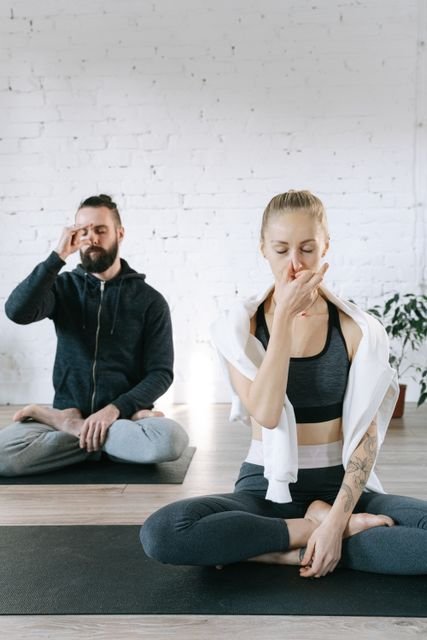
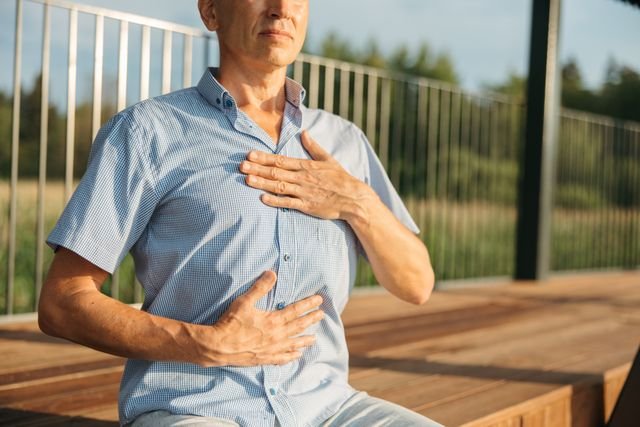
Sit upright or lie comfortably. Let your shoulders and jaw relax. If it helps, place one hand over your abdomen and notice whether it moves naturally as you breathe. The goal is not to force your belly outward but to avoid rigid, shallow breathing.
How to Do Box Breathing
Box breathing is sometimes called square breathing because all four phases use the same count.
- Inhale gently for a count of 4.
- Hold for a count of 4.
- Exhale smoothly for a count of 4.
- Hold after the exhale for a count of 4.
- Repeat while the rhythm remains comfortable.
The equal structure can make box breathing easy to remember because each phase is identical. Some people also like the mental focus of moving through four predictable stages.
However, the equal timing should not be interpreted as proof that box breathing prevents over-breathing, keeps you alert, or “balances” the nervous system in a unique way. A 2026 systematic review of randomized box-breathing trials found that the evidence remains limited and heterogeneous. Some studies reported short-term improvements in stress, anxiety, mood, respiratory rate, or heart rate, while physiological findings were not consistently reproduced.
If a four-count hold feels uncomfortable, shorten the phases. For example, you might try 3-3-3-3 or even begin with a slow inhale and exhale without any holds. Comfort is more important than preserving a perfect square.
How to Do 4-7-8 Breathing
The traditional 4-7-8 pattern uses a short inhale, a comparatively long breath hold, and an even longer exhale.
- Sit or lie in a comfortable position.
- Exhale gently to begin.
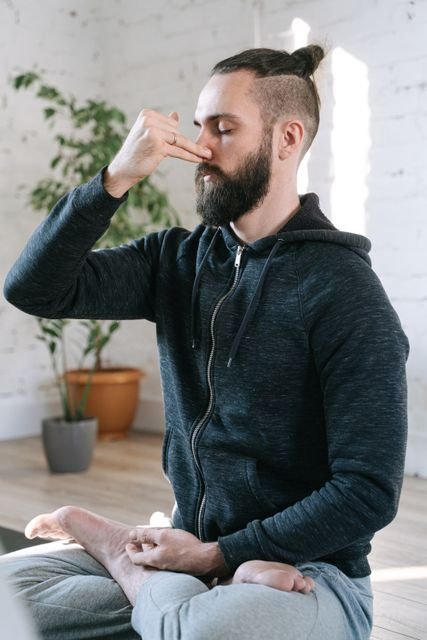
- Inhale through your nose for a count of 4.
- Hold for a count of 7.
- Exhale slowly for a count of 8.
- Repeat only as long as the pattern remains comfortable.
The technique is commonly taught with an audible mouth exhale, but the most important part for this article is the timing pattern rather than producing a particular sound.
There is some research specifically examining 4-7-8 breathing. In a study of immediate 4-7-8 breathing effects in healthy young adults, researchers observed decreases in heart rate and systolic blood pressure after the breathing intervention, along with some HRV changes.
That is useful protocol-specific evidence, but it has important limits. The study involved healthy young adults, and it did not show that 4-7-8 breathing works faster than box breathing for anxiety, sleep problems, panic symptoms, or the general population.
What the Evidence Says About Box Breathing vs. 4-7-8
The most important evidence for this comparison comes from a 2025 study that directly tested square breathing, 4-7-8 breathing, and two breathing conditions set at six breaths per minute.
In that study of 84 college students, the six-breaths-per-minute conditions produced larger increases in HRV than either square breathing or 4-7-8 breathing. At the same time, the breathing conditions did not produce meaningful differences in mood or blood pressure.
That finding matters because it challenges the idea that either named pattern must be physiologically superior simply because one uses equal counts and the other emphasizes a longer exhale.
| Question | What the evidence supports |
|---|---|
| Is box breathing clearly better for immediate calm? | No. Current evidence does not establish it as universally faster or more effective. |
| Is 4-7-8 clearly better because of the longer exhale? | No. A longer exhale may feel relaxing, but the exact 4-7-8 ratio has not been shown to be universally superior. |
| Does slow breathing have broader evidence? | Yes. Slow breathing as a general category has stronger evidence for changes in HRV and autonomic activity. |
| Does a physiological change guarantee that you will feel calmer? | No. Changes in HRV, heart rate, or blood pressure do not automatically translate into a predictable subjective response. |
The fairest conclusion is that neither box breathing nor 4-7-8 currently deserves the label of scientifically proven winner for “instant calm.” Their biggest practical differences are how the rhythm feels, how much breath holding they require, and how easily you can maintain the pattern without strain.
Which Breathing Pattern Fits Your Situation?
Instead of choosing based on a claim that one method is scientifically superior, use the features of each technique to decide what is easiest to practice comfortably.
| Situation | Practical option | Why |
|---|---|---|
| You prefer simple, symmetrical counting | Box breathing | Every phase uses the same count, which can make the rhythm easier to remember. |
| You like a longer exhale and do not mind a long hold | 4-7-8 breathing | The pattern emphasizes a longer retention and exhalation phase. |
| You dislike breath holds | Simple slow inhale/exhale breathing | You can slow your breathing without forcing a retention phase. |
| You become dizzy when focusing on breath counts | Use shorter counts or normal breathing | Forcing the rhythm is not necessary and may make symptoms worse. |
| You need to remain mentally engaged during the day | Try whichever pattern feels least distracting | Research does not establish box breathing as uniquely alerting or 4-7-8 as inherently sedating. |
| You are winding down before bed | Either pattern may be tried gently | Some people prefer a longer exhale, but 4-7-8 has not been proven universally better for sleep. |
You can also test the techniques for yourself without turning the exercise into a competition. Try one on a low-stress day, notice whether the rhythm feels comfortable, and pay attention to tension, breathing effort, and mental distraction. On another day, try the other method under similar conditions.
The useful question is not “Which technique forces my body to relax fastest?” but “Which rhythm helps me slow down without making breathing itself stressful?”
If counting each phase is distracting, an external visual cue can make pacing easier. The Mindsight “Breathing Buddha” uses light cues for 4/7/8, 5/5, and 4/4/4/4 patterns, so it can act as a visual timer rather than requiring you to track every count mentally. It is optional; both techniques can be practiced without buying anything.
- 🧠 WHAT IT'S FOR: Daily guided breathing to help calm & focus your mind during the day or promote a peaceful night sleep, improving overall wellness. Continued practice can help manage or reduce stress & anxiety in all ages and can help improve symptoms of depression. A simple & fun meditation tool that can also cultivate mindfulness to help you live in the present moment.
- 🧠 HOW TO USE IT – 3 easy to use breathing modes OR as a calming night light. Simply follow fade-in, fade-out color prompts that simulate the popular 4/7/8 'calming breath', 5/5 'balance breath', or 4/4/4/4 'box breathing'. Green Buddha - Inhale , Purple Buddha – Hold, Blue Buddha – Exhale. Lightly tap on surface to adjust brightness.

Safety, Breath Holds, and Common Problems
Breathing exercises should feel controlled rather than demanding. Do not force yourself to take huge breaths, hold beyond your comfort level, or finish a round simply because the written count says you should.
If you feel dizzy or lightheaded
Stop the exercise and return to comfortable normal breathing. Excessive or overly rapid breathing can lower carbon dioxide levels and contribute to symptoms such as lightheadedness, tingling, palpitations, or a feeling of breathlessness, as explained in MedlinePlus guidance on hyperventilation.
Do not automatically assume every episode of dizziness is harmless. New, severe, persistent, or otherwise concerning symptoms should be medically assessed rather than blamed on the breathing exercise.
If the holds feel uncomfortable
Shorten them or skip them. You might use 3-3-3-3 instead of 4-4-4-4, shorten the 7-count hold in 4-7-8, or switch to a slow inhale-and-exhale pattern with no retention.
The broader evidence for slow breathing does not depend on proving that breath holding itself is necessary. A breathing pattern you can perform gently is more useful than one you have to fight through.
If you have a medical condition
There is no need to publish a blanket rule that everyone with asthma, pregnancy, high blood pressure, heart disease, or another medical condition must avoid these techniques. However, if you have significant heart or lung disease, recurrent fainting, unusual breathlessness, or concerns about prolonged breath retention, ask a clinician whether held-breath exercises are appropriate for you.
Breathing exercises are not treatment for panic disorder
Slow breathing can be used as a coping or relaxation skill, but recurring panic attacks or severe anxiety deserve appropriate professional care. NIMH guidance on panic disorder treatment identifies psychotherapy, including cognitive behavioral therapy, and medication when appropriate as established treatment options.
If breathing exercises are part of your coping strategy, think of them as one tool rather than a replacement for diagnosis or treatment.
Final Takeaway
Box breathing and 4-7-8 breathing are both reasonable ways to structure slow, controlled breathing, but current research does not show that either one is the universal winner for immediate calm.
Box breathing may be easier if you like an even rhythm. The 4-7-8 pattern may appeal if you are comfortable with a longer hold and longer exhale. If either pattern feels strained, simpler slow breathing without breath holds is a valid alternative.
Start gently, keep the breath comfortable, and judge the technique by how easy it is to practice consistently rather than by claims that one ratio can reliably switch off stress faster than another.
FAQ
Is either technique proven to work faster?
No. The available direct comparison does not show that box breathing or 4-7-8 reliably produces faster subjective calm. The 2025 comparison found stronger HRV responses with six-breaths-per-minute breathing than with square or 4-7-8 breathing, but it did not find meaningful mood or blood-pressure differences among the tested breathing conditions.
What if breath holds make me uncomfortable?
Shorten the holds or remove them. Slow breathing does not need to become an endurance exercise. A gentle pattern with a comfortable inhale and exhale may be easier to sustain.
What should I do if I feel dizzy?
Stop the technique, return to normal breathing, and sit or lie down if needed. Avoid forcing deep breaths or immediately restarting the same pattern. If dizziness is severe, persistent, recurrent, or accompanied by concerning symptoms such as chest pain, fainting, or unusual shortness of breath, seek appropriate medical care.
Can breathing exercises replace treatment for anxiety or panic?
No. Breathing exercises can be useful coping tools, but they should not replace evidence-based care for persistent, severe, or disruptive anxiety or panic symptoms. Professional evaluation is especially important when symptoms interfere with daily life or are difficult to manage on your own.