


Can spending just a few minutes feeling thankful change how your brain responds to everyday life? Research suggests that practicing gratitude may improve emotional well-being, help you notice positive experiences, and change how certain brain regions respond to appreciation.
Gratitude means recognizing something valuable in your life and appreciating the people, experiences, or circumstances that contributed to it. It might be a friend’s kindness, a peaceful morning, or someone helping you through a difficult day.
Brain imaging studies have linked gratitude to areas involved in social connection, decision-making, and emotional meaning. Research also suggests that gratitude exercises can improve mood and reduce some symptoms of anxiety and depression. However, the benefits are generally modest, and scientists are still studying whether these practices produce lasting structural changes in the brain.
Here’s what the neuroscience of gratitude actually shows, where the evidence remains uncertain, and how to build a simple practice without forcing yourself to feel positive all the time.
Key Takeaways
- Gratitude engages important brain regions: Imaging studies connect grateful feelings with the medial prefrontal cortex and other areas involved in emotion and social understanding.
- Mental health benefits are possible: Research suggests small improvements in well-being, with some studies reporting fewer symptoms of anxiety and depression.
- Brain changes are still being studied: One study found differences in gratitude-related brain activity three months after a writing exercise, but this does not prove permanent brain rewiring.
- Sleep may improve: Some studies connect gratitude with better sleep quality, although results are mixed.
- Simple practices are enough to begin: Writing about meaningful moments, thanking someone, or taking a mindful walk requires little time or equipment.
Helpful Products at a Glance
For guided daily reflection: The Intelligent Change Five Minute Journal (Earth Green) provides structured gratitude and self-reflection prompts. It may help if you prefer guidance over a blank notebook, but it is optional.
- Cultivates Gratitude and Mindfulness - Journaling allows you to appreciate your life more for at least 5 minutes a day. The 5 Minute Journal for women and men is specially crafted for positive manifestation and improved confidence as you get on with your day.
- Chic Daily Journal With Prompts - Start your day with appreciation and end it with deep reflection using our wellness journal. This positivity journal has enough pages for 6 months. It features thoughtfully designed prompts, such as weekly challenges, gratitude, daily highlights, inspirational quotes, daily affirmations, and self-reflection.

How Gratitude Affects Your Brain and Emotional Well-Being
Your brain constantly processes information about your surroundings. Threats, problems, and unpleasant experiences can grab your attention because noticing potential danger helps you respond to it.
This tendency is often called the negativity bias. While it can be useful, it may also make everyday frustrations feel more noticeable than positive experiences.
Practicing gratitude offers another point of focus. Instead of ignoring problems, you deliberately recognize something helpful or meaningful that might otherwise go unnoticed.

Why Specific Appreciation Matters
Imagine that a coworker helps you finish an important task. You could simply think, “Today was good.” But recognizing exactly what happened gives your reflection more meaning.
For example: “My coworker helped me finish a difficult project, and I felt supported instead of overwhelmed.”
That reflection connects the experience with its emotional importance. It also helps you recognize support in your relationships.
Over time, regularly noticing experiences like these may make positive events easier to remember. However, scientists have not established that gratitude permanently eliminates negativity bias.
What Research Says About Mood and Stress
A 2025 meta-analysis published in PNAS examined 145 papers involving more than 24,000 participants across 28 countries. It found that gratitude interventions produced small overall improvements in well-being.
Another systematic review and meta-analysis of 64 randomized trials found improvements in positive emotions and some mental health measures, including anxiety and depression symptoms.
These findings are encouraging, but they do not mean gratitude works equally well for everyone. Study methods and participant experiences vary, and some studies have important limitations.
The Neuroscience of Gratitude: Brain Regions and Chemicals
Gratitude is not controlled by one special part of the brain. It involves several connected systems that help us recognize value, understand relationships, and respond emotionally.
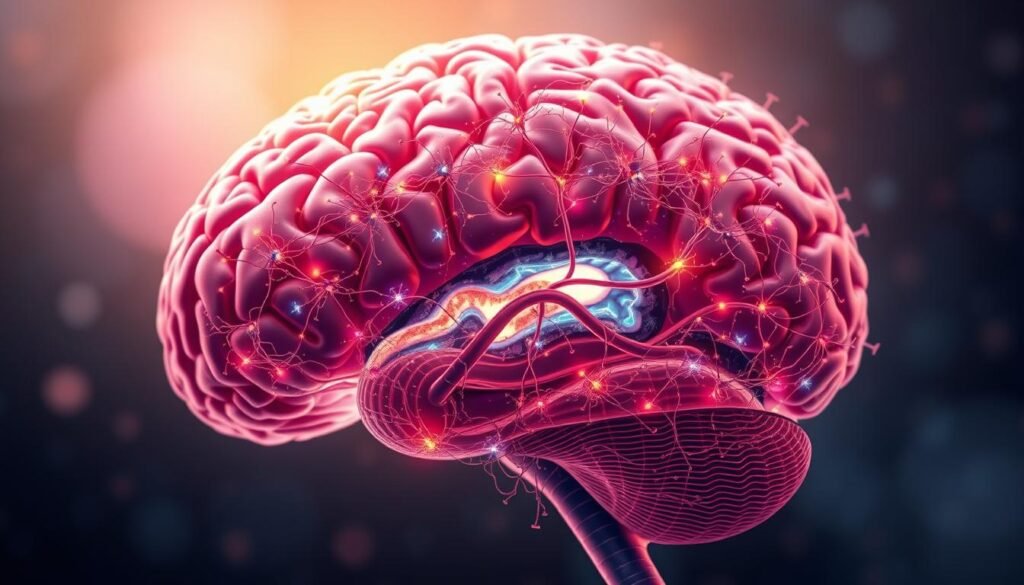
1. Medial Prefrontal Cortex: Meaning and Appreciation
The medial prefrontal cortex (mPFC) helps process personal value, social information, and decisions. It is one of the brain regions most consistently connected with gratitude in imaging research.
A 2015 brain imaging study by Glenn Fox and colleagues found that feelings of gratitude were associated with activity in regions including the medial prefrontal cortex.
This suggests that gratitude involves evaluating the meaning of what others have done for us, not simply experiencing a pleasant feeling.
2. Anterior Cingulate Cortex: Emotion and Social Awareness
The anterior cingulate cortex (ACC) contributes to attention, decision-making, emotional processing, and responses to social situations.
Because gratitude often involves recognizing another person’s kindness, researchers are interested in how this region works alongside other areas involved in social understanding.
However, observing activity in a brain region does not prove that gratitude strengthens that region or improves every function associated with it.
3. Amygdala and Hypothalamus: Stress Responses
The amygdala helps detect emotionally important events, including possible threats. The hypothalamus helps coordinate many automatic body functions, including parts of the stress response.
Some researchers suggest that gratitude could influence how people interpret stressful situations, making certain challenges feel more manageable.
But claims that a few minutes of gratitude reliably reduce amygdala activity, lower cortisol, or switch on the body’s relaxation response are stronger than the available evidence supports.
4. VTA and Nucleus Accumbens: Reward and Motivation
The ventral tegmental area (VTA) and nucleus accumbens are involved in the brain’s reward and motivation systems.
These systems help us learn from rewarding experiences and may contribute to why positive social interactions encourage future helpful behavior.
However, gratitude research does not establish that every gratitude exercise directly activates these regions or produces a measurable dopamine increase.
What About Dopamine, Serotonin, and Oxytocin?
Three brain chemicals often appear in discussions about gratitude:
- Dopamine: Plays important roles in motivation, reward learning, and behavior.
- Serotonin: Helps regulate several functions, including mood and sleep.
- Oxytocin: Contributes to aspects of social bonding and social behavior.
Although these chemicals participate in processes related to positive emotions and relationships, scientists have not shown that ordinary gratitude journaling reliably increases all three.
The better-supported conclusion is that gratitude involves networks related to social meaning and emotion, rather than a simple chemical boost.
Can Gratitude Actually Rewire Your Brain?
Neuroplasticity means your brain can change how it functions and connects information in response to experience, learning, and repeated activity.
For example, practicing a musical instrument can improve skills through learning-related brain changes. Researchers are exploring whether repeated emotional habits, including gratitude, can also influence brain activity over time.

What a Three-Month Brain Imaging Study Found
A 2016 study published in NeuroImage examined people entering psychotherapy for depression or anxiety.
Some participants completed a gratitude letter-writing activity alongside therapy, while another group received therapy without the writing intervention.
When researchers assessed participants three months later, the gratitude-writing group showed greater gratitude-related activity in the medial prefrontal cortex during a brain-scanning task.
What this means: A brief writing intervention was associated with differences in how the brain responded to gratitude months later.
What it does not prove: The study did not establish that gratitude permanently rewires the brain, increases gray matter, or guarantees better emotional regulation.
How Long Does Gratitude Take to Work?
Some gratitude studies report improvements after relatively short interventions, while others examine several weeks or months of practice.
There is no scientifically established rule that the brain changes after exactly 21 days, anxiety improves after 30 days, or permanent structural changes appear after three months.
A more useful approach is to practice regularly and pay attention to how your mood and behavior respond, without expecting a fixed transformation date.
Gratitude, Sleep, Stress, and Physical Health
Gratitude may influence more than how you feel during the day, but the evidence for physical benefits is less certain than the evidence for emotional well-being.
Can Gratitude Help You Sleep Better?
A 2009 study published in the Journal of Psychosomatic Research found that people with higher gratitude scores tended to report better sleep. Their thoughts before bedtime appeared to help explain the relationship.
However, that study was observational, so it could not prove that gratitude caused better sleep.
A later 2020 systematic review found improvements in self-reported sleep quality in five of eight studies examining that outcome.
These findings suggest that a calming bedtime reflection may help some people, but gratitude is not a proven treatment for insomnia.
Does Gratitude Lower Cortisol or Improve Heart Rate Variability?
Cortisol is a hormone involved in the body’s stress response. Heart rate variability (HRV) measures small differences in timing between heartbeats and can provide information about nervous system activity.
Gratitude may help people feel less stressed, but evidence that daily gratitude exercises consistently lower cortisol or increase HRV is not strong enough to promise those results.
The same caution applies to claims about stronger immunity, lower blood pressure, or better blood sugar control. Research on these physical outcomes remains limited or mixed.
5 Simple Gratitude Practices You Can Start Today
You do not need special equipment, expensive technology, or long meditation sessions to begin practicing gratitude.
Choose a method that feels natural and manageable. Honest, specific appreciation is more useful than trying to convince yourself that everything is wonderful.

1. Write Three Specific Things You Appreciate
At the end of the day, write down up to three things you genuinely appreciated. Include a short reason why each mattered.
- What happened: A friend checked on me today.
- Why it mattered: I felt cared for during a stressful week.
- What I noticed: I have someone I can talk to when life feels difficult.
You can start with just one meaningful experience. A few thoughtful sentences may feel more natural than trying to fill a long list.
2. Try a Guided Gratitude Journal
If you regularly sit down to write but cannot think of where to begin, guided prompts may make the habit easier to follow.
The Intelligent Change Five Minute Journal (Earth Green) is one option. It uses an undated format with prompts for gratitude, affirmations, daily highlights, and self-reflection. Its A5-sized pages and structured layout may suit people who want a repeatable morning and evening routine.
The limitation is that a guided journal costs more than a regular notebook, and its branded format has not been proven superior to free gratitude exercises. You can use the same approach with ordinary paper or a phone’s notes app.
Consider a guided journal if prompts help you stay organized. Skip it if you already enjoy writing freely or prefer a simple one-sentence reflection.
- Cultivates Gratitude and Mindfulness - Journaling allows you to appreciate your life more for at least 5 minutes a day. The 5 Minute Journal for women and men is specially crafted for positive manifestation and improved confidence as you get on with your day.
- Chic Daily Journal With Prompts - Start your day with appreciation and end it with deep reflection using our wellness journal. This positivity journal has enough pages for 6 months. It features thoughtfully designed prompts, such as weekly challenges, gratitude, daily highlights, inspirational quotes, daily affirmations, and self-reflection.
- Easy-to-Follow Guided Journal - Don’t know where to start? No worries! Our five minute gratitude journal provides writing cues to set the flow. The motivational journal is undated, so you can begin jotting down your thoughts whenever you’re ready.
- Premium-Quality Aesthetic Journal - These journals with prompts are the epitome of quality. They come in different colors to suit your style. Each personal journal is made using recyclable, sustainably sourced paper with a natural linen fabric cover.
3. Write a Gratitude Letter
Think of someone who helped you or made a meaningful difference in your life. Write a short letter explaining what they did and why you appreciate it.
You can send the letter, read it aloud, or keep it private. The important part is reflecting sincerely on the experience rather than creating a perfect message.
4. Take a 10-Minute Gratitude Walk
During an ordinary walk, notice three things you appreciate. They might be cool air, a comfortable path, birdsong, or a pleasant interaction.
Pause briefly to notice why each experience matters. This combines gentle movement with focused attention, although the research does not establish that gratitude walks uniquely change brain chemistry.
5. Practice Two Minutes of Appreciation
On busy days, try a shorter routine:
- Sit comfortably and take a few natural breaths.
- Remember one person, event, or experience you appreciate.
- Think about what happened and why it mattered.
- Notice how you feel without trying to create a particular emotion.
- Return to your day.
You can also use a short story about kindness or generosity as a starting point. Hearing about helpful actions may encourage reflection on relationships and social connection.
How to Build a Sustainable Gratitude Habit
Consistency can help you remember to practice, but gratitude should not become another stressful task.
Try this simple routine for the next three weeks:
- Week 1: Write one specific thing you appreciated most days.
- Week 2: Add a sentence explaining why it mattered or how it affected you.
- Week 3: Continue journaling and express genuine thanks to someone when the opportunity arises.
At the end of each week, ask yourself whether you noticed any changes in mood, sleep, or relationships. A brief weekly check-in may reveal personal patterns, although it cannot prove that gratitude caused every change.
Avoid Forced Positivity
Gratitude does not mean ignoring sadness, anger, grief, or difficult circumstances. You can appreciate someone’s support while still acknowledging that you are having a hard time.
For example, “Today was difficult, but I appreciated my sister listening to me” is more honest than pretending the entire day was wonderful.
If a gratitude exercise makes you feel guilty or pressured, simplify it, change the prompt, or take a break. It should support emotional awareness rather than replace it.
Do Brainwave Audio and Gratitude Apps Help?
Some apps and audio tools use calming soundscapes, guided reflection, or music described as targeting alpha, theta, or other brainwave states.
Such features may make a session more pleasant for some users. However, there is not enough reliable evidence to conclude that adaptive soundscapes or brainwave audio specifically enhance gratitude-related brain changes.
Use technology for convenience rather than expecting a particular brainwave frequency to unlock stronger benefits. A quiet room and a basic notebook remain reasonable options.
Conclusion: Small Moments of Appreciation May Make a Difference
The neuroscience of gratitude offers an interesting picture of how appreciation connects with brain systems involved in meaning, emotion, and social understanding.
Research suggests that gratitude exercises can produce small improvements in emotional well-being. Brain imaging studies also show that gratitude-related neural responses can differ following a writing intervention. Still, claims about permanently rewiring the brain, boosting specific chemicals, or reliably changing stress hormones go beyond what science currently establishes.
Start with one genuine moment of appreciation today. Write down what happened, why it mattered, and how it made you feel. Repeat the practice when it fits your life, and adjust it if it stops feeling helpful.
You do not need to force happiness or purchase special tools. The goal is simply to give meaningful positive experiences some attention alongside life’s real challenges.
Frequently Asked Questions
What happens in your brain when you feel gratitude?
Brain imaging studies associate gratitude with activity in the medial prefrontal cortex and other regions involved in social understanding, emotional meaning, and decision-making. Scientists are still investigating how these networks work together during grateful experiences.
Does gratitude release dopamine, serotonin, or oxytocin?
These chemicals are involved in reward, mood, and social behavior. However, current research does not establish that everyday gratitude exercises consistently increase their levels. Claims about a guaranteed gratitude-related chemical boost are oversimplified.
Can gratitude permanently rewire your brain?
One brain imaging study found differences in gratitude-related activity three months after a writing intervention. This supports further research into lasting effects, but it does not prove permanent changes in brain structure or neural connections.
Can gratitude reduce anxiety and stress?
Some randomized studies report modest reductions in anxiety or depression symptoms and improvements in emotional well-being. Results vary, and gratitude is better viewed as a possible supportive habit rather than a replacement for established mental health treatment.
Does keeping a gratitude journal improve sleep?
Some studies link gratitude with better self-reported sleep quality, possibly because people have more pleasant thoughts before bedtime. However, findings are mixed, and journaling is not guaranteed to improve sleep problems.
Is writing gratitude more effective than thinking about it?
Writing helps create a record and gives structure to reflection, while silent appreciation may feel easier for some people. There is not enough consistent evidence to declare one method universally better. Choose the approach you can practice comfortably.
Can expressing thanks improve relationships?
Genuine expressions of appreciation can help others feel recognized and valued. Gratitude research also connects appreciation with positive social behavior, although outcomes depend on the relationship, situation, and sincerity of the expression.
How long should I practice gratitude each day?
A few minutes is a practical starting point, but research has not established one ideal daily duration. Try writing one or two meaningful reflections and adjust the time according to your needs.
How many days does gratitude take to change the brain?
There is no proven 21-day or 30-day brain-rewiring deadline. Some studies observe changes in well-being after short interventions, while brain imaging research has examined responses months later. The timing and size of benefits differ among individuals.
Can I practice gratitude when life feels difficult?
Yes, provided the practice feels genuine and does not pressure you to dismiss painful experiences. You might appreciate a small act of kindness while still acknowledging stress, grief, or disappointment. It is also reasonable to skip the exercise when it does not feel helpful.