


Ever notice your shoulders creeping toward your ears during a stressful day? Or your lower back feeling stiff after hours at a desk? Somatic stretching offers a gentle way to notice that tension and move more comfortably.
Unlike workouts that focus on repetitions or calories burned, somatic stretching asks you to pay attention to how movement feels. You move slowly, breathe comfortably, and adjust each stretch based on your body’s signals. Even five to ten minutes can provide a useful break from a busy day.
But can one week of somatic stretching improve stress, sleep, or flexibility? Seven days is enough to explore the exercises and notice possible changes, although lasting benefits are not guaranteed. This guide explains the research, walks you through beginner-friendly movements, and provides a realistic seven-day plan.
Key Takeaways
- Body awareness comes first: Somatic stretching focuses on gentle movement, breathing, and noticing physical sensations rather than pushing for deeper stretches.
- Stress relief is possible: Slow breathing and mindful movement may help you feel calmer, although individual results vary.
- You don’t need equipment: A chair, comfortable floor space, and a few quiet minutes are enough to begin.
- Start with 5–15 minutes: Short daily sessions are a practical way to build a habit, not a scientifically proven minimum for results.
- Track changes: Notice shoulder tension, back comfort, sleep, mood, and energy without expecting dramatic improvements in one week.
Helpful Products at a Glance
For comfortable floor-based stretching, the Gaiam Thick Yoga Mat provides foam cushioning. Its softness may make standing balance poses less stable.
- Extra-Thick Cushioning for Joint Comfort : Made with 10mm (2/5") high-density NBR foam, this mat delivers plush cushioning that helps reduce pressure on knees, hips, and joints—ideal for beginners, low-impact yoga, Pilates, stretching, floor exercises, and home workouts on hard surfaces.
- Comfort-Focused Surface for Controlled Movement : Textured foam surface helps reduce slipping on most hard floors during dry workouts and everyday exercise. The softer, cushioned feel prioritizes comfort and shock absorption over firmness, making it a great choice for floor-based and low-impact routines.

For extra torso support during restorative poses, the Gaiam Rectangular Yoga Bolster offers a firm cushion. A folded blanket or household pillow may work instead.
- 100% Cotton
- Yoga Bolster Pillow - The Gaiam yoga bolster is a soft and supportive meditation cushion for added support for the body during yoga, meditation, or general relaxation. Our pillow comes in multiple colors to match your style.

What Is Somatic Stretching?
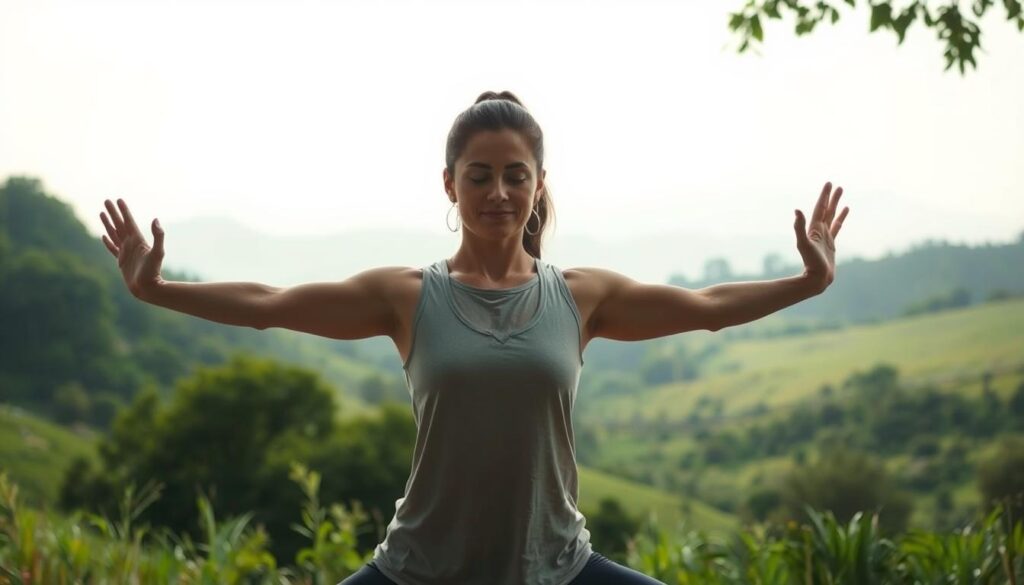
Somatic stretching is a gentle approach to movement that focuses on what you feel inside your body. Instead of stretching as far as possible, you explore comfortable movements while paying attention to breathing, muscle tension, and changes in sensation.
For example, during a shoulder roll, you might notice that one shoulder moves more freely than the other. Rather than forcing both sides to match, you slow down and explore a comfortable range.
How Is It Different From Regular Stretching?
Traditional stretching often aims to increase flexibility by holding or repeating movements. Somatic stretching emphasizes awareness throughout the movement. Neither approach is automatically better; they simply place attention on different goals.
- Regular stretching: You may hold a hamstring stretch for 30 seconds to work on flexibility.
- Somatic stretching: You gently bend and straighten your knee while noticing changes in tightness and comfort.
- Traditional exercise: You might track repetitions, resistance, speed, or distance.
- Awareness-led movement: You focus on breathing, coordination, and how your body responds.
What Happens in the Nervous System?
Stress can increase muscle tension, breathing rate, and alertness. Slow breathing and relaxing movements may help support the body’s natural relaxation response, which can involve a slower heart rate and a greater sense of calm.
However, somatic stretching does not automatically reset the nervous system or release stored trauma. The National Institutes of Health describes evidence for relaxation techniques while noting that results depend on the practice and health condition.
Somatic Stretching Benefits: What Does Research Actually Show?
Somatic stretching is often discussed alongside yoga, tai chi, breathing exercises, and other mindful movement practices. These related methods have been studied more extensively than routines specifically marketed as somatic stretching.
1. Better Movement Awareness and Flexibility
Slow stretching gives you time to notice where movement feels easy or restricted. Repeated comfortable movements may gradually improve mobility, particularly when combined with an appropriate flexibility routine.
You might notice easier shoulder movements or less stiffness after sitting. Significant flexibility improvements generally require more than a handful of sessions, and somatic stretching has not been shown to outperform established stretching methods.
2. Less Stress and Physical Tension
Breathing slowly while paying attention to your body may reduce feelings of tension and stress. Research on yoga and relaxation practices supports possible improvements in perceived stress, although this does not prove that every somatic stretching routine produces the same results.
According to the NCCIH review of yoga research, yoga may support stress management, mental well-being, and sleep. The strength of evidence differs across outcomes.
3. Possible Support for Lower-Back Pain
Gentle movement may help some people with ongoing back discomfort. Research on yoga, tai chi, and the Alexander Technique suggests potential benefits for chronic lower-back pain, but these are distinct approaches.
A 2008 BMJ trial involving 579 adults found that participants receiving 24 Alexander Technique lessons reported 86% fewer days with back pain than the usual-care group at one year. That result came from a structured teaching program, not a seven-day somatic stretching routine.
Persistent back pain needs an appropriate assessment, especially when accompanied by worsening weakness, numbness, or changes in bladder or bowel control.
4. Posture, Balance, and Sleep
Mindful movement can help you recognize habits such as raised shoulders, a clenched jaw, or holding your breath while concentrating. Yoga and tai chi may improve balance and movement control with regular practice.
A relaxing evening routine might also make bedtime feel easier. Still, evidence that somatic stretching alone improves sleep is limited. Poor sleep has many possible causes, so stretching is only one part of the picture.
A 7-Day Somatic Stretching Plan: What to Try and Notice
The first week is about learning your body’s signals, not proving that the exercises work. Aim for roughly ten minutes each day, or shorten the session when necessary.
Before starting, rate your shoulder tension, back stiffness, and stress from 0 to 10. Also note your usual sleep quality and afternoon energy. Repeat these quick checks throughout the week.

Your Daily Routine
- Day 1 — Notice your baseline: Spend five minutes breathing comfortably and five minutes scanning your body. Identify areas of tension without trying to fix everything.
- Day 2 — Focus on shoulders: Practice slow shoulder rolls, neck movements, and gentle breathing. Notice whether one side feels different.
- Day 3 — Explore your back: Try comfortable seated spinal rotations and small pelvic movements. Avoid twisting into pain.
- Day 4 — Add micro-breaks: Use two or three brief movement breaks during your workday. Compare how you feel before and afterward.
- Day 5 — Try evening relaxation: Combine a body scan with a comfortable resting position. Notice whether the routine helps you settle before bed.
- Day 6 — Combine favorite movements: Create a ten-minute sequence using the exercises that feel most helpful.
- Day 7 — Review your notes: Compare your stress, tension, sleep, and comfort ratings with Day 1. Decide which movements deserve a place in your regular routine.
What Changes Might You Notice?
Some people may feel calmer immediately after a session. Others notice little difference or discover that certain positions are uncomfortable.
Pay attention to small, practical observations:
- Do your shoulders feel less tense after a work break?
- Can you recognize muscle tightness earlier?
- Do breathing exercises feel easier or more natural?
- Does an evening session help you relax?
- Are there exercises you would rather modify or skip?
One unusually good night’s sleep or one stiff morning does not prove that stretching caused the change. Look for patterns rather than judging the whole routine by a single day.
6 Simple Somatic Stretching Exercises for Beginners
These movements are designed to be gentle and easy to modify. You can practice them individually or combine several into a short session.
For floor exercises, choose a stable, comfortable surface. A folded blanket may provide enough cushioning. If your floor feels hard, the Gaiam Thick Yoga Mat offers a 72-by-24-inch foam surface with extra cushioning for kneeling and lying down. It is optional, and its softer surface may be less suitable for balance-focused standing moves.
- Extra-Thick Cushioning for Joint Comfort : Made with 10mm (2/5") high-density NBR foam, this mat delivers plush cushioning that helps reduce pressure on knees, hips, and joints—ideal for beginners, low-impact yoga, Pilates, stretching, floor exercises, and home workouts on hard surfaces.
- Comfort-Focused Surface for Controlled Movement : Textured foam surface helps reduce slipping on most hard floors during dry workouts and everyday exercise. The softer, cushioned feel prioritizes comfort and shock absorption over firmness, making it a great choice for floor-based and low-impact routines.
- Soft Foam Feel with Easy Care : Crafted from low-odor NBR foam that’s easy to maintain—simply wipe clean with a damp cloth. Initial foam odor may be present when first opened and typically fades after airing out for 24–48 hours.
- Versatile for Home Fitness & Recovery : Popular for yoga, Pilates, stretching, physical therapy, core workouts, and general home fitness. The extra-thick foam provides comfort on wood, tile, or concrete floors and is well-suited for regular bodyweight use.
1. Diaphragmatic Breathing
Also called belly breathing, this exercise encourages a gentle movement of your abdomen as you breathe.
- Sit comfortably or lie on your back with your knees supported.
- Place one hand on your chest and the other on your belly.
- Inhale slowly through your nose, allowing your belly to rise naturally.
- Exhale gently without forcing all the air out.
- Continue for one to three minutes, or as long as comfortable.
If counting helps, try breathing in for about four seconds and out for six. Adjust the timing freely and avoid holding your breath if it feels uncomfortable.
2. Body Scan
Sit or lie comfortably and bring your attention to different body areas, starting at your feet and moving toward your head.
Notice warmth, pressure, tightness, or comfort. You do not need to make every muscle relax. If focusing on internal sensations feels unsettling, open your eyes and pay attention to the room instead.
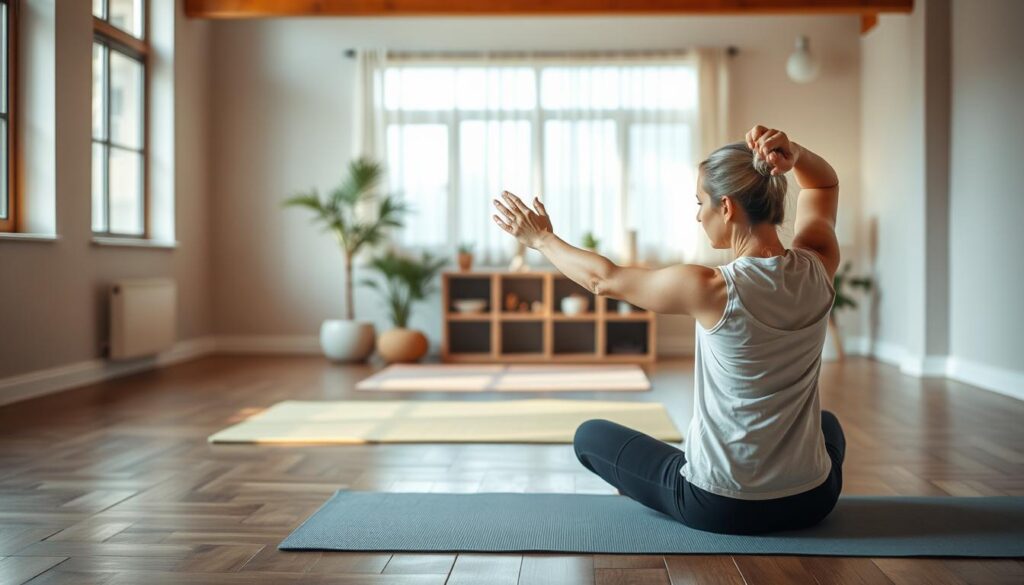
3. Seated Spinal Twist
- Sit upright in a stable chair with both feet resting on the floor.
- Inhale gently while lengthening through your upper body.
- Exhale and rotate your torso slightly toward one side.
- Take two or three comfortable breaths.
- Return to the center and repeat on the other side.
Keep the movement small. Avoid forceful twisting, particularly if you have a spinal injury or a condition that makes rotation painful.
4. Supported Child’s Pose
Child’s Pose is a resting yoga position that may feel comfortable for the back and shoulders.
- Kneel on a padded surface with your knees comfortably apart.
- Move your hips backward only as far as comfortable.
- Bring your upper body forward and rest your arms where they feel natural.
- Support your head or chest if reaching the floor feels difficult.
- Breathe gently for three to five breaths before slowly returning upright.
If your knees or hips feel uncomfortable, skip the pose or try resting forward on a table while seated. A household pillow or folded blanket can support your chest without requiring special equipment.
For people who regularly practice supported floor poses, the Gaiam Rectangular Yoga Bolster is another option. Its cotton-filled cushion provides a more structured resting surface, and its removable cover can be washed. Because it is firm, you may still need to adjust its position or use additional padding. It is not necessary for the exercise to be useful.
- 100% Cotton
- Yoga Bolster Pillow - The Gaiam yoga bolster is a soft and supportive meditation cushion for added support for the body during yoga, meditation, or general relaxation. Our pillow comes in multiple colors to match your style.
- All-Natural Filling - This pillow is filled with natural cotton batting for superior comfort and cushioning. The soft and flexible filling lets you lay against the pillow with cushioned comfort while the pillow keeps its shape.
- Handle Strap - Our yoga pillow features a built-in sturdy handle on the pillow case for hassle-free transport to easily grab the meditation cushion and go or reposition for poses or support your neck.
5. Gentle Grounding and Swaying
Stand beside a sturdy chair or counter for support. Shift your weight slowly from one foot to the other while noticing how each foot presses into the floor.
You can also try small, controlled heel raises and lower your heels gently. Avoid forceful heel drops, especially when dealing with balance problems, foot pain, or joint injuries.
6. Seated Wave Breathing
Sit upright with your feet flat. As you inhale, allow a small, comfortable lift through your chest. As you exhale, gently soften your upper back without collapsing forward.
Repeat five or six times. Keep the motion smooth and natural rather than trying to create a large spinal arch.
Can Yoga, Tai Chi, Pilates, and Dance Be Somatic?
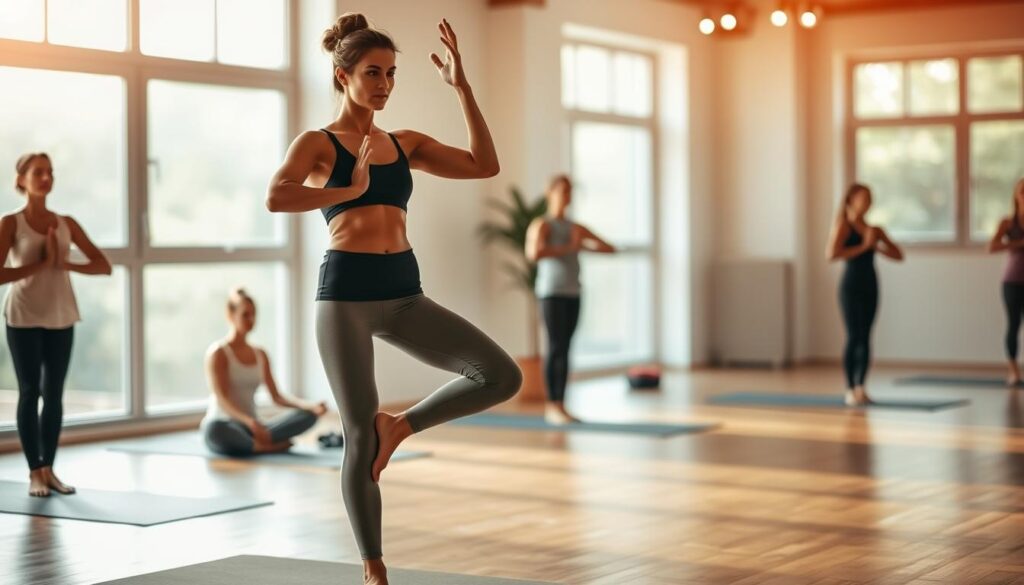
Yes, these activities can include somatic principles when you pay close attention to internal sensations and move with intention.
However, not every yoga class or dance workout is automatically a somatic practice. The way you approach the movement matters.
- Yoga: Connects breathing, posture, and body awareness. Gentle styles may be useful for a slower routine.
- Tai chi: Uses slow, flowing movements and controlled weight shifts to practice coordination and balance.
- Pilates: Emphasizes controlled movements, breathing, and trunk strength. It can include mindful awareness alongside physical conditioning.
- Dance: Can encourage body awareness when you explore movement without worrying about appearance or perfect technique.
If you’re new to these approaches, start with a short beginner session. Pick one point of attention, such as how your feet connect with the floor or how your shoulders move with each breath.
For more guided movement ideas, explore Peloton’s overview of somatic movement or the Cleveland Clinic’s somatic exercise guide.
How Often Should You Practice Somatic Stretching?
Five to fifteen minutes is a manageable starting point for many beginners. There is no established research-based schedule showing that a particular number of somatic stretching minutes guarantees better results.
You can begin with a few comfortable minutes and increase your practice time as you learn which movements suit you.
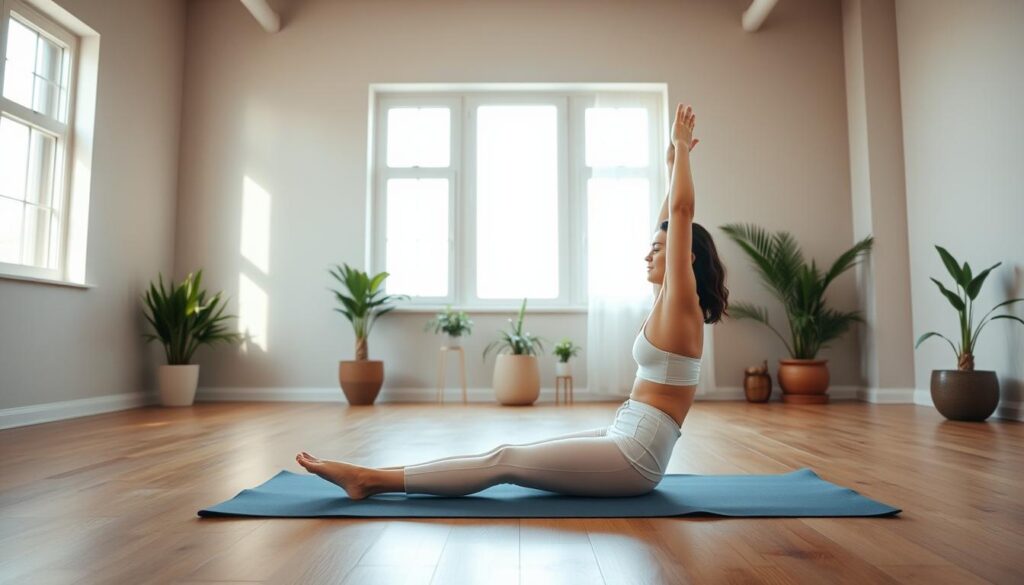
Finding a Routine That Fits
- Morning: Try five minutes of breathing and gentle mobility before beginning work.
- Midday: Take a two-minute movement break when you notice stiffness or mental fatigue.
- Evening: Use a comfortable body scan or resting position to unwind.
- Weekends: Explore a longer yoga or tai chi session if you enjoy guided movement.
Missing a day is not failure. Return to the routine when convenient rather than making up missed time with longer, uncomfortable stretches.
For additional routine ideas, see the Somatic Movement Center’s daily practice guide. You can also explore our flexibility stretching guide if improving your range of motion is a separate goal.
Somatic Stretching for Anxiety and Trauma: Important Differences
Gentle breathing and mindful movement may help some people manage everyday stress. When you slow down and notice your surroundings, you may find it easier to shift attention away from racing thoughts.
Two breathing options are worth knowing:
- Box breathing: Breathe in, pause, breathe out, and pause again using comfortable counts. Skip breath holds when they cause discomfort.
- Cyclic sighing: Take an inhale, add a small second inhale if comfortable, then exhale slowly. Use gentle breaths rather than repeated forceful inhalation.
These exercises are optional. If controlled breathing makes you dizzy, anxious, or uncomfortable, return to natural breathing.

Is Somatic Stretching the Same as Somatic Experiencing?
No. Somatic Experiencing is a specific body-oriented approach used by trained practitioners to address trauma-related difficulties. General somatic stretching is a wellness activity and does not provide the same structured treatment.
Research on body-based trauma approaches is developing, but evidence does not establish that self-guided stretching treats PTSD or releases trauma from muscles.
People with a history of trauma may sometimes find body scans or certain movements distressing. If that happens:
- Keep your eyes open and focus on familiar objects.
- Choose a comfortable seated or standing position.
- Stop the exercise whenever you want.
- Work with a qualified mental health professional when symptoms interfere with daily life.
Established treatments such as trauma-focused cognitive behavioral therapy and EMDR remain important options for PTSD. Somatic movement may be used alongside appropriate care when it feels helpful.
Quick Somatic Micro-Breaks for Work and School
Not every session needs a mat or quiet room. Small movements can help interrupt long periods of sitting and give you an opportunity to notice tension.
A Two-Minute Desk Reset
- Hands and fingers — 30 seconds: Open and close your hands gently, then spread your fingers without forcing them.
- Wrists — 20 seconds: Make small, comfortable wrist circles.
- Neck — 30 seconds: Slowly tilt your head from side to side without pulling or pressing.
- Shoulders — 20 seconds: Roll your shoulders backward and let them settle.
- Breathing — 20 seconds: Take several comfortable breaths while relaxing your jaw.
You can also try a gentle seated hip hinge: keep your feet grounded, lean slightly forward from your hips, then return upright. Avoid pushing through back pain.
These breaks can make long desk sessions more comfortable, but they are not a replacement for regular physical activity or an ergonomic workstation.
Helpful Apps for Guided Somatic Movement
A guided app can be useful when you prefer audio instructions, reminders, or a structured routine. You do not need one to practice the exercises in this article.
NEUROFIT
NEUROFIT offers short guided somatic exercises, daily check-ins, and tracking features. It may appeal to people who prefer brief, app-led sessions. Its claims about rapid nervous system improvements should not be treated as guaranteed clinical outcomes.
SomaShare offers guided practices, trauma-informed content, mini-courses, and community features. Free content is available, with additional features offered through a paid subscription.
When choosing any wellness app, look for clear exercise instructions, comfortable beginner options, transparent subscription terms, and the freedom to skip activities. Tracking your personal observations is more useful than relying on an app’s promised results.
How to Track Your Progress Without Overthinking It
Use a simple daily check-in instead of measuring every movement. Before and after your session, note how you feel.
- Tension: Rate shoulder or back stiffness from 0 to 10.
- Stress: Record how tense or calm you feel.
- Sleep: Note whether you fell asleep easily and felt rested.
- Energy: Check how alert you feel during the afternoon.
- Comfort: Record which exercises felt good and which needed changes.
Look back after seven days. A pattern of easier movements or improved comfort may help you decide what to continue. No noticeable improvement is also useful information, especially if an exercise consistently makes symptoms worse.
Conclusion: Is Somatic Stretching Worth Trying?
Somatic stretching can be a practical way to bring more awareness and gentle movement into your day. It requires little space, does not have to involve equipment, and can fit into short breaks at home or work.
A week of practice may help you discover which movements feel relaxing, but it cannot establish lasting improvements in pain, sleep, or nervous system health. Those outcomes need a more careful and individual approach.
Begin with belly breathing, a comfortable body scan, or a seated stretch. Practice for a few minutes, track how you feel, and keep the exercises that genuinely help. If pain or distress increases, stop and choose a safer approach.
Frequently Asked Questions
Can you see somatic stretching results in seven days?
You may notice greater body awareness or temporary relaxation within a week. Meaningful changes in flexibility, ongoing pain, or sleep are less predictable. No specific seven-day result is guaranteed.
Is somatic stretching good for chronic lower-back pain?
Gentle movement may help some people manage discomfort, but research on somatic stretching itself is limited. Evidence is stronger for related approaches such as yoga and the Alexander Technique. Persistent back pain deserves an appropriate assessment and individualized exercise advice.
Can somatic stretching help with anxiety?
Slow breathing and mindful movement may provide short-term relaxation and help some people cope with stress. They are not established replacements for psychological treatment when anxiety is severe or ongoing.
Do I need a yoga mat or stretching equipment?
No. A chair, stable floor, blanket, or ordinary pillow is often enough. A mat or bolster can make certain floor positions more comfortable, but neither is essential.
Is somatic stretching better than yoga or regular stretching?
Not necessarily. Somatic stretching emphasizes internal awareness, while regular stretching often focuses more directly on flexibility. Yoga can combine both. The most helpful choice depends on your goals, comfort, and physical needs.
Can I practice somatic stretching every day?
Many people can practice gentle movements daily when the exercises remain comfortable. Start with a short session and adjust based on how your body responds. Avoid exercises that aggravate injuries or other symptoms.


Don’t Miss These Picks