

Have you ever struggled to carry heavy groceries, get up from the floor, or climb stairs without feeling tired? These everyday movements may seem simple, but they require strength, balance, and coordination.
Functional training helps you build the strength and movement skills needed for daily activities. Instead of focusing only on individual muscles, it uses exercises that resemble real-life tasks, such as squatting, lifting, pushing, pulling, and carrying.
Regular practice can improve movement control, make physical tasks easier, and help reduce certain injury risks. You do not need an expensive gym membership or complicated equipment to begin.
This guide explains the benefits of functional training, eight beginner-friendly exercises, proper form, safety precautions, and a simple weekly workout plan you can follow at home.
Key Takeaways
- Functional training builds practical strength. It prepares your body for activities like climbing stairs, carrying groceries, and getting up from a chair.
- Better balance and coordination may reduce injury risks. However, no exercise program can prevent every injury.
- Four movement areas matter: walking and stepping, changing body height, pushing and pulling, and rotating.
- Beginners can start without equipment. A sturdy chair, wall, and clear floor space are enough for several useful exercises.
- Start with two or three weekly strength sessions. Focus on comfortable movement, gradual progress, and enough recovery.
Helpful Products at a Glance
For gentle lower-body resistance during side steps and hip exercises, the Fit Simplify Resistance Loop Bands offer five resistance levels. These short loops are less suitable for full-length rowing movements.
- High End Exercise Bands. Our 12"³ By 2"³ Heavy Duty Loop Resistance Bands Come In 5 Varying Resistance Levels. This Makes Them Perfect Whether You Are Just Starting To Workout Or A Seasoned Workout Warrior. Our Extra Light And Light Bands Are Great For Beginners, While Our Medium, Heavy And Extra Heavy Exercise Bands Are Targeted For More Intermediate And Advanced Strength Training.
- Great With Any Workout. This Resistance Band Set Can Be Integrated Seamlessly With Various Popular Workout Program. Or Use Them For General Exercise, Stretching, Strength Training, Power Weight Programs. The Included Carry Bag Makes It Easy To Take Your Bands With You And Do Any Workout Away From Home Or Your Home Gym.

For adding light resistance to carries, rows, and controlled strength exercises, the Amazon Basics 5-Pound Neoprene Dumbbell Pair is one option. Choose a lighter or heavier weight according to your ability.
What Is Functional Training?
Functional training is a type of exercise that prepares your muscles and joints for movements you perform outside the gym. It often involves several muscle groups working together instead of training one muscle at a time.
For example, a squat strengthens muscles involved in standing from a chair. A farmer’s carry develops the grip and body control needed to carry shopping bags.
According to the Mayo Clinic, functional fitness exercises often involve multiple joints and emphasize core stability to prepare the body for everyday activities.
This does not mean traditional strength training is ineffective. Both approaches can improve strength and physical function. Functional training simply places greater attention on movements that matter in your daily routine.
How Functional Training Improves Everyday Life
One of the biggest advantages of functional training is that you can notice its benefits during ordinary activities, not just while exercising.
Think about a typical day. You might bend to pick something up, carry laundry, reach into a cupboard, or step over an obstacle. Each activity requires muscles and joints to work together.

Five Everyday Benefits
- Easier sitting and standing: Squats and lunges strengthen your legs and hips, helping you rise from chairs and other low surfaces.
- More comfortable lifting: Hip-hinge exercises teach you to use your hips and legs when picking up everyday objects.
- Better carrying ability: Loaded carries strengthen your grip, shoulders, and trunk for shopping bags and household items.
- Improved balance: Step-ups and supported single-leg exercises develop control during stairs and uneven walking surfaces.
- Greater independence: Maintaining strength and mobility can help you continue daily activities as you age.
A 2024 systematic review of 32 studies found that functional training can improve activities of daily living in community-dwelling older adults. However, its effects on balance and mobility were not consistently better than other exercise programs.
The important lesson is to choose exercises you can perform consistently and adapt to your needs.
The Four Pillars of Functional Movement
Most daily activities involve combinations of four basic movement areas. Understanding them helps you build a balanced workout.
1. Locomotion: Walking and Stepping
Locomotion means moving from one place to another. Walking, climbing stairs, stepping sideways, and changing direction all require balance and coordination.
Try this: Stand beside a sturdy counter and balance on one leg for 10 seconds. Use your hand for support when necessary.
2. Level Changes: Squatting and Bending
Level changes happen when you lower or raise your body. Sitting down, standing up, and picking something off the floor are everyday examples.
Try this: Slowly sit on a sturdy chair and stand again without using your hands, if comfortable.
3. Upper-Body Function: Pushing and Pulling
Your shoulders, arms, back, and core work together when you open a heavy door, push a shopping cart, or pull something toward you.
Try this: Perform a few slow wall push-ups while keeping your body comfortably aligned.
4. Rotation: Turning and Reaching
Rotation helps you turn to look behind you, reach across a table, or change direction while walking.
Try this: Sit upright and gently turn your upper body from side to side without forcing the movement.
Can Functional Training Reduce Injury Risk?
Functional training may help lower certain injury risks by improving strength, balance, movement control, and your ability to handle physical loads. However, it cannot guarantee protection against back pain, sprains, or other injuries.
Stronger muscles can help you manage physical demands. Practicing balance may also improve stability, especially in older adults who are at greater risk of falling.
The CDC recommends balance activities alongside aerobic and muscle-strengthening exercise for older adults. These activities support physical function and help reduce fall-related risks.
What Actually Makes Training Safer?
- Gradual progression: Increase difficulty only after you can complete an exercise with good control.
- Appropriate resistance: Start with a weight or variation you can manage without straining.
- Balance practice: Strengthen your ability to control your body during stepping and turning.
- Recovery: Allow muscles time to recover between demanding sessions.
- Exercise variety: Train different movement patterns rather than repeating one difficult exercise every day.
There is no single perfect posture that prevents every injury. Comfortable technique, suitable exercise choices, and sensible training loads matter more than forcing your body into a rigid position.
8 Beginner-Friendly Functional Training Exercises
These exercises cover the major movements needed for daily life. Start with easy variations, then increase difficulty as your strength and confidence improve.
1. Chair Squats for Easier Sitting and Standing
Chair squats strengthen your thighs and glutes while teaching you to raise and lower your body with control.
- Stand in front of a sturdy chair with your feet about shoulder-width apart.
- Move your hips backward and slowly bend your knees.
- Lower yourself until you lightly touch the chair.
- Push through your feet to stand upright.
- Repeat 8–12 times for 2 sets.
Beginner modification: Use the chair’s armrests or a stable counter for assistance. You do not need to squat until your thighs are parallel to the floor.
2. Hip Hinges for Safer Everyday Lifting
A hip hinge teaches you to bend mainly at your hips while keeping the load close to your body. This movement is useful when picking up bags, laundry baskets, and other objects.
- Stand with your feet about hip-width apart and knees slightly bent.
- Push your hips backward as your upper body leans forward.
- Keep your back comfortably aligned and avoid twisting.
- Return to standing by pushing through your feet and extending your hips.
- Perform 2 sets of 8–12 repetitions.
Practice with a broomstick along your back if it helps you learn the movement. Once comfortable, you can progress to light dumbbell or kettlebell deadlifts.
Advanced option: A supported single-leg deadlift challenges balance and hip control. Hold a sturdy surface, keep one knee soft, and hinge only as far as you can control without twisting.
3. Step-Ups and Step-Downs for Better Stair Control
Step-ups strengthen your legs while practicing the same movement used to climb stairs and curbs.
- Stand in front of a low, stable step.
- Place your right foot fully on the step.
- Press through that foot to lift your body.
- Step down slowly instead of dropping your weight.
- Complete 8–10 repetitions, then switch legs.
Start with 2 sets per leg. Keep your knee moving generally in line with your foot and use a railing or stable support if needed.
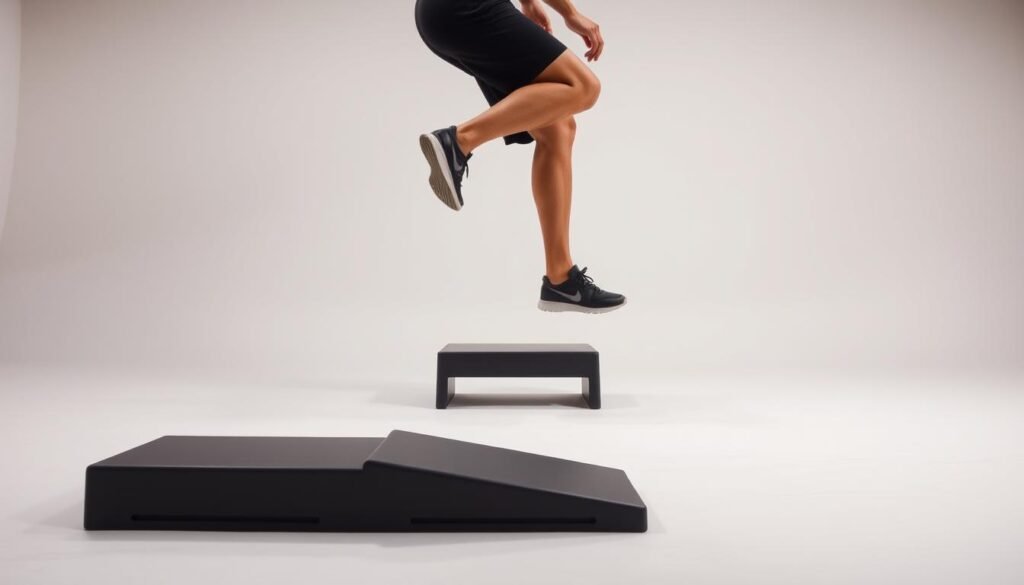
To practice descending, stand on a low step and slowly lower your free foot toward the floor while holding support. Choose a lower step if your knee hurts or you struggle to maintain balance.
A regular household staircase can work when it has secure footing and a handrail. You do not need to purchase an exercise platform.
4. Stationary Lunges for Single-Leg Strength
Lunges strengthen your thighs, glutes, and hip muscles. They also help prepare your body for stepping and getting up from lower positions.
- Stand with one foot in front of the other.
- Hold a sturdy chair or counter if necessary.
- Bend both knees and lower your body a comfortable distance.
- Press through your front foot to rise.
- Perform 6–10 repetitions on each side.
Begin with 2 sets. If a deep lunge feels uncomfortable, shorten the movement or practice a supported split-stance squat instead.
5. Wall Push-Ups and Rows for Everyday Upper-Body Strength
Pushing and pulling exercises develop strength for opening doors, moving household objects, and carrying items.
Wall push-up: Stand facing a wall with your hands around shoulder height. Bend your elbows to bring your chest toward the wall, then push away. Complete 2 sets of 8–12 repetitions.
Supported dumbbell row: Place one hand on a sturdy bench or other stable support. Hold a light weight in the other hand, pull your elbow toward your hip, and lower slowly. Perform 2 sets of 8–12 repetitions per arm.
Keep the movement controlled without shrugging your shoulders. A properly secured long resistance band can also be used for rows, but check that the anchor cannot slip or release.
6. Farmer’s Carries for Lifting and Carrying Groceries
Farmer’s carries train your grip, arms, shoulders, and trunk while you walk with a manageable load.
- Stand tall while holding a light weight in each hand.
- Keep your arms comfortably by your sides.
- Walk slowly for 20–40 seconds.
- Set the weights down using a controlled movement.
- Rest and repeat 2–3 times.
You can practice with two evenly filled shopping bags or light water bottles. Begin with an easy load and avoid holding your breath.
If you prefer dedicated weights, the Amazon Basics 5-Pound Neoprene Dumbbell Pair provides two fixed-weight dumbbells with coated grips and hexagonal ends designed to limit rolling.
This pair can be used for carries, supported rows, and other controlled exercises. However, five pounds per hand may be too challenging for some beginners and too light for others. Choose resistance based on your strength rather than assuming one weight suits everyone.
7. Planks and Side Planks for Core Stability
Planks train your trunk to resist unwanted movement. This strength can support activities such as lifting, carrying, and maintaining control during exercise.
Standard forearm plank: Place your elbows beneath your shoulders and extend your legs behind you. Gently tighten your abdominal muscles and glutes while breathing normally.
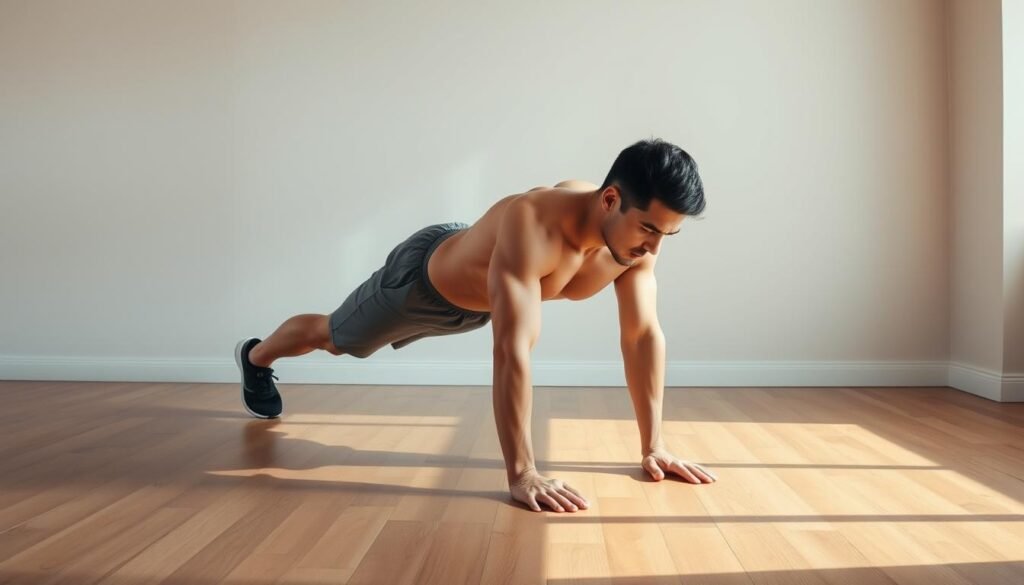
Start with 2 holds of 15–30 seconds. Stop before your hips sag or your shoulders become uncomfortable. Elevating your forearms on a sturdy surface or keeping your knees on the floor makes the exercise easier.
Side plank: Lie on your side with your forearm beneath your shoulder. Lift your hips while keeping your knees bent for an easier variation. Try 2 holds of 10–20 seconds per side.
A longer hold is not always better. Gradually increase time while maintaining control and steady breathing.
8. Downward-Facing Dog for Mobility and Body Control
Downward-facing dog is a yoga movement that combines shoulder support with gentle stretching through the calves, hips, and back of the legs.
- Begin on your hands and knees.
- Press into your hands and lift your hips upward.
- Keep a slight bend in your knees and lengthen your back.
- Hold comfortably for 10–20 seconds while breathing.
- Lower to your starting position and repeat 2–3 times.
Do not force your heels to touch the floor. If your wrists or shoulders feel uncomfortable, try a standing version with your hands against a wall.
This exercise is optional. Gentle shoulder reaches, calf stretches, and standing hip hinges can provide easier mobility alternatives.
Why Mobility, Balance, and Endurance Also Matter
Strength alone does not cover every part of everyday movement. Mobility helps you move through a useful range of motion, balance helps you stay steady, and endurance helps you continue activities without becoming exhausted too quickly.
For example, strong legs help you climb stairs, but ankle mobility and balance also matter when stepping onto an uneven surface.

Simple Balance and Mobility Drills
- Supported single-leg standing: Hold a counter and balance for 10–20 seconds on each leg.
- Heel raises: Slowly rise onto your toes and lower for 10–15 repetitions.
- Gentle upper-body rotation: Turn from side to side within a comfortable range.
- Shoulder reaches: Lift your arms overhead without forcing the movement.
- Regular walking: Increase walking time gradually to improve stamina.
For general health, the CDC recommends at least 150 minutes of moderate-intensity aerobic activity per week and muscle-strengthening exercise on at least two days.
You can combine functional strength sessions with walking, cycling, or another activity you enjoy. For additional mobility ideas, see our guide to stretching and flexibility.
Should You Use Resistance Bands for Functional Training?
Resistance bands are an optional way to make certain exercises more challenging without using heavy weights. They are lightweight, easy to store, and useful for exercises targeting the hips, legs, and shoulders.
For example, placing a short loop band above your knees during controlled side steps adds resistance as you move. However, you can practice the same stepping pattern without a band when learning balance and coordination.
The Fit Simplify Resistance Loop Exercise Bands include five short bands with different resistance levels. They can be useful for lateral steps, hip exercises, and certain warm-up movements.
These bands are made with latex, so they are unsuitable for people with latex allergies. Their short-loop shape also limits their use for exercises that need a longer pulling distance, such as many standing rows.
Start with a comfortable resistance level, inspect bands for damage, and keep them away from your face. Never stretch them beyond their intended use or attach them to an unstable object.
- High End Exercise Bands. Our 12"³ By 2"³ Heavy Duty Loop Resistance Bands Come In 5 Varying Resistance Levels. This Makes Them Perfect Whether You Are Just Starting To Workout Or A Seasoned Workout Warrior. Our Extra Light And Light Bands Are Great For Beginners, While Our Medium, Heavy And Extra Heavy Exercise Bands Are Targeted For More Intermediate And Advanced Strength Training.
- Great With Any Workout. This Resistance Band Set Can Be Integrated Seamlessly With Various Popular Workout Program. Or Use Them For General Exercise, Stretching, Strength Training, Power Weight Programs. The Included Carry Bag Makes It Easy To Take Your Bands With You And Do Any Workout Away From Home Or Your Home Gym.
- Multiple Uses. While These Resistance Bands Are Often Used For Sports And Fitness, Physical Therapists Love These Physical Therapy Bands (Rehab Bands) To Help Them Rehabilitate Their Patients. Our Stretch Bands Work For People Suffering From Leg, Knee And Back Injuries. They Are Also Perfect For Use By Women After Pregnancy And Birth To Keep Their Bodies In Shape.
- Superior Quality. All Of Our Exercise Resistance Bands Are Thoroughly Tested Before We Ship Them Out To You. This Ensures Your Bands Are Easy On Skin And Will Provide You With A Worry Free Experience. The Instruction Booklet Includes Dozens Of Different Illustrated Exercises That Demonstrate How To Use Our Resistance Bands For Legs, Arms, Back, Shoulders, Ankles, Hips And Stomach.
A Simple Weekly Functional Training Plan
You do not need to perform every exercise in one workout. For beginners, two or three full-body sessions each week can be a practical starting point, with easier activities between sessions.
Beginner Weekly Schedule
- Monday — Full-body strength: Chair squats, hip hinges, wall push-ups, supported rows, and a plank.
- Tuesday — Walking and mobility: Walk for 20–30 minutes at a comfortable pace and practice gentle stretches.
- Wednesday — Recovery: Rest from demanding strength exercise or take an easy walk.
- Thursday — Strength and balance: Step-ups, supported lunges, farmer’s carries, side planks, and balance practice.
- Friday — Light movement: Enjoy walking, cycling, or gentle mobility work.
- Saturday — Optional workout: Repeat a shorter full-body session if you have recovered well.
- Sunday — Recovery: Rest or choose easy recreational activity.
Sets, Reps, and Session Length
Start each strength session with a 5–8-minute warm-up, such as easy walking, arm circles, and comfortable bodyweight movements.
- Strength exercises: Begin with 1–2 sets of 8–12 controlled repetitions.
- Single-leg exercises: Try 6–10 repetitions per side.
- Planks: Begin with comfortable holds of 15–30 seconds.
- Rest: Allow roughly 45–90 seconds between sets, or longer when needed.
- Duration: Aim for approximately 20–40 minutes, depending on your ability and exercise selection.
These are starting guidelines, not fixed requirements. Your fitness level, recovery, and any physical limitations should guide how much you do.
How to Progress Without Rushing
When an exercise becomes comfortable, increase the challenge gradually rather than changing everything at once.
- Improve control: Practice smooth repetitions and comfortable positioning.
- Add repetitions: Move from 8 repetitions toward 10–12.
- Add a set: Increase from one or two sets when recovery allows.
- Increase resistance: Use a slightly heavier weight or stronger band when ready.
- Choose harder variations: Try deeper squats, lower push-up surfaces, or more demanding balance exercises as appropriate.
Track your progress using a notebook or phone. If fatigue builds, reduce training difficulty or take an additional recovery day.
Common Functional Training Mistakes to Avoid
More difficult exercises do not automatically produce better results. The goal is to build useful strength while keeping training manageable.
- Lifting too heavy too soon: Begin with resistance you can control throughout the movement.
- Holding your breath: Continue breathing during repetitions, especially if you have blood pressure concerns.
- Ignoring uncomfortable movements: Adjust the range, resistance, or exercise when something causes pain.
- Skipping balance exercises: Include supported balance practice rather than focusing only on weights.
- Training hard every day: Give your body recovery time between demanding strength sessions.
- Copying advanced workouts: Choose variations that match your current abilities instead of someone else’s fitness level.
A useful form reminder is to keep your movements controlled, use stable footing, and avoid forcing joints into painful positions. If you are uncertain about technique, a qualified trainer or physical therapist can help.
Who Should Take Extra Precautions?
Functional training can be adapted for many fitness levels, but some people need more individual guidance.
- People returning after an injury or surgery: Follow rehabilitation instructions and avoid movements that conflict with recovery restrictions.
- People with significant joint pain: Begin with supported, comfortable movements and seek professional guidance when pain continues.
- People with uncontrolled high blood pressure, unstable heart conditions, or other significant medical problems: Get appropriate medical guidance before starting or increasing exercise intensity.
- Pregnant individuals: Discuss exercise modifications and any restrictions with their prenatal care professional. Many people with uncomplicated pregnancies can safely continue suitable strength and aerobic exercise.
- Older adults with balance difficulties: Use stable support and consider supervised training when fall risk is high.
Stop exercising if you experience chest pain, faintness, severe breathlessness, or sudden significant pain. Seek prompt medical attention for serious symptoms. During pregnancy, vaginal bleeding, fluid leakage, or painful regular contractions also require stopping exercise and contacting the maternity care team.
Remember that needing a chair, wall, lighter weight, or shorter movement does not make an exercise less useful. The right modification allows you to practice safely at your current level.
How to Know Whether Functional Training Is Working
Instead of judging progress only by how much weight you lift, look for improvements in everyday movements.
Check your progress every few weeks using simple questions:
- Can you stand from a chair with better control?
- Do stairs feel more manageable?
- Can you carry the same groceries with less effort?
- Can you balance a little longer while staying supported?
- Do you complete your exercises with smoother movements?
Some people notice better coordination or confidence within the first few weeks, while strength and endurance improvements may take longer. Progress depends on training consistency, starting fitness, health conditions, and recovery.
Avoid promising yourself a fixed timeline. Small, repeatable improvements are more useful than chasing rapid changes.
Frequently Asked Questions
Is functional training better than traditional strength training?
Not necessarily. Traditional strength training is effective for building muscle and strength. Functional training emphasizes practicing movement patterns that relate to everyday tasks. Combining both approaches can be useful.
Can functional training prevent lower back pain?
Strengthening muscles and improving lifting skills may help some people manage physical demands. However, back pain has many possible causes, and functional training cannot guarantee prevention or treatment. Persistent or worsening pain deserves professional assessment.
Can beginners do functional training without equipment?
Yes. Chair squats, wall push-ups, supported lunges, balance exercises, and modified planks require little or no equipment. See our free ways to stay fit without a gym for more ideas.
How many times per week should I train?
Two or three nonconsecutive strength sessions are a reasonable starting point for many beginners. You can add more sessions as your experience and recovery capacity improve.
Are functional exercises suitable for people over 40 or 50?
Yes. Age alone does not prevent someone from benefiting from strength, balance, and mobility training. Begin at an appropriate difficulty and consider medical guidance if you have been inactive or have important health concerns.
What should I do if an exercise feels too difficult?
Reduce the range of motion, use a stable support, choose lighter resistance, or perform fewer repetitions. Progress once you can complete the easier version comfortably and with control.
Conclusion: Build Strength That Helps You Every Day
Functional training is about becoming better prepared for the movements life requires. Squats help with standing, hinges help with lifting, carries build practical strength, and balance exercises improve stability.
You do not need to master every exercise immediately. Start with a few comfortable movements, practice two or three times per week, and increase difficulty gradually.
Pay attention to everyday improvements, such as easier stair climbing, smoother movements, and better control when carrying objects.
With consistent practice, functional training can become a practical part of staying strong, active, and independent throughout daily life.