


What if your daily walk could do more than help you stay active? Walking meditation combines ordinary walking with mindfulness, helping you pay attention to your body, breathing, and surroundings instead of getting lost in your thoughts.
You don’t need a meditation class, expensive equipment, or a peaceful mountain trail. A quiet sidewalk, nearby park, or even an open space inside your home can work. Start with five minutes and focus on one step at a time.
Research suggests mindful walking may help reduce stress and improve mood. Walking also supports physical health, especially when you move at a brisk pace. However, the evidence does not show that walking meditation is better than every other form of exercise or meditation.
This guide explains how walking meditation works, what science says about its benefits, and how to practice safely. You’ll also find simple exercises, helpful variations, and tips for making mindful walking part of your routine.
Key Takeaways
- Walking meditation combines movement and mindfulness. You focus on your steps, breathing, and surroundings while walking.
- It may help manage stress. Small studies suggest mindful walking can reduce perceived stress and support emotional well-being.
- Getting started is easy. Five to ten minutes is a practical starting point, and no special equipment is required.
- You can practice almost anywhere. Parks, quiet sidewalks, indoor spaces, and treadmills can all work with suitable precautions.
- Safety comes first. Keep your eyes open, notice obstacles, and never let meditation distract you from traffic.
What Is Walking Meditation?
Walking meditation is a mindfulness practice where you pay attention to the experience of walking. Instead of rushing toward your destination, you notice how your feet touch the ground, how your body moves, and what happens around you.
Mindfulness means paying attention to the present moment without judging your experience. You don’t need to stop thinking or force yourself to feel calm. The goal is to notice what is happening and gently return your attention whenever it wanders.
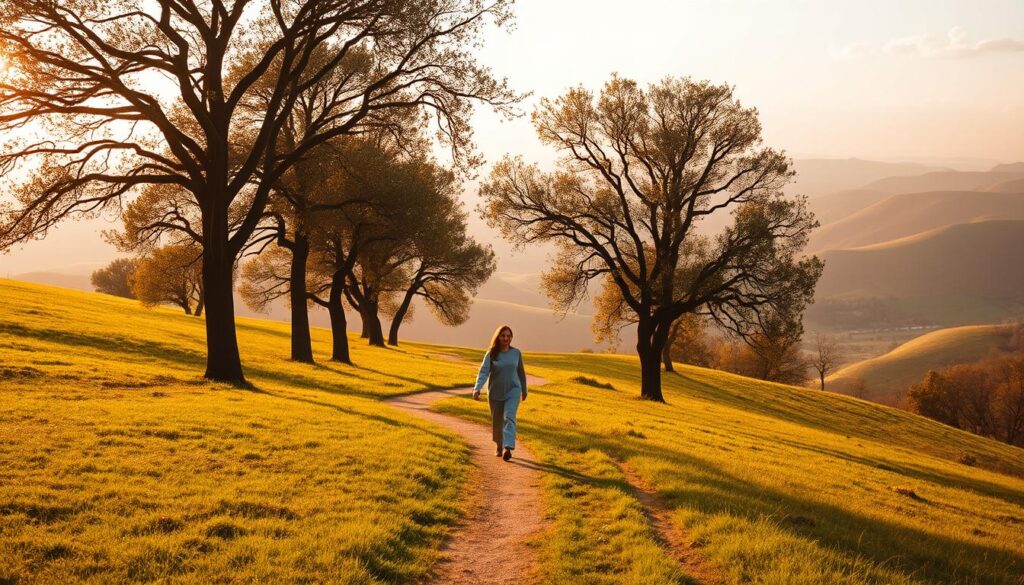
Walking Meditation vs. Regular Walking
Both activities involve movement, but your attention makes the difference.
- Regular walking: You might think about work, listen to a podcast, or plan your day while moving.
- Walking meditation: You deliberately notice your footsteps, posture, natural breathing, and surrounding sounds.
Neither approach is automatically better. Regular brisk walking can provide valuable exercise, while mindful walking adds a deliberate attention practice. You can also combine both by spending a few minutes walking mindfully before increasing your pace.
How Is It Different From Seated Meditation?
Seated meditation often uses breathing, sounds, or body sensations as a focus while you remain still. Walking meditation uses movement as an additional point of attention.
If sitting quietly feels uncomfortable or makes you restless, mindful walking offers another way to practice. However, seated meditation may be preferable when you need to limit movement or want fewer distractions.
Science-Backed Benefits of Walking Meditation
Walking meditation brings together two activities with established research behind them: physical movement and mindfulness. Still, studies examining the exact combination are smaller and less consistent than research on exercise or meditation separately.
1. May Reduce Stress and Anxiety
Mindful walking gives you an opportunity to notice worries without following every thought. Focusing on your footsteps may help interrupt repetitive thinking, especially after a busy day.
A randomized controlled trial involving 74 adults compared a four-week mindful walking program with a waiting-list group. Participants in the walking program reported lower perceived stress and improved quality of life.
That is encouraging, but the study was relatively small and did not compare mindful walking with an equally active walking program. We cannot tell how much of the improvement came specifically from mindfulness rather than walking, social interaction, or other parts of the program.
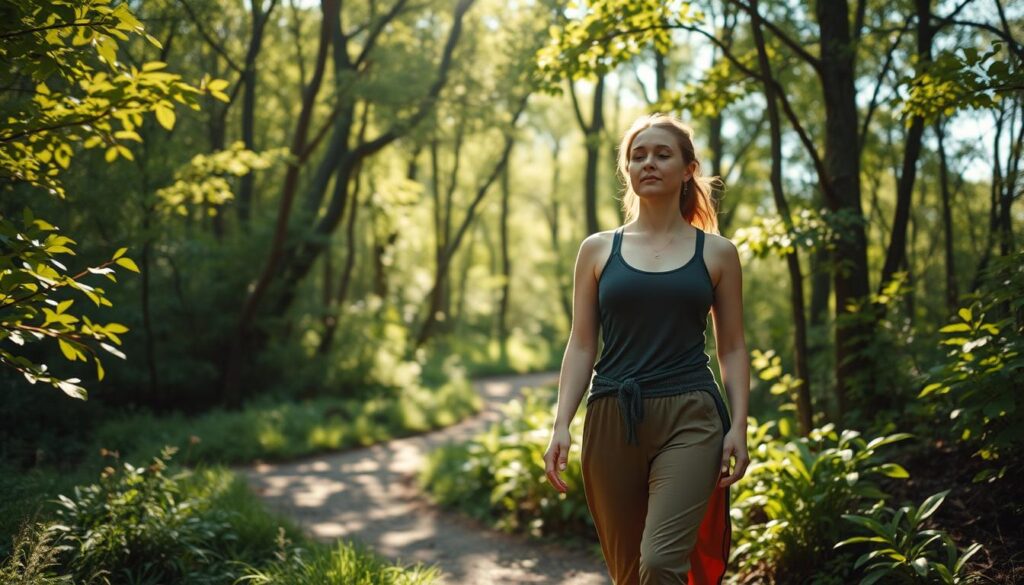
2. May Support Mood and Emotional Well-Being
Walking offers a break from screens, while mindfulness encourages you to notice feelings without immediately reacting to them. Together, these habits may make stressful moments easier to manage.
In a trial involving 110 young adults, researchers examined walking, meditation, and combinations of both. Some meditation and combined-activity groups showed reduced short-term anxiety, while walking alone did not show the same result in that study.
These findings suggest movement and meditation can complement each other, but they do not guarantee an immediate mood boost for everyone.
3. Offers Practice for Attention and Focus
Every time you notice your mind wandering and return to your steps, you practice directing your attention.
Mindfulness programs may improve some measures of attention and emotional regulation. However, research has not established that a few minutes of walking meditation reliably improve work performance, memory, or long-term cognitive resilience.
The National Center for Complementary and Integrative Health (NCCIH) notes that mindfulness research shows promise, although study quality and results vary.
4. Adds Movement to Your Daily Routine
Mindful walking gets you moving, but its fitness benefits depend partly on pace and duration. A slow, gentle meditation walk may provide light activity without raising your heart rate enough to count as moderate-intensity exercise.
Brisk walking offers stronger cardiovascular benefits. According to the CDC physical activity guidelines, adults should generally aim for at least 150 minutes of moderate-intensity aerobic activity each week, plus muscle-strengthening activities on two days.
You can practice mindfulness while walking briskly, provided you remain aware of your surroundings. The meditation itself has not been proven to add cardiovascular benefits beyond those of comparable physical activity.
How to Practice Walking Meditation: A Beginner’s Guide
You can begin with a five-minute session on a familiar, obstacle-free path. Choose a comfortable walking speed and use these steps as a simple routine.

- Choose a safe location. Find a quiet path, park, or indoor area where you can walk without frequent obstacles. Keep your eyes open throughout the practice.
- Set a simple intention. Tell yourself, “For the next five minutes, I’ll pay attention to walking.” You don’t need a more complicated goal.
- Check your posture. Stand comfortably, relax your shoulders, and allow your arms to move naturally. Notice any tension without forcing yourself into a rigid position.
- Begin walking. Take a few comfortable steps. Notice your weight shifting and how each foot meets the ground. If your usual gait rolls from heel to toe, observe that pattern without exaggerating it.
- Notice your breathing. Feel your natural inhalations and exhalations. You can gently slow your pace if that feels comfortable, but don’t force deep breaths or hold your breath while moving.
- Include your surroundings. Notice the air on your skin, nearby sounds, changing light, and the path ahead. Keep enough awareness to navigate safely.
- Return when your mind wanders. If you start planning dinner or thinking about work, quietly recognize “thinking” and bring your attention back to walking.
- Finish with a check-in. When you stop in a safe place, notice how your body and mood feel. You don’t need to feel completely relaxed for the practice to count.
Beginner tip: Focus on one sensation rather than trying to monitor everything. The feeling of your feet contacting the ground is often an easy place to start.
If you’d like extra guidance, UCLA Health offers free mindfulness resources that can help you learn the basic attention skills.
Where Can You Practice Walking Meditation?
You don’t need a special meditation space. Different locations simply call for different levels of awareness and attention.
On City Sidewalks
Busy streets have people, vehicles, curbs, and changing signals. Keep your attention mostly on your surroundings, using brief moments between obstacles to notice your steps.
Try a simple reminder at the beginning of each safe block: “Feel my feet, relax my shoulders, notice what’s ahead.”
When crossing a street, stop the inward-focused exercise and give traffic your full attention.
In Parks and Nature
Parks offer opportunities to notice birdsong, trees, fresh air, and changing scenery. You can use these details as gentle anchors for attention without looking down or closing your eyes.

On uneven trails, prioritize stable footing. Slow down on rocks, slopes, and slippery sections instead of concentrating deeply on your breathing.
Indoors or on a Treadmill
Walking around a clear room or hallway works well when the weather is poor. Focus on posture, the feeling of your feet, and the rhythm of your movement. Slow down before turning.
You can also practice light mindfulness on a treadmill, although machine safety must come first. Choose a comfortable speed, face forward, and remain aware of the moving belt. Don’t close your eyes or perform distracting body scans while the machine is running.
If you need to change settings or feel unsteady, stop the treadmill before returning to the exercise.
Three Walking Meditation Variations to Try
Using the same attention cue every day can become repetitive. These variations provide different ways to stay engaged without turning your walk into a complicated routine.
1. Nature Awareness Walk
Choose one thing to notice at a time: a color, a sound, or the feeling of a breeze. You might watch sunlight moving through trees or listen to birds while continuing to watch your path.
When thoughts interrupt, return to the next sight or sound. The purpose is to experience your surroundings rather than force yourself to feel peaceful.

2. Gratitude Walking
During a quiet section of your walk, bring to mind three specific things you appreciate. They can be ordinary moments, such as a helpful conversation, a comfortable home, or time spent with family.
Notice how each thought feels, then return your attention to walking. If gratitude feels difficult on a stressful day, skip the exercise without judging yourself.
3. Motivational Walking
For a more energetic session, walk at a comfortable, purposeful pace while repeating a realistic encouraging phrase, such as “I can take this one step at a time.”
You can use music for motivation, but this becomes more of a mindful movement variation than traditional quiet meditation. Keep music low enough to hear your surroundings, and avoid headphones near traffic when they reduce awareness.
Choose the variation that fits your needs. You can use nature awareness when you want a quieter experience, gratitude when you’d like to reflect, or motivational walking before a demanding task.
How to Make Walking Meditation a Daily Habit
A short walk you can repeat is more useful than an ambitious plan you rarely follow. Begin with a manageable routine and increase the time only when it feels comfortable.
A Simple Seven-Day Starter Plan
- Day 1: Walk for five minutes while noticing foot contact.
- Day 2: Try five minutes while observing natural breathing.
- Day 3: Walk for five to seven minutes and notice posture and shoulder tension.
- Day 4: Take a short nature or neighborhood walk and focus on surrounding sounds.
- Day 5: Practice returning your attention whenever thoughts wander.
- Day 6: Try an eight- to ten-minute walk using your favorite cue.
- Day 7: Repeat whichever session felt easiest to maintain and consider when to practice next week.
This is a habit-building example, not a medically established training schedule. You can repeat shorter sessions or take rest days as needed.
Use Transition Walks
A transition walk is a brief walk between activities. For example, you could walk for five minutes after finishing work before moving into your evening routine.
During the walk, notice your steps rather than reviewing unfinished tasks. This may help you create a clearer boundary between work and personal time, although it won’t necessarily change your mood every time.
What If You Can’t Stay Focused?
Mind-wandering is normal, even for experienced meditators. If your attention drifts ten times, you have ten opportunities to practice returning it.
Try these adjustments:
- Too many thoughts? Focus on the feeling of one foot touching the ground.
- Feeling bored? Change your attention from footsteps to sounds or posture.
- Not enough time? Practice for one or two minutes during an ordinary walk.
- Feeling overwhelmed? Look around, notice familiar objects, and shorten or stop the exercise if needed.
Don’t measure success by how empty your mind feels. Regularly noticing and returning your attention is the central practice.
Walking Meditation Safety and Accessibility
Mindfulness should help you become more aware of your surroundings, not less. Keep these precautions in mind whenever you practice.
- Stay aware of traffic. Use designated crossings, watch vehicles, and avoid looking down for long periods.
- Choose suitable footwear. Wear comfortable shoes with enough grip for the surface. Shoes you already own may be sufficient.
- Consider visibility. Prefer well-lit routes. If walking near roads in low light, bright or reflective clothing and a light can help other road users notice you. The CDC recommends visibility precautions for pedestrians.
- Respect physical limits. Slow down or stop if walking causes dizziness, significant pain, unusual breathlessness, or instability.
- Keep breathing comfortable. You don’t need the 4-4-4 breathing pattern or any breath-holding technique to practice mindfulness. Natural breathing is enough.
What If You Have Limited Mobility or Chronic Pain?
Walking meditation should be adapted to what your body can comfortably do. A shorter route, supportive walking aid, or accessible indoor space may help, depending on your needs.
If walking is uncomfortable or unsafe, you can practice seated mindfulness instead. Sit securely and notice your breathing, contact with the chair, and the sensations in your hands or feet.
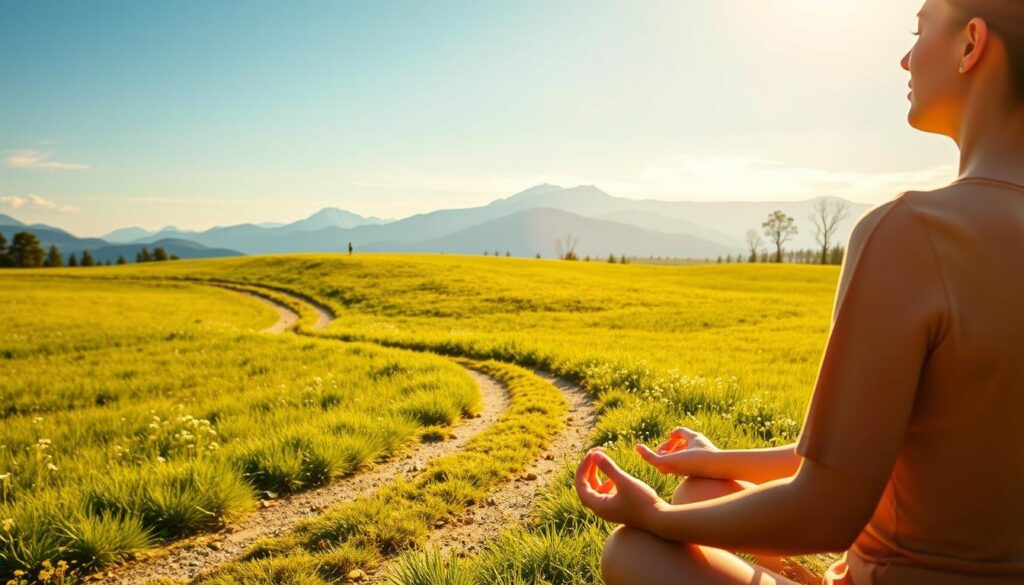
This seated version isn’t walking exercise, but it preserves the attention-building part of meditation. People with conditions affecting balance, circulation, joints, or exercise tolerance may need an individualized activity plan.
Mindfulness can also bring up uncomfortable emotions for some people. If an exercise increases distress, you can stop, orient yourself to your surroundings, and use a different calming activity.
Is Walking Meditation the Future of Fitness and Mental Health?
Walking meditation is an accessible way to combine movement with attention training, but calling it the future of fitness would go beyond current evidence.
Its appeal is practical: it requires little preparation, fits into existing routines, and can be adjusted for different abilities. You can use it alongside regular exercise, seated meditation, or mental health treatment rather than treating it as a replacement.
For people who struggle to sit still or find dedicated meditation time, mindful walking may offer a particularly convenient starting point.
Frequently Asked Questions
How Long Should Walking Meditation Last?
Start with five to ten minutes, or even less if needed. You can gradually extend sessions to 20–30 minutes if you enjoy the practice. There is no proven minimum duration that guarantees mental health benefits.
Does Walking Meditation Count as Exercise?
Yes, it involves physical activity. However, slow mindful walking may be light-intensity exercise. To count toward moderate-intensity aerobic activity goals, you generally need to walk briskly enough to raise your heart rate and breathing while still being able to talk.
Can Walking Meditation Help With Anxiety?
It may help some people manage stress and anxious feelings. Small mindful walking studies and broader mindfulness research suggest possible benefits, but results vary. Walking meditation is not a proven substitute for treatment when anxiety is persistent or significantly affects daily life.
Should I Focus on My Breathing or My Feet?
Either is fine. Foot contact is often an easy anchor for beginners because each step provides a fresh sensation. Breathing, posture, and surrounding sounds are also useful choices. Keep your attention on the environment whenever safety requires it.
Can I Practice Walking Meditation With Music?
Yes, if you remain aware of your environment. Instrumental music or gentle audio guidance may be helpful for some people, although practicing without audio can make it easier to notice natural sounds. Avoid distracting audio in traffic or other hazardous settings.
Is Walking Meditation Better in Nature?
Nature may provide a pleasant setting, but you don’t need a forest or park. A quiet street or clear indoor hallway can also work. What matters most for the practice is safe, intentional awareness rather than a particular location.
Conclusion: Start With Your Next Walk
Walking meditation doesn’t require a new fitness program or major lifestyle change. It simply asks you to bring more attention to movement you’re already doing.
On your next walk, try this: relax your shoulders, feel your feet touching the ground, breathe naturally, and notice what’s around you. When your mind wanders, gently bring it back.
Start with five comfortable minutes and repeat whenever it fits your day. You might discover that an ordinary walk becomes a useful opportunity to move, reflect, and give your attention a break from everyday distractions.


Don’t Miss These Picks