


Want to carry groceries without struggling, climb stairs with more confidence, or feel stronger during everyday activities? A functional training workout helps you build strength through movements you use in real life.
Instead of focusing only on individual muscles, functional training combines squats, hinges, pushes, pulls, carries, and controlled movements in different directions. These exercises can improve strength, coordination, balance, and your ability to handle physical tasks.
You don’t need a complicated gym setup to begin. This guide covers a practical warm-up, essential exercises, three ready-to-follow workouts, and a weekly training plan. You’ll also learn how to use dumbbells, kettlebells, and rucking safely as your fitness improves.
Key Takeaways
- Functional training builds practical strength. Squats, lunges, carries, and pulling movements prepare your body for everyday tasks.
- Start with two full-body sessions weekly. Add walking, mobility work, or a light conditioning session as your recovery allows.
- You can train with minimal equipment. Bodyweight exercises, dumbbells, and a kettlebell cover many important movements.
- Rucking and loaded carries add variety. They challenge your grip, endurance, and ability to control a load.
- Progress gradually. Build good technique and comfortable movement before increasing resistance or workout difficulty.
Helpful Products at a Glance
For home strength exercises and farmer carries, the Yes4All 10 lb Neoprene Dumbbell Pair offers two handheld weights, although stronger lifters may need heavier options.
- CAST IRON HAND WEIGHTS NEOPRENE DUMBBELLS: Yes4All Neoprene Dumbbell will not break or bend after repeated use. Neoprene is also more durable & less prone to splitting than vinyl, making it a more desirable choice for long term use
- NON SLIP WEIGHTS NEOPRENE: Thick durable neoprene coating provides a comfy grip on hands and doesn’t require gloves. The neoprene coating forms a protective barrier that prevents the dumbbells from chipping and protects the floor from damage

For kettlebell deadlifts, goblet squats, and learning controlled hip movements, the Amazon Basics 15 lb Cast Iron Kettlebell provides a single fixed-weight option.
- VERSATILE STRENGTH TRAINING: Supports a wide range of resistance exercises for full-body workouts.
- SHIPMENT CONTAINS: Single 15-pound cast iron kettlebell designed for building strength and endurance

For dedicated weighted walking, the GORUCK Basic Rucker 17L has a pocket designed to hold compatible weight plates. A regular comfortable backpack may be enough for occasional light sessions.

What Is Functional Training?
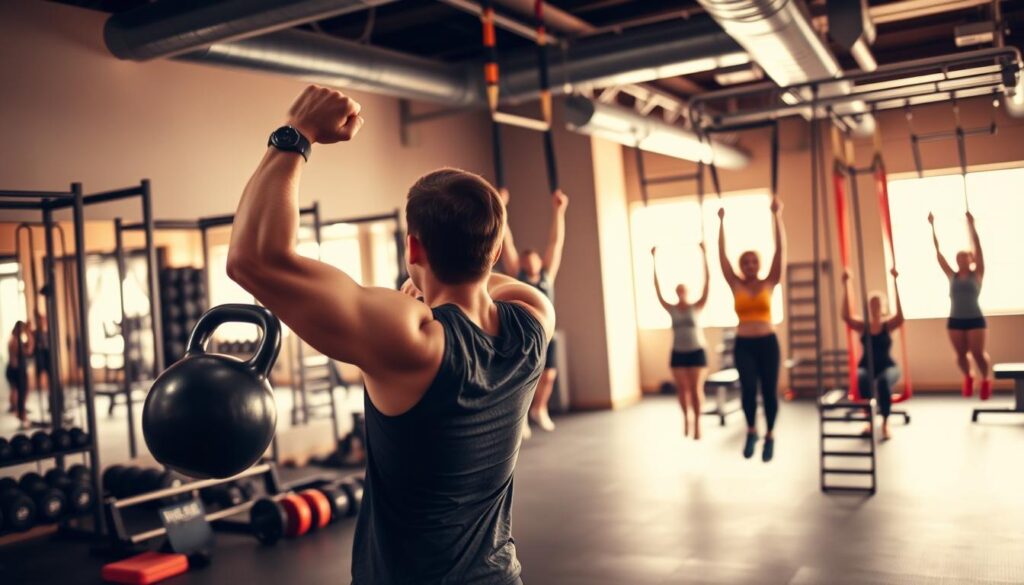
Functional training uses exercises chosen to improve movements needed for daily life, recreation, or sports. Picking something up, carrying a suitcase, reaching overhead, and getting out of a chair are all examples of tasks that benefit from strength and movement control.
Most programs combine several basic movement patterns:
- Squat: Lower your hips and stand again, similar to sitting down and getting up.
- Hinge: Bend mainly at your hips to pick something up from the floor.
- Push and pull: Move an object away from or toward your body.
- Carry: Walk while holding or supporting a load.
- Rotate and resist rotation: Turn your body with control or keep your torso steady when a force tries to twist it.
Functional Training vs. Traditional Strength Training
Traditional strength training and functional training have plenty in common. Both can use squats, deadlifts, rows, and presses. The main difference is how exercises are selected and combined to meet a particular goal.
For example, a leg extension strengthens the muscles at the front of your thigh. A squat strengthens several muscle groups while practicing a movement used when standing up. Neither exercise is automatically better; each serves a different purpose.
Functional workouts also include movement in three directions: forward and backward, side to side, and rotation. Training these patterns helps you develop control beyond straight-line lifting.
Benefits of Functional Training for Everyday Life
Regular functional training may improve your ability to lift, move, and carry objects. Resistance exercises build strength, while balance and mobility drills help you control that strength through everyday movements.
A systematic review of functional training in older adults found improvements in daily activity performance in several studies. However, functional training was not consistently better than other exercise programs for balance and mobility.

Potential benefits include:
- Practical strength: Make lifting bags, moving household items, and climbing stairs easier.
- Better balance: Practice staying steady while stepping, turning, and shifting weight.
- Improved coordination: Teach different muscle groups to work together.
- Muscular endurance: Build the ability to repeat physical tasks without tiring as quickly.
- Confidence with movement: Become more familiar with lifting and carrying loads under control.
Strengthening your trunk and hips may also support comfortable movement. However, functional training does not guarantee better posture, prevent injuries, or cure back pain. Those outcomes depend on several factors, including your health and how you train.
Functional Training Warm-Up: 6–10 Minutes
A warm-up prepares your muscles and joints for the movements ahead. Start gently, increase your movement range, and practice lighter versions of the exercises in your workout.
Step 1: Activate Your Core and Hips
- Dead bugs: 8 repetitions per side, keeping your lower back comfortable and controlled.
- Glute bridges: 10 repetitions, lifting your hips without over-arching your back.
- Side plank: Hold 15–20 seconds per side, using your knees for support if needed.
Step 2: Mobilize Your Joints
- Shoulder circles: 10 in each direction.
- Standing upper-back rotations: 8 per side.
- Ankle rocks: 10 per side.
- Alternating reverse lunges: 5 per side.
Step 3: Practice Your Main Movements
Finish with 8 bodyweight squats, 8 slow hip hinges, and a short unloaded carry or walk. If your workout uses weights, perform a few light practice repetitions before your working sets.
Simple form reminder: Keep your movements comfortable, breathe steadily, and maintain control rather than forcing a larger range of motion.
Essential Functional Training Exercises
A balanced workout should challenge your legs, hips, back, chest, shoulders, and core. You don’t have to perform every exercise in one session. Choose movements that cover the main patterns without exhausting the same muscles repeatedly.
1. Squats and Lunges
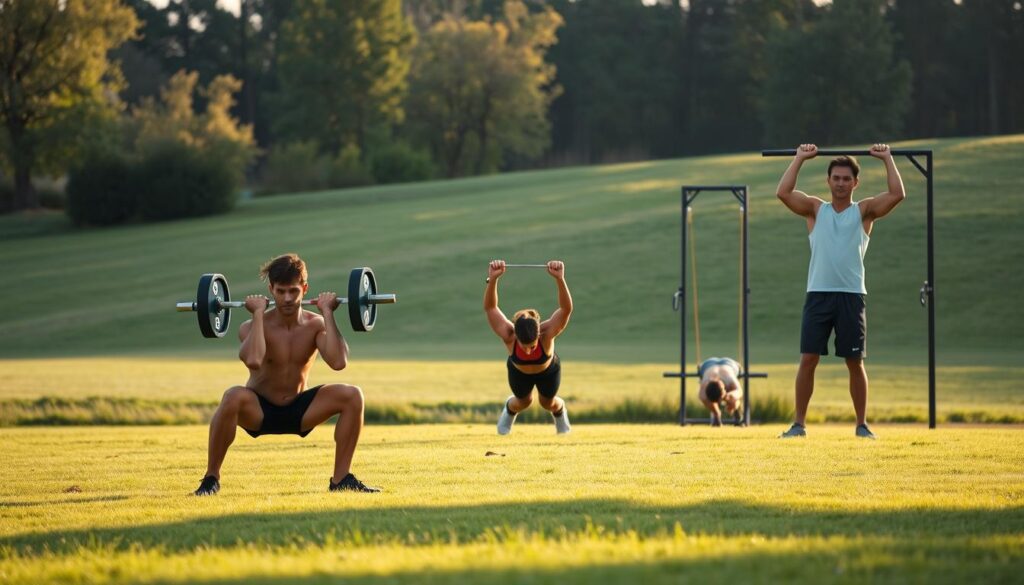
Squats strengthen your thighs, glutes, and trunk. Begin with bodyweight squats or sit-to-stands using a sturdy chair. Try 8–12 controlled repetitions.
Reverse lunges add a balance challenge and work one leg at a time. Start with 6–8 repetitions per side, holding a stable support if needed.
2. Rows, Presses, and Loaded Carries
Rows strengthen the muscles involved in pulling. Push-ups and overhead presses develop pushing strength. Loaded carries help you practice keeping your body steady while moving with weight.
A pair of dumbbells makes these movements easy to organize into one home workout. Choose a weight that allows you to finish each set without swinging or losing control.
The Yes4All 10 lb Neoprene Dumbbell Pair offers two fixed-weight dumbbells with neoprene coating and a hexagonal anti-roll design. You can use them for one-arm rows, controlled presses, goblet-style squats, and farmer carries. Ten pounds per hand may be challenging for some beginners and too light for others, so choose based on your ability.
- CAST IRON HAND WEIGHTS NEOPRENE DUMBBELLS: Yes4All Neoprene Dumbbell will not break or bend after repeated use. Neoprene is also more durable & less prone to splitting than vinyl, making it a more desirable choice for long term use
- NON SLIP WEIGHTS NEOPRENE: Thick durable neoprene coating provides a comfy grip on hands and doesn’t require gloves. The neoprene coating forms a protective barrier that prevents the dumbbells from chipping and protects the floor from damage
- COLOR CODED NEOPRENE DUMBBELL WITH ANTI ROLLING HEAD: Color coded weights neoprene dumbbell with printed weight number on the end caps for easy identification. Hexagonal head prevents rolling away from the storage place or during your exercise
- GREAT FOR TOTAL BODY WORKOUT: Yes4All Neoprene Dumbbells are ideal to sculpt your arms, shoulders & back, build stamina; Suitable for overall health, balance, weight management, aerobics, cardio, yoga, and strength building
3. Hip Hinges and Kettlebell Work
Hip hinges strengthen the muscles around your hips and the back of your legs. Start by pushing your hips backward while keeping the weight close to your body. Try 8–10 controlled repetitions.
Once you understand the movement, kettlebell deadlifts and goblet squats offer simple ways to add resistance. A kettlebell’s handle also makes it useful for short carries.
The Amazon Basics 15 lb Cast Iron Kettlebell has a solid cast-iron body and a textured, wide handle. It can be used for deadlifts, goblet squats, and controlled carries. Its fixed weight won’t suit everyone, so make sure 15 pounds matches your current strength.
Kettlebell swings add speed to the hip hinge, but they require more coordination than deadlifts. Learn the basic hinge first, start with a suitable load, and get technique guidance before attempting fast repetitions.
- VERSATILE STRENGTH TRAINING: Supports a wide range of resistance exercises for full-body workouts.
- SHIPMENT CONTAINS: Single 15-pound cast iron kettlebell designed for building strength and endurance
- DURABLE CONSTRUCTION: Made of solid cast iron for reliable, built-to-last strength through intense training sessions
- COMFORTABLE GRIP: Textured wide handle ensures a secure, comfortable grip whether holding with one hand or two hands
4. Core Stability and Anti-Rotation
Planks, side planks, and Pallof presses train your trunk to resist unwanted movement. These exercises complement squats and carries rather than replacing them.
For a simple starting point, perform two sets of 20–30-second planks. Keep breathing normally and shorten the hold if your position begins to break down.
Outdoor Functional Training: Rucking and Carries
Outdoor training lets you practice walking, climbing, and carrying under different conditions. You can start with a flat park path before introducing hills or uneven ground.
How to Start Rucking
Rucking means walking with weight in a backpack. It adds resistance to ordinary walking and may challenge your muscles and cardiovascular system more than an unloaded walk at the same pace.
However, extra weight also increases physical demands. Build a comfortable walking routine first. If loaded walking suits your health and ability, begin with a small, secure load, such as 5–10 pounds, rather than assuming everyone should start with 20 pounds.

Try a short 15–20-minute walk on level ground. Keep the backpack secure, maintain a comfortable stride, and avoid leaning excessively forward. Increase distance before making large weight increases.
A normal, sturdy backpack may work for very light loads if the contents are secured. A dedicated rucking pack becomes more useful when you train regularly and need a compartment designed to hold weight in place.
The GORUCK Basic Rucker 17L is a compact rucking backpack with an elevated internal plate pocket designed for compatible 10, 20, or 30 lb plates. Its purpose-built design helps organize a weighted walking setup, but the backpack itself does not make heavy rucking appropriate for a beginner. Check plate compatibility and included accessories before buying.
Add Sandbag Carries and Hill Work
Once basic carries feel comfortable, try holding a manageable sandbag against your torso for 20–40 meters. Its shifting contents create a different challenge from a fixed dumbbell.
Hill walking and short carries can also build endurance. Avoid combining unfamiliar heavy loads with difficult terrain until your strength and balance are ready.
Functional Training Equipment: What Do You Actually Need?
You can build a useful routine without buying a full home gym. Start with bodyweight exercises, then add equipment for movements that need more resistance.
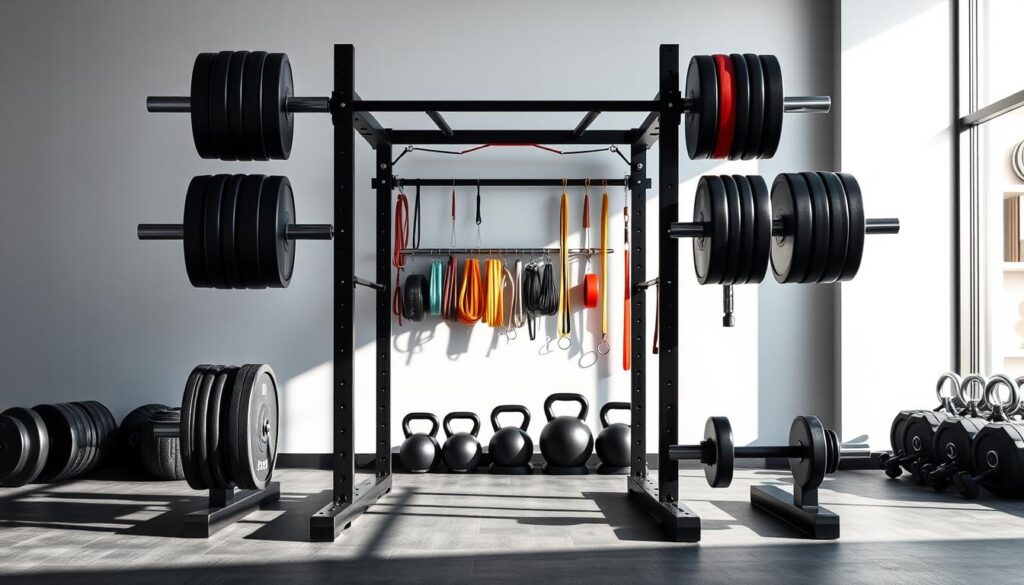
- No equipment: Squats, lunges, wall or floor push-ups, glute bridges, and planks.
- Resistance bands: Useful for controlled warm-ups, lateral steps, and pulling exercises.
- Dumbbells: Helpful for rows, presses, lunges, and carries.
- Kettlebell: Useful for hinges, goblet squats, and selected carry variations.
- Sandbag or rucksack: Optional tools for awkward-load practice and loaded walking.
A sturdy chair or step can also help with seated squats and step-ups. For additional equipment-free ideas, explore these free ways to stay fit at home or outdoors.
How to Build Your Weekly Functional Training Program
Start with two full-body strength sessions on nonconsecutive days. Add another session only when your recovery and schedule allow.
The CDC recommends muscle-strengthening activities on at least two days each week, covering the major muscle groups. Adults should also work toward regular aerobic activity.
Example Weekly Schedule
- Monday: Full-body strength workout A, 30–45 minutes.
- Tuesday: Easy walking and gentle mobility.
- Wednesday: Optional light conditioning or recovery.
- Thursday: Full-body strength workout B, 30–45 minutes.
- Friday: Rest or easy movement.
- Saturday: Optional ruck, outdoor walk, or carry practice.
- Sunday: Rest and recovery.
Sets, Reps, and Rest
Beginners can start with 1–2 sets of 8–12 repetitions for most strength exercises. Progress toward 2–3 sets as the movements become easier.
For heavier strength work, experienced lifters may use 3–5 sets of 4–6 repetitions with longer rests. Moderate sets of 8–12 repetitions are also useful for general strength and muscle development.
Rest approximately 60–90 seconds between moderate sets, or longer when needed for good technique. The American College of Sports Medicine’s 2026 resistance-training guidance emphasizes that consistency matters more than complicated programming.
3 Functional Training Workouts You Can Start
Choose the workout that matches your current ability. Always complete the warm-up first, and use resistance that allows controlled movement.
Workout 1: Beginner Full-Body Circuit
Complete 2–3 rounds. Rest 60–90 seconds between rounds, or longer if needed.
- Bodyweight squats: 8–10 repetitions.
- Incline push-ups: 6–10 repetitions against a stable surface.
- Reverse lunges: 6–8 repetitions per leg.
- Bodyweight hip hinges: 10 repetitions.
- One-arm backpack rows: 8 repetitions per arm using a securely packed, manageable load.
- Front plank: 20–30 seconds.
Make it easier: Use a chair for squats, hold a stable support during lunges, and shorten plank holds. Focus on learning the patterns rather than finishing quickly.
Workout 2: Intermediate Strength and Conditioning
Complete 3–4 rounds, resting 60–90 seconds between rounds. Select loads that allow clean repetitions.
- Kettlebell swings: 8 repetitions if you have learned proper technique; otherwise perform kettlebell deadlifts.
- Farmer carry: 30–40 meters.
- Push-ups: 6–10 repetitions.
- Step-ups: 8 repetitions per leg using a stable step.
- One-arm dumbbell rows: 8–10 repetitions per arm.
- Side plank: 20–30 seconds per side.
Keep the pace controlled. If your grip or breathing makes your technique deteriorate, reduce the load or extend your rest.
Workout 3: Outdoor Ruck and Sandbag Session
This session suits people who already tolerate loaded walking and basic lifting comfortably.
- Walk briskly with a manageable ruck for 15–25 minutes.
- Perform 3 sets of sandbag bear-hug carries for 20–40 meters.
- Perform 3 sets of 6–8 sandbag deadlifts.
- Finish with 10–15 minutes of easy walking, with or without the load.
Rest between carries and deadlifts as needed. If you’re new to rucking, begin with an unloaded walk and build toward the combined workout over time.
For more low-cost exercise ideas, see our guide to working out without a gym membership.
How to Progress Without Rushing
Progress happens when your body adapts to an exercise and you gradually give it a greater challenge. That could mean more repetitions, slightly more resistance, longer carries, or better control.
For most beginners, improving technique and comfortable movement comes before adding speed or complex exercises.
| Stage | Main Focus | Example | When to Progress |
|---|---|---|---|
| 1. Bodyweight | Control and coordination | Air squats, dead bugs | Consistent, comfortable repetitions |
| 2. Light resistance | Strength and range | Light dumbbell rows | Target repetitions feel manageable |
| 3. Moderate resistance | Strength and endurance | Goblet squats, loaded carries | Good technique across all sets |
| 4. Uneven loads | Balance and control | Suitcase carries, sandbags | Steady movement without excessive compensation |
| 5. Power and conditioning | Speed and work capacity | Swings, faster carries | Strong fundamentals and adequate recovery |
Change one major variable at a time. For example, increase your carry distance before increasing the weight. Unstable exercises are optional, not a required final stage of strength training.
You can also use a rate of perceived exertion (RPE) scale from 1 to 10. An effort around 6–7 feels challenging but manageable. Experienced lifters may use harder sets when appropriate, while beginners should leave several good repetitions in reserve.
Form, Safety, and Recovery
Good training balances effort with control. No single posture guarantees protection from injury, but recognizing technique problems and responding to discomfort can make workouts more manageable.
Common Mistakes and Simple Corrections
| Movement | Common Problem | What to Try |
|---|---|---|
| Squat | Heels lifting or knees collapsing inward | Reduce depth or load and use a comfortable stance |
| Hip hinge | Bending mainly through the lower back | Push hips backward and keep the weight close |
| Overhead press | Excessive lower-back arching | Use less weight and control ribcage position |
| Loaded carry | Leaning heavily or losing balance | Lighten the load and shorten the distance |
Stop if an exercise causes sharp pain, dizziness, chest discomfort, or unusual shortness of breath. Seek appropriate medical attention for concerning symptoms. If you have an injury, major balance difficulty, or a medical condition affected by exercise, get individual guidance before trying demanding loaded workouts.
Recovery Habits That Support Progress
- Sleep: Allow enough rest between demanding workouts.
- Nutrition: Eat balanced meals with adequate protein and energy to support training.
- Hydration: Drink according to your needs, especially during hot outdoor sessions.
- Active recovery: Use comfortable walking and gentle mobility on easier days.
- Reduce training stress: Lower loads or workout volume when fatigue builds. A lighter training week may help during demanding periods.
Frequently Asked Questions
Is functional training good for beginners?
Yes. Beginners can start with bodyweight squats, supported lunges, incline push-ups, glute bridges, and light carries. Choose manageable exercises and build consistency before adding resistance.
Can functional training build muscle?
Yes. When exercises provide enough resistance and become more challenging over time, they can build muscle and strength. However, a program designed mainly for balance or light conditioning may not provide enough resistance for substantial muscle growth.
How often should I do functional training?
Two full-body strength sessions per week are a practical starting point. You can add a third session as your recovery improves. Walking, mobility work, and lighter conditioning can fit between strength days.
Do I need kettlebells or sandbags?
No. Bodyweight exercises, a pair of dumbbells, or other manageable resistance can cover many functional movement patterns. Kettlebells and sandbags add variety but are not essential.
Can older adults benefit from functional training?
Yes. Age-appropriate resistance and balance exercises can help maintain strength and daily function. Chair squats, supported step-ups, light rows, and gentle carries are possible starting points. Exercise selection should match individual ability and health needs.
Can functional training help lower back pain?
Appropriate strengthening and movement practice may help some people, but results depend on the cause of their symptoms. Heavy carries, hinges, and rucking can also aggravate certain conditions. Persistent or worsening back pain deserves an individual assessment rather than simply adding more exercise.
Conclusion: Start Building Strength You Can Use
A functional training workout doesn’t need to be complicated. Squats, hinges, pushes, pulls, carries, and core exercises give you a practical foundation for improving everyday strength and movement.
Start with two manageable full-body workouts this week. Practice good technique, record your repetitions, and progress one step at a time. Add outdoor walking or light carrying when you’re comfortable.
Consistency matters more than having every piece of equipment or completing the hardest possible workout. Build a routine you can maintain, and let your strength develop with regular practice.




Don’t Miss These Picks