

Can drinking bone broth really heal your gut lining, reduce inflammation, and improve digestion? The answer is more complicated than wellness trends suggest.
Bone broth contains protein, gelatin, and amino acids that help the body maintain healthy tissues, including those in the digestive system. However, scientists have not yet shown that drinking bone broth directly repairs a damaged intestinal lining in humans.
That doesn’t mean you should avoid it. Bone broth can be a comforting, nutritious addition to your meals, especially when you want something warm, savory, and easy to consume.
This guide explains what bone broth does inside your body, what research actually supports, how to prepare it safely, and how to choose a good store-bought option.
Key Takeaways
- Bone broth provides collagen-derived nutrients. Gelatin, glycine, and proline supply building blocks the body uses for normal tissue maintenance.
- Gut-healing claims remain unproven. Animal studies are encouraging, but direct human evidence for intestinal repair is limited.
- Homemade broth is easy to customize. Connective tissue-rich bones, water, and gentle simmering create a flavorful broth without requiring expensive ingredients.
- Store-bought quality varies. Compare protein, sodium, serving size, and ingredients rather than relying on marketing claims.
- Bone broth works best alongside a balanced diet. Fiber-rich foods, adequate protein, and appropriate medical care matter more than any single drink.
Helpful Products at a Glance
For everyday sipping and cooking, Pacific Foods Organic Unsalted Chicken Bone Broth provides a ready-made option without added salt, although it still contains naturally occurring sodium.
- USDA Organic
- 9g of Protein per Serving

For a richer beef flavor in soups and stews, Kettle & Fire Regenerative Agriculture Beef Bone Broth offers a seasoned alternative. Its sodium content makes portion size worth checking.
- …...

What Is Bone Broth, and How Is It Different From Regular Stock?
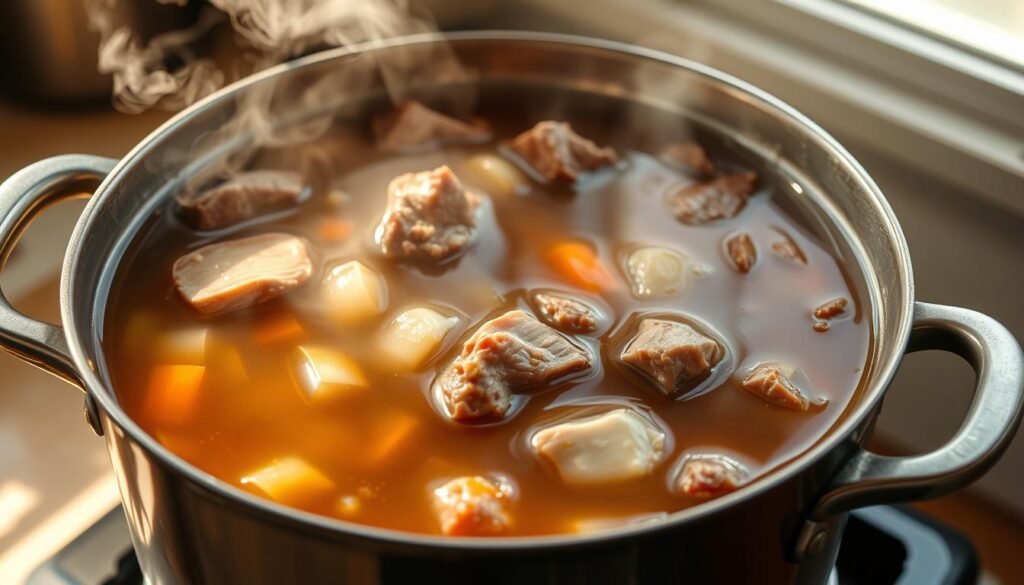
Bone broth is made by simmering animal bones, connective tissues, and sometimes meat with water and vegetables. During cooking, some collagen breaks down into gelatin, giving the liquid a richer texture.
Traditional recipes often simmer beef bones for 12–24 hours, although cooking time varies. Chicken bones generally need less time, while fish bones cook much faster.
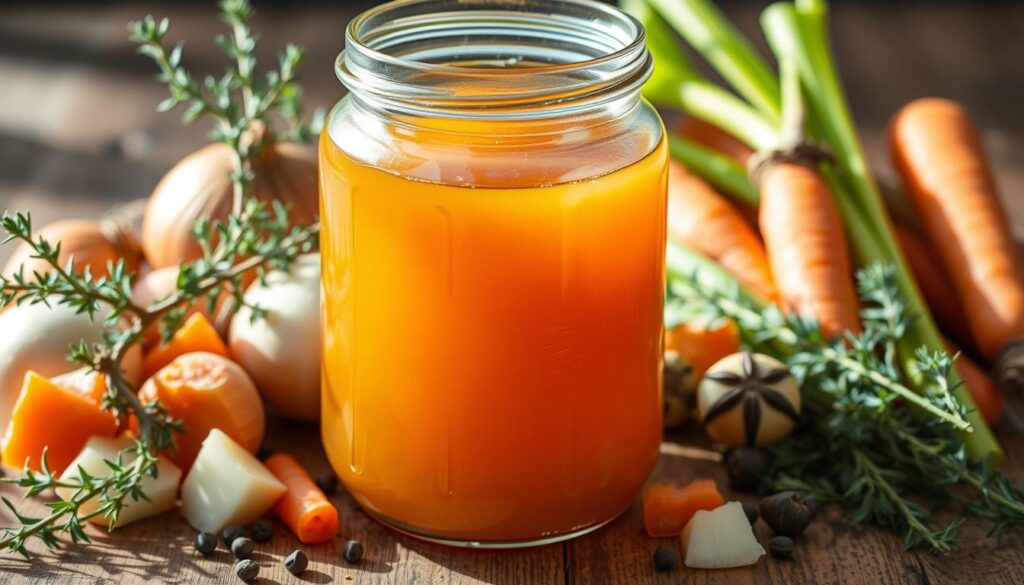
Bone broth vs. regular stock
Bone broth and stock are similar foods. Both can contain gelatin, protein, and flavor from bones. The main differences usually involve preparation and intended use.
- Bone broth: Often uses connective tissue-rich bones and longer cooking times to create a concentrated, gelatin-rich liquid.
- Regular stock: Usually focuses on flavor for soups and sauces and may have a shorter cooking time.
- Meat broth: Often relies more heavily on meat for flavor and may contain less gelatin.
These names are not strict nutritional categories. A well-made chicken stock can contain more gelatin than a poorly prepared product labeled bone broth.
Tip: If homemade broth becomes jelly-like after refrigeration, it contains enough gelatin to thicken when cold. That’s a useful cooking clue, but it doesn’t prove the broth has special healing properties.
How Bone Broth May Support the Intestinal Lining
Your intestinal lining forms a protective barrier between the contents of your digestive tract and the rest of your body.
It helps absorb nutrients while controlling which substances pass through the intestinal wall. This barrier includes intestinal cells, mucus, immune defenses, and connections between neighboring cells.

1. Collagen and gelatin provide building blocks
Collagen is a structural protein found in skin, cartilage, tendons, and other connective tissues. Cooking bones and connective tissues releases gelatin and other collagen-derived compounds into the broth.
During digestion, your body breaks these proteins into smaller peptides and amino acids. It can then use those nutrients for normal functions, including maintaining and rebuilding tissues.
However, eating collagen does not mean it travels directly to your intestinal lining and repairs it. The body distributes and uses these nutrients according to its needs.
2. Amino acids play different roles in gut health
Bone broth may provide glycine, proline, and other amino acids. Some are involved in collagen production, immune function, and intestinal cell maintenance.
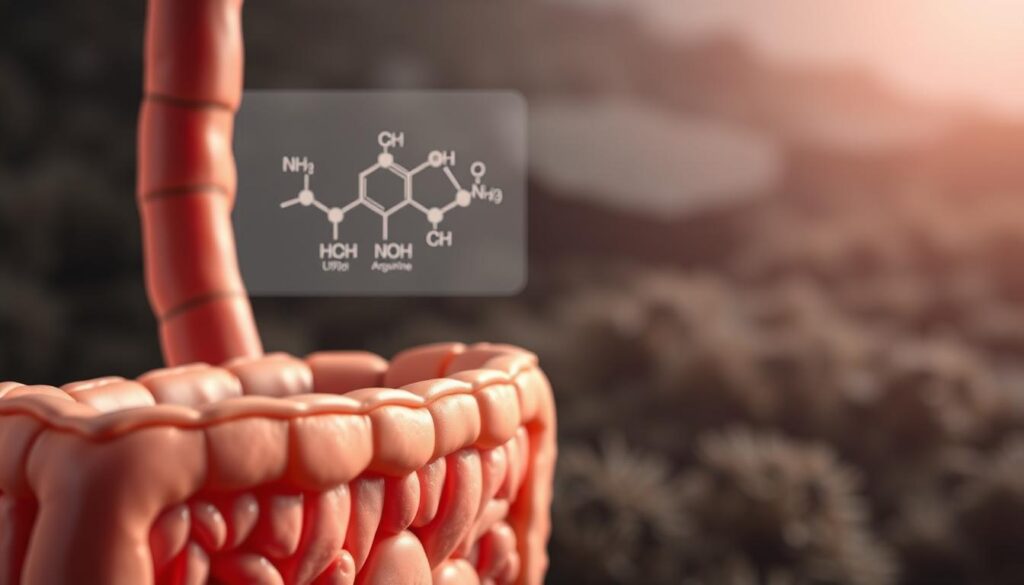
| Amino Acid | Role in the Body | Connection to Gut Health |
|---|---|---|
| Glutamine | Provides fuel for certain cells | Helps intestinal cells maintain normal function |
| Glycine | Supports collagen production | Participates in normal tissue maintenance |
| Proline | Helps produce collagen | Contributes to connective tissue structure |
| Arginine | Supports protein synthesis and circulation | Participates in immune and tissue-repair processes |
| Histidine | Supports protein production | Contributes to normal growth and tissue maintenance |
One important distinction: gelatin contains glutamic acid, but it is not necessarily a rich or reliable source of free glutamine. The amount of each amino acid also varies between broth recipes.
3. Could bone broth improve intestinal permeability?
Intestinal permeability describes how easily substances pass through the intestinal barrier. When this barrier becomes unusually permeable, people sometimes call the condition leaky gut.
Changes in intestinal permeability can occur with certain digestive diseases. However, the term itself does not explain every case of bloating, fatigue, or stomach discomfort.
Researchers are studying whether compounds in bone broth influence inflammation and barrier function. These mechanisms are interesting, but they do not establish that drinking broth treats intestinal damage.
What Research Says About Bone Broth and Gut Healing
Bone broth research is developing, but understanding the difference between laboratory findings and human treatment results is essential.
Encouraging findings from animal studies
A 2022 study published in Frontiers in Nutrition examined bone soup and particles isolated from it in mice with experimentally induced colitis.
Researchers observed reduced inflammatory signals and changes in intestinal bacteria. These findings suggest that certain soup compounds deserve further investigation.

What human research tells us
A 2025 review in Digestive Diseases and Sciences examined bone broth nutrients and their potential roles in intestinal barrier health. The authors discussed promising biological mechanisms and called for further research.
Yet research showing that specific nutrients support normal intestinal function is not the same as a controlled trial proving that drinking bone broth heals a person’s gut.
Another 2019 study comparing bone broth with collagen supplements found that amino acid amounts varied widely between preparations. Standardized broths generally supplied lower amounts of several collagen-related amino acids than the collagen supplement doses examined.
The evidence-based conclusion: Bone broth can supply useful nutrients, but there is not enough direct human research to recommend it as a treatment for leaky gut, inflammatory bowel disease, or chronic digestive problems.
How to Make Bone Broth at Home
Homemade bone broth allows you to control the ingredients, salt, and flavor. You don’t need a complicated recipe or expensive equipment.
Ingredients
- 2–4 pounds of chicken, beef, or pork bones
- Approximately 1 gallon (4 liters) of water, or enough to cover the bones
- 1 onion and 2 carrots, roughly chopped
- 2 celery stalks and optional fresh herbs
- 1–2 tablespoons apple cider vinegar, optional
- Salt and pepper to taste
Knuckles, feet, joints, and cartilage-rich cuts are useful when you want more gelatin. Marrow bones contribute flavor and fat, but connective tissues are particularly important for gelatin production.
Step-by-step instructions
- Prepare the ingredients. Place the bones and vegetables in a large stockpot. Cover them with water and add vinegar if desired.
- Bring to a boil. Heat the mixture until boiling, then reduce to a gentle simmer. Skim foam from the surface if needed.
- Simmer slowly. Cook beef bones for approximately 12–24 hours or poultry bones for 6–12 hours. Fish frames generally require a much shorter cooking time.
- Check the liquid. Add water when necessary to keep the ingredients covered. Avoid leaving an unattended stovetop running overnight.
- Strain carefully. Remove the bones and vegetables. Discard small bone fragments and season the strained liquid to taste.
- Cool and store safely. Transfer the broth into shallow containers and refrigerate promptly.
Vinegar is optional. Although many recipes claim it dramatically increases mineral extraction, that benefit is not firmly established for ordinary home cooking.
Food safety and storage
According to USDA food-safety guidance, cooked foods should be refrigerated within two hours, or one hour when temperatures exceed 90°F.
- Refrigerator: Store at 40°F (4°C) or colder and use within 3–4 days.
- Freezer: Freeze in individual portions, ideally using within 2–3 months for good quality.
- Reheating: Bring soups and broths to a rolling boil when reheating leftovers.
Don’t leave a large pot cooling overnight. Divide hot broth into smaller containers or use an ice bath to speed cooling.
How Much Bone Broth Should You Drink Daily?
There is no scientifically established daily dose of bone broth for repairing the intestinal lining.
If you enjoy it, start with half a cup or one cup (240 mL) and adjust according to your appetite and tolerance. One or two cups can fit into many eating plans, but drinking more has not been proven to create greater gut-healing benefits.
Simple ways to enjoy bone broth
- Morning: Sip a warm cup instead of a savory snack or alongside breakfast.
- Lunch: Use broth as a base for vegetable soup with chicken, beans, or rice.
- Dinner: Add it to stews, sauces, or cooked grains for extra flavor.
- Between meals: Enjoy a small serving when you want something warm and satisfying.
Timing is mainly a personal preference. There’s no strong evidence that drinking broth before eating prepares the digestive system or improves nutrient absorption.
A convenient beef broth for savory meals
If you prefer a richer flavor but don’t want to simmer bones, prepared beef bone broth can work well in stews, gravies, and hearty soups. It can also be served warm on its own.
Kettle & Fire Regenerative Agriculture Beef Bone Broth is one option made with beef bones, vegetables, herbs, and seasonings. The 16.9-ounce carton is convenient for smaller recipes or sipping.
Its richer, seasoned flavor may suit beef-based dishes better than a mild chicken broth. However, it contains added sea salt, so compare the sodium information with your daily needs. Homemade unsalted beef broth is a reasonable alternative.
- …...
How to Choose the Best Store-Bought Bone Broth
Not every packaged broth offers the same nutrition. Ingredients, protein levels, sodium, and serving sizes vary considerably.
Instead of judging quality by words like “healing” or “superfood,” focus on the nutrition label and whether the product suits your cooking needs.

Five things worth checking
- Ingredients: Look for bone broth or bones among the main ingredients. Vegetables, herbs, and seasonings are normal additions.
- Protein: Compare grams per serving. More protein does not automatically mean stronger gut benefits.
- Sodium: Check the actual amount, especially when drinking broth frequently.
- Serving size: Compare similar portions rather than assuming a whole carton equals one cup.
- Storage instructions: Check whether unopened cartons are shelf-stable and how quickly to use them after opening.
Some manufacturers also describe their simmering methods. That information can be useful, but a 12-hour cooking claim alone does not guarantee superior nutrition.
A practical chicken broth with no added salt
For everyday cooking, a mild broth without added salt gives you more control over seasoning. This is especially helpful when preparing soups, rice, or sauces containing other salty ingredients.
Pacific Foods Organic Unsalted Chicken Bone Broth comes in a 32-ounce carton and is made using organic chicken bone broth and apple cider vinegar. It provides protein while allowing you to add seasoning according to your taste.
Although labeled unsalted, it is not sodium-free. Check the current package nutrition facts if you need to limit sodium. You can also prepare an unsalted homemade version and freeze it in one-cup portions.
- USDA Organic
- 9g of Protein per Serving
- Fat Free
- No Salt Added
What Results Can You Realistically Expect?
Bone broth can be a useful food without being a proven gut treatment. Understanding that difference helps prevent unrealistic expectations.
Possible everyday benefits
- Hydration: Its water content contributes to daily fluid intake.
- Protein intake: Some preparations supply meaningful protein, though collagen-derived protein is not a complete replacement for varied dietary protein.
- Comfort: A warm, savory drink may feel pleasant when your appetite is low.
- Meal satisfaction: Adding broth to soups with vegetables and protein can help create filling meals.
What about sleep, joints, and skin?
Glycine and collagen supplements have been studied for different health outcomes, including sleep and connective tissue health. However, those findings should not automatically be applied to ordinary bone broth.
Broth recipes contain inconsistent amounts of collagen-related nutrients, and evidence does not show that daily cups reliably relieve joint pain, improve skin elasticity, or enhance sleep.
For more context, read our collagen peptides review and our discussion of drinking bone broth every morning.
Who should exercise extra caution?
Bone broth is generally a familiar food, but it won’t suit everyone equally.
- People limiting sodium: Choose suitable lower-sodium preparations and follow any prescribed dietary restrictions.
- People with kidney conditions or gout: Ask your clinician about appropriate portions and dietary limits when applicable.
- People with food allergies: Check for fish, shellfish, celery, or other ingredients in prepared broths.
- People with digestive conditions: Onion, garlic, rich fats, and certain seasonings may worsen symptoms in some individuals.
If you have ongoing diarrhea, blood in your stool, unexplained weight loss, or significant abdominal pain, seek medical evaluation rather than relying on broth to resolve the problem.
Frequently Asked Questions
Can bone broth actually heal a damaged intestinal lining?
There is not enough direct human research to say that it does. Bone broth supplies nutrients involved in tissue maintenance, but that does not establish that drinking it reverses intestinal damage or treats digestive disease.
Is chicken or beef bone broth better for gut health?
Neither has been proven better for intestinal repair. Chicken broth often has a lighter flavor, while beef broth can taste richer. Choose based on ingredients, nutrition, food tolerance, and personal preference.
Does bone broth help with leaky gut syndrome?
Some laboratory and animal research suggests that certain broth components may influence intestinal inflammation and barrier function. Clinical evidence showing that bone broth corrects increased gut permeability in humans remains insufficient.
How long does it take to notice improvements?
You might enjoy the warmth and hydration immediately, but there is no established timeline for gut-barrier improvement from drinking bone broth. Claims that it repairs your gut within a few days or weeks are not supported by reliable human trials.
Is bone broth better than collagen supplements?
They serve different purposes. Bone broth is a savory food that contributes fluid, flavor, and variable amounts of protein. Collagen supplements provide more concentrated and often standardized doses. Neither should be assumed to treat intestinal disease.
Can I drink bone broth every day?
Many people can include it regularly as part of a varied diet. Watch sodium, consider the protein content, and make room for other nutritious foods. There is no need to drink several cups daily to obtain unproven healing benefits.
Which vegetables and herbs work best in homemade broth?
Carrots, celery, parsley, thyme, and bay leaves add flavor. Onion and garlic are also popular, but people sensitive to certain fermentable carbohydrates may prefer leaving them out. Choose ingredients you tolerate well.
Conclusion: Is Bone Broth Worth Adding to Your Diet?
Bone broth can be a nutritious, comforting addition to a gut-friendly eating plan, but it is not a proven treatment for intestinal damage. Its gelatin and amino acids contribute to ordinary nutrition, while research into specific gut-barrier benefits is still developing.
If you enjoy it, start with a small serving, make a simple homemade batch, or choose a prepared broth with suitable protein and sodium levels.
Most importantly, pair it with fiber-rich plants, varied protein sources, adequate hydration, and any treatment recommended for your digestive condition. Those broader habits offer a more dependable foundation for long-term gut health than relying on bone broth alone.