

Drinking bone broth every morning can be a convenient way to add fluid and some protein-related nutrients to your diet, but the strongest social-media claims go well beyond what research on ordinary bone broth has actually shown. Claims about healing the gut, improving skin, relieving joint pain, reducing inflammation, or causing weight loss often rely on studies of isolated amino acids or standardized collagen supplements rather than bone broth itself.
Bone broth can still be a useful food. Depending on the recipe or product, it may provide protein, gelatin-derived amino acids, sodium, and a warm savory alternative to plain water or other beverages. But its nutritional value varies widely, and there is no convincing evidence that drinking it specifically in the morning provides a special health advantage.
The more useful question is not whether bone broth is a wellness cure-all. It is whether it fits your diet, what you expect from it, and whether the product or recipe actually provides enough nutritional value to justify the cost and effort.
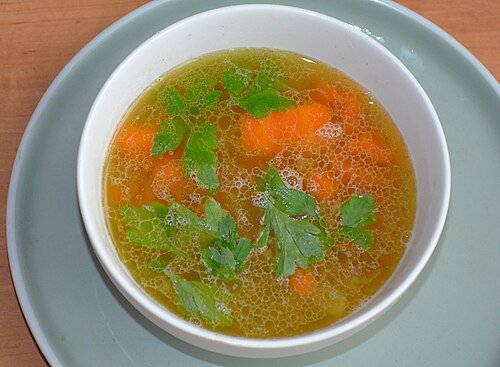
Why Morning Bone Broth Became So Popular
Bone broth itself is not new. People have simmered bones, connective tissue, meat scraps, and vegetables for generations to make flavorful broths and stocks. What is new is the way bone broth is now marketed as a concentrated source of collagen and amino acids with benefits for digestion, skin, joints, hydration, and weight management.
The problem is that these claims often blur three different questions: what bone broth contains, what those nutrients do in the body, and whether drinking bone broth itself has been shown to produce a meaningful health outcome. Those are not the same thing.
What Bone Broth Actually Provides
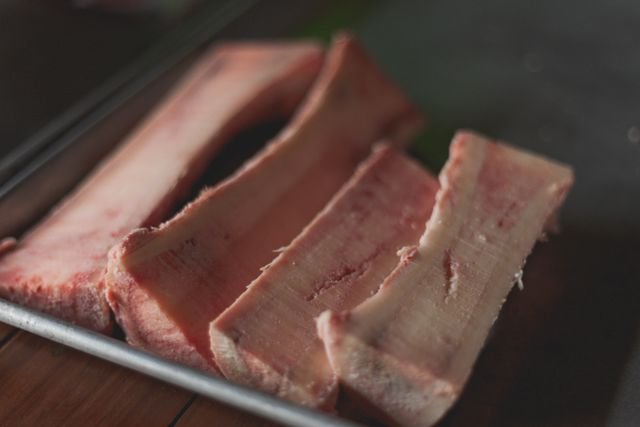
Bone broth is usually made by simmering animal bones and connective tissues in water, often with vegetables, herbs, and seasonings. During cooking, some proteins and other compounds move into the liquid. Collagen from connective tissues can break down into gelatin, which is why some broths become thick or gel-like when chilled.
Bone broth may contain amino acids associated with collagen, including glycine and proline, along with other amino acids such as glutamine. But the amount can vary substantially depending on the bones used, cooking method, concentration, processing, and serving size.
A study comparing bone broth with collagen supplements found substantial variation in collagen-related amino acids across broth preparations. The tested broths also did not consistently provide the same concentrations found in standardized collagen supplements used in research. That matters because evidence from a measured collagen-supplement dose cannot automatically be transferred to a cup of bone broth.
Bone Broth Is Not Necessarily a Mineral-Rich Food
Bones contain minerals, but that does not mean large amounts end up in the finished broth. Research measuring minerals in tested bone broths found that calcium and magnesium contributions were relatively modest, with the analyzed servings providing less than 5% of recommended daily amounts for those minerals.
The same research on essential and toxic metals in bone broth found that preparation conditions such as acidity and cooking duration can affect mineral extraction. However, that does not mean adding vinegar or cooking for extremely long periods turns bone broth into a major calcium or magnesium source.
Popular Bone Broth Claims: What the Evidence Shows
| Claim | What the Evidence Suggests | Practical Takeaway |
|---|---|---|
| Gut health | Some nutrients found in bone broth are involved in intestinal-barrier physiology, but direct clinical evidence for ordinary bone broth is limited. | Do not treat bone broth as a proven way to heal intestinal permeability or digestive disease. |
| Skin and collagen | Standardized collagen supplements have been studied, but bone broth contains variable amounts and is not equivalent to those products. | Do not assume a daily mug will improve wrinkles, elasticity, hair, or nails. |
| Joint support | Collagen-based supplements have been studied for osteoarthritis, but that does not prove that ordinary bone broth relieves joint pain. | Think of broth as food, not a joint treatment. |
| Minerals | Calcium and magnesium levels can be modest and vary by preparation. | Do not rely on bone broth as a primary mineral source. |
| Hydration | It provides fluid and usually sodium. | It can contribute to hydration, but it is not automatically a superior electrolyte or recovery drink. |
| Weight management | Protein-containing foods can contribute to fullness, but bone broth itself has not been shown to cause meaningful weight loss. | Use it only as part of the overall diet, not as a fat-loss strategy. |
| Morning timing | No convincing evidence shows that morning consumption provides unique benefits. | Drink it when it fits your routine. |
Does Bone Broth Help the Gut?
The gut-health claim is one of the most common reasons people start drinking bone broth. Glutamine and other amino acids are involved in intestinal cell function, and researchers continue to study nutrients found in broth in relation to intestinal-barrier health.
A 2025 review of bone broth nutrients and intestinal-barrier research describes biological reasons these components are interesting for gut health. But much of the underlying evidence concerns individual nutrients, animal research, disease-specific settings, or other forms of supplementation.
That is very different from proving that an ordinary cup of bone broth repairs intestinal permeability or treats gastrointestinal disease. The phrase “leaky gut” is also used much more broadly in wellness marketing than it is in clinical medicine. Bone broth can be part of a normal diet, but it should not be presented as a proven treatment.
What About Skin and Collagen?
The skin claim usually comes from the fact that bone broth contains collagen-related proteins and amino acids. But eating collagen-containing food does not mean intact collagen travels directly into the skin. Proteins are digested into smaller components before the body uses them.
Research on standardized collagen supplements is also not the same as research on bone broth. A 2025 systematic review of collagen supplements and skin aging found that results varied according to study quality and funding, reinforcing the need for cautious interpretation even within the supplement literature.
Bone broth may contribute amino acids as part of the diet, but current evidence does not justify promising smoother skin, fewer wrinkles, stronger nails, or healthier hair from drinking it.
Can Bone Broth Help Joint Pain?
Collagen-related supplements have been studied in people with osteoarthritis. A systematic review and meta-analysis of randomized trials reported improvements in some pain and function outcomes with collagen supplementation.
That research helps explain why joint claims around bone broth sound plausible, but the distinction is important: standardized collagen interventions are not the same as a variable serving of broth. Bone broth should not be described as a proven joint-pain treatment unless evidence directly supports that use.
Is Bone Broth Good for Hydration?
Bone broth contains water, so it contributes to fluid intake. Many commercial broths also contain a meaningful amount of sodium. That combination can make broth appealing after activity or when someone wants a warm savory drink instead of plain water.
However, it should not automatically be called a complete sports drink or superior rehydration beverage. Exercise recovery needs differ depending on sweat loss, workout duration, carbohydrate needs, total food intake, and individual health considerations.
Does Bone Broth Help With Weight Loss?
Bone broth is often relatively low in calories, and products containing a useful amount of protein may contribute to fullness. That can make broth fit comfortably into some eating patterns.
But there is no good basis for claiming that bone broth itself burns fat or causes weight loss. Body-weight changes depend on the overall dietary pattern, energy intake, activity, sleep, health status, and many other factors.
Does Drinking Bone Broth in the Morning Matter?
No clear evidence shows that morning consumption produces a unique biological advantage. Drinking it first thing in the day may be convenient, comforting, or easier to turn into a habit, but that is different from proving that your body benefits more from bone broth at 8 a.m. than at lunch or dinner.
If you enjoy it in the morning, there is no need to stop. If you would rather have it with lunch, use it in soup, or sip it in the evening, there is no evidence-based reason to force a morning routine.
How to Use Bone Broth Practically
Bone broth can be treated like any other savory food rather than a supplement. You can sip it warm, use it as a soup base, cook grains in it, add it to stews, or use it wherever a recipe calls for broth or stock.
You do not need to drink it every day to gain value from it. Frequency should depend on your overall diet, sodium intake, food preferences, budget, and whether broth is replacing or complementing other protein-containing foods.
How to Choose a Store-Bought Bone Broth
Ignore broad wellness language at first and start with the Nutrition Facts panel. Check the serving size, protein, sodium, number of servings per package, and ingredient list. Also look for allergens and whether the product is ready to drink or needs dilution.
Protein matters because products sold as bone broth can differ considerably in concentration. Sodium also deserves attention, especially if you drink broth frequently or are following a sodium-restricted eating plan. The FDA uses a Daily Value of 2,300 mg for sodium and notes that 5% Daily Value or less per serving is generally considered low, while 20% or more is considered high.
Terms such as organic, grass-fed, slow-simmered, collagen-rich, clean, or gut-friendly may describe a product’s positioning, but they should not replace measurable label information. Likewise, a broth that gels when chilled may contain more gelatin, but gel formation is not a precise measure of collagen dose or health effectiveness.
A Convenient Store-Bought Example
Pacific Foods Organic Beef Bone Broth is one example of a shelf-stable liquid broth that can be evaluated using those practical criteria rather than marketing promises.
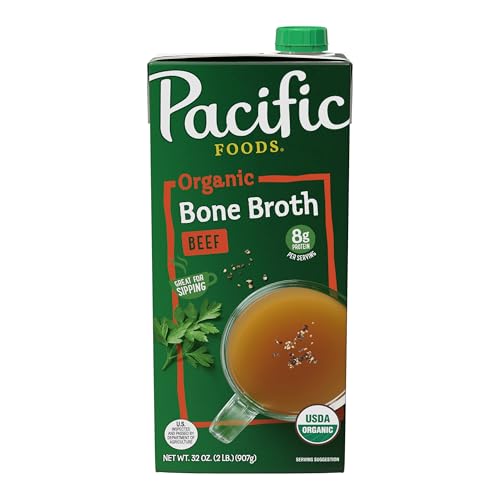
The manufacturer lists a serving as 1 cup, or 240 mL, with 8 grams of protein. That makes it easier to know what one serving actually contributes instead of assuming all bone broths contain similar amounts of protein.
The same serving contains 360 mg of sodium, or 16% of the Daily Value listed on the current label. That is not automatically too high, but it is a useful number to consider if you drink broth regularly, eat many other sodium-rich foods, or have been advised to monitor sodium intake.
The 32-ounce carton contains about four 1-cup servings. Its ingredient list includes beef bone stock along with vegetables, sea salt, garlic, tomato, celery juice concentrate, yeast extract, and spices. The main reason to choose a product like this is convenience and transparent label information, not an expectation that it will produce special gut, skin, or joint outcomes.
- One (1) 32 oz carton of Pacific Foods Organic Beef Bone Broth
- A savory bone broth made from slow-simmering organic beef bones and vegetables
- Full of naturally occurring collagen, with 8 grams of protein in each 1-cup serving
- USDA-certified organic bone broth made from non-GMO ingredients and free of gluten, soy, wheat and yeast
Simple Homemade Bone Broth
Making broth at home gives you more control over the ingredients and sodium level. It can also be economical if you already have leftover bones from meals.
Ingredients
- 2 to 3 pounds of beef, chicken, or mixed bones
- 1 onion, quartered
- 2 carrots, roughly chopped
- 2 celery stalks, roughly chopped
- 1 to 2 tablespoons apple cider vinegar, optional
- Water
- Herbs or seasonings to taste
Instructions
- Roast the bones if desired. Roasting at about 400°F for roughly 30 minutes can deepen the flavor, especially with beef bones.
- Add everything to a pot. Place the bones, vegetables, optional vinegar, and seasonings in a stockpot or slow cooker.
- Cover with water. Add enough water to submerge the ingredients.
- Bring to a gentle simmer. Avoid a hard rolling boil for the entire cooking period.
- Cook until the broth develops the flavor and body you want. Chicken broths are often finished sooner than beef broths. Longer cooking can change extraction, but longer does not automatically mean dramatically more nutritious.
- Strain and cool safely. Remove the solids, cool the broth promptly, and refrigerate or freeze it in suitable containers.
Adding vinegar can increase acidity, which may affect mineral extraction during cooking, but it should be viewed mainly as a preparation choice rather than a way to transform broth into a major mineral source.

Who May Want to Limit or Skip Bone Broth?
Bone broth is optional. You do not need it to have a healthy diet, obtain collagen-building amino acids, or meet your protein needs.
If you need to monitor sodium, compare labels carefully because packaged broths vary considerably. People with food allergies or specific dietary restrictions should also check ingredients, especially seasonings, flavorings, vegetables, and other added components.
If you follow a clinician-directed nutrition plan for kidney disease, heart disease, hypertension, digestive disease, or another medical condition, the right amount of sodium, protein, and fluid may differ from general label guidance. In that situation, bone broth should fit the plan rather than replace it.
Frequently Asked Questions
What Is the Difference Between Bone Broth and Regular Stock?
The categories overlap more than marketing sometimes suggests. Bone broth is usually cooked with bones and connective tissues long enough to extract gelatin and develop a richer body, while stock may be cooked for a shorter period and used mainly as a cooking base. There is no universal cooking-time rule that automatically makes one product nutritionally superior.
Does Bone Broth Contain Lead or Other Heavy Metals?
Bone can store certain metals, so the question is reasonable. An earlier small study of chicken-based broths found measurable lead and reported higher concentrations in the broths than in the water used to make them.
However, another analysis of essential and toxic metals in bone broths found low microgram-per-serving levels of lead and cadmium in the samples tested and characterized the associated risk as minimal. These studies are too limited to prove that every broth is either dangerous or completely free of concern.
There is also not enough evidence to say that labels such as grass-fed, pasture-raised, or organic automatically eliminate heavy-metal exposure.
Final Takeaway
Bone broth can be a practical, flavorful food that provides fluid and, depending on the recipe or product, a useful amount of protein and collagen-related amino acids. It can fit comfortably into a normal diet if you enjoy it.
What it should not be treated as is a proven treatment for intestinal permeability, joint pain, skin aging, inflammation, or weight loss. Many of those claims are based on research involving isolated nutrients or standardized supplements rather than ordinary bone broth.
If you want to use bone broth, choose it for reasons you can verify: taste, convenience, protein, sodium, ingredients, price, and how well it fits your meals. Morning is fine, but it is not medically special. Making it, buying it, or skipping it can all be reasonable choices depending on what you actually want from it.