

Cycle syncing means adjusting training and recovery to how you feel across your menstrual cycle, not following a rigid rulebook. The goal is practical: train hard when your body is ready, scale back when symptoms hit, and stay more consistent over time.
Research on exercise performance across the menstrual cycle is mixed. Some studies show small changes in energy, comfort, or performance, while others show that muscle-building responses stay similar across phases. That is why the most useful approach is personal tracking, not perfection.
This guide explains what tends to change across each phase, how to track your cycle and workouts, and how to adjust exercise, nutrition, and recovery in a way that fits real life. For a deeper overview, you can also read cycle syncing: the hormone-friendly way.
Key Takeaways
- Track your cycle and symptoms so your workout plan reflects your real patterns, not generic advice.
- Personalization beats strict rules. Research shows mixed results, so your own data matters most.
- Strength gains can happen in any phase with steady training, enough food, and good recovery.
- Rest is productive. Lower-energy days are a good time for mobility, walking, lighter sessions, or full rest.
- Test the approach for at least 2–3 cycles before deciding what works best for you.
Why Match Training to Your Cycle?
Matching training to your cycle can help you decide when to push, when to maintain, and when to recover. A 2020 meta-analysis found that some women may see a small dip in performance during the early follicular phase, but the overall evidence was inconsistent. More recent research also suggests that the muscle-building response to resistance exercise does not appear to depend on doing strength work in one “perfect” phase.
The practical takeaway is simple: broad phase-based patterns can be useful, but your own symptoms, sleep, mood, and recovery are more important than a textbook calendar. If you often feel strong and focused mid-cycle, that may be a good time for harder sessions. If late-cycle fatigue or cramps hit you hard, it makes sense to reduce volume or choose gentler movement.
That kind of flexibility can help reduce missed workouts, lower frustration, and support long-term consistency.

Understand the Four Phases of the Menstrual Cycle
Your cycle is usually described in four phases: menstrual, follicular, ovulation, and luteal. These phases do not look the same for everyone, and cycle length can vary from month to month, so treat the timelines below as rough guides.
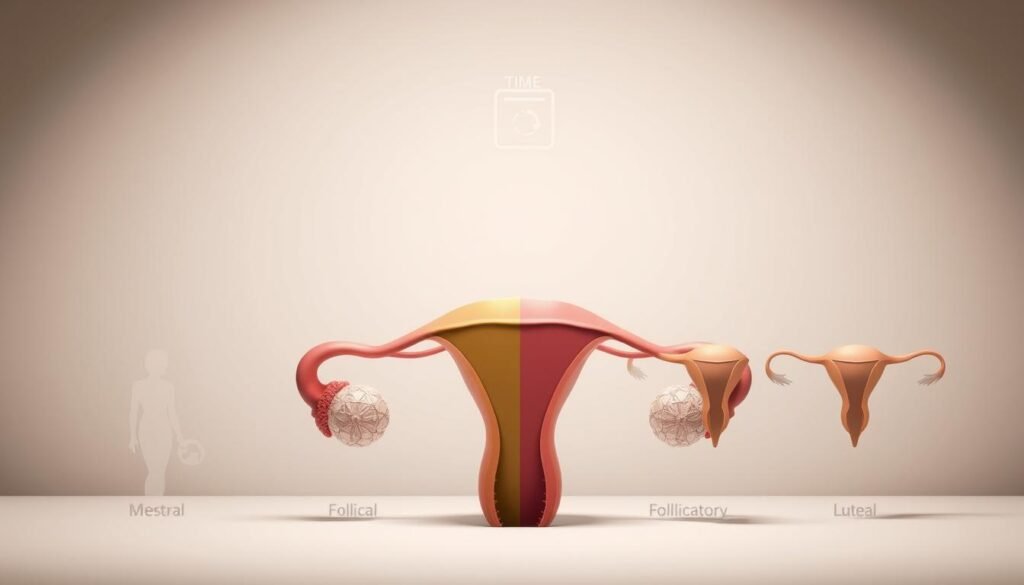
- Menstrual phase (roughly days 1–5): Estrogen and progesterone are low while the uterine lining sheds. Some people feel more tired, crampy, or less motivated to train hard.
- Follicular phase (roughly days 6–14): Estrogen rises. Many women notice better energy, focus, and readiness for harder training as this phase progresses.
- Ovulation (often around mid-cycle): Ovulation is triggered by a hormone surge. Some people feel strong and energetic here, though others notice bloating, ovulation pain, or no clear change at all.
- Luteal phase (roughly days 15–28): Progesterone rises, then drops late in the phase if pregnancy does not occur. This is when PMS symptoms, poor sleep, bloating, mood shifts, or a higher sense of effort may show up.
These patterns are not rules. They are starting points. The most useful plan comes from pairing these broad changes with your own tracking. If you want a research-based overview of how activity can shift across the cycle, see this Harvard-linked explainer on exercise habits by menstrual cycle phase.
How to Track Your Cycle, Energy, and Workouts
You do not need a complicated system. A notes app, calendar, spreadsheet, or period-tracking app is enough if you use it consistently. The goal is to spot patterns, not collect perfect data.
What to log each day
- Energy, mood, and motivation
- Sleep length and sleep quality
- Flow, cramps, bloating, breast tenderness, or headaches
- Workout type, intensity, pace, reps, or perceived exertion
- Soreness, recovery quality, stress, travel, and hydration
Tools that can help
| Tool | What to track | Why it helps |
|---|---|---|
| Period app or calendar | Flow, symptoms, mood | Easy way to spot broad cycle patterns |
| Notebook or spreadsheet | Training notes, RPE, recovery | Best for detailed personal analysis |
| Basal body temperature | Wake temperature | Can help clarify ovulation timing |
| Wearable | Sleep, resting heart rate, recovery trends | Adds objective data to your self-report |
Review your notes after 2–3 cycles. Highlight the days when you felt strongest, the days when recovery felt poor, and the days when symptoms changed your training. That is where your real pattern starts to show.
How to Adjust Workouts in Each Phase
Menstrual Phase: Lower the Pressure
During your period, comfort matters. If symptoms are mild, gentle movement can help stiffness, mood, and circulation. If symptoms are severe, rest is completely valid.
- Easy walking
- Restorative yoga or gentle Pilates
- Mobility work and breathing drills
- Very light strength or technique sessions if you feel up to it
If you have heavy cramps, dizziness, or strong fatigue, shorten the session or skip it. Focus on staying hydrated, warming up gradually, and choosing movement that helps you feel better instead of drained.
Follicular and Ovulation Phases: Use Rising Energy Wisely
As energy improves, many women feel more ready for strength work, longer workouts, or higher-intensity sessions. This can be a good time to build momentum, but it is still important to progress gradually rather than assuming every mid-cycle day should be maximal.
- Strength: compound lifts, full-body sessions, or structured split training
- Cardio: tempo runs, intervals, cycling, or steady endurance work
- Power: short sprints or explosive work if you feel good and your form is solid
A simple approach is to increase weight, reps, or total volume slowly while keeping at least one lighter day in the week. If ovulation pain, bloating, or discomfort shows up, swap high-impact sessions for lower-impact options such as cycling, sled pushes, or incline walking.
The important point is this: there is no single magic phase for muscle growth. Consistent progressive overload over months matters more than trying to time every workout perfectly.
Luteal Phase: Protect Recovery and Adjust Early
The luteal phase is often where people notice more PMS symptoms, higher perceived effort, poorer sleep, or slower recovery. That does not mean you must stop training. It means you may do better with a more moderate approach.

- Use moderate intensity instead of always pushing hard
- Take longer rest periods between sets
- Reduce volume if fatigue builds for several days in a row
- Prioritize walking, mobility, and sleep if recovery is lagging
A late-cycle deload can work well if you often feel flat before your period. That might mean cutting volume by 20–40%, choosing technique work over heavy loading, or replacing one hard day with active recovery.
Nutrition and Recovery That Support the Cycle
Food does not need to change dramatically across the month, but small adjustments can support energy, training quality, and symptom control.

- During bleeding: focus on iron-rich foods such as lentils, leafy greens, or lean red meat, and pair them with vitamin C sources like citrus or berries. Omega-3-rich foods and steady hydration may also help with cramps and recovery.
- During the follicular and ovulation phases: support harder training with enough carbohydrates and protein. Whole grains, beans, fruit, lean proteins, and healthy fats can help energy and recovery.
- During the luteal phase: many women do well with complex carbs, fiber, magnesium-rich foods, and steady meal timing. Oats, sweet potatoes, pumpkin seeds, yogurt, leafy greens, and nuts are practical options.
Do not overlook basics such as hydration, pre-workout meals, and post-workout protein. Those habits usually matter more than tiny phase-specific food changes. For more practical guidance, see this Cleveland Clinic overview on nutrition and exercise throughout the menstrual cycle.
Special Considerations: Birth Control, PCOS, Endometriosis, and PMDD
If you use hormonal birth control, natural hormone fluctuations may be flatter, so strict cycle syncing may be less useful. In that case, follow your daily symptoms more than fixed dates on an app.
If you have PCOS, endometriosis, PMDD, or another condition that affects pain, bleeding, mood, or recovery, build your plan around symptom management and consistency. That may mean shorter sessions during flare-ups, more flexible cardio choices, or extra recovery time. A clinician or experienced coach can help if symptoms are severe or unpredictable.
Across all of these situations, strength training still matters. Regular resistance exercise supports muscle mass, bone health, and long-term fitness. The goal is not to avoid strength work. The goal is to adjust it intelligently.
A Flexible Four-Week Template
Use this as a starting point, then move sessions based on your real symptoms and schedule.
- Week 1 (bleeding): 1–2 low-impact sessions, 1 light strength or technique day, easy walking, and more rest if symptoms are strong.
- Week 2 (rising energy): 2 full-body strength sessions, 1 endurance or interval workout, 1 mobility day, and 1–2 easier recovery days.
- Week 3 (ovulation window): keep 2 strength sessions, add a harder cardio or power session if you feel good, and maintain at least one lighter day.
- Week 4 (luteal): shift to moderate intensity, trim volume if needed, keep walking or low-moderate cardio, and prioritize sleep and recovery.
Use RPE, soreness, mood, and sleep as your adjustment tools. If recovery lags, reduce intensity earlier instead of waiting until you feel completely run down.
FAQ
Does cycle syncing really work?
It can help, especially if you notice predictable monthly changes in energy, cramps, mood, or recovery. The science does not support strict rules for everyone, but it does support a personalized approach.
Should I avoid heavy lifting during my period?
No. If you feel good and your symptoms are manageable, you can still lift. If cramps, fatigue, or heavy bleeding make hard training feel miserable, scale the session down or rest.
What if I use hormonal birth control?
Track your symptoms, performance, sleep, and mood, but do not assume the same phase-based patterns will apply. Daily feedback matters more than cycle labels in this case.
How long should I test this approach?
Give it at least 2–3 full cycles. That is usually enough time to see whether certain phases consistently feel better for harder training or for extra recovery.
When should I talk to a clinician?
Seek medical advice if you have severe pain, very heavy bleeding, faintness, missed periods, major mood changes, or symptoms that keep disrupting daily life or exercise.
Conclusion
Use cycle syncing as a flexible framework, not a set of strict rules. Keep lifting, keep moving, and adjust training based on your energy, symptoms, and recovery. That approach is more sustainable than trying to force the same training week every month.
Start with simple tracking, review your notes after a few cycles, and make small changes instead of overhauling your entire routine at once. If you want easy movement ideas while you test what works best, you can also explore these free smart ways to stay fit without a gym.